

War between States
1861-1865
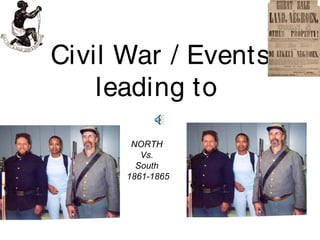
Civil War / Events
leading to
NORTH
Vs.
South
1861-1865
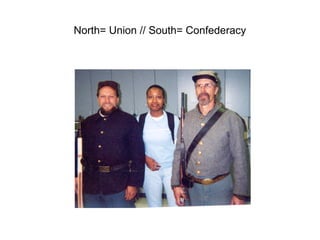
North= Union // South= Confederacy
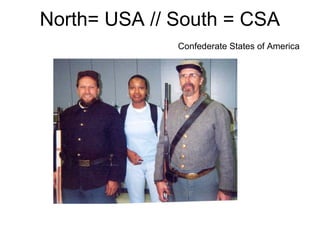
North= USA // South = CSA
Confederate States of America
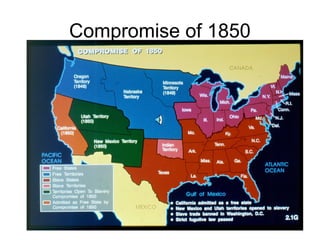
Compromise of 1850
• Compromise of 1850 temporarily held the
nation together and helped ease
sectionalism.
• What were the parts of the Compromise of
1850????? (308)
Compromise of 1850
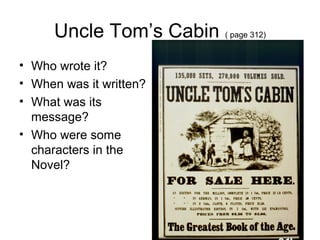
Uncle Tom’s Cabin ( page 312)
• Who wrote it?
• When was it written?
• What was its
message?
• Who were some
characters in the
Novel?
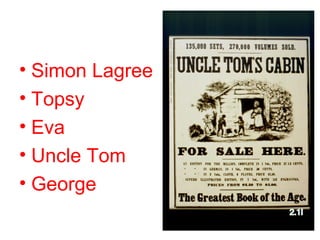
• Simon Lagree
• Topsy
• Eva
• Uncle Tom
• George
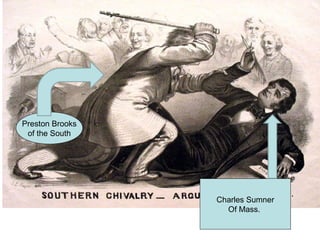
Preston Brooks
of the South
Charles Sumner
Of Mass.
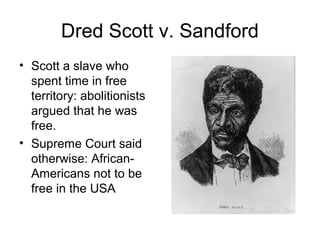
Dred Scott v. Sandford
• Scott a slave who
spent time in free
territory: abolitionists
argued that he was
free.
• Supreme Court said
otherwise: African-
Americans not to be
free in the USA
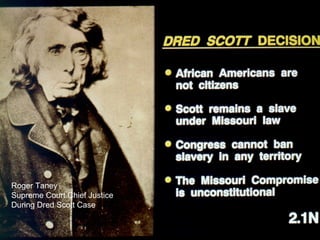
Dred Scott decison
Roger Taney
Supreme Court Chief Justice
During Dred Scott Case
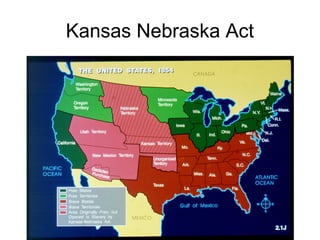
Kansas Nebraska Act
Kansas Nebraska Act
• Proposed by Stephen A. Douglas
• Would make slavery POSSIBLE where it
was formerly illegal under the Missouri
Compromise
• Northerners saw it as an attempt to spread
slavery north of the 36/30 line.
• 90% of southerners voted for the bill..
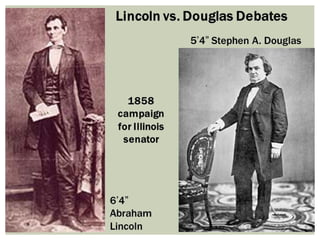
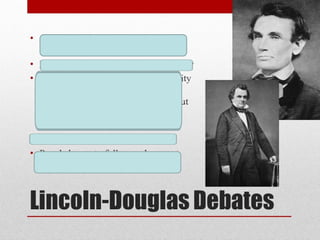
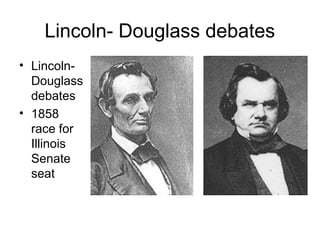
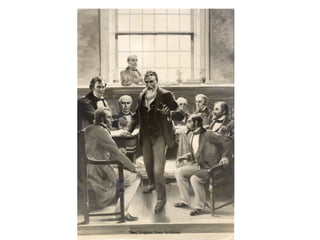
Lincoln- Douglass debates
• Lincoln-
Douglass
debates
• 1858
race for
Illinois
Senate
seat
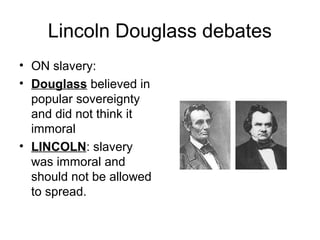
Lincoln Douglass debates
• ON slavery:
• Douglass believed in
popular sovereignty
and did not think it
immoral
• LINCOLN: slavery
was immoral and
should not be allowed
to spread.
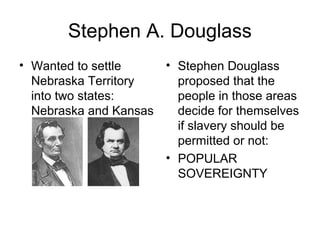
Stephen A. Douglass
• Wanted to settle
Nebraska Territory
into two states:
Nebraska and Kansas
• Stephen Douglass
proposed that the
people in those areas
decide for themselves
if slavery should be
permitted or not:
• POPULAR
SOVEREIGNTY
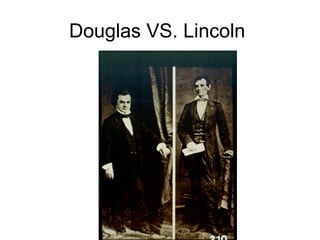
Douglas VS. Lincoln
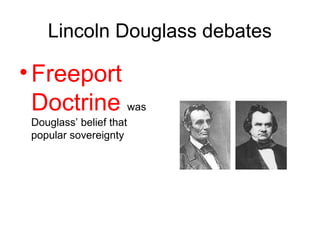
Lincoln Douglass debates
•Freeport
Doctrine was
Douglass’ belief that
popular sovereignty
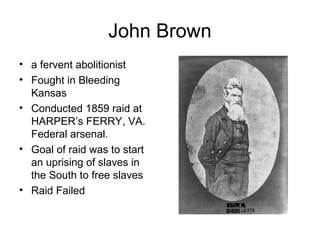
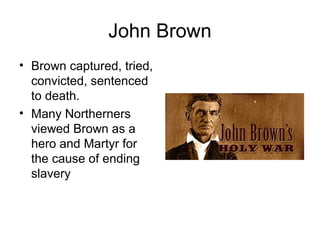
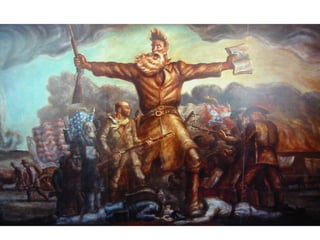
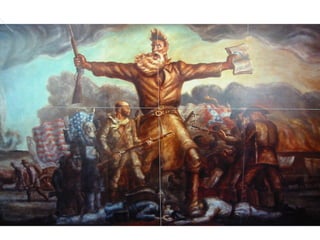
John Brown
• a fervent abolitionist
• Fought in Bleeding
Kansas
• Conducted 1859 raid at
HARPER’s FERRY, VA.
Federal arsenal.
• Goal of raid was to start
an uprising of slaves in
the South to free slaves
• Raid Failed
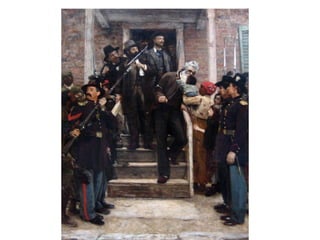
John Brown
• Brown captured, tried,
convicted, sentenced
to death.
• Many Northerners
viewed Brown as a
hero and Martyr for
the cause of ending
slavery
Civil War: Who fought
• Northern States fought against the
Southern States
The North was called the Union / Yankees
The Southerners were called Confederates /
Rebels
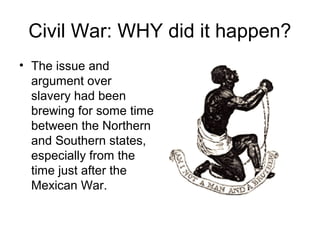
Civil War: WHY did it happen?
• The issue and
argument over
slavery had been
brewing for some time
between the Northern
and Southern states,
especially from the
time just after the
Mexican War.
Bleeding Kansas
• Pro and anti slave settlers flooded into
Kansas in order to sway the vote for or
against slavery.
• Vicious fighting broke out in Kansas from
1852-1858
Put in correct Order
• Secession of South Carolina 1860
• John Brown’s Raid
• Lincoln’s Election
• Dred Scott Decision
• Lincoln Douglass Debates
• Kansas Nebraska Act
• Bleeding Kansas
• Compromise of 1850
• Uncle Tom’s Cabin
• 1860 Secession of South Carolina
• 1860 Election of 1860
• 1859 John Brown’s Raid
• 1858 Lincoln Douglas Debates
• 1857 Dred Scott Decision
• 1854 Kansas Nebraska Act
– Bleeding Kansas : 1854-1858
• 1852 Uncle Tom’s Cabin
• 1850 Compromise of 1850
• 1846-1848 : War with Mexico
Issue of Slavery divides USA
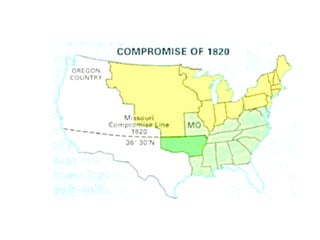
• Compromise of 1820
• War with Mexico
• Compromise of 1850
• Fugitive Slave Act
• Dred Scott Case
• The Liberator
• John Calhoun
• Uncle Tom’s Cabin
• John Brown
• Bleeding Kansas
• Election 1860
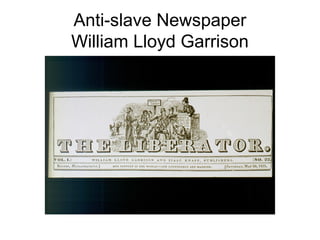
Anti-slave Newspaper
William Lloyd Garrison
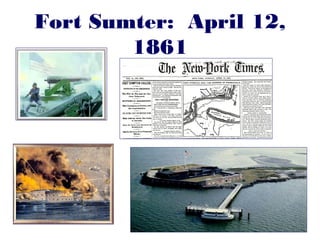
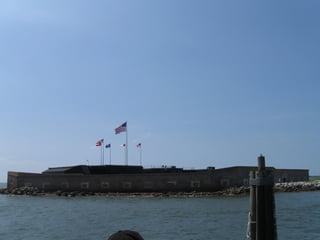
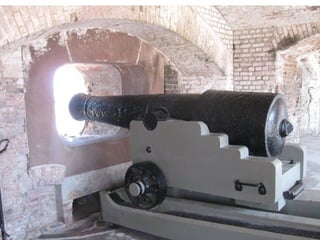
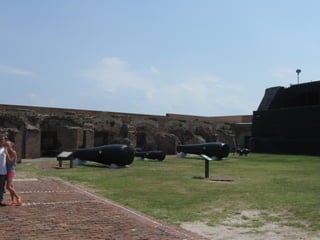
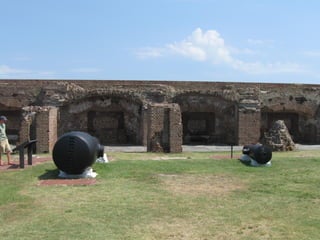
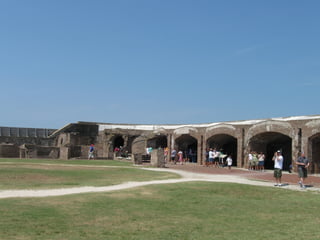
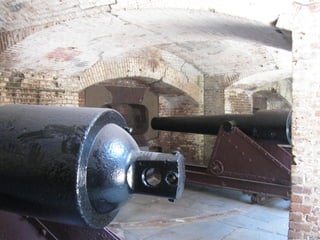
Fort Sumter: April 12,
1861
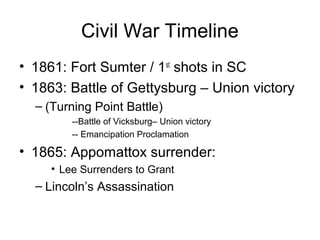
Civil War Timeline
• 1861: Fort Sumter / 1st
shots in SC
• 1863: Battle of Gettysburg – Union victory
– (Turning Point Battle)
--Battle of Vicksburg– Union victory
-- Emancipation Proclamation
• 1865: Appomattox surrender:
• Lee Surrenders to Grant
– Lincoln’s Assassination
Civil War: 1861-1865
UNION advantages Confederate Advantages
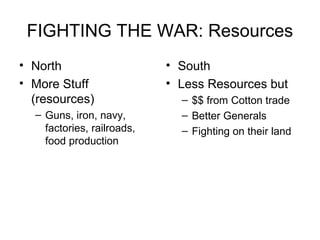
FIGHTING THE WAR: Resources
• North
• More Stuff
(resources)
– Guns, iron, navy,
factories, railroads,
food production
• South
• Less Resources but
– $$ from Cotton trade
– Better Generals
– Fighting on their land
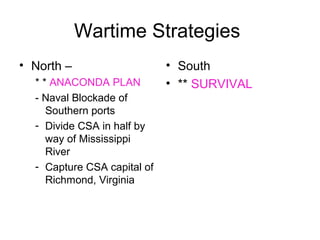
Wartime Strategies
• North –
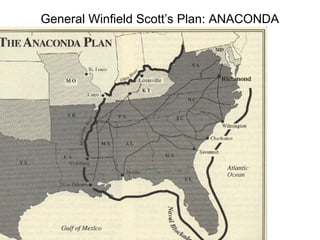
* * ANACONDA PLAN
- Naval Blockade of
Southern ports
- Divide CSA in half by
way of Mississippi
River
- Capture CSA capital of
Richmond, Virginia
• South
• ** SURVIVAL
General Winfield Scott’s Plan: ANACONDA
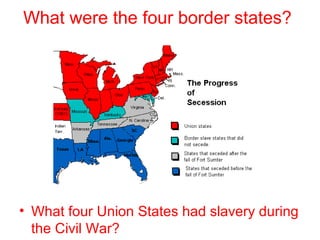
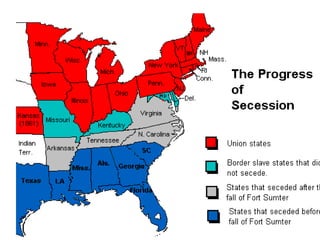
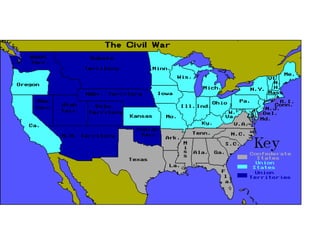
What were the four border states?
• What four Union States had slavery during
the Civil War?
• UNION States • Confederates States
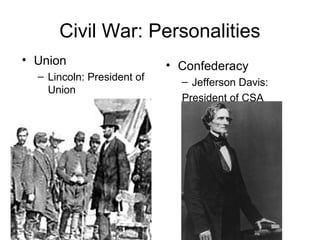
Civil War: Personalities
• Union
– Lincoln: President of
Union
–
• Confederacy
– Jefferson Davis:
President of CSA
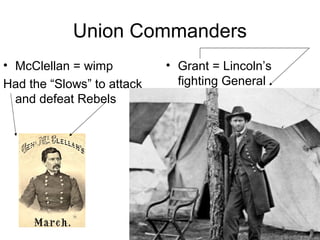
Union Commanders
• McClellan = wimp
Had the “Slows” to attack
and defeat Rebels
• Grant = Lincoln’s
fighting General
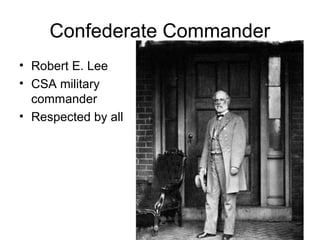
Confederate Commander
• Robert E. Lee
• CSA military
commander
• Respected by all
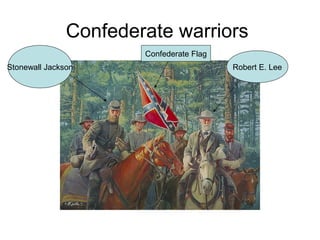
Confederate warriors
Stonewall Jackson Robert E. Lee
Confederate Flag
• 1. What new technologies affected the
Civil War?
• 2. How did President Lincoln use trains
and the telegraph to win the war?
• 3. How did the Civil War effect medicine
and funerals?
Civil War Technology
1861-1865
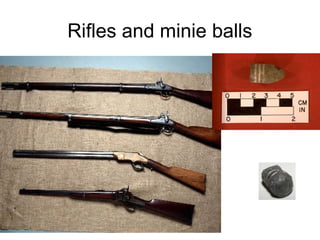
Rifling
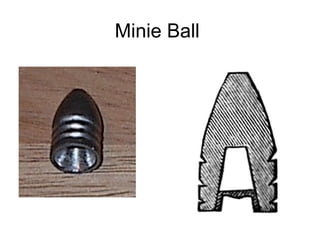
Minie Ball
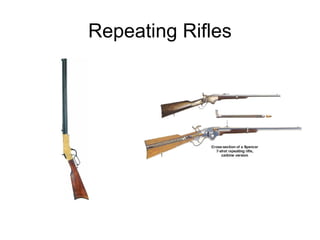
Repeating Rifles
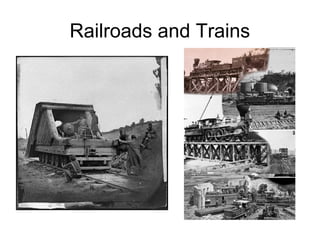
Railroads and Trains
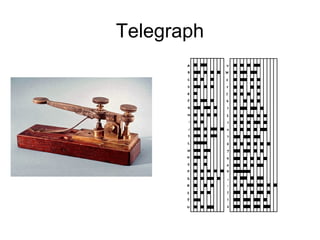
Telegraph
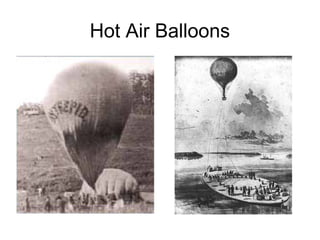
Hot Air Balloons
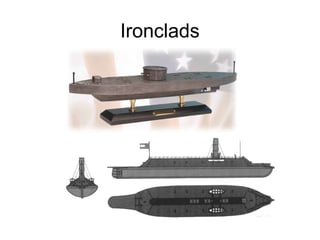
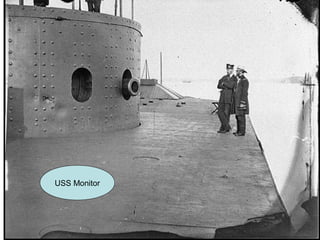
Ironclads
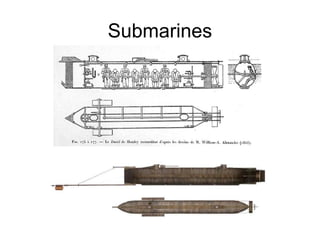
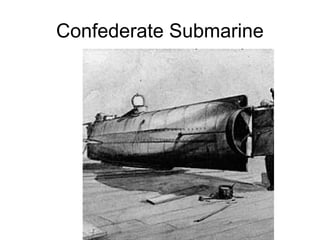
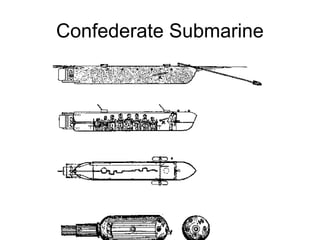
Submarines
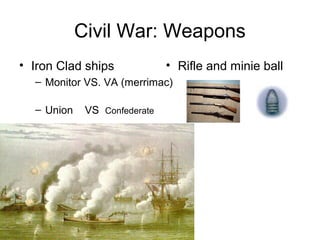
Civil War: Weapons
• Iron Clad ships
– Monitor VS. VA (merrimac)
– Union VS Confederate
• Rifle and minie ball
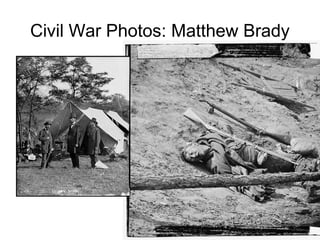
Civil War Photos: Matthew Brady
USS Monitor
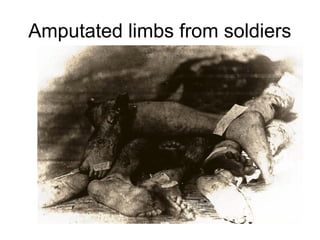
Amputated limbs from soldiers
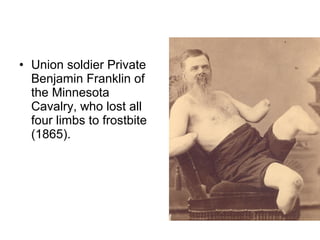
• Union soldier Private
Benjamin Franklin of
the Minnesota
Cavalry, who lost all
four limbs to frostbite
(1865).
Confederate Submarine
Rifles and minie balls
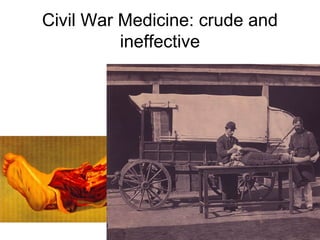
Civil War Medicine: crude and
ineffective
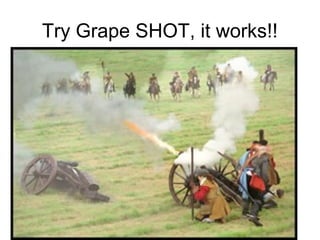
Try Grape SHOT, it works!!
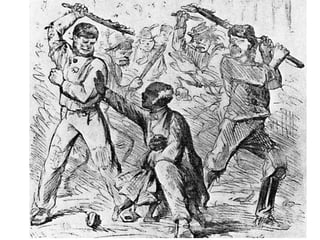
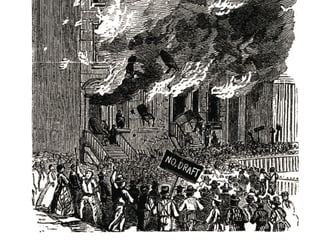
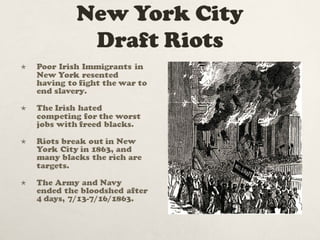
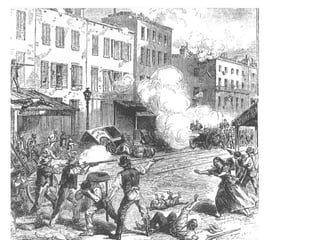
• Video link: Draft Riots
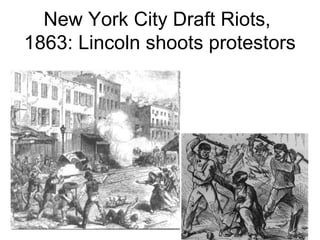
New York City Draft Riots,
1863: Lincoln shoots protestors
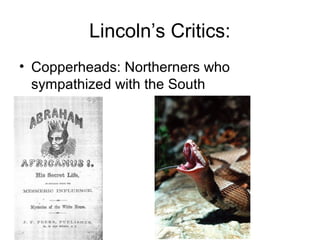
Lincoln’s Critics:
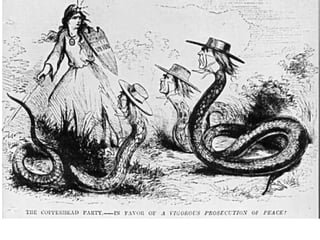
• Copperheads: Northerners who
sympathized with the South
Lincoln the Tyrant?
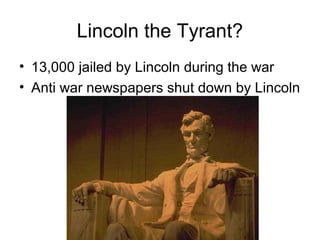
• 13,000 jailed by Lincoln during the war
• Anti war newspapers shut down by Lincoln
Did Lincoln free the slaves?
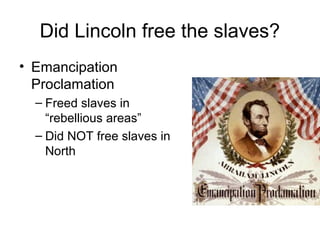
• Emancipation
Proclamation
– Freed slaves in
“rebellious areas”
– Did NOT free slaves in
North
What did it DO?
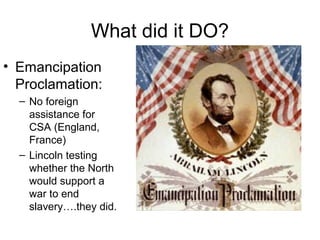
• Emancipation
Proclamation:
– No foreign
assistance for
CSA (England,
France)
– Lincoln testing
whether the North
would support a
war to end
slavery….they did.
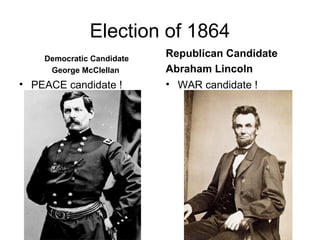
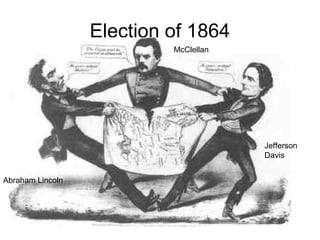
Election of 1864
Democratic Candidate
George McClellan
• PEACE candidate !
Republican Candidate
Abraham Lincoln
• WAR candidate !
Election of 1864
Abraham Lincoln
Jefferson
Davis
McClellan
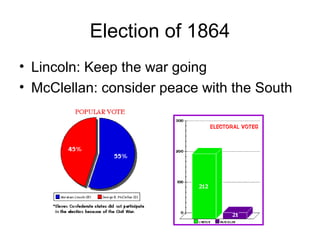
Election of 1864
• Lincoln: Keep the war going
• McClellan: consider peace with the South
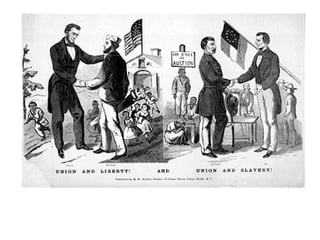
President Abraham Lincoln
"A House Divided" Speech (June 16, 1858)
Lincoln delivered his "House Divided" speech upon accepting the Republican
nomination for Senate in Springfield, Illinois. In this speech he famously states
"A house divided against itself cannot stand" in describing the coming national
conflict over slavery.
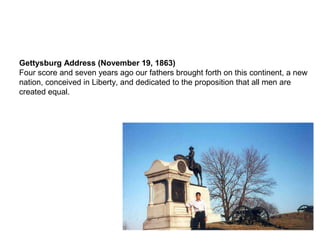
Gettysburg Address (November 19, 1863)
Four score and seven years ago our fathers brought forth on this continent, a new
nation, conceived in Liberty, and dedicated to the proposition that all men are
created equal.
January 1, 1863: Emancipation Proclamation
• ``That on the first day of January, in the year of our Lord one
thousand eight hundred and sixty-three, all persons held as slaves
within any State or designated part of a State, the people whereof
shall then be in rebellion against the United States, shall be then,
thenceforward, and forever free; and the Executive Government of
the United States, including the military and naval authority thereof,
will recognize and maintain the freedom of such persons, and will do
no act or acts to repress such persons, or any of them, in any efforts
they may make for their actual freedom.
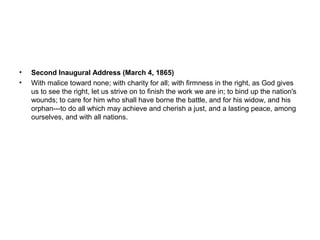
• Second Inaugural Address (March 4, 1865)
• With malice toward none; with charity for all; with firmness in the right, as God gives
us to see the right, let us strive on to finish the work we are in; to bind up the nation's
wounds; to care for him who shall have borne the battle, and for his widow, and his
orphan---to do all which may achieve and cherish a just, and a lasting peace, among
ourselves, and with all nations.
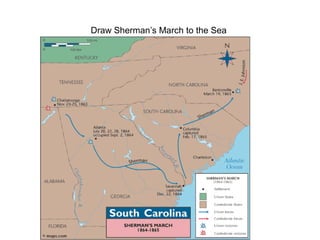
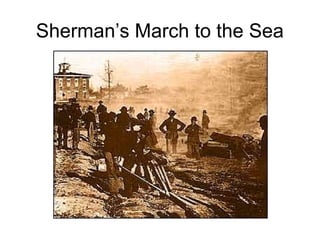
Draw Sherman’s March to the Sea
Sherman’s March to the Sea
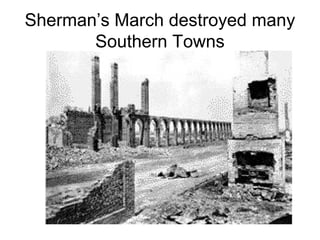
Sherman’s March destroyed many
Southern Towns
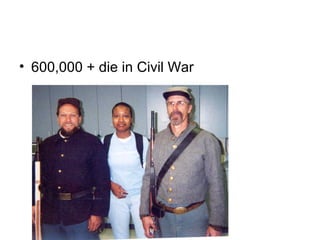
• 600,000 + die in Civil War
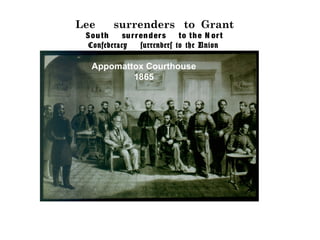
Lee surrenders to Grant
South surrenders to the N ort
Confederacy surrenders to the Union
Appomattox Courthouse
1865
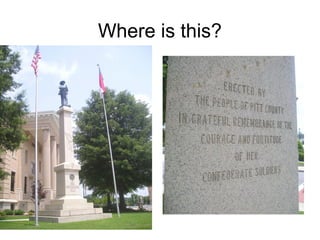
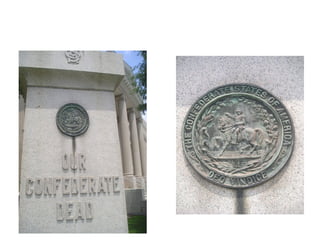
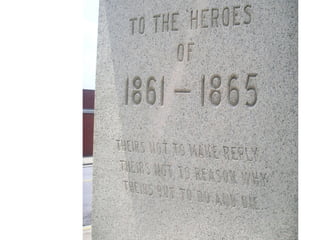
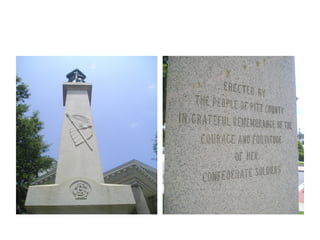
Where is this?
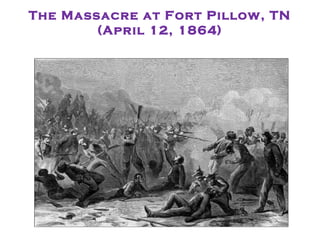
The Massacre at Fort Pillow, TN
(April 12, 1864)
Nathan Bedford Forrest
Captured Fort Pillow: war
Crimes?
 CONFEDERATE GENERAL……
 262 African-Americans
 295 white Union
soldiers.
 Ordered black soldiers
murdered after they
surrendered! [many
white soldiers killed as
well]
 Became the first Grand
Wizard of the Ku Klux
Klan after the war.
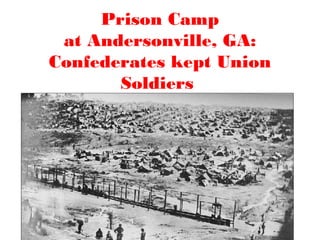
Prison Camp
at Andersonville, GA:
Confederates kept Union
Soldiers
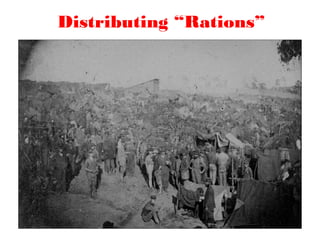
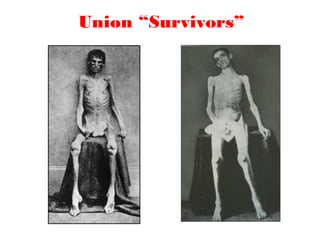
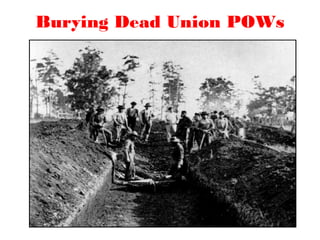
Original Andersonville Plan
 Planned to hold 10,000 men.
 Had over 32,000 at one time.
Distributing “Rations”
Union “Survivors”
Burying Dead Union POWs
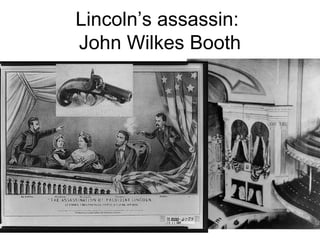
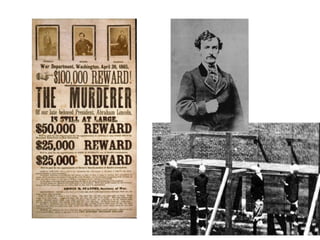
Lincoln’s assassin:
John Wilkes Booth
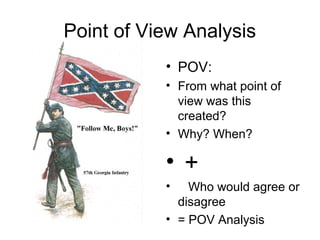
Point of View Analysis
• POV:
• From what point of
view was this
created?
• Why? When?
• +
• Who would agree or
disagree
• = POV Analysis
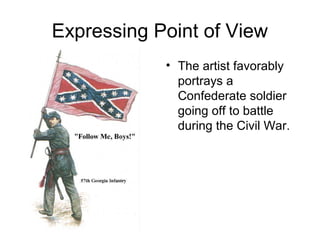
Expressing Point of View
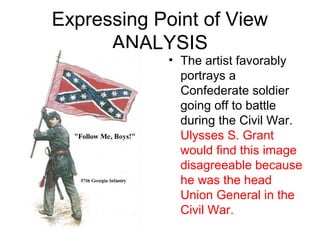
• The artist favorably
portrays a
Confederate soldier
going off to battle
during the Civil War.
Expressing Point of View
ANALYSIS
• The artist favorably
portrays a
Confederate soldier
going off to battle
during the Civil War.
Ulysses S. Grant
would find this image
disagreeable because
he was the head
Union General in the
Civil War.

War between the States

  • 6.
  • 7.
    Civil War /Events leading to NORTH Vs. South 1861-1865
  • 8.
    North= Union //South= Confederacy
  • 9.
    North= USA //South = CSA Confederate States of America
  • 11.
    Compromise of 1850 •Compromise of 1850 temporarily held the nation together and helped ease sectionalism. • What were the parts of the Compromise of 1850????? (308)
  • 12.
  • 13.
    Uncle Tom’s Cabin( page 312) • Who wrote it? • When was it written? • What was its message? • Who were some characters in the Novel?
  • 14.
    • Simon Lagree •Topsy • Eva • Uncle Tom • George
  • 15.
    Preston Brooks of theSouth Charles Sumner Of Mass.
  • 16.
    Dred Scott v.Sandford • Scott a slave who spent time in free territory: abolitionists argued that he was free. • Supreme Court said otherwise: African- Americans not to be free in the USA
  • 17.
    Dred Scott decison RogerTaney Supreme Court Chief Justice During Dred Scott Case
  • 18.
  • 19.
    Kansas Nebraska Act •Proposed by Stephen A. Douglas • Would make slavery POSSIBLE where it was formerly illegal under the Missouri Compromise • Northerners saw it as an attempt to spread slavery north of the 36/30 line. • 90% of southerners voted for the bill..
  • 22.
    Lincoln- Douglass debates •Lincoln- Douglass debates • 1858 race for Illinois Senate seat
  • 23.
    Lincoln Douglass debates •ON slavery: • Douglass believed in popular sovereignty and did not think it immoral • LINCOLN: slavery was immoral and should not be allowed to spread.
  • 24.
    Stephen A. Douglass •Wanted to settle Nebraska Territory into two states: Nebraska and Kansas • Stephen Douglass proposed that the people in those areas decide for themselves if slavery should be permitted or not: • POPULAR SOVEREIGNTY
  • 25.
  • 26.
    Lincoln Douglass debates •Freeport Doctrinewas Douglass’ belief that popular sovereignty
  • 27.
    John Brown • afervent abolitionist • Fought in Bleeding Kansas • Conducted 1859 raid at HARPER’s FERRY, VA. Federal arsenal. • Goal of raid was to start an uprising of slaves in the South to free slaves • Raid Failed
  • 28.
    John Brown • Browncaptured, tried, convicted, sentenced to death. • Many Northerners viewed Brown as a hero and Martyr for the cause of ending slavery
  • 33.
    Civil War: Whofought • Northern States fought against the Southern States The North was called the Union / Yankees The Southerners were called Confederates / Rebels
  • 34.
    Civil War: WHYdid it happen? • The issue and argument over slavery had been brewing for some time between the Northern and Southern states, especially from the time just after the Mexican War.
  • 35.
    Bleeding Kansas • Proand anti slave settlers flooded into Kansas in order to sway the vote for or against slavery. • Vicious fighting broke out in Kansas from 1852-1858
  • 36.
    Put in correctOrder • Secession of South Carolina 1860 • John Brown’s Raid • Lincoln’s Election • Dred Scott Decision • Lincoln Douglass Debates • Kansas Nebraska Act • Bleeding Kansas • Compromise of 1850 • Uncle Tom’s Cabin
  • 37.
    • 1860 Secessionof South Carolina • 1860 Election of 1860 • 1859 John Brown’s Raid • 1858 Lincoln Douglas Debates • 1857 Dred Scott Decision • 1854 Kansas Nebraska Act – Bleeding Kansas : 1854-1858 • 1852 Uncle Tom’s Cabin • 1850 Compromise of 1850 • 1846-1848 : War with Mexico
  • 38.
    Issue of Slaverydivides USA • Compromise of 1820 • War with Mexico • Compromise of 1850 • Fugitive Slave Act • Dred Scott Case • The Liberator • John Calhoun • Uncle Tom’s Cabin • John Brown • Bleeding Kansas • Election 1860
  • 39.
  • 40.
  • 50.
    Civil War Timeline •1861: Fort Sumter / 1st shots in SC • 1863: Battle of Gettysburg – Union victory – (Turning Point Battle) --Battle of Vicksburg– Union victory -- Emancipation Proclamation • 1865: Appomattox surrender: • Lee Surrenders to Grant – Lincoln’s Assassination
  • 51.
    Civil War: 1861-1865 UNIONadvantages Confederate Advantages
  • 52.
    FIGHTING THE WAR:Resources • North • More Stuff (resources) – Guns, iron, navy, factories, railroads, food production • South • Less Resources but – $$ from Cotton trade – Better Generals – Fighting on their land
  • 53.
    Wartime Strategies • North– * * ANACONDA PLAN - Naval Blockade of Southern ports - Divide CSA in half by way of Mississippi River - Capture CSA capital of Richmond, Virginia • South • ** SURVIVAL
  • 54.
  • 55.
    What were thefour border states? • What four Union States had slavery during the Civil War?
  • 57.
    • UNION States• Confederates States
  • 59.
    Civil War: Personalities •Union – Lincoln: President of Union – • Confederacy – Jefferson Davis: President of CSA
  • 60.
    Union Commanders • McClellan= wimp Had the “Slows” to attack and defeat Rebels • Grant = Lincoln’s fighting General
  • 61.
    Confederate Commander • RobertE. Lee • CSA military commander • Respected by all
  • 62.
    Confederate warriors Stonewall JacksonRobert E. Lee Confederate Flag
  • 63.
    • 1. Whatnew technologies affected the Civil War? • 2. How did President Lincoln use trains and the telegraph to win the war? • 3. How did the Civil War effect medicine and funerals?
  • 64.
  • 65.
  • 66.
  • 68.
  • 69.
  • 70.
  • 71.
  • 72.
  • 73.
  • 74.
    Civil War: Weapons •Iron Clad ships – Monitor VS. VA (merrimac) – Union VS Confederate • Rifle and minie ball
  • 75.
    Civil War Photos:Matthew Brady
  • 76.
  • 77.
  • 79.
    • Union soldierPrivate Benjamin Franklin of the Minnesota Cavalry, who lost all four limbs to frostbite (1865).
  • 81.
  • 82.
  • 83.
  • 84.
    Civil War Medicine:crude and ineffective
  • 85.
    Try Grape SHOT,it works!!
  • 91.
    • Video link:Draft Riots
  • 92.
    New York CityDraft Riots, 1863: Lincoln shoots protestors
  • 93.
    Lincoln’s Critics: • Copperheads:Northerners who sympathized with the South
  • 95.
    Lincoln the Tyrant? •13,000 jailed by Lincoln during the war • Anti war newspapers shut down by Lincoln
  • 96.
    Did Lincoln freethe slaves? • Emancipation Proclamation – Freed slaves in “rebellious areas” – Did NOT free slaves in North
  • 97.
    What did itDO? • Emancipation Proclamation: – No foreign assistance for CSA (England, France) – Lincoln testing whether the North would support a war to end slavery….they did.
  • 105.
    Election of 1864 DemocraticCandidate George McClellan • PEACE candidate ! Republican Candidate Abraham Lincoln • WAR candidate !
  • 106.
    Election of 1864 AbrahamLincoln Jefferson Davis McClellan
  • 107.
    Election of 1864 •Lincoln: Keep the war going • McClellan: consider peace with the South
  • 111.
    President Abraham Lincoln "AHouse Divided" Speech (June 16, 1858) Lincoln delivered his "House Divided" speech upon accepting the Republican nomination for Senate in Springfield, Illinois. In this speech he famously states "A house divided against itself cannot stand" in describing the coming national conflict over slavery.
  • 112.
    Gettysburg Address (November19, 1863) Four score and seven years ago our fathers brought forth on this continent, a new nation, conceived in Liberty, and dedicated to the proposition that all men are created equal.
  • 113.
    January 1, 1863:Emancipation Proclamation • ``That on the first day of January, in the year of our Lord one thousand eight hundred and sixty-three, all persons held as slaves within any State or designated part of a State, the people whereof shall then be in rebellion against the United States, shall be then, thenceforward, and forever free; and the Executive Government of the United States, including the military and naval authority thereof, will recognize and maintain the freedom of such persons, and will do no act or acts to repress such persons, or any of them, in any efforts they may make for their actual freedom.
  • 114.
    • Second InauguralAddress (March 4, 1865) • With malice toward none; with charity for all; with firmness in the right, as God gives us to see the right, let us strive on to finish the work we are in; to bind up the nation's wounds; to care for him who shall have borne the battle, and for his widow, and his orphan---to do all which may achieve and cherish a just, and a lasting peace, among ourselves, and with all nations.
  • 117.
  • 118.
  • 119.
    Sherman’s March destroyedmany Southern Towns
  • 120.
    • 600,000 +die in Civil War
  • 121.
    Lee surrenders toGrant South surrenders to the N ort Confederacy surrenders to the Union Appomattox Courthouse 1865
  • 122.
  • 133.
    The Massacre atFort Pillow, TN (April 12, 1864)
  • 134.
    Nathan Bedford Forrest CapturedFort Pillow: war Crimes?  CONFEDERATE GENERAL……  262 African-Americans  295 white Union soldiers.  Ordered black soldiers murdered after they surrendered! [many white soldiers killed as well]  Became the first Grand Wizard of the Ku Klux Klan after the war.
  • 135.
    Prison Camp at Andersonville,GA: Confederates kept Union Soldiers
  • 136.
    Original Andersonville Plan Planned to hold 10,000 men.  Had over 32,000 at one time.
  • 137.
  • 138.
  • 139.
  • 140.
  • 142.
    Point of ViewAnalysis • POV: • From what point of view was this created? • Why? When? • + • Who would agree or disagree • = POV Analysis
  • 143.
    Expressing Point ofView • The artist favorably portrays a Confederate soldier going off to battle during the Civil War.
  • 144.
    Expressing Point ofView ANALYSIS • The artist favorably portrays a Confederate soldier going off to battle during the Civil War. Ulysses S. Grant would find this image disagreeable because he was the head Union General in the Civil War.