Abolitionists, in short, believed slavery
  should be banned. Abolition was a fierce
issue in the minds of Americans. These are
         some of the early, most prominent
       Abolitionists that contributed to the
                  separation of the country.
 Notall abolitionists wanted slavery banned
 because they saw it as cruel and inhumane.
 Some only wanted abolition because they
 hated the slave aristocracy and wanted to
 help poor southern whites. Some only
 wanted slavery banned in the new territories
 so everyone could compete economically.
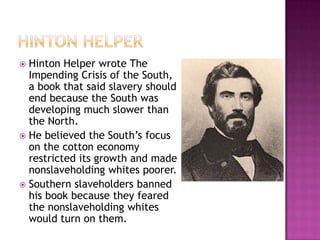
 Hinton Helper wrote The
  Impending Crisis of the South,
  a book that said slavery should
  end because the South was
  developing much slower than
  the North.
 He believed the South’s focus
  on the cotton economy
  restricted its growth and made
  nonslaveholding whites poorer.
 Southern slaveholders banned
  his book because they feared
  the nonslaveholding whites
  would turn on them.
 The  Free Soil Party was a political party
  united by their wanting of abolition in the
  new territories. They rose to prominence in
  the late 1840s – early 50s.
 They believed that free new territories
  would be economically and morally superior
  than territories with slavery.
 In 1854, the Republican Party superseded the
  Free Soil Party.
 Garrison was a hardcore abolitionist and very
  uncompromising.
 He wrote The Liberator, an anti-slavery
  newspaper, and eventually in 1833, he and
  other abolitionists founded the American
  Anti-Slavery Society.
 He used the Declaration of Independence and
  the Constitution to defend his arguments.
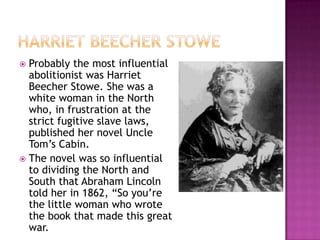
 Probably the most influential
  abolitionist was Harriet
  Beecher Stowe. She was a
  white woman in the North
  who, in frustration at the
  strict fugitive slave laws,
  published her novel Uncle
  Tom’s Cabin.
 The novel was so influential
  to dividing the North and
  South that Abraham Lincoln
  told her in 1862, “So you’re
  the little woman who wrote
  the book that made this great
  war.
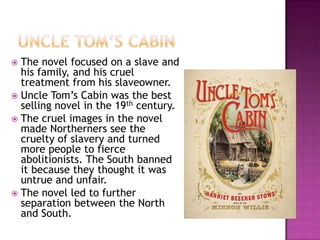
 The novel focused on a slave and
  his family, and his cruel
  treatment from his slaveowner.
 Uncle Tom’s Cabin was the best
  selling novel in the 19th century.
 The cruel images in the novel
  made Northerners see the
  cruelty of slavery and turned
  more people to fierce
  abolitionists. The South banned
  it because they thought it was
  untrue and unfair.
 The novel led to further
  separation between the North
  and South.
Abolition was a main factor in the division of
 the country. Abolitionists hated slaveowners,
and slaveowners hated abolitionists. Works of
  abolitionists, such as Uncle Tom’s Cabin, led
                     the country into Civil War.

Abolitionists

  • 1.
    Abolitionists, in short,believed slavery should be banned. Abolition was a fierce issue in the minds of Americans. These are some of the early, most prominent Abolitionists that contributed to the separation of the country.
  • 2.
     Notall abolitionistswanted slavery banned because they saw it as cruel and inhumane. Some only wanted abolition because they hated the slave aristocracy and wanted to help poor southern whites. Some only wanted slavery banned in the new territories so everyone could compete economically.
  • 3.
     Hinton Helperwrote The Impending Crisis of the South, a book that said slavery should end because the South was developing much slower than the North.  He believed the South’s focus on the cotton economy restricted its growth and made nonslaveholding whites poorer.  Southern slaveholders banned his book because they feared the nonslaveholding whites would turn on them.
  • 4.
     The Free Soil Party was a political party united by their wanting of abolition in the new territories. They rose to prominence in the late 1840s – early 50s.  They believed that free new territories would be economically and morally superior than territories with slavery.  In 1854, the Republican Party superseded the Free Soil Party.
  • 5.
     Garrison wasa hardcore abolitionist and very uncompromising.  He wrote The Liberator, an anti-slavery newspaper, and eventually in 1833, he and other abolitionists founded the American Anti-Slavery Society.  He used the Declaration of Independence and the Constitution to defend his arguments.
  • 6.
     Probably themost influential abolitionist was Harriet Beecher Stowe. She was a white woman in the North who, in frustration at the strict fugitive slave laws, published her novel Uncle Tom’s Cabin.  The novel was so influential to dividing the North and South that Abraham Lincoln told her in 1862, “So you’re the little woman who wrote the book that made this great war.
  • 7.
     The novelfocused on a slave and his family, and his cruel treatment from his slaveowner.  Uncle Tom’s Cabin was the best selling novel in the 19th century.  The cruel images in the novel made Northerners see the cruelty of slavery and turned more people to fierce abolitionists. The South banned it because they thought it was untrue and unfair.  The novel led to further separation between the North and South.
  • 8.
    Abolition was amain factor in the division of the country. Abolitionists hated slaveowners, and slaveowners hated abolitionists. Works of abolitionists, such as Uncle Tom’s Cabin, led the country into Civil War.