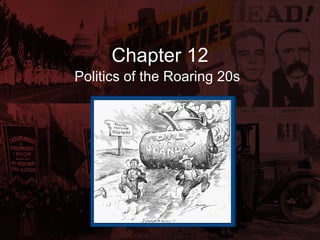
Chapter 12 Politics of the Roaring 20s
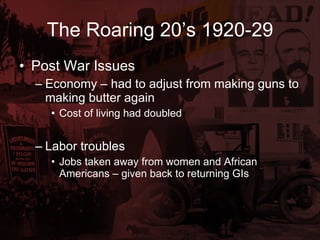
The Roaring 20’s 1920-29 Post War Issues Economy – had to adjust from making guns to making butter again Cost of living had doubled Labor troubles Jobs taken away from women and African Americans – given back to returning GIs
Isolationism Did not want to get involved in another war like WWI – pulled away from world affairs Feelings of nativism (prejudice against foreign born people) increased
Communism Russian revolution – Lenin’s Bolsheviks overthrew tsar  established communist government in Russia
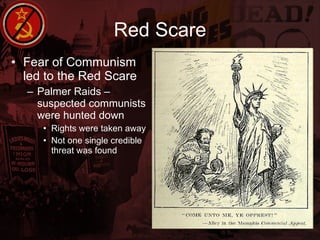
Red Scare Fear of Communism led to the Red Scare Palmer Raids – suspected communists were hunted down Rights were taken away Not one single credible threat was found
 
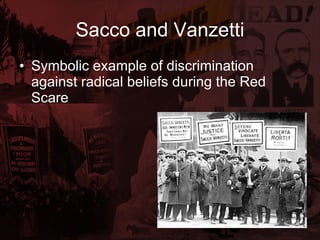
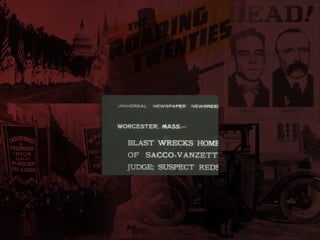
Sacco and Vanzetti Italian anarchists Charged with robbery and murder – convicted even though evidence was circumstantial Executed
Sacco and Vanzetti Symbolic example of discrimination against radical beliefs during the Red Scare
 
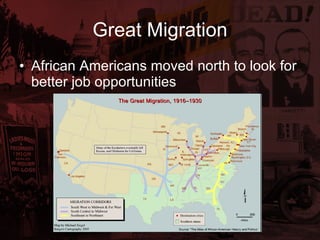
Great Migration African Americans moved north to look for better job opportunities
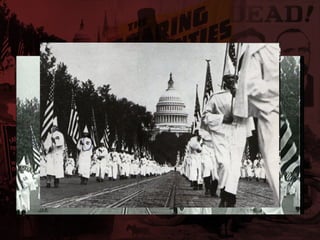
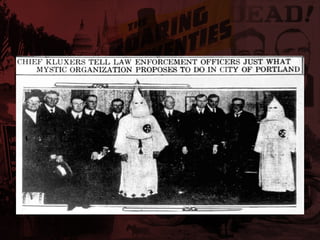
Ku Klux Klan Grows over Red Scare and anti-immigrant feelings By 1924, the Klan had  4.5 million  members
 
 
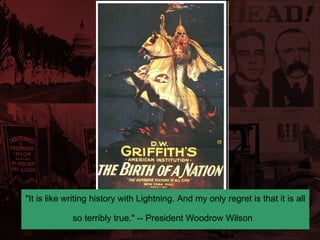
"It is like writing history with Lightning. And my only regret is that it is all so terribly true." -- President Woodrow Wilson
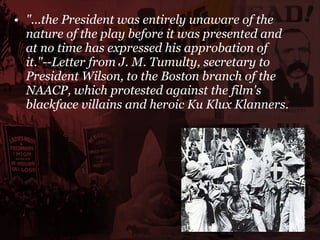
"...the President was entirely unaware of the nature of the play before it was presented and at no time has expressed his approbation of it."--Letter from J. M. Tumulty, secretary to President Wilson, to the Boston branch of the NAACP, which protested against the film's blackface villains and heroic Ku Klux Klanners.
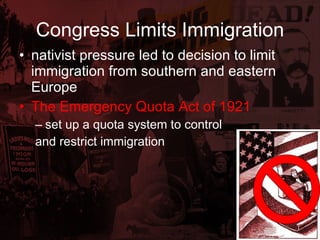
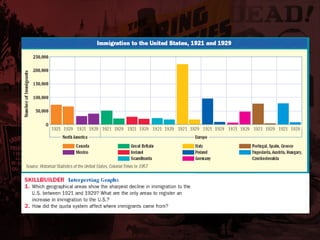
Congress Limits Immigration nativist pressure led to decision to limit immigration from southern and eastern Europe The Emergency Quota Act of 1921   set up a quota system to control  and restrict immigration
 
 
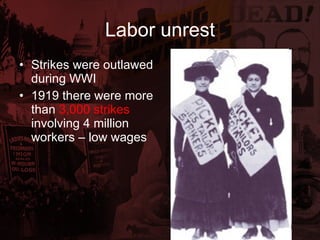
Labor unrest Strikes were outlawed during WWI 1919 there were more than  3,000 strikes  involving 4 million workers – low wages
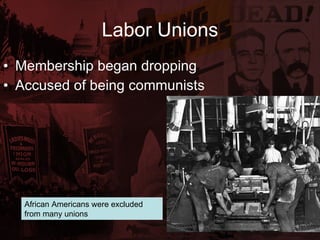
Labor Unions Membership began dropping Accused of being communists African Americans were excluded from many unions
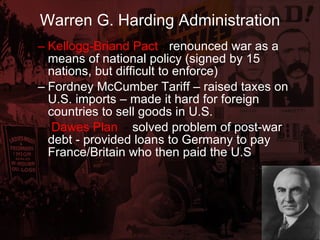
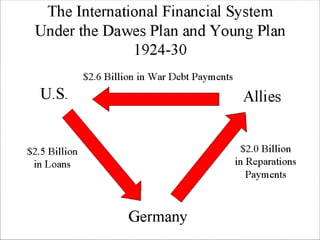
Warren G. Harding Administration Kellogg-Briand Pact  -  renounced war as a means of national policy (signed by 15 nations, but difficult to enforce) Fordney McCumber Tariff – raised taxes on U.S. imports – made it hard for foreign countries to sell goods in U.S. Dawes Plan   -  solved problem of post-war debt - provided loans to Germany to pay France/Britain who then paid the U.S
 
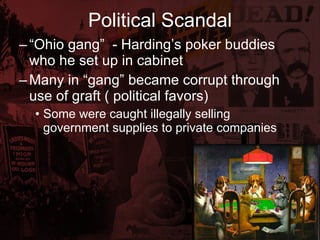
Political Scandal “ Ohio gang”  - Harding’s poker buddies who he set up in cabinet  Many in “gang” became corrupt through use of graft ( political favors) Some were caught illegally selling government supplies to private companies
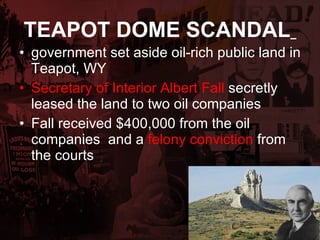
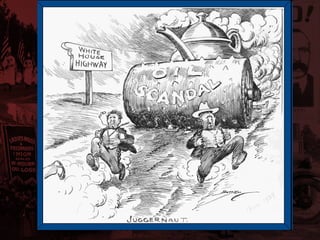
TEAPOT DOME SCANDAL   government set aside oil-rich public land in Teapot, WY Secretary of Interior Albert Fall   secretly leased the land to two oil companies Fall received $400,000 from the oil companies  and a  felony conviction   from the courts
 
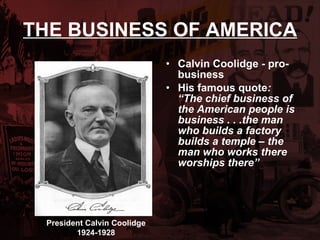
THE BUSINESS OF AMERICA Calvin Coolidge - pro-business His famous quote :  “The chief business of the American people is business . . .the man who builds a factory builds a temple – the man who works there worships there” President Calvin Coolidge 1924-1928
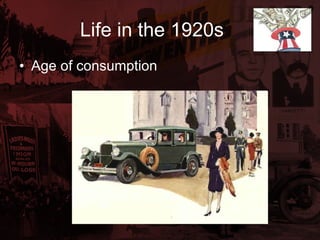
Life in the 1920s Age of consumption
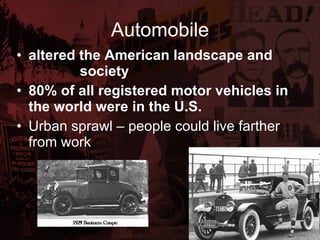
Automobile altered the American landscape and  society 80% of all registered motor vehicles in the world were in the U.S. Urban sprawl – people could live farther from work
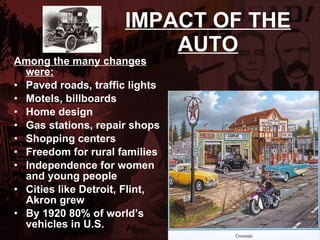
IMPACT OF THE AUTO Among the many changes were: Paved roads, traffic lights Motels, billboards Home design Gas stations, repair shops Shopping centers  Freedom for rural families Independence for women and young people Cities like Detroit, Flint, Akron grew  By 1920 80% of world’s vehicles in U.S.
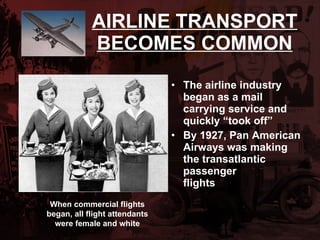
AIRLINE TRANSPORT BECOMES COMMON The airline industry began as a mail carrying service and quickly “took off” By 1927, Pan American Airways was making the transatlantic  passenger  flights When commercial flights began, all flight attendants were female and white
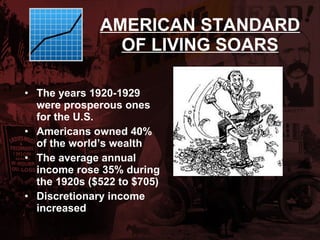
AMERICAN STANDARD OF LIVING SOARS The years 1920-1929 were prosperous ones for the U.S. Americans owned 40% of the world’s wealth The average annual income rose 35% during the 1920s ($522 to $705) Discretionary income increased
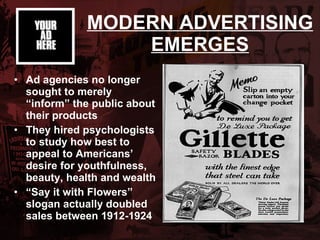
MODERN ADVERTISING EMERGES Ad agencies no longer sought to merely “inform” the public about their products  They hired psychologists to study how best to appeal to Americans’ desire for youthfulness, beauty, health and wealth   “ Say it with Flowers” slogan actually doubled sales between 1912-1924
A SUPERFICIAL PROSPERITY Many during the 1920s believed the prosperity would go on forever Wages, production, GNP, and the stock market all rose significantly  But. . . .
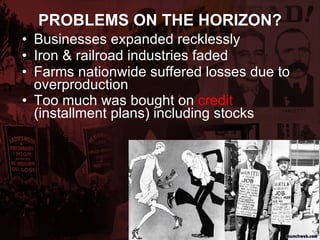
PROBLEMS ON THE HORIZON? Businesses expanded recklessly Iron & railroad industries faded Farms nationwide suffered losses due to overproduction Too much was bought on  credit  (installment plans) including stocks

Chapter 12politicsoftheroaring20s

  • 1.
    Chapter 12 Politicsof the Roaring 20s
  • 2.
    The Roaring 20’s1920-29 Post War Issues Economy – had to adjust from making guns to making butter again Cost of living had doubled Labor troubles Jobs taken away from women and African Americans – given back to returning GIs
  • 3.
    Isolationism Did notwant to get involved in another war like WWI – pulled away from world affairs Feelings of nativism (prejudice against foreign born people) increased
  • 4.
    Communism Russian revolution– Lenin’s Bolsheviks overthrew tsar established communist government in Russia
  • 5.
    Red Scare Fearof Communism led to the Red Scare Palmer Raids – suspected communists were hunted down Rights were taken away Not one single credible threat was found
  • 6.
  • 7.
    Sacco and VanzettiItalian anarchists Charged with robbery and murder – convicted even though evidence was circumstantial Executed
  • 8.
    Sacco and VanzettiSymbolic example of discrimination against radical beliefs during the Red Scare
  • 9.
  • 10.
    Great Migration AfricanAmericans moved north to look for better job opportunities
  • 11.
    Ku Klux KlanGrows over Red Scare and anti-immigrant feelings By 1924, the Klan had 4.5 million members
  • 12.
  • 13.
  • 14.
    "It is likewriting history with Lightning. And my only regret is that it is all so terribly true." -- President Woodrow Wilson
  • 15.
    "...the President wasentirely unaware of the nature of the play before it was presented and at no time has expressed his approbation of it."--Letter from J. M. Tumulty, secretary to President Wilson, to the Boston branch of the NAACP, which protested against the film's blackface villains and heroic Ku Klux Klanners.
  • 16.
    Congress Limits Immigrationnativist pressure led to decision to limit immigration from southern and eastern Europe The Emergency Quota Act of 1921 set up a quota system to control and restrict immigration
  • 17.
  • 18.
  • 19.
    Labor unrest Strikeswere outlawed during WWI 1919 there were more than 3,000 strikes involving 4 million workers – low wages
  • 20.
    Labor Unions Membershipbegan dropping Accused of being communists African Americans were excluded from many unions
  • 21.
    Warren G. HardingAdministration Kellogg-Briand Pact - renounced war as a means of national policy (signed by 15 nations, but difficult to enforce) Fordney McCumber Tariff – raised taxes on U.S. imports – made it hard for foreign countries to sell goods in U.S. Dawes Plan - solved problem of post-war debt - provided loans to Germany to pay France/Britain who then paid the U.S
  • 22.
  • 23.
    Political Scandal “Ohio gang” - Harding’s poker buddies who he set up in cabinet Many in “gang” became corrupt through use of graft ( political favors) Some were caught illegally selling government supplies to private companies
  • 24.
    TEAPOT DOME SCANDAL government set aside oil-rich public land in Teapot, WY Secretary of Interior Albert Fall secretly leased the land to two oil companies Fall received $400,000 from the oil companies and a felony conviction from the courts
  • 25.
  • 26.
    THE BUSINESS OFAMERICA Calvin Coolidge - pro-business His famous quote : “The chief business of the American people is business . . .the man who builds a factory builds a temple – the man who works there worships there” President Calvin Coolidge 1924-1928
  • 27.
    Life in the1920s Age of consumption
  • 28.
    Automobile altered theAmerican landscape and society 80% of all registered motor vehicles in the world were in the U.S. Urban sprawl – people could live farther from work
  • 29.
    IMPACT OF THEAUTO Among the many changes were: Paved roads, traffic lights Motels, billboards Home design Gas stations, repair shops Shopping centers Freedom for rural families Independence for women and young people Cities like Detroit, Flint, Akron grew By 1920 80% of world’s vehicles in U.S.
  • 30.
    AIRLINE TRANSPORT BECOMESCOMMON The airline industry began as a mail carrying service and quickly “took off” By 1927, Pan American Airways was making the transatlantic passenger flights When commercial flights began, all flight attendants were female and white
  • 31.
    AMERICAN STANDARD OFLIVING SOARS The years 1920-1929 were prosperous ones for the U.S. Americans owned 40% of the world’s wealth The average annual income rose 35% during the 1920s ($522 to $705) Discretionary income increased
  • 32.
    MODERN ADVERTISING EMERGESAd agencies no longer sought to merely “inform” the public about their products They hired psychologists to study how best to appeal to Americans’ desire for youthfulness, beauty, health and wealth “ Say it with Flowers” slogan actually doubled sales between 1912-1924
  • 33.
    A SUPERFICIAL PROSPERITYMany during the 1920s believed the prosperity would go on forever Wages, production, GNP, and the stock market all rose significantly But. . . .
  • 34.
    PROBLEMS ON THEHORIZON? Businesses expanded recklessly Iron & railroad industries faded Farms nationwide suffered losses due to overproduction Too much was bought on credit (installment plans) including stocks