
Unconscious Motivation

Chapter 14
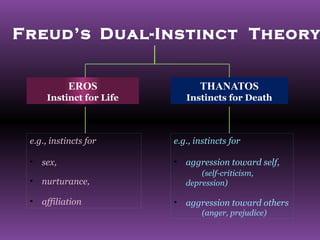
Freud’s Dual-Instinct Theory


            EROS                  THANATOS
      Instinct for Life       Instincts for Death


 e.g., instincts for      e.g., instincts for

 •   sex,                 •   aggression toward self,
                                  (self-criticism,
 •   nurturance,              depression)

 •   affiliation          •   aggression toward others
                                  (anger, prejudice)
ontempor ary Psychodynamic Perspectiv
hree Contempor ary Views on the Unconsciou


      Freudian        Adaptive            Implicit
     Unconscious     Unconscious         Motivation


     Automatically   e.g., sets goals,   Automatically
       appraises          makes            attend to
           the         judgments,         emotionally
      environment     and initiates          linked
                          action         environmental
                                             events
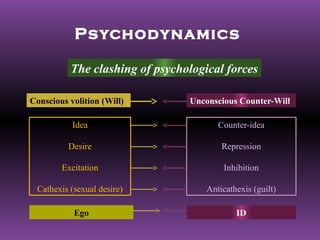
Psychodynamics

          The clashing of psychological forces

Conscious volition (Will)       Unconscious Counter-Will

           Idea                        Counter-idea

          Desire                        Repression

        Excitation                      Inhibition

 Cathexis (sexual desire)           Anticathexis (guilt)

           Ego                              ID
Illustr ation of Psychodynamics
Do the ID and Ego Actually Exist?
Ego
                  Psychology
Ego Development (Loevinger, 1976)
Ego Development
 Symbiotic
   Infant, ego is immature and overwhelmed by impulses

   Welfare depends of and is provided by caretaker

 Impulsive
   External forces (parental rules) curb a child’s impulses
    and desires
 Self-Protective
   Child begins to understand rules and consequences and
    develops self-control
   Rules and consequences are internalized and guide
    one’s self-protective defense capabilities
Ego Development
 Conformist
   Ego internalizes group accepted rules

   Anxiety of group disapproval becomes a counterforce
    against impulses
 Conscientious
   Set of internal standards to curb and counter impulses

 Autonomous
   Thoughts, plans, goals, and behaviors originate from
    within the ego
   Self regulating and self motivating ego
Motivational Importance of
     Ego Development
Ego Defense

      Changes in Internal
      Or External Reality

 •    Environmental Dangers
          (conflict with                                              Anxiety,
     environment)                                                     Distress,
                                                                      Depression
 •   Instinctual Presses (from Id)
          (conflict with impulses)
                                           Defense Mechanisms to
 •    Superego Demands                     Buffer and Reduce Anxiety
         (conflict with
     conscience)

Figure 14.1 Role of Defense Mechanisms in Buffering the Ego from Anxiety-Generating Events
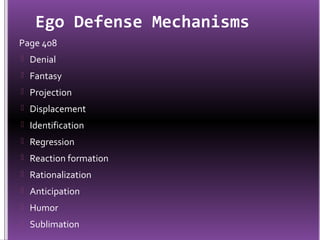
Ego Defense Mechanisms
Page 408
 Denial
 Fantasy
 Projection
 Displacement
 Identification
 Regression
 Reaction formation
 Rationalization
 Anticipation
 Humor
 Sublimation
Ego Effectance

White’s Model of Effectance Motivation


Effectance
Motivation
                                           When Successful, Sense
                                           of Competence Increases


Willingness to Exercise   Inevitable        Voluntary Attempts
Emerging and Existing     Effects on or     To Produce Intentional,
Skills and Capabilities   Changes in the    Goal-Directed
                          Environment       Changes in the
                                            Environment
Freud’s Drive
                  Theory

Source of Drive        Impetus of Drive         Object of Drive       Aim of Drive


 Bodily deficit          Intensity of the        Environmental        Satisfaction
                         psychological           object capable       by removing the
                         discomfort              of satisfying        bodily deficit
                         (anxiety)               bodily deficit


     Development of mental representations of self through your relationships with
      others.
Object Relation Theory

      The quality of any one’s mental representation of
relationships can be characterized by three chief dimensions:
Criticisms of the
Psychodynamic Approach
Ch14

Ch14

  • 1.
  • 2.
    Freud’s Dual-Instinct Theory EROS THANATOS Instinct for Life Instincts for Death e.g., instincts for e.g., instincts for • sex, • aggression toward self, (self-criticism, • nurturance, depression) • affiliation • aggression toward others (anger, prejudice)
  • 3.
  • 4.
    hree Contempor aryViews on the Unconsciou Freudian Adaptive Implicit Unconscious Unconscious Motivation Automatically e.g., sets goals, Automatically appraises makes attend to the judgments, emotionally environment and initiates linked action environmental events
  • 5.
    Psychodynamics The clashing of psychological forces Conscious volition (Will) Unconscious Counter-Will Idea Counter-idea Desire Repression Excitation Inhibition Cathexis (sexual desire) Anticathexis (guilt) Ego ID
  • 6.
    Illustr ation ofPsychodynamics
  • 7.
    Do the IDand Ego Actually Exist?
  • 8.
    Ego Psychology Ego Development (Loevinger, 1976)
  • 9.
    Ego Development  Symbiotic  Infant, ego is immature and overwhelmed by impulses  Welfare depends of and is provided by caretaker  Impulsive  External forces (parental rules) curb a child’s impulses and desires  Self-Protective  Child begins to understand rules and consequences and develops self-control  Rules and consequences are internalized and guide one’s self-protective defense capabilities
  • 10.
    Ego Development  Conformist  Ego internalizes group accepted rules  Anxiety of group disapproval becomes a counterforce against impulses  Conscientious  Set of internal standards to curb and counter impulses  Autonomous  Thoughts, plans, goals, and behaviors originate from within the ego  Self regulating and self motivating ego
  • 11.
  • 12.
    Ego Defense Changes in Internal Or External Reality • Environmental Dangers (conflict with Anxiety, environment) Distress, Depression • Instinctual Presses (from Id) (conflict with impulses) Defense Mechanisms to • Superego Demands Buffer and Reduce Anxiety (conflict with conscience) Figure 14.1 Role of Defense Mechanisms in Buffering the Ego from Anxiety-Generating Events
  • 13.
    Ego Defense Mechanisms Page408  Denial  Fantasy  Projection  Displacement  Identification  Regression  Reaction formation  Rationalization  Anticipation  Humor  Sublimation
  • 14.
    Ego Effectance White’s Modelof Effectance Motivation Effectance Motivation When Successful, Sense of Competence Increases Willingness to Exercise Inevitable Voluntary Attempts Emerging and Existing Effects on or To Produce Intentional, Skills and Capabilities Changes in the Goal-Directed Environment Changes in the Environment
  • 15.
    Freud’s Drive Theory Source of Drive Impetus of Drive Object of Drive Aim of Drive Bodily deficit Intensity of the Environmental Satisfaction psychological object capable by removing the discomfort of satisfying bodily deficit (anxiety) bodily deficit  Development of mental representations of self through your relationships with others.
  • 16.
    Object Relation Theory The quality of any one’s mental representation of relationships can be characterized by three chief dimensions:
  • 17.