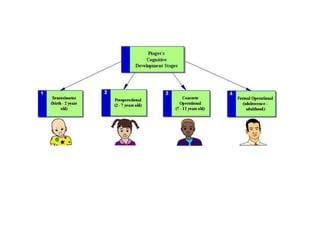


Dr. Harpal Kaur Aujla
AKAL COLLEGE OF EDUCATION, MASTUANA SAHIB
SANGRUR (PUNJAB)
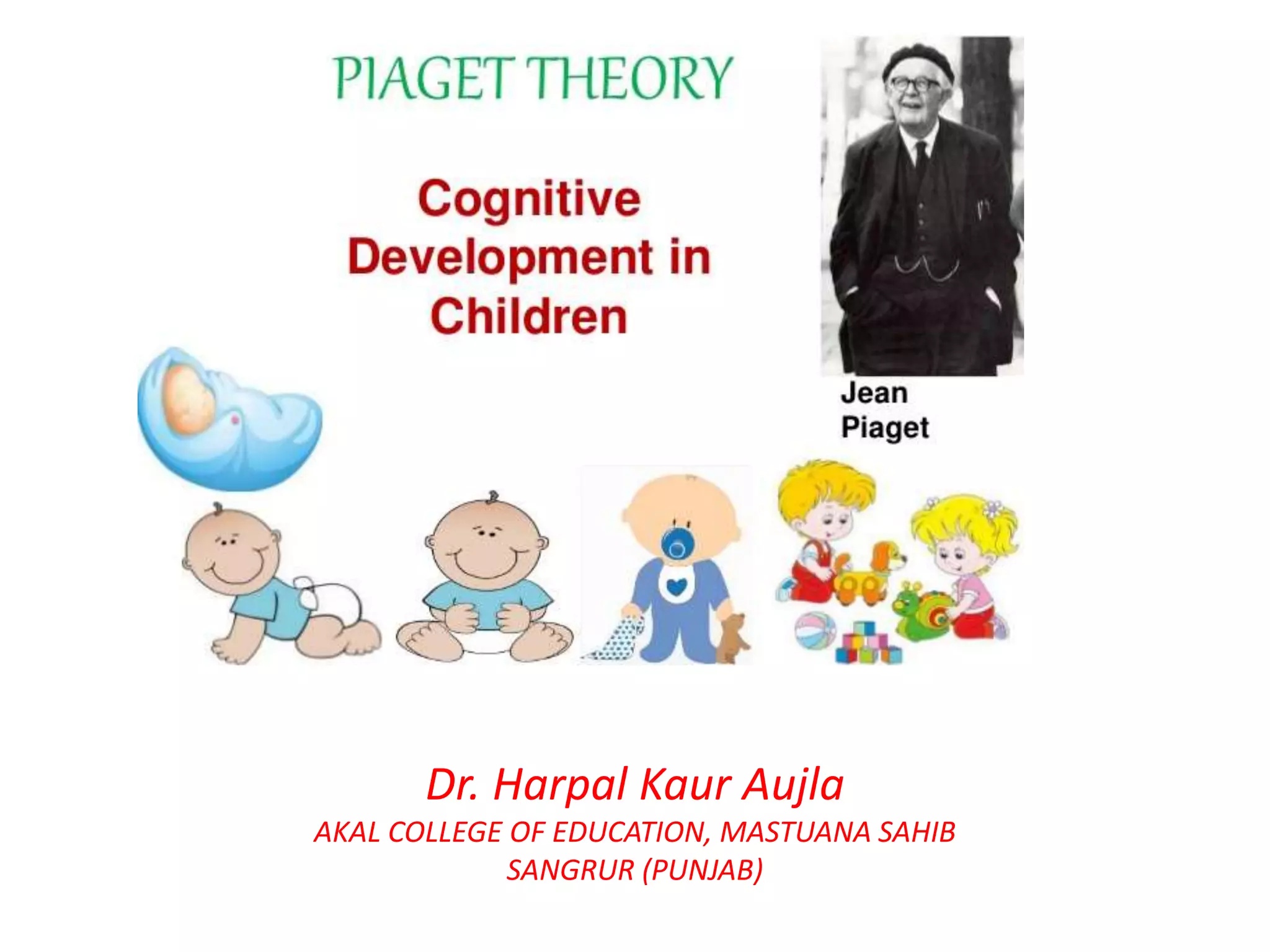
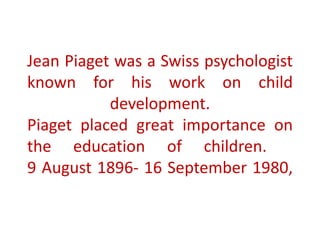
Jean Piaget was a Swiss psychologist
known for his work on child
development.
Piaget placed great importance on
the education of children.
9 August 1896- 16 September 1980,
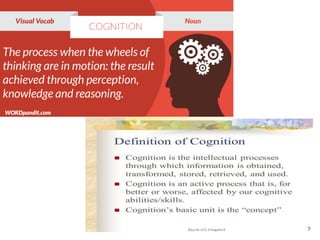
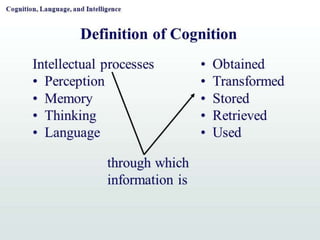
Cognition is "the mental action or
process of acquiring knowledge and
understanding through thought,
experience, and the senses". ...
Cognitive processes use existing
knowledge and generate new
knowledge.
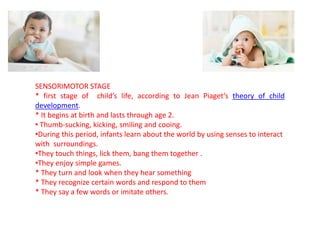
SENSORIMOTOR STAGE
* first stage of child’s life, according to Jean Piaget’s theory of child
development.
* It begins at birth and lasts through age 2.
• Thumb-sucking, kicking, smiling and cooing.
•During this period, infants learn about the world by using senses to interact
with surroundings.
•They touch things, lick them, bang them together .
•They enjoy simple games.
* They turn and look when they hear something
* They recognize certain words and respond to them
* They say a few words or imitate others.
# From 4 to 8 months of age, your growing little
one will begin to use objects to learn about the
world. This process generally begins by accident,
but as your baby starts to enjoy their ability to
make things happen, they’ll continue these
activities again and again.
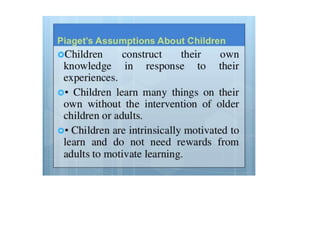
# Children use their personal experience to develop
their own knowledge about the world.
# Children can learn on their own, even when they
aren’t taught or influenced by other children or
adults.
# Children have an internal motivation to learn, so
rewards for learning generally aren’t necessary.
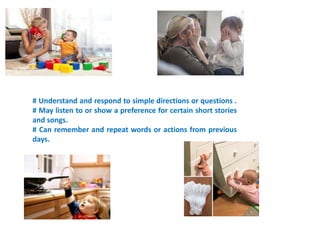
# Understand and respond to simple directions or questions .
# May listen to or show a preference for certain short stories
and songs.
# Can remember and repeat words or actions from previous
days.
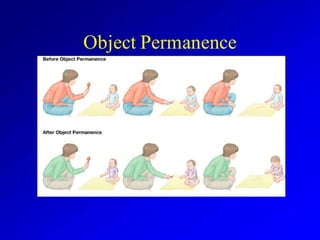
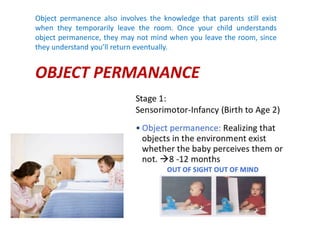
Object permanence also involves the knowledge that parents still exist
when they temporarily leave the room. Once your child understands
object permanence, they may not mind when you leave the room, since
they understand you’ll return eventually.
OBJECT PERMANANCE
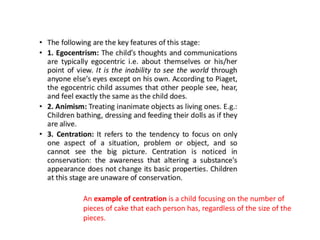
An example of centration is a child focusing on the number of
pieces of cake that each person has, regardless of the size of the
pieces.
REFERENCES
https://www.simplypsychology.org › piaget
https://www.google.com/search?q=concrete+operational+stage&sxsrf=A
https://www.slideshare.net/newkirker/Piagets-Cognitive-Development-Theory
https://www.slideshare.net › ayushigupta547
https://www.verywellmind.com › Theories › Developmental Psychology
https://www.slideshare.net › anivvp › cognitive-development-piaget-66207.
Piaget Theory- Cognitive Development

Piaget Theory- Cognitive Development

  • 1.
    Dr. Harpal KaurAujla AKAL COLLEGE OF EDUCATION, MASTUANA SAHIB SANGRUR (PUNJAB)
  • 2.
    Jean Piaget wasa Swiss psychologist known for his work on child development. Piaget placed great importance on the education of children. 9 August 1896- 16 September 1980,
  • 4.
    Cognition is "themental action or process of acquiring knowledge and understanding through thought, experience, and the senses". ... Cognitive processes use existing knowledge and generate new knowledge.
  • 17.
    SENSORIMOTOR STAGE * firststage of child’s life, according to Jean Piaget’s theory of child development. * It begins at birth and lasts through age 2. • Thumb-sucking, kicking, smiling and cooing. •During this period, infants learn about the world by using senses to interact with surroundings. •They touch things, lick them, bang them together . •They enjoy simple games. * They turn and look when they hear something * They recognize certain words and respond to them * They say a few words or imitate others.
  • 18.
    # From 4to 8 months of age, your growing little one will begin to use objects to learn about the world. This process generally begins by accident, but as your baby starts to enjoy their ability to make things happen, they’ll continue these activities again and again. # Children use their personal experience to develop their own knowledge about the world. # Children can learn on their own, even when they aren’t taught or influenced by other children or adults. # Children have an internal motivation to learn, so rewards for learning generally aren’t necessary.
  • 19.
    # Understand andrespond to simple directions or questions . # May listen to or show a preference for certain short stories and songs. # Can remember and repeat words or actions from previous days.
  • 21.
    Object permanence alsoinvolves the knowledge that parents still exist when they temporarily leave the room. Once your child understands object permanence, they may not mind when you leave the room, since they understand you’ll return eventually. OBJECT PERMANANCE
  • 27.
    An example ofcentration is a child focusing on the number of pieces of cake that each person has, regardless of the size of the pieces.
  • 36.
    REFERENCES https://www.simplypsychology.org › piaget https://www.google.com/search?q=concrete+operational+stage&sxsrf=A https://www.slideshare.net/newkirker/Piagets-Cognitive-Development-Theory https://www.slideshare.net› ayushigupta547 https://www.verywellmind.com › Theories › Developmental Psychology https://www.slideshare.net › anivvp › cognitive-development-piaget-66207.