Social Needs

        Chapter 7
Acquired Needs:
Quasi-needs
ACQUIRED NEEDS:
Social Needs
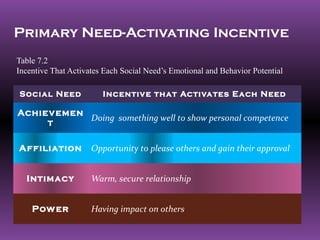
Primary Need-Activating Incentive
Table 7.2
Incentive That Activates Each Social Need’s Emotional and Behavior Potential

Social Need             Incentiv e that Activates Each Need

Achievemen
           Doing something well to show personal competence
     t

Affiliation          Opportunity to please others and gain their approval


  Intimacy           Warm, secure relationship


    Pow er           Having impact on others
Achievement
Origins of the Need for Achievement
Atkinson’s Model

Tendency to       Tendency to Approach             Tendency to Avoid
Achieve (Ta)          Success (Ts)                    Failure (Taf)


  Ta = (Ms ××Ps × Is) –
        (Ms Ps × Is)                             (Maf × Pf × If )

                                              • Maf : Motive to Avoid Failure
               • Ms: Motive to Success
                                              • Pf : Perceived Probability of
               • Ps : Perceived Probability
                                                    Failure (1- Ps)
                     of Success
                                              • If : Negative Incentive
               • Is : Incentive Value of
                                                value
                     Success
                                                    for Failure (1- Is)
Dynamics-of-Action Model


Figure 7.1 Streams of Behavior for People High and Low in Ms and Maf
1. Latency to begin an achievement depends on motive strength. (Ms vs. Maf)
2. Persistence on an achievement task depends on motive strength. (Ms vs. Maf)
3. Switching to a nonachievement task occurs with rising consumption.
Conditions That Involve &
Satisfy the Need for Achievement
Achievement Goals
Benefits of Adopting Mastery Goals

                    Preference for a
                    Challenging Task         Work
                    One can Learn From       Harder


                    Use Conceptually
                    Based Learning
                    Strategies
                                             Persist
                                             Longer
A dop tion of a
Mastery Goal

                    Experience Greater
  (rather than a    Intrinsic than
Performance Goal)   Extrinsic Motivation


                    More Likely to Ask       Perform
                    for Information & Help    Better
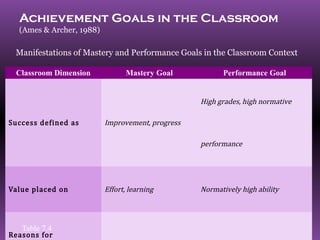
Achievement Goals in the Classroom
  (Ames & Archer, 1988)

 Manifestations of Mastery and Performance Goals in the Classroom Context

 Classroom Dimension             Mastery Goal           Performance Goal


                                                  High grades, high normative

Success defined as        Improvement, progress

                                                  performance


Value placed on           Effort, learning        Normatively high ability


Reasons for
   Table 7.4
Integrating Classical & Contemporary
Approaches to Achievement Motivation
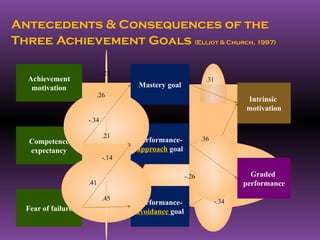
Antecedents & Consequences of the
Three Achievement Goals (Elliot & Church, 1997)

                           .22
  Achievement                                              .31
   motivation                     Mastery goal
                       .26
                                                                       Intrinsic
                                                                       motivation
                    -.34

                           .21                            .36
   Competence                     Performance-
   expectancy                     approach goal
                           -.14

                                                   -.26                  Graded
                    .41                                                performance
                           .45                                  -.34
                                  Performance-
  Fear of failure                 avoidance goal
Avoidance Motivation & Well-Being
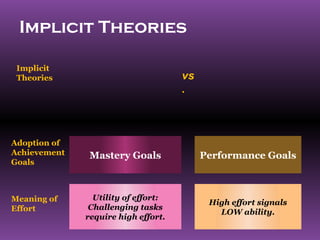
Implicit Theories

 Implicit
 Theories                            vs
                                     .


Adoption of
Achievement    Mastery Goals              Performance Goals
Goals


Meaning of      Utility of effort:
                                           High effort signals
Effort         Challenging tasks
                                             LOW ability.
              require high effort.
AFFILIATION AND INTIMACY
Table 7.7
Profile of High Intimacy Motivation
     Category                                       Definition
Thoughts             Of friends, of relationships

Story Themes         Relationships produce positive affect, reciprocal dialogue,
                     expressions of relationship commitment and union, and expressions
                     of interpersonal harmony


Interaction          Self-disclosure, Intense listening habits, Many conversations
Style
Autobiography        Themes of love and dialogue are mentioned as personally
                     significant life experiences

Peer Rating          Individual rated as warm, loving, sincere, nondominant.

Memory               Enhanced recall with stories involving themes of interpersonal
                     interactions
Conditions That Involve & Satisfy
            the Affiliation and Intimacy Needs


Need-Involving
Condition


Need-Satisfying
Condition
POWER
Leadership Motive Pattern
A special variant of the need for power is the leadership motive pattern.

Ch07

  • 1.
    Social Needs Chapter 7
  • 3.
  • 4.
  • 5.
    Primary Need-Activating Incentive Table7.2 Incentive That Activates Each Social Need’s Emotional and Behavior Potential Social Need Incentiv e that Activates Each Need Achievemen Doing something well to show personal competence t Affiliation Opportunity to please others and gain their approval Intimacy Warm, secure relationship Pow er Having impact on others
  • 6.
  • 7.
    Origins of theNeed for Achievement
  • 8.
    Atkinson’s Model Tendency to Tendency to Approach Tendency to Avoid Achieve (Ta) Success (Ts) Failure (Taf) Ta = (Ms ××Ps × Is) – (Ms Ps × Is) (Maf × Pf × If ) • Maf : Motive to Avoid Failure • Ms: Motive to Success • Pf : Perceived Probability of • Ps : Perceived Probability Failure (1- Ps) of Success • If : Negative Incentive • Is : Incentive Value of value Success for Failure (1- Is)
  • 9.
    Dynamics-of-Action Model Figure 7.1Streams of Behavior for People High and Low in Ms and Maf 1. Latency to begin an achievement depends on motive strength. (Ms vs. Maf) 2. Persistence on an achievement task depends on motive strength. (Ms vs. Maf) 3. Switching to a nonachievement task occurs with rising consumption.
  • 10.
    Conditions That Involve& Satisfy the Need for Achievement
  • 11.
  • 12.
    Benefits of AdoptingMastery Goals Preference for a Challenging Task Work One can Learn From Harder Use Conceptually Based Learning Strategies Persist Longer A dop tion of a Mastery Goal Experience Greater (rather than a Intrinsic than Performance Goal) Extrinsic Motivation More Likely to Ask Perform for Information & Help Better
  • 13.
    Achievement Goals inthe Classroom (Ames & Archer, 1988) Manifestations of Mastery and Performance Goals in the Classroom Context Classroom Dimension Mastery Goal Performance Goal High grades, high normative Success defined as Improvement, progress performance Value placed on Effort, learning Normatively high ability Reasons for Table 7.4
  • 14.
    Integrating Classical &Contemporary Approaches to Achievement Motivation
  • 15.
    Antecedents & Consequencesof the Three Achievement Goals (Elliot & Church, 1997) .22 Achievement .31 motivation Mastery goal .26 Intrinsic motivation -.34 .21 .36 Competence Performance- expectancy approach goal -.14 -.26 Graded .41 performance .45 -.34 Performance- Fear of failure avoidance goal
  • 16.
  • 17.
    Implicit Theories Implicit Theories vs . Adoption of Achievement Mastery Goals Performance Goals Goals Meaning of Utility of effort: High effort signals Effort Challenging tasks LOW ability. require high effort.
  • 18.
    AFFILIATION AND INTIMACY Table7.7 Profile of High Intimacy Motivation Category Definition Thoughts Of friends, of relationships Story Themes Relationships produce positive affect, reciprocal dialogue, expressions of relationship commitment and union, and expressions of interpersonal harmony Interaction Self-disclosure, Intense listening habits, Many conversations Style Autobiography Themes of love and dialogue are mentioned as personally significant life experiences Peer Rating Individual rated as warm, loving, sincere, nondominant. Memory Enhanced recall with stories involving themes of interpersonal interactions
  • 19.
    Conditions That Involve& Satisfy the Affiliation and Intimacy Needs Need-Involving Condition Need-Satisfying Condition
  • 20.
  • 21.
    Leadership Motive Pattern Aspecial variant of the need for power is the leadership motive pattern.