> > > > > > > >
Production and Operations
Management
Chapter 11
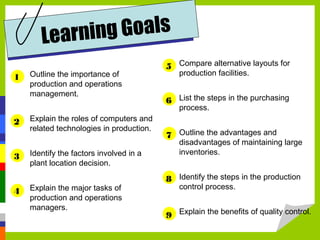
Outline the importance of
production and operations
management.
Explain the roles of computers and
related technologies in production.
Identify the factors involved in a
plant location decision.
Explain the major tasks of
production and operations
managers.
Compare alternative layouts for
production facilities.
List the steps in the purchasing
process.
Outline the advantages and
disadvantages of maintaining large
inventories.
Identify the steps in the production
control process.
Explain the benefits of quality control.
1
2
3
4
5
6
7
8
9
Learning Goals
Production & Operations
Management
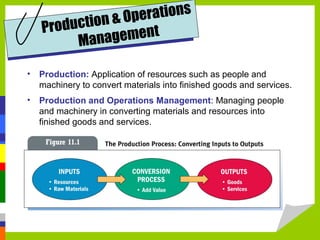
• Production: Application of resources such as people and
machinery to convert materials into finished goods and services.
• Production and Operations Management: Managing people
and machinery in converting materials and resources into
finished goods and services.
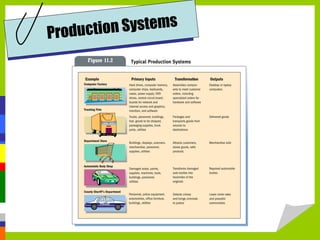
Production Systems
• A vital function is necessary for generating money
to pay employees, lenders, and stockholders.
• Effective production and operations management
can:
– lower a firm’s costs of production.
– boost the quality of its goods and services.
– allow it to respond dependably to customer demands.
– enable it to renew itself by providing new products.
Strategic Importance of
the Production Function
Mass, Flexible and
Customer-Driven Production
• Mass Production – manufacturing products in
large amounts through standardization,
mechanization and specialized skills.
• Flexible Production – producing smaller
batches using information technology,
communication and cooperation.
• Customer-Driven Production – evaluating
customer demands to link with manufacturer.
Technology and The
Production Process
• Robots – reprogrammable machines capable of performing routine
jobs and manipulating material
• Computer-Aided Design and Manufacturing – enables engineers
to design parts and buildings on computer screens faster and with
fewer mistakes.
• Flexible Manufacturing Systems – a production facility that
workers can quickly modify to manufacture different products.
• Computer-Integrated Manufacturing – integrates robots,
computers and other technologies to help workers design products,
control machines, handle materials, and control the production
function.
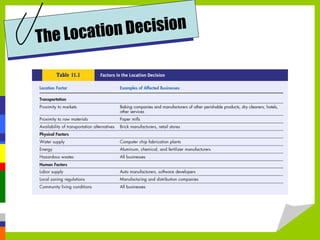
The Location Decision
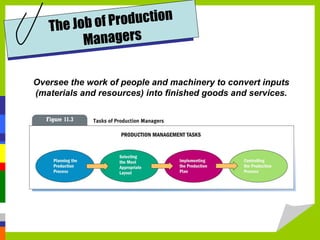
The Job of Production
Managers
Oversee the work of people and machinery to convert inputs
(materials and resources) into finished goods and services.
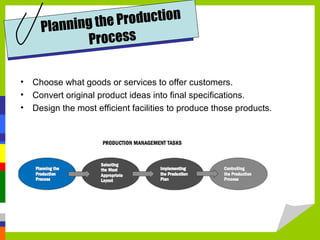
Planning the Production
Process
• Choose what goods or services to offer customers.
• Convert original product ideas into final specifications.
• Design the most efficient facilities to produce those products.
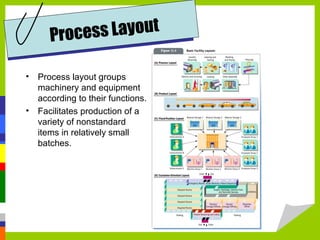
• Process layout groups
machinery and equipment
according to their functions.
• Facilitates production of a
variety of nonstandard
items in relatively small
batches.
Process Layout
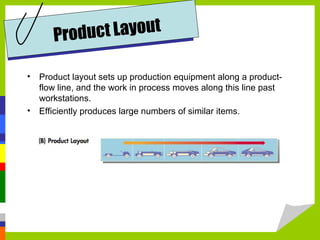
• Product layout sets up production equipment along a product-
flow line, and the work in process moves along this line past
workstations.
• Efficiently produces large numbers of similar items.
Product Layout
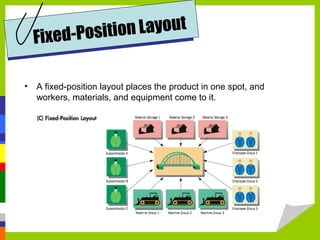
• A fixed-position layout places the product in one spot, and
workers, materials, and equipment come to it.
Fixed-Position Layout
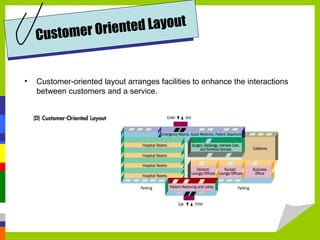
• Customer-oriented layout arranges facilities to enhance the interactions
between customers and a service.
Customer Oriented Layout
Make, Buy, or Lease Decision
• Choosing whether to manufacture a needed product
or component in-house, purchase it from an outside
supplier, or lease it.
• Factors in the decision include cost, availability of
reliable outside suppliers, and the need for
confidentiality.
Selection of Suppliers
• Based on comparison of quality, prices, dependability
of delivery, and services offered by competing
companies.
Implementing the
Production Plan
Inventory Control
– Perpetual inventory
– Vendor-managed inventory
Just-in-Time Systems
• Improving profits and return on investment by minimizing
costs and eliminating waste through cutting inventory on
hand.
Materials Requirement Planning
• Computer-based production planning system by which a
firm can ensure that it has the correct materials for
production.
Inventory Control
Controlling the Production
Process
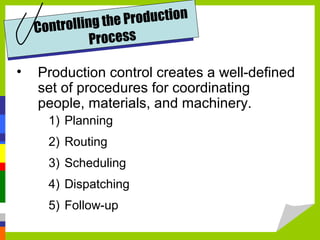
• Production control creates a well-defined
set of procedures for coordinating
people, materials, and machinery.
1) Planning
2) Routing
3) Scheduling
4) Dispatching
5) Follow-up
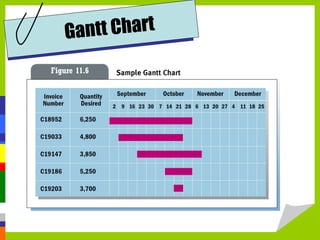
Gantt Chart
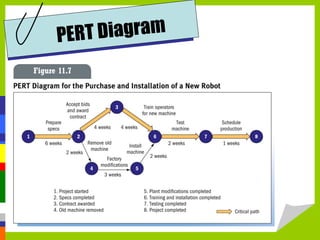
PERT Diagram
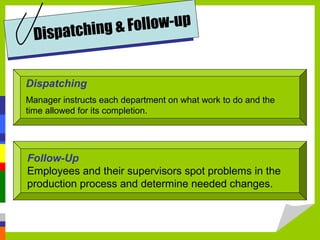
Dispatching
Manager instructs each department on what work to do and the
time allowed for its completion.
Dispatching & Follow-up
Follow-Up
Employees and their supervisors spot problems in the
production process and determine needed changes.
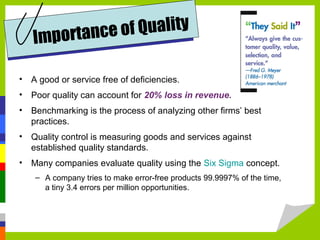
• A good or service free of deficiencies.
• Poor quality can account for 20% loss in revenue.
• Benchmarking is the process of analyzing other firms’ best
practices.
• Quality control is measuring goods and services against
established quality standards.
• Many companies evaluate quality using the Six Sigma concept.
– A company tries to make error-free products 99.9997% of the time,
a tiny 3.4 errors per million opportunities.
Importance of Quality
• International Organization for Standardization (ISO) - mission
is to promote the development of standardized products to
facilitate trade and cooperation across national borders.
• Representatives from more than 146 nations.
• ISO 9000 series of standards sets requirements for quality
processes.
• Nearly half a million ISO 9000 certificates have been awarded to
companies around the world.
• ISO 14000 series also sets standards for operations that
minimize harm to the environment.
ISO Standards

Ch11 introto business

  • 1.
    > > >> > > > > Production and Operations Management Chapter 11
  • 2.
    Outline the importanceof production and operations management. Explain the roles of computers and related technologies in production. Identify the factors involved in a plant location decision. Explain the major tasks of production and operations managers. Compare alternative layouts for production facilities. List the steps in the purchasing process. Outline the advantages and disadvantages of maintaining large inventories. Identify the steps in the production control process. Explain the benefits of quality control. 1 2 3 4 5 6 7 8 9 Learning Goals
  • 3.
    Production & Operations Management •Production: Application of resources such as people and machinery to convert materials into finished goods and services. • Production and Operations Management: Managing people and machinery in converting materials and resources into finished goods and services.
  • 4.
  • 5.
    • A vitalfunction is necessary for generating money to pay employees, lenders, and stockholders. • Effective production and operations management can: – lower a firm’s costs of production. – boost the quality of its goods and services. – allow it to respond dependably to customer demands. – enable it to renew itself by providing new products. Strategic Importance of the Production Function
  • 6.
    Mass, Flexible and Customer-DrivenProduction • Mass Production – manufacturing products in large amounts through standardization, mechanization and specialized skills. • Flexible Production – producing smaller batches using information technology, communication and cooperation. • Customer-Driven Production – evaluating customer demands to link with manufacturer.
  • 7.
    Technology and The ProductionProcess • Robots – reprogrammable machines capable of performing routine jobs and manipulating material • Computer-Aided Design and Manufacturing – enables engineers to design parts and buildings on computer screens faster and with fewer mistakes. • Flexible Manufacturing Systems – a production facility that workers can quickly modify to manufacture different products. • Computer-Integrated Manufacturing – integrates robots, computers and other technologies to help workers design products, control machines, handle materials, and control the production function.
  • 8.
  • 9.
    The Job ofProduction Managers Oversee the work of people and machinery to convert inputs (materials and resources) into finished goods and services.
  • 10.
    Planning the Production Process •Choose what goods or services to offer customers. • Convert original product ideas into final specifications. • Design the most efficient facilities to produce those products.
  • 11.
    • Process layoutgroups machinery and equipment according to their functions. • Facilitates production of a variety of nonstandard items in relatively small batches. Process Layout
  • 12.
    • Product layoutsets up production equipment along a product- flow line, and the work in process moves along this line past workstations. • Efficiently produces large numbers of similar items. Product Layout
  • 13.
    • A fixed-positionlayout places the product in one spot, and workers, materials, and equipment come to it. Fixed-Position Layout
  • 14.
    • Customer-oriented layoutarranges facilities to enhance the interactions between customers and a service. Customer Oriented Layout
  • 15.
    Make, Buy, orLease Decision • Choosing whether to manufacture a needed product or component in-house, purchase it from an outside supplier, or lease it. • Factors in the decision include cost, availability of reliable outside suppliers, and the need for confidentiality. Selection of Suppliers • Based on comparison of quality, prices, dependability of delivery, and services offered by competing companies. Implementing the Production Plan
  • 16.
    Inventory Control – Perpetualinventory – Vendor-managed inventory Just-in-Time Systems • Improving profits and return on investment by minimizing costs and eliminating waste through cutting inventory on hand. Materials Requirement Planning • Computer-based production planning system by which a firm can ensure that it has the correct materials for production. Inventory Control
  • 17.
    Controlling the Production Process •Production control creates a well-defined set of procedures for coordinating people, materials, and machinery. 1) Planning 2) Routing 3) Scheduling 4) Dispatching 5) Follow-up
  • 18.
  • 19.
  • 20.
    Dispatching Manager instructs eachdepartment on what work to do and the time allowed for its completion. Dispatching & Follow-up Follow-Up Employees and their supervisors spot problems in the production process and determine needed changes.
  • 21.
    • A goodor service free of deficiencies. • Poor quality can account for 20% loss in revenue. • Benchmarking is the process of analyzing other firms’ best practices. • Quality control is measuring goods and services against established quality standards. • Many companies evaluate quality using the Six Sigma concept. – A company tries to make error-free products 99.9997% of the time, a tiny 3.4 errors per million opportunities. Importance of Quality
  • 22.
    • International Organizationfor Standardization (ISO) - mission is to promote the development of standardized products to facilitate trade and cooperation across national borders. • Representatives from more than 146 nations. • ISO 9000 series of standards sets requirements for quality processes. • Nearly half a million ISO 9000 certificates have been awarded to companies around the world. • ISO 14000 series also sets standards for operations that minimize harm to the environment. ISO Standards