INTRODUCTION
TO
PRODUCTION PLANNING AND
CONTROL
Unit-1
PRODUCTION
PLANNING AND
CONTROL
UNIT-1
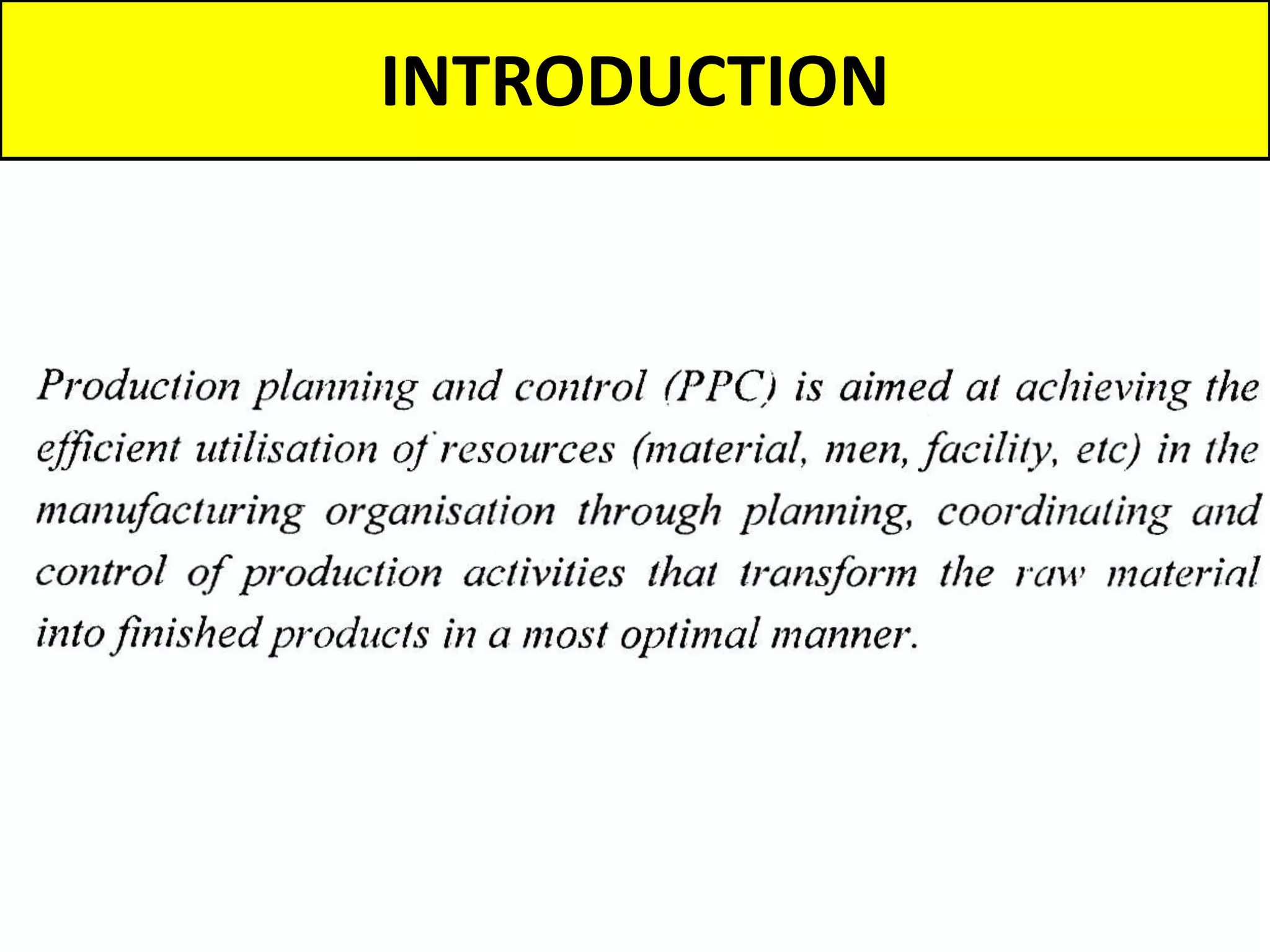
INTRODUCTION
TO
PRODUCTION PLANNING
AND CONTROL
INTRODUCTION
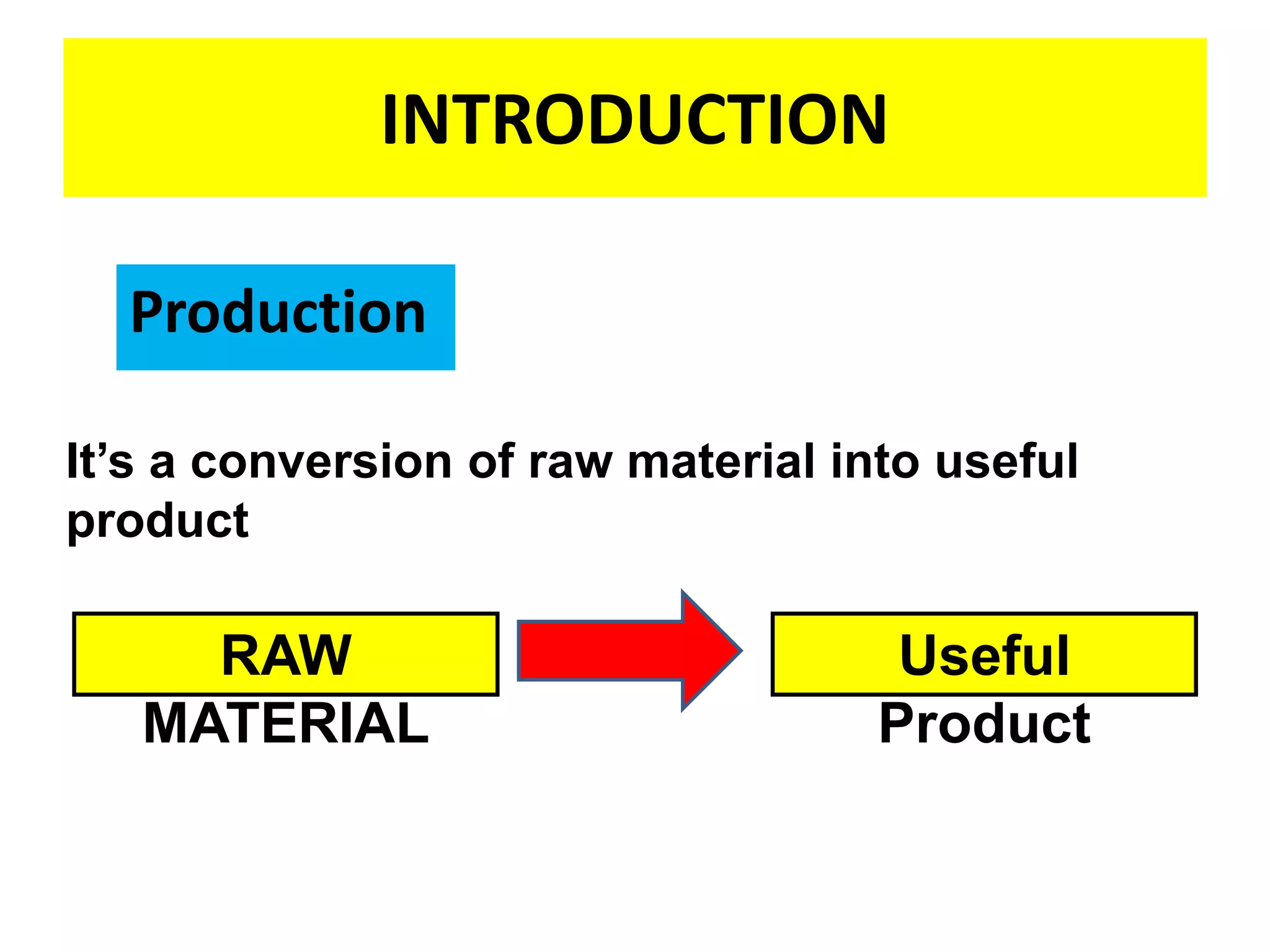
Production
It’s a conversion of raw material into useful
product
RAW
MATERIAL
Useful
Product
INTRODUCTION
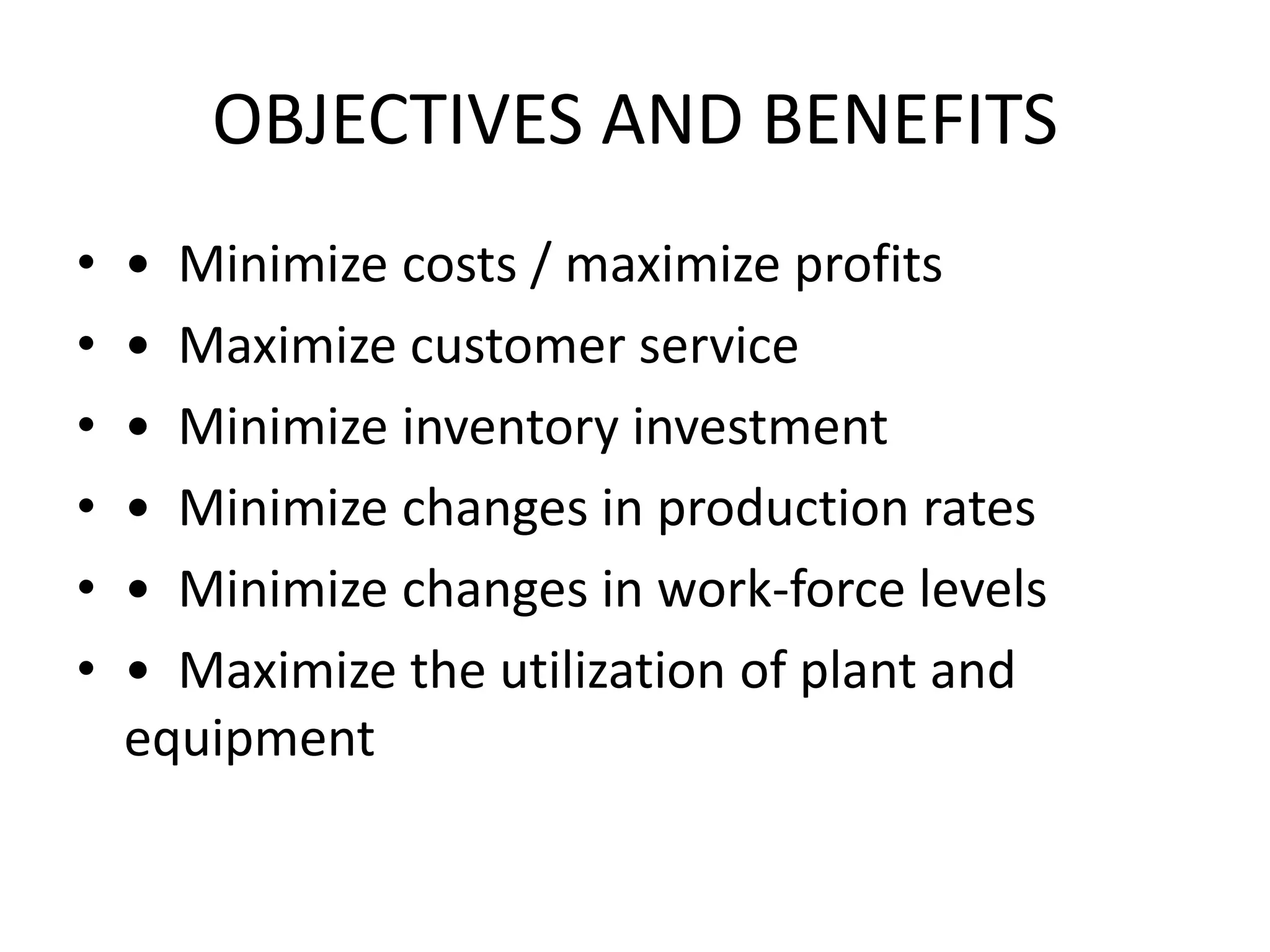
OBJECTIVES AND BENEFITS
• • Minimize costs / maximize profits
• • Maximize customer service
• • Minimize inventory investment
• • Minimize changes in production rates
• • Minimize changes in work-force levels
• • Maximize the utilization of plant and
equipment
FUNCTIONS OF PRODUCTION
CONTROL
• Production function encompasses the activities of
procurement, allocation and utilization of resources.
• The main objective of production function is to
produce the goods and services demanded by the
customers in the most efficient and economical way.
• Therefore efficient management of the production
function is of utmost importance in order to achieve
this objective.
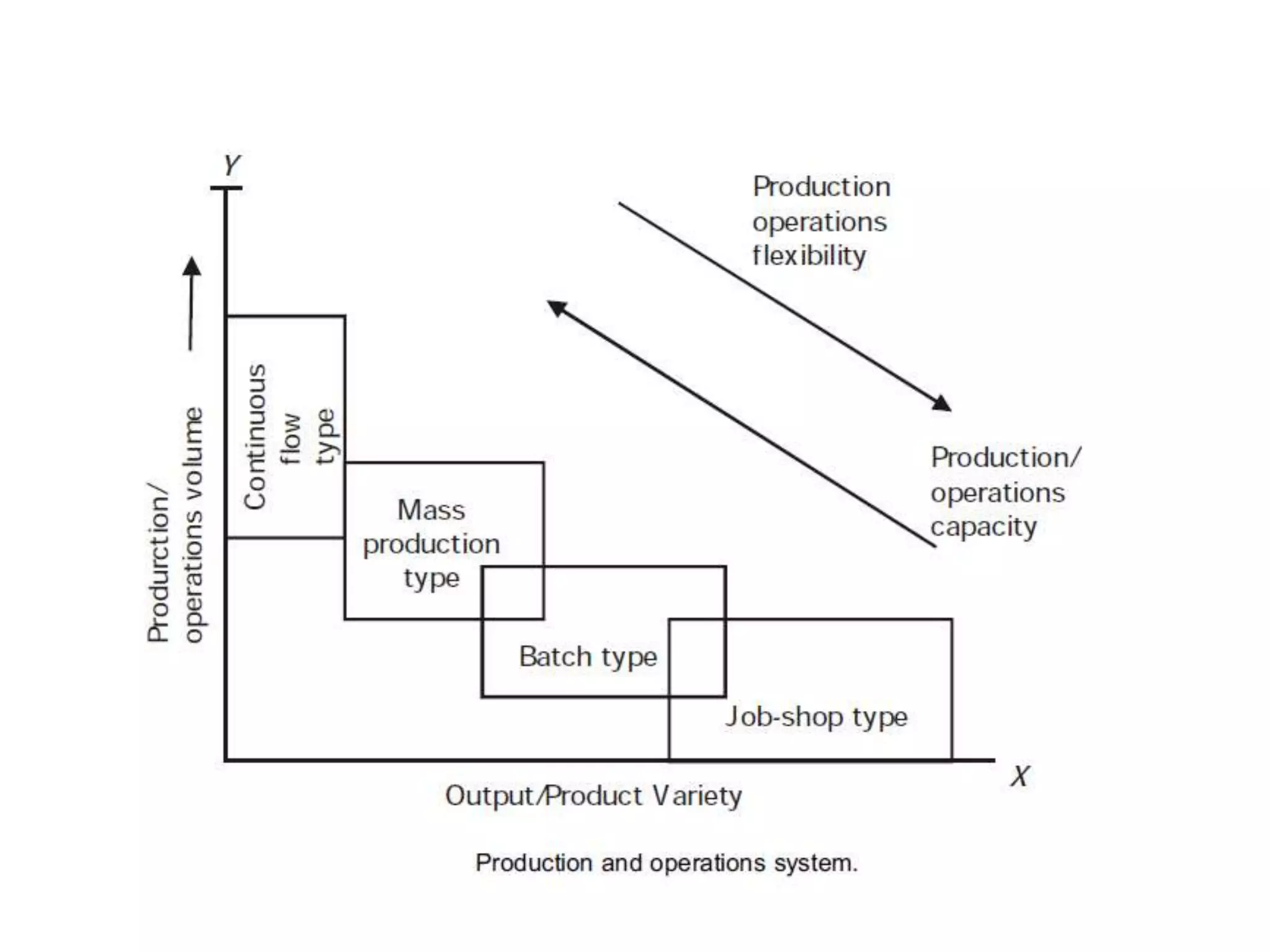
TYPES OF PRODUCTION
• Continuous production
• Job or unit production
• Intermittent production
Continuous production
• It refers to the production of standardized products
with a standard set of process and operation
sequence in anticipation of demand.
• It is also known as mass flow production or
assembly line production.
• This system ensures less work in process inventory
and high product quality but involves large
investment in machinery and equipment.
Job or unit production
• It involves production as per customer‘s
specification each batch or order consists of a
small lot of identical products and is different
from other batches.
• The system requires comparatively smaller
investment in machines and equipment.
• It is flexible and can be adapted to changes in
product design and order size without much
inconvenience.
Intermittent production
• Under this system the goods are produced
partly for inventory and partly for customer's
orders.
• E.g. components are made for inventory but
they are combined differently for different
customers. .
• Automobile plants, printing presses, electrical
goods plant
PRODUCT DESIGN
• Product design is a strategic decision as the image and profit
earning capacity of a small firm depends largely on product
design.
• Once the product to be produced is decided by the
entrepreneur the next step is to prepare its design
• Product design consists of form and function. The form
designing includes decisions regarding its shape, size, color
and appearance of the product.
• The functional design involves the working conditions of the
product.
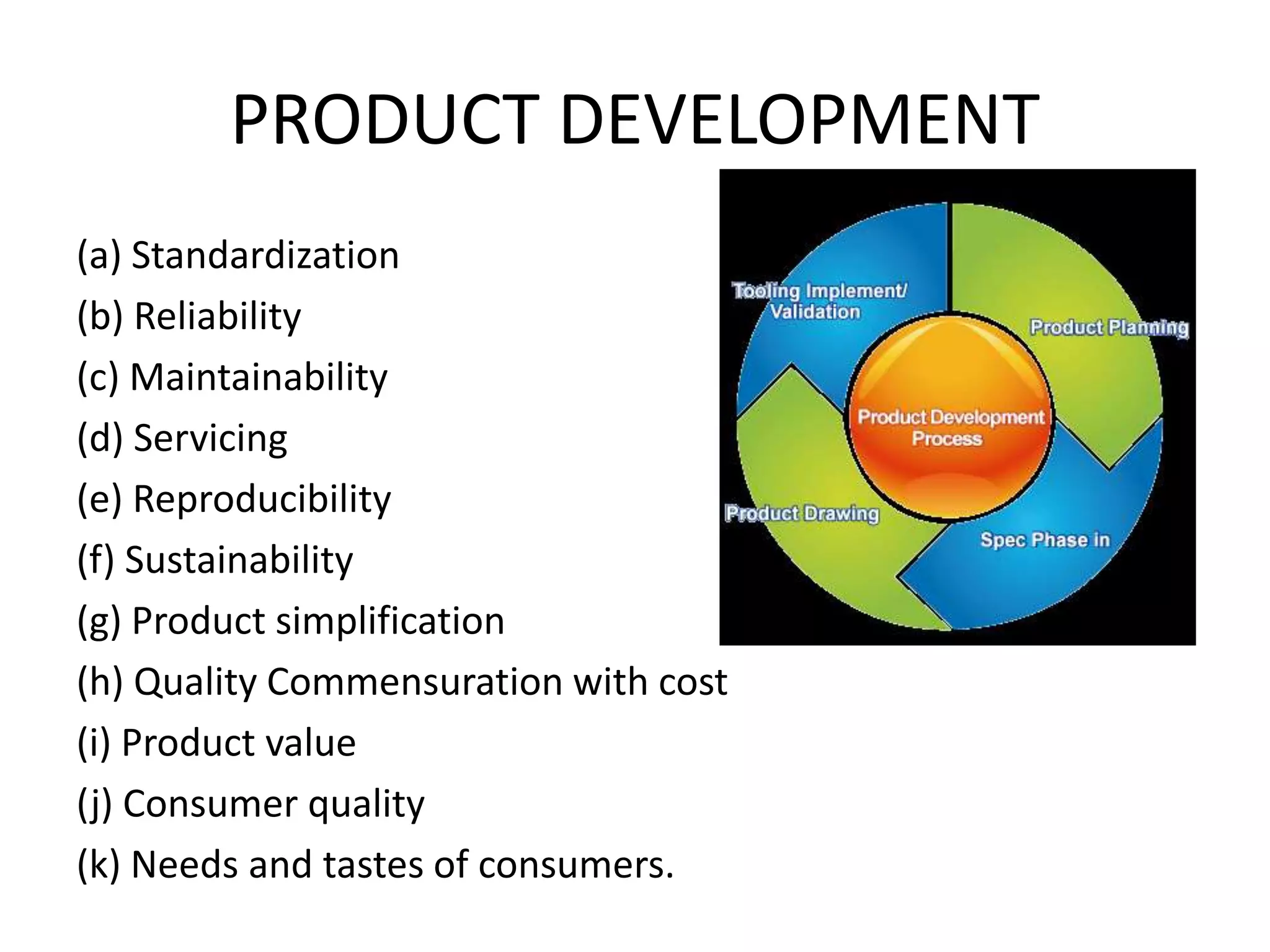
PRODUCT DEVELOPMENT
(a) Standardization
(b) Reliability
(c) Maintainability
(d) Servicing
(e) Reproducibility
(f) Sustainability
(g) Product simplification
(h) Quality Commensuration with cost
(i) Product value
(j) Consumer quality
(k) Needs and tastes of consumers.
MARKETING ASPECT
• Sales and Marketing is a key function whose participation is often hard to
enlist.
• Sales and Marketing are critical functions in this process, since they
provide the starting point of the planning and scheduling process -- the
forecasts and customer order demands
• They are also vital from the viewpoint of providing the proper customer
perspective whenever changes need to be made to plans and schedules
based on mismatches of resources to customer demands.
• Only with a proper level of participation in Planning and Scheduling, can
Sales and Marketing optimally leverage its performance and create a
trusting and consensus-based working relationship with Manufacturing,
Purchasing, Planning, Engineering and all other functions in the company.
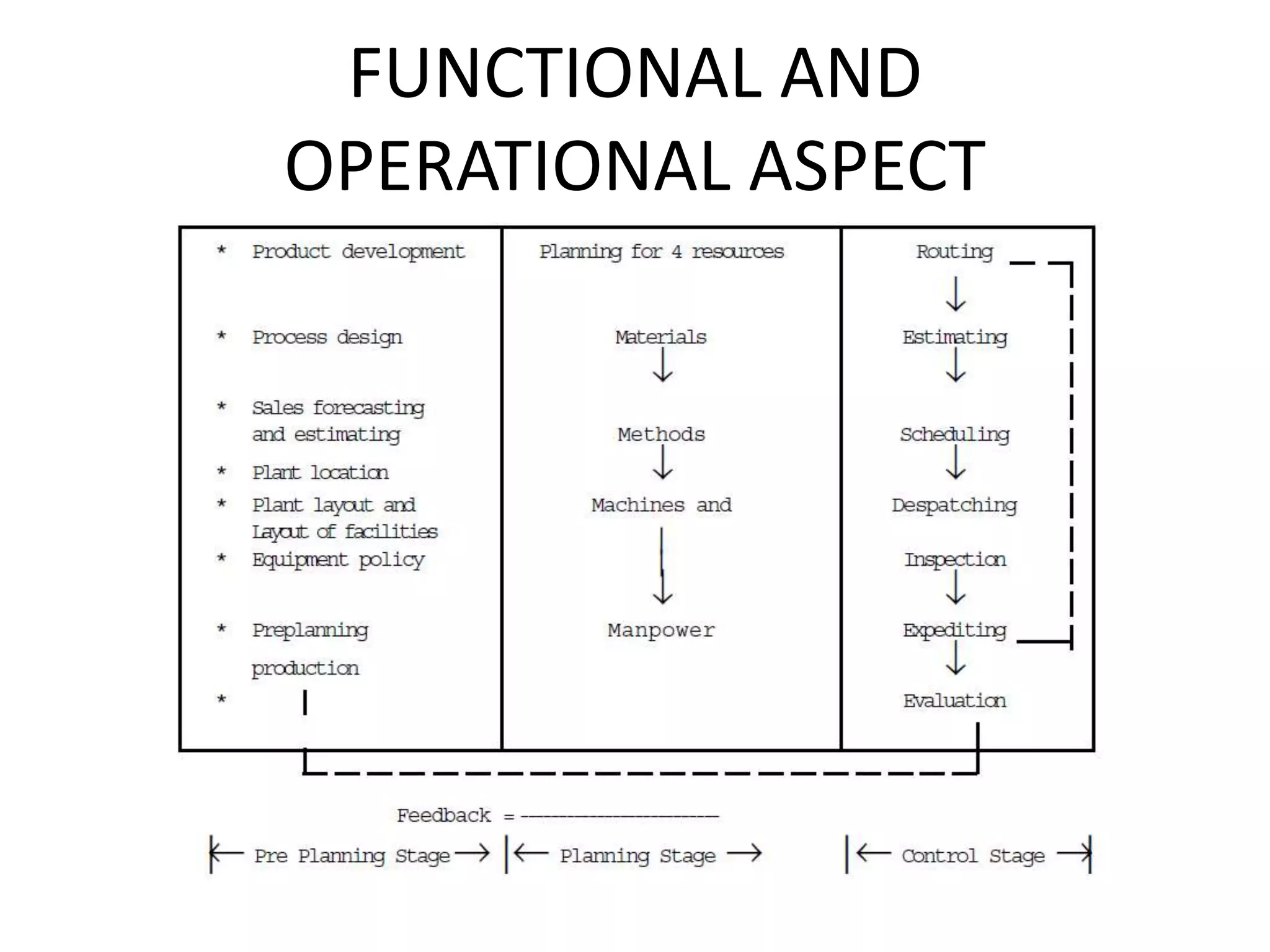
FUNCTIONAL AND
OPERATIONAL ASPECT
DURABILITY AND DEPENDABILITY
Dependability for a system gathers the following attributes or non-functional
requirements:
Availability: readiness for correct service
Reliability: continuity of correct service
Maintainability: to undergo modifications and repairs
Durability aspects concerns about the way the production is going to serve
the purpose with out any hurdles for a prolonged period of time scale
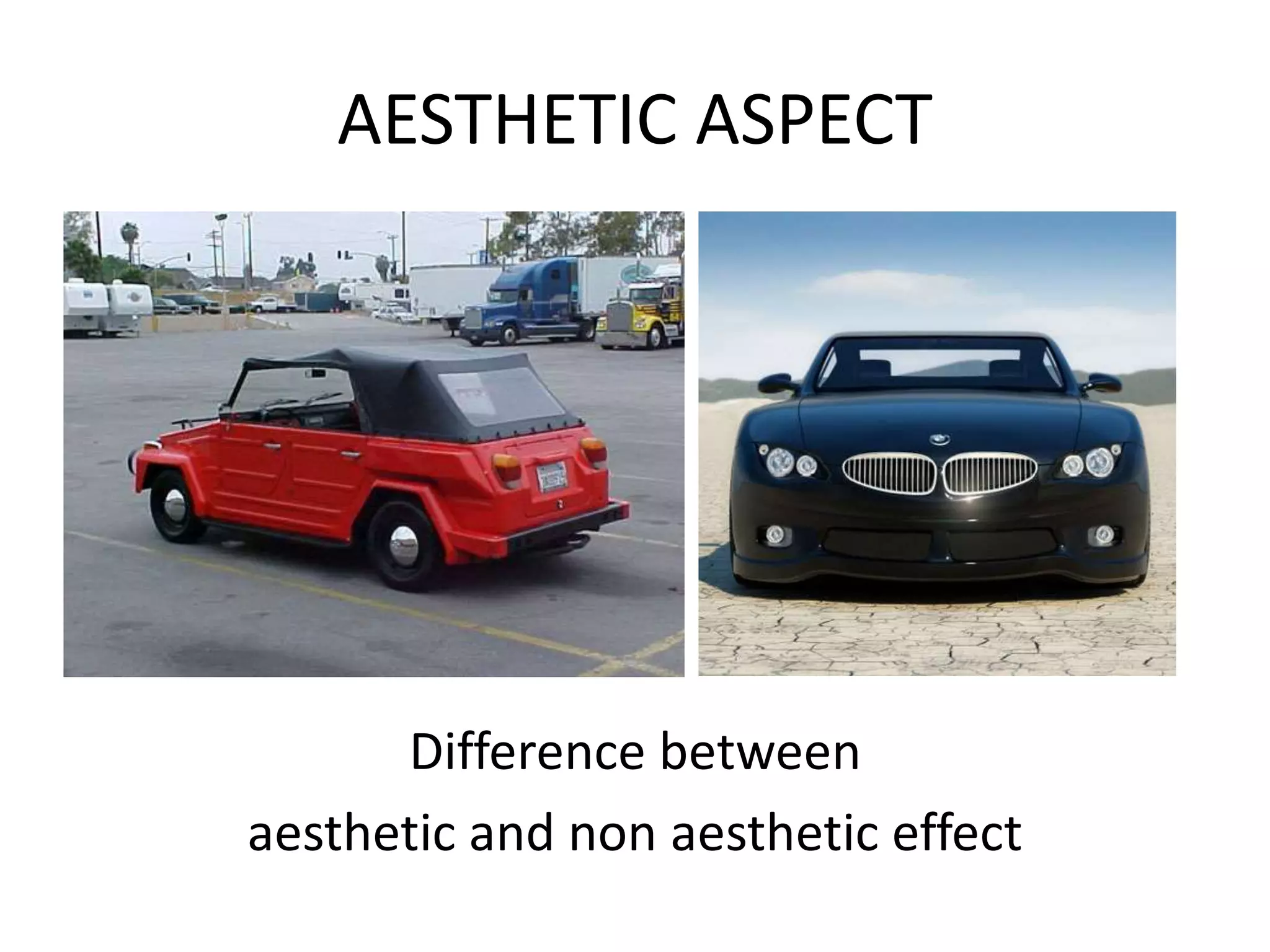
AESTHETIC ASPECT
Difference between
aesthetic and non aesthetic effect
Profit consideration
• taking the time to calculate the profit margin for a
product line or even for a company as a whole is
essential to determining if a company is growing,
maintaining its current market share, or is losing
customers and is in danger of not making a profit.
• Many companies choose to look at profit margin
ratios on a regular basis, just to make sure that sales
are headed in the right direction, and that expenses
are being contained in order to maximize the returns
from those sales.
Standardization
• Sizes for screws, nuts bolts and other threaded fasteners were
first standardized based on work of by Joseph Whitworth..
• Pipe sizes
• Shoe size standardization
• The screw base size and thread dimensions of electric lamp
bulbs was standardized by Thomas Edison.
• Electrical voltage and frequency
• Electrical wiring and device standards
Simplification and specialization
• The production system should be as simple as
possible to make it easy for understanding as
well as easy for execution
• Specialization of production infers the special
production system for specific products or
services.
Break even analysis
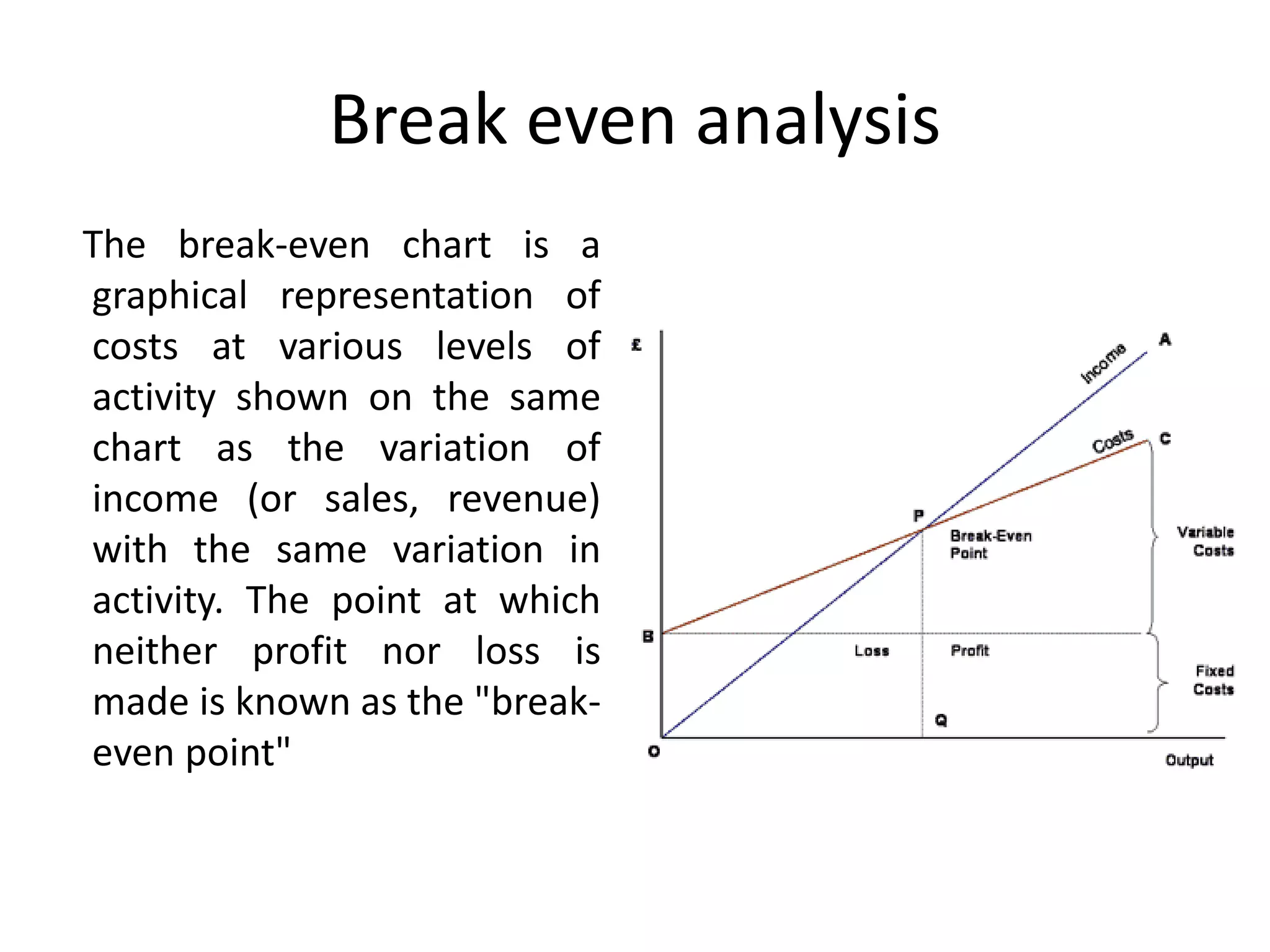
The break-even chart is a
graphical representation of
costs at various levels of
activity shown on the same
chart as the variation of
income (or sales, revenue)
with the same variation in
activity. The point at which
neither profit nor loss is
made is known as the "break-
even point"

Ppc unit-1-production planning and control

  • 1.
  • 2.
  • 3.
  • 4.
    INTRODUCTION Production It’s a conversionof raw material into useful product RAW MATERIAL Useful Product
  • 5.
  • 6.
    OBJECTIVES AND BENEFITS •• Minimize costs / maximize profits • • Maximize customer service • • Minimize inventory investment • • Minimize changes in production rates • • Minimize changes in work-force levels • • Maximize the utilization of plant and equipment
  • 9.
    FUNCTIONS OF PRODUCTION CONTROL •Production function encompasses the activities of procurement, allocation and utilization of resources. • The main objective of production function is to produce the goods and services demanded by the customers in the most efficient and economical way. • Therefore efficient management of the production function is of utmost importance in order to achieve this objective.
  • 10.
    TYPES OF PRODUCTION •Continuous production • Job or unit production • Intermittent production
  • 11.
    Continuous production • Itrefers to the production of standardized products with a standard set of process and operation sequence in anticipation of demand. • It is also known as mass flow production or assembly line production. • This system ensures less work in process inventory and high product quality but involves large investment in machinery and equipment.
  • 12.
    Job or unitproduction • It involves production as per customer‘s specification each batch or order consists of a small lot of identical products and is different from other batches. • The system requires comparatively smaller investment in machines and equipment. • It is flexible and can be adapted to changes in product design and order size without much inconvenience.
  • 13.
    Intermittent production • Underthis system the goods are produced partly for inventory and partly for customer's orders. • E.g. components are made for inventory but they are combined differently for different customers. . • Automobile plants, printing presses, electrical goods plant
  • 15.
    PRODUCT DESIGN • Productdesign is a strategic decision as the image and profit earning capacity of a small firm depends largely on product design. • Once the product to be produced is decided by the entrepreneur the next step is to prepare its design • Product design consists of form and function. The form designing includes decisions regarding its shape, size, color and appearance of the product. • The functional design involves the working conditions of the product.
  • 16.
    PRODUCT DEVELOPMENT (a) Standardization (b)Reliability (c) Maintainability (d) Servicing (e) Reproducibility (f) Sustainability (g) Product simplification (h) Quality Commensuration with cost (i) Product value (j) Consumer quality (k) Needs and tastes of consumers.
  • 17.
    MARKETING ASPECT • Salesand Marketing is a key function whose participation is often hard to enlist. • Sales and Marketing are critical functions in this process, since they provide the starting point of the planning and scheduling process -- the forecasts and customer order demands • They are also vital from the viewpoint of providing the proper customer perspective whenever changes need to be made to plans and schedules based on mismatches of resources to customer demands. • Only with a proper level of participation in Planning and Scheduling, can Sales and Marketing optimally leverage its performance and create a trusting and consensus-based working relationship with Manufacturing, Purchasing, Planning, Engineering and all other functions in the company.
  • 18.
  • 19.
    DURABILITY AND DEPENDABILITY Dependabilityfor a system gathers the following attributes or non-functional requirements: Availability: readiness for correct service Reliability: continuity of correct service Maintainability: to undergo modifications and repairs Durability aspects concerns about the way the production is going to serve the purpose with out any hurdles for a prolonged period of time scale
  • 20.
  • 21.
    Profit consideration • takingthe time to calculate the profit margin for a product line or even for a company as a whole is essential to determining if a company is growing, maintaining its current market share, or is losing customers and is in danger of not making a profit. • Many companies choose to look at profit margin ratios on a regular basis, just to make sure that sales are headed in the right direction, and that expenses are being contained in order to maximize the returns from those sales.
  • 22.
    Standardization • Sizes forscrews, nuts bolts and other threaded fasteners were first standardized based on work of by Joseph Whitworth.. • Pipe sizes • Shoe size standardization • The screw base size and thread dimensions of electric lamp bulbs was standardized by Thomas Edison. • Electrical voltage and frequency • Electrical wiring and device standards
  • 23.
    Simplification and specialization •The production system should be as simple as possible to make it easy for understanding as well as easy for execution • Specialization of production infers the special production system for specific products or services.
  • 24.
    Break even analysis Thebreak-even chart is a graphical representation of costs at various levels of activity shown on the same chart as the variation of income (or sales, revenue) with the same variation in activity. The point at which neither profit nor loss is made is known as the "break- even point"