SAMIA SHAHEEN
08-166
CERVICAL CARCINOMA
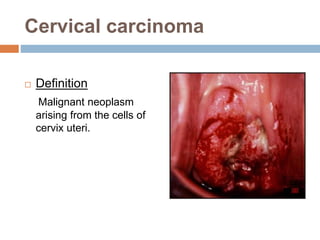
Cervical carcinoma
 Definition
Malignant neoplasm
arising from the cells of
cervix uteri.
Epidemiology
 Second most common cancer in women.
 Third most common cause of death among women.
 16 per 100,000 cases reported globally every year.
 80% cases from developing countries.
 Pakistan:19.5 cases per 1lac population (WHO 2008)
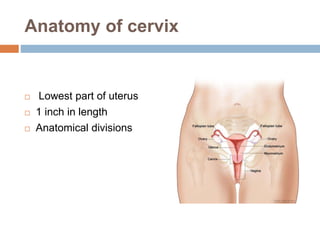
Anatomy of cervix
 Lowest part of uterus
 1 inch in length
 Anatomical divisions
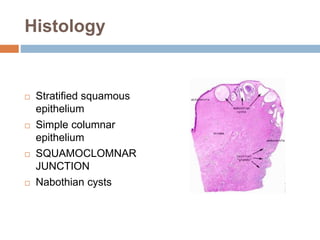
Histology
 Stratified squamous
epithelium
 Simple columnar
epithelium
 SQUAMOCLOMNAR
JUNCTION
 Nabothian cysts
Types
 squamous cell carcinoma (about 80-85%)
 adenocarcinoma (about 15%)
 adenosquamous carcinoma
 small cell carcinoma
 neuroendocrine tumour
 glassy cell carcinoma
 villoglandular adenocarcinoma
Risk factors
 Human Papillomavirus (HPV) Infection
 Family History of Cervical Cancer
 Age
 Sexual and Reproductive History
 Socioeconomic Status
 Smoking
 HIV Infection
 In Utero DES Exposure
 Long-term use of oral contraceptives
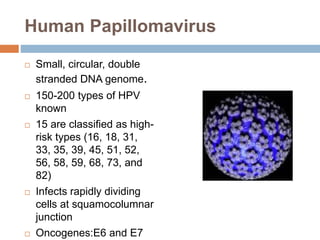
Human Papillomavirus
 Small, circular, double
stranded DNA genome.
 150-200 types of HPV
known
 15 are classified as high-
risk types (16, 18, 31,
33, 35, 39, 45, 51, 52,
56, 58, 59, 68, 73, and
82)
 Infects rapidly dividing
cells at squamocolumnar
junction
 Oncogenes:E6 and E7
Symptoms
 Asymptomatic
 Postcoital bleed
 Intermenstrual bleed
 Postmenopausal bleed
 Malodorous vaginal discharge
 Urinary frequency, retention
 Sciatic pain
 Swelling of lower extremity(s)
 Urinary/fecal incontinence
 Bone fractures
Diagnosis
 History and physical examination
 Papanicolaou smear/liquid based cytology
 HPV-DNA testing
 Colposcopy: endocervical curettage
 Per rectal examination
 Biopsy
Diagnosis
 History and physical
examination
Risk factors, past
illness, treatments, signs
of health and disease,
lumps and swellings.
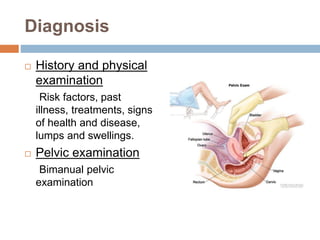
 Pelvic examination
Bimanual pelvic
examination
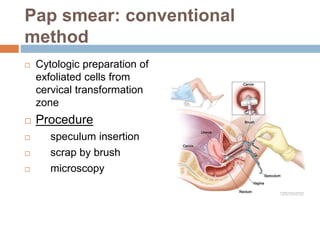
Pap smear: conventional
method
 Cytologic preparation of
exfoliated cells from
cervical transformation
zone
 Procedure
 speculum insertion
 scrap by brush
 microscopy
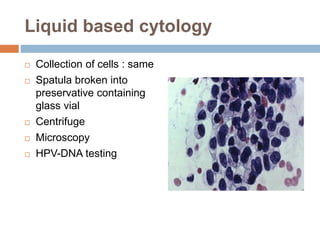
Liquid based cytology
 Collection of cells : same
 Spatula broken into
preservative containing
glass vial
 Centrifuge
 Microscopy
 HPV-DNA testing
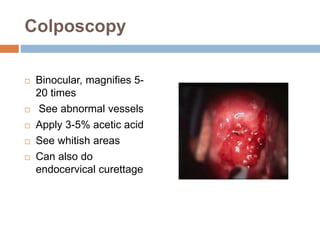
Colposcopy
 Binocular, magnifies 5-
20 times
 See abnormal vessels
 Apply 3-5% acetic acid
 See whitish areas
 Can also do
endocervical curettage
Biopsy
 When abnormal cells are found on cytology
 Simple biopsy
 Small amount of tissue removed in doctor’s office
 Cone biopsy
 Cone of tissue removed, need to visit hospital
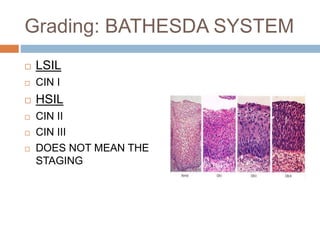
Grading: BATHESDA SYSTEM
 LSIL
 CIN I
 HSIL
 CIN II
 CIN III
 DOES NOT MEAN THE
STAGING
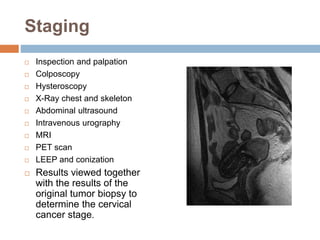
Staging
 Inspection and palpation
 Colposcopy
 Hysteroscopy
 X-Ray chest and skeleton
 Abdominal ultrasound
 Intravenous urography
 MRI
 PET scan
 LEEP and conization
 Results viewed together
with the results of the
original tumor biopsy to
determine the cervical
cancer stage.
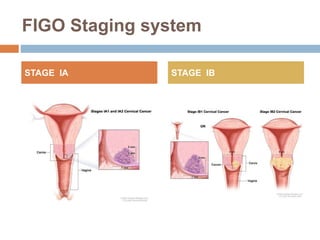
FIGO Staging system
STAGE IA STAGE IB
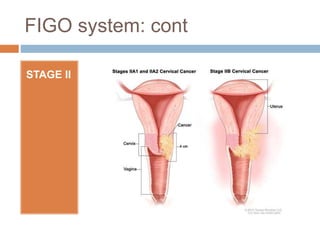
FIGO system: cont
STAGE II
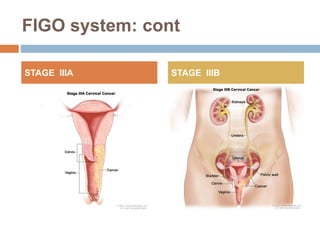
FIGO system: cont
STAGE IIIA STAGE IIIB
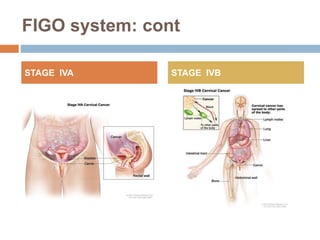
FIGO system: cont
STAGE IVA STAGE IVB
Treatment
 Depends upon
 Stage of tumor
 Size
 Age and general health
 Desire to have children
Treatment
 Stage I
 IA1: LEEP or cone biopsy,trachelectomy
 IA2: hystrectomy,remove lymph nodes as well
 Stage IB1 and Stage IIA
 Wertheim hysterectomy, radiation therapy
 Stage IIB –IVA
 Chemo radiotherapy followed by hysterectomy
 Recurrence
 Pelvic externation
Treatment during pregnancy
 Depends on the time of diagnosis
 1st trimester: external irradiation, abortion, internal
irradiation and chemotherapy
 Last trimester:hysterotomy or caesarean section
followed by radical hysterectomy
Palliative treatment
 At the advanced stage disease
 Pain free and comfort
 Expert nursing
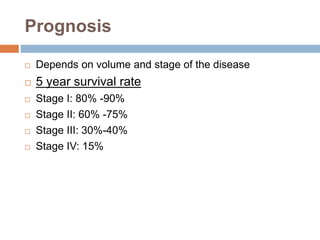
Prognosis
 Depends on volume and stage of the disease
 5 year survival rate
 Stage I: 80% -90%
 Stage II: 60% -75%
 Stage III: 30%-40%
 Stage IV: 15%
Screening and prevention
 Types of screening
 Conventional cytology
 Liquid-based monolayer cytology
 Human papillomavirus testing
 Testing in resource-poor areas
 Visual inspection to detect pre-cancer or cancer
Prevention
 HPV vaccination
 Quit smoking
 Limitation of sexual partners
 Barrier methods of contraception
 Regular Pap smears
 Diet with anti oxidants: vita A, vit B12, vit C, vit E, beta
carotene.
THANK YOU

Cervical carcinoma

  • 1.
  • 2.
    Cervical carcinoma  Definition Malignantneoplasm arising from the cells of cervix uteri.
  • 3.
    Epidemiology  Second mostcommon cancer in women.  Third most common cause of death among women.  16 per 100,000 cases reported globally every year.  80% cases from developing countries.  Pakistan:19.5 cases per 1lac population (WHO 2008)
  • 4.
    Anatomy of cervix Lowest part of uterus  1 inch in length  Anatomical divisions
  • 5.
    Histology  Stratified squamous epithelium Simple columnar epithelium  SQUAMOCLOMNAR JUNCTION  Nabothian cysts
  • 6.
    Types  squamous cellcarcinoma (about 80-85%)  adenocarcinoma (about 15%)  adenosquamous carcinoma  small cell carcinoma  neuroendocrine tumour  glassy cell carcinoma  villoglandular adenocarcinoma
  • 7.
    Risk factors  HumanPapillomavirus (HPV) Infection  Family History of Cervical Cancer  Age  Sexual and Reproductive History  Socioeconomic Status  Smoking  HIV Infection  In Utero DES Exposure  Long-term use of oral contraceptives
  • 8.
    Human Papillomavirus  Small,circular, double stranded DNA genome.  150-200 types of HPV known  15 are classified as high- risk types (16, 18, 31, 33, 35, 39, 45, 51, 52, 56, 58, 59, 68, 73, and 82)  Infects rapidly dividing cells at squamocolumnar junction  Oncogenes:E6 and E7
  • 9.
    Symptoms  Asymptomatic  Postcoitalbleed  Intermenstrual bleed  Postmenopausal bleed  Malodorous vaginal discharge  Urinary frequency, retention  Sciatic pain  Swelling of lower extremity(s)  Urinary/fecal incontinence  Bone fractures
  • 10.
    Diagnosis  History andphysical examination  Papanicolaou smear/liquid based cytology  HPV-DNA testing  Colposcopy: endocervical curettage  Per rectal examination  Biopsy
  • 11.
    Diagnosis  History andphysical examination Risk factors, past illness, treatments, signs of health and disease, lumps and swellings.  Pelvic examination Bimanual pelvic examination
  • 12.
    Pap smear: conventional method Cytologic preparation of exfoliated cells from cervical transformation zone  Procedure  speculum insertion  scrap by brush  microscopy
  • 13.
    Liquid based cytology Collection of cells : same  Spatula broken into preservative containing glass vial  Centrifuge  Microscopy  HPV-DNA testing
  • 14.
    Colposcopy  Binocular, magnifies5- 20 times  See abnormal vessels  Apply 3-5% acetic acid  See whitish areas  Can also do endocervical curettage
  • 15.
    Biopsy  When abnormalcells are found on cytology  Simple biopsy  Small amount of tissue removed in doctor’s office  Cone biopsy  Cone of tissue removed, need to visit hospital
  • 16.
    Grading: BATHESDA SYSTEM LSIL  CIN I  HSIL  CIN II  CIN III  DOES NOT MEAN THE STAGING
  • 17.
    Staging  Inspection andpalpation  Colposcopy  Hysteroscopy  X-Ray chest and skeleton  Abdominal ultrasound  Intravenous urography  MRI  PET scan  LEEP and conization  Results viewed together with the results of the original tumor biopsy to determine the cervical cancer stage.
  • 18.
  • 19.
  • 20.
    FIGO system: cont STAGEIIIA STAGE IIIB
  • 21.
  • 22.
    Treatment  Depends upon Stage of tumor  Size  Age and general health  Desire to have children
  • 23.
    Treatment  Stage I IA1: LEEP or cone biopsy,trachelectomy  IA2: hystrectomy,remove lymph nodes as well  Stage IB1 and Stage IIA  Wertheim hysterectomy, radiation therapy  Stage IIB –IVA  Chemo radiotherapy followed by hysterectomy  Recurrence  Pelvic externation
  • 24.
    Treatment during pregnancy Depends on the time of diagnosis  1st trimester: external irradiation, abortion, internal irradiation and chemotherapy  Last trimester:hysterotomy or caesarean section followed by radical hysterectomy
  • 25.
    Palliative treatment  Atthe advanced stage disease  Pain free and comfort  Expert nursing
  • 26.
    Prognosis  Depends onvolume and stage of the disease  5 year survival rate  Stage I: 80% -90%  Stage II: 60% -75%  Stage III: 30%-40%  Stage IV: 15%
  • 27.
    Screening and prevention Types of screening  Conventional cytology  Liquid-based monolayer cytology  Human papillomavirus testing  Testing in resource-poor areas  Visual inspection to detect pre-cancer or cancer
  • 28.
    Prevention  HPV vaccination Quit smoking  Limitation of sexual partners  Barrier methods of contraception  Regular Pap smears  Diet with anti oxidants: vita A, vit B12, vit C, vit E, beta carotene.
  • 29.