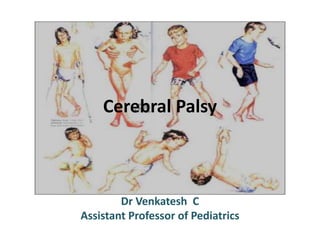
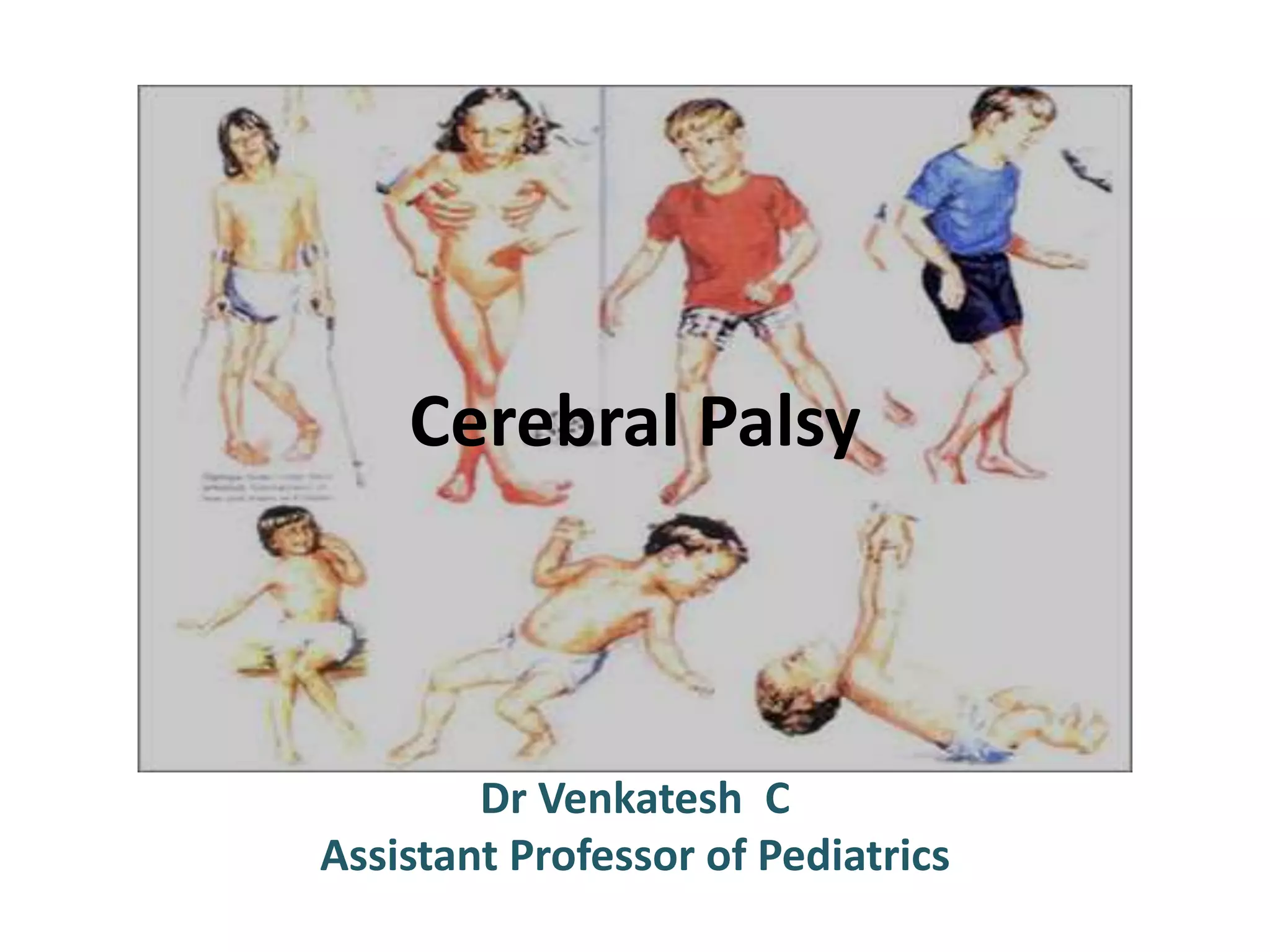
Cerebral Palsy 
Dr Venkatesh C 
Assistant Professor of Pediatrics
Introduction 
• Major cause of disability in children 
• Incidence 1 in 500 births 
• 70-80% are due to prenatal factors 
• No known cure, Prevention is the key.
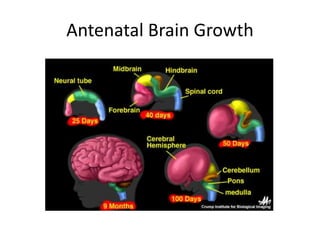
Antenatal Brain Growth
Postnatal Brain Growth 
• Brain growth continues postnatally well into 
adolescence 
• More than 90% Brain growth is complete by 2 
years 
• As age advances, myelination increases with 
pruning of synapses
Definition 
• Disorder of movement and posture 
• Non-progressive insult 
• growing brain 
• Dynamic manifestations
Aetiology 
• Antenatal- Extreme prematurity, Multiple 
gestation, IEM, Genetic diseases, Brain 
malformation, Congenital infection, maternal 
toxemia, placental abnormalities, 
coagulopathy, Heamorrhage 
• Birth- Low birth weight, MSL, Infection, 
trauma, Kernicterus 
• Postnatal- infection, trauma, toxins
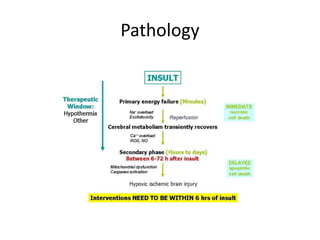
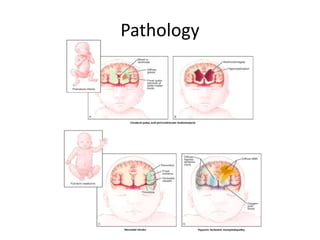
Pathology
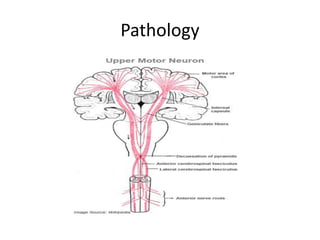
Pathology
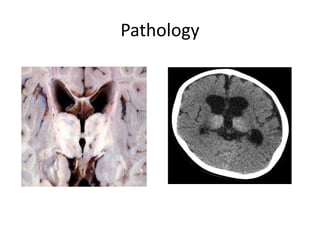
Pathology
Pathology
Types 
• Spastic 
• Dyskinetic 
• Hypotonic/ataxic 
• Mixed
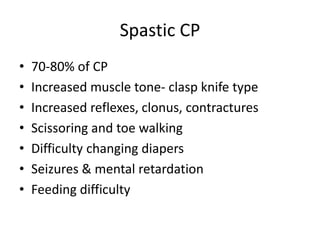
Spastic CP 
• 70-80% of CP 
• Increased muscle tone- clasp knife type 
• Increased reflexes, clonus, contractures 
• Scissoring and toe walking 
• Difficulty changing diapers 
• Seizures & mental retardation 
• Feeding difficulty
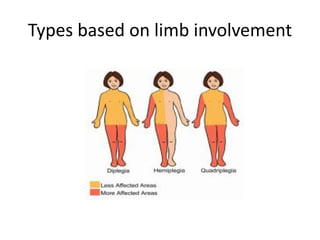
Types based on limb involvement
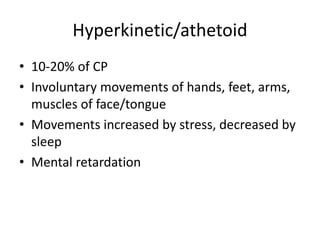
Hyperkinetic/athetoid 
• 10-20% of CP 
• Involuntary movements of hands, feet, arms, 
muscles of face/tongue 
• Movements increased by stress, decreased by 
sleep 
• Mental retardation
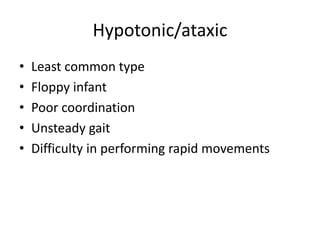
Hypotonic/ataxic 
• Least common type 
• Floppy infant 
• Poor coordination 
• Unsteady gait 
• Difficulty in performing rapid movements
Mixed 
• Combination of above 
• Spastic and athetoid most common 
• Hypotonic and athetoid 
• Variable frequency of seizures, MR
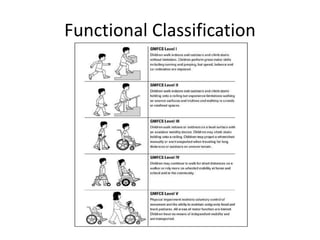
Functional Classification
Early markers 
• Persistent fisting/ cortical thumb 
• Persistent primitive reflexes 
• Irritability 
• Delayed development 
• Early hand preference
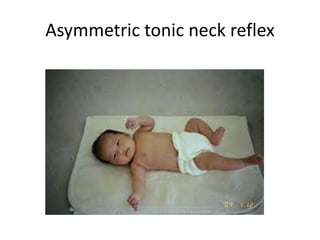
Asymmetric tonic neck reflex
Diagnosis 
• Good history and physical examination 
• Neuroimaging CT/MRI 
• IU infection screen 
• Metabolic & genetic testing 
• Coagulation studies 
• Screening for co-morbidity – vision, hearing, 
seizures
Treatment 
• Multi-disciplinary approach 
• Early stimulation 
• Monitoring growth, nutrition 
• Vision and hearing assessment 
• Control of seizures 
• Reduce spasticity and contractures 
• Promote self care
Prognosis 
• No head control by age 1- unlikely to walk 
• Not sitting by 4 yrs- 99% will not walk 
• Sits unsupported by 2 yrs- 100% will walk
Prevention 
• Proper antenatal care and fetal monitoring 
• Hypothermia 
• Magnesium sulphate

Cerebral palsy

  • 1.
    Cerebral Palsy DrVenkatesh C Assistant Professor of Pediatrics
  • 2.
    Introduction • Majorcause of disability in children • Incidence 1 in 500 births • 70-80% are due to prenatal factors • No known cure, Prevention is the key.
  • 3.
  • 4.
    Postnatal Brain Growth • Brain growth continues postnatally well into adolescence • More than 90% Brain growth is complete by 2 years • As age advances, myelination increases with pruning of synapses
  • 5.
    Definition • Disorderof movement and posture • Non-progressive insult • growing brain • Dynamic manifestations
  • 6.
    Aetiology • Antenatal-Extreme prematurity, Multiple gestation, IEM, Genetic diseases, Brain malformation, Congenital infection, maternal toxemia, placental abnormalities, coagulopathy, Heamorrhage • Birth- Low birth weight, MSL, Infection, trauma, Kernicterus • Postnatal- infection, trauma, toxins
  • 7.
  • 8.
  • 9.
  • 10.
  • 11.
    Types • Spastic • Dyskinetic • Hypotonic/ataxic • Mixed
  • 12.
    Spastic CP •70-80% of CP • Increased muscle tone- clasp knife type • Increased reflexes, clonus, contractures • Scissoring and toe walking • Difficulty changing diapers • Seizures & mental retardation • Feeding difficulty
  • 13.
    Types based onlimb involvement
  • 14.
    Hyperkinetic/athetoid • 10-20%of CP • Involuntary movements of hands, feet, arms, muscles of face/tongue • Movements increased by stress, decreased by sleep • Mental retardation
  • 15.
    Hypotonic/ataxic • Leastcommon type • Floppy infant • Poor coordination • Unsteady gait • Difficulty in performing rapid movements
  • 16.
    Mixed • Combinationof above • Spastic and athetoid most common • Hypotonic and athetoid • Variable frequency of seizures, MR
  • 17.
  • 18.
    Early markers •Persistent fisting/ cortical thumb • Persistent primitive reflexes • Irritability • Delayed development • Early hand preference
  • 19.
  • 20.
    Diagnosis • Goodhistory and physical examination • Neuroimaging CT/MRI • IU infection screen • Metabolic & genetic testing • Coagulation studies • Screening for co-morbidity – vision, hearing, seizures
  • 21.
    Treatment • Multi-disciplinaryapproach • Early stimulation • Monitoring growth, nutrition • Vision and hearing assessment • Control of seizures • Reduce spasticity and contractures • Promote self care
  • 22.
    Prognosis • Nohead control by age 1- unlikely to walk • Not sitting by 4 yrs- 99% will not walk • Sits unsupported by 2 yrs- 100% will walk
  • 23.
    Prevention • Properantenatal care and fetal monitoring • Hypothermia • Magnesium sulphate