FOOD SPOILAGE
(c)PDST Home Economics
CAUSES OF FOOD SPOILAGE
• 1. Moisture loss
• 2. Enzyme action
• 3. Microbial contamination
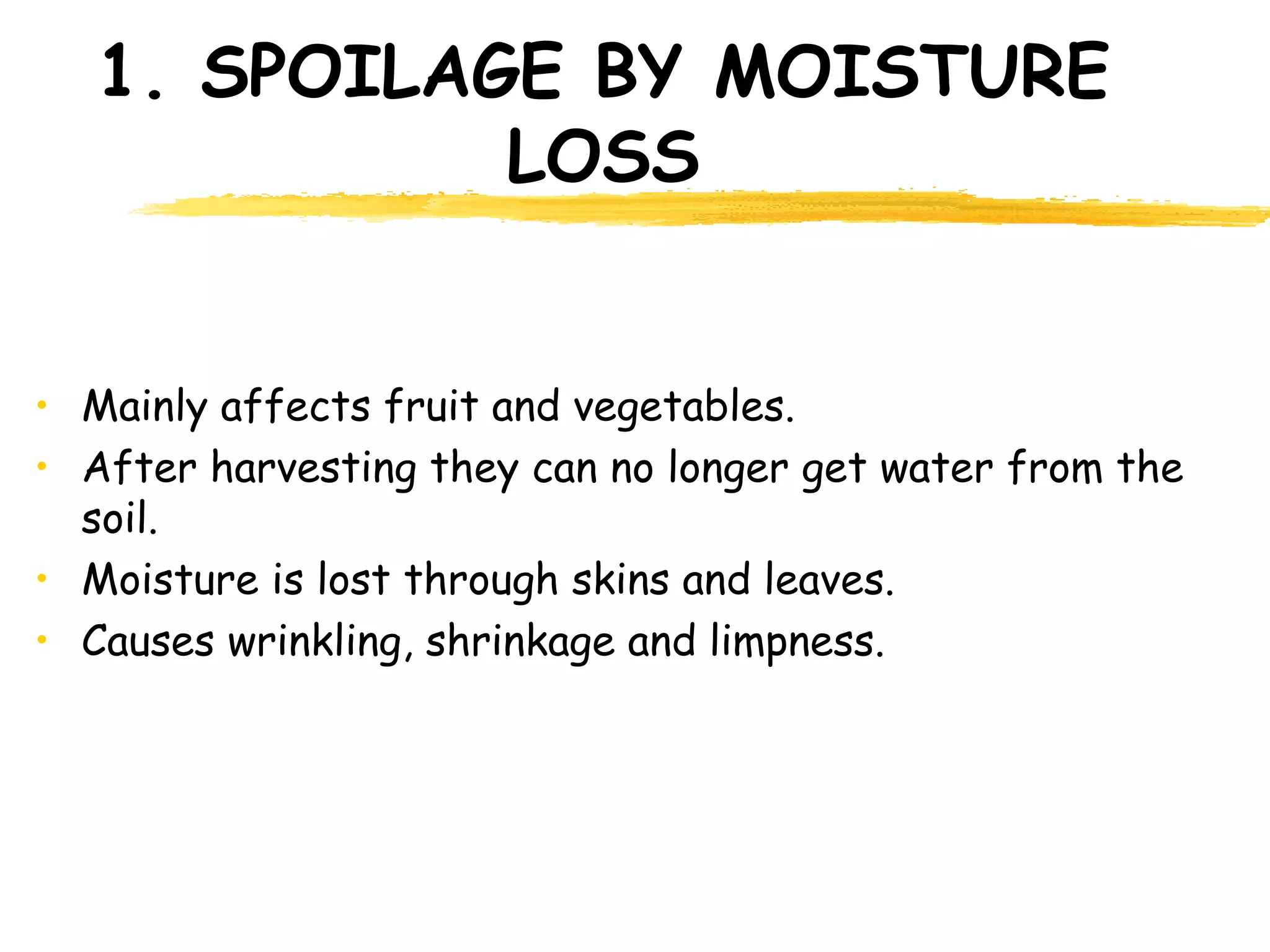
1. SPOILAGE BY MOISTURE
LOSS
• Mainly affects fruit and vegetables.
• After harvesting they can no longer get water from the
soil.
• Moisture is lost through skins and leaves.
• Causes wrinkling, shrinkage and limpness.
2. ENZYME ACTION
• Ripening
Enzymes cause food to ripen, then become over-ripe and
eventually decay. Starch changes to sugar, colour
changes and texture softens.
• Browning
When certain foods are cut and the surface exposed to
air, enzymes cause them to turn brown. e.g. apples,
• Enzymatic rotting
Enzymes in fish cause deterioration even at low
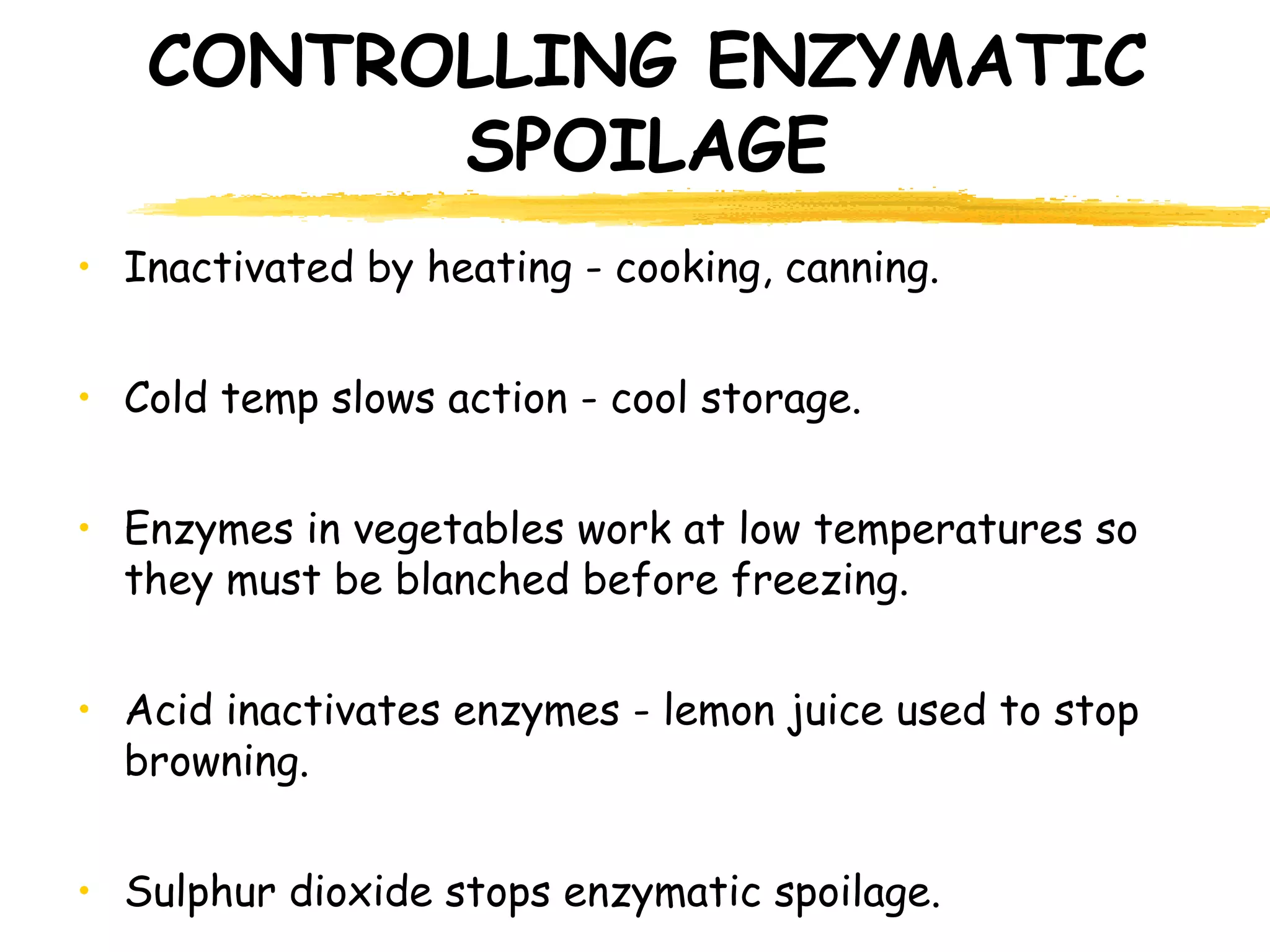
CONTROLLING ENZYMATIC
SPOILAGE
• Inactivated by heating - cooking, canning.
• Cold temp slows action - cool storage.
• Enzymes in vegetables work at low temperatures so
they must be blanched before freezing.
• Acid inactivates enzymes - lemon juice used to stop
browning.
• Sulphur dioxide stops enzymatic spoilage.
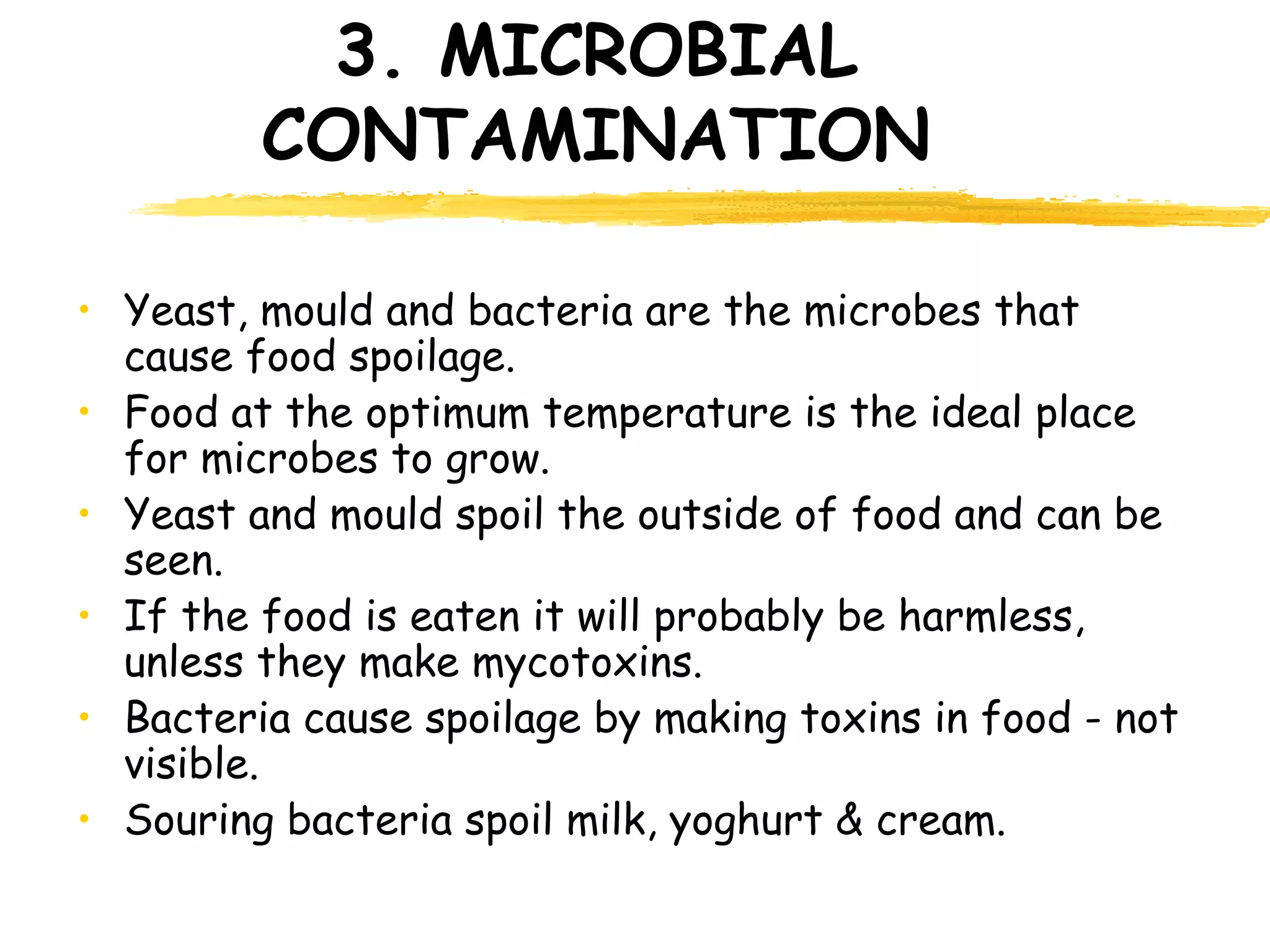
3. MICROBIAL
CONTAMINATION
• Yeast, mould and bacteria are the microbes that
cause food spoilage.
• Food at the optimum temperature is the ideal place
for microbes to grow.
• Yeast and mould spoil the outside of food and can be
seen.
• If the food is eaten it will probably be harmless,
unless they make mycotoxins.
• Bacteria cause spoilage by making toxins in food - not
visible.
• Souring bacteria spoil milk, yoghurt & cream.
FOOD POISONING
3 types
• 1.Chemical –Caused by pesticides, antibiotics, metals.
• 2.Biological – Caused by toxins naturally present in
food e.g. red kidney beans, green potatoes.
• 3.Bacterial - Caused by pathogenic bacteria in food
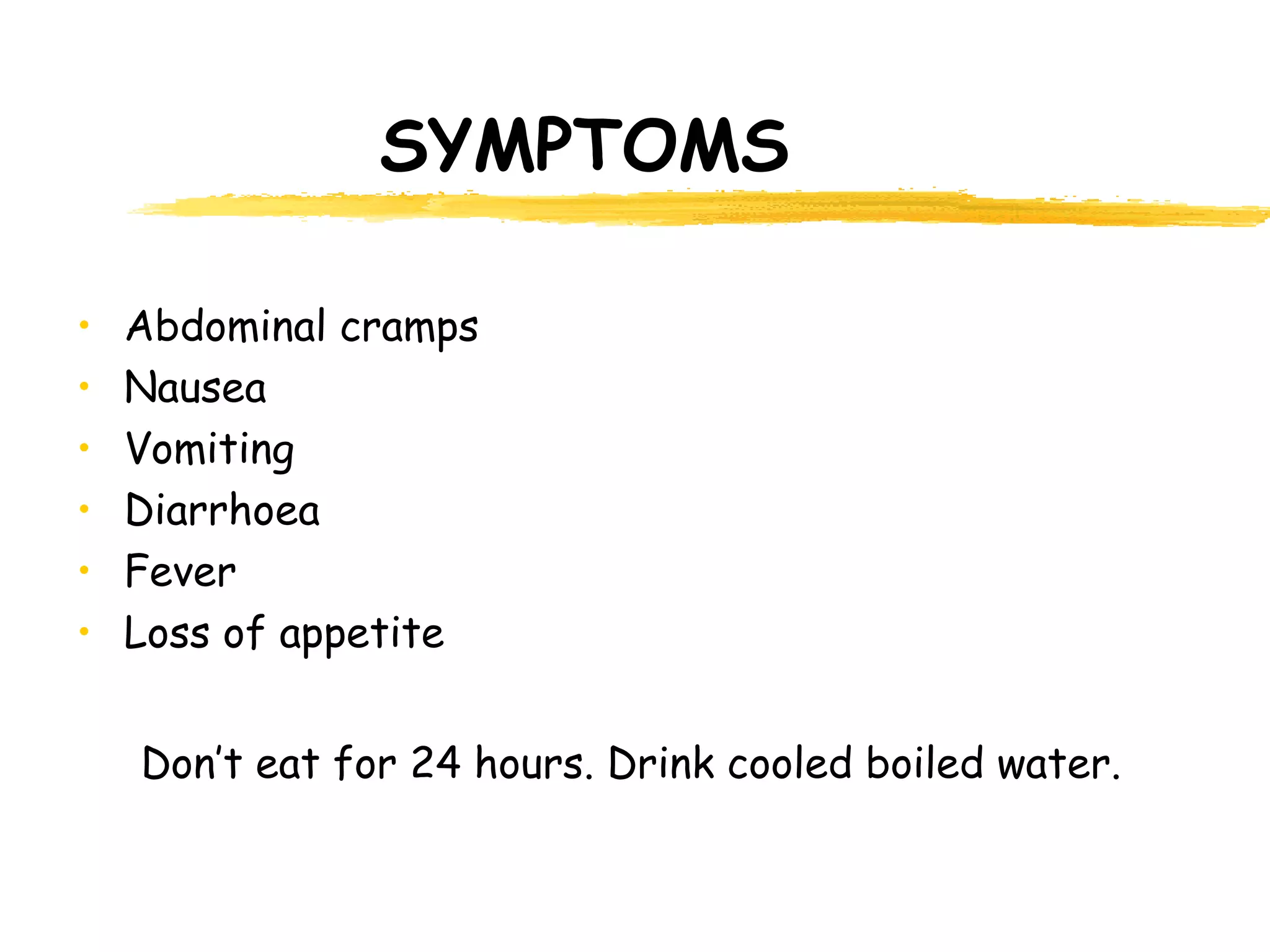
SYMPTOMS
• Abdominal cramps
• Nausea
• Vomiting
• Diarrhoea
• Fever
• Loss of appetite
Don’t eat for 24 hours. Drink cooled boiled water.
BACTERIAL FOOD
POISONING
2 types
• 1. Toxic
• 2. Infectious
(H) 1. TOXIC BACTERIAL FOOD
POISONING
• Caused by eating food containing toxins.
• Exotoxins are made by bacteria in the food before
and after it’s eaten.
• Exotoxins are difficult to destroy - must be boiled
for 30minutes.
• Symptoms develop quickly - within a few hours of
eating the food.
(H) 2. INFECTIOUS BACTERIAL
FOOD POISONING
• Caused by eating food containing large numbers of
pathogenic bacteria that produce endotoxins.
• The endotoxins are released when the bacteria die in your
intestine.
• Endotoxins are easily destroyed by normal
cooking/heating of food.
• Symptoms take longer to occur - over 12 hours.
(H) HIGH RISK FOODS
• Liquid protein foods.
• Milk, cream, eggs.
• Meat, poultry, fish.
• Meat dishes e.g. pies, gravies.
• Soups and stocks.
• Egg dishes e.g. custard, mayonnaise.
• Reheated dishes.

Food spoilage

  • 1.
  • 2.
    CAUSES OF FOODSPOILAGE • 1. Moisture loss • 2. Enzyme action • 3. Microbial contamination
  • 3.
    1. SPOILAGE BYMOISTURE LOSS • Mainly affects fruit and vegetables. • After harvesting they can no longer get water from the soil. • Moisture is lost through skins and leaves. • Causes wrinkling, shrinkage and limpness.
  • 4.
    2. ENZYME ACTION •Ripening Enzymes cause food to ripen, then become over-ripe and eventually decay. Starch changes to sugar, colour changes and texture softens. • Browning When certain foods are cut and the surface exposed to air, enzymes cause them to turn brown. e.g. apples, • Enzymatic rotting Enzymes in fish cause deterioration even at low
  • 5.
    CONTROLLING ENZYMATIC SPOILAGE • Inactivatedby heating - cooking, canning. • Cold temp slows action - cool storage. • Enzymes in vegetables work at low temperatures so they must be blanched before freezing. • Acid inactivates enzymes - lemon juice used to stop browning. • Sulphur dioxide stops enzymatic spoilage.
  • 6.
    3. MICROBIAL CONTAMINATION • Yeast,mould and bacteria are the microbes that cause food spoilage. • Food at the optimum temperature is the ideal place for microbes to grow. • Yeast and mould spoil the outside of food and can be seen. • If the food is eaten it will probably be harmless, unless they make mycotoxins. • Bacteria cause spoilage by making toxins in food - not visible. • Souring bacteria spoil milk, yoghurt & cream.
  • 7.
    FOOD POISONING 3 types •1.Chemical –Caused by pesticides, antibiotics, metals. • 2.Biological – Caused by toxins naturally present in food e.g. red kidney beans, green potatoes. • 3.Bacterial - Caused by pathogenic bacteria in food
  • 8.
    SYMPTOMS • Abdominal cramps •Nausea • Vomiting • Diarrhoea • Fever • Loss of appetite Don’t eat for 24 hours. Drink cooled boiled water.
  • 9.
    BACTERIAL FOOD POISONING 2 types •1. Toxic • 2. Infectious
  • 10.
    (H) 1. TOXICBACTERIAL FOOD POISONING • Caused by eating food containing toxins. • Exotoxins are made by bacteria in the food before and after it’s eaten. • Exotoxins are difficult to destroy - must be boiled for 30minutes. • Symptoms develop quickly - within a few hours of eating the food.
  • 11.
    (H) 2. INFECTIOUSBACTERIAL FOOD POISONING • Caused by eating food containing large numbers of pathogenic bacteria that produce endotoxins. • The endotoxins are released when the bacteria die in your intestine. • Endotoxins are easily destroyed by normal cooking/heating of food. • Symptoms take longer to occur - over 12 hours.
  • 12.
    (H) HIGH RISKFOODS • Liquid protein foods. • Milk, cream, eggs. • Meat, poultry, fish. • Meat dishes e.g. pies, gravies. • Soups and stocks. • Egg dishes e.g. custard, mayonnaise. • Reheated dishes.