FOOD PROCESSING
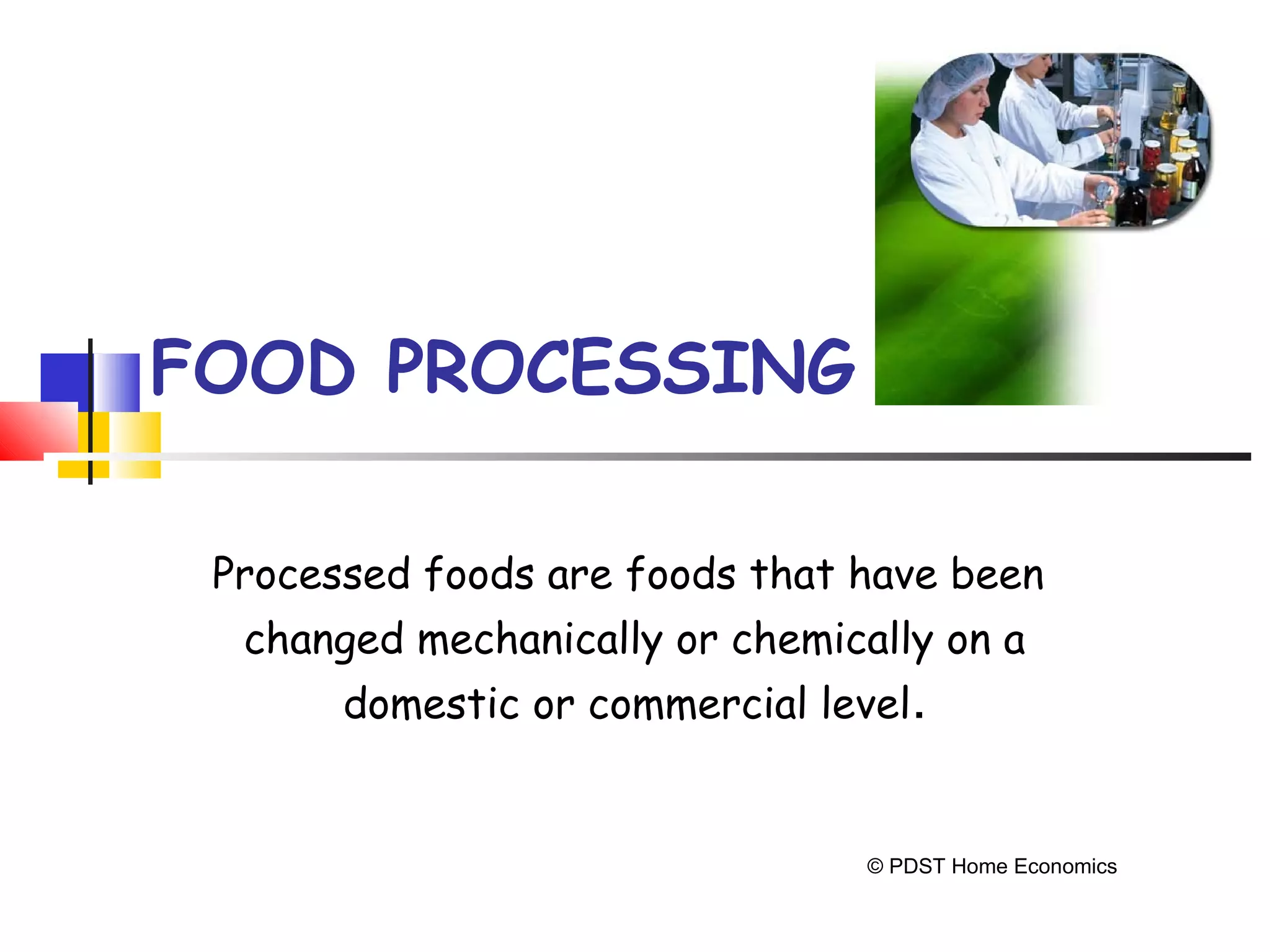
Processed foods are foods that have been
changed mechanically or chemically on a
domestic or commercial level.
© PDST Home Economics
REASONS FOR PROCESSING
FOODS
 Make them safe to eat.
 Save time & energy in the home.
 Create new food products.
 For healthier food options.
 Vary the diet.
 Increase shelf-life.
 Ensure wide choice all year round.
 Allow for fortification.
Primary processing:
 Changes a basic foodstuff, to change keeping quality, make
it saleable and ready for cooking and eating.
 E.g. milling wheat, pasteurising milk, making vegetable oil
from seeds & nuts.
Secondary processing (convenience foods):
 Takes a basic processed food and uses it to produce a food
product.
 E.g. making margarine from vegetable oil, making bread,
cakes, biscuits from flour, making dairy products from
milk, convenience meals.
TYPES OF PROCESSING
RANGE OF PROCESSED
FOODS
 Milk ,cheese, yoghurt.
 Butter, margarine,
spreads.
 Flour, pasta, rice.
 Bread, cakes, biscuits,
breakfast cereals.
 Convenience foods.
CONVENIENCE FOODS
Foods partly or totally prepared so it is easier for
consumer to use.
ADVANTAGES
 Save time, labour & fuel.
 Little cooking skill needed.
 Less waste.
 Often fortified.
 Easily stored.
 Wide variety.
DISADVANTAGES
 More expensive.
 Contain additives.
 Low in fibre.
 High in salt, sugar & fat.
 Inferior taste, colour &
texture.
CLASSIFICATION OF
CONVENIENCE FOODS
EXAMPLES OF EACH
CLASS
Frozen Meats, fish, vegetables,
fruit, complete meals,
desserts
Dried Milk, soups, sauces,
fruit, cakes/bread
mixes, TVP
Canned/bottled Fish, vegetables, soup,
fruit, jam, pickles,
chutney, sauces.
Cook-chill (refrigerated) Cartons/tubs soup,
sauces, quiche, lasagne,
sausage rolls
Take-away food Chips, burgers, pizza,
breakfast rolls etc
FUNCTIONAL
FOODS  Foods with health promoting
properties.
 Plant sterols - reduce
cholesterol e.g. “Benecol”,
“Flora Pro-Active”.
 Probiotics - improve the
working of the digestive
system e.g. Bio yoghurts -
“Activia”, “Vitallity”.
 Omega3 fatty acids -
reduce heart disease and
cancer - milk, yoghurt.
 Any fortified food
PROFILE OF 3 TYPES OF
PROCESSED FOODS
 A food that undergoes extensive processing e.g.
milling wheat to produce flour.
 A food that is processed to extend its shelf life
e.g. long life milk.
 Added value food – processing of raw materials to
make a product with a high economic value e.g.
cooked-chill food.
GENETICALLY MODIFIED
FOODS – GM FOODS
 Foods that have had their DNA altered to change
the characteristics of the food. E.g. size, speed of
ripening, susceptibility to a disease.
 Very restricted use in Ireland. Modified soya
beans and maize are used.
 EU regulations demand the labelling of genetically
modified food.
GENETICALLY MODIFIED
FOODS – GM FOODS
 Foods that have had their DNA altered to change
the characteristics of the food. E.g. size, speed of
ripening, susceptibility to a disease.
 Very restricted use in Ireland. Modified soya
beans and maize are used.
 EU regulations demand the labelling of genetically
modified food.

Food processing

  • 1.
    FOOD PROCESSING Processed foodsare foods that have been changed mechanically or chemically on a domestic or commercial level. © PDST Home Economics
  • 2.
    REASONS FOR PROCESSING FOODS Make them safe to eat.  Save time & energy in the home.  Create new food products.  For healthier food options.  Vary the diet.  Increase shelf-life.  Ensure wide choice all year round.  Allow for fortification.
  • 3.
    Primary processing:  Changesa basic foodstuff, to change keeping quality, make it saleable and ready for cooking and eating.  E.g. milling wheat, pasteurising milk, making vegetable oil from seeds & nuts. Secondary processing (convenience foods):  Takes a basic processed food and uses it to produce a food product.  E.g. making margarine from vegetable oil, making bread, cakes, biscuits from flour, making dairy products from milk, convenience meals. TYPES OF PROCESSING
  • 4.
    RANGE OF PROCESSED FOODS Milk ,cheese, yoghurt.  Butter, margarine, spreads.  Flour, pasta, rice.  Bread, cakes, biscuits, breakfast cereals.  Convenience foods.
  • 5.
    CONVENIENCE FOODS Foods partlyor totally prepared so it is easier for consumer to use. ADVANTAGES  Save time, labour & fuel.  Little cooking skill needed.  Less waste.  Often fortified.  Easily stored.  Wide variety. DISADVANTAGES  More expensive.  Contain additives.  Low in fibre.  High in salt, sugar & fat.  Inferior taste, colour & texture.
  • 6.
    CLASSIFICATION OF CONVENIENCE FOODS EXAMPLESOF EACH CLASS Frozen Meats, fish, vegetables, fruit, complete meals, desserts Dried Milk, soups, sauces, fruit, cakes/bread mixes, TVP Canned/bottled Fish, vegetables, soup, fruit, jam, pickles, chutney, sauces. Cook-chill (refrigerated) Cartons/tubs soup, sauces, quiche, lasagne, sausage rolls Take-away food Chips, burgers, pizza, breakfast rolls etc
  • 7.
    FUNCTIONAL FOODS  Foodswith health promoting properties.  Plant sterols - reduce cholesterol e.g. “Benecol”, “Flora Pro-Active”.  Probiotics - improve the working of the digestive system e.g. Bio yoghurts - “Activia”, “Vitallity”.  Omega3 fatty acids - reduce heart disease and cancer - milk, yoghurt.  Any fortified food
  • 8.
    PROFILE OF 3TYPES OF PROCESSED FOODS  A food that undergoes extensive processing e.g. milling wheat to produce flour.  A food that is processed to extend its shelf life e.g. long life milk.  Added value food – processing of raw materials to make a product with a high economic value e.g. cooked-chill food.
  • 9.
    GENETICALLY MODIFIED FOODS –GM FOODS  Foods that have had their DNA altered to change the characteristics of the food. E.g. size, speed of ripening, susceptibility to a disease.  Very restricted use in Ireland. Modified soya beans and maize are used.  EU regulations demand the labelling of genetically modified food.
  • 10.
    GENETICALLY MODIFIED FOODS –GM FOODS  Foods that have had their DNA altered to change the characteristics of the food. E.g. size, speed of ripening, susceptibility to a disease.  Very restricted use in Ireland. Modified soya beans and maize are used.  EU regulations demand the labelling of genetically modified food.