Subject- Concrete
Technology
By
Mr. Denis Jangeed
Assistant Professor
Civil Engineering Department
Topic- Cement
What is cement?
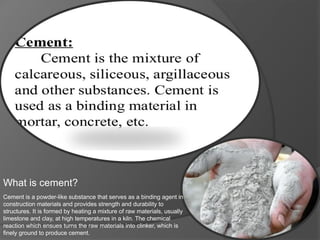
Cement is a powder-like substance that serves as a binding agent in
construction materials and provides strength and durability to
structures. It is formed by heating a mixture of raw materials, usually
limestone and clay, at high temperatures in a kiln. The chemical
reaction which ensues turns the raw materials into clinker, which is
finely ground to produce cement.
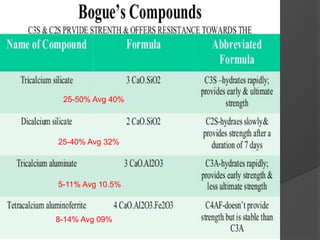
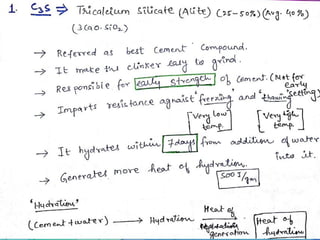
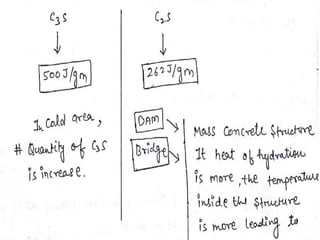
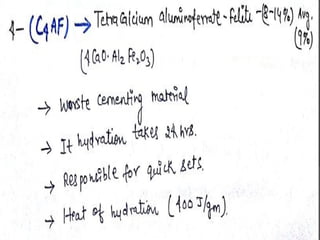
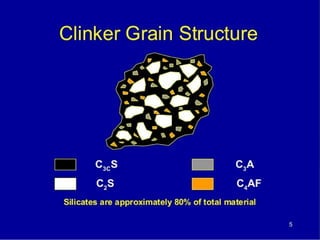
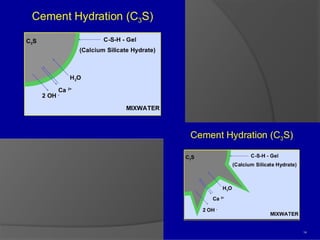
25-50% Avg 40%
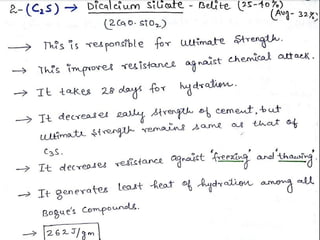
25-40% Avg 32%
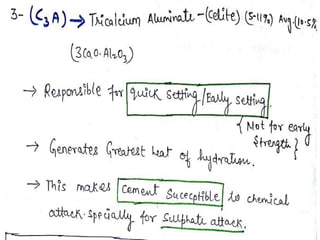
8-14% Avg 09%
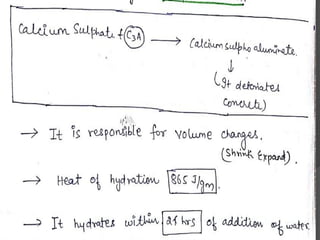
5-11% Avg 10.5%
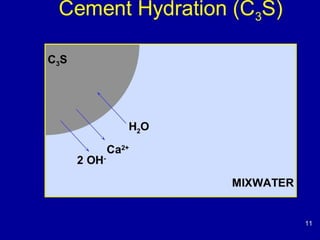
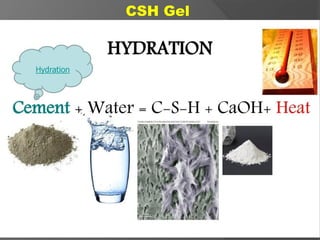
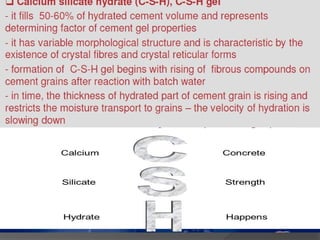
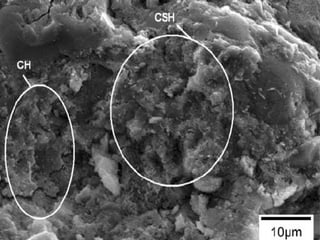
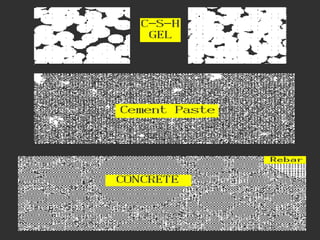
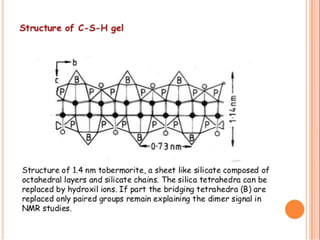
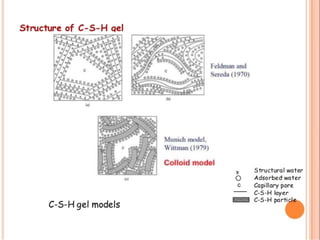
CSH Gel
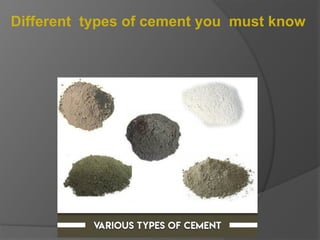
Different types of cement you must know
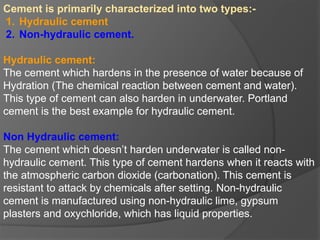
Cement is primarily characterized into two types:-
1. Hydraulic cement
2. Non-hydraulic cement.
Hydraulic cement:
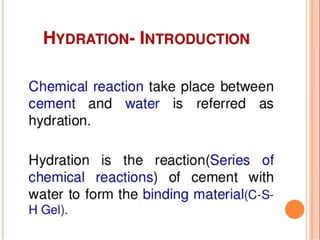
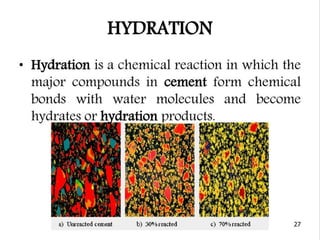
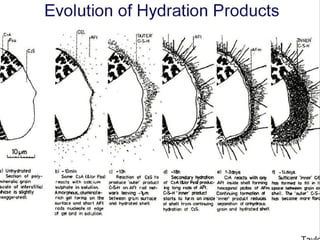
The cement which hardens in the presence of water because of
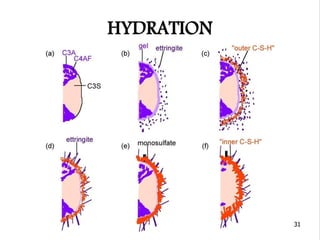
Hydration (The chemical reaction between cement and water).
This type of cement can also harden in underwater. Portland
cement is the best example for hydraulic cement.
Non Hydraulic cement:
The cement which doesn’t harden underwater is called non-
hydraulic cement. This type of cement hardens when it reacts with
the atmospheric carbon dioxide (carbonation). This cement is
resistant to attack by chemicals after setting. Non-hydraulic
cement is manufactured using non-hydraulic lime, gypsum
plasters and oxychloride, which has liquid properties.
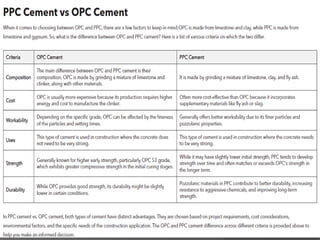
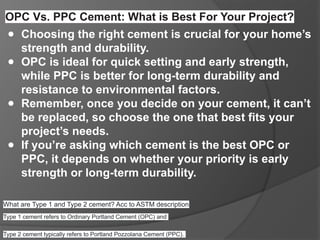
OPC Vs. PPC Cement: What is Best For Your Project?
● Choosing the right cement is crucial for your home’s
strength and durability.
● OPC is ideal for quick setting and early strength,
while PPC is better for long-term durability and
resistance to environmental factors.
● Remember, once you decide on your cement, it can’t
be replaced, so choose the one that best fits your
project’s needs.
● If you’re asking which cement is the best OPC or
PPC, it depends on whether your priority is early
strength or long-term durability.
What are Type 1 and Type 2 cement? Acc to ASTM description
Type 1 cement refers to Ordinary Portland Cement (OPC) and
Type 2 cement typically refers to Portland Pozzolana Cement (PPC).
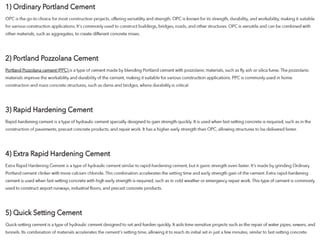
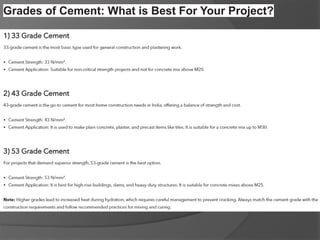
Grades of Cement: What is Best For Your Project?
Cement & its types in concrete technology.pptx

Cement & its types in concrete technology.pptx

  • 1.
    Subject- Concrete Technology By Mr. DenisJangeed Assistant Professor Civil Engineering Department Topic- Cement
  • 2.
    What is cement? Cementis a powder-like substance that serves as a binding agent in construction materials and provides strength and durability to structures. It is formed by heating a mixture of raw materials, usually limestone and clay, at high temperatures in a kiln. The chemical reaction which ensues turns the raw materials into clinker, which is finely ground to produce cement.
  • 16.
    25-50% Avg 40% 25-40%Avg 32% 8-14% Avg 09% 5-11% Avg 10.5%
  • 32.
  • 52.
    Different types ofcement you must know
  • 53.
    Cement is primarilycharacterized into two types:- 1. Hydraulic cement 2. Non-hydraulic cement. Hydraulic cement: The cement which hardens in the presence of water because of Hydration (The chemical reaction between cement and water). This type of cement can also harden in underwater. Portland cement is the best example for hydraulic cement. Non Hydraulic cement: The cement which doesn’t harden underwater is called non- hydraulic cement. This type of cement hardens when it reacts with the atmospheric carbon dioxide (carbonation). This cement is resistant to attack by chemicals after setting. Non-hydraulic cement is manufactured using non-hydraulic lime, gypsum plasters and oxychloride, which has liquid properties.
  • 55.
    OPC Vs. PPCCement: What is Best For Your Project? ● Choosing the right cement is crucial for your home’s strength and durability. ● OPC is ideal for quick setting and early strength, while PPC is better for long-term durability and resistance to environmental factors. ● Remember, once you decide on your cement, it can’t be replaced, so choose the one that best fits your project’s needs. ● If you’re asking which cement is the best OPC or PPC, it depends on whether your priority is early strength or long-term durability. What are Type 1 and Type 2 cement? Acc to ASTM description Type 1 cement refers to Ordinary Portland Cement (OPC) and Type 2 cement typically refers to Portland Pozzolana Cement (PPC).
  • 59.
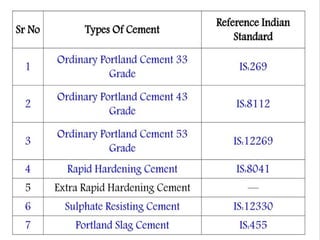
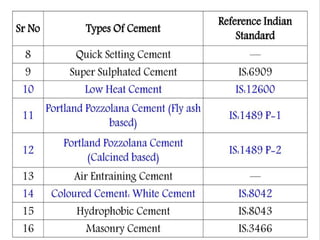
    Grades of Cement:What is Best For Your Project?