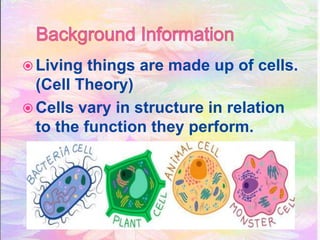
 Living things are made up of cells.
(Cell Theory)
 Cells vary in structure in relation
to the function they perform.
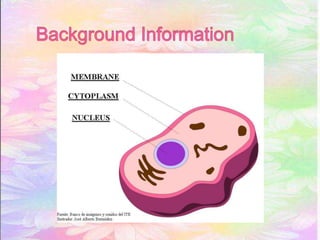
 Cells differ greatly in shape and size.
However they have the same main
parts:
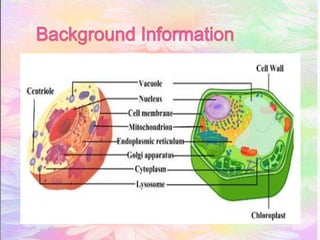
- cytoplasm, the part of the cell where
most life activities take place;
- cell membrane, which envelopes the
cytoplasm; and
- nucleus, the part of the cell where the
genetic material is formed.
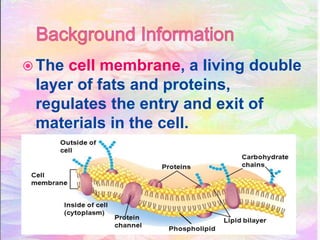
 The cell membrane, a living double
layer of fats and proteins,
regulates the entry and exit of
materials in the cell.
Found in the cytoplasm are the
following: mitochondria,
lysosomes, Golgi bodies,
endoplasmic reticulum,
ribosomes and vacuoles.
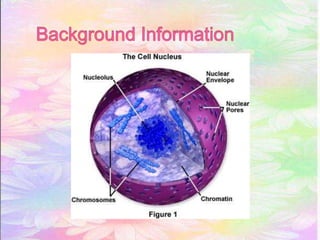
The nuclear membrane, a
double layer of fats and
proteins, covers the nucleus.
Inside it are the nuclear sap
(nucleoplasm), nucleolus and
chromosomes.
Growth
Development
Repair of damaged body parts
and tissues (gametes).
Reproduction
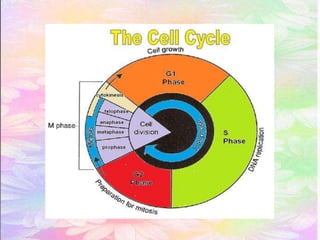
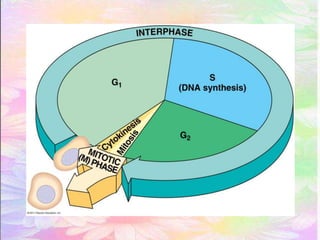
 cell grows, accumulates nutrients
and replicates its genetic material
– all important events that prepare
the cell division.
 three stages: G1 phase, S phase,
G2 phase
 90% of the entire cycle is devoted
to the interphase.
 cell is still young and undergoes
rapid growth, cell attains its
normal size
 organelles are formed
 DNA and proteins
 the longest phase in most cells
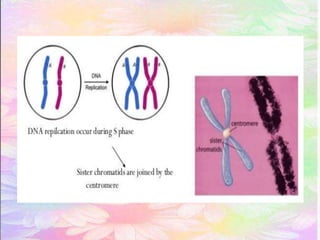
 DNA inside the chromosome
doubles by a process called
replication
 sister chromatid – strand of the
double-stranded chromosome
produced joined by the
centromere
 preparations for cell division
 cell synthesizes proteins and
continues to increase in size
 assembly of proteins
 RNA and proteins are made
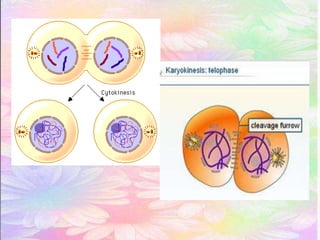
 cell undergoes division
 division of nucleus – karyokinesis
(nuclear division)
 2 types of karyokinesis: mitosis
and meiosis
 division of cytoplasm –
cytokinesis
Cellular organization and cell reproduction

Cellular organization and cell reproduction

  • 2.
     Living thingsare made up of cells. (Cell Theory)  Cells vary in structure in relation to the function they perform.
  • 3.
     Cells differgreatly in shape and size. However they have the same main parts: - cytoplasm, the part of the cell where most life activities take place; - cell membrane, which envelopes the cytoplasm; and - nucleus, the part of the cell where the genetic material is formed.
  • 5.
     The cellmembrane, a living double layer of fats and proteins, regulates the entry and exit of materials in the cell.
  • 6.
    Found in thecytoplasm are the following: mitochondria, lysosomes, Golgi bodies, endoplasmic reticulum, ribosomes and vacuoles.
  • 8.
    The nuclear membrane,a double layer of fats and proteins, covers the nucleus. Inside it are the nuclear sap (nucleoplasm), nucleolus and chromosomes.
  • 10.
    Growth Development Repair of damagedbody parts and tissues (gametes). Reproduction
  • 12.
     cell grows,accumulates nutrients and replicates its genetic material – all important events that prepare the cell division.  three stages: G1 phase, S phase, G2 phase  90% of the entire cycle is devoted to the interphase.
  • 14.
     cell isstill young and undergoes rapid growth, cell attains its normal size  organelles are formed  DNA and proteins  the longest phase in most cells
  • 15.
     DNA insidethe chromosome doubles by a process called replication  sister chromatid – strand of the double-stranded chromosome produced joined by the centromere
  • 17.
     preparations forcell division  cell synthesizes proteins and continues to increase in size  assembly of proteins  RNA and proteins are made
  • 18.
     cell undergoesdivision  division of nucleus – karyokinesis (nuclear division)  2 types of karyokinesis: mitosis and meiosis  division of cytoplasm – cytokinesis