The Basic Structure and Function 
of Cells 
By Ita P. Rodríguez 
3rd Grade
Definition of Cells 
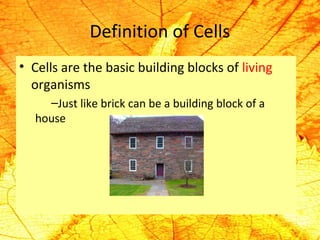
• Cells are the basic building blocks of living 
organisms 
–Just like brick can be a building block of a 
house
Definition of Cells 
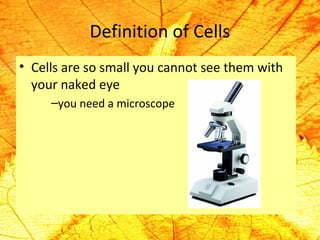
• Cells are so small you cannot see them with 
your naked eye 
–you need a microscope
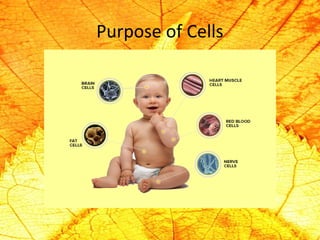
Purpose of Cells 
• The main purpose of a cell 
is to organize 
–Cells hold different pieces 
and each cell has a different 
set of jobs 
–Cells are small 
compartments that hold all of 
the biological equipment 
necessary to keep an 
organism alive and successful 
on Earth
Purpose of Cells
Types of Cells 
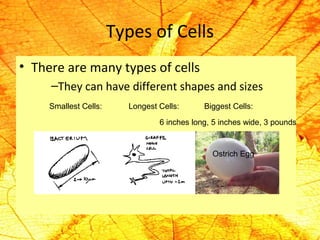
• There are many types of cells 
–They can have different shapes and sizes 
Smallest Cells: Longest Cells: Biggest Cells: 
6 inches long, 5 inches wide, 3 pounds 
Ostrich Egg
Types of Cells 
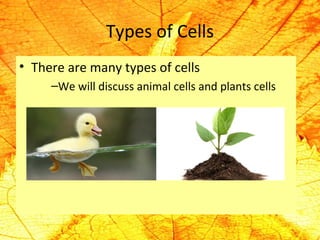
• There are many types of cells 
–We will discuss animal cells and plants cells
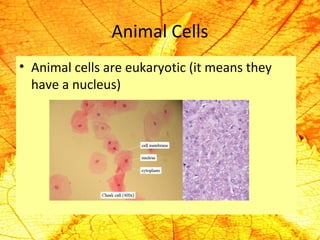
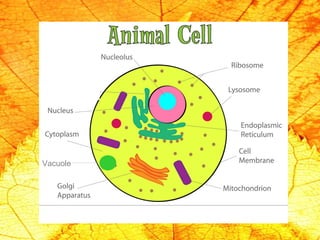
Animal Cells 
• Animal cells are eukaryotic (it means they 
have a nucleus)
Vacuole
Cell Parts 
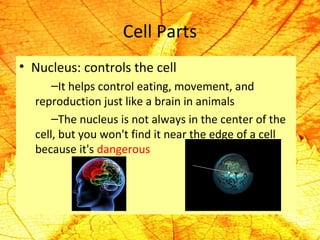
• Nucleus: controls the cell 
–It helps control eating, movement, and 
reproduction just like a brain in animals 
–The nucleus is not always in the center of the 
cell, but you won't find it near the edge of a cell 
because it's dangerous
Cell Parts 
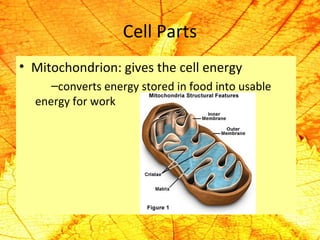
• Mitochondrion: gives the cell energy 
–converts energy stored in food into usable 
energy for work
Cell Parts 
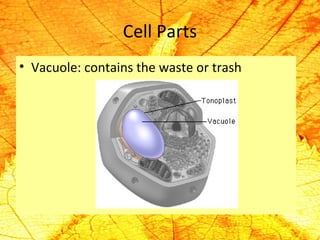
• Vacuole: contains the waste or trash
Cell Parts 
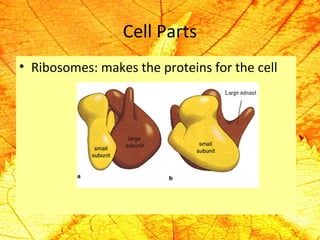
• Ribosomes: makes the proteins for the cell
Cell Parts 
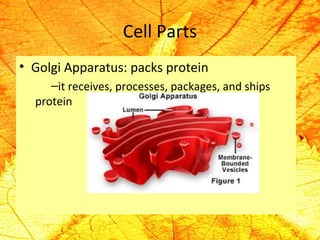
• Golgi Apparatus: packs protein 
–it receives, processes, packages, and ships 
protein
Cell Parts 
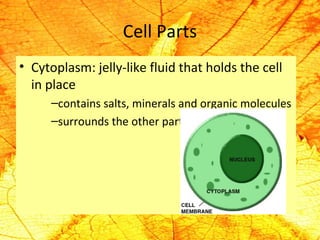
• Cytoplasm: jelly-like fluid that holds the cell 
in place 
–contains salts, minerals and organic molecules 
–surrounds the other parts
Cell Parts 
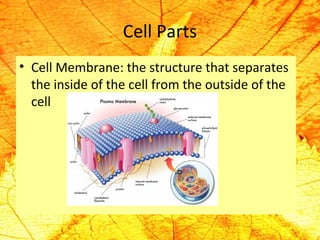
• Cell Membrane: the structure that separates 
the inside of the cell from the outside of the 
cell
Cell Parts 
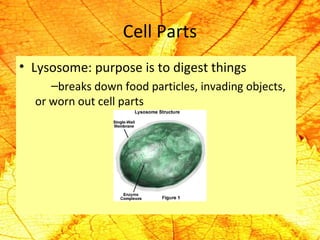
• Lysosome: purpose is to digest things 
–breaks down food particles, invading objects, 
or worn out cell parts
Plant Cells 
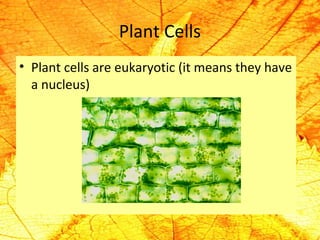
• Plant cells are eukaryotic (it means they have 
a nucleus)
Plant Cells 
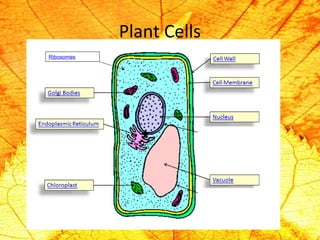
Ribosomes
Cell Parts 
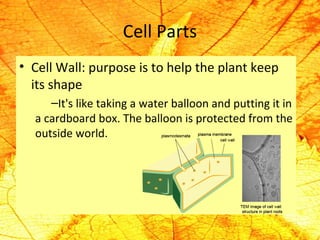
• Cell Wall: purpose is to help the plant keep 
its shape 
–It's like taking a water balloon and putting it in 
a cardboard box. The balloon is protected from the 
outside world.
Cell Parts 
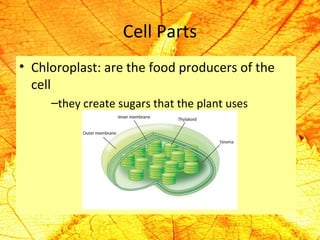
• Chloroplast: are the food producers of the 
cell 
–they create sugars that the plant uses
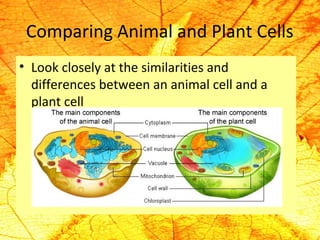
Comparing Animal and Plant Cells 
• Look closely at the similarities and 
differences between an animal cell and a 
plant cell
THE END

The basic structure and function of cells

  • 1.
    The Basic Structureand Function of Cells By Ita P. Rodríguez 3rd Grade
  • 2.
    Definition of Cells • Cells are the basic building blocks of living organisms –Just like brick can be a building block of a house
  • 3.
    Definition of Cells • Cells are so small you cannot see them with your naked eye –you need a microscope
  • 4.
    Purpose of Cells • The main purpose of a cell is to organize –Cells hold different pieces and each cell has a different set of jobs –Cells are small compartments that hold all of the biological equipment necessary to keep an organism alive and successful on Earth
  • 5.
  • 6.
    Types of Cells • There are many types of cells –They can have different shapes and sizes Smallest Cells: Longest Cells: Biggest Cells: 6 inches long, 5 inches wide, 3 pounds Ostrich Egg
  • 7.
    Types of Cells • There are many types of cells –We will discuss animal cells and plants cells
  • 8.
    Animal Cells •Animal cells are eukaryotic (it means they have a nucleus)
  • 9.
  • 10.
    Cell Parts •Nucleus: controls the cell –It helps control eating, movement, and reproduction just like a brain in animals –The nucleus is not always in the center of the cell, but you won't find it near the edge of a cell because it's dangerous
  • 11.
    Cell Parts •Mitochondrion: gives the cell energy –converts energy stored in food into usable energy for work
  • 12.
    Cell Parts •Vacuole: contains the waste or trash
  • 13.
    Cell Parts •Ribosomes: makes the proteins for the cell
  • 14.
    Cell Parts •Golgi Apparatus: packs protein –it receives, processes, packages, and ships protein
  • 15.
    Cell Parts •Cytoplasm: jelly-like fluid that holds the cell in place –contains salts, minerals and organic molecules –surrounds the other parts
  • 16.
    Cell Parts •Cell Membrane: the structure that separates the inside of the cell from the outside of the cell
  • 17.
    Cell Parts •Lysosome: purpose is to digest things –breaks down food particles, invading objects, or worn out cell parts
  • 18.
    Plant Cells •Plant cells are eukaryotic (it means they have a nucleus)
  • 19.
  • 20.
    Cell Parts •Cell Wall: purpose is to help the plant keep its shape –It's like taking a water balloon and putting it in a cardboard box. The balloon is protected from the outside world.
  • 21.
    Cell Parts •Chloroplast: are the food producers of the cell –they create sugars that the plant uses
  • 22.
    Comparing Animal andPlant Cells • Look closely at the similarities and differences between an animal cell and a plant cell
  • 23.