 NAME:- HITARTHSINH.D.SOLANKI.
 ROLL. NO.:- 55.
 EXAM NO:- 52.
 B.PHARM:- SEM-1.
 SUBJECT:- LIBRARY ASSINGMENT.
 All plants are composed of cells.
 Angiosperms are complex multicellular
organisms composed of many different
types of cells.
 Found surrounding plants cells not animal
cells
 Surrounds all the other parts of the cell
(other parts called the protoplast)
 Plant cell walls may consist of one or two
layers called primary and secondary wall
 Middle Lamella is a layer of sticky material
between walls of adjacent cells
 All of the plant cell enclosed by the cell
wall.
 It consists of the nucleus plus the
cytoplasm
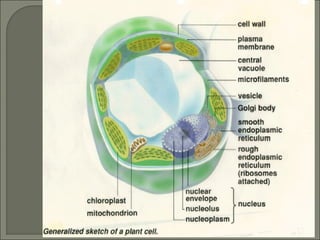
 Cytoplasm contains a variety of organelles
- each with a specific function
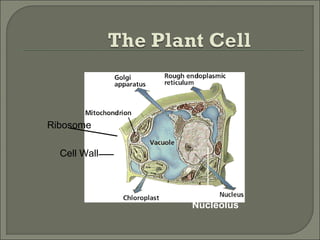
Nucleolus
Cell Wall
Ribosome
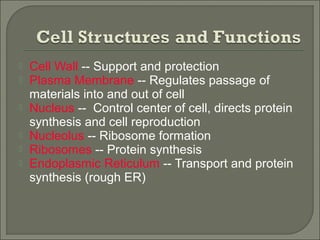
 Cell Wall -- Support and protection
 Plasma Membrane -- Regulates passage of
materials into and out of cell
 Nucleus -- Control center of cell, directs protein
synthesis and cell reproduction
 Nucleolus -- Ribosome formation
 Ribosomes -- Protein synthesis
 Endoplasmic Reticulum -- Transport and protein
synthesis (rough ER)
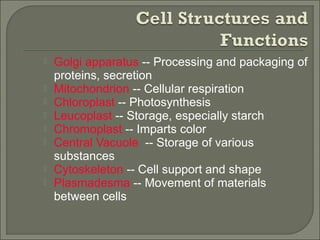
 Golgi apparatus -- Processing and packaging of
proteins, secretion
 Mitochondrion -- Cellular respiration
 Chloroplast -- Photosynthesis
 Leucoplast -- Storage, especially starch
 Chromoplast -- Imparts color
 Central Vacuole -- Storage of various
substances
 Cytoskeleton -- Cell support and shape
 Plasmadesma -- Movement of materials
between cells
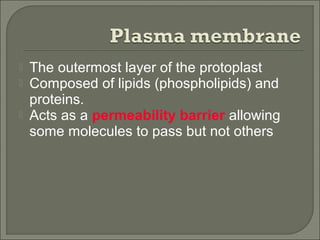
 The outermost layer of the protoplast
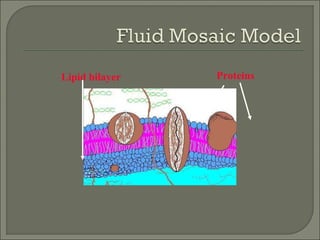
 Composed of lipids (phospholipids) and
proteins.
 Acts as a permeability barrier allowing
some molecules to pass but not others
ProteinsLipid bilayer
 Cells constantly exchange materials with
their environment. One way this occurs is
by diffusion.
 Diffusion is the movement of particles or
molecules from areas of higher
concentration to lower concentration.
 Diffusion also occurs within living
organisms, but the membranes present
barriers to this movement of molecules.
 Membranes are differentially permeable.
They permit the diffusion of some
molecules, but present a barrier to the
passage of other molecules.
 The diffusion of water across cell
membranes is called osmosis.
 Water can move freely through
membranes.
 The direction the water molecules move is
dependent upon the relative
concentrations of substances on either
side of the membrane, moving from high
concentration to low
 Diffusion take place when molecules
move along a concentration gradient.
 Cells can also move substances against
a concentration gradient
• Called active transport
• Requires energy by the cell
• Membrane proteins transport these substances
across the membrane
 All living organisms are composed of cells -
cells are the basic unit of life.
 Plant cells are eukaryotic having an
organized nucleus and membrane bound
organelles.
 Substances can move in and out of cells
by diffusion and osmosis or be carried in
or out by active transport.
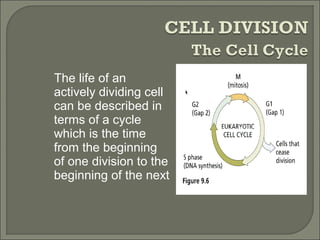
The life of an
actively dividing cell
can be described in
terms of a cycle
which is the time
from the beginning
of one division to the
beginning of the next
Cell Division
 Mitosis - two exact copies of the nucleus
result from a process known as mitosis.
 Cytokinesis, the division of the cytoplasm,
usually occurs during the later stages of
mitosis.
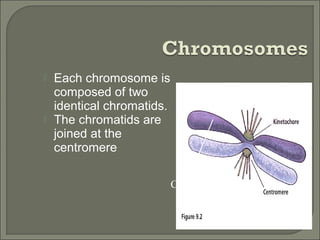
 Each chromosome is
composed of two
identical chromatids.
 The chromatids are
joined at the
centromere
Chromatids
 The production of new cells through cell
division enables plants to grow, repair
wounds, and regenerate lost cells.
 Cell division can lead to the production of
new genetically identical individuals or
clones. This type of reproduction is known
as asexual reproduction.
 Many crops are propagated asexually and
are gentically identical

The plant cell

  • 1.
     NAME:- HITARTHSINH.D.SOLANKI. ROLL. NO.:- 55.  EXAM NO:- 52.  B.PHARM:- SEM-1.  SUBJECT:- LIBRARY ASSINGMENT.
  • 3.
     All plantsare composed of cells.  Angiosperms are complex multicellular organisms composed of many different types of cells.
  • 4.
     Found surroundingplants cells not animal cells  Surrounds all the other parts of the cell (other parts called the protoplast)  Plant cell walls may consist of one or two layers called primary and secondary wall  Middle Lamella is a layer of sticky material between walls of adjacent cells
  • 5.
     All ofthe plant cell enclosed by the cell wall.  It consists of the nucleus plus the cytoplasm  Cytoplasm contains a variety of organelles - each with a specific function
  • 6.
  • 7.
     Cell Wall-- Support and protection  Plasma Membrane -- Regulates passage of materials into and out of cell  Nucleus -- Control center of cell, directs protein synthesis and cell reproduction  Nucleolus -- Ribosome formation  Ribosomes -- Protein synthesis  Endoplasmic Reticulum -- Transport and protein synthesis (rough ER)
  • 9.
     Golgi apparatus-- Processing and packaging of proteins, secretion  Mitochondrion -- Cellular respiration  Chloroplast -- Photosynthesis  Leucoplast -- Storage, especially starch  Chromoplast -- Imparts color  Central Vacuole -- Storage of various substances  Cytoskeleton -- Cell support and shape  Plasmadesma -- Movement of materials between cells
  • 10.
     The outermostlayer of the protoplast  Composed of lipids (phospholipids) and proteins.  Acts as a permeability barrier allowing some molecules to pass but not others
  • 11.
  • 12.
     Cells constantlyexchange materials with their environment. One way this occurs is by diffusion.  Diffusion is the movement of particles or molecules from areas of higher concentration to lower concentration.
  • 13.
     Diffusion alsooccurs within living organisms, but the membranes present barriers to this movement of molecules.  Membranes are differentially permeable. They permit the diffusion of some molecules, but present a barrier to the passage of other molecules.
  • 14.
     The diffusionof water across cell membranes is called osmosis.  Water can move freely through membranes.  The direction the water molecules move is dependent upon the relative concentrations of substances on either side of the membrane, moving from high concentration to low
  • 15.
     Diffusion takeplace when molecules move along a concentration gradient.  Cells can also move substances against a concentration gradient • Called active transport • Requires energy by the cell • Membrane proteins transport these substances across the membrane
  • 16.
     All livingorganisms are composed of cells - cells are the basic unit of life.  Plant cells are eukaryotic having an organized nucleus and membrane bound organelles.  Substances can move in and out of cells by diffusion and osmosis or be carried in or out by active transport.
  • 17.
    The life ofan actively dividing cell can be described in terms of a cycle which is the time from the beginning of one division to the beginning of the next Cell Division
  • 18.
     Mitosis -two exact copies of the nucleus result from a process known as mitosis.  Cytokinesis, the division of the cytoplasm, usually occurs during the later stages of mitosis.
  • 19.
     Each chromosomeis composed of two identical chromatids.  The chromatids are joined at the centromere Chromatids
  • 20.
     The productionof new cells through cell division enables plants to grow, repair wounds, and regenerate lost cells.  Cell division can lead to the production of new genetically identical individuals or clones. This type of reproduction is known as asexual reproduction.  Many crops are propagated asexually and are gentically identical