Scientific Method
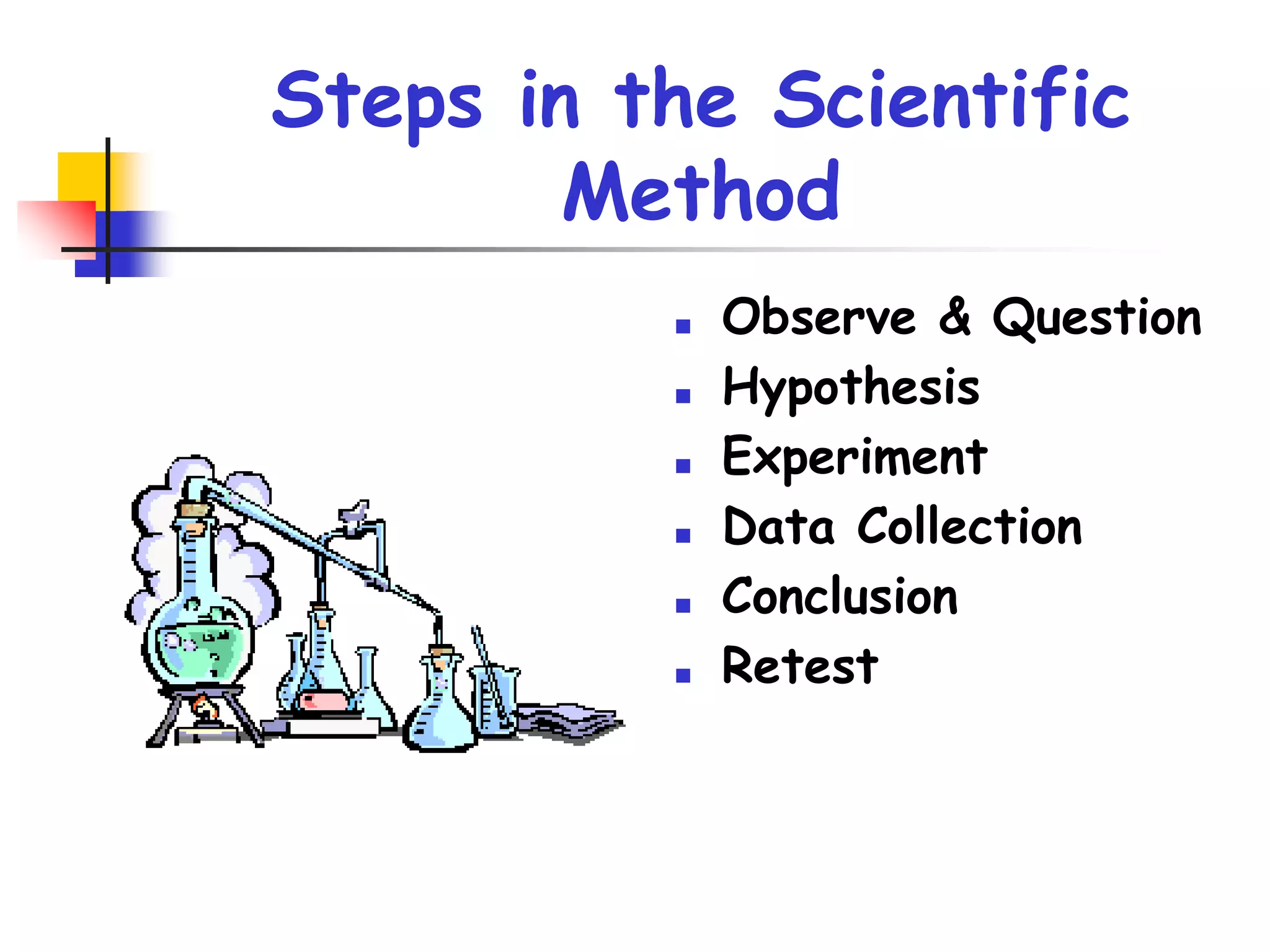
Steps in the Scientific 
Method 
■ Observe & Question 
■ Hypothesis 
■ Experiment 
■ Data Collection 
■ Conclusion 
■ Retest
Observations 
■ Gathered through 
your senses 
■ A scientist notices 
something in their 
natural world
Observations 
■ An example of an 
observation might 
be noticing that 
many salamanders 
near a pond have 
curved, not 
straight, tails
Hypothesis 
■ A suggested solution to 
the problem. 
■ Must be testable 
■ Written as If…Then… 
statements 
■ Predicts an outcome
Hypothesis 
■ An example of a 
hypothesis might 
be that the 
salamanders have 
curved tails due to 
a pollutant in the 
moist soil where 
they live.
Experiment 
■ A procedure 
to test the 
hypothesis.
Experiment 
Variable – factor 
in the 
experiment that 
is being tested
Experiment 
A good or “valid” 
experiment will 
only have ONE 
independent 
variable!
Scientific Experiments Follow 
Rules 
■ An experimenter 
changes one factor 
and observes or 
measures what 
happens.
Independent and 
Dependent Variables 
■ The factor that is changed is 
known as the independent 
variable. (manipulated variable) 
■ “I change the independent variable” 
■ The factor that is measured or 
observed is called the dependent 
variable. (response variable)
Controlled Variables/Constants 
■ The experimenter makes a 
special effort to keep other 
factors constant so that they 
will not affect the outcome. 
■ Those factors are called 
controlled variables or 
constants.
What is the Purpose of a 
Control Group? 
■ The control group is the “normal” 
situation of the independent 
variable 
■ The Control are used for 
COMPARISON
Example of Controls & 
Variables 
■ For example, suppose you want to figure 
out the fastest route to walk home from 
school. 
■ You will try several different routes and 
time how long it takes you to get home by 
each one. 
■ Since you are only interested in finding a 
route that is fastest for you, you will do 
the walking yourself.
What are the Variables in 
Your Experiment? 
■ Varying the route is the 
independent variable 
■ The time it takes is the dependent 
variable 
■ Keeping the same walker throughout 
makes the walker a control variable.
One more thing… it is best 
to make several trials with 
each independent variable.
Valid Experiments
Remember: To be a Valid 
Experiment: 
■ Two groups are required --- 
the control & experimental 
groups 
■ There should be only one 
variable
Data 
■ Results of the 
experiment 
■ May be 
quantitative 
(numbers) or 
qualitative
Data 
■ Must be 
organized 
■ Can be 
organized into 
charts, 
tables, or 
graphs
Conclusion 
■ The answer to 
the hypothesis 
based on the 
data obtained 
from the 
experiment
Retest 
In order to 
verify the 
results, 
experiments 
must be 
retested.
Summary
Solving a Problem 
1)Identify a Problem 
2) State Observations 
about the problem 
3) Form a Hypothesis about 
the problem (if…then…) 
4) Design an Experiment to 
test the hypothesis 
5) Collect Data 
6) Form a Conclusion 
7) Retest

Scientific method (Biology A)

  • 1.
  • 2.
    Steps in theScientific Method ■ Observe & Question ■ Hypothesis ■ Experiment ■ Data Collection ■ Conclusion ■ Retest
  • 3.
    Observations ■ Gatheredthrough your senses ■ A scientist notices something in their natural world
  • 4.
    Observations ■ Anexample of an observation might be noticing that many salamanders near a pond have curved, not straight, tails
  • 5.
    Hypothesis ■ Asuggested solution to the problem. ■ Must be testable ■ Written as If…Then… statements ■ Predicts an outcome
  • 6.
    Hypothesis ■ Anexample of a hypothesis might be that the salamanders have curved tails due to a pollutant in the moist soil where they live.
  • 7.
    Experiment ■ Aprocedure to test the hypothesis.
  • 8.
    Experiment Variable –factor in the experiment that is being tested
  • 9.
    Experiment A goodor “valid” experiment will only have ONE independent variable!
  • 10.
    Scientific Experiments Follow Rules ■ An experimenter changes one factor and observes or measures what happens.
  • 11.
    Independent and DependentVariables ■ The factor that is changed is known as the independent variable. (manipulated variable) ■ “I change the independent variable” ■ The factor that is measured or observed is called the dependent variable. (response variable)
  • 12.
    Controlled Variables/Constants ■The experimenter makes a special effort to keep other factors constant so that they will not affect the outcome. ■ Those factors are called controlled variables or constants.
  • 13.
    What is thePurpose of a Control Group? ■ The control group is the “normal” situation of the independent variable ■ The Control are used for COMPARISON
  • 14.
    Example of Controls& Variables ■ For example, suppose you want to figure out the fastest route to walk home from school. ■ You will try several different routes and time how long it takes you to get home by each one. ■ Since you are only interested in finding a route that is fastest for you, you will do the walking yourself.
  • 15.
    What are theVariables in Your Experiment? ■ Varying the route is the independent variable ■ The time it takes is the dependent variable ■ Keeping the same walker throughout makes the walker a control variable.
  • 16.
    One more thing…it is best to make several trials with each independent variable.
  • 17.
  • 18.
    Remember: To bea Valid Experiment: ■ Two groups are required --- the control & experimental groups ■ There should be only one variable
  • 19.
    Data ■ Resultsof the experiment ■ May be quantitative (numbers) or qualitative
  • 20.
    Data ■ Mustbe organized ■ Can be organized into charts, tables, or graphs
  • 21.
    Conclusion ■ Theanswer to the hypothesis based on the data obtained from the experiment
  • 22.
    Retest In orderto verify the results, experiments must be retested.
  • 23.
  • 24.
    Solving a Problem 1)Identify a Problem 2) State Observations about the problem 3) Form a Hypothesis about the problem (if…then…) 4) Design an Experiment to test the hypothesis 5) Collect Data 6) Form a Conclusion 7) Retest