CELL MEMBRANE
A CELL MEMBRANE IS:
• The boundary that separates the living cells from its surrounding and controls the movements
into and out of the cell it surrounds.
• it allows selective permeability. This means that it does not allow everything to enter nor leave
the cell.
What makes a membrane
-Membranes are made up of Lipids, Proteins and other
macromolecules.
-The most abundant lipids in most membranes are phospholipids.
-Phospholipid is an amphipathic molecule. Meaning it has both a
hydrophilic part and a hydrophobic region.
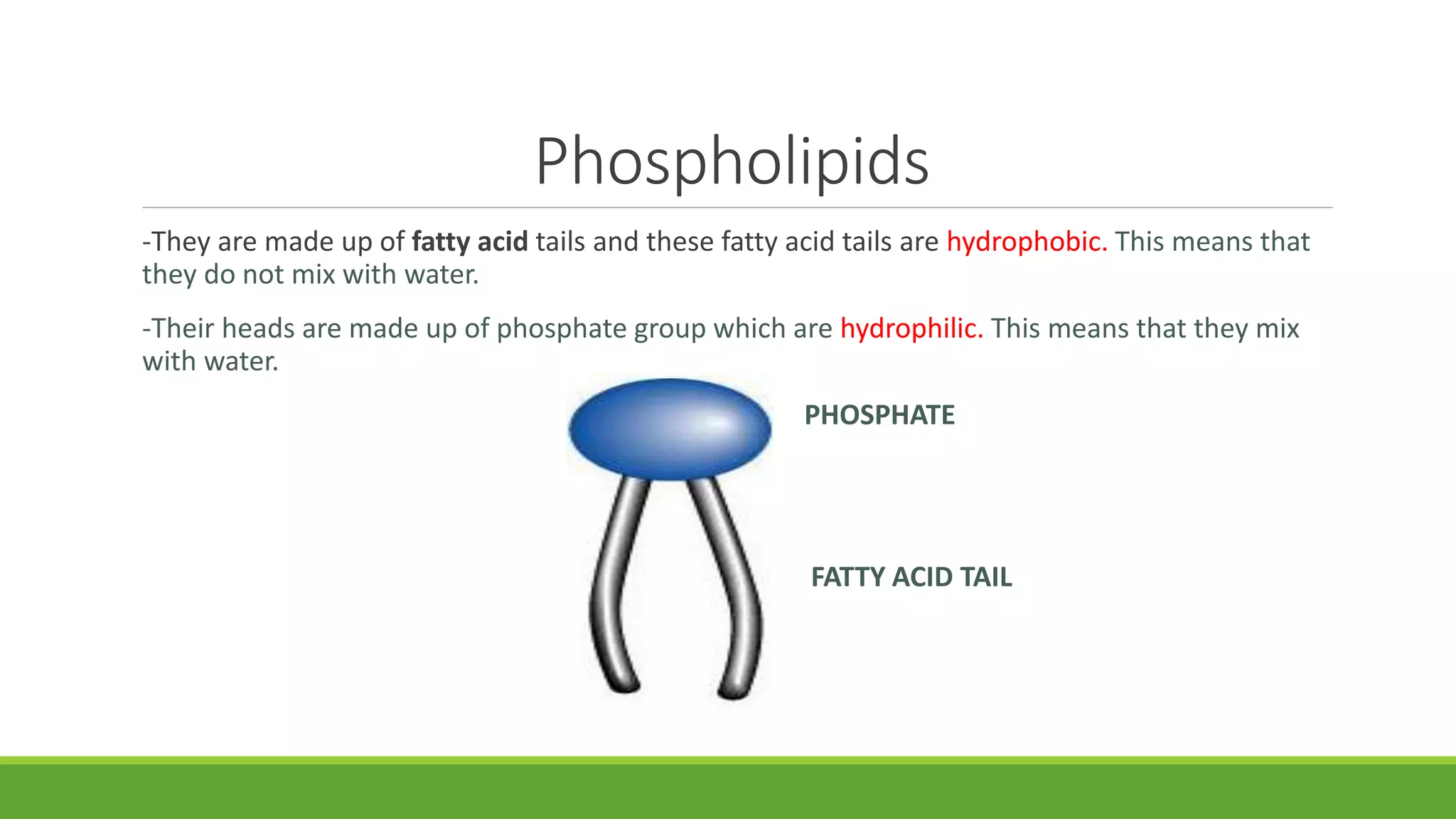
Phospholipids
-They are made up of fatty acid tails and these fatty acid tails are hydrophobic. This means that
they do not mix with water.
-Their heads are made up of phosphate group which are hydrophilic. This means that they mix
with water.
PHOSPHATE
FATTY ACID TAIL
Proteins
-Proteins determines a membranes specific function. Therefore the proteins that makes up a cell
membrane and a protein that makes up a membrane of an organelle are different.
Peripheral proteins.
-Loosely bound to the surface of the membrane.
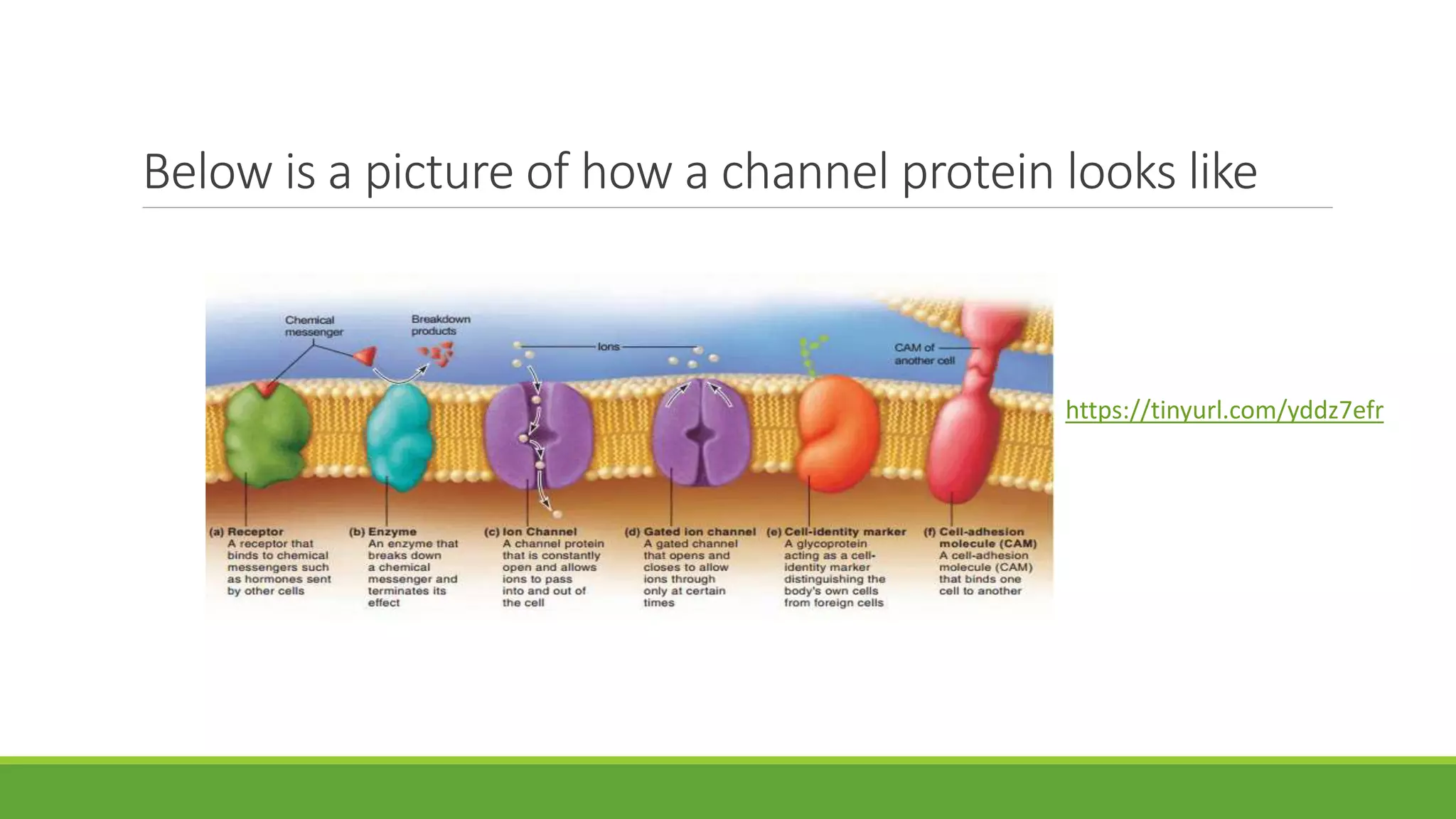
Integral proteins.
-They penetrate the bilayer of the cell membrane
-They are transmembrane protein.
Below is a picture of how a channel protein looks like
https://tinyurl.com/yddz7efr
Passing through a membrane
1. PASSIVE TRANSPORT.
• Simple diffusion
-diffusion of nonpolar molecules, hydrophobic molecules such as fats.
• Facilitated transport.
-diffusion of polar molecules, hydrophilic molecules using a protein channel.
2. ACTIVE TRANSPORT
-Uses protein pump.
-Requires energy (ATP)
Summary of diffusion through a membrane
Moving large molecules
1. Endocytosis
Phagocytosis- Cellular intake of food.
Pinocytosis-Cellular intake of liquid
2. Exocytosis
References
Bester, M. et al. (2013). Platinum: Natural Sciences. Cape Town: CTP Printers.
Dschreiber44. (2009). Cell membrane. Available from slideshare at
https://www.slideshare.net/dschreiber44/cell-membrane
Foley, T. (2011). Cell membrane and transport. Available from slideshare at
https://www.slideshare.net/ToniFoley/24-cell-membrane-and-transport
Ravagnan, M. (2012). PowerPoint cell membrane transport copy. Available from slideshare at
https://tinyurl.com/ybxa5xvz
Saikia, A. (2018). Transport across the cell membrane. Available from slideshare at
https://www.slideshare.net/AnkurSaikia3/transport-across-the-cell-membrane

Cell membrane2

  • 1.
  • 2.
    A CELL MEMBRANEIS: • The boundary that separates the living cells from its surrounding and controls the movements into and out of the cell it surrounds. • it allows selective permeability. This means that it does not allow everything to enter nor leave the cell.
  • 3.
    What makes amembrane -Membranes are made up of Lipids, Proteins and other macromolecules. -The most abundant lipids in most membranes are phospholipids. -Phospholipid is an amphipathic molecule. Meaning it has both a hydrophilic part and a hydrophobic region.
  • 4.
    Phospholipids -They are madeup of fatty acid tails and these fatty acid tails are hydrophobic. This means that they do not mix with water. -Their heads are made up of phosphate group which are hydrophilic. This means that they mix with water. PHOSPHATE FATTY ACID TAIL
  • 5.
    Proteins -Proteins determines amembranes specific function. Therefore the proteins that makes up a cell membrane and a protein that makes up a membrane of an organelle are different. Peripheral proteins. -Loosely bound to the surface of the membrane. Integral proteins. -They penetrate the bilayer of the cell membrane -They are transmembrane protein.
  • 6.
    Below is apicture of how a channel protein looks like https://tinyurl.com/yddz7efr
  • 7.
    Passing through amembrane 1. PASSIVE TRANSPORT. • Simple diffusion -diffusion of nonpolar molecules, hydrophobic molecules such as fats. • Facilitated transport. -diffusion of polar molecules, hydrophilic molecules using a protein channel. 2. ACTIVE TRANSPORT -Uses protein pump. -Requires energy (ATP)
  • 8.
    Summary of diffusionthrough a membrane
  • 9.
    Moving large molecules 1.Endocytosis Phagocytosis- Cellular intake of food. Pinocytosis-Cellular intake of liquid 2. Exocytosis
  • 10.
    References Bester, M. etal. (2013). Platinum: Natural Sciences. Cape Town: CTP Printers. Dschreiber44. (2009). Cell membrane. Available from slideshare at https://www.slideshare.net/dschreiber44/cell-membrane Foley, T. (2011). Cell membrane and transport. Available from slideshare at https://www.slideshare.net/ToniFoley/24-cell-membrane-and-transport Ravagnan, M. (2012). PowerPoint cell membrane transport copy. Available from slideshare at https://tinyurl.com/ybxa5xvz Saikia, A. (2018). Transport across the cell membrane. Available from slideshare at https://www.slideshare.net/AnkurSaikia3/transport-across-the-cell-membrane