TOPIC: CELL CYCLE AND CELL DIVISION
VANDANA H L
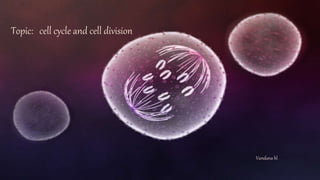
Topic: cell cycle and cell division
Vandana hl
INTRODUCTION
• The cell is the basic structural and functional unit of life.
• Cell cycle is a series of events that takes place in a cell as it grows and
divides.
• The cell cycle was discovered by Prevost and Dumas(1824) while
studying the cleavage of zygote of Frog.
• It involves the copy and distribution of the genome into 2 daughter
cell
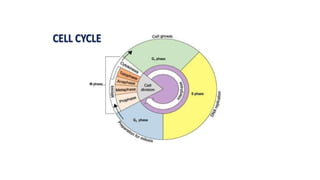
CELL CYCLE
• Preparation phase
• Changes takes place in cell
TYPES OF CELL DIVISION
• Mitosis
• Meiosis
• Amitosis
PHASES OF CELL CYCLE
1.Interphase
2.M Phase
• INTERPHASE- 1. G1 Phase
2. G2 Phase
3. G3 Phase
• M PHASE -1. Karyokinesis (Prophase, Metaphase, Anaphase, Telophase)
2. Cytokinesis
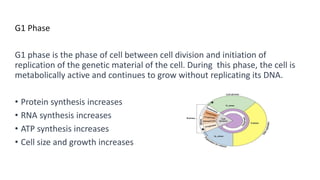
G1 Phase
G1 phase is the phase of cell between cell division and initiation of
replication of the genetic material of the cell. During this phase, the cell is
metabolically active and continues to grow without replicating its DNA.
• Protein synthesis increases
• RNA synthesis increases
• ATP synthesis increases
• Cell size and growth increases
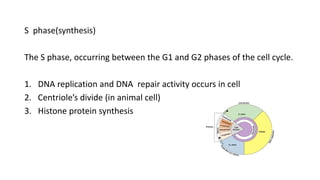
S phase(synthesis)
The S phase, occurring between the G1 and G2 phases of the cell cycle.
1. DNA replication and DNA repair activity occurs in cell
2. Centriole’s divide (in animal cell)
3. Histone protein synthesis
G2 Phase
In G2 Phase, the cell prepares for multiplication, during this phase RNA,
protein and other macromolecules required for multiplication.
1. Protein synthesis increases
2. ATP molecule increases
3. RNA synthesis increases
4. Cell size and growth increases
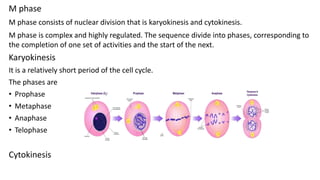
M phase
M phase consists of nuclear division that is karyokinesis and cytokinesis.
M phase is complex and highly regulated. The sequence divide into phases, corresponding to
the completion of one set of activities and the start of the next.
Karyokinesis
It is a relatively short period of the cell cycle.
The phases are
• Prophase
• Metaphase
• Anaphase
• Telophase
Cytokinesis
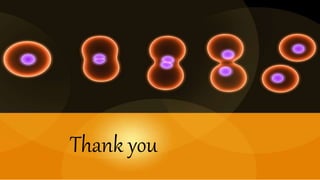
Thank you

cell cycle and cell division part one

  • 1.
    TOPIC: CELL CYCLEAND CELL DIVISION VANDANA H L Topic: cell cycle and cell division Vandana hl
  • 2.
    INTRODUCTION • The cellis the basic structural and functional unit of life. • Cell cycle is a series of events that takes place in a cell as it grows and divides. • The cell cycle was discovered by Prevost and Dumas(1824) while studying the cleavage of zygote of Frog. • It involves the copy and distribution of the genome into 2 daughter cell
  • 3.
    CELL CYCLE • Preparationphase • Changes takes place in cell TYPES OF CELL DIVISION • Mitosis • Meiosis • Amitosis
  • 4.
    PHASES OF CELLCYCLE 1.Interphase 2.M Phase • INTERPHASE- 1. G1 Phase 2. G2 Phase 3. G3 Phase • M PHASE -1. Karyokinesis (Prophase, Metaphase, Anaphase, Telophase) 2. Cytokinesis
  • 6.
    G1 Phase G1 phaseis the phase of cell between cell division and initiation of replication of the genetic material of the cell. During this phase, the cell is metabolically active and continues to grow without replicating its DNA. • Protein synthesis increases • RNA synthesis increases • ATP synthesis increases • Cell size and growth increases
  • 7.
    S phase(synthesis) The Sphase, occurring between the G1 and G2 phases of the cell cycle. 1. DNA replication and DNA repair activity occurs in cell 2. Centriole’s divide (in animal cell) 3. Histone protein synthesis
  • 8.
    G2 Phase In G2Phase, the cell prepares for multiplication, during this phase RNA, protein and other macromolecules required for multiplication. 1. Protein synthesis increases 2. ATP molecule increases 3. RNA synthesis increases 4. Cell size and growth increases
  • 9.
    M phase M phaseconsists of nuclear division that is karyokinesis and cytokinesis. M phase is complex and highly regulated. The sequence divide into phases, corresponding to the completion of one set of activities and the start of the next. Karyokinesis It is a relatively short period of the cell cycle. The phases are • Prophase • Metaphase • Anaphase • Telophase Cytokinesis
  • 10.