{Tools, utensils and equipment
Nutritional Value and component of
eggs.
Characteristics of quality fresh eggs
TOOLS AND UTENSILS
NEEDED IN COOKING
EGGS
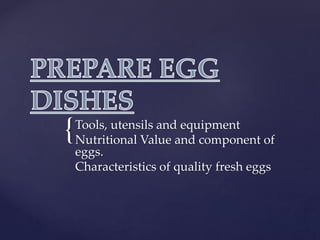
- For serving and eating
soft-boiled eggs.
They are either
porcelain or stainless
steel.
Some have integrated
plates to hold the
shell pieces.
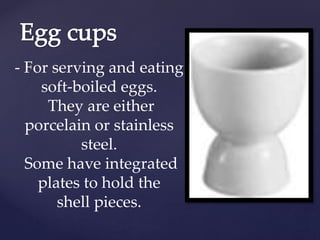
-For soft-boiled
eggs.
They fit
comfortably inside
an egg without
breaking the shell.
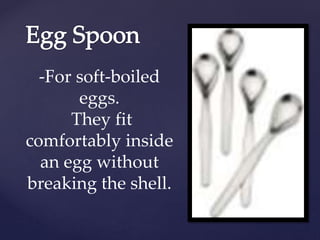
These are
supposed to
cleanly cut the
tapered ends off
the egg so you
can eat out of the
shell.
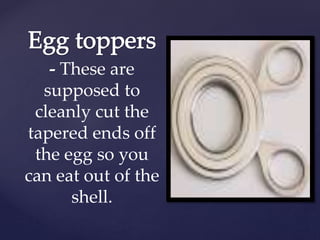
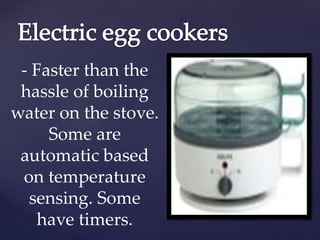
- Faster than the
hassle of boiling
water on the stove.
Some are
automatic based
on temperature
sensing. Some
have timers.
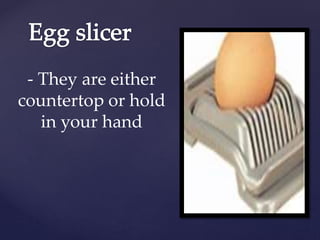
- They are either
countertop or hold
in your hand
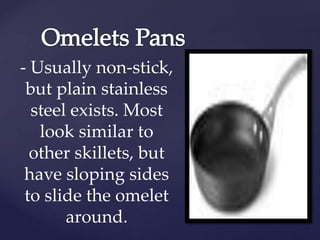
- Usually non-stick,
but plain stainless
steel exists. Most
look similar to
other skillets, but
have sloping sides
to slide the omelet
around.
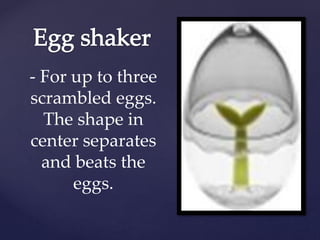
- For up to three
scrambled eggs.
The shape in
center separates
and beats the
eggs.
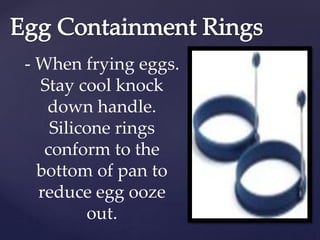
- When frying eggs.
Stay cool knock
down handle.
Silicone rings
conform to the
bottom of pan to
reduce egg ooze
out.
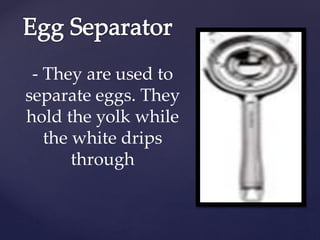
- They are used to
separate eggs. They
hold the yolk while
the white drips
through
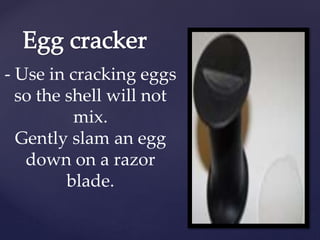
- Use in cracking eggs
so the shell will not
mix.
Gently slam an egg
down on a razor
blade.
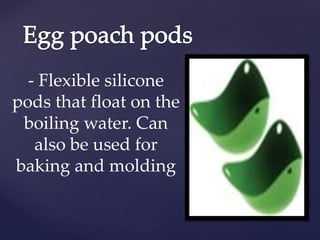
- Flexible silicone
pods that float on the
boiling water. Can
also be used for
baking and molding
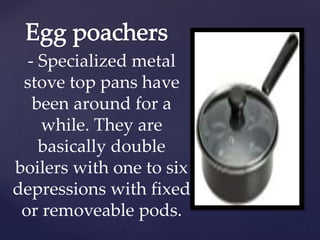
- Specialized metal
stove top pans have
been around for a
while. They are
basically double
boilers with one to six
depressions with fixed
or removeable pods.
Quality
&
Grades of Eggs
Changes in Quality Over
Time
Eggs must be stored in the
refrigerator to maintain Grade
A quality. Eggs kept at room
temperature deteriorate as
much in a day as they do in a
week under refrigeration
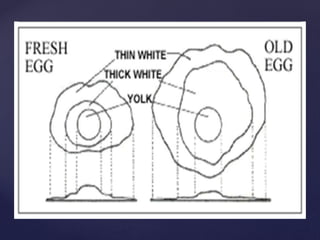
As an egg ages:
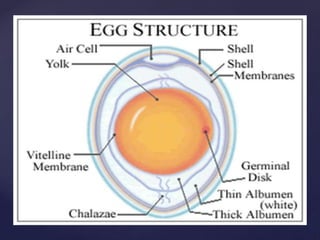
• The AIR CELL becomes
larger
• The YOLK becomes flatter,
larger and breaks more easily
• The THICK WHITE
becomes thin and watery
Egg Grades
Grade A
• Thick white
• Round, well centered yolk
• Small air cell (less than 5 mm
deep)
• Clean, uncracked shell with
normal shape
Grade B
• These eggs are mostly used for
commercial baking
• Yolk is slightly flattened; white
is thinner.
• Shell is un-cracked and may
have a rough texture; and/or be
slightly soiled and stained.
Grade C
• The lowest egg grade, these are
used in the production of processed
egg products only. They are not sold
in grocery stores.
• Yolk is flattened and may be
oblong in shape; white is thin and
watery.
• Shell may be cracked and/or
stained.
NUTRITIONAL VALUE
/COMPONENTS OF EGGS
1. high-quality protein
(which contains all essential amino acids
for humans)
2. vitamin A,
3. riboflavin,
4. folic acid,
5. vitamin B6,
6. vitamin B12,
7. Choline
8. Iron
9. calcium
10. phosphorus
11. potassium.
- Contains vitamin A, D and E
- Makes up about 33% of the liquid
weight of the egg
- Contains all of the choline
- High Cholesterol, fat, saturated fat
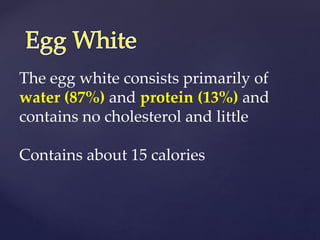
The egg white consists primarily of
water (87%) and protein (13%) and
contains no cholesterol and little
Contains about 15 calories
Power point  prepare egg dishes

Power point prepare egg dishes

  • 1.
    {Tools, utensils andequipment Nutritional Value and component of eggs. Characteristics of quality fresh eggs
  • 2.
  • 3.
    - For servingand eating soft-boiled eggs. They are either porcelain or stainless steel. Some have integrated plates to hold the shell pieces.
  • 4.
    -For soft-boiled eggs. They fit comfortablyinside an egg without breaking the shell.
  • 5.
    These are supposed to cleanlycut the tapered ends off the egg so you can eat out of the shell.
  • 6.
    - Faster thanthe hassle of boiling water on the stove. Some are automatic based on temperature sensing. Some have timers.
  • 7.
    - They areeither countertop or hold in your hand
  • 8.
    - Usually non-stick, butplain stainless steel exists. Most look similar to other skillets, but have sloping sides to slide the omelet around.
  • 9.
    - For upto three scrambled eggs. The shape in center separates and beats the eggs.
  • 10.
    - When fryingeggs. Stay cool knock down handle. Silicone rings conform to the bottom of pan to reduce egg ooze out.
  • 11.
    - They areused to separate eggs. They hold the yolk while the white drips through
  • 12.
    - Use incracking eggs so the shell will not mix. Gently slam an egg down on a razor blade.
  • 13.
    - Flexible silicone podsthat float on the boiling water. Can also be used for baking and molding
  • 14.
    - Specialized metal stovetop pans have been around for a while. They are basically double boilers with one to six depressions with fixed or removeable pods.
  • 15.
  • 18.
    Changes in QualityOver Time Eggs must be stored in the refrigerator to maintain Grade A quality. Eggs kept at room temperature deteriorate as much in a day as they do in a week under refrigeration
  • 19.
    As an eggages: • The AIR CELL becomes larger • The YOLK becomes flatter, larger and breaks more easily • The THICK WHITE becomes thin and watery
  • 20.
    Egg Grades Grade A •Thick white • Round, well centered yolk • Small air cell (less than 5 mm deep) • Clean, uncracked shell with normal shape
  • 21.
    Grade B • Theseeggs are mostly used for commercial baking • Yolk is slightly flattened; white is thinner. • Shell is un-cracked and may have a rough texture; and/or be slightly soiled and stained.
  • 22.
    Grade C • Thelowest egg grade, these are used in the production of processed egg products only. They are not sold in grocery stores. • Yolk is flattened and may be oblong in shape; white is thin and watery. • Shell may be cracked and/or stained.
  • 23.
    NUTRITIONAL VALUE /COMPONENTS OFEGGS 1. high-quality protein (which contains all essential amino acids for humans) 2. vitamin A, 3. riboflavin, 4. folic acid, 5. vitamin B6, 6. vitamin B12,
  • 24.
    7. Choline 8. Iron 9.calcium 10. phosphorus 11. potassium.
  • 25.
    - Contains vitaminA, D and E - Makes up about 33% of the liquid weight of the egg - Contains all of the choline - High Cholesterol, fat, saturated fat
  • 26.
    The egg whiteconsists primarily of water (87%) and protein (13%) and contains no cholesterol and little Contains about 15 calories