Standard & Elements
• S6E5. Obtain, evaluate, and communicate
information to show how Earth’s surface is formed.
• c. Construct an explanation of how to classify rocks
by their formation and how rocks change through
geologic processes in the rock cycle.
• Learning Target: I can explain how the three
main types of rock are related to one another and
how changes to rocks happen in a recurring
sequence is the rock cycle.
Cause and Effect in the Rock Cycle
Directions:
• Read each slide
• Fill in any blanks using the
underlined or highlighted words.
• Finished watch the Study Jam
video then explore other rock
cycle activities.
2
Rocks
You already know…
• Rocks are naturally occurring combinations of
minerals.
• Most consist of two or more different
minerals.
• Rocks are classified according to how they
were formed & mineral composition.
You already know….
All rocks fit into one of three classifications.
(Products)
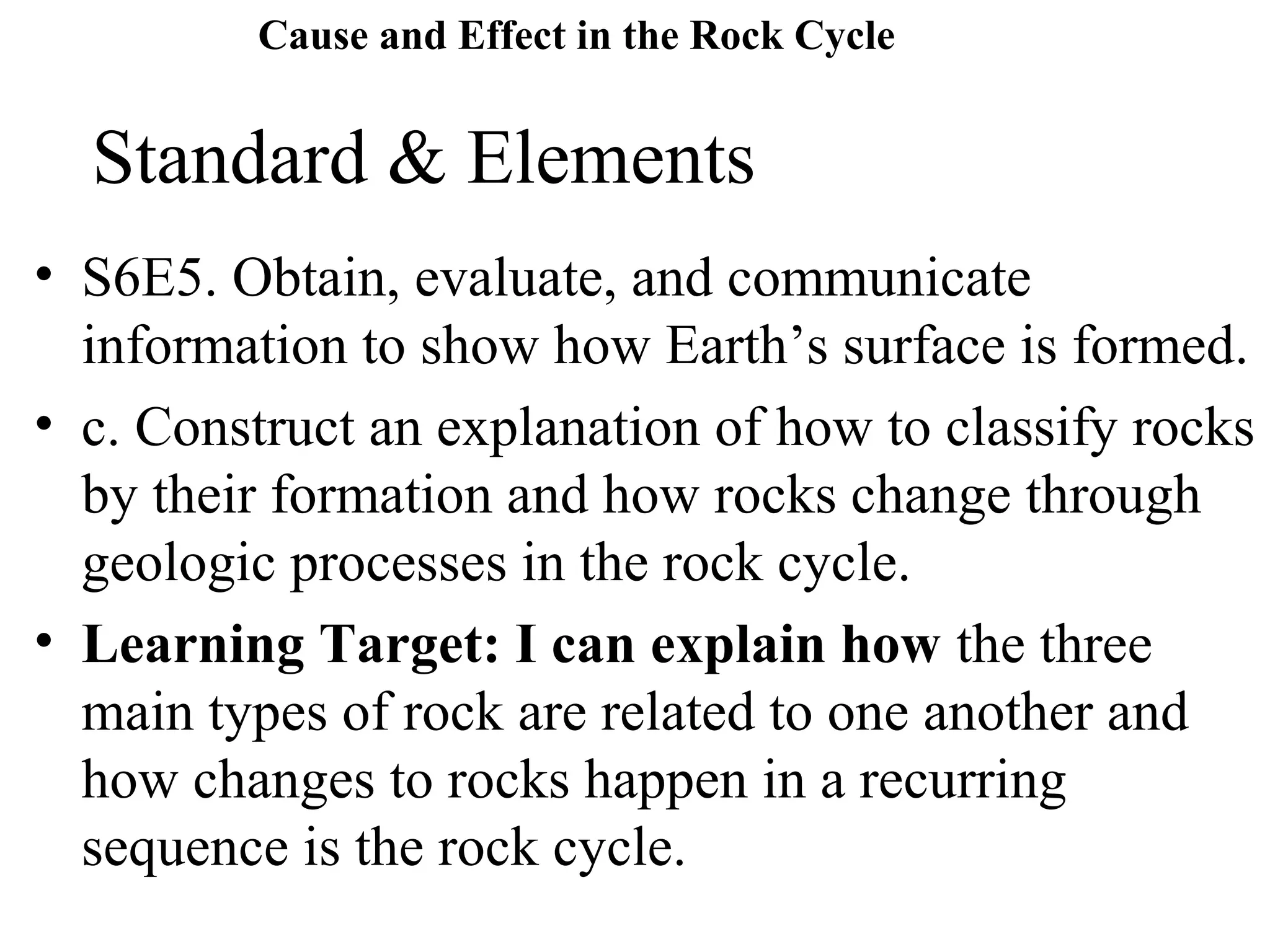
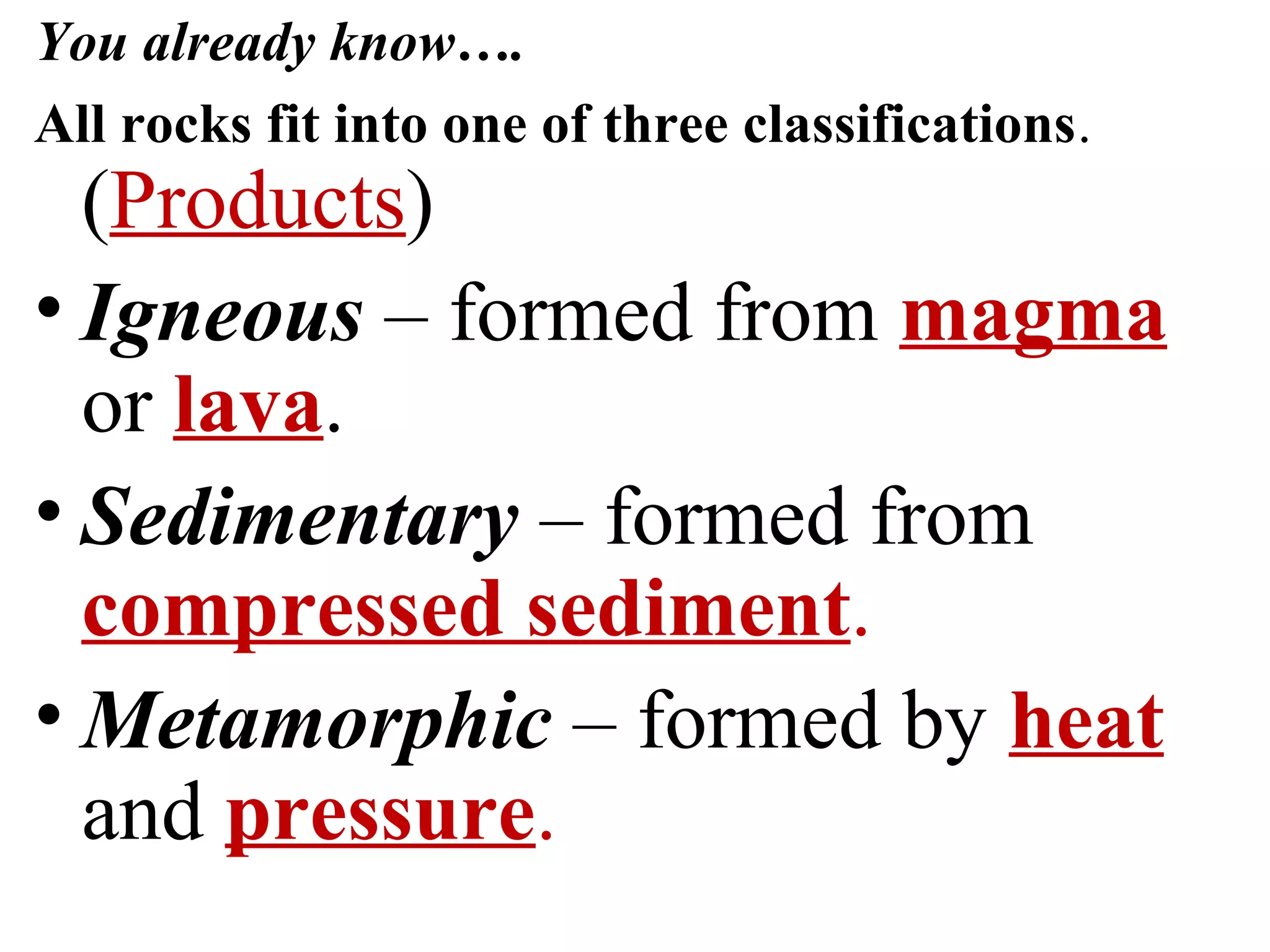
• Igneous – formed from magma
or lava.
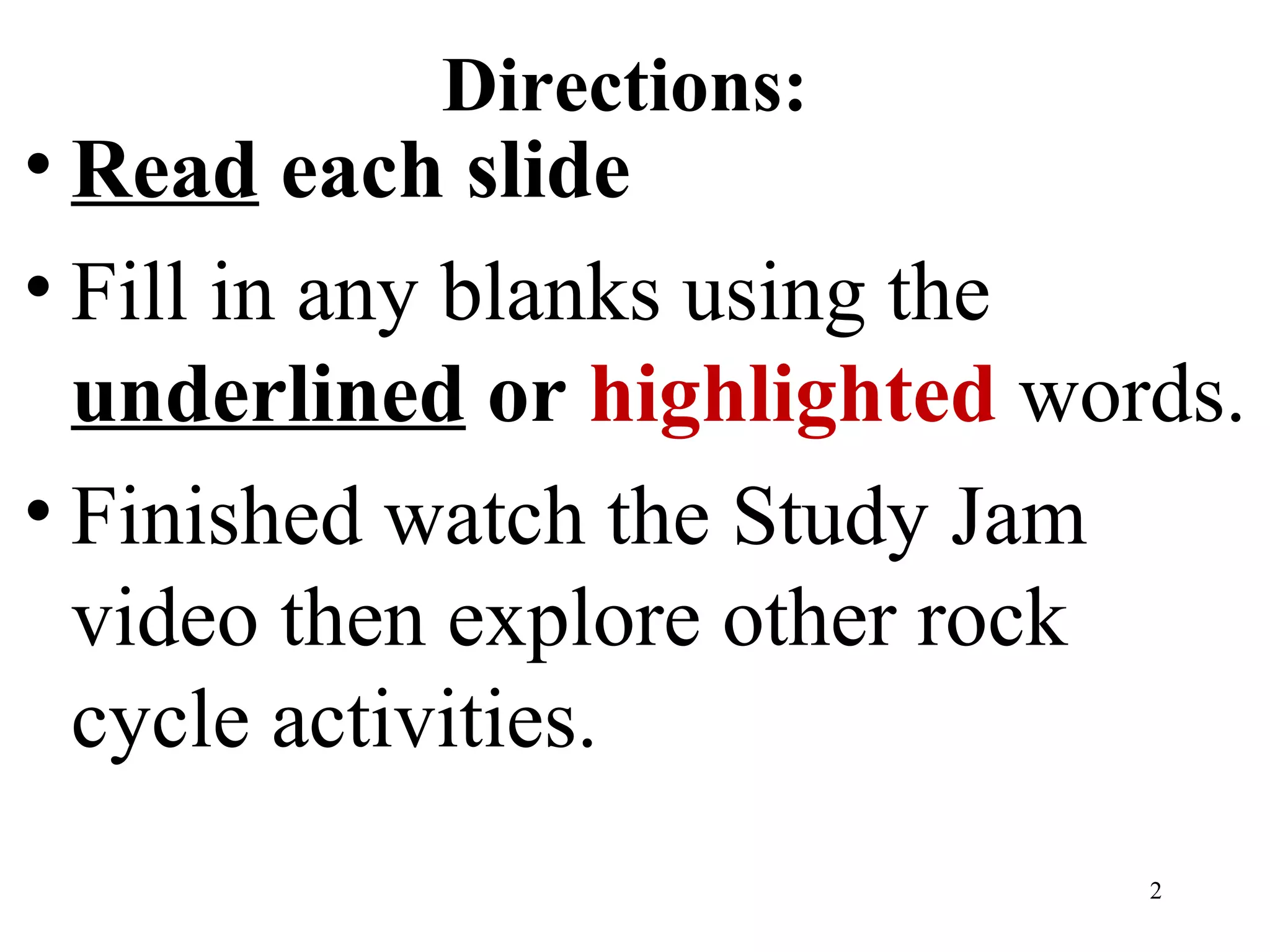
• Sedimentary – formed from
compressed sediment.
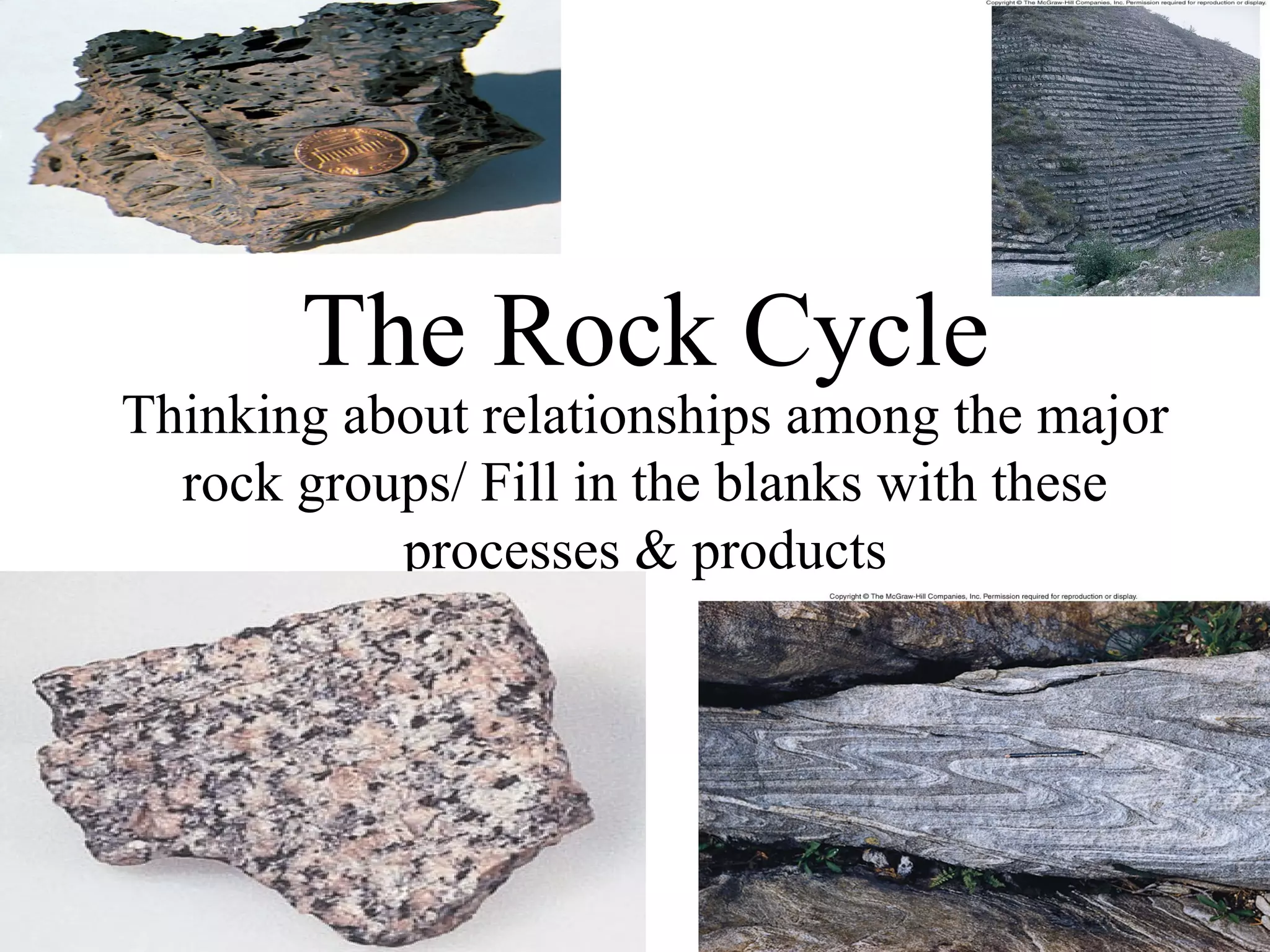
• Metamorphic – formed by heat
and pressure.
The Rock Cycle
• Rock families change because of different
processes. (eg: weathering; cementation;
heat and pressure; and melting.)
• New rocks are constantly being formed by
old rock material.
• This continuous change is called the Rock
Cycle.
• All rocks go through this cycle.
Types of Changes
(Processes)
• Weathering and Erosion
• Compaction and Cementation
• Cooling
• Melting
• Heat and Pressure
• These changes can take place in various
order and combinations.
The Rock Cycle
Thinking about relationships among the major
rock groups/ Fill in the blanks with these
processes & products
Fig. 2.9
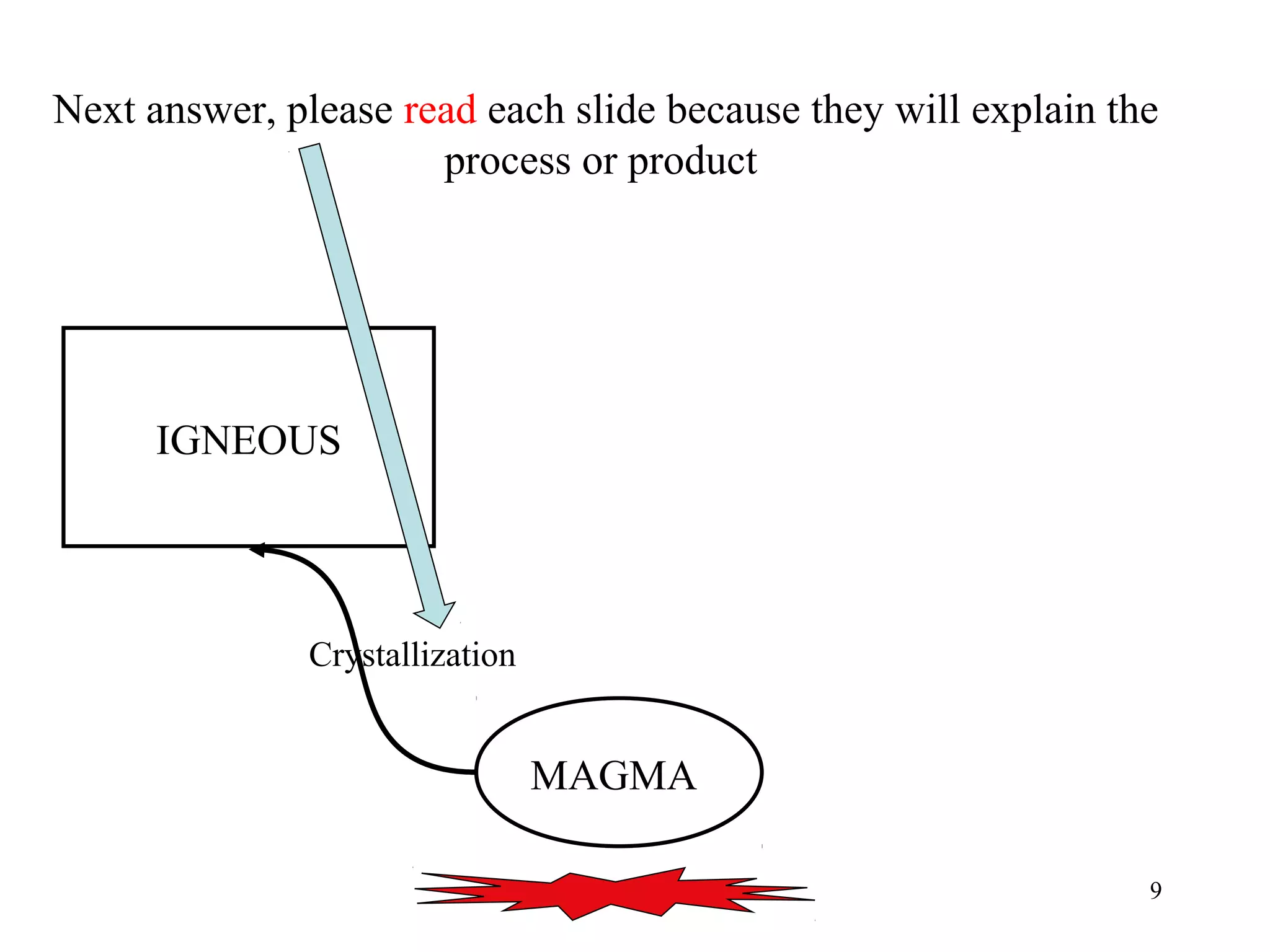
MAGMAStart here:
9
MAGMA
Crystallization
IGNEOUS
Next answer, please read each slide because they will explain the
process or product
10
MAGMA
IGNEOUS
Plutonic
Crystallization
11
MAGMA
Volcanic
IGNEOUS
Plutonic
Crystallization
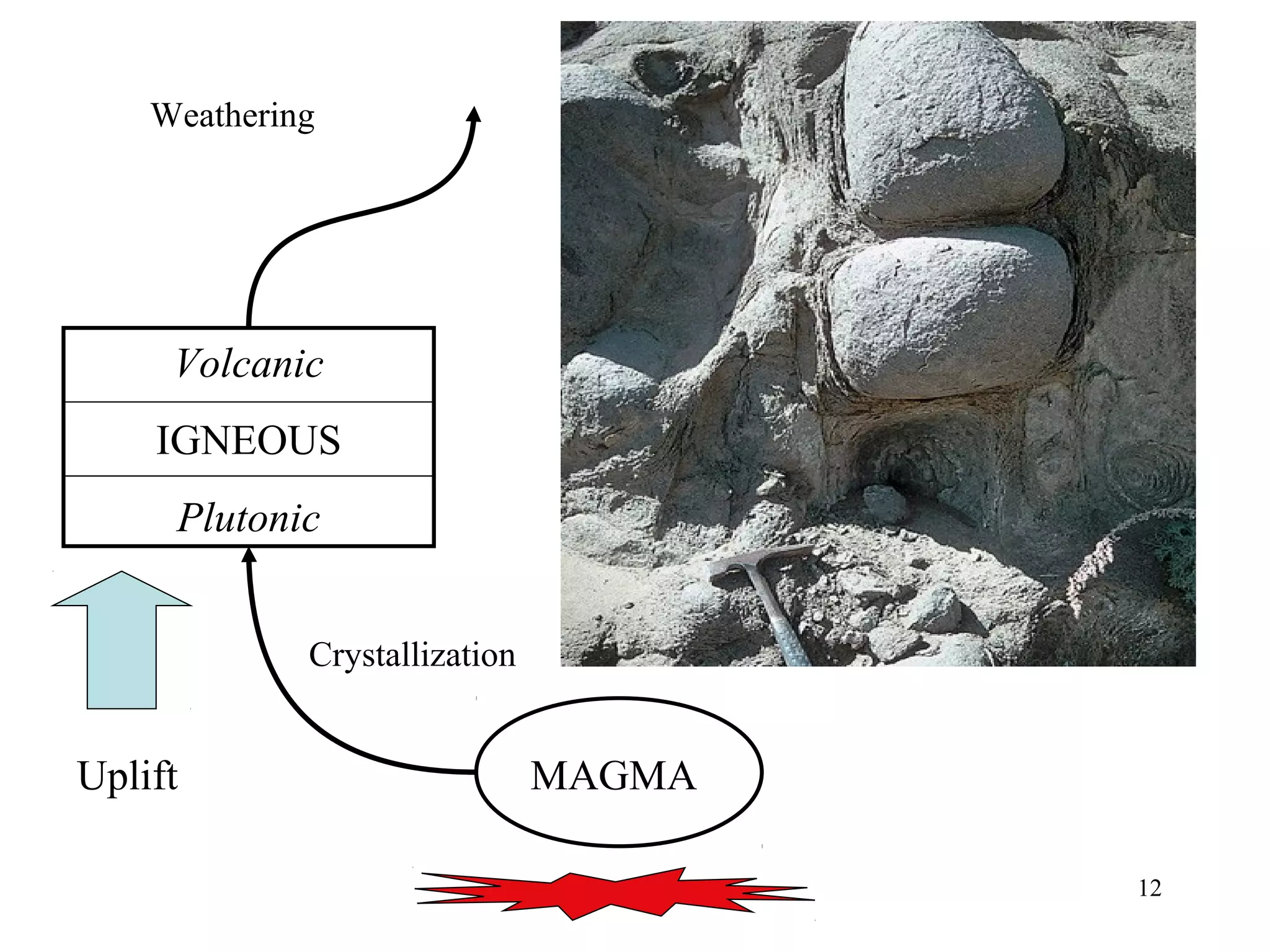
12
MAGMA
Volcanic
IGNEOUS
Plutonic
Uplift
Crystallization
Weathering
13
MAGMA
Volcanic
IGNEOUS
Plutonic
SEDIMENT
Uplift
Crystallization
Weathering SEDIMENT
14
MAGMA
Volcanic
IGNEOUS
Plutonic
SEDIMENT
SEDIMENTARY
Uplift
Crystallization
Weathering
Erosion
Transport
Deposition
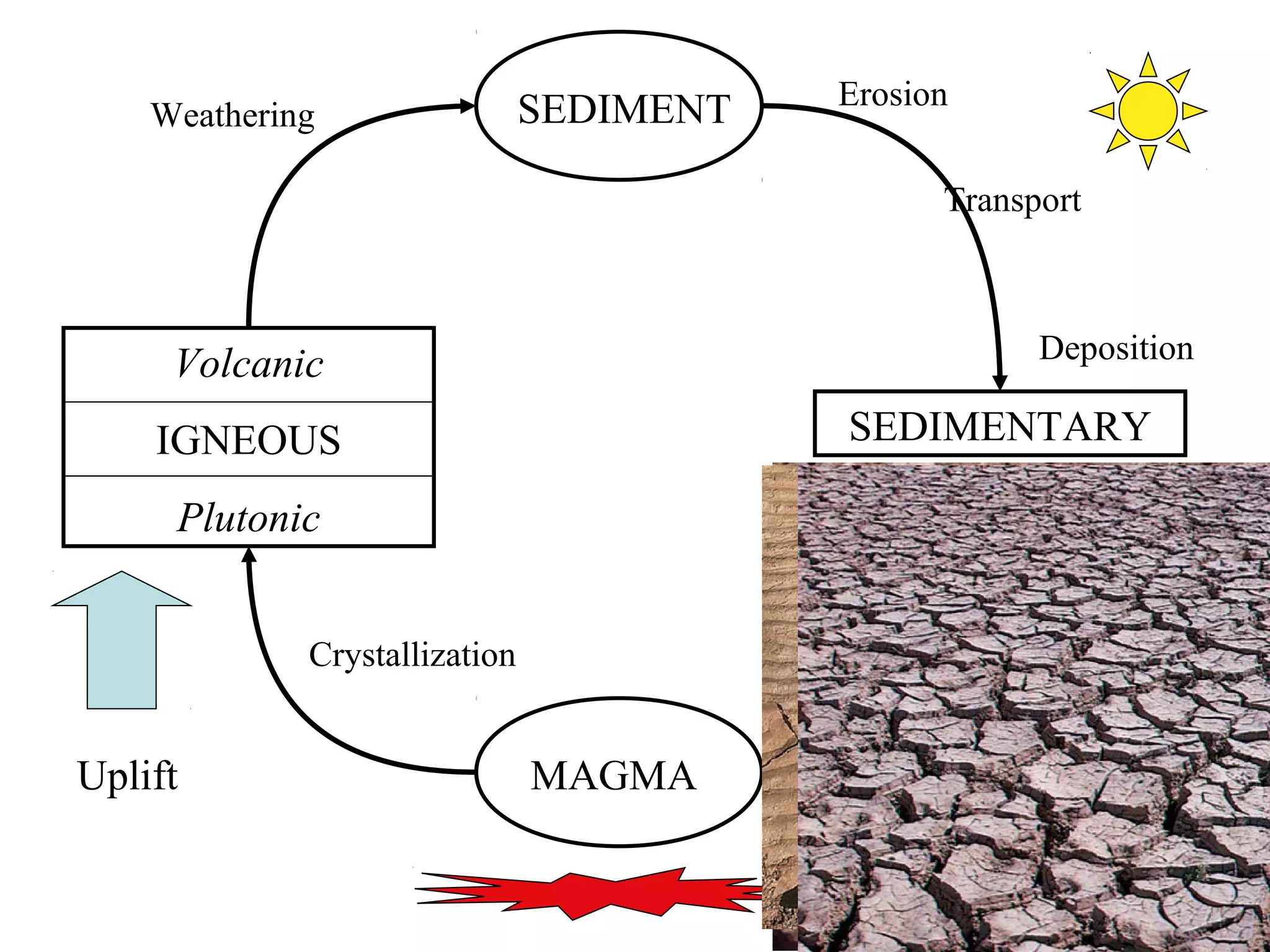
15
MAGMA
Volcanic
IGNEOUS
Plutonic
SEDIMENT
SEDIMENTARY
Uplift
Crystallization
Weathering
Erosion
Transport
Deposition
16
MAGMA
Volcanic
IGNEOUS
Plutonic
SEDIMENT
SEDIMENTARY
METAMORPHIC
Uplift
Burial
Increased P&T
Crystallization
Weathering
Erosion
Transport
Deposition
17
MAGMA
Volcanic
IGNEOUS
Plutonic
SEDIMENT
SEDIMENTARY
METAMORPHIC
Uplift
Burial
Increased P&T
Melting
Crystallization
Weathering
Erosion
Transport
Deposition
Can you see
any shortcuts?
18
MAGMA
Volcanic
IGNEOUS
Plutonic
SEDIMENT
SEDIMENTARY
METAMORPHIC
Uplift
Burial
Increased P&T
Melting
Crystallization
Weathering
Erosion
Transport
Deposition
• The rock cycle demonstrates
the relationships among the
three major rock groups
• It is powered by the interior
heat of the Earth
• As well as earth’s
momentum and…
• The energy from the sun
• It involves processes on the
Earth’s surface as well as
the Earth’s interior
• It connects the “hydrologic
cycle” with the “tectonic
cycle”.
In Conclusion…
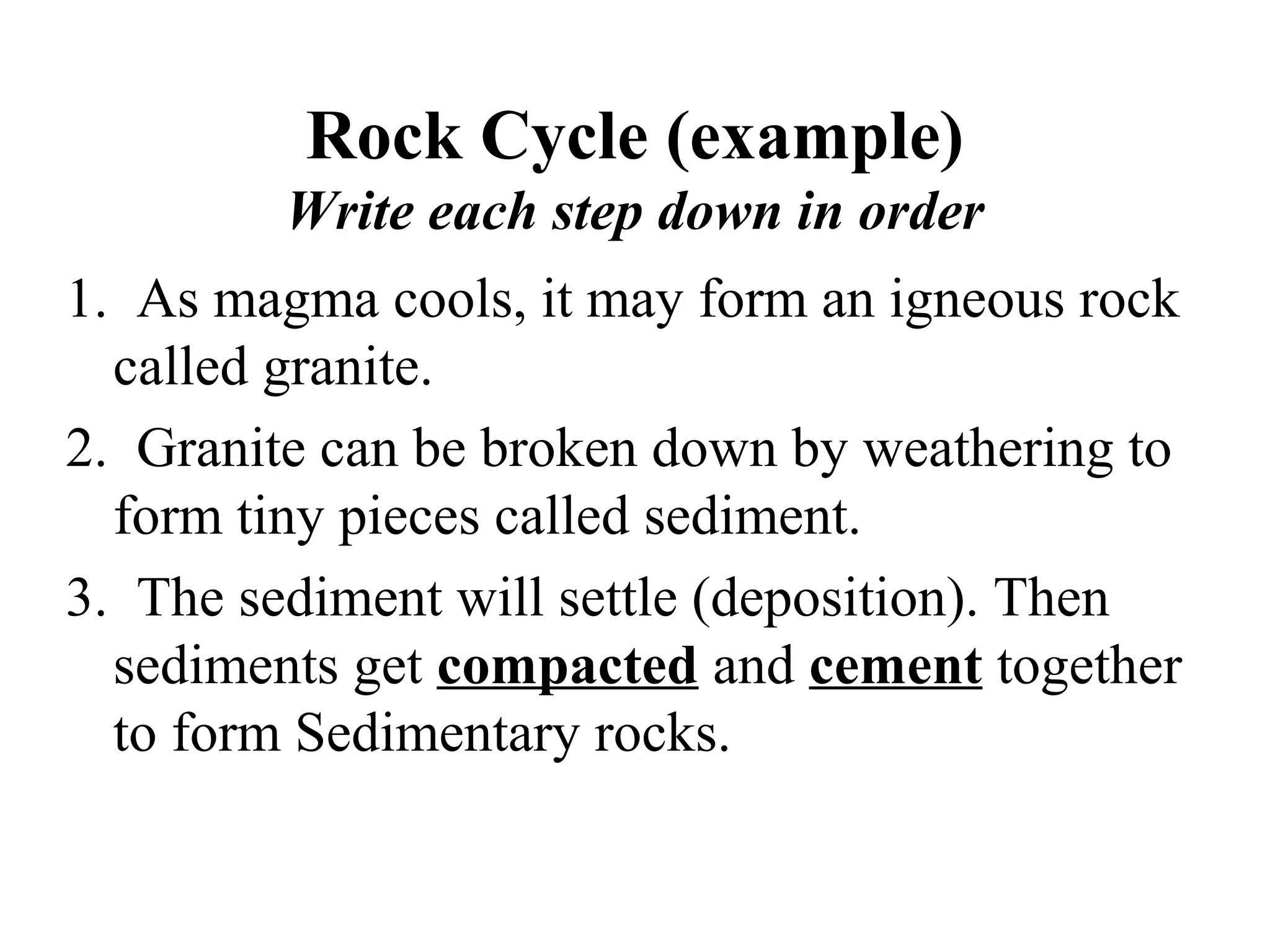
Rock Cycle (example)
Write each step down in order
1. As magma cools, it may form an igneous rock
called granite.
2. Granite can be broken down by weathering to
form tiny pieces called sediment.
3. The sediment will settle (deposition). Then
sediments get compacted and cement together
to form Sedimentary rocks.
4. If the Sedimentary rock is exposed to heat
and pressure, it will form a Metamorphic rock.
5. The new Metamorphic rock could then melt
and cool to form an igneous rock or it could
erode and form a different Sedimentary rock.
The Rock Cycle is NOT
a one way process.
Go to
ikeepbookmarks.com
Type: Alleyne in
Account (or Email)
Look left and select Geosphere (29)
Look right for select Rock Cycle (33)
Explore (some may not work because they are flash
files.)
23

Cause and effect in the rock cycle