Welcome Astronomers to the Sun, Moon, and
Earth! The relationship
between the Sun, Moon, and Earth is very
important to the existence of life on Earth. Our
quest is to find out how their relationships affect
day and night, years, the seasons around the
world, and the phases of the moon.
Day, Night, Year, and
Seasons
Purpose/Objective:  The students will be able to:
1)Describe how the Earth’s rotation on its axis
relative to the Sun causes the Earth to experience
cycles of day and night.
2) Describe how Earth’s 365-day revolution around
the Sun allows us to have years.
3) Explain the reason why Earth passes through four
different seasons during its revolution around the
Sun.
4) Relate the Moon phases to changes in the Moon’s
position relative to the Earth and Sun during its 29-day
revolution around the Earth.
Rotation – Earth spinning on axis.
1 rotation = 24 hours
Part of Earth facing sun = day
Part of Earth facing away from Sun = night
Rotation
What does Rotation mean?
Rotation occurs when something is spinning around an axis.
What are some examples of things that rotate?
Tops, Ballerinas, Figure skaters, cyclones, Tornadoes, a merry-go-round, Earth
How do we know that the Earth rotates?
1. Star trails- trails made with time exposure, circular paths that occur
because the planet is moving and not stationary.
2. Winds curve because of the Earth’s rotation.
3. Ocean currents curve clockwise in the northern hemisphere, and
counterclockwise in the southern hemisphere.
4. The movement of a pendulum. It does not actually move, it is the Earth
moving that causes the pendulum to appear to change the direction of its
swing.
Night and Day
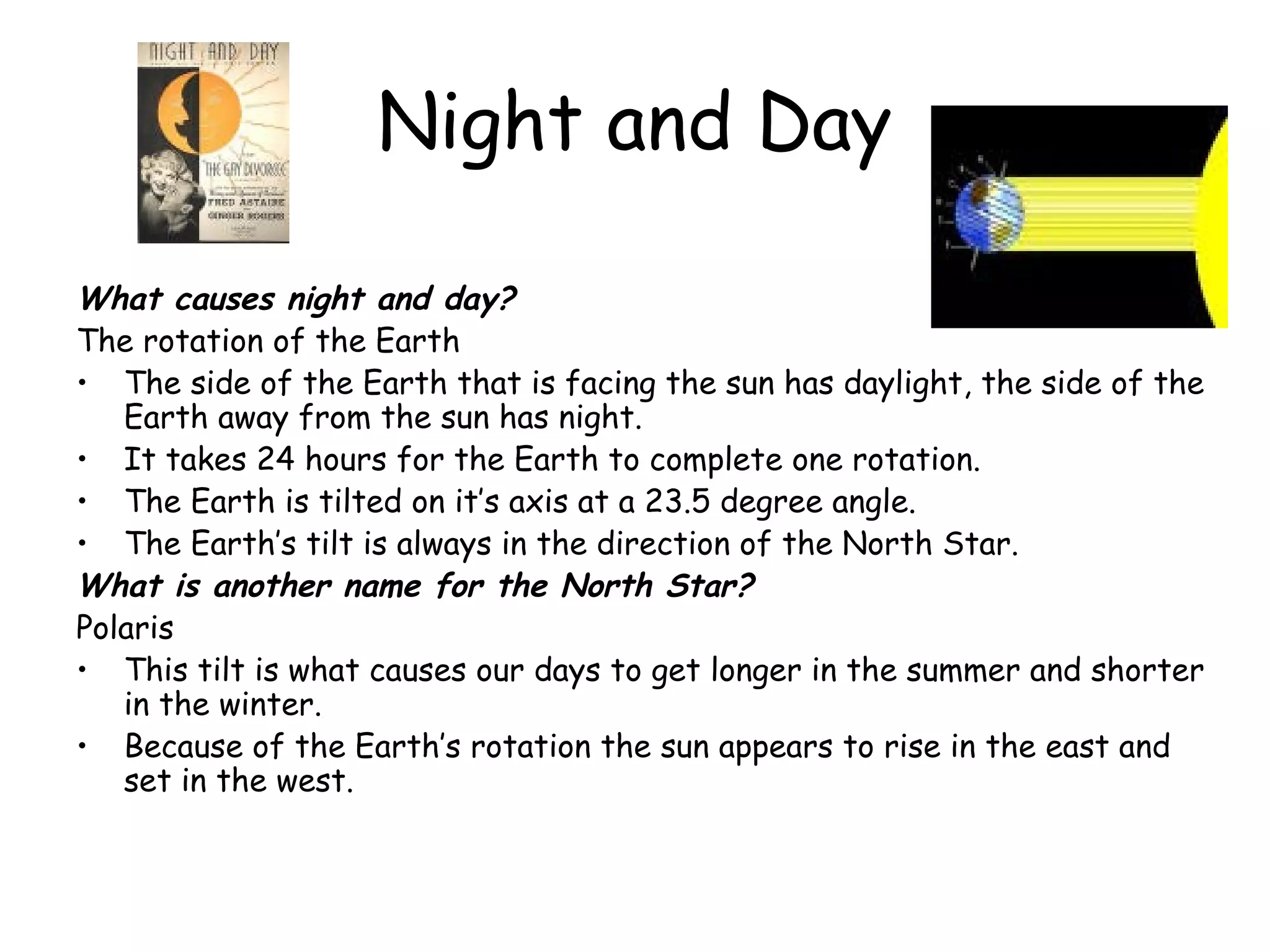
What causes night and day?
The rotation of the Earth
• The side of the Earth that is facing the sun has daylight, the side of the
Earth away from the sun has night.
• It takes 24 hours for the Earth to complete one rotation.
• The Earth is tilted on it’s axis at a 23.5 degree angle.
• The Earth’s tilt is always in the direction of the North Star.
What is another name for the North Star?
Polaris
• This tilt is what causes our days to get longer in the summer and shorter
in the winter.
• Because of the Earth’s rotation the sun appears to rise in the east and
set in the west.
Revolution – movement of 1 object around
another object.
Earth Revolution around Sun = 1 year (365
days)
One revolution around the sun
equals 365 days. This
revolution causes the changing
of the seasons.
Orbit – the path an object takes
as it revolves around another
object.
Axis – Imaginary line passing through
Earth causing it to rotate. Earth tilted
23.5 degrees on axis.
Seasons
What two things cause the difference in the seasons?
1. The angle of the sun’s rays
2. The length of the days
There are two kinds of rays from the Sun:
1. Direct- occurs when Earth is tilted toward the Sun
2. Indirect-occurs when Earth is tilted away from the Sun
In the Summer, we get the direct rays from the sun and
the days are longer. (But we are farther away from
the Sun)
In the Winter, we get indirect rays from the Sun and
the days are shorter. (But we are closer to the Sun)
Why does this happen?
Seasons are caused by the tilt of the Earth
Direct Sunlight
• more direct at the equator
• more indirect at the poles
Not to scale, the Sun is MUCH bigger than the Earth.
Winter in Northern Hemisphere = Summer in
Southern Hemisphere.
Winter Solstice 1st
Day of Winter, Dec. 22.
Longest Night
Summer in Northern Hemisphere = Winter in
Southern Hemisphere.
Summer Solstice 1st
Day of Summer, June 21.
Longest Day
Spring in Northern Hemisphere = Fall in
Southern Hemisphere.
Vernal Equinox 1st
day of Spring, March 21.
Equal Day and Equal Night
Fall in Northern Hemisphere = Spring in the
Southern Hemisphere.
Autumnal Equinox 1st
day of fall Sept. 23
Equal Day and Equal Night
The Four Seasons: The Effect of the Tilt
of Earth’s Rotation Axis
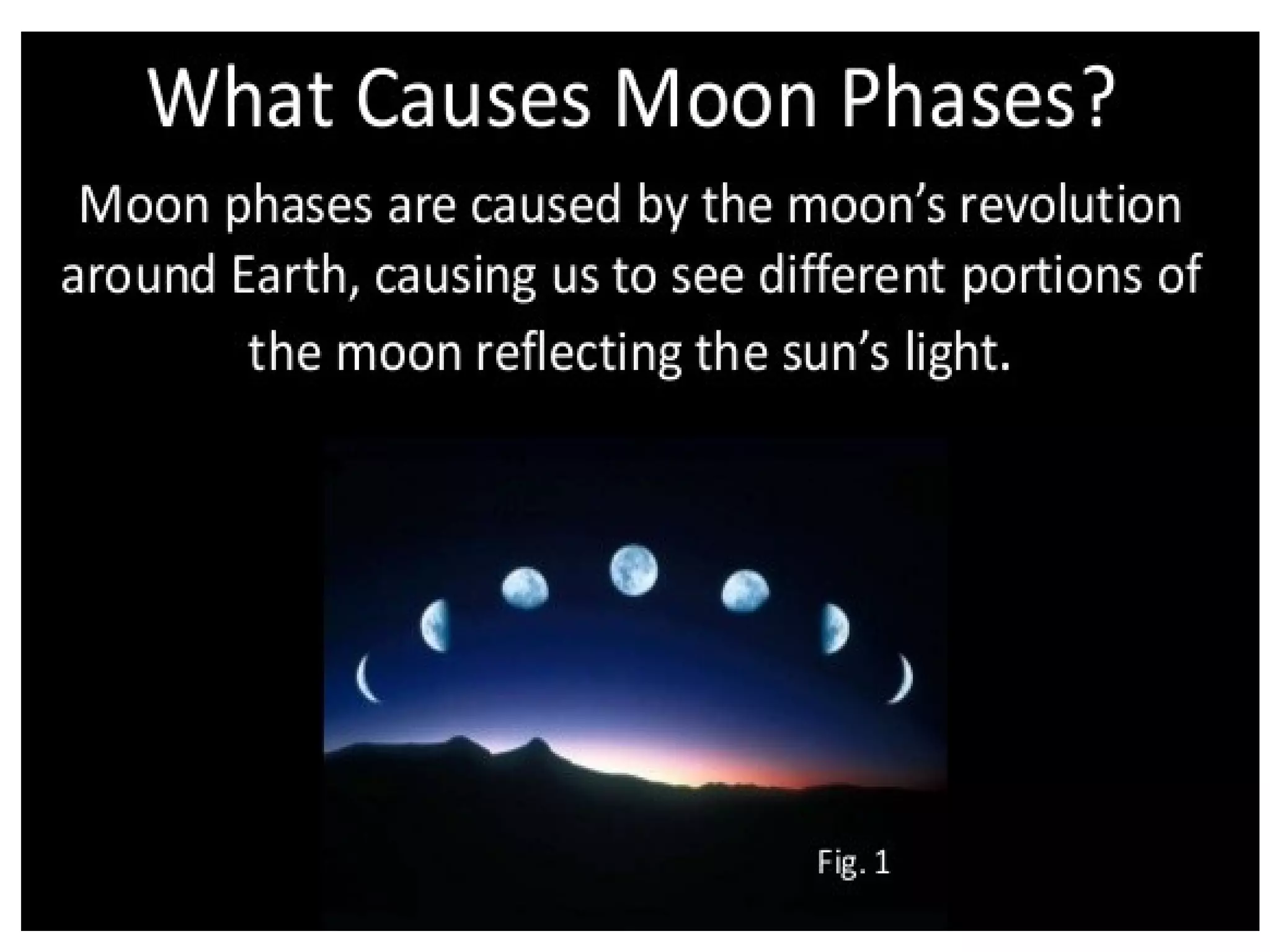
The Phase of the Moon
The phase of
the Moon
depends on the
relative position
between the
Sun, the Earth,
and the Moon…
>> 0 >> 1 >> 2 >> 3 >> 4 >>
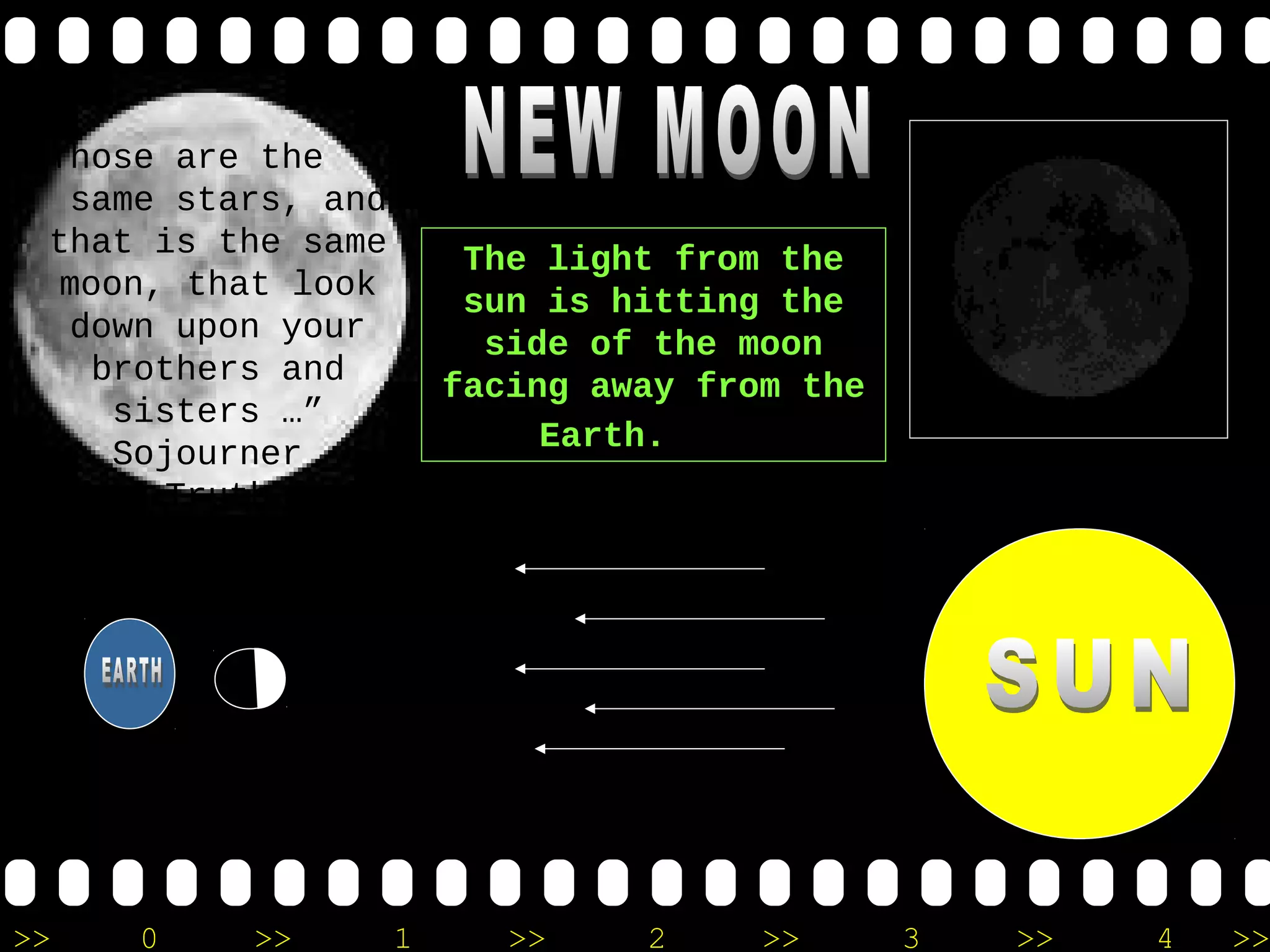
The light from the
sun is hitting the
side of the moon
facing away from the
Earth.
Those are the
same stars, and
that is the same
moon, that look
down upon your
brothers and
sisters …”
Sojourner
Truth
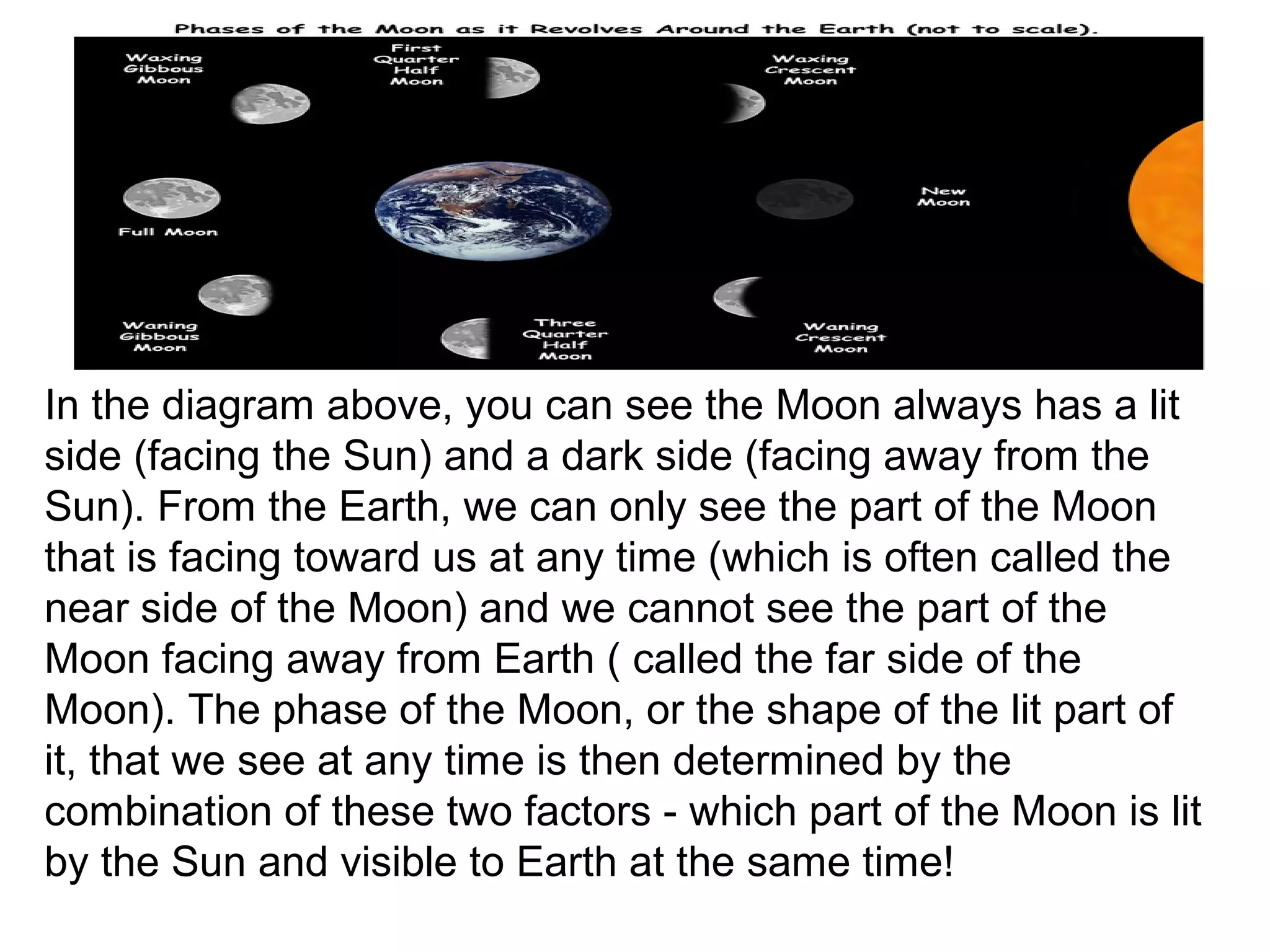
In the diagram above, you can see the Moon always has a lit
side (facing the Sun) and a dark side (facing away from the
Sun). From the Earth, we can only see the part of the Moon
that is facing toward us at any time (which is often called the
near side of the Moon) and we cannot see the part of the
Moon facing away from Earth ( called the far side of the
Moon). The phase of the Moon, or the shape of the lit part of
it, that we see at any time is then determined by the
combination of these two factors - which part of the Moon is lit
by the Sun and visible to Earth at the same time!
To summarize, the phases of
the Moon are caused by the
Sun only lighting up half of the
Moon and our angle of seeing
the Moon.
The phases of the Moon are
not caused by the Earth's
shadow.
Finished
• Go to New path learning
• Earth, Sun & Moon
– Don’t have a code? Come see me or can’t
remember? Come see me
– Go to USA TEST PREP
• What Causes Seasons? (01:35)
• S6E2.c.) Earth tilt and solar energy
(S6E2.a.) Earth, Moon, and Sun

4 11 2017 rotation and revolution

  • 1.
    Welcome Astronomers tothe Sun, Moon, and Earth! The relationship between the Sun, Moon, and Earth is very important to the existence of life on Earth. Our quest is to find out how their relationships affect day and night, years, the seasons around the world, and the phases of the moon. Day, Night, Year, and Seasons
  • 2.
    Purpose/Objective:  The studentswill be able to: 1)Describe how the Earth’s rotation on its axis relative to the Sun causes the Earth to experience cycles of day and night. 2) Describe how Earth’s 365-day revolution around the Sun allows us to have years. 3) Explain the reason why Earth passes through four different seasons during its revolution around the Sun. 4) Relate the Moon phases to changes in the Moon’s position relative to the Earth and Sun during its 29-day revolution around the Earth.
  • 3.
    Rotation – Earthspinning on axis. 1 rotation = 24 hours Part of Earth facing sun = day Part of Earth facing away from Sun = night
  • 4.
    Rotation What does Rotationmean? Rotation occurs when something is spinning around an axis. What are some examples of things that rotate? Tops, Ballerinas, Figure skaters, cyclones, Tornadoes, a merry-go-round, Earth How do we know that the Earth rotates? 1. Star trails- trails made with time exposure, circular paths that occur because the planet is moving and not stationary. 2. Winds curve because of the Earth’s rotation. 3. Ocean currents curve clockwise in the northern hemisphere, and counterclockwise in the southern hemisphere. 4. The movement of a pendulum. It does not actually move, it is the Earth moving that causes the pendulum to appear to change the direction of its swing.
  • 5.
    Night and Day Whatcauses night and day? The rotation of the Earth • The side of the Earth that is facing the sun has daylight, the side of the Earth away from the sun has night. • It takes 24 hours for the Earth to complete one rotation. • The Earth is tilted on it’s axis at a 23.5 degree angle. • The Earth’s tilt is always in the direction of the North Star. What is another name for the North Star? Polaris • This tilt is what causes our days to get longer in the summer and shorter in the winter. • Because of the Earth’s rotation the sun appears to rise in the east and set in the west.
  • 6.
    Revolution – movementof 1 object around another object. Earth Revolution around Sun = 1 year (365 days)
  • 7.
    One revolution aroundthe sun equals 365 days. This revolution causes the changing of the seasons.
  • 8.
    Orbit – thepath an object takes as it revolves around another object.
  • 9.
    Axis – Imaginaryline passing through Earth causing it to rotate. Earth tilted 23.5 degrees on axis.
  • 10.
    Seasons What two thingscause the difference in the seasons? 1. The angle of the sun’s rays 2. The length of the days There are two kinds of rays from the Sun: 1. Direct- occurs when Earth is tilted toward the Sun 2. Indirect-occurs when Earth is tilted away from the Sun In the Summer, we get the direct rays from the sun and the days are longer. (But we are farther away from the Sun) In the Winter, we get indirect rays from the Sun and the days are shorter. (But we are closer to the Sun) Why does this happen?
  • 11.
    Seasons are causedby the tilt of the Earth
  • 12.
    Direct Sunlight • moredirect at the equator • more indirect at the poles
  • 13.
    Not to scale,the Sun is MUCH bigger than the Earth.
  • 14.
    Winter in NorthernHemisphere = Summer in Southern Hemisphere. Winter Solstice 1st Day of Winter, Dec. 22. Longest Night
  • 15.
    Summer in NorthernHemisphere = Winter in Southern Hemisphere. Summer Solstice 1st Day of Summer, June 21. Longest Day
  • 16.
    Spring in NorthernHemisphere = Fall in Southern Hemisphere. Vernal Equinox 1st day of Spring, March 21. Equal Day and Equal Night
  • 17.
    Fall in NorthernHemisphere = Spring in the Southern Hemisphere. Autumnal Equinox 1st day of fall Sept. 23 Equal Day and Equal Night
  • 18.
    The Four Seasons:The Effect of the Tilt of Earth’s Rotation Axis
  • 19.
    The Phase ofthe Moon The phase of the Moon depends on the relative position between the Sun, the Earth, and the Moon…
  • 21.
    >> 0 >>1 >> 2 >> 3 >> 4 >> The light from the sun is hitting the side of the moon facing away from the Earth. Those are the same stars, and that is the same moon, that look down upon your brothers and sisters …” Sojourner Truth
  • 22.
    In the diagramabove, you can see the Moon always has a lit side (facing the Sun) and a dark side (facing away from the Sun). From the Earth, we can only see the part of the Moon that is facing toward us at any time (which is often called the near side of the Moon) and we cannot see the part of the Moon facing away from Earth ( called the far side of the Moon). The phase of the Moon, or the shape of the lit part of it, that we see at any time is then determined by the combination of these two factors - which part of the Moon is lit by the Sun and visible to Earth at the same time!
  • 24.
    To summarize, thephases of the Moon are caused by the Sun only lighting up half of the Moon and our angle of seeing the Moon. The phases of the Moon are not caused by the Earth's shadow.
  • 25.
    Finished • Go toNew path learning • Earth, Sun & Moon – Don’t have a code? Come see me or can’t remember? Come see me – Go to USA TEST PREP • What Causes Seasons? (01:35) • S6E2.c.) Earth tilt and solar energy (S6E2.a.) Earth, Moon, and Sun