z
The Paleozoic Era:
Era of Old Life
z
Paleozoic Era
 The Paleozoic Era started 542
million years ago with the
emergence of complex life forms
and ended 251 million years ago
with the largest mass extinction the
world has ever experienced
z
What was the Paleozoic Era?
z
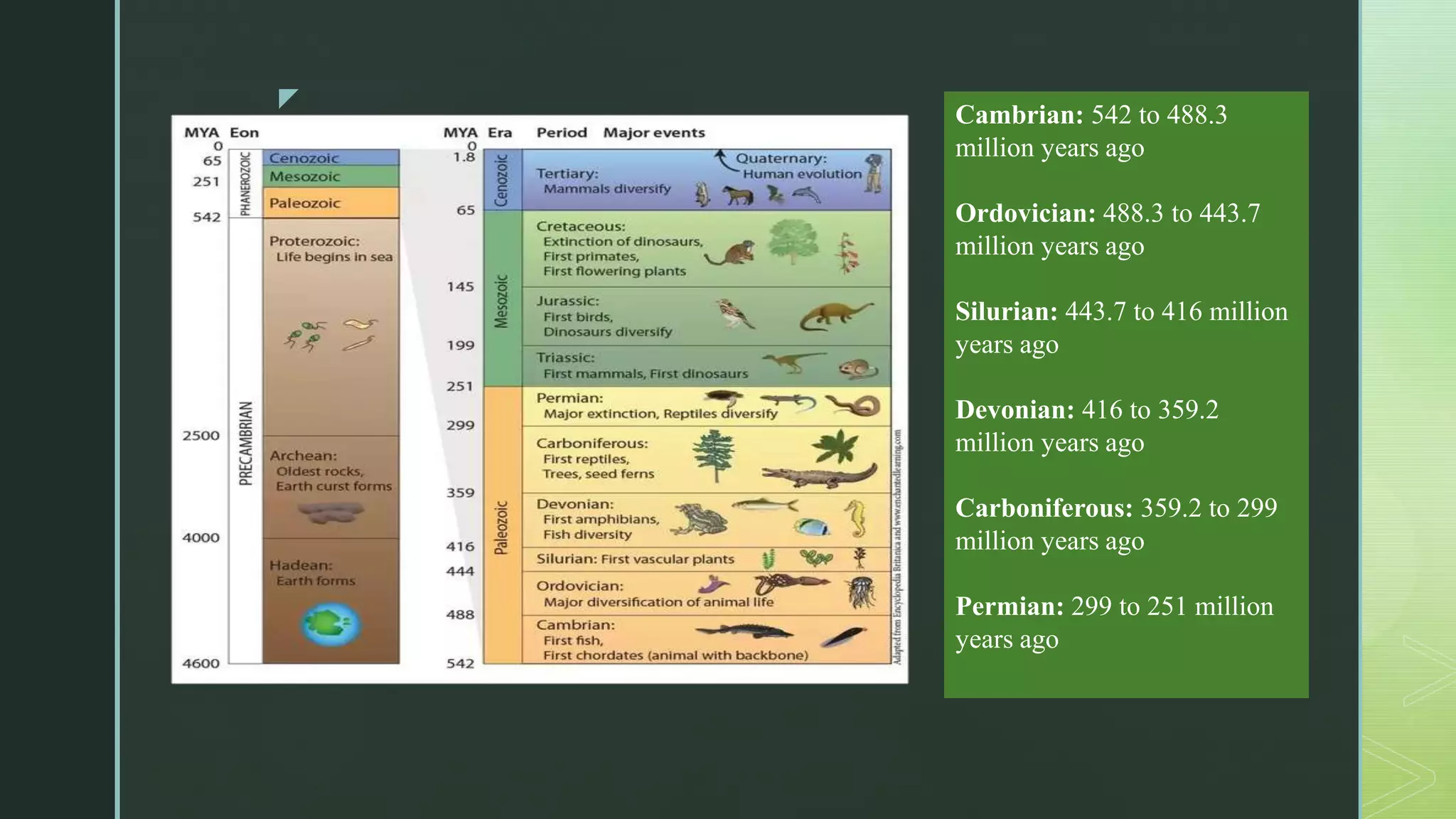
 It is the oldest and longest era of
the Phanerozoic Eon. The era is
usually broken down even further
to six main periods:
z
Cambrian: 542 to 488.3
million years ago
Ordovician: 488.3 to 443.7
million years ago
Silurian: 443.7 to 416 million
years ago
Devonian: 416 to 359.2
million years ago
Carboniferous: 359.2 to 299
million years ago
Permian: 299 to 251 million
years ago
z
Cambrian: 542 to 488.3 million
years ago
z
Ordovician: 488.3 to 443.7
million years ago
z
Silurian: 443.7 to 416 million years
ago
z
Devonian: 416 to 359.2 million years
ago
z
Carboniferous: 359.2 to 299 million
years ago
z
Permian: 299 to 251 million years
ago
z
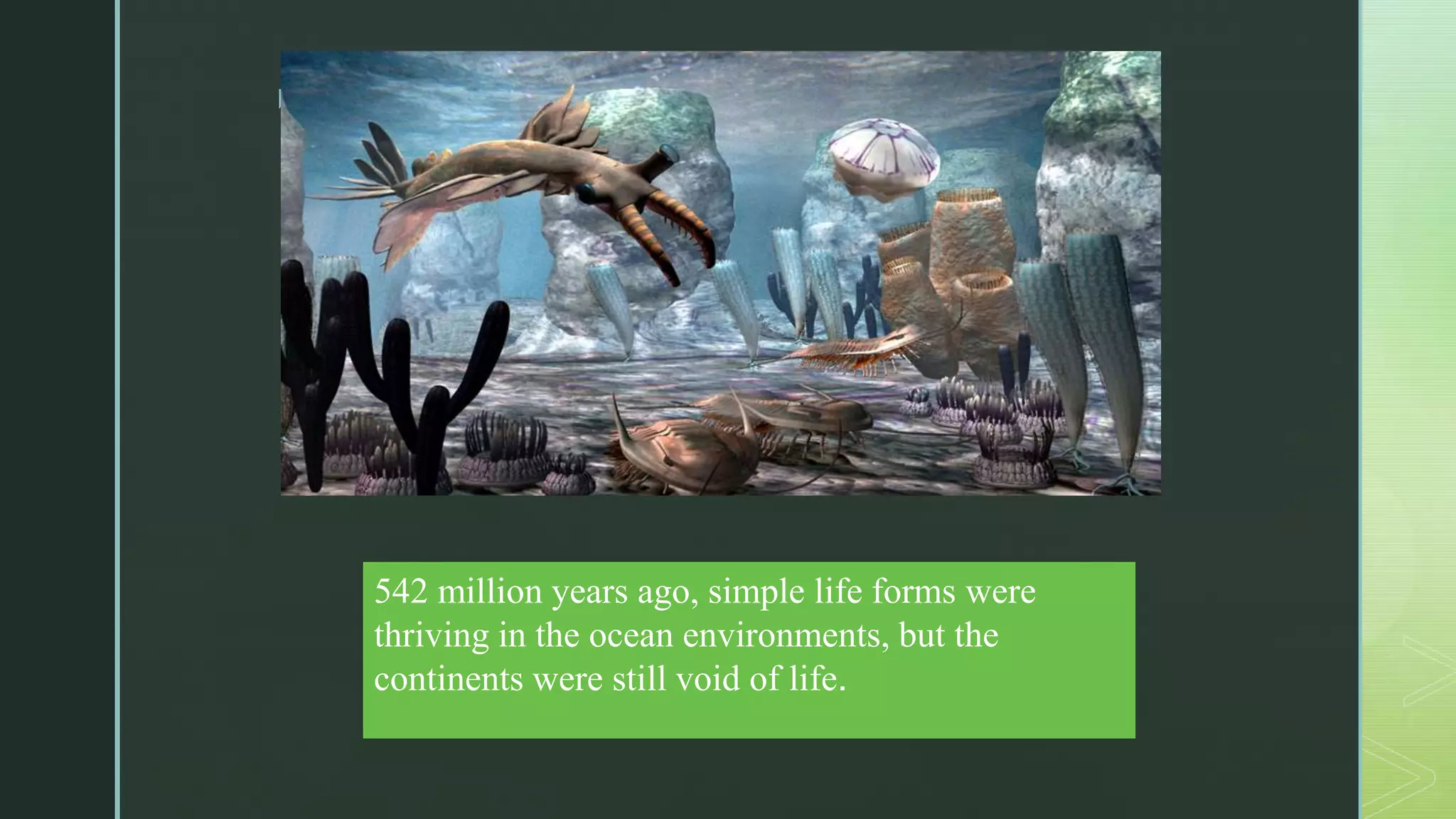
542 million years ago, simple life forms were
thriving in the ocean environments, but the
continents were still void of life.
z
z
- The Paleozoic Era would see an explosion of variety of diverse
life forms in the ocean and eventually make the leap onto land.
z
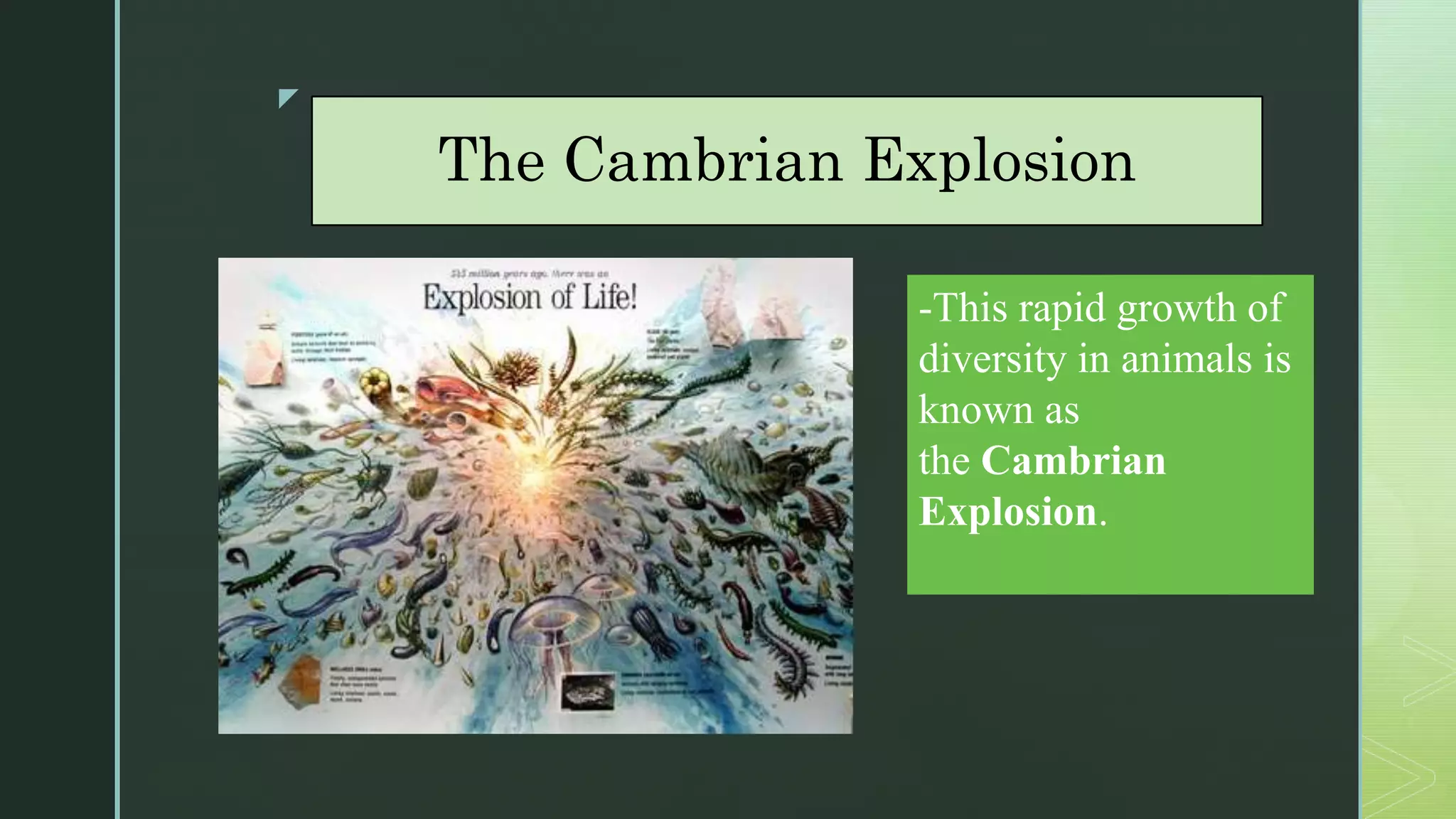
The Cambrian Explosion
-This rapid growth of
diversity in animals is
known as
the Cambrian
Explosion.
z
Silurian Period
- By the Silurian
Period, both
plants and
invertebrate
animals had
made their way
onto land.
z
Devonian Period
- Vertebrate fish had
ventured out of the
sea and become land
dwellers by the
Devonian Period.
z
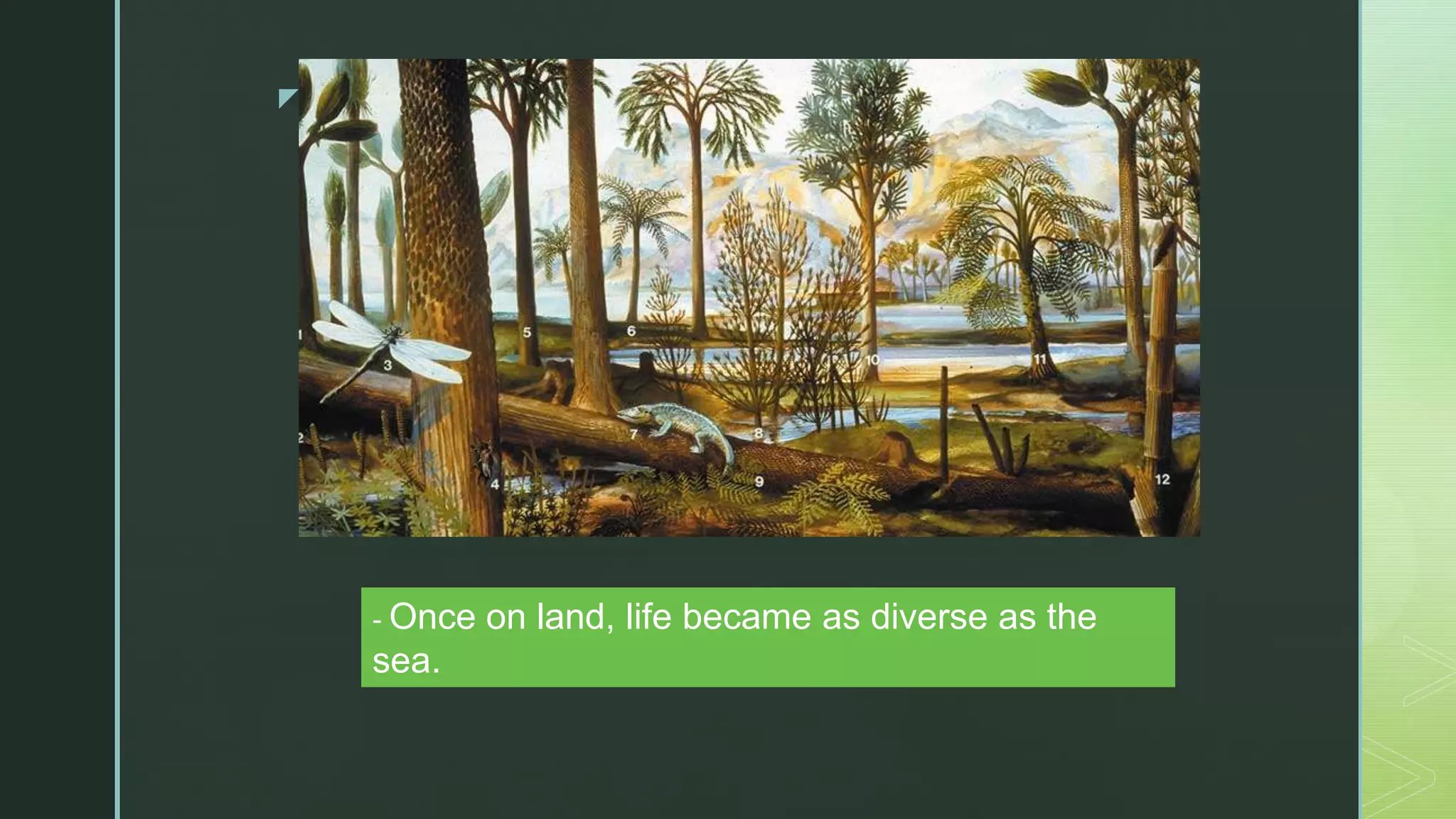
- Once on land, life became as diverse as the
sea.
z
Carboniferious Period
The Carboniferous
Period saw the
emergence of flight
with winged insects.
z
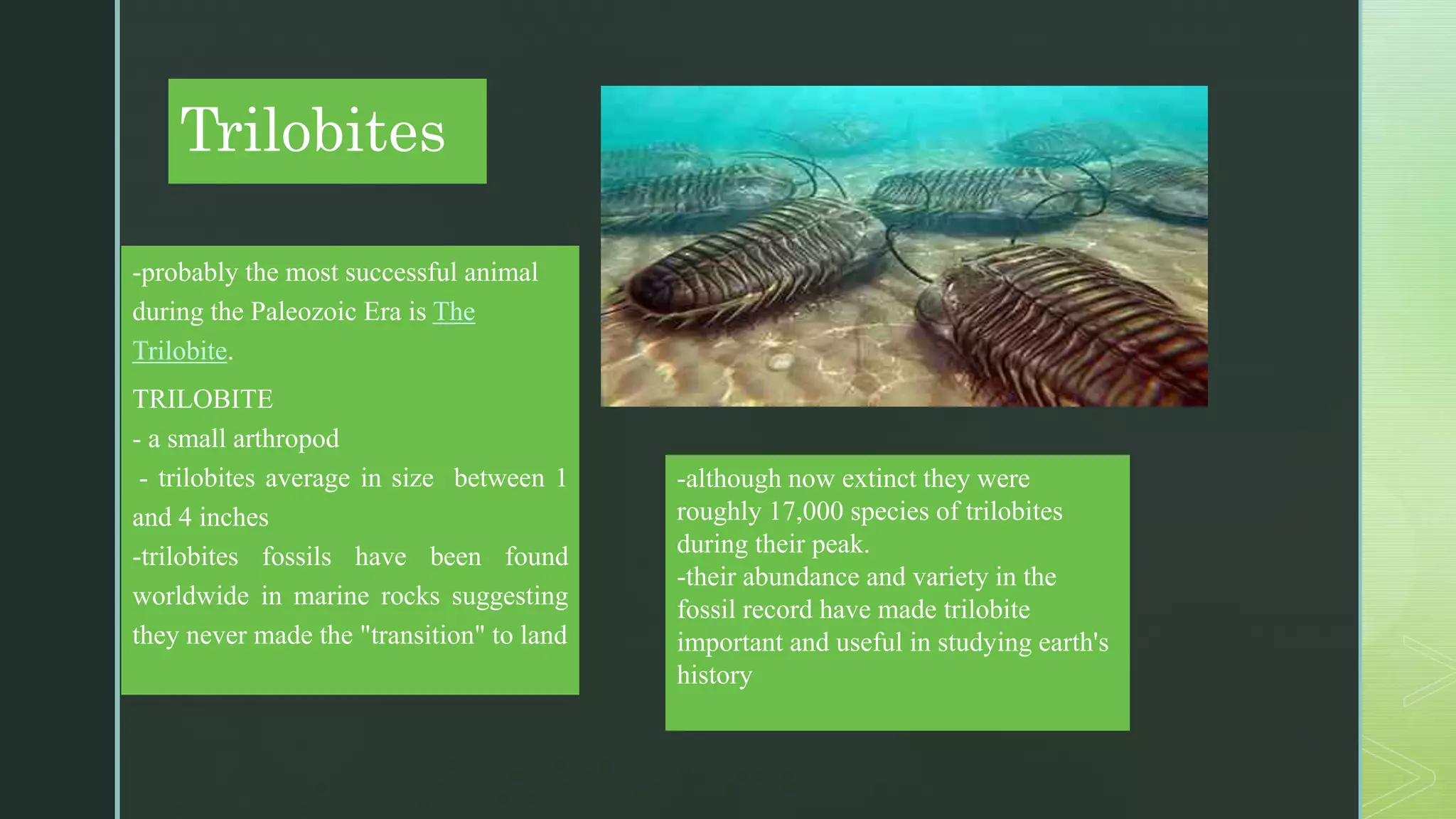
Trilobites
-probably the most successful animal
during the Paleozoic Era is The
Trilobite.
TRILOBITE
- a small arthropod
- trilobites average in size between 1
and 4 inches
-trilobites fossils have been found
worldwide in marine rocks suggesting
they never made the "transition" to land
-although now extinct they were
roughly 17,000 species of trilobites
during their peak.
-their abundance and variety in the
fossil record have made trilobite
important and useful in studying earth's
history
z
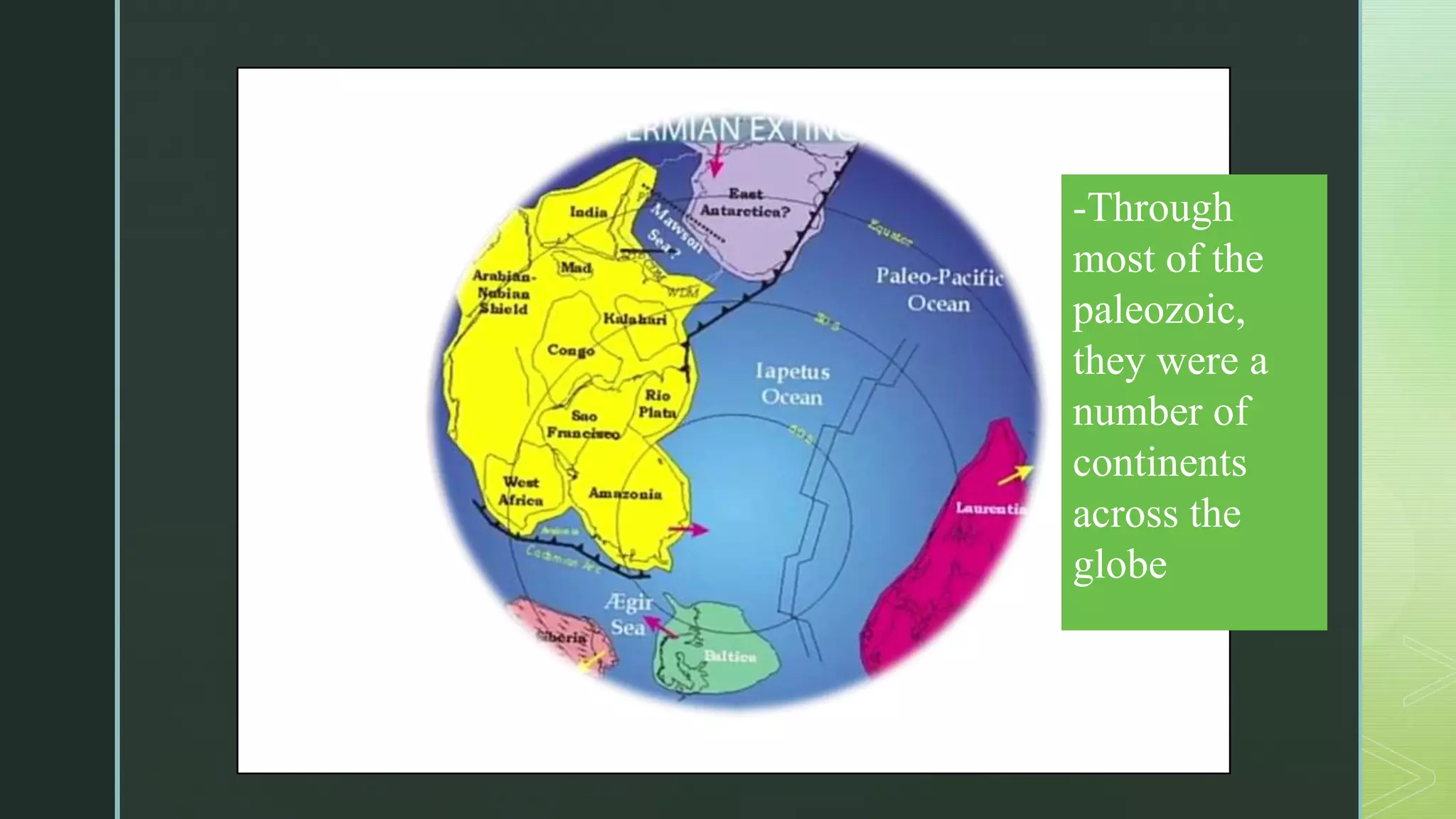
-Through
most of the
paleozoic,
they were a
number of
continents
across the
globe
z
Pangea
-by the end of the
era the continents
had recombined
to form the most
recent
supercontinent
"PANGEA"
z
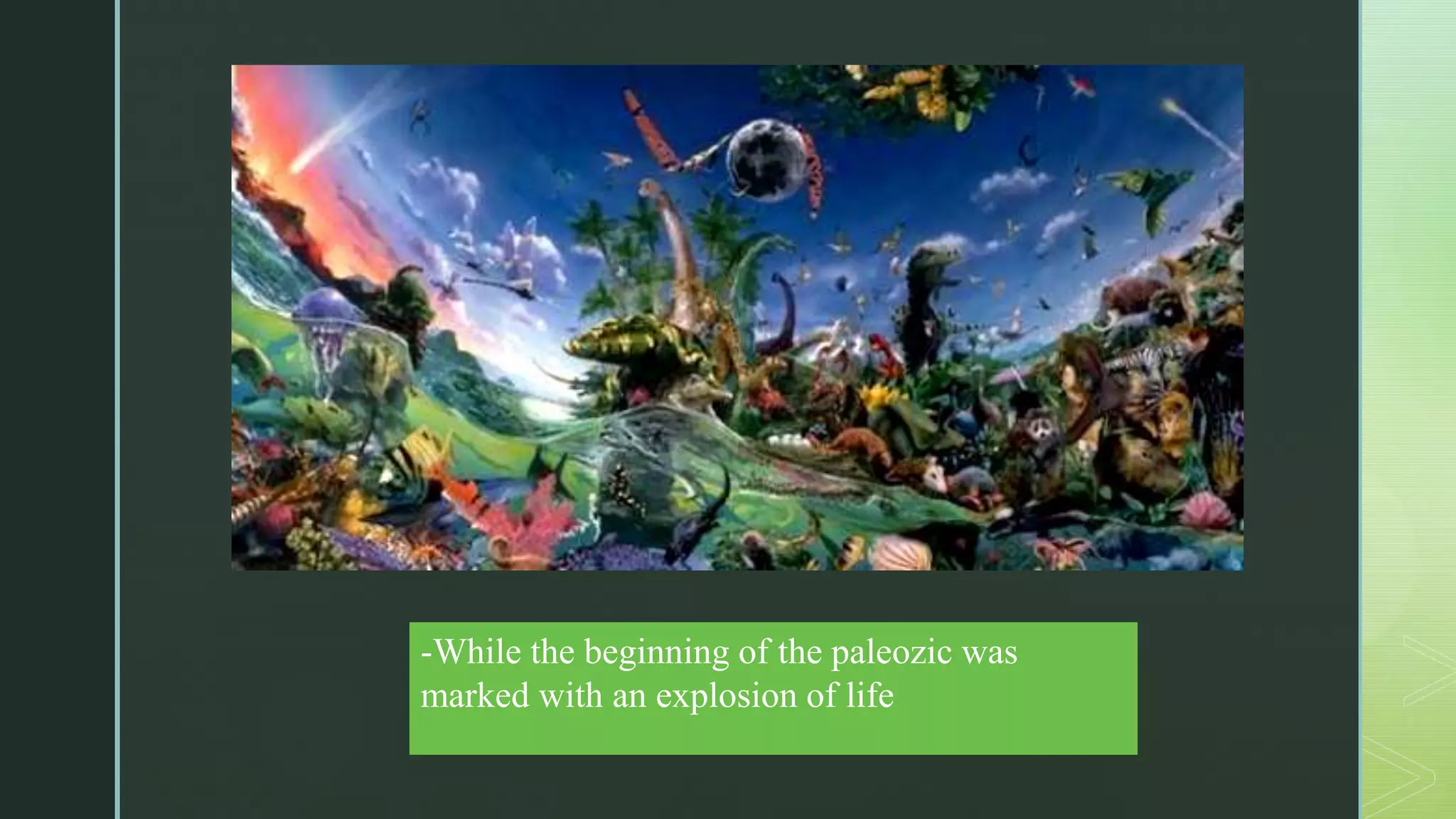
-While the beginning of the paleozic was
marked with an explosion of life
z
- the end of the paleozoic era was marked by a mass
extinction named "THE PERMIAN EXTINCTION"
z
The Permian Extinction
The largest mass extinction in earth's
history occurred 251 million years
ago where 96% of all marine life and
70% of terrestrial life went extinct.
z
Theories as to the cause of
the extinction
z
Asteroid
impact
z
Mass volcano
eruption
z
Oxygen depletion
in the ocean
z
Significant
Global
Warming
z
It would take another ten million
years for a life to recover from this
mass extinction.

WHAT IS PALEOZOIC ERA?