Succession Planning
By
Sreejith Sreeenivasan
• Succession Planning is a process of identifying, developing and
transitioning potential successors for the companies present and future
key roles, aligned with the talent and ambitions of its current employees
and talent network.
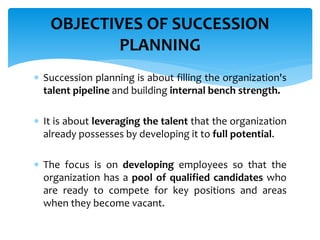
 Succession planning is about filling the organization's
talent pipeline and building internal bench strength.
 It is about leveraging the talent that the organization
already possesses by developing it to full potential.
 The focus is on developing employees so that the
organization has a pool of qualified candidates who
are ready to compete for key positions and areas
when they become vacant.
OBJECTIVES OF SUCCESSION
PLANNING
 Succession planning starts when you can accurately
measure the performance of employees, assess skills
and career growth information.
 Succession planning tools need to have extensive
integration and customization options to support all
of your talent management efforts.
 Refer to the software criteria and requirements
SUCCESSION PLANNING TOOLS

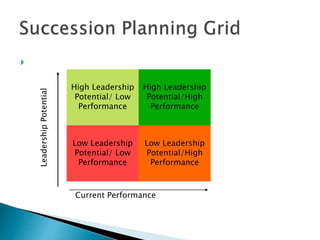
High Leadership
Potential/ Low
Performance
High Leadership
Potential/High
Performance
Low Leadership
Potential/ Low
Performance
Low Leadership
Potential/High
Performance
LeadershipPotential
Current Performance
 Succession planning should be a proactive process geared to meeting individual
employees’ and the organization’s needs.
 It should allow staff the opportunity to gain experience and training in different
areas before they are needed in critical positions.
 This may have the added benefit of keeping employees challenged and
stimulated, which may foster retention while employees wait for openings.
 The commitment of employees to their own development.
 The personal involvement of senior leaders, as well as their personal
accountability and responsibility for growing leaders.
CRITICAL SUCCESS FACTORS FOR
SUCCESSION PLANNING – BEST PRACTICE
PRINCIPLES
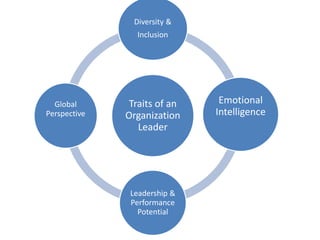
Traits of an
Organization
Leader
Diversity &
Inclusion
Emotional
Intelligence
Leadership &
Performance
Potential
Global
Perspective
Thank You

Succession Planning

  • 1.
  • 2.
    • Succession Planningis a process of identifying, developing and transitioning potential successors for the companies present and future key roles, aligned with the talent and ambitions of its current employees and talent network.
  • 3.
     Succession planningis about filling the organization's talent pipeline and building internal bench strength.  It is about leveraging the talent that the organization already possesses by developing it to full potential.  The focus is on developing employees so that the organization has a pool of qualified candidates who are ready to compete for key positions and areas when they become vacant. OBJECTIVES OF SUCCESSION PLANNING
  • 4.
     Succession planningstarts when you can accurately measure the performance of employees, assess skills and career growth information.  Succession planning tools need to have extensive integration and customization options to support all of your talent management efforts.  Refer to the software criteria and requirements SUCCESSION PLANNING TOOLS
  • 5.
     High Leadership Potential/ Low Performance HighLeadership Potential/High Performance Low Leadership Potential/ Low Performance Low Leadership Potential/High Performance LeadershipPotential Current Performance
  • 6.
     Succession planningshould be a proactive process geared to meeting individual employees’ and the organization’s needs.  It should allow staff the opportunity to gain experience and training in different areas before they are needed in critical positions.  This may have the added benefit of keeping employees challenged and stimulated, which may foster retention while employees wait for openings.  The commitment of employees to their own development.  The personal involvement of senior leaders, as well as their personal accountability and responsibility for growing leaders. CRITICAL SUCCESS FACTORS FOR SUCCESSION PLANNING – BEST PRACTICE PRINCIPLES
  • 7.
    Traits of an Organization Leader Diversity& Inclusion Emotional Intelligence Leadership & Performance Potential Global Perspective
  • 10.