Critical Care of the Post-Cardiac Surgical Patient:
Right Ventricular Failure
Matthew H Armstrong, MD, MA
Associate Medical Director, Cardiothoracic Critical Care Unit
Meijer Heart Center, Spectrum Health
Clinical Instructor, Anesthesiology and Critical Care
Michigan State University, College of Human Medicine
Conflicts of Interest
No Conflicts of Interest to Disclose.
1. Risk Factors and Dynamics of Right Ventricular Failure (RVF).
2. Assess the severity of RVF with laboratory, hemodynamic, and echocardiographic
data.
3. Discuss the management of RVF in postsurgical patients.
4. Understand the terminology which describes mechanical RV support devices.
Learning Objectives
Wilbur
64 y/o M admitted from ED with worsening pedal edema and
orthopnea.
PMHx:
Non-Ischemic Cardiomyopathy, LVEF 18%
Obesity
Hypercholesterolemia
Hypertension
Prostate CA s/p prostatectomy
PE:
Rales at bilateral lung bases
Third heart sound, III/VI systolic murmur
Abdominal fluid wave
Bilateral LE pitting edema
Admission Labs:
Na 121, K 4, Cl 97, HCO3 19, BUN 30, Cr 1.7, Lactate 2.5
Bili 3.1, AST 400, ALT 370, INR 1.3
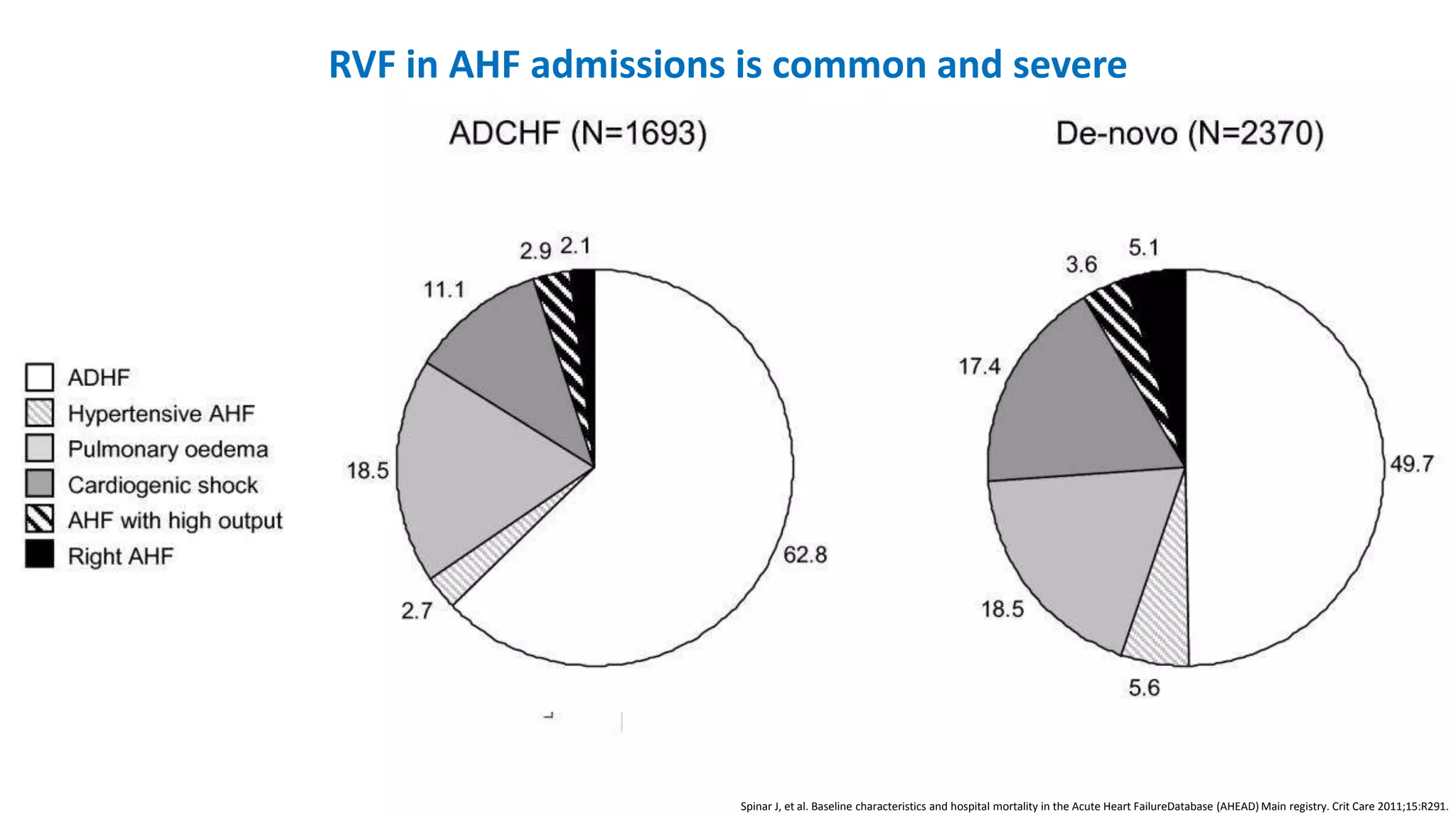
RVF in AHF admissions is common and severe
Spinar J, et al. Baseline characteristics and hospital mortality in the Acute Heart FailureDatabase (AHEAD) Main registry. Crit Care 2011;15:R291.
Kalogeropoulos, A. et al. Validation of Clinical Scores for Right Ventricular Failure Prediction After Implantation of LVAD Devices. J Heart and Lung Transplant. 2015 (34)12 1595 - 1603
Title
Haddad, F. et al. The Right Ventricle in Cardiac Surgery, a Perioperative Perspective: II. Pathophysiology, Clinical Importance, and Management. A&A Feb 2009. (108)2, 422 - 433
Soliman, O. et al. Derivation and validation of a novel right-sided heart failure model after implantation of continuous flow LVADs. Circulation 2017. 136.
Wilbur
64 y/o M admitted from ED with worsening pedal edema and
orthopnea.
PMHx:
Non-Ischemic Cardiomyopathy, LVEF 18%
Obesity
Hypercholesterolemia
Hypertension
Prostate CA s/p prostatectomy
PE:
Rales at bilateral lung bases
Third heart sound, III/VI systolic murmur
Abdominal fluid wave
Bilateral pitting edema
Admission Labs:
Na 121, K 4, Cl 97, HCO3 19, BUN 30, Cr 1.7, Lactate 2.5
Bili 3.1, AST 400, ALT 370, INR 1.3
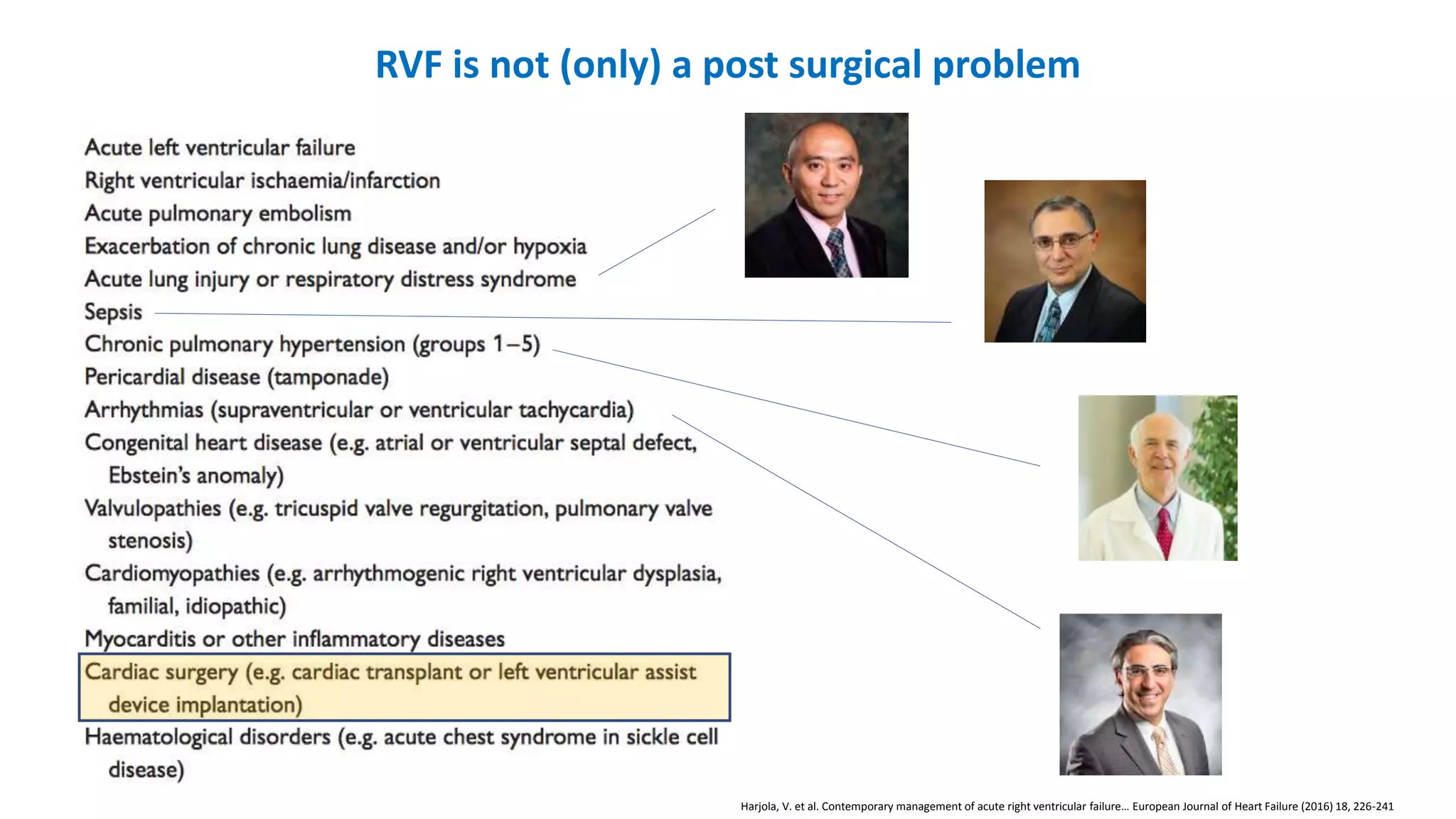
RVF is not (only) a post surgical problem
Harjola, V. et al. Contemporary management of acute right ventricular failure… European Journal of Heart Failure (2016) 18, 226-241
RVF is not (only) a post surgical problem
King, C., May, C., Williams, J., Shlobin, O.. Management of Right Heart Failure in the Critically Ill. Critical Care Clinics 30 (2014) 475-489
RVF is not (only) a post surgical problem
Harjola, V. et al. Contemporary management of acute right ventricular failure… European Journal of Heart Failure (2016) 18, 226-241
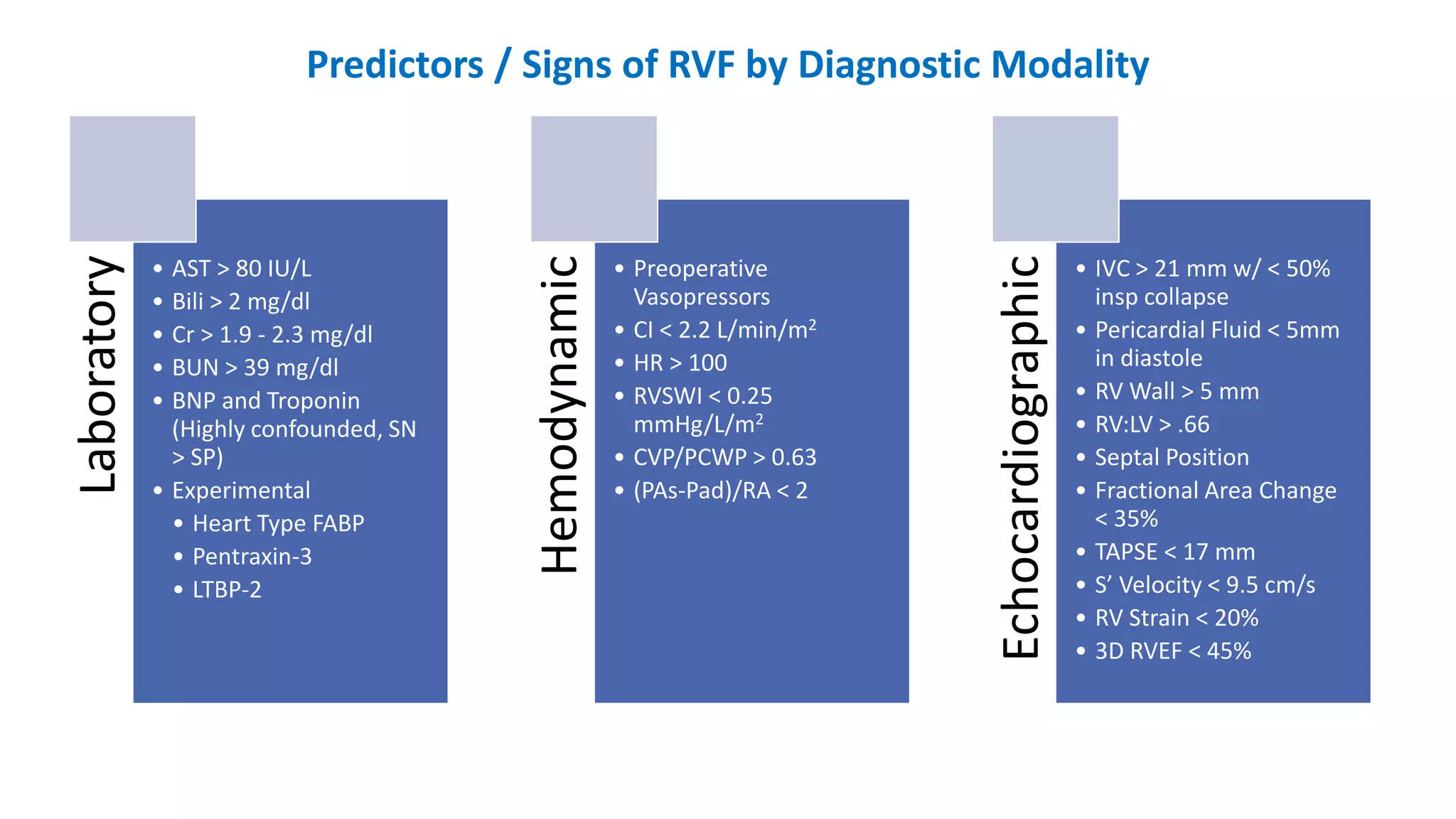
Predictors / Signs of RVF by Diagnostic Modality
Laboratory
• AST > 80 IU/L
• Bili > 2 mg/dl
• Cr > 1.9 - 2.3 mg/dl
• BUN > 39 mg/dl
• BNP and Troponin
(Highly confounded, SN
> SP)
• Experimental
• Heart Type FABP
• Pentraxin-3
• LTBP-2
Hemodynamic
• Preoperative
Vasopressors
• CI < 2.2 L/min/m2
• HR > 100
• RVSWI < 0.25
mmHg/L/m2
• CVP/PCWP > 0.63
• (PAs-Pad)/RA < 2
Echocardiographic
• IVC > 21 mm w/ < 50%
insp collapse
• Pericardial Fluid < 5mm
in diastole
• RV Wall > 5 mm
• RV:LV > .66
• Septal Position
• Fractional Area Change
< 35%
• TAPSE < 17 mm
• S’ Velocity < 9.5 cm/s
• RV Strain < 20%
• 3D RVEF < 45%
Transthoracic Echocardiography – Critical Care Ultrasound
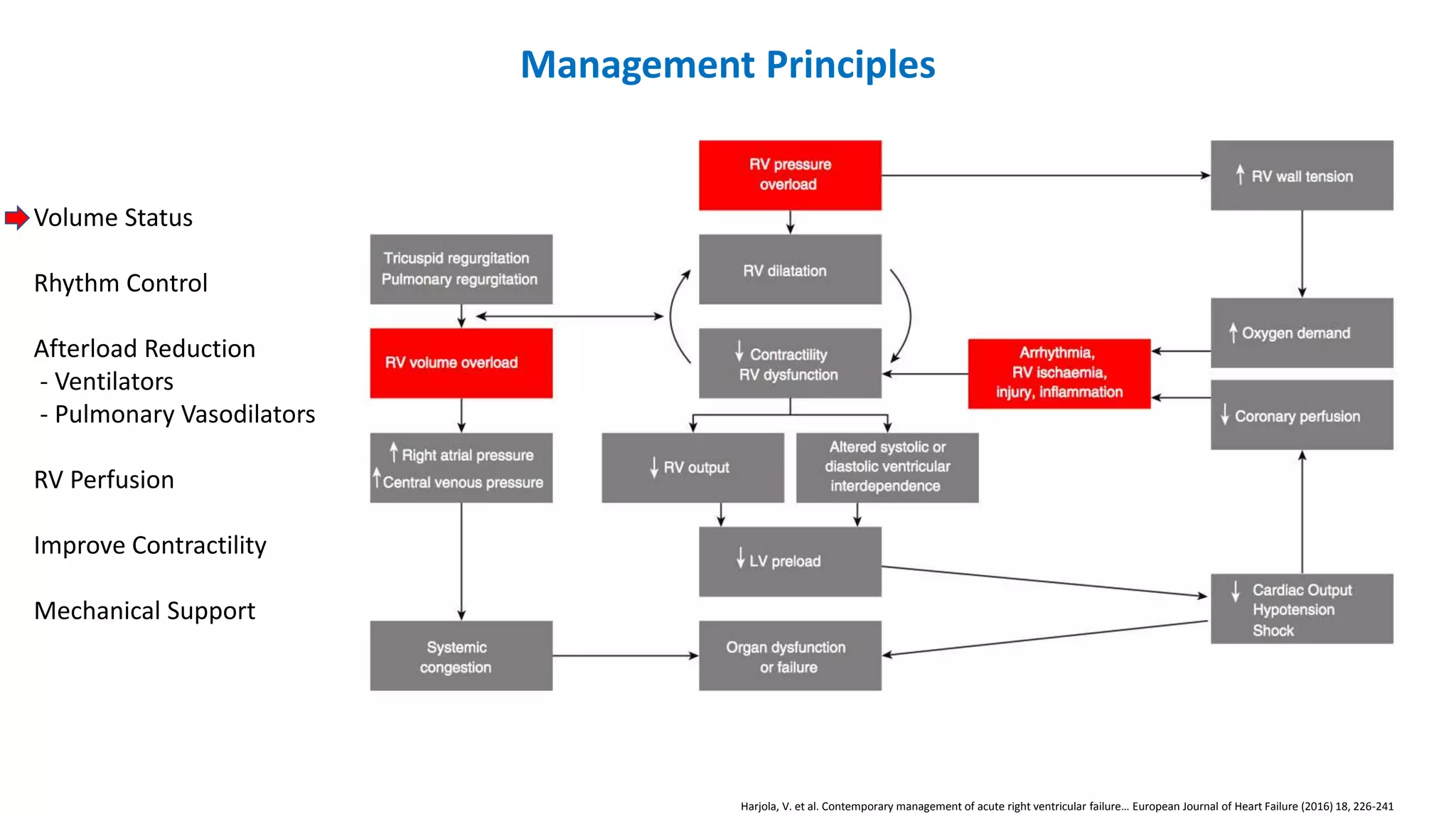
Management Principles
Volume Status
Rhythm Control
Afterload Reduction
- Ventilators
- Pulmonary Vasodilators
RV Perfusion
Improve Contractility
Mechanical Support
Harjola, V. et al. Contemporary management of acute right ventricular failure… European Journal of Heart Failure (2016) 18, 226-241
Post-surgical Management of RVF
Volume Status
Rhythm Control
Afterload Reduction
- Ventilators
- Pulmonary Vasodilators
RV Perfusion
Improve Contractility
Mechanical Support
Goldstein, JA. et al. Hemodynamic importance of systolic ventricular interaction, augmented right atrial contractility and atrioventricular synchrony in
acute right ventricular dysfunction. J Am Coll Cardiol. 1990;16;181-189
Electrically Isolated RV Free Wall of 13 dogs.
AV Sequential Pace RV Electrical Silence LV Pace Only
Post-surgical Management of RVF
Volume Status
Rhythm Control
Afterload Reduction
- Ventilators
- Pulmonary Vasodilators
RV Perfusion
Improve Contractility
Mechanical Support
Repesse X, Charron, C., Vieillard-Baron A.,. Right ventricular failure in acue lung injury and acue respiratory distress syndrome. Minerva Anestesiol. 2012:78: 941-948
Rischer, LG. et al. Management of pulmonary hypertension: physiological and pharmacological considerations for anesthesiologists. Anesth Analg 2003;96: 1603 - 1616
Post-surgical Management of RVF
Volume Status
Rhythm Control
Afterload Reduction
- Ventilators / Prone
- Pulmonary Vasodilators
RV Perfusion
Improve Contractility
Mechanical Support
Khan, TA., Schnickel, G., Ross, D., et al. A prospective, randomized, crossover pilot study of inhaled nitric oxide verus inhaled prostacyclin in heart transplant and lung
transplant recipients. J Thoracic Cardiovasc Surg. 2009;138:1417-1424.
Post-surgical Management of RVF
Volume Status
Rhythm Control
Afterload Reduction
- Ventilators / Prone
- Pulmonary Vasodilators
RV Perfusion
Improve Contractility
Mechanical Support
Khan, TA., Schnickel, G., Ross, D., et al. A prospective, randomized, crossover pilot study of inhaled nitric oxide verus inhaled prostacyclin in heart transplant and lung
transplant recipients. J Thoracic Cardiovasc Surg. 2009;138:1417-1424.
Post-surgical Management of RVF
Volume Status
Rhythm Control
Afterload Reduction
- Ventilators
- Pulmonary Vasodilators
RV Perfusion
Improve Contractility
Mechanical Support
Yonekura et al via Crystal, G., Pagel, P.. Right Ventricular Perfusion: Physiology and Clinical Implications. Anesthesiology 2018 128:202-218
Post-surgical Management of RVF
Volume Status
Rhythm Control
Afterload Reduction
- Ventilators
- Pulmonary Vasodilators
RV Perfusion
Improve Contractility
Mechanical Support
Crystal, G., Pagel, P.. Right Ventricular Perfusion: Physiology and Clinical Implications. Anesthesiology 2018 128:202-218
Optimize CPP
Increase MAP:
NE (SVR > PVR)
Vaso (SVR > PVR)
Epi (Ino + SVR > PVR)
Decrease RV Afterload:
(see previous)
Milrinone
Isoproterenol
Post-surgical Management of RVF
Volume Status
Rhythm Control
Afterload Reduction
- Ventilators
- Pulmonary Vasodilators
RV Perfusion
Improve Contractility
Mechanical Support
Drug INO/PVR/SVR Goal Use
Milrinone /
Levosimendan
+ + /- - / - - inotrope, pulm
vasodilation
Pulm HTN, RV Fail,
PE
Dobutamine + + / - / - - Inotrope, minimal
pulm vasodilation
Inotrope only
Norepinephrine + / n / + + Optimize CPP Low SVR
Epinephrine + + + / + / + + +
Phenylephrine n / + + / + + Increase SVR None in RVF
Dopamine + + / n + / + Inotrope, increase
SVR
Arrhythmogenic,
use NE / Epi first
iNO / Epoprostenol n / - - / n Pulm Vasodilation Hypoxemia, high
PVR
Post-surgical Management of RVF
Volume Status
Rhythm Control
Afterload Reduction
- Ventilators
- Pulmonary Vasodilators
RV Perfusion
Improve Contractility
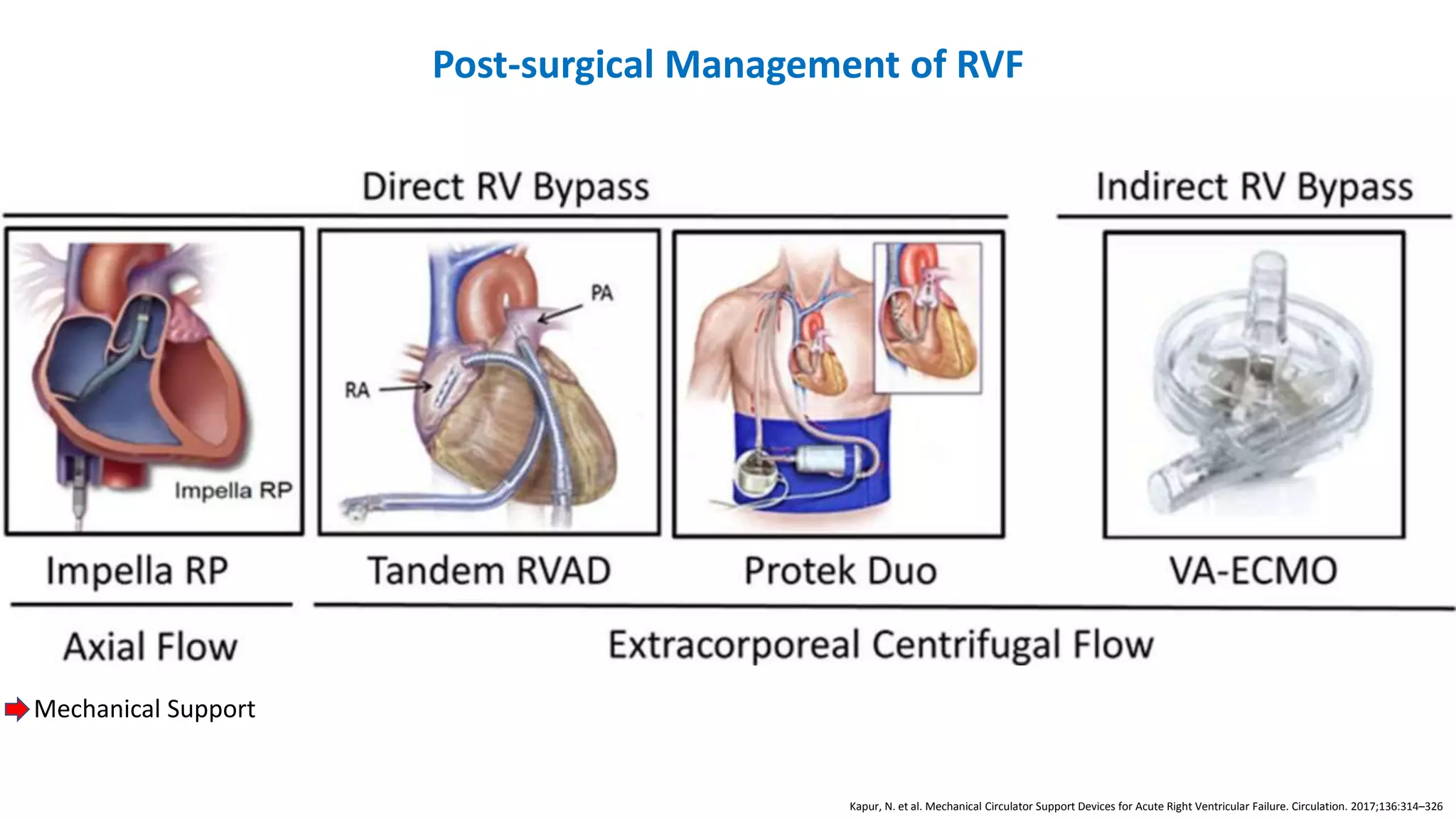
Mechanical Support
Kapur, N. et al. Mechanical Circulator Support Devices for Acute Right Ventricular Failure. Circulation. 2017;136:314–326
Post-surgical Management of RVF
DIRECT RV BYPASS (Impella RP)
RA Pressure ↓
RV Stroke Volume ↓
RV Systolic / PA Systolic ↑
LVEDP / LVEDV ↑
LV Stroke Vol ↑
INDIRECT RV BYPASS (VA ECMO)
RA Pressure ↓
RV Stroke Volume →
RV Systolic / PA Systolic →
LVEDP / LVEDV
LV Afterload ↑
LV Stroke Vol ↓
Kapur, N. et al. Mechanical Circulator Support Devices for Acute Right Ventricular Failure. Circulation. 2017;136:314–326
Summary
30% of LVAD’s
5% of De-novo AHF admissions
18% in hospital mortality
Multifactorial
Interdisciplinary
Biomarkers SN > SP
Hemodynamics are predictive
Echo is very important
Optimize RV curves
Augment Sys funct
Mechanical Options
Direct may ↑ PA
In-direct ↑ LV afterload
Thank You
Matthew H Armstrong, MD, MA
Associate Medical Director, Cardiothoracic Critical Care Unit
Meijer Heart Center, Spectrum Health
Clinical Instructor, Anesthesiology and Critical Care
Michigan State University, College of Human Medicine
Matthew.Armstrong@SpectrumHealth.org
Great Reviews
Part I: echo and physiology dense.
Part II: lots of surgically relevant pearls.
RV MCS, Indications, and Pearls Algorithms outline management in
RV failure, clinically relevant.
Kapur, N. et al. Mechanical Circulator Support Devices for Acute Right Ventricular Failure. Circulation. 2017;136:314–326
Haddad, F. et al. The Right Ventricle in Cardiac Surgery, a Perioperative Perspective: I (or II). Pathophysiology, Clinical Importance, and Management. A&A Feb 2009. (108)2, 422 - 433
Harjola, V. et al. Contemporary management of acute right ventricular failure… European Journal of Heart Failure (2016) 18, 226-241

Right Ventricular Failure

  • 1.
    Critical Care ofthe Post-Cardiac Surgical Patient: Right Ventricular Failure Matthew H Armstrong, MD, MA Associate Medical Director, Cardiothoracic Critical Care Unit Meijer Heart Center, Spectrum Health Clinical Instructor, Anesthesiology and Critical Care Michigan State University, College of Human Medicine
  • 2.
    Conflicts of Interest NoConflicts of Interest to Disclose.
  • 3.
    1. Risk Factorsand Dynamics of Right Ventricular Failure (RVF). 2. Assess the severity of RVF with laboratory, hemodynamic, and echocardiographic data. 3. Discuss the management of RVF in postsurgical patients. 4. Understand the terminology which describes mechanical RV support devices. Learning Objectives
  • 4.
    Wilbur 64 y/o Madmitted from ED with worsening pedal edema and orthopnea. PMHx: Non-Ischemic Cardiomyopathy, LVEF 18% Obesity Hypercholesterolemia Hypertension Prostate CA s/p prostatectomy PE: Rales at bilateral lung bases Third heart sound, III/VI systolic murmur Abdominal fluid wave Bilateral LE pitting edema Admission Labs: Na 121, K 4, Cl 97, HCO3 19, BUN 30, Cr 1.7, Lactate 2.5 Bili 3.1, AST 400, ALT 370, INR 1.3
  • 5.
    RVF in AHFadmissions is common and severe Spinar J, et al. Baseline characteristics and hospital mortality in the Acute Heart FailureDatabase (AHEAD) Main registry. Crit Care 2011;15:R291.
  • 6.
    Kalogeropoulos, A. etal. Validation of Clinical Scores for Right Ventricular Failure Prediction After Implantation of LVAD Devices. J Heart and Lung Transplant. 2015 (34)12 1595 - 1603
  • 7.
    Title Haddad, F. etal. The Right Ventricle in Cardiac Surgery, a Perioperative Perspective: II. Pathophysiology, Clinical Importance, and Management. A&A Feb 2009. (108)2, 422 - 433
  • 8.
    Soliman, O. etal. Derivation and validation of a novel right-sided heart failure model after implantation of continuous flow LVADs. Circulation 2017. 136.
  • 9.
    Wilbur 64 y/o Madmitted from ED with worsening pedal edema and orthopnea. PMHx: Non-Ischemic Cardiomyopathy, LVEF 18% Obesity Hypercholesterolemia Hypertension Prostate CA s/p prostatectomy PE: Rales at bilateral lung bases Third heart sound, III/VI systolic murmur Abdominal fluid wave Bilateral pitting edema Admission Labs: Na 121, K 4, Cl 97, HCO3 19, BUN 30, Cr 1.7, Lactate 2.5 Bili 3.1, AST 400, ALT 370, INR 1.3
  • 10.
    RVF is not(only) a post surgical problem Harjola, V. et al. Contemporary management of acute right ventricular failure… European Journal of Heart Failure (2016) 18, 226-241
  • 11.
    RVF is not(only) a post surgical problem King, C., May, C., Williams, J., Shlobin, O.. Management of Right Heart Failure in the Critically Ill. Critical Care Clinics 30 (2014) 475-489
  • 12.
    RVF is not(only) a post surgical problem Harjola, V. et al. Contemporary management of acute right ventricular failure… European Journal of Heart Failure (2016) 18, 226-241
  • 13.
    Predictors / Signsof RVF by Diagnostic Modality Laboratory • AST > 80 IU/L • Bili > 2 mg/dl • Cr > 1.9 - 2.3 mg/dl • BUN > 39 mg/dl • BNP and Troponin (Highly confounded, SN > SP) • Experimental • Heart Type FABP • Pentraxin-3 • LTBP-2 Hemodynamic • Preoperative Vasopressors • CI < 2.2 L/min/m2 • HR > 100 • RVSWI < 0.25 mmHg/L/m2 • CVP/PCWP > 0.63 • (PAs-Pad)/RA < 2 Echocardiographic • IVC > 21 mm w/ < 50% insp collapse • Pericardial Fluid < 5mm in diastole • RV Wall > 5 mm • RV:LV > .66 • Septal Position • Fractional Area Change < 35% • TAPSE < 17 mm • S’ Velocity < 9.5 cm/s • RV Strain < 20% • 3D RVEF < 45%
  • 14.
    Transthoracic Echocardiography –Critical Care Ultrasound
  • 15.
    Management Principles Volume Status RhythmControl Afterload Reduction - Ventilators - Pulmonary Vasodilators RV Perfusion Improve Contractility Mechanical Support Harjola, V. et al. Contemporary management of acute right ventricular failure… European Journal of Heart Failure (2016) 18, 226-241
  • 16.
    Post-surgical Management ofRVF Volume Status Rhythm Control Afterload Reduction - Ventilators - Pulmonary Vasodilators RV Perfusion Improve Contractility Mechanical Support Goldstein, JA. et al. Hemodynamic importance of systolic ventricular interaction, augmented right atrial contractility and atrioventricular synchrony in acute right ventricular dysfunction. J Am Coll Cardiol. 1990;16;181-189 Electrically Isolated RV Free Wall of 13 dogs. AV Sequential Pace RV Electrical Silence LV Pace Only
  • 17.
    Post-surgical Management ofRVF Volume Status Rhythm Control Afterload Reduction - Ventilators - Pulmonary Vasodilators RV Perfusion Improve Contractility Mechanical Support Repesse X, Charron, C., Vieillard-Baron A.,. Right ventricular failure in acue lung injury and acue respiratory distress syndrome. Minerva Anestesiol. 2012:78: 941-948 Rischer, LG. et al. Management of pulmonary hypertension: physiological and pharmacological considerations for anesthesiologists. Anesth Analg 2003;96: 1603 - 1616
  • 18.
    Post-surgical Management ofRVF Volume Status Rhythm Control Afterload Reduction - Ventilators / Prone - Pulmonary Vasodilators RV Perfusion Improve Contractility Mechanical Support Khan, TA., Schnickel, G., Ross, D., et al. A prospective, randomized, crossover pilot study of inhaled nitric oxide verus inhaled prostacyclin in heart transplant and lung transplant recipients. J Thoracic Cardiovasc Surg. 2009;138:1417-1424.
  • 19.
    Post-surgical Management ofRVF Volume Status Rhythm Control Afterload Reduction - Ventilators / Prone - Pulmonary Vasodilators RV Perfusion Improve Contractility Mechanical Support Khan, TA., Schnickel, G., Ross, D., et al. A prospective, randomized, crossover pilot study of inhaled nitric oxide verus inhaled prostacyclin in heart transplant and lung transplant recipients. J Thoracic Cardiovasc Surg. 2009;138:1417-1424.
  • 20.
    Post-surgical Management ofRVF Volume Status Rhythm Control Afterload Reduction - Ventilators - Pulmonary Vasodilators RV Perfusion Improve Contractility Mechanical Support Yonekura et al via Crystal, G., Pagel, P.. Right Ventricular Perfusion: Physiology and Clinical Implications. Anesthesiology 2018 128:202-218
  • 21.
    Post-surgical Management ofRVF Volume Status Rhythm Control Afterload Reduction - Ventilators - Pulmonary Vasodilators RV Perfusion Improve Contractility Mechanical Support Crystal, G., Pagel, P.. Right Ventricular Perfusion: Physiology and Clinical Implications. Anesthesiology 2018 128:202-218 Optimize CPP Increase MAP: NE (SVR > PVR) Vaso (SVR > PVR) Epi (Ino + SVR > PVR) Decrease RV Afterload: (see previous) Milrinone Isoproterenol
  • 22.
    Post-surgical Management ofRVF Volume Status Rhythm Control Afterload Reduction - Ventilators - Pulmonary Vasodilators RV Perfusion Improve Contractility Mechanical Support Drug INO/PVR/SVR Goal Use Milrinone / Levosimendan + + /- - / - - inotrope, pulm vasodilation Pulm HTN, RV Fail, PE Dobutamine + + / - / - - Inotrope, minimal pulm vasodilation Inotrope only Norepinephrine + / n / + + Optimize CPP Low SVR Epinephrine + + + / + / + + + Phenylephrine n / + + / + + Increase SVR None in RVF Dopamine + + / n + / + Inotrope, increase SVR Arrhythmogenic, use NE / Epi first iNO / Epoprostenol n / - - / n Pulm Vasodilation Hypoxemia, high PVR
  • 23.
    Post-surgical Management ofRVF Volume Status Rhythm Control Afterload Reduction - Ventilators - Pulmonary Vasodilators RV Perfusion Improve Contractility Mechanical Support Kapur, N. et al. Mechanical Circulator Support Devices for Acute Right Ventricular Failure. Circulation. 2017;136:314–326
  • 24.
    Post-surgical Management ofRVF DIRECT RV BYPASS (Impella RP) RA Pressure ↓ RV Stroke Volume ↓ RV Systolic / PA Systolic ↑ LVEDP / LVEDV ↑ LV Stroke Vol ↑ INDIRECT RV BYPASS (VA ECMO) RA Pressure ↓ RV Stroke Volume → RV Systolic / PA Systolic → LVEDP / LVEDV LV Afterload ↑ LV Stroke Vol ↓ Kapur, N. et al. Mechanical Circulator Support Devices for Acute Right Ventricular Failure. Circulation. 2017;136:314–326
  • 25.
    Summary 30% of LVAD’s 5%of De-novo AHF admissions 18% in hospital mortality Multifactorial Interdisciplinary Biomarkers SN > SP Hemodynamics are predictive Echo is very important Optimize RV curves Augment Sys funct Mechanical Options Direct may ↑ PA In-direct ↑ LV afterload
  • 26.
    Thank You Matthew HArmstrong, MD, MA Associate Medical Director, Cardiothoracic Critical Care Unit Meijer Heart Center, Spectrum Health Clinical Instructor, Anesthesiology and Critical Care Michigan State University, College of Human Medicine Matthew.Armstrong@SpectrumHealth.org
  • 27.
    Great Reviews Part I:echo and physiology dense. Part II: lots of surgically relevant pearls. RV MCS, Indications, and Pearls Algorithms outline management in RV failure, clinically relevant. Kapur, N. et al. Mechanical Circulator Support Devices for Acute Right Ventricular Failure. Circulation. 2017;136:314–326 Haddad, F. et al. The Right Ventricle in Cardiac Surgery, a Perioperative Perspective: I (or II). Pathophysiology, Clinical Importance, and Management. A&A Feb 2009. (108)2, 422 - 433 Harjola, V. et al. Contemporary management of acute right ventricular failure… European Journal of Heart Failure (2016) 18, 226-241