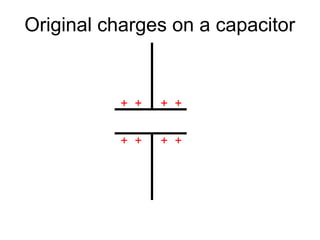
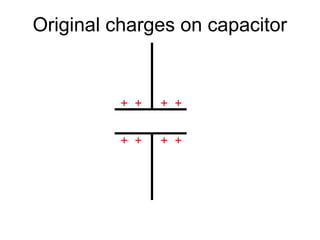
Original charges on a capacitor


           + +   + +


           + +   + +
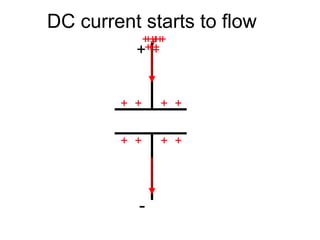
DC current starts to flow
           +++
           +++
             +
             +
          ++ +
            ++


        + +   + +


        + +   + +


          -
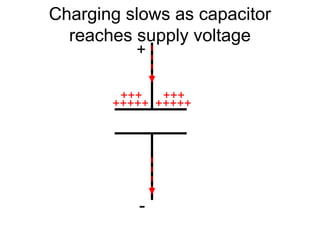
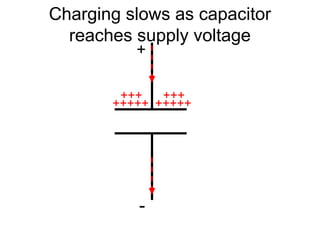
Charging slows as capacitor
  reaches supply voltage
          +

        +++   +++
       +++++ +++++


          -
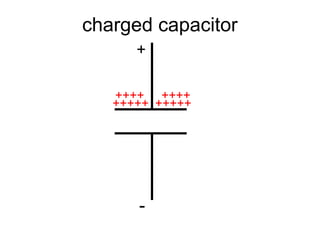
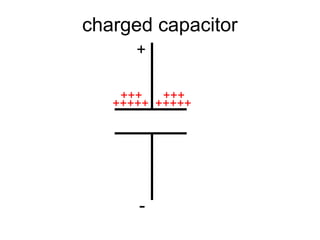
charged capacitor
      +

   ++++ ++++
   +++++ +++++


      -
Capacitive Reactance
• As charges build up on capacitor plate, an
  electric field is established because like
  charges try to repel each other.
• As an electric field builds up on a
  capacitor plate, the more the capacitor
  opposes the source voltage pushing
  additional charges onto the capacitor
  plate.
• Opposition to voltage changes by a
  capacitor is called capacitive reactance.
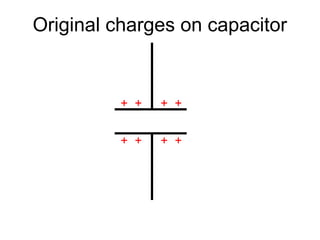
Original charges on capacitor


          + +   + +


          + +   + +
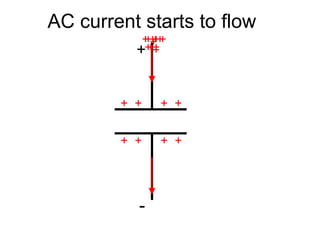
AC current starts to flow
           +++
           +++
             +
             +
          ++ +
            ++


        + +   + +


        + +   + +


          -
Charging slows as capacitor
  reaches supply voltage
          +

        +++   +++
       +++++ +++++


          -
charged capacitor
      +

    +++   +++
   +++++ +++++


      -
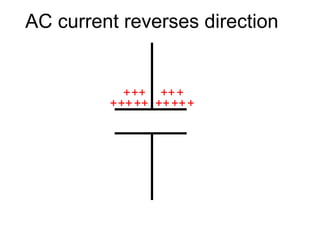
AC current reverses direction


            + ++ ++ +
         + ++ ++ ++ ++ +
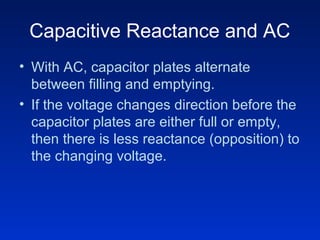
Capacitive Reactance and AC
• With AC, capacitor plates alternate
  between filling and emptying.
• If the voltage changes direction before the
  capacitor plates are either full or empty,
  then there is less reactance (opposition) to
  the changing voltage.
Original charges on capacitor


          + +   + +


          + +   + +
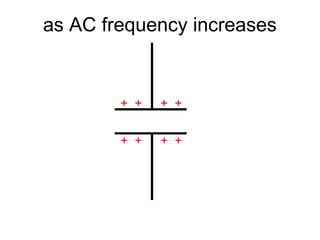
as AC frequency increases


        + +   + +


        + +   + +
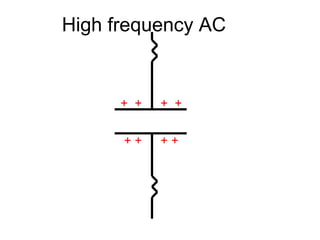
High frequency AC


      + +   + +


      ++    ++
Capacitive Reactance and AC
• Current constantly flows on either side of
  (not across) capacitors.
• Capacitors block DC but do not block AC.
• Capacitors resist voltage changes as
  voltage on a plate becomes closer to the
  supply voltage.
• As frequency increases, capacitors have
  less opposition to voltage changes, less
  capacitive reactance.

Capacitors, how they work

  • 2.
    Original charges ona capacitor + + + + + + + +
  • 3.
    DC current startsto flow +++ +++ + + ++ + ++ + + + + + + + + -
  • 4.
    Charging slows ascapacitor reaches supply voltage + +++ +++ +++++ +++++ -
  • 5.
    charged capacitor + ++++ ++++ +++++ +++++ -
  • 6.
    Capacitive Reactance • Ascharges build up on capacitor plate, an electric field is established because like charges try to repel each other. • As an electric field builds up on a capacitor plate, the more the capacitor opposes the source voltage pushing additional charges onto the capacitor plate. • Opposition to voltage changes by a capacitor is called capacitive reactance.
  • 7.
    Original charges oncapacitor + + + + + + + +
  • 8.
    AC current startsto flow +++ +++ + + ++ + ++ + + + + + + + + -
  • 9.
    Charging slows ascapacitor reaches supply voltage + +++ +++ +++++ +++++ -
  • 10.
    charged capacitor + +++ +++ +++++ +++++ -
  • 11.
    AC current reversesdirection + ++ ++ + + ++ ++ ++ ++ +
  • 12.
    Capacitive Reactance andAC • With AC, capacitor plates alternate between filling and emptying. • If the voltage changes direction before the capacitor plates are either full or empty, then there is less reactance (opposition) to the changing voltage.
  • 13.
    Original charges oncapacitor + + + + + + + +
  • 14.
    as AC frequencyincreases + + + + + + + +
  • 15.
    High frequency AC + + + + ++ ++
  • 16.
    Capacitive Reactance andAC • Current constantly flows on either side of (not across) capacitors. • Capacitors block DC but do not block AC. • Capacitors resist voltage changes as voltage on a plate becomes closer to the supply voltage. • As frequency increases, capacitors have less opposition to voltage changes, less capacitive reactance.