Implementing an Effective CAPA Process Sue Jacobs President QMS Consulting, Inc. Hoffman Estates, IL [email_address] 847.359.4456 Cecilia Kimberlin, PhD Medical Products Group VP Abbott Laboratories Abbott Park, IL [email_address] 847.937.7933
Topics Elements of an effective CAPA process Data analysis Getting to probable cause CAPA timeliness Effectiveness checks Learning from experience
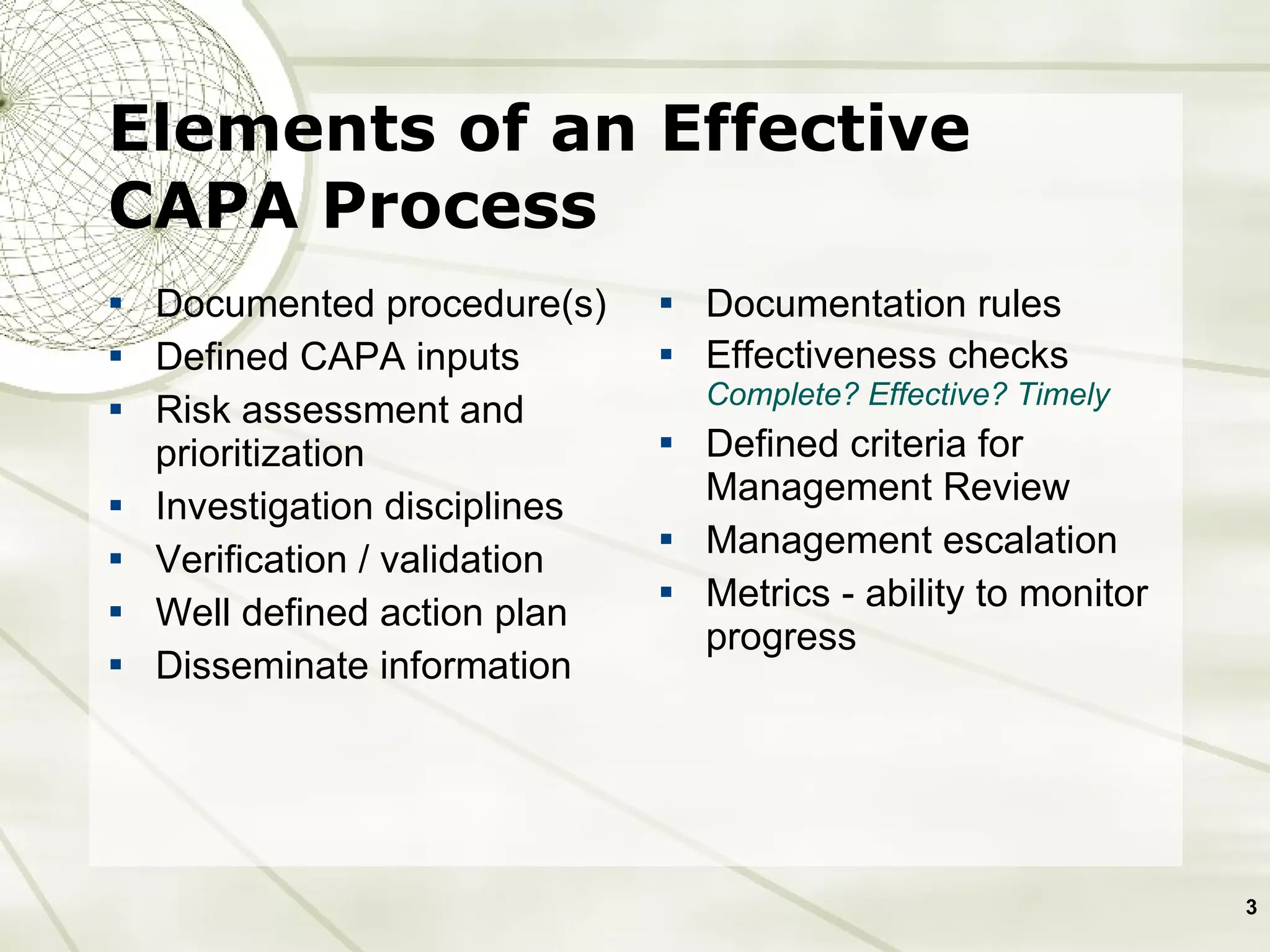
Elements of an Effective CAPA Process Documented procedure(s) Defined CAPA inputs Risk assessment and prioritization Investigation disciplines Verification / validation Well defined action plan Disseminate information Documentation rules Effectiveness checks Complete? Effective? Timely Defined criteria for Management Review Management escalation Metrics - ability to monitor progress
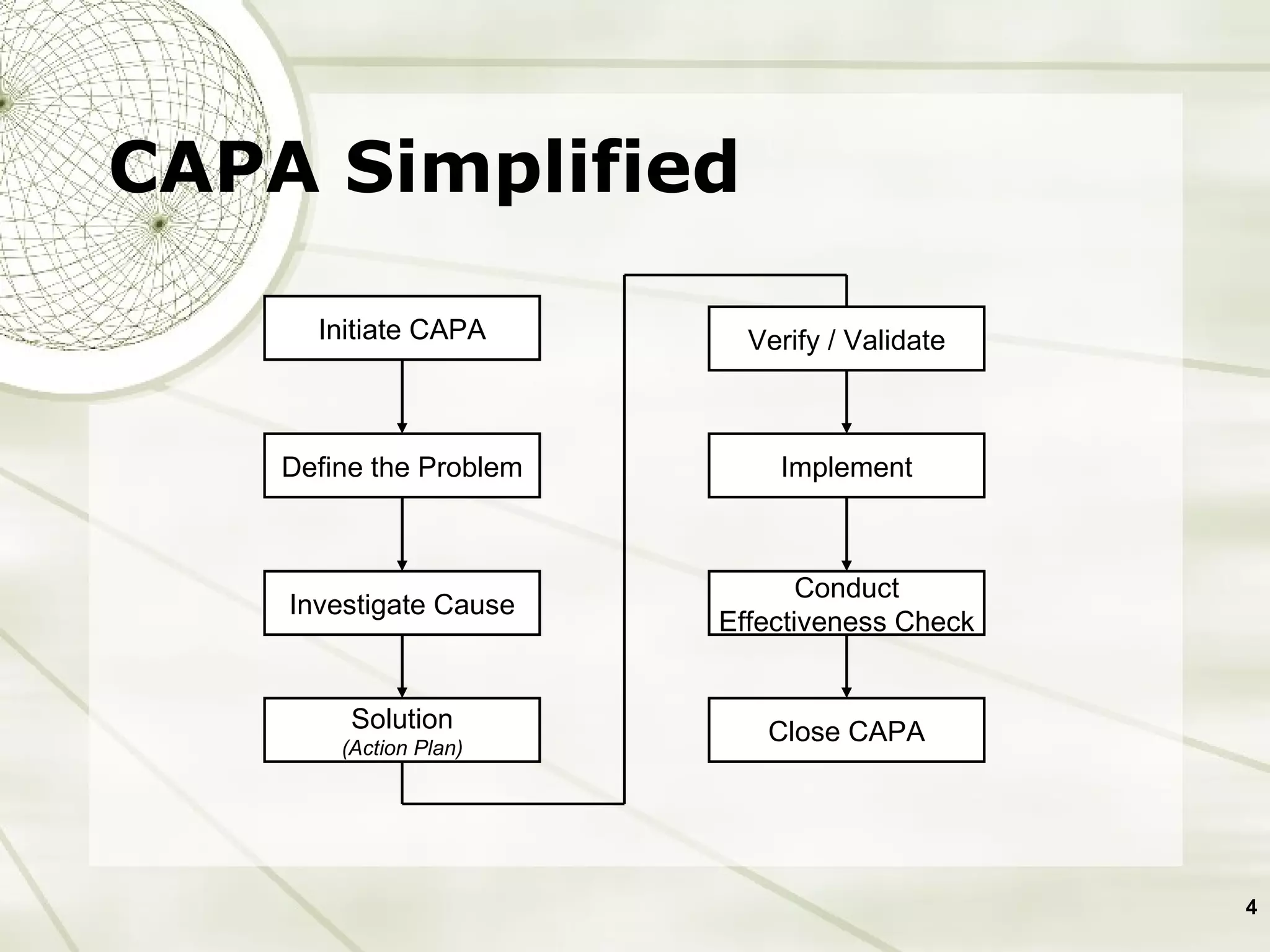
CAPA Simplified Define the Problem Initiate CAPA Investigate Cause Solution (Action Plan) Verify / Validate Conduct Effectiveness Check Implement Close CAPA
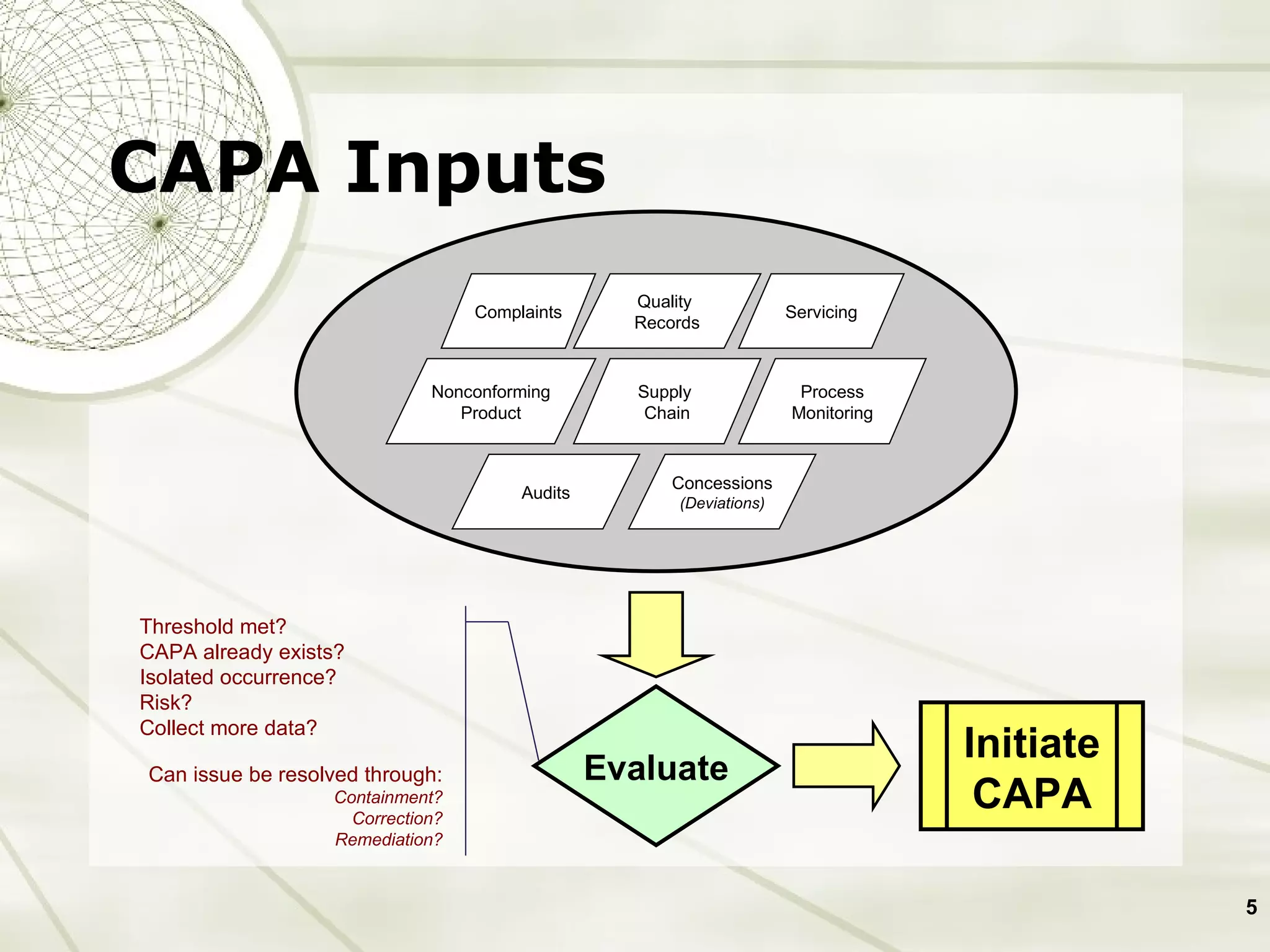
CAPA Inputs Evaluate Initiate CAPA Threshold met? CAPA already exists? Isolated occurrence? Risk? Collect more data? Can issue be resolved through: Containment? Correction? Remediation? Complaints Quality  Records Servicing Nonconforming Product Supply  Chain Process Monitoring Audits Concessions (Deviations)
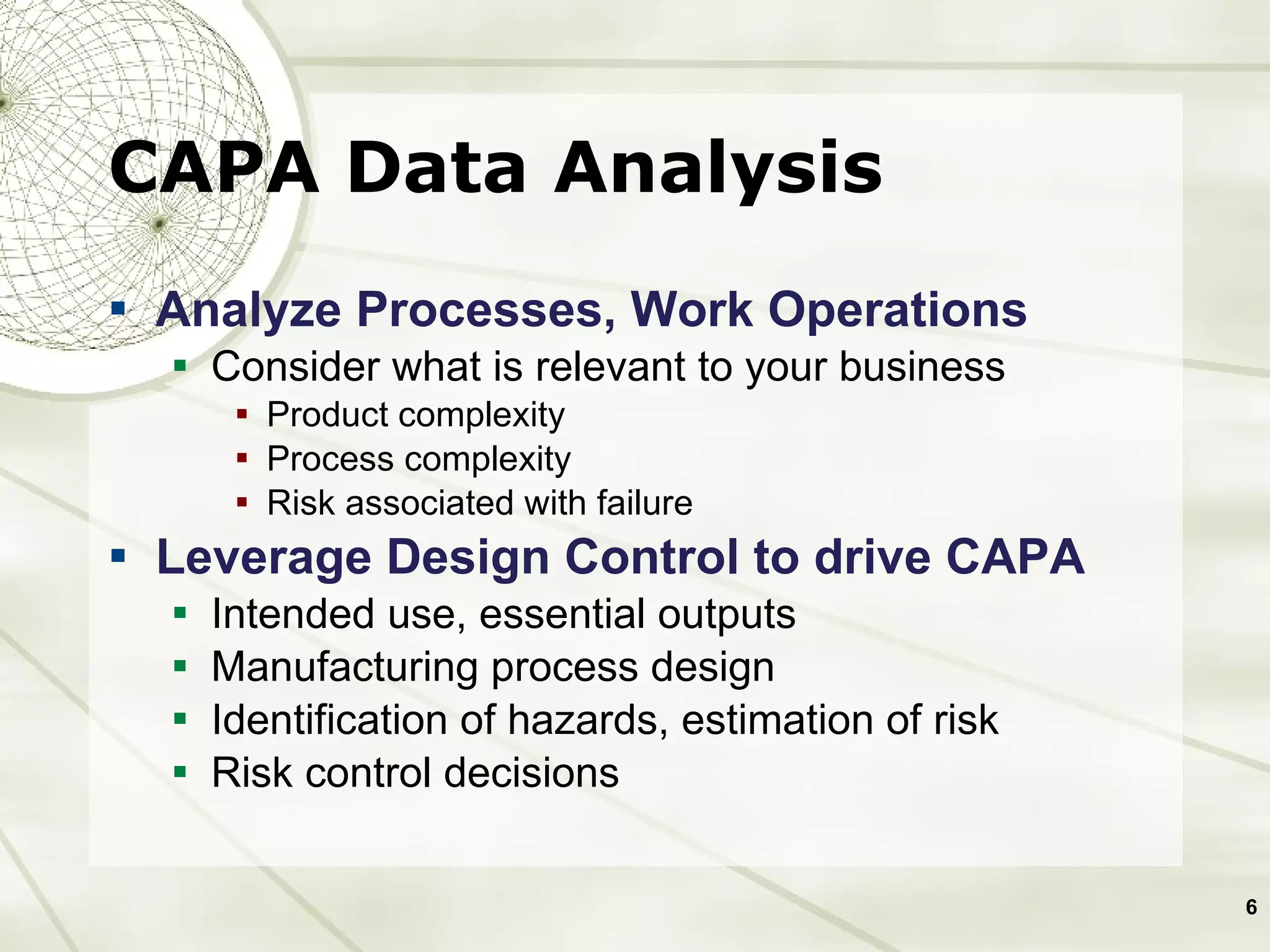
CAPA Data Analysis Analyze Processes, Work Operations Consider what is relevant to your business Product complexity Process complexity  Risk associated with failure Leverage Design Control to drive CAPA Intended use, essential outputs Manufacturing process design Identification of hazards, estimation of risk Risk control decisions
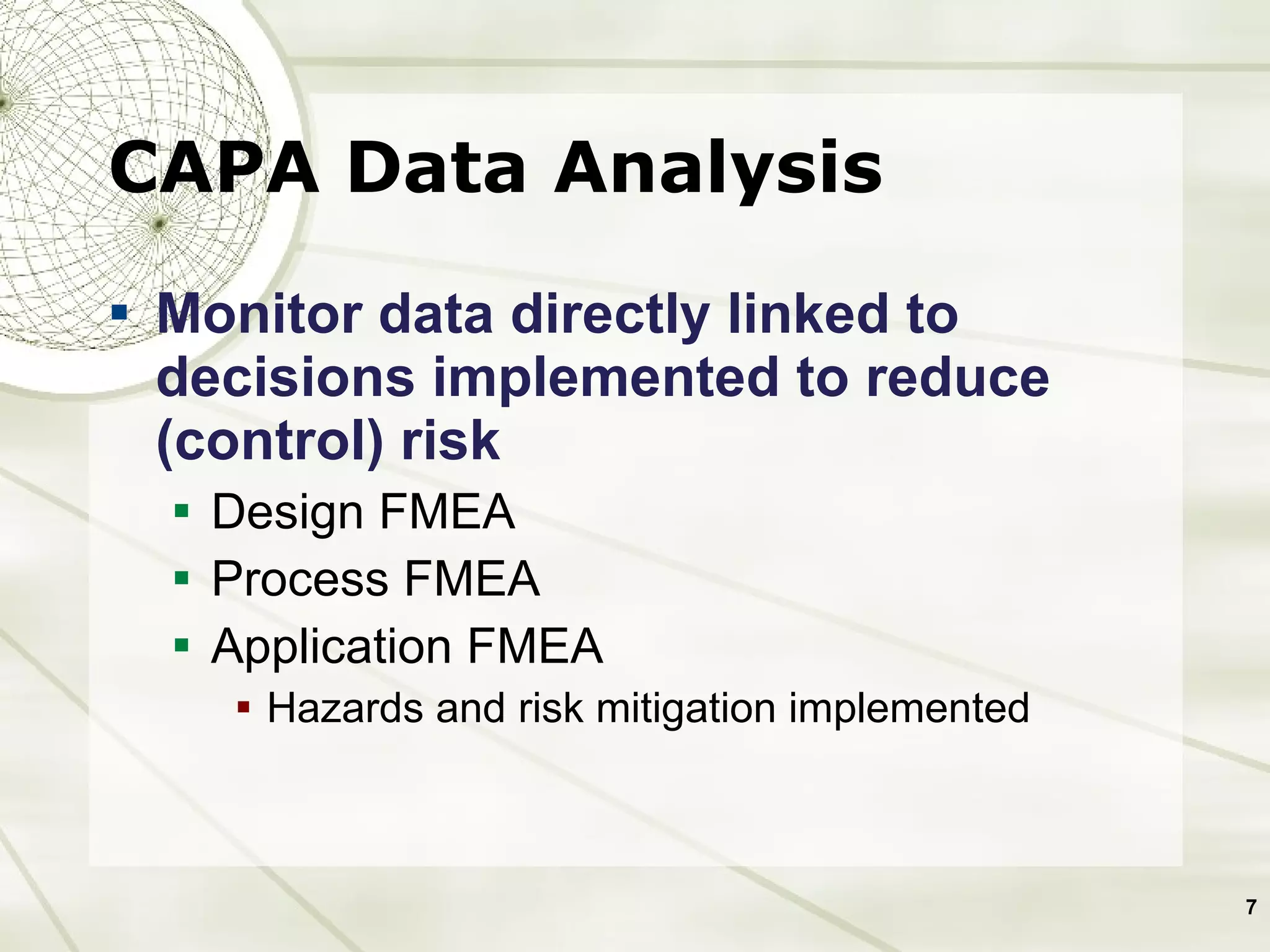
CAPA Data Analysis Monitor data directly linked to decisions implemented to reduce (control) risk Design FMEA Process FMEA Application FMEA Hazards and risk mitigation implemented
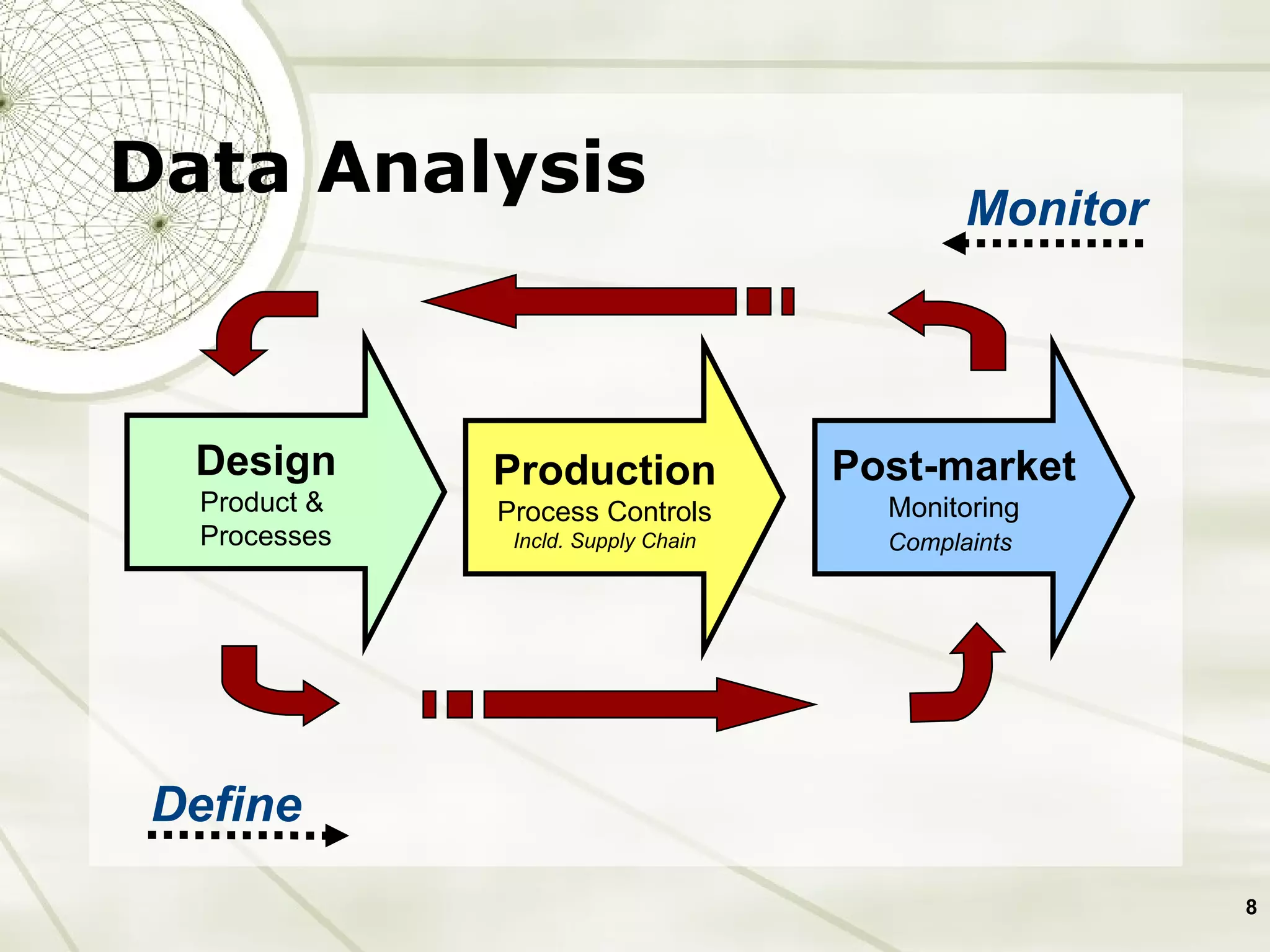
Data Analysis Design Product &  Processes Production Process Controls Incld. Supply Chain Post-market Monitoring Complaints   Define Monitor
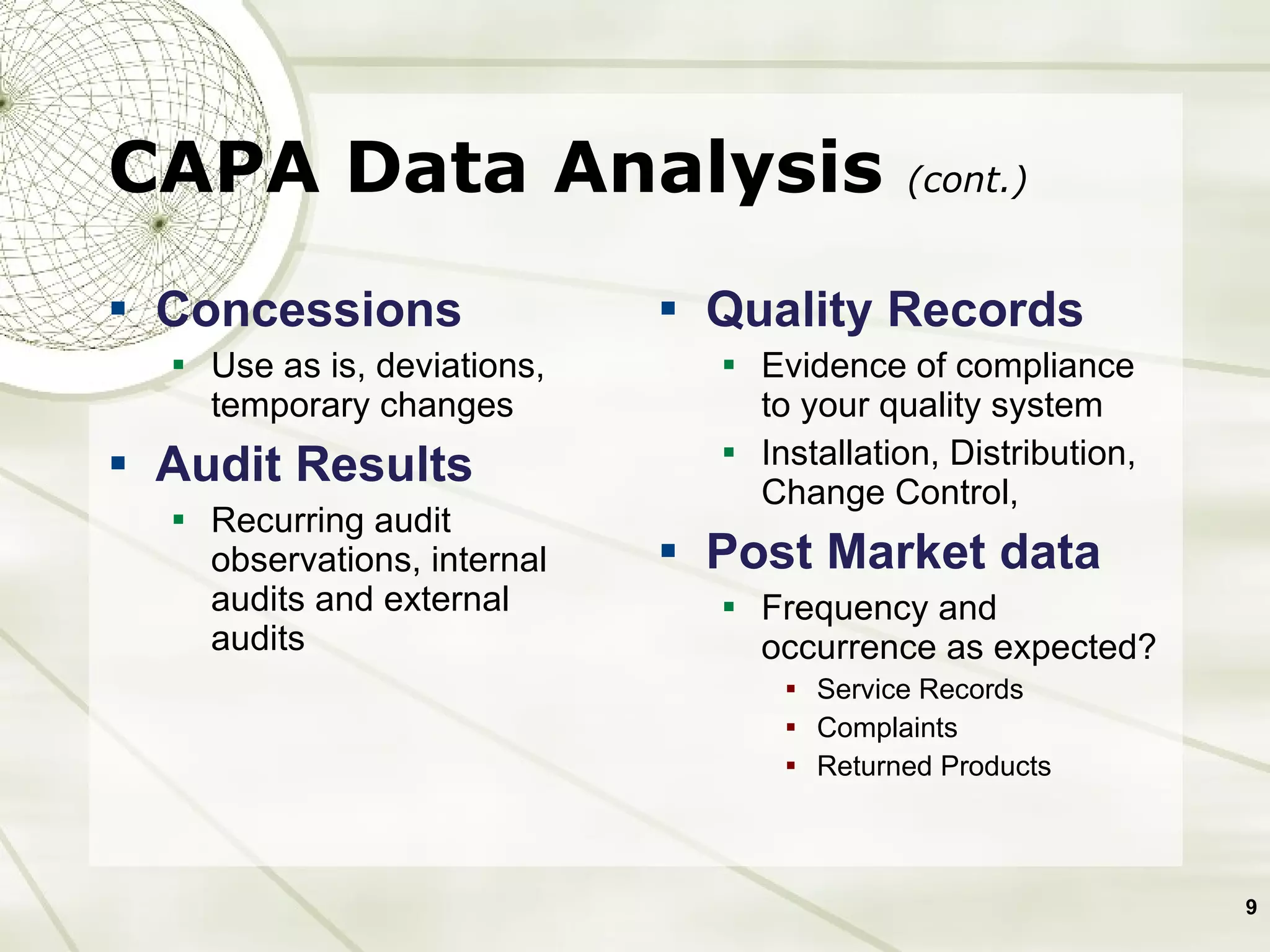
CAPA Data Analysis  (cont.) Concessions Use as is, deviations, temporary changes Audit Results Recurring audit observations, internal audits and external audits Quality Records Evidence of compliance to your quality system Installation, Distribution, Change Control,  Post Market data Frequency and occurrence as expected?  Service Records Complaints Returned Products
Risk & Prioritization Establish a prioritization method Use the method  consistently  across the quality management system Complaint Handling Nonconforming Product Supplier Performance Change Control Environmental Monitoring Process Controls  Servicing Audits
Investigating Cause Ultimate goal  - determine WHY the problem occurred Phases of Investigation  Presumptive Cause  apparent during early investigation, hypotheses that may explain the effect but needs validation Contributing Cause secondary and possible causes Root Cause primary reason for the problem which if corrected will prevent recurrence
A clear problem statement will establish investigation boundaries The problem statement is the difference between what  is  and what  should be   Focus on  facts –  not emotions what  is wrong, not  why  it’s wrong Investigating Cause
Problem Definition State the problem in measurable terms how often, how much, when, and where Emphasize the effects (risk) safety, death, injury, rework, cost, etc.  Avoid  negative descriptors, inflammatory statements  words that are broad and do not describe the conditions or behavior such as careless, complacency, neglect, oversight
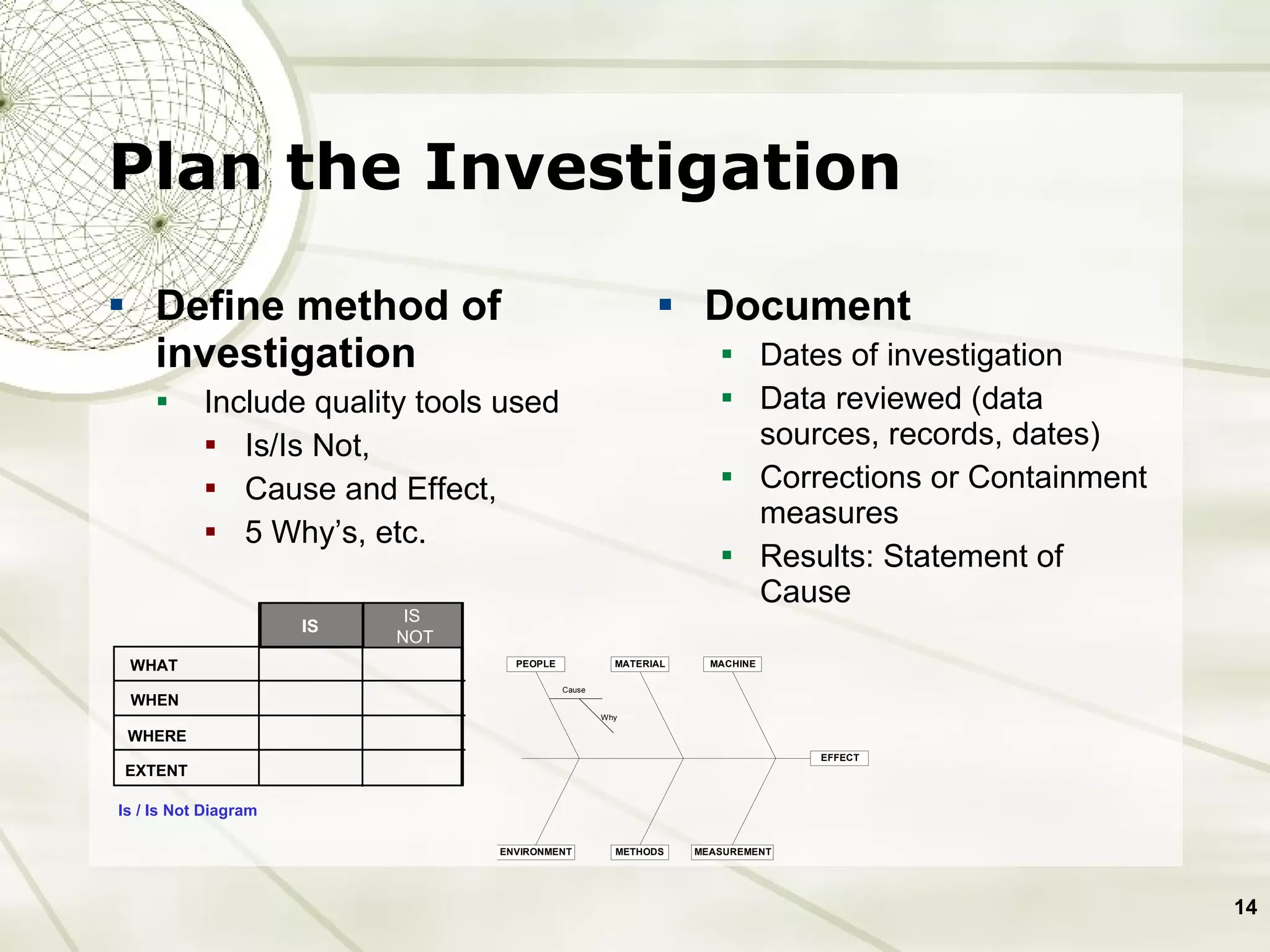
Plan the Investigation Define method of investigation Include quality tools used Is/Is Not,  Cause and Effect,  5 Why’s, etc. Document   Dates of investigation  Data reviewed (data sources, records, dates) Corrections or Containment measures Results: Statement of Cause Is / Is Not Diagram WHAT WHEN WHERE EXTENT IS   IS  NOT
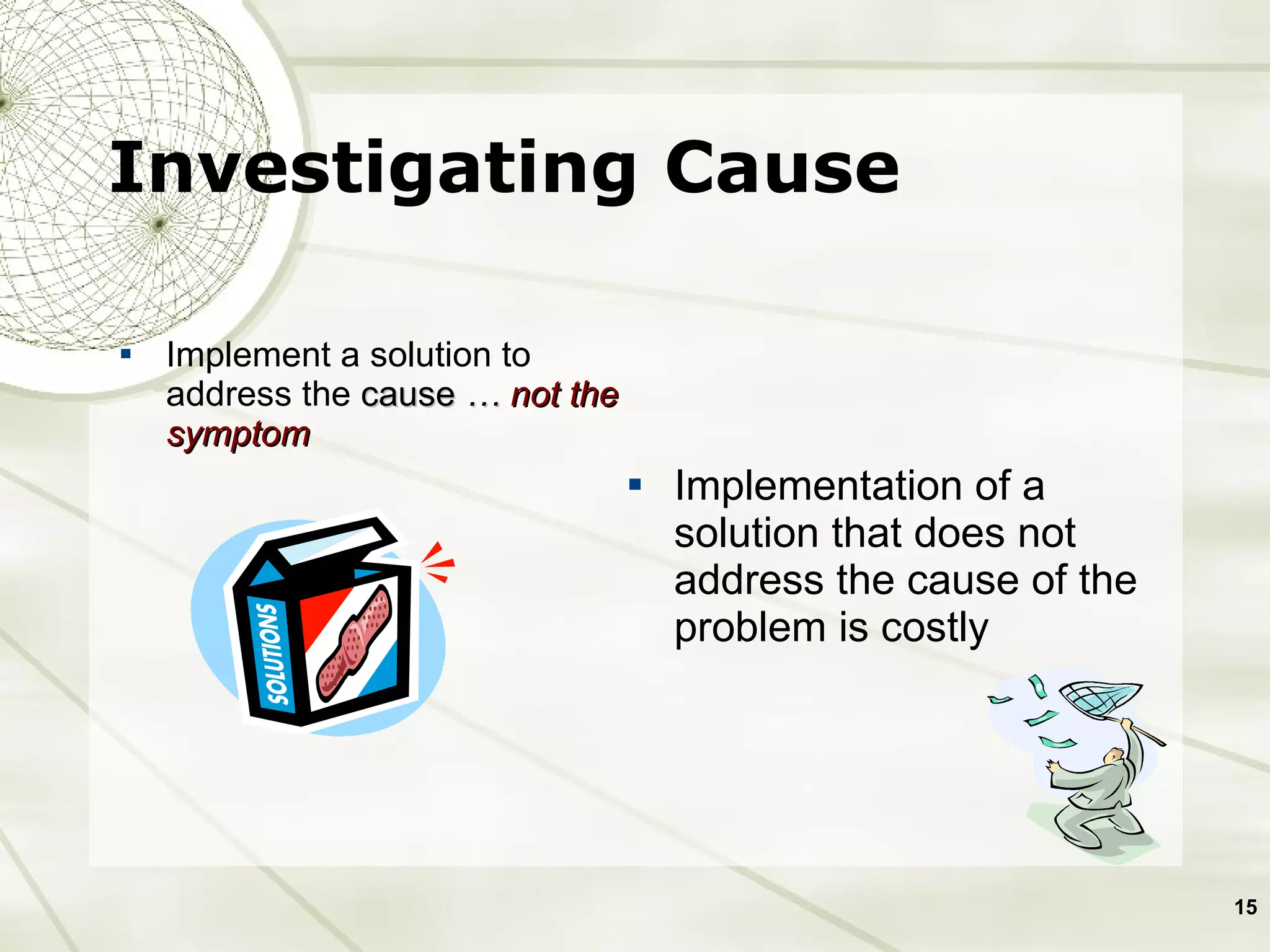
Investigating Cause Implement a solution to address the  cause   …  not the symptom Implementation of a solution that does not address the cause of the problem is costly
Effectiveness Checks Effectiveness Checks Avoid applying the same criteria to all CAPAs  Plan the effectiveness check specific to the CAPA Identify early detection points to monitor for recurrence/occurrence
Effectiveness Checks What to do when a effectiveness check fails, and what are the consequences? Close the CAPA and open a new one? Get an extension? Leave the CAPA open and investigate why?
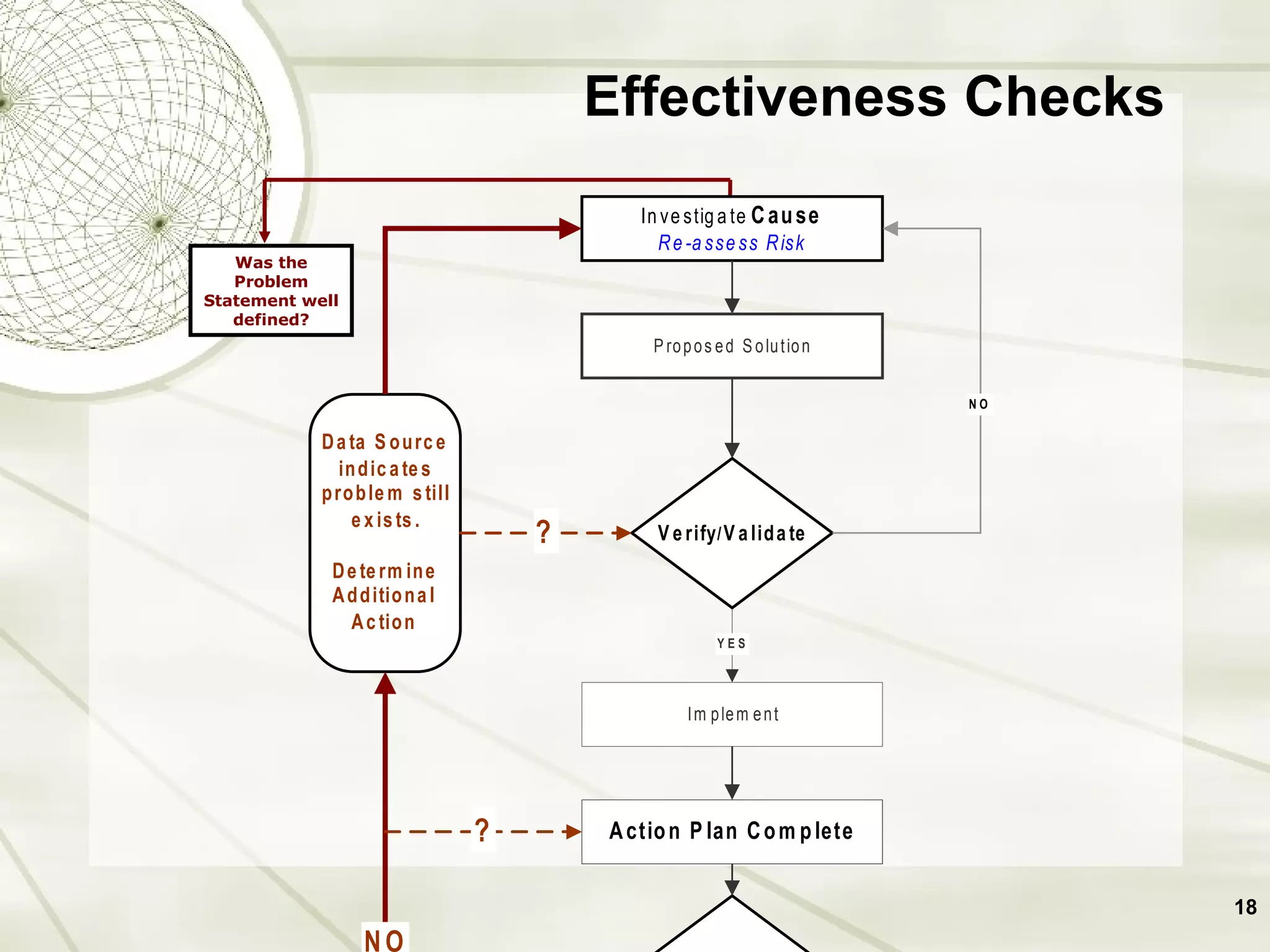
Was the Problem Statement well defined? Effectiveness Checks
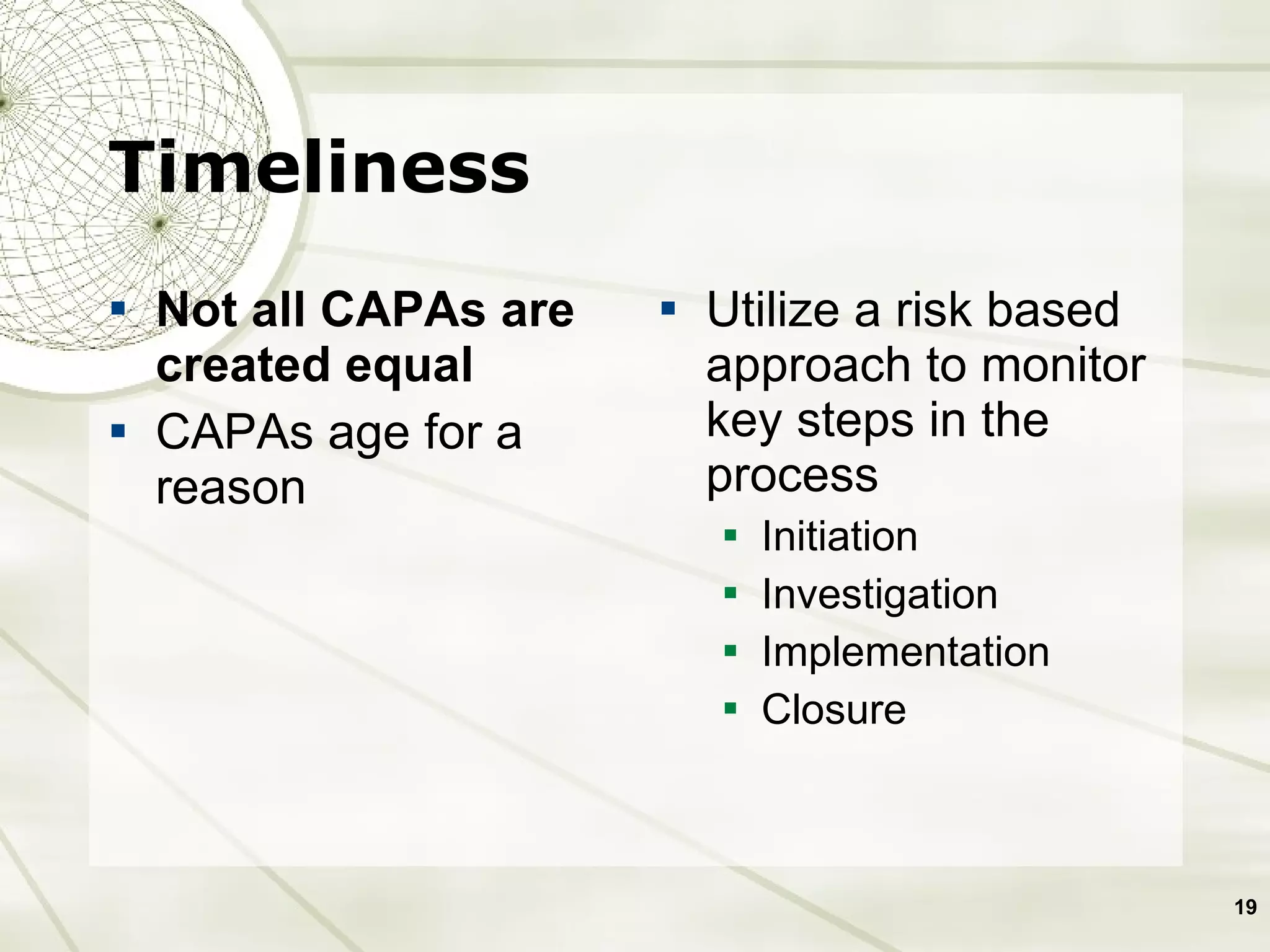
Timeliness   Not all CAPAs are created equal CAPAs age for a reason Utilize a risk based approach to monitor key steps in the process Initiation Investigation Implementation Closure
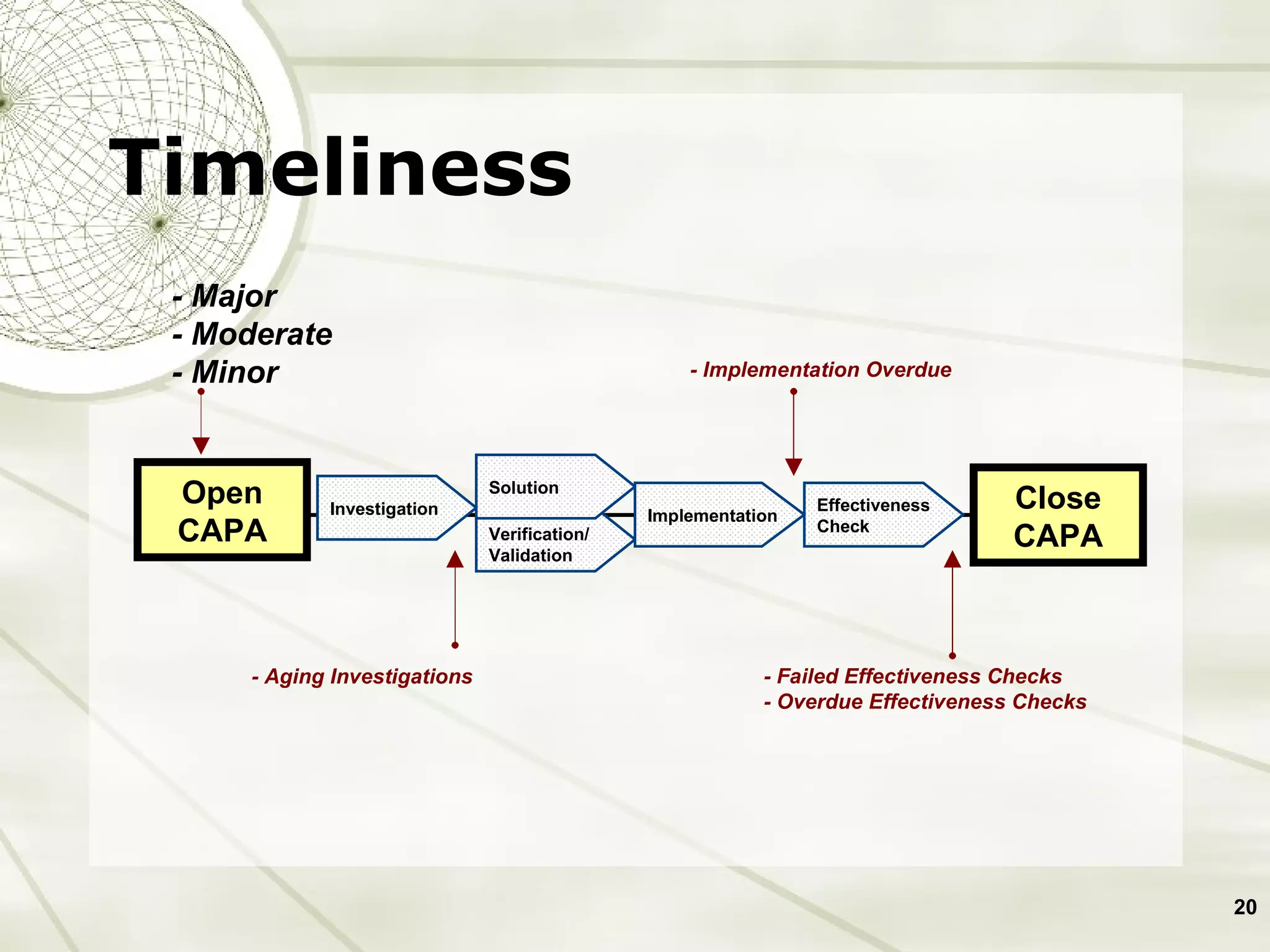
Timeliness Open CAPA Close CAPA Investigation Implementation Effectiveness  Check Verification/  Validation Solution - Major - Moderate - Minor - Aging Investigations - Implementation Overdue - Failed Effectiveness Checks - Overdue Effectiveness Checks
CAPA System Effectiveness  Learning from experience  Cecilia Kimberlin, PhD Group VP  QA/RA/MA/Compliance Abbott Medical Products
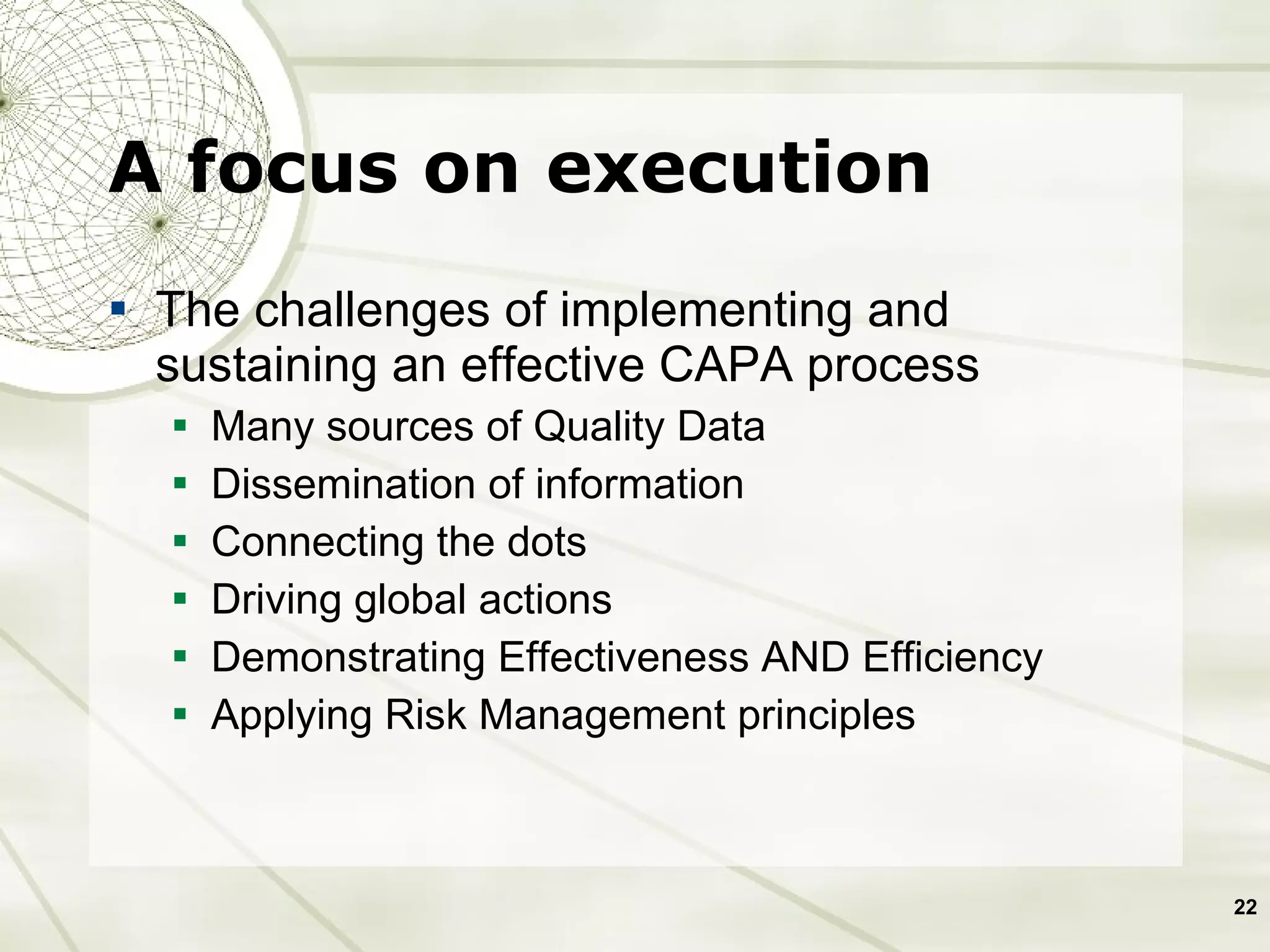
A focus on execution The challenges of implementing and sustaining an effective CAPA process Many sources of Quality Data Dissemination of information Connecting the dots Driving global actions Demonstrating Effectiveness AND Efficiency Applying Risk Management principles
What should management do? Evaluate the CAPA system and ability to meet business needs and be in compliance HOW ?
What should we expect over time ? A reduction in quality issues A reduction in the severity of issues More preventive actions over time Better designed products/processes Improved customer satisfaction Better business results
What are the symptoms of a less than effective CAPA system? Recurring issues  Inability to “manage” the many sources of quality data to understand early trends and issues More reaction than prevention Resources ($$$) are spent on “handling” failure rather than learning from it and preventing “more of the same” Field issues
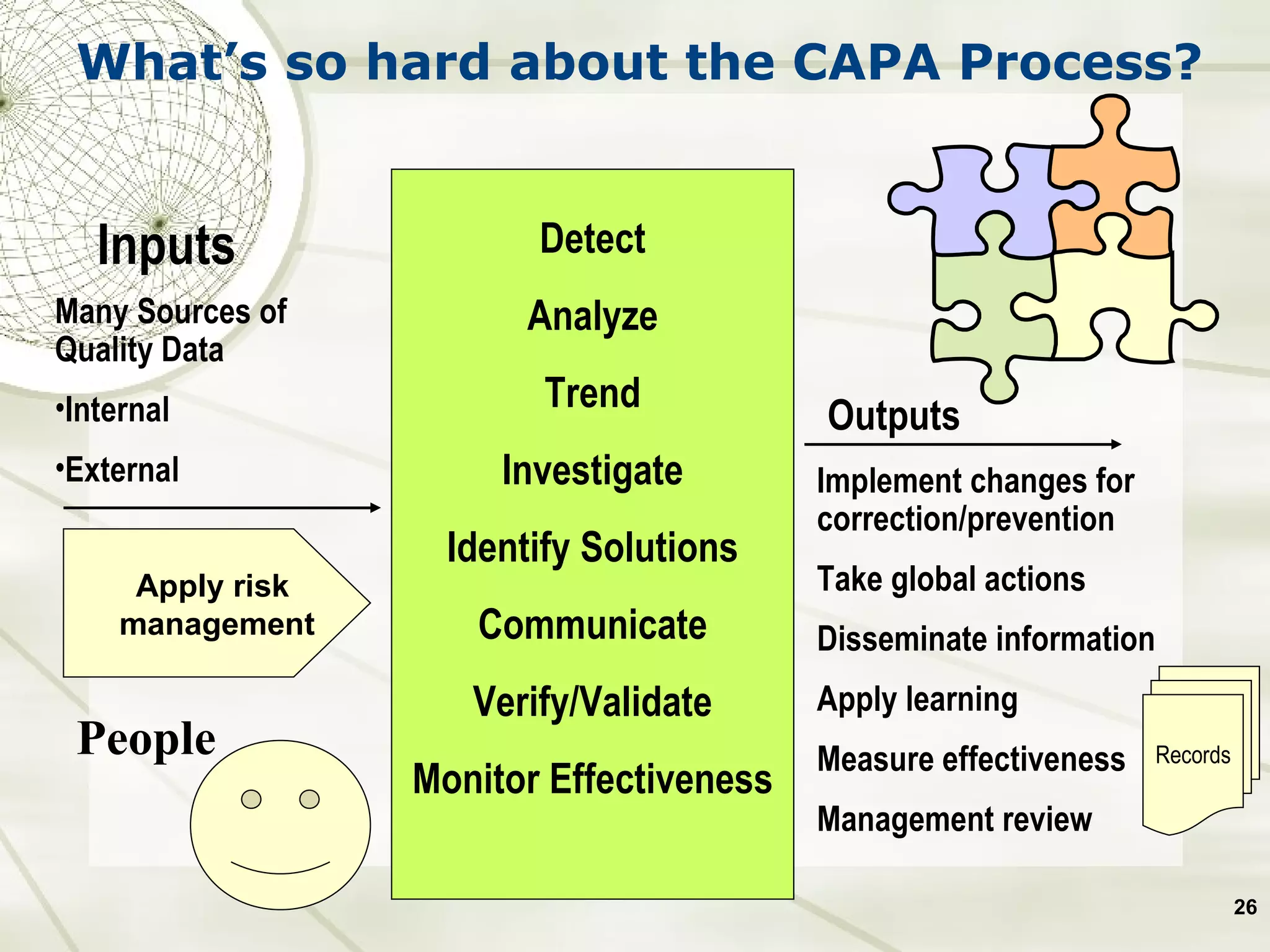
What’s so hard about the CAPA Process? Detect Analyze Trend Investigate Identify Solutions Communicate Verify/Validate Monitor Effectiveness Inputs Outputs Many Sources of Quality Data Internal External Implement changes for correction/prevention Take global actions Disseminate information Apply learning Measure effectiveness  Management review Apply risk  management Records People
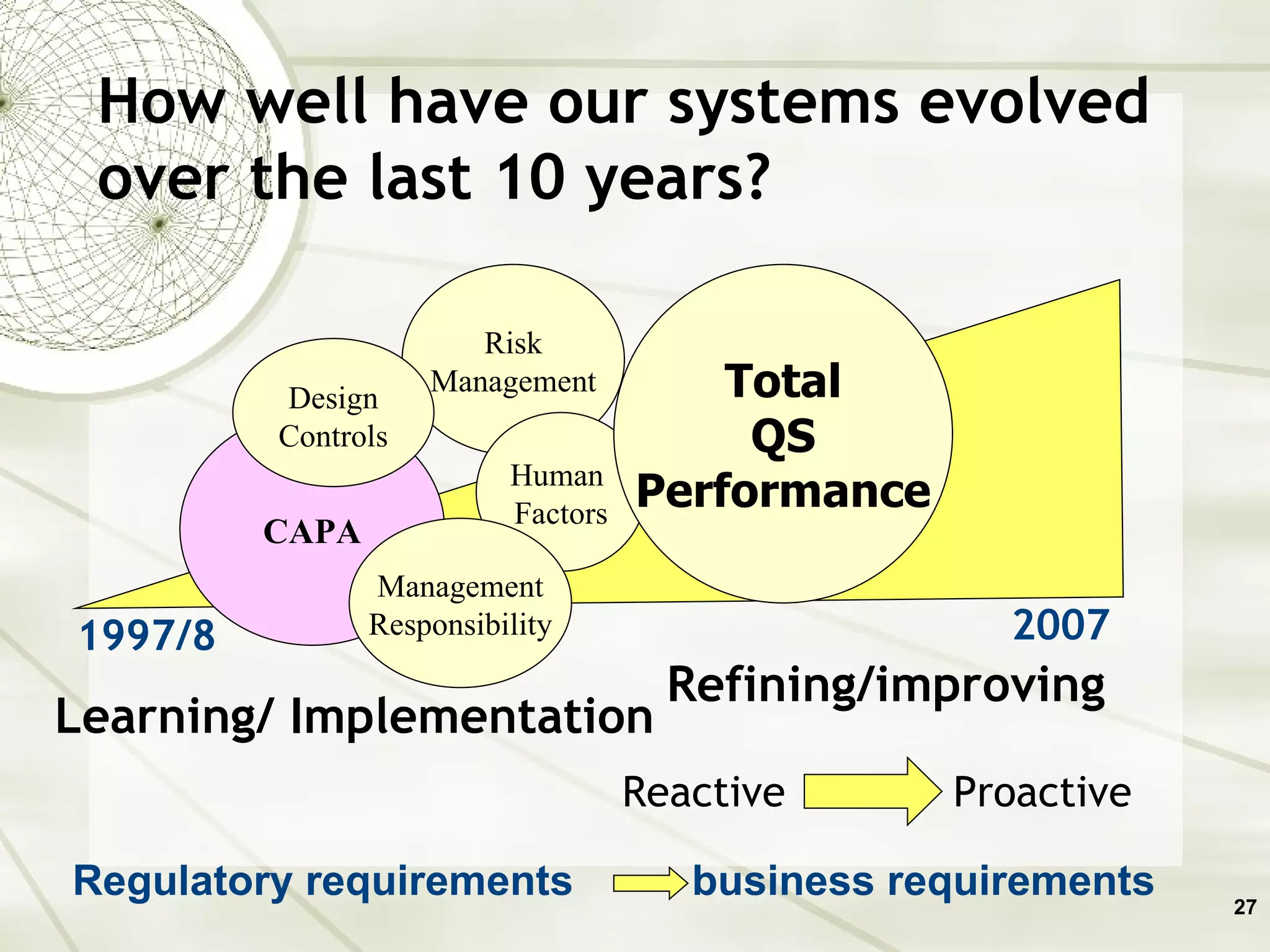
2007 1997/8 Learning/ Implementation Reactive Refining/improving Proactive CAPA Risk Management Human  Factors Management Responsibility Regulatory requirements  business requirements Total QS Performance Design Controls How well have our systems evolved over the last 10 years?
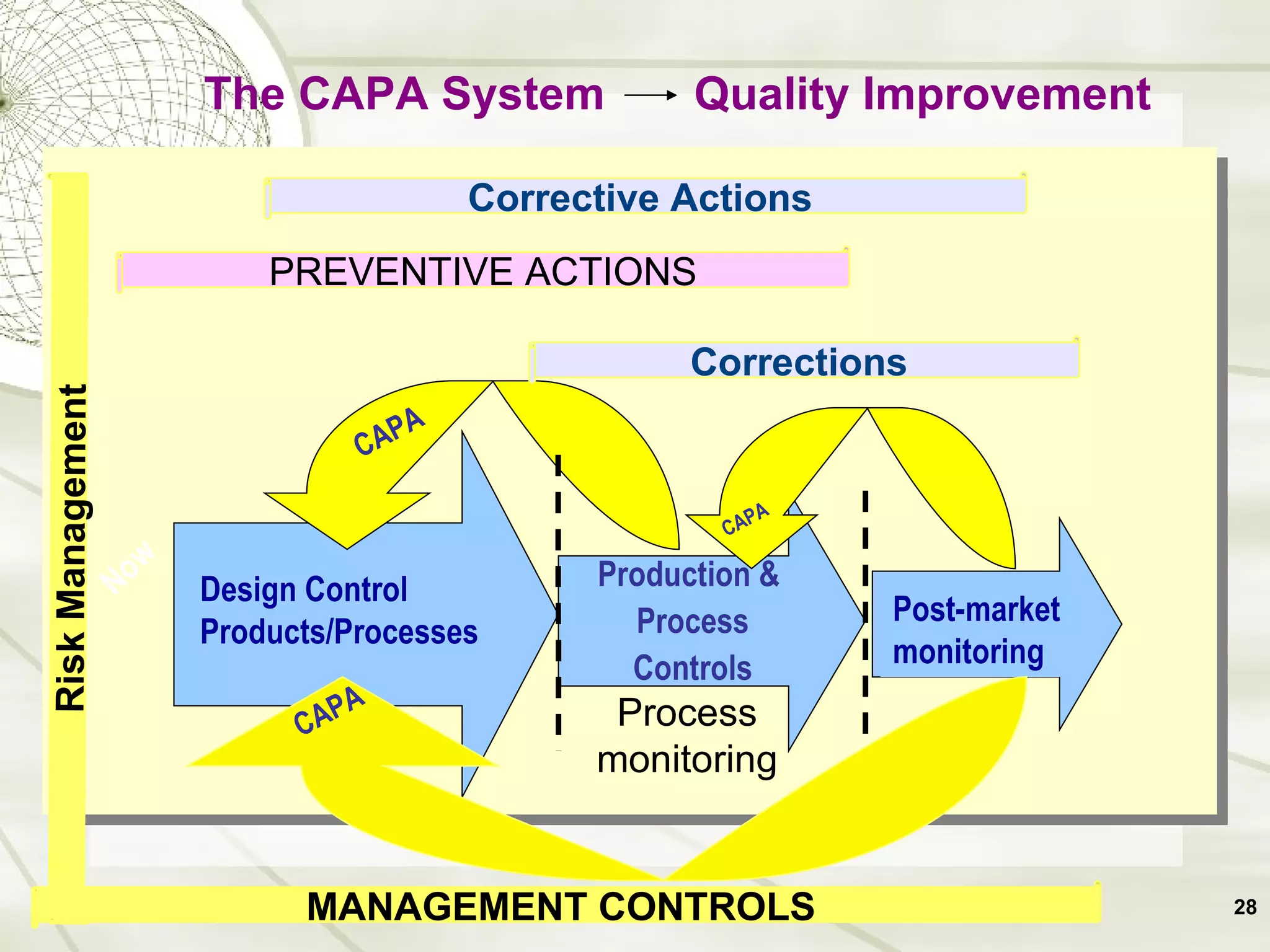
Production &  Process Controls CAPA CAPA Now Process monitoring PREVENTIVE ACTIONS CAPA The CAPA System  Quality Improvement Corrective   Actions  Corrections  MANAGEMENT CONTROLS  Risk Management Design Control Products/Processes Post-market monitoring
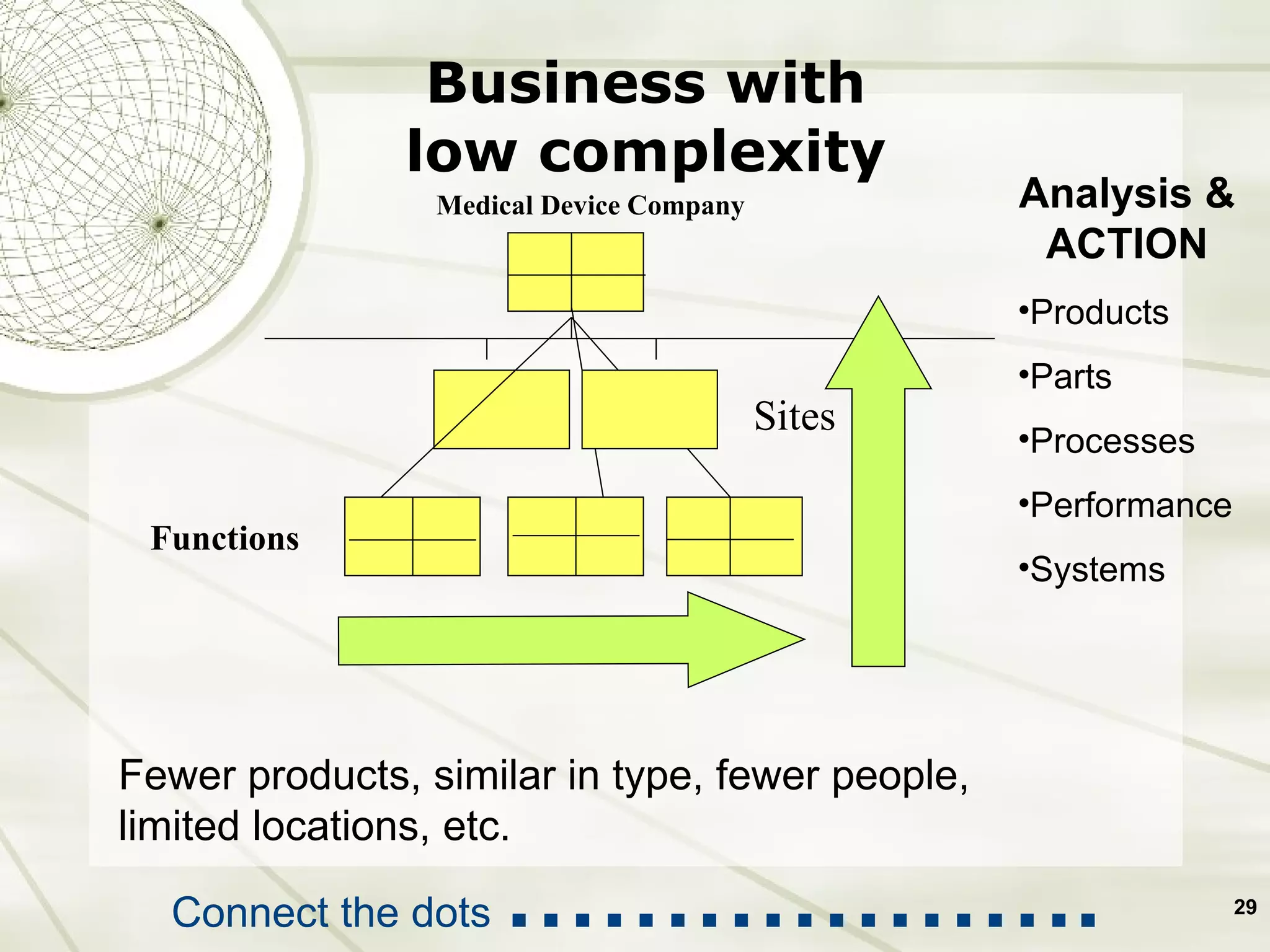
Business with low complexity Functions Sites Medical Device Company Fewer products, similar in type, fewer people, limited locations, etc.  Analysis & ACTION Products Parts Processes Performance Systems Connect the dots  ……………….
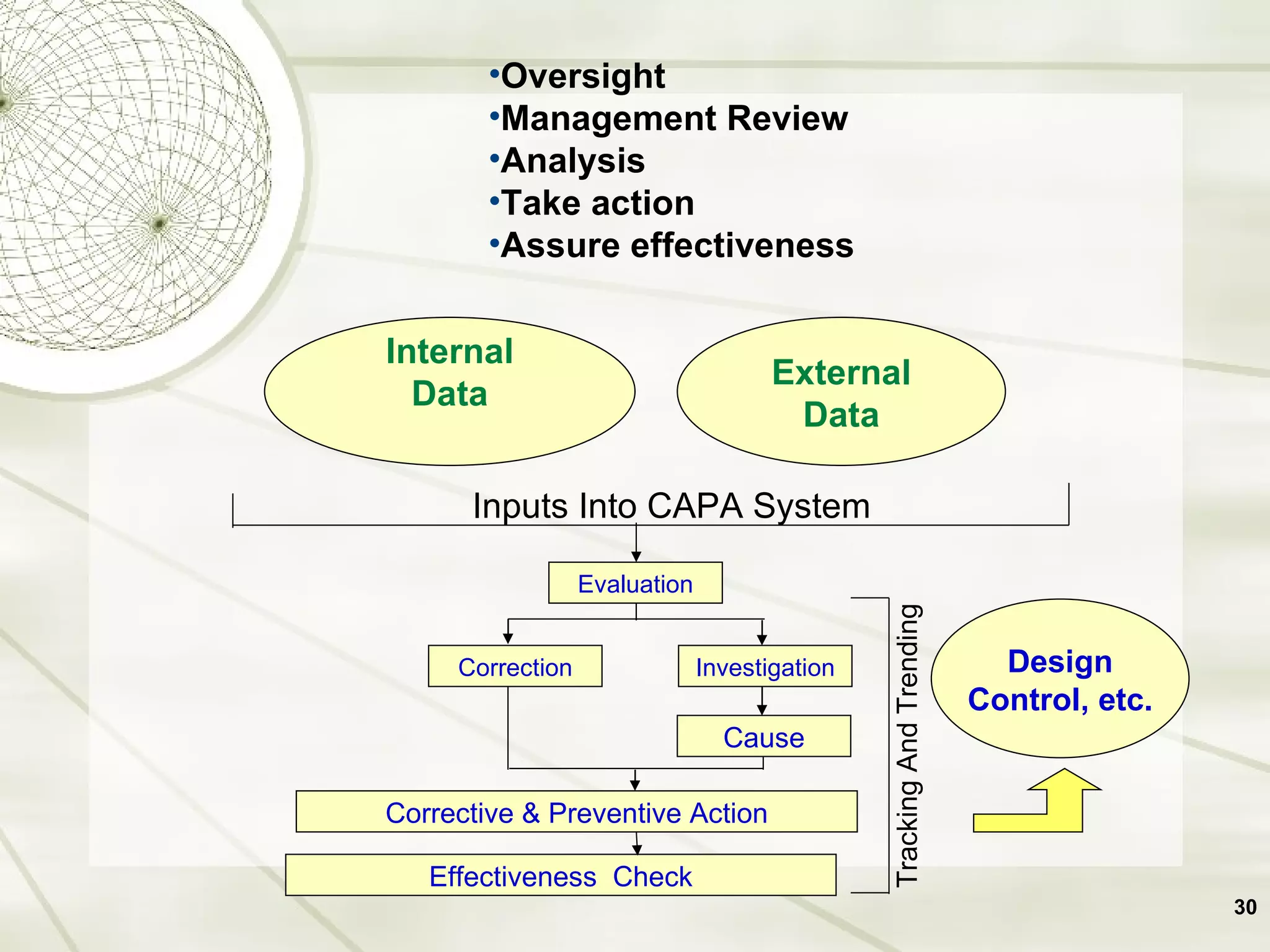
External Data Internal Data Design Control, etc. Oversight Management Review Analysis Take action Assure effectiveness Inputs Into CAPA System Evaluation Correction Investigation Cause Corrective & Preventive Action Effectiveness  Check Tracking And Trending
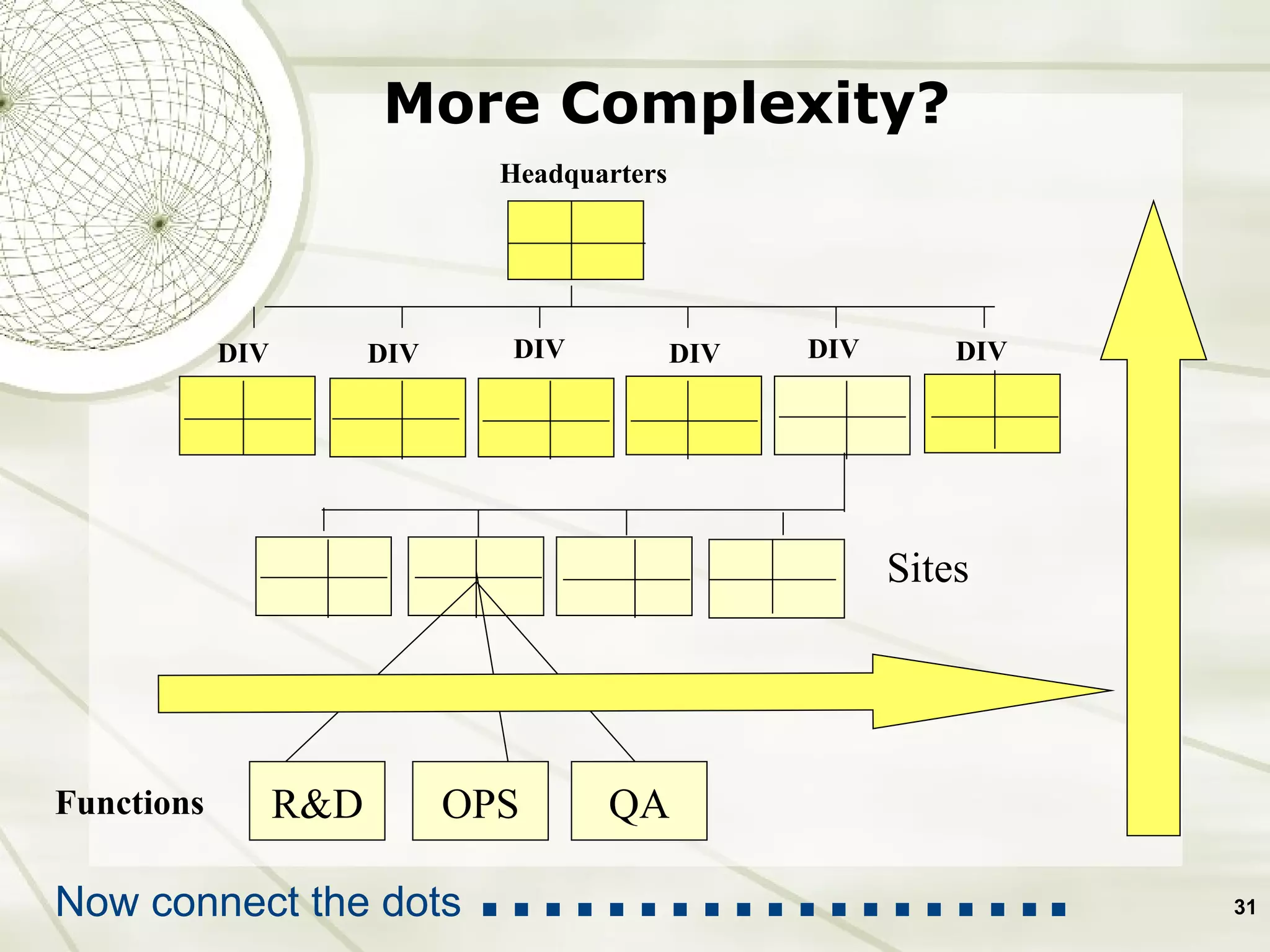
More Complexity?  R&D OPS QA Functions Sites DIV DIV DIV DIV DIV DIV Headquarters Now connect the dots  ……………….
The right people: training,qualifications, recognition, accountability, communication IT system – can really help but is not the only answer Basic good quality and business practices – PDCA, DMAIC, ROI, etc.  Has to work as a closed loop system Scale the system to fit the business Keep it simple and straightforward ! Continuous improvement is the goal Some points to consider
Thank-You ! Questions?  Thoughts?  Ideas? Sue Jacobs QMS Consulting, Inc.  847 359 4456 [email_address] Cecilia Kimberlin Abbott Laboratories  847 937 7933 [email_address]

Capa

  • 1.
    Implementing an EffectiveCAPA Process Sue Jacobs President QMS Consulting, Inc. Hoffman Estates, IL [email_address] 847.359.4456 Cecilia Kimberlin, PhD Medical Products Group VP Abbott Laboratories Abbott Park, IL [email_address] 847.937.7933
  • 2.
    Topics Elements ofan effective CAPA process Data analysis Getting to probable cause CAPA timeliness Effectiveness checks Learning from experience
  • 3.
    Elements of anEffective CAPA Process Documented procedure(s) Defined CAPA inputs Risk assessment and prioritization Investigation disciplines Verification / validation Well defined action plan Disseminate information Documentation rules Effectiveness checks Complete? Effective? Timely Defined criteria for Management Review Management escalation Metrics - ability to monitor progress
  • 4.
    CAPA Simplified Definethe Problem Initiate CAPA Investigate Cause Solution (Action Plan) Verify / Validate Conduct Effectiveness Check Implement Close CAPA
  • 5.
    CAPA Inputs EvaluateInitiate CAPA Threshold met? CAPA already exists? Isolated occurrence? Risk? Collect more data? Can issue be resolved through: Containment? Correction? Remediation? Complaints Quality Records Servicing Nonconforming Product Supply Chain Process Monitoring Audits Concessions (Deviations)
  • 6.
    CAPA Data AnalysisAnalyze Processes, Work Operations Consider what is relevant to your business Product complexity Process complexity Risk associated with failure Leverage Design Control to drive CAPA Intended use, essential outputs Manufacturing process design Identification of hazards, estimation of risk Risk control decisions
  • 7.
    CAPA Data AnalysisMonitor data directly linked to decisions implemented to reduce (control) risk Design FMEA Process FMEA Application FMEA Hazards and risk mitigation implemented
  • 8.
    Data Analysis DesignProduct & Processes Production Process Controls Incld. Supply Chain Post-market Monitoring Complaints Define Monitor
  • 9.
    CAPA Data Analysis (cont.) Concessions Use as is, deviations, temporary changes Audit Results Recurring audit observations, internal audits and external audits Quality Records Evidence of compliance to your quality system Installation, Distribution, Change Control, Post Market data Frequency and occurrence as expected? Service Records Complaints Returned Products
  • 10.
    Risk & PrioritizationEstablish a prioritization method Use the method consistently across the quality management system Complaint Handling Nonconforming Product Supplier Performance Change Control Environmental Monitoring Process Controls Servicing Audits
  • 11.
    Investigating Cause Ultimategoal - determine WHY the problem occurred Phases of Investigation Presumptive Cause apparent during early investigation, hypotheses that may explain the effect but needs validation Contributing Cause secondary and possible causes Root Cause primary reason for the problem which if corrected will prevent recurrence
  • 12.
    A clear problemstatement will establish investigation boundaries The problem statement is the difference between what is and what should be Focus on facts – not emotions what is wrong, not why it’s wrong Investigating Cause
  • 13.
    Problem Definition Statethe problem in measurable terms how often, how much, when, and where Emphasize the effects (risk) safety, death, injury, rework, cost, etc. Avoid negative descriptors, inflammatory statements words that are broad and do not describe the conditions or behavior such as careless, complacency, neglect, oversight
  • 14.
    Plan the InvestigationDefine method of investigation Include quality tools used Is/Is Not, Cause and Effect, 5 Why’s, etc. Document Dates of investigation Data reviewed (data sources, records, dates) Corrections or Containment measures Results: Statement of Cause Is / Is Not Diagram WHAT WHEN WHERE EXTENT IS IS NOT
  • 15.
    Investigating Cause Implementa solution to address the cause … not the symptom Implementation of a solution that does not address the cause of the problem is costly
  • 16.
    Effectiveness Checks EffectivenessChecks Avoid applying the same criteria to all CAPAs Plan the effectiveness check specific to the CAPA Identify early detection points to monitor for recurrence/occurrence
  • 17.
    Effectiveness Checks Whatto do when a effectiveness check fails, and what are the consequences? Close the CAPA and open a new one? Get an extension? Leave the CAPA open and investigate why?
  • 18.
    Was the ProblemStatement well defined? Effectiveness Checks
  • 19.
    Timeliness Not all CAPAs are created equal CAPAs age for a reason Utilize a risk based approach to monitor key steps in the process Initiation Investigation Implementation Closure
  • 20.
    Timeliness Open CAPAClose CAPA Investigation Implementation Effectiveness Check Verification/ Validation Solution - Major - Moderate - Minor - Aging Investigations - Implementation Overdue - Failed Effectiveness Checks - Overdue Effectiveness Checks
  • 21.
    CAPA System Effectiveness Learning from experience Cecilia Kimberlin, PhD Group VP QA/RA/MA/Compliance Abbott Medical Products
  • 22.
    A focus onexecution The challenges of implementing and sustaining an effective CAPA process Many sources of Quality Data Dissemination of information Connecting the dots Driving global actions Demonstrating Effectiveness AND Efficiency Applying Risk Management principles
  • 23.
    What should managementdo? Evaluate the CAPA system and ability to meet business needs and be in compliance HOW ?
  • 24.
    What should weexpect over time ? A reduction in quality issues A reduction in the severity of issues More preventive actions over time Better designed products/processes Improved customer satisfaction Better business results
  • 25.
    What are thesymptoms of a less than effective CAPA system? Recurring issues Inability to “manage” the many sources of quality data to understand early trends and issues More reaction than prevention Resources ($$$) are spent on “handling” failure rather than learning from it and preventing “more of the same” Field issues
  • 26.
    What’s so hardabout the CAPA Process? Detect Analyze Trend Investigate Identify Solutions Communicate Verify/Validate Monitor Effectiveness Inputs Outputs Many Sources of Quality Data Internal External Implement changes for correction/prevention Take global actions Disseminate information Apply learning Measure effectiveness Management review Apply risk management Records People
  • 27.
    2007 1997/8 Learning/Implementation Reactive Refining/improving Proactive CAPA Risk Management Human Factors Management Responsibility Regulatory requirements business requirements Total QS Performance Design Controls How well have our systems evolved over the last 10 years?
  • 28.
    Production & Process Controls CAPA CAPA Now Process monitoring PREVENTIVE ACTIONS CAPA The CAPA System Quality Improvement Corrective Actions Corrections MANAGEMENT CONTROLS Risk Management Design Control Products/Processes Post-market monitoring
  • 29.
    Business with lowcomplexity Functions Sites Medical Device Company Fewer products, similar in type, fewer people, limited locations, etc. Analysis & ACTION Products Parts Processes Performance Systems Connect the dots ……………….
  • 30.
    External Data InternalData Design Control, etc. Oversight Management Review Analysis Take action Assure effectiveness Inputs Into CAPA System Evaluation Correction Investigation Cause Corrective & Preventive Action Effectiveness Check Tracking And Trending
  • 31.
    More Complexity? R&D OPS QA Functions Sites DIV DIV DIV DIV DIV DIV Headquarters Now connect the dots ……………….
  • 32.
    The right people:training,qualifications, recognition, accountability, communication IT system – can really help but is not the only answer Basic good quality and business practices – PDCA, DMAIC, ROI, etc. Has to work as a closed loop system Scale the system to fit the business Keep it simple and straightforward ! Continuous improvement is the goal Some points to consider
  • 33.
    Thank-You ! Questions? Thoughts? Ideas? Sue Jacobs QMS Consulting, Inc. 847 359 4456 [email_address] Cecilia Kimberlin Abbott Laboratories 847 937 7933 [email_address]

Editor's Notes

  • #27 A lot of things have to come together…each of these steps are important and need skills, subsystems, etc. – some thoughts on most challenging…..Investigations ( to root cause ) and good verification and validation- People need the skills..but most importantly they need good judgment Finally – it is only as good as the records reflect . . .
  • #28 One perspective is …. Industry struggled with adapting to the new QS as a system … came at it in parts…some with parallel implementation…more recently getting better at connecting the dots in the system…in the next slides…talk about some possible reasons
  • #32 Is it easier for a smaller firm? …they face limited expert resources…people wear many hats… Larger firms … the complexity is multiplied by the number of products, locations, divisions, etc.