CANNULATION AND
COMPLICATIONS
JOEL ARUDCHELVAM
MBBS (COL), MD (SUR), MRCS (ENG)
CONSULTANTVASCULARANDTRANSPLANT SURGEON
Cannula
 Latin - "little reed"*
 A hollow tube with a retractable inner core that can
be inserted into a vein, an artery, or another body
cavity
Intravenous catheters
Includes;
 Peripheral cannula – Arterial /Venous
 Central catheters
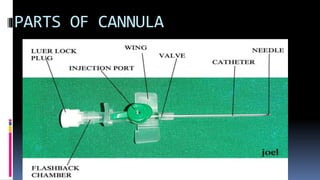
PARTS OF CANNULA
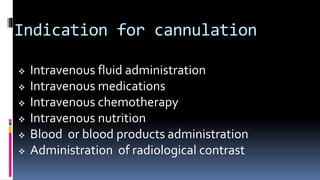
Indication for cannulation
 Intravenous fluid administration
 Intravenous medications
 Intravenous chemotherapy
 Intravenous nutrition
 Blood or blood products administration
 Administration of radiological contrast
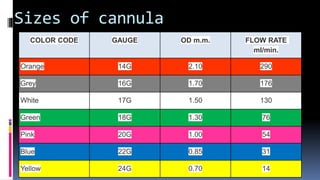
Sizes of cannula
COLOR CODE GAUGE OD m.m. FLOW RATE
ml/min.
Orange 14G 2.10 290
Grey 16G 1.70 176
White 17G 1.50 130
Green 18G 1.30 76
Pink 20G 1.00 54
Blue 22G 0.85 31
Yellow 24G 0.70 14
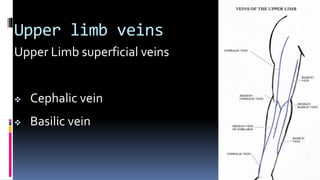
Upper limb veins
Upper Limb superficial veins
 Cephalic vein
 Basilic vein
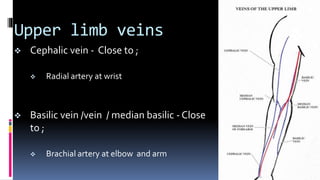
Upper limb veins
 Cephalic vein - Close to ;
 Radial artery at wrist
 Basilic vein /vein / median basilic - Close
to ;
 Brachial artery at elbow and arm
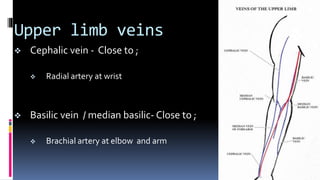
Upper limb veins
 Cephalic vein - Close to ;
 Radial artery at wrist
 Basilic vein / median basilic- Close to ;
 Brachial artery at elbow and arm
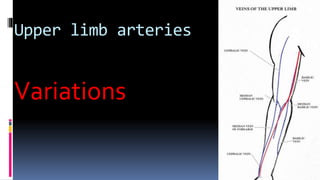
Upper limb arteries
Variations
Cannula Insertion Procedure
 Explain the procedure
 Select the appropriate size cannula
 Get all the equipment ready
The sites to avoid
 Wrist, feet, ankle
 Veins below a previous IV infiltration
 Phlebitic area or thrombosed veins
 Inflamed skin
 An arm with oedema, DVT, infection
 Arm with AVF
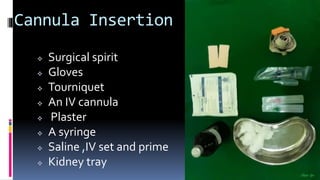
Cannula Insertion
 Surgical spirit
 Gloves
 Tourniquet
 An IV cannula
 Plaster
 A syringe
 Saline ,IV set and prime
 Kidney tray
Cannula Insertion
 Position the patient keep arm in a comfortable position
 Look for any abnormalities at the cannulation site , variations
 Apply tourniquet identify the vein
 Wear the glove and clean the site
Cannula Insertion
 Take the cannula open the wings of the cannula and hold the
cannula between the thumb index and middle fingers
 Stretch the skin distal to the site of insertion and insert the
cannula at 30°
Cannula Insertion
 Inspect for the flashback of blood in the hub
 Then insert the cannula a little more and then
withdraw the needle and advances cannula into vein
 Keep the pressure at the tip of the cannula and put
the cap to the hub
 Check for function
Cannula
Insertion
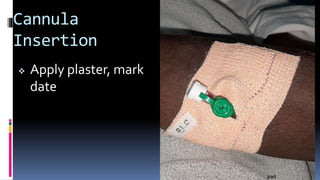
 Apply plaster, mark
date
Complications of cannulation
 Accidental intra arterial cannulation
 Infection
 Extravasation and compartment syndrome
 Fracture and retention of part of the cannula
/embolisation
Infection
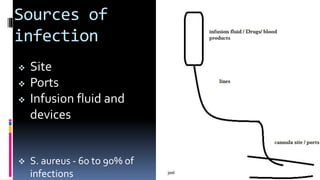
Sources of
infection
 Site
 Ports
 Infusion fluid and
devices
 S. aureus - 60 to 90% of
infections
INFECTION PREVENTION
 Hand disinfection
 Sterile gloves
 Disinfect the skin insertion site.
 Cover with sterile dressing
 Remove cannula if signs of infection occur
 Change dressing only when necessary
 Close ports that are not needed with sterile caps
INFECTION PREVENTION
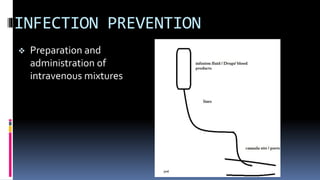
 Preparation and
administration of
intravenous mixtures
Accidental Intra Arterial
Cannulation / Injection
Risk factors
 Unconscious or sedated patients
 Trauma patients, hypotensive patients
 Vascular anomalies
 Children
 Receiving multiple infusion
 Obese
Intra-arterial cannulation / injection of
drugs
Results in thrombosis by;
 Spasm
 Trauma to the vessel wall and thrombosis
 Occlusion of the vessels by particles in the drug
 Crystallization of the drug after injection
 Endothelial injury - chemical arteritis resulting in platelet
adhesions
Prevention of intra-arterial
cannulation / injection
 Knowledge about the anatomical variations ·
 Avoiding cannulation close the known neurovascular bundle
e.g. cubital fossa
Prevention of intra-arterial
cannulation / injection
 Recognition of intra-arterial cannulation in
case of accidental insertion of a cannula.
 When the cannula is within the artery -
flashback of bright red blood
If the cannula is within the artery …………………..
 There will be a pulsatile back bleeding of bright red blood
 There may be a hematoma formation
 If the cannula is connected with the infusion set or a syringe there will
be back flow of blood into these under high pressure
 Pain along the arm to fingers with injection
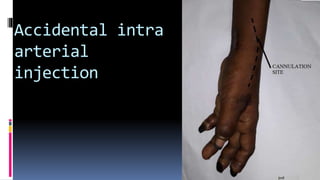
Accidental intra
arterial
injection
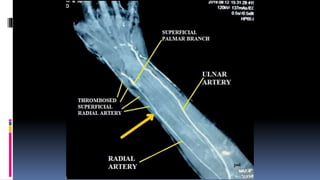
If the cannula is within the artery …………………..
If accidental intra-arterial cannulation is recognised
 Cannula should be immediately removed
 Apply local pressure
 The distal circulation should be monitored.
Arudchelvam J, Marasinghe A (2019) Accidental Intra-Arterial Injection of a Drug in a Patient with Radial Artery Variation; A
Rarity Leading to a Disaster. J Clinical Case Rep Case Stud 2019: 66-68.
In case of accidental intra-arterial
injection
 Do not remove the cannula
 the same cannula which was used for injection can be
used………..
 To flush the artery with heparin saline
 For injection of thrombolytic agents
 For injection of vasodilators
 Can also be used to perform an angiography
In case of accidental intra-arterial
injection
 Treatment options
 Analgesics
 systemic heparinization
 Catheter directed intra-arterial thrombolysis (with
streptokinase, urokinase)
 Systemic dextran and steroids
 Surgical interventions - thrombectomy or bypass
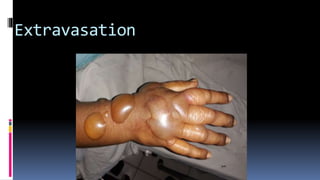
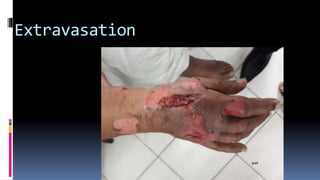
Extravasation
Extravasation
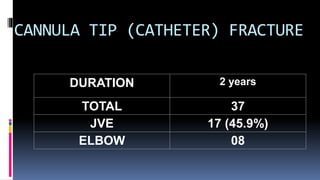
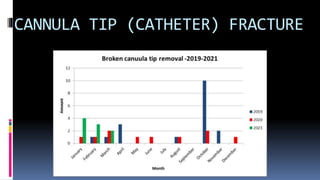
CANNULA TIP (CATHETER) FRACTURE
DURATION 2 years
TOTAL 37
JVE 17 (45.9%)
ELBOW 08
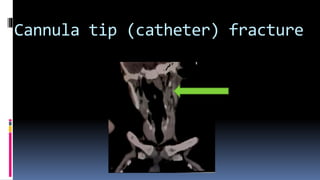
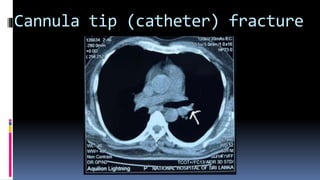
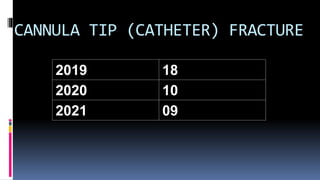
CANNULA TIP (CATHETER) FRACTURE
2019 18
2020 10
2021 09
CANNULA TIP (CATHETER) FRACTURE
 The migration and embolization - both towards
and against the flow of blood.
 Results in
 Thrombosis
 Infection
 Embolisation
 Arrhythmia
Cannula tip (catheter) fracture
 Associated with
 Insertion at mobile sites
 longer duration of use
 Poor technique of insertion
 Multiple attempts at cannulation
 Repeated reinsertion of needle
Brand
Matters !!!
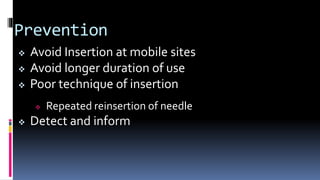
Prevention
 Avoid Insertion at mobile sites
 Avoid longer duration of use
 Poor technique of insertion
 Repeated reinsertion of needle
 Detect and inform
Thank you

Cannulation and complications joel arudchelvam

  • 1.
    CANNULATION AND COMPLICATIONS JOEL ARUDCHELVAM MBBS(COL), MD (SUR), MRCS (ENG) CONSULTANTVASCULARANDTRANSPLANT SURGEON
  • 2.
    Cannula  Latin -"little reed"*  A hollow tube with a retractable inner core that can be inserted into a vein, an artery, or another body cavity
  • 3.
    Intravenous catheters Includes;  Peripheralcannula – Arterial /Venous  Central catheters
  • 4.
  • 5.
    Indication for cannulation Intravenous fluid administration  Intravenous medications  Intravenous chemotherapy  Intravenous nutrition  Blood or blood products administration  Administration of radiological contrast
  • 6.
    Sizes of cannula COLORCODE GAUGE OD m.m. FLOW RATE ml/min. Orange 14G 2.10 290 Grey 16G 1.70 176 White 17G 1.50 130 Green 18G 1.30 76 Pink 20G 1.00 54 Blue 22G 0.85 31 Yellow 24G 0.70 14
  • 7.
    Upper limb veins UpperLimb superficial veins  Cephalic vein  Basilic vein
  • 8.
    Upper limb veins Cephalic vein - Close to ;  Radial artery at wrist  Basilic vein /vein / median basilic - Close to ;  Brachial artery at elbow and arm
  • 9.
    Upper limb veins Cephalic vein - Close to ;  Radial artery at wrist  Basilic vein / median basilic- Close to ;  Brachial artery at elbow and arm
  • 10.
  • 11.
    Cannula Insertion Procedure Explain the procedure  Select the appropriate size cannula  Get all the equipment ready
  • 12.
    The sites toavoid  Wrist, feet, ankle  Veins below a previous IV infiltration  Phlebitic area or thrombosed veins  Inflamed skin  An arm with oedema, DVT, infection  Arm with AVF
  • 13.
    Cannula Insertion  Surgicalspirit  Gloves  Tourniquet  An IV cannula  Plaster  A syringe  Saline ,IV set and prime  Kidney tray
  • 14.
    Cannula Insertion  Positionthe patient keep arm in a comfortable position  Look for any abnormalities at the cannulation site , variations  Apply tourniquet identify the vein  Wear the glove and clean the site
  • 15.
    Cannula Insertion  Takethe cannula open the wings of the cannula and hold the cannula between the thumb index and middle fingers  Stretch the skin distal to the site of insertion and insert the cannula at 30°
  • 16.
    Cannula Insertion  Inspectfor the flashback of blood in the hub  Then insert the cannula a little more and then withdraw the needle and advances cannula into vein  Keep the pressure at the tip of the cannula and put the cap to the hub  Check for function
  • 17.
  • 18.
    Complications of cannulation Accidental intra arterial cannulation  Infection  Extravasation and compartment syndrome  Fracture and retention of part of the cannula /embolisation
  • 19.
  • 20.
    Sources of infection  Site Ports  Infusion fluid and devices  S. aureus - 60 to 90% of infections
  • 21.
    INFECTION PREVENTION  Handdisinfection  Sterile gloves  Disinfect the skin insertion site.  Cover with sterile dressing  Remove cannula if signs of infection occur  Change dressing only when necessary  Close ports that are not needed with sterile caps
  • 22.
    INFECTION PREVENTION  Preparationand administration of intravenous mixtures
  • 23.
  • 24.
    Risk factors  Unconsciousor sedated patients  Trauma patients, hypotensive patients  Vascular anomalies  Children  Receiving multiple infusion  Obese
  • 25.
    Intra-arterial cannulation /injection of drugs Results in thrombosis by;  Spasm  Trauma to the vessel wall and thrombosis  Occlusion of the vessels by particles in the drug  Crystallization of the drug after injection  Endothelial injury - chemical arteritis resulting in platelet adhesions
  • 26.
    Prevention of intra-arterial cannulation/ injection  Knowledge about the anatomical variations ·  Avoiding cannulation close the known neurovascular bundle e.g. cubital fossa
  • 27.
    Prevention of intra-arterial cannulation/ injection  Recognition of intra-arterial cannulation in case of accidental insertion of a cannula.  When the cannula is within the artery - flashback of bright red blood
  • 28.
    If the cannulais within the artery …………………..  There will be a pulsatile back bleeding of bright red blood  There may be a hematoma formation  If the cannula is connected with the infusion set or a syringe there will be back flow of blood into these under high pressure  Pain along the arm to fingers with injection
  • 29.
  • 31.
    If the cannulais within the artery ………………….. If accidental intra-arterial cannulation is recognised  Cannula should be immediately removed  Apply local pressure  The distal circulation should be monitored. Arudchelvam J, Marasinghe A (2019) Accidental Intra-Arterial Injection of a Drug in a Patient with Radial Artery Variation; A Rarity Leading to a Disaster. J Clinical Case Rep Case Stud 2019: 66-68.
  • 32.
    In case ofaccidental intra-arterial injection  Do not remove the cannula  the same cannula which was used for injection can be used………..  To flush the artery with heparin saline  For injection of thrombolytic agents  For injection of vasodilators  Can also be used to perform an angiography
  • 33.
    In case ofaccidental intra-arterial injection  Treatment options  Analgesics  systemic heparinization  Catheter directed intra-arterial thrombolysis (with streptokinase, urokinase)  Systemic dextran and steroids  Surgical interventions - thrombectomy or bypass
  • 34.
  • 35.
  • 36.
    CANNULA TIP (CATHETER)FRACTURE DURATION 2 years TOTAL 37 JVE 17 (45.9%) ELBOW 08
  • 37.
    CANNULA TIP (CATHETER)FRACTURE 2019 18 2020 10 2021 09
  • 38.
  • 39.
    CANNULA TIP (CATHETER)FRACTURE  The migration and embolization - both towards and against the flow of blood.  Results in  Thrombosis  Infection  Embolisation  Arrhythmia
  • 40.
  • 41.
  • 42.
    Cannula tip (catheter)fracture  Associated with  Insertion at mobile sites  longer duration of use  Poor technique of insertion  Multiple attempts at cannulation  Repeated reinsertion of needle
  • 43.
  • 44.
    Prevention  Avoid Insertionat mobile sites  Avoid longer duration of use  Poor technique of insertion  Repeated reinsertion of needle  Detect and inform
  • 45.