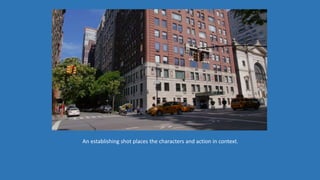
An establishing shot places the characters and action in context.
Extreme long shot is when the subject appears small in the frame. Can be
used to create a sense of helplessness or insignificance.
A long shot shows the whole subject, with room to spare at the top and
bottom of the frame.
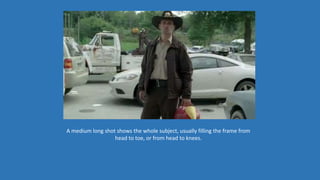
A medium long shot shows the whole subject, usually filling the frame from
head to toe, or from head to knees.
A medium shot shows the figure from waist up.
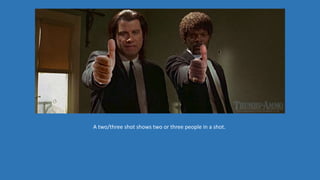
A two/three shot shows two or three people in a shot.
A medium close up shows the figure from head to chest.
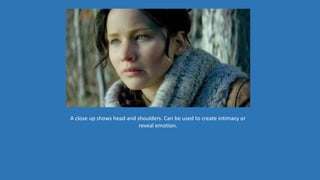
A close up shows head and shoulders. Can be used to create intimacy or
reveal emotion.
An extreme close up shows a minute amount of the subject e.g. a tear
on the face or a finger on the trigger. Can be used to crate tension or
emphasize emotion.
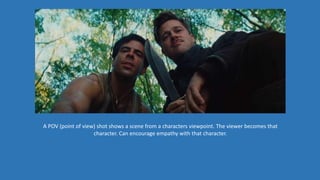
A POV (point of view) shot shows a scene from a characters viewpoint. The viewer becomes that
character. Can encourage empathy with that character.
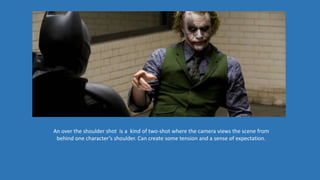
An over the shoulder shot is a kind of two-shot where the camera views the scene from
behind one character’s shoulder. Can create some tension and a sense of expectation.
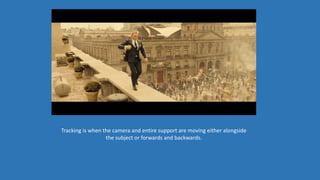
Tracking is when the camera and entire support are moving either alongside
the subject or forwards and backwards.
Panning is when the camera support remains fixed while camera moves
from side to side (horizontally).
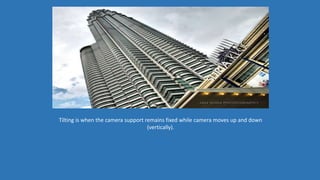
Tilting is when the camera support remains fixed while camera moves up and down
(vertically).
Magnification/zooming is the mechanical change of the camera magnification (the camera
is not physically moved). Zoom-in to close-up or zoom-out to long-shot.

Different Shots

  • 1.
    An establishing shotplaces the characters and action in context.
  • 2.
    Extreme long shotis when the subject appears small in the frame. Can be used to create a sense of helplessness or insignificance.
  • 3.
    A long shotshows the whole subject, with room to spare at the top and bottom of the frame.
  • 4.
    A medium longshot shows the whole subject, usually filling the frame from head to toe, or from head to knees.
  • 5.
    A medium shotshows the figure from waist up.
  • 6.
    A two/three shotshows two or three people in a shot.
  • 7.
    A medium closeup shows the figure from head to chest.
  • 8.
    A close upshows head and shoulders. Can be used to create intimacy or reveal emotion.
  • 9.
    An extreme closeup shows a minute amount of the subject e.g. a tear on the face or a finger on the trigger. Can be used to crate tension or emphasize emotion.
  • 10.
    A POV (pointof view) shot shows a scene from a characters viewpoint. The viewer becomes that character. Can encourage empathy with that character.
  • 11.
    An over theshoulder shot is a kind of two-shot where the camera views the scene from behind one character’s shoulder. Can create some tension and a sense of expectation.
  • 12.
    Tracking is whenthe camera and entire support are moving either alongside the subject or forwards and backwards.
  • 13.
    Panning is whenthe camera support remains fixed while camera moves from side to side (horizontally).
  • 14.
    Tilting is whenthe camera support remains fixed while camera moves up and down (vertically).
  • 15.
    Magnification/zooming is themechanical change of the camera magnification (the camera is not physically moved). Zoom-in to close-up or zoom-out to long-shot.