Camera
Shots, Angles
and Movement.
Camera Shot
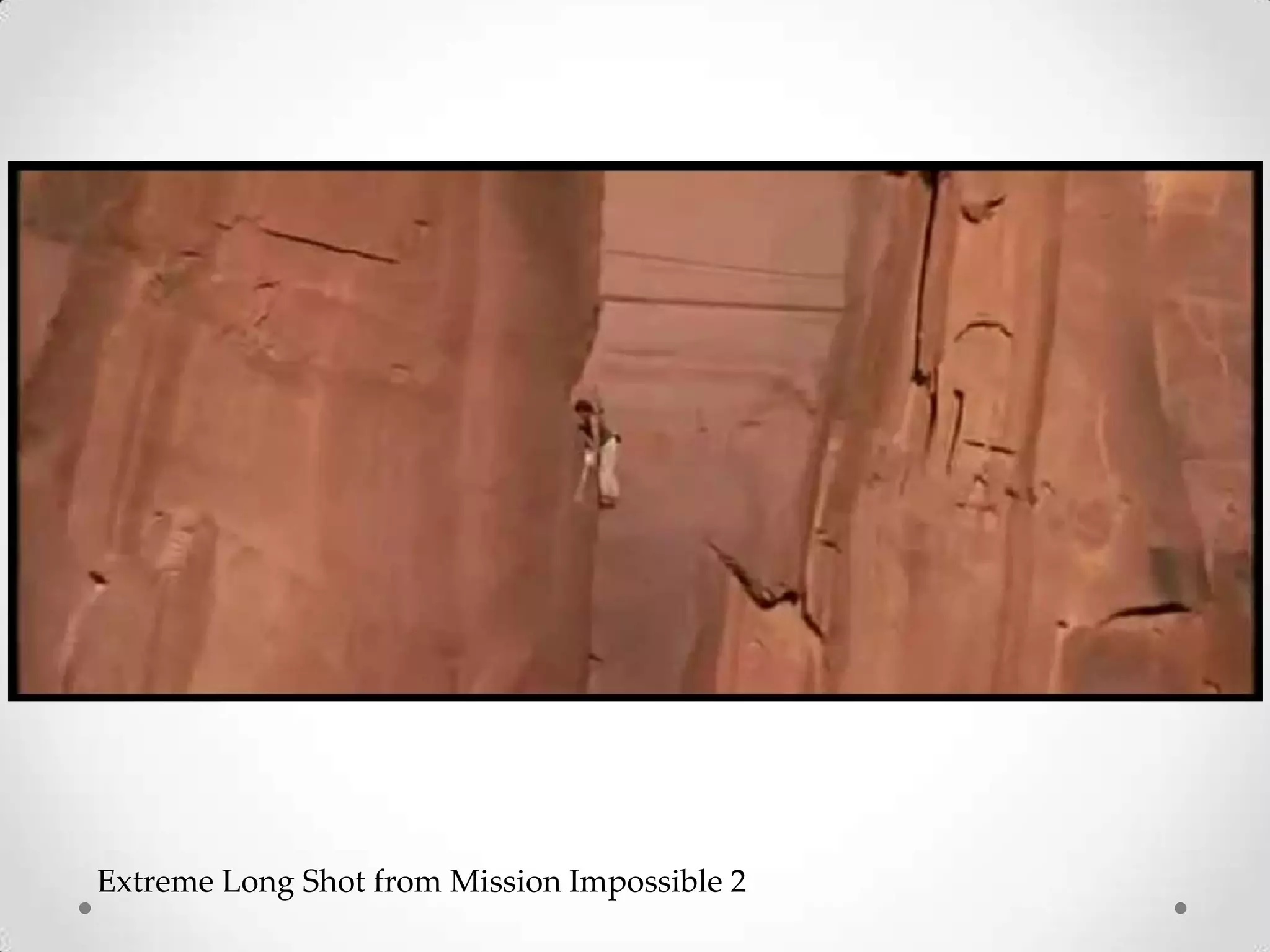
• Extreme Long Shot (ELS)
• Also known as an establishing shot. Often
used at the beginning of a sequence to
‘establish’ the setting in which the scene
takes place.
Extreme Long Shot from Mission Impossible 2
Camera Shot
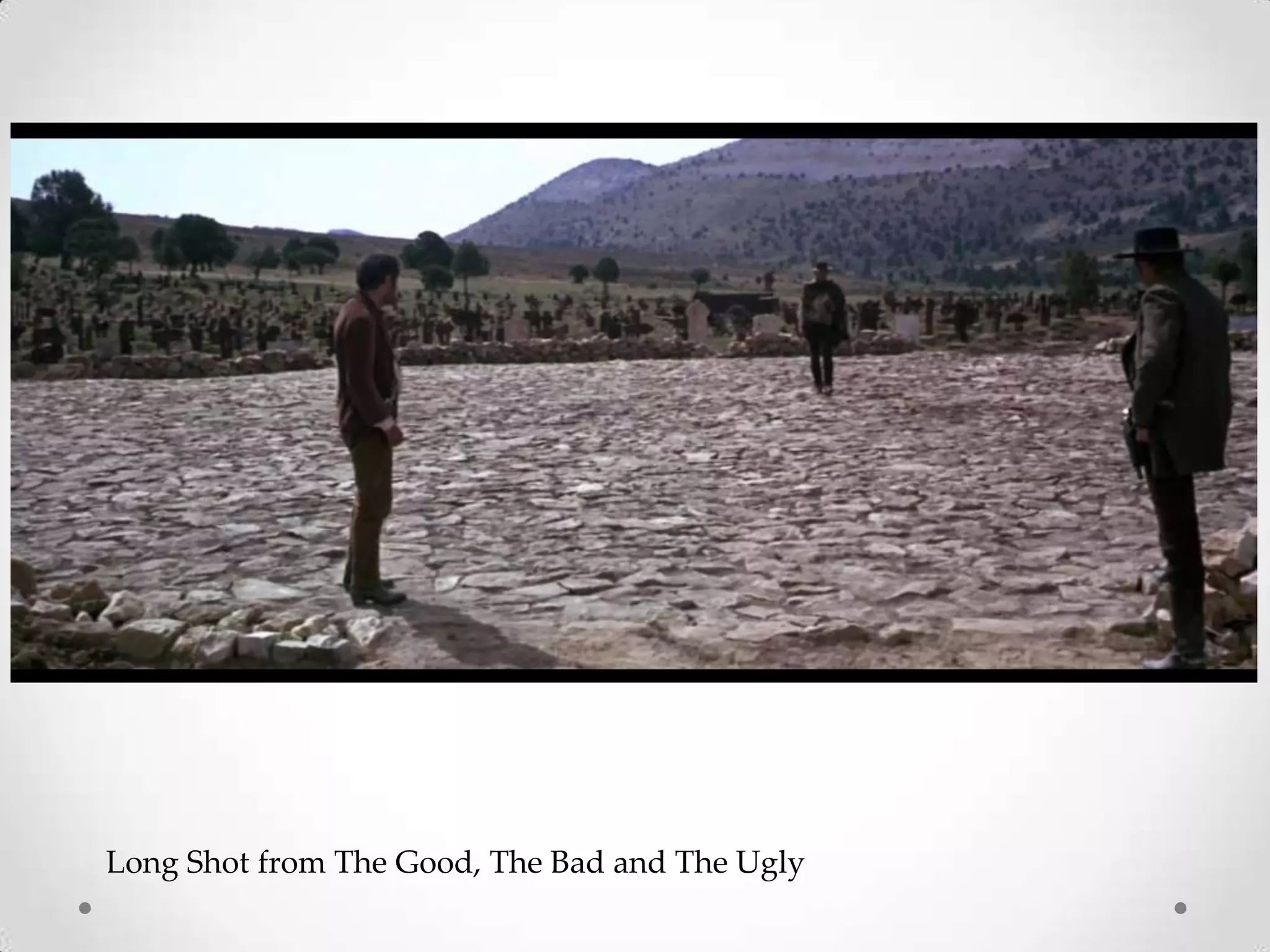
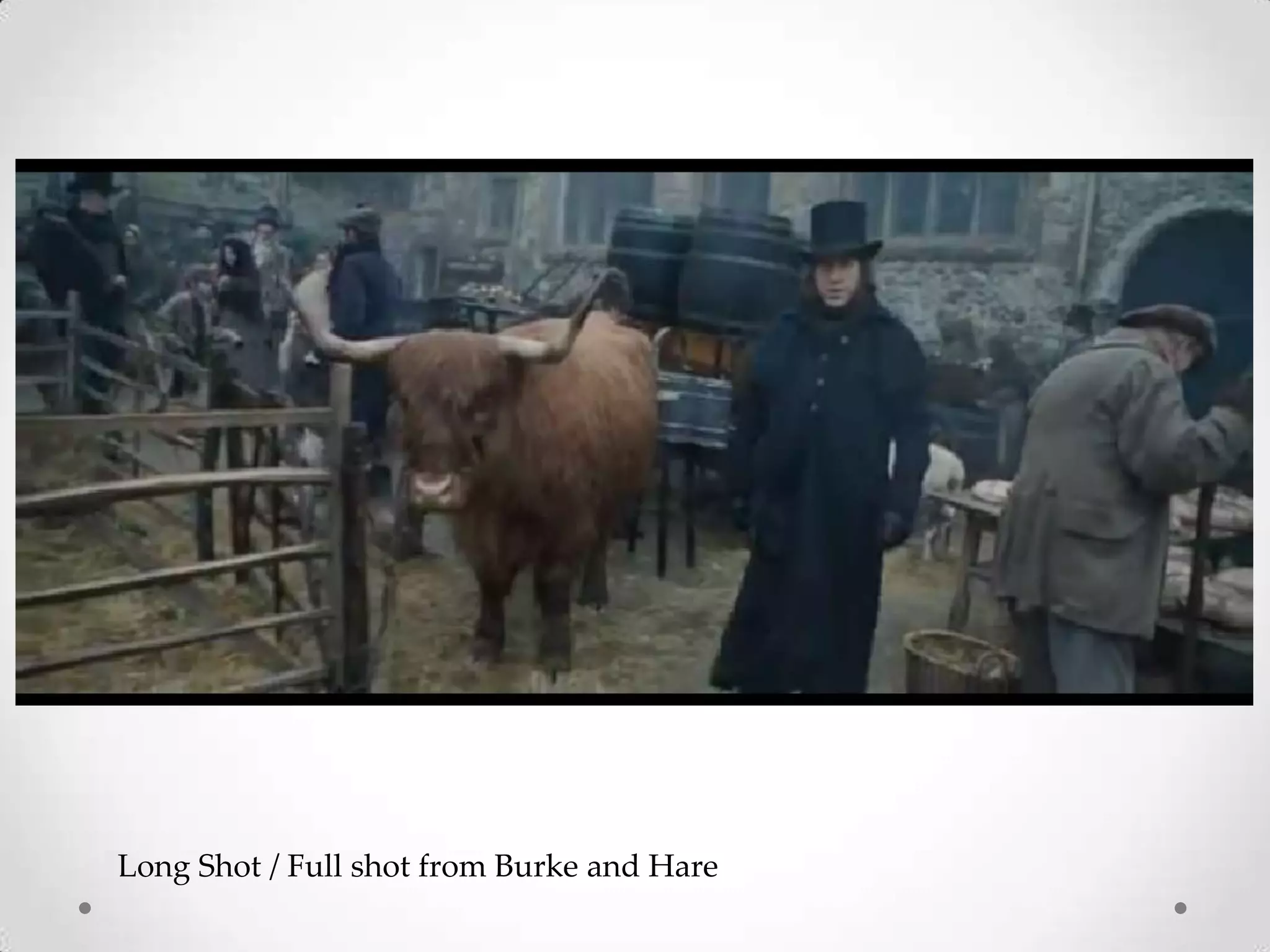
• Long Shot (LS)
• A shot that portrays the scene in a
realistic perspective. It can also be
defined as a Full Shot, a shot that
contains a person from head to toe. This
can be used to draw the audience into a
scene after an establishing shot.
Long Shot from The Good, The Bad and The Ugly
Long Shot / Full shot from Burke and Hare
Camera Shot
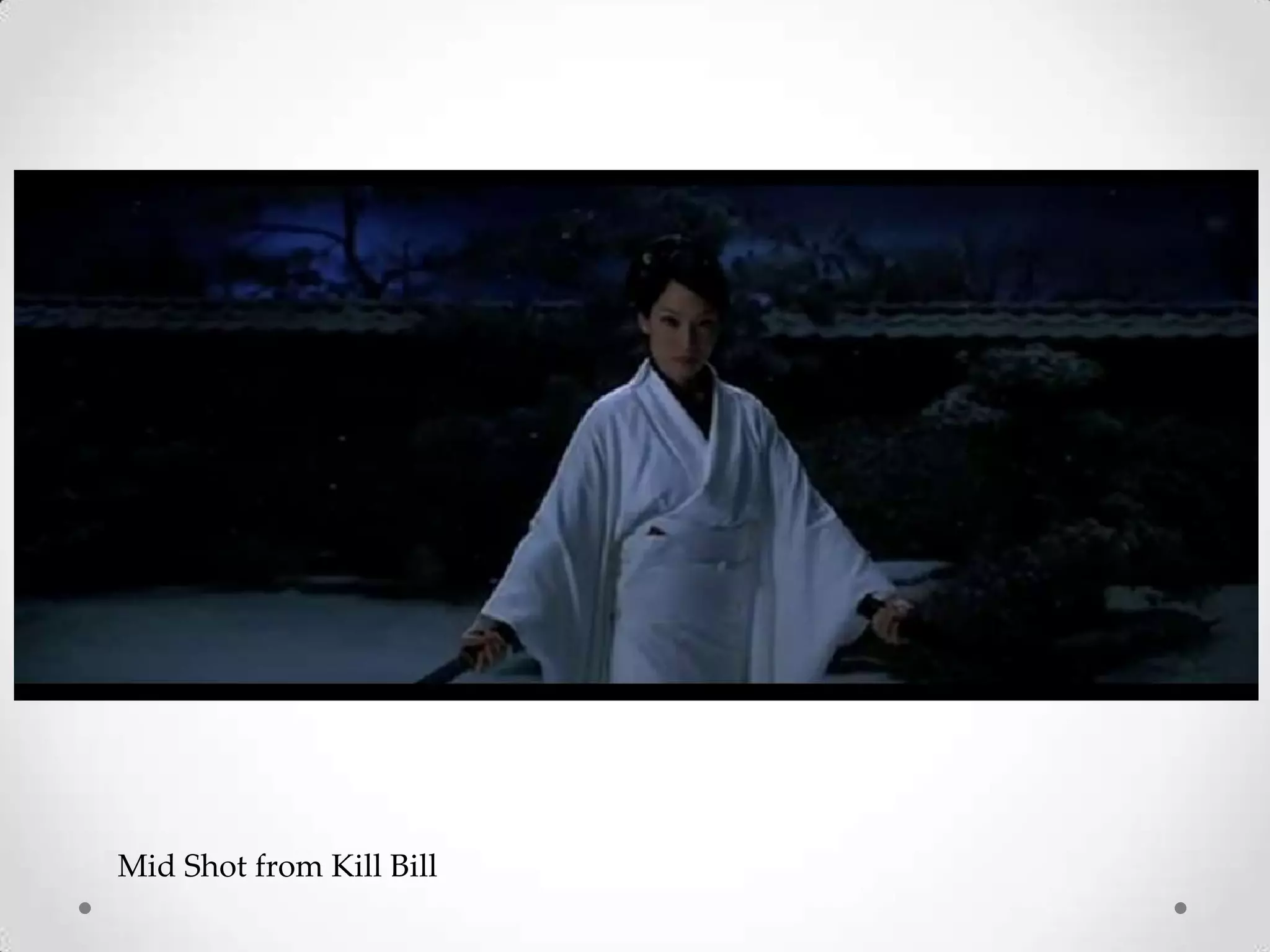
• Mid Shot (MS)
• A shot depicting a person from the waist
up. Can be used for dialogue
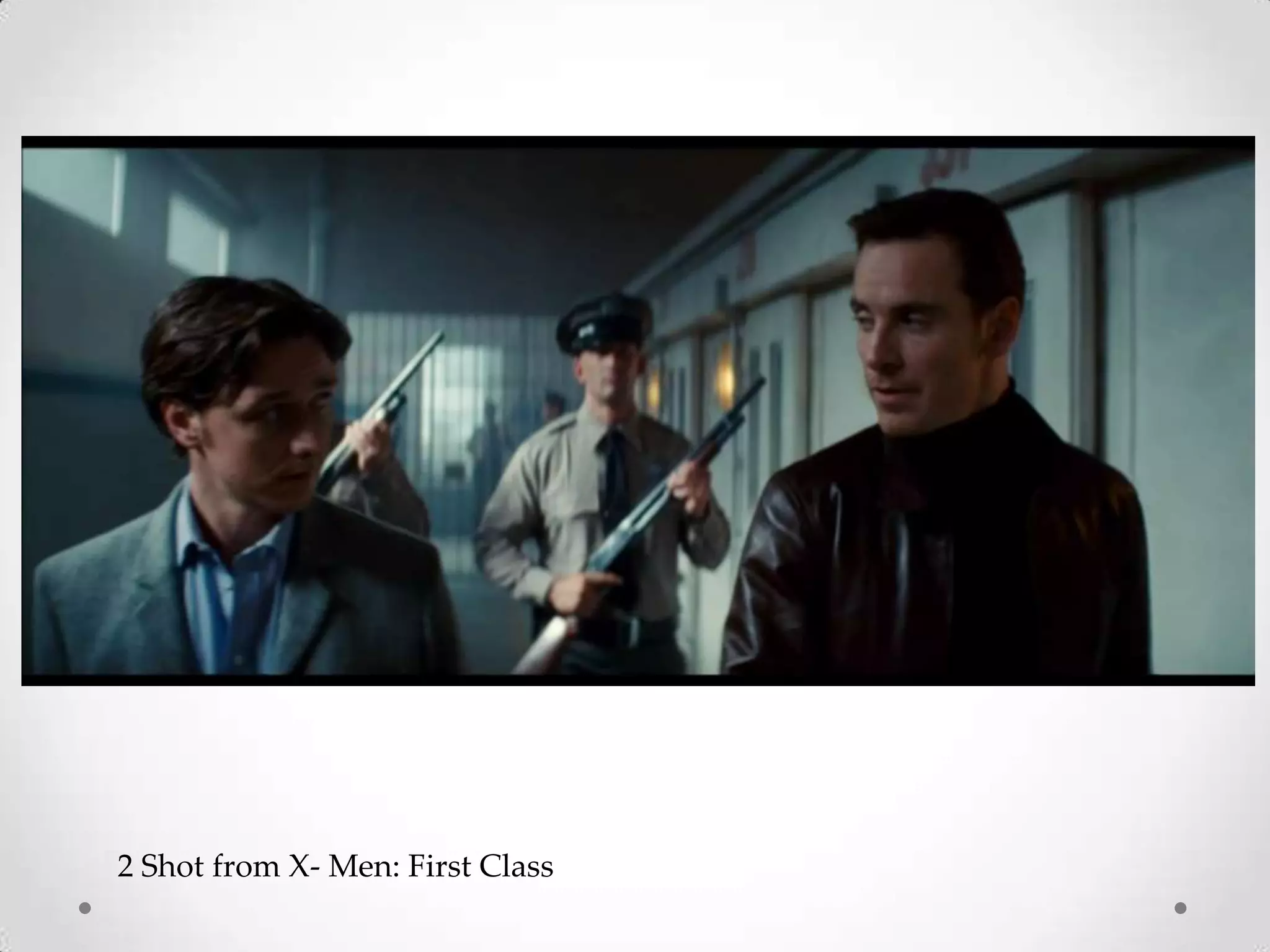
• 2 shot
• A MS containing 2 people. Used for
travelling scenes and dialogue.
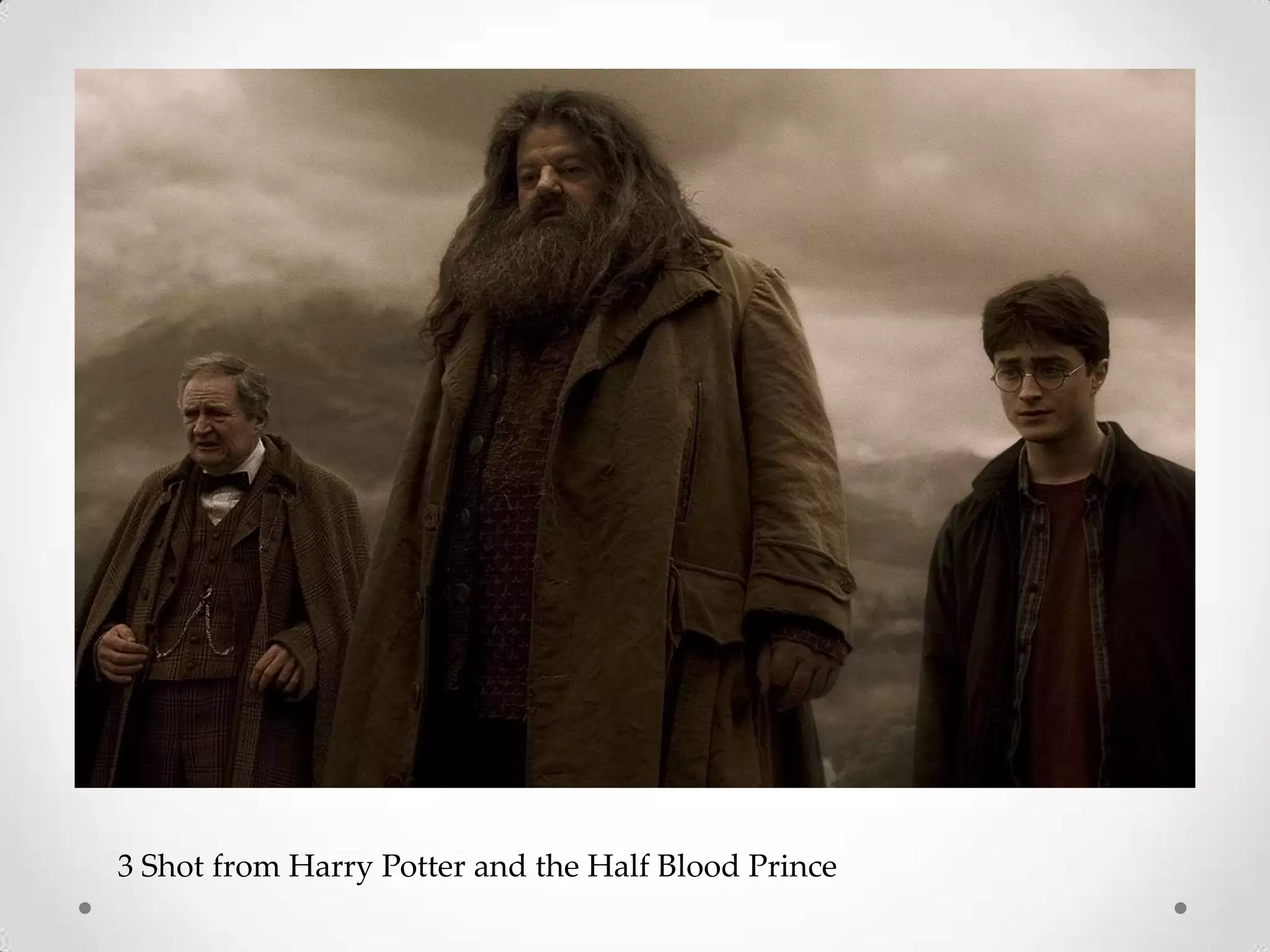
• 3 shot
• A MS containing 3 people. Used for
travelling scenes and dialogue.
Mid Shot from Kill Bill
2 Shot from X- Men: First Class
3 Shot from Harry Potter and the Half Blood Prince
Camera Shot
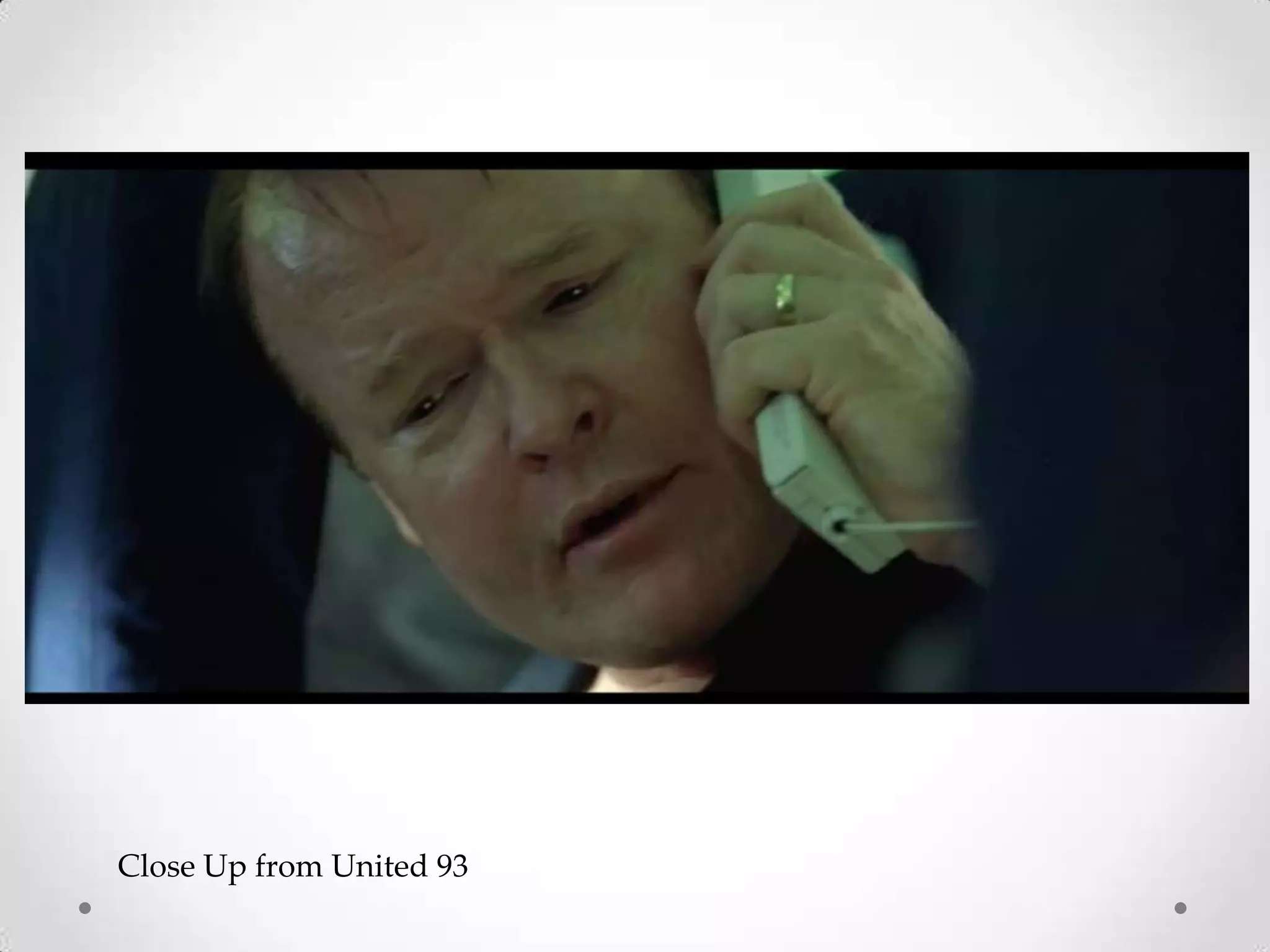
• Close Up (CU)
• A shot depicting a person from the
shoulders/neck up or depicting a specific
item or prop in the scene. Used to draw
the audience’s attention to a specific
person or item. Can be used for dialogue
Close Up from United 93
Camera Shot
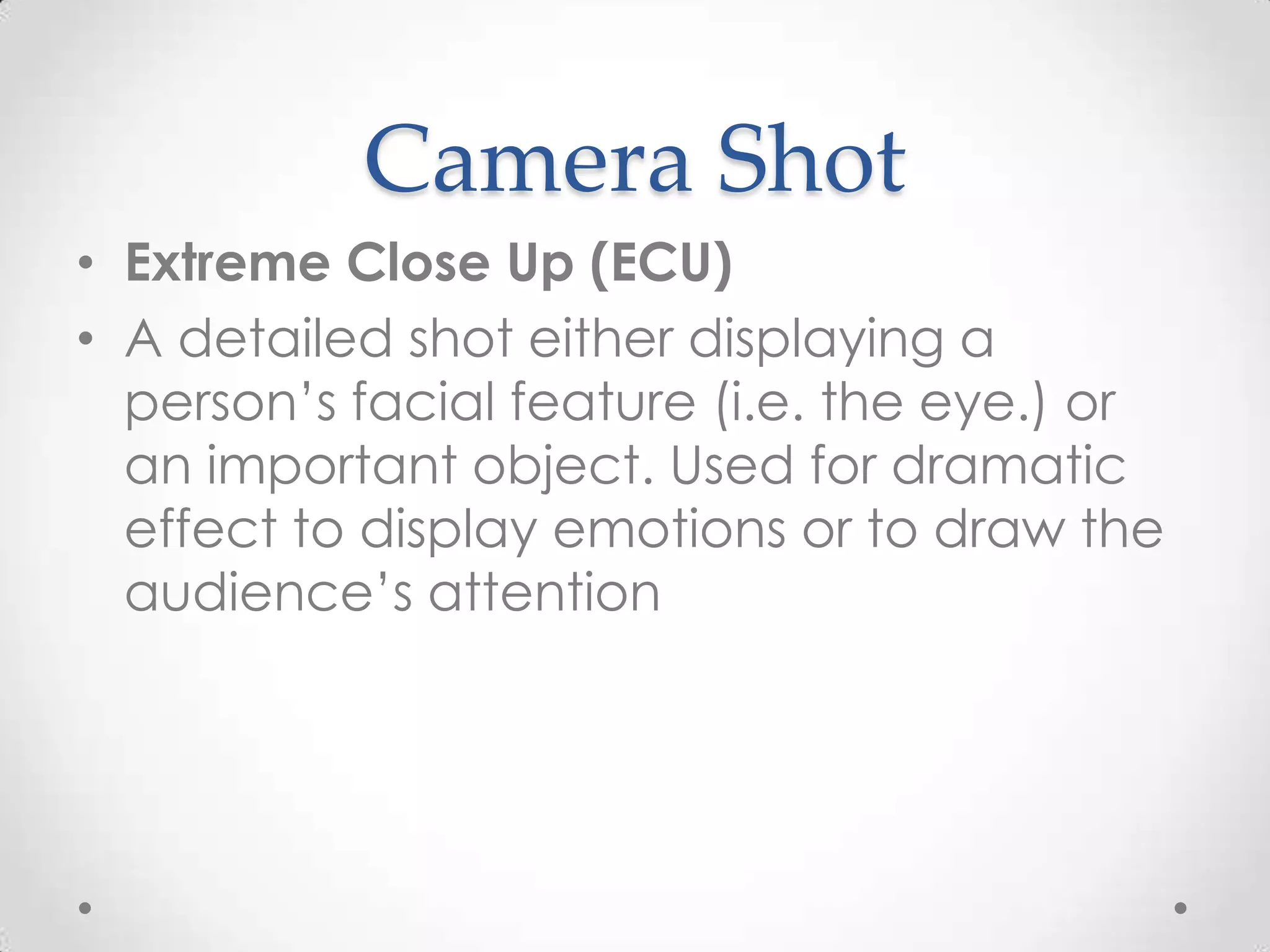
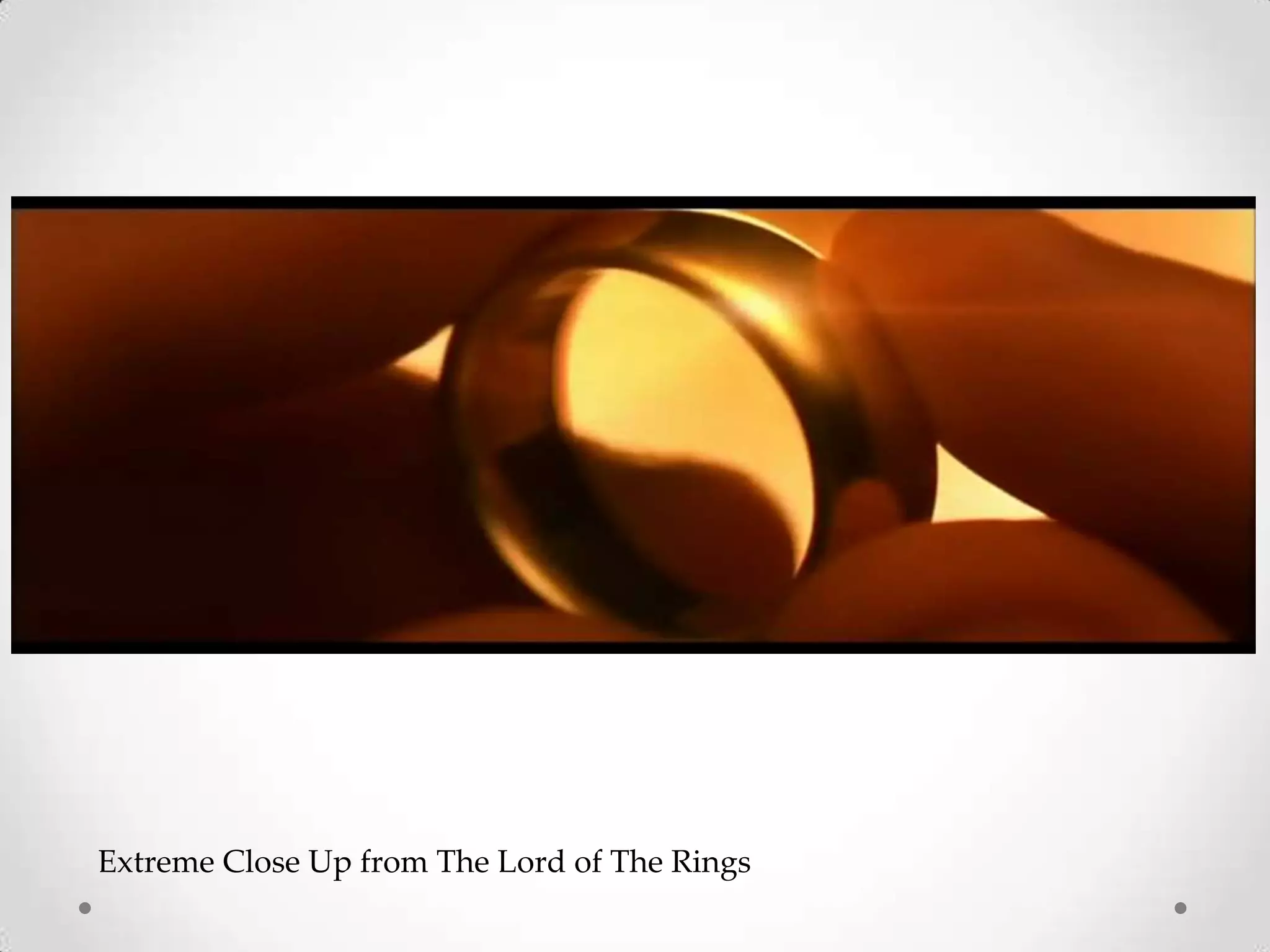
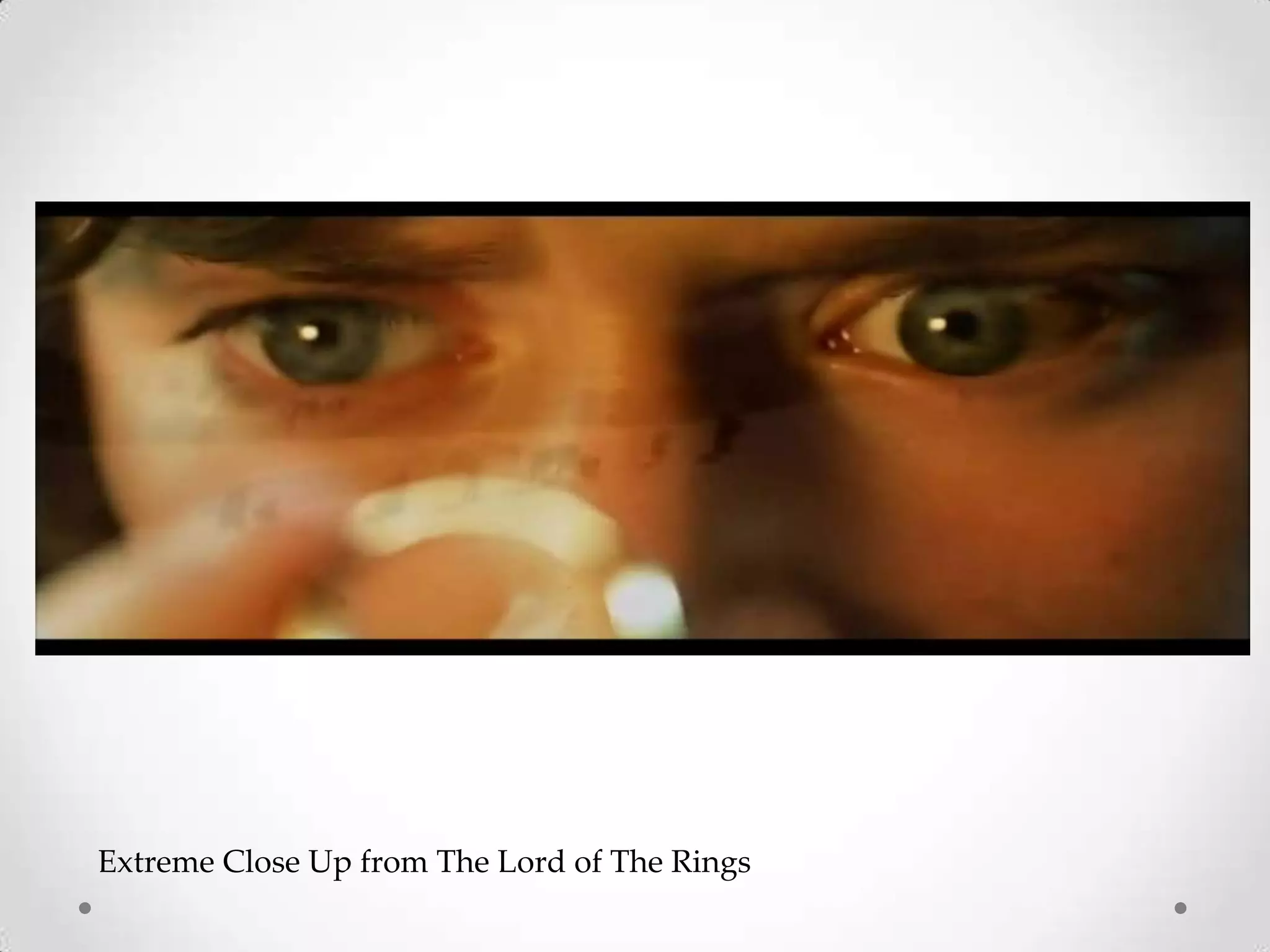
• Extreme Close Up (ECU)
• A detailed shot either displaying a
person’s facial feature (i.e. the eye.) or
an important object. Used for dramatic
effect to display emotions or to draw the
audience’s attention
Extreme Close Up from The Lord of The Rings
Camera Angle
• Bird’s Eye View
• A high angled shot normally directly
overhead the character. Combined with
an ELS it can be used to establish a
scene.
Birds Eye View shot from Kill Bill
Camera Angle
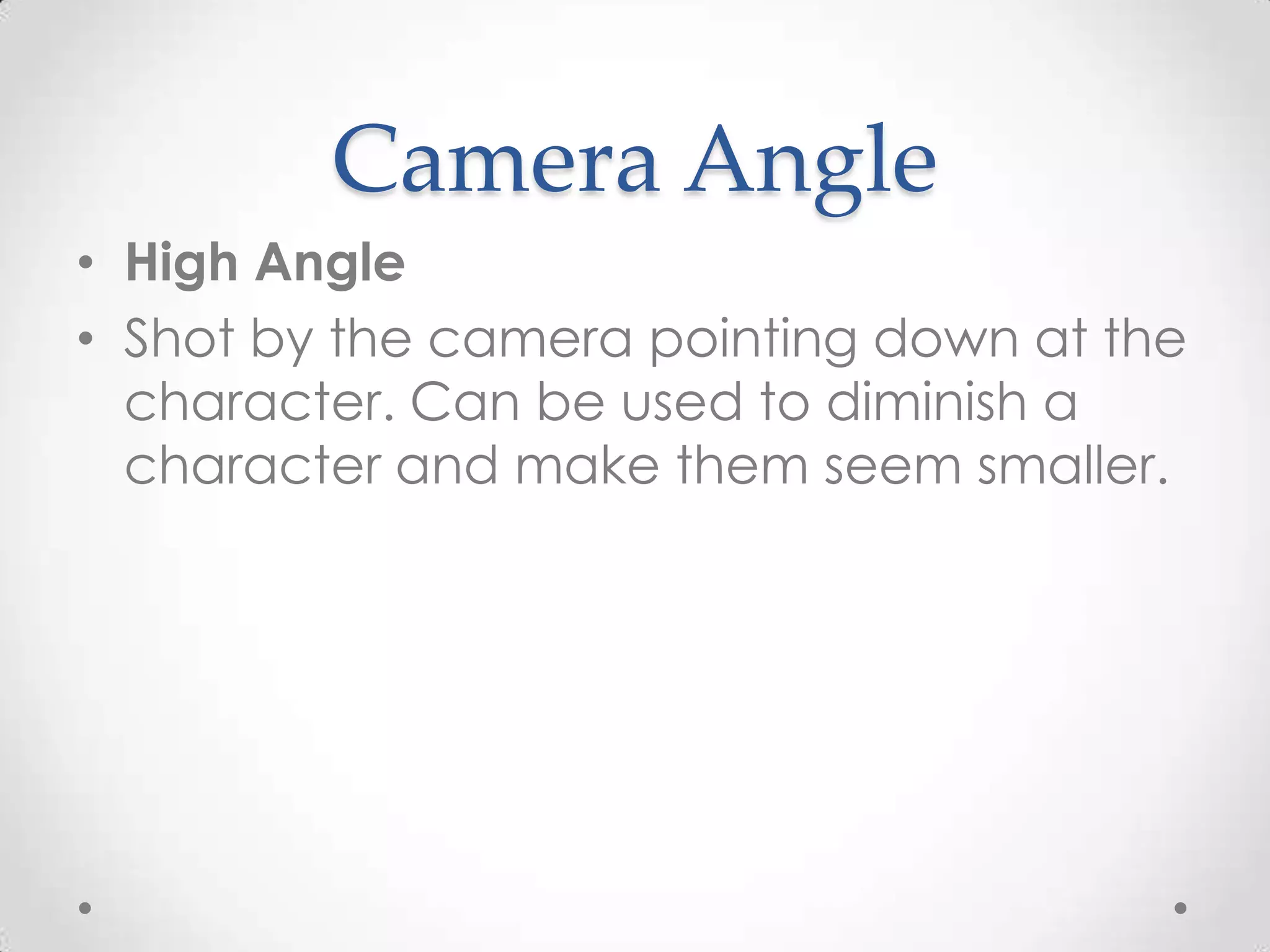
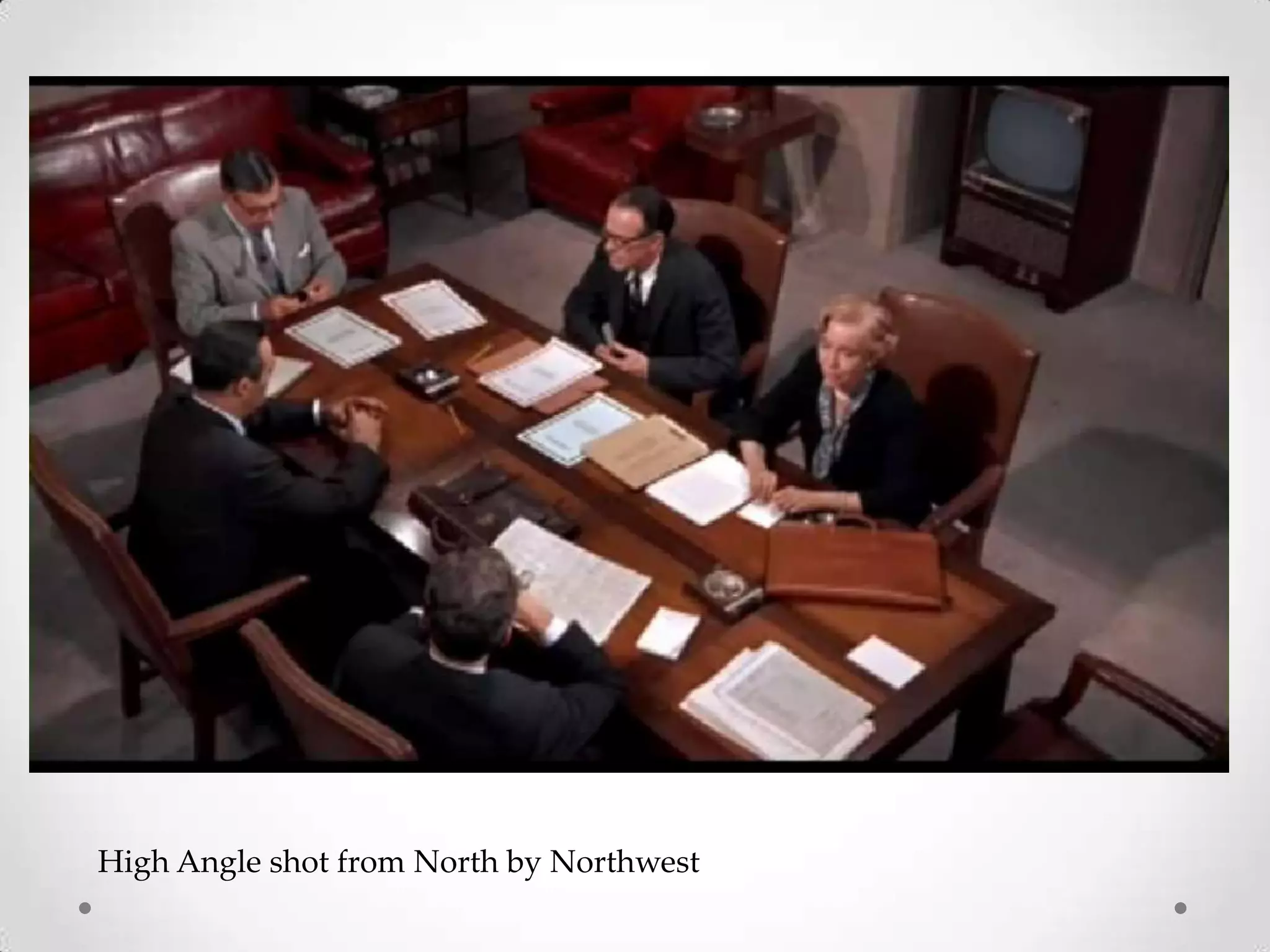
• High Angle
• Shot by the camera pointing down at the
character. Can be used to diminish a
character and make them seem smaller.
High Angle shot from North by Northwest
Camera Angle
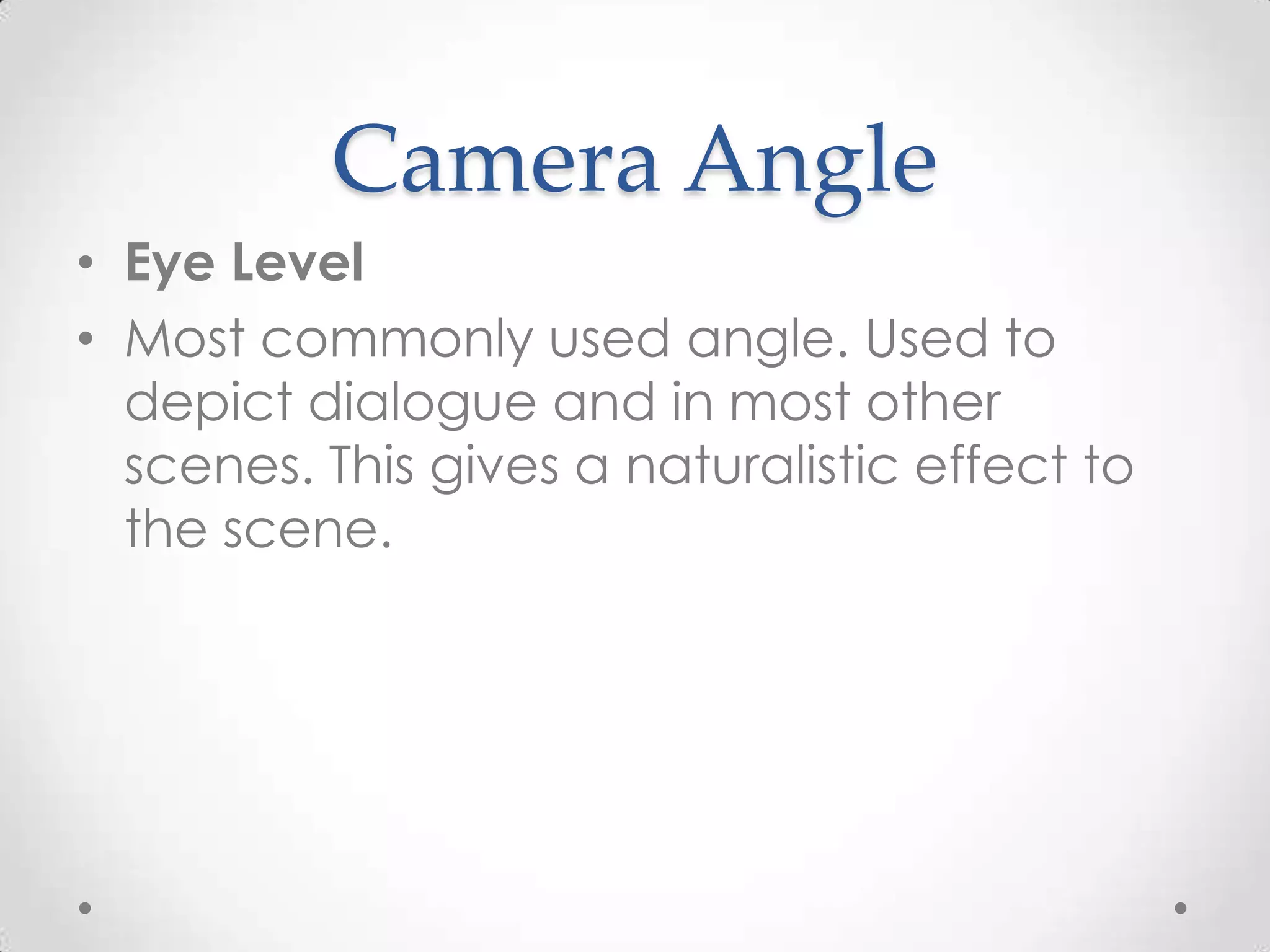
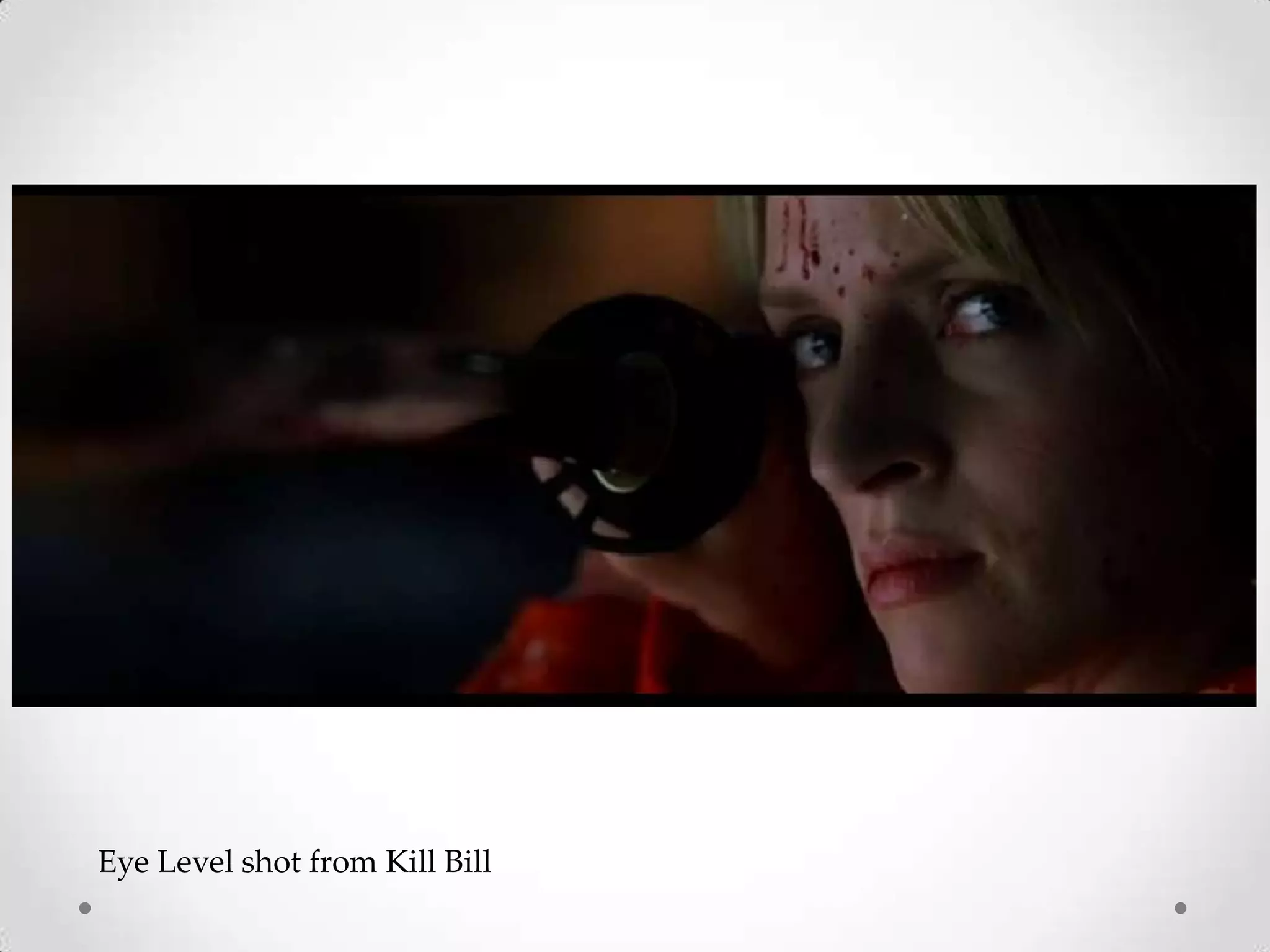
• Eye Level
• Most commonly used angle. Used to
depict dialogue and in most other
scenes. This gives a naturalistic effect to
the scene.
Eye Level shot from Kill Bill
Camera Angle
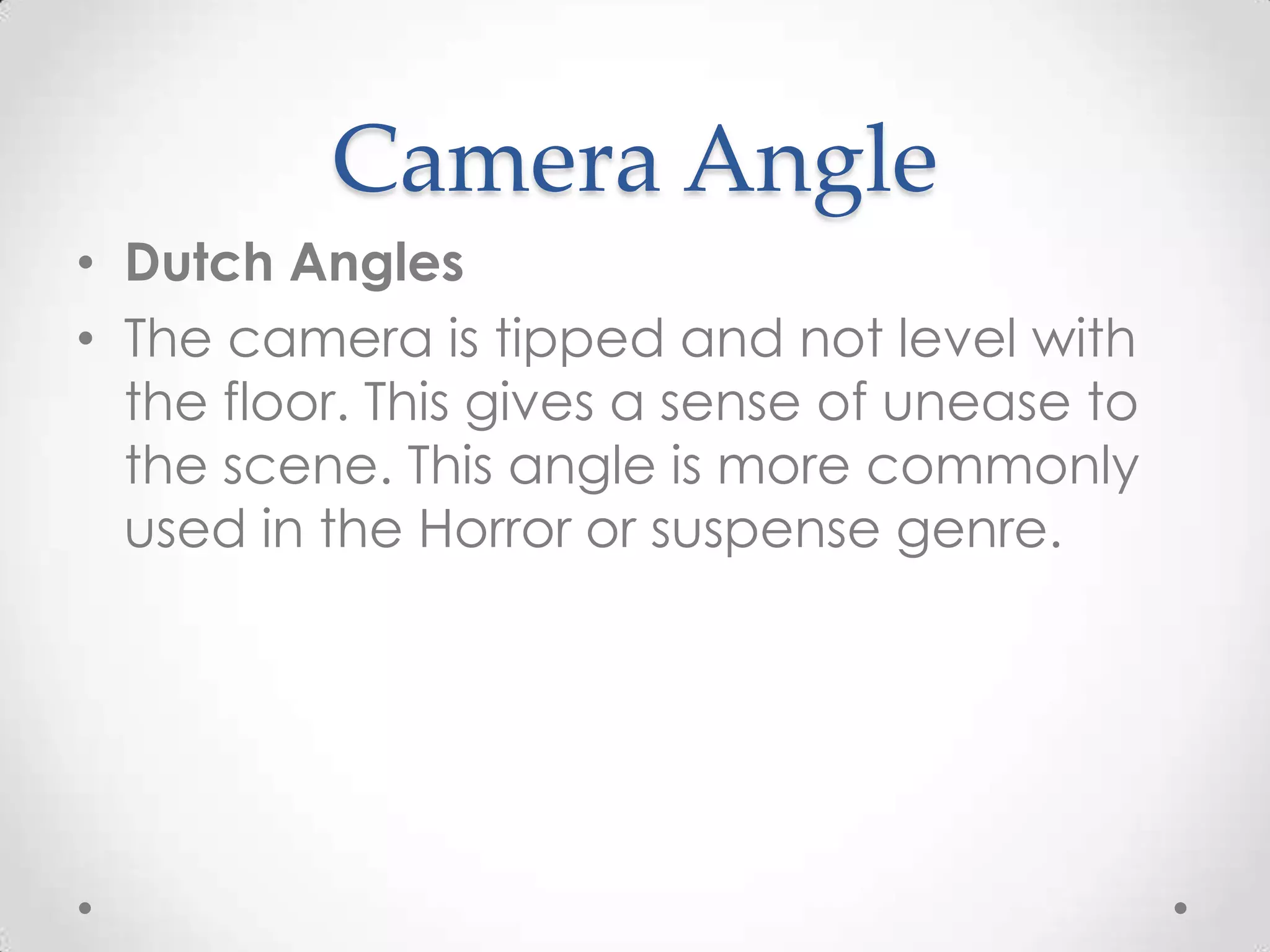
• Low Angle
• Shot by the camera pointing up at the
character. Can be used to add height to
buildings, but can also make characters
seem taller and more threatening.
Low Angle shot from Inglorious Basterds
Camera Angle
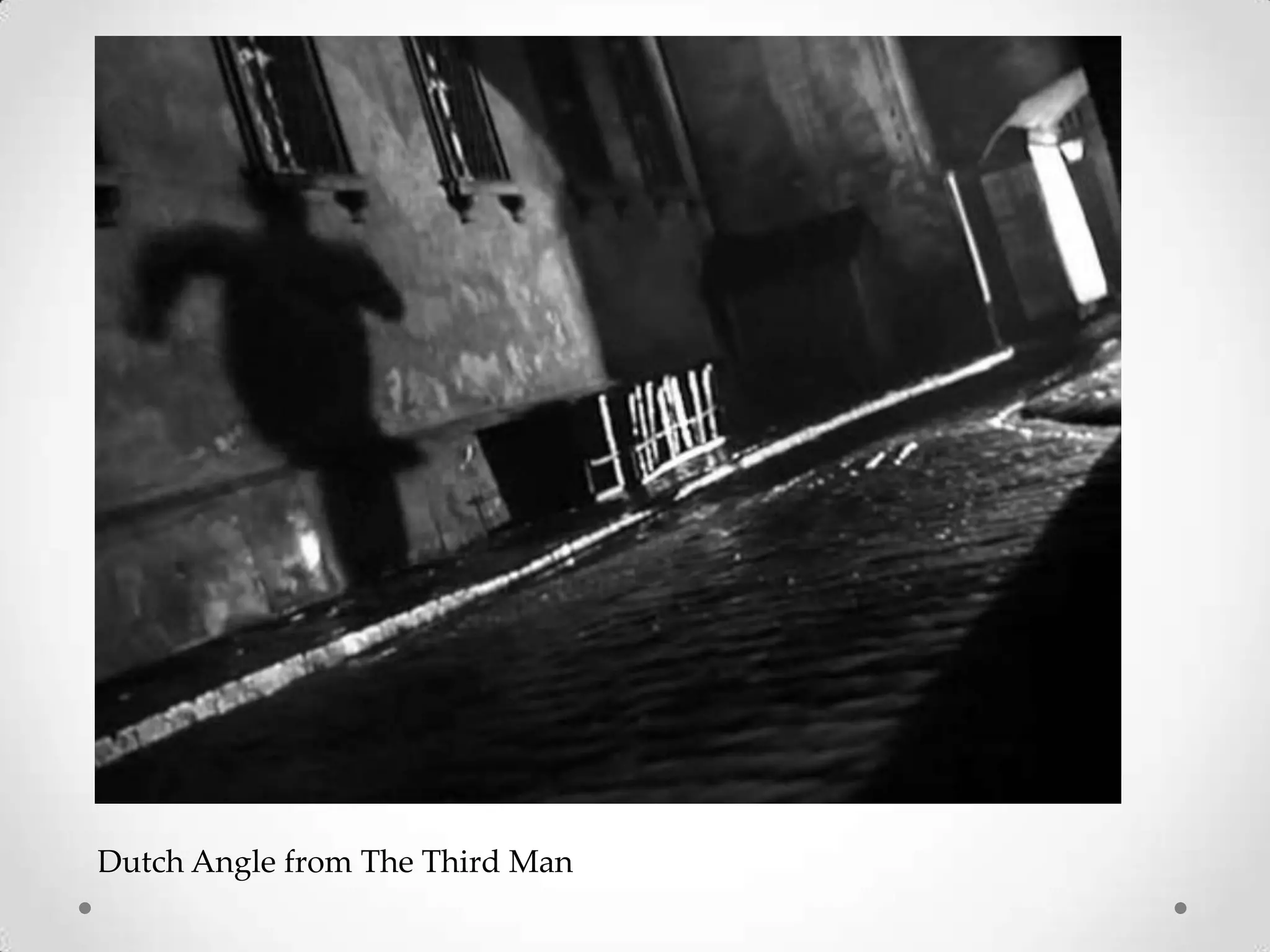
• Dutch Angles
• The camera is tipped and not level with
the floor. This gives a sense of unease to
the scene. This angle is more commonly
used in the Horror or suspense genre.
Dutch Angle from The Third Man
Camera Movement
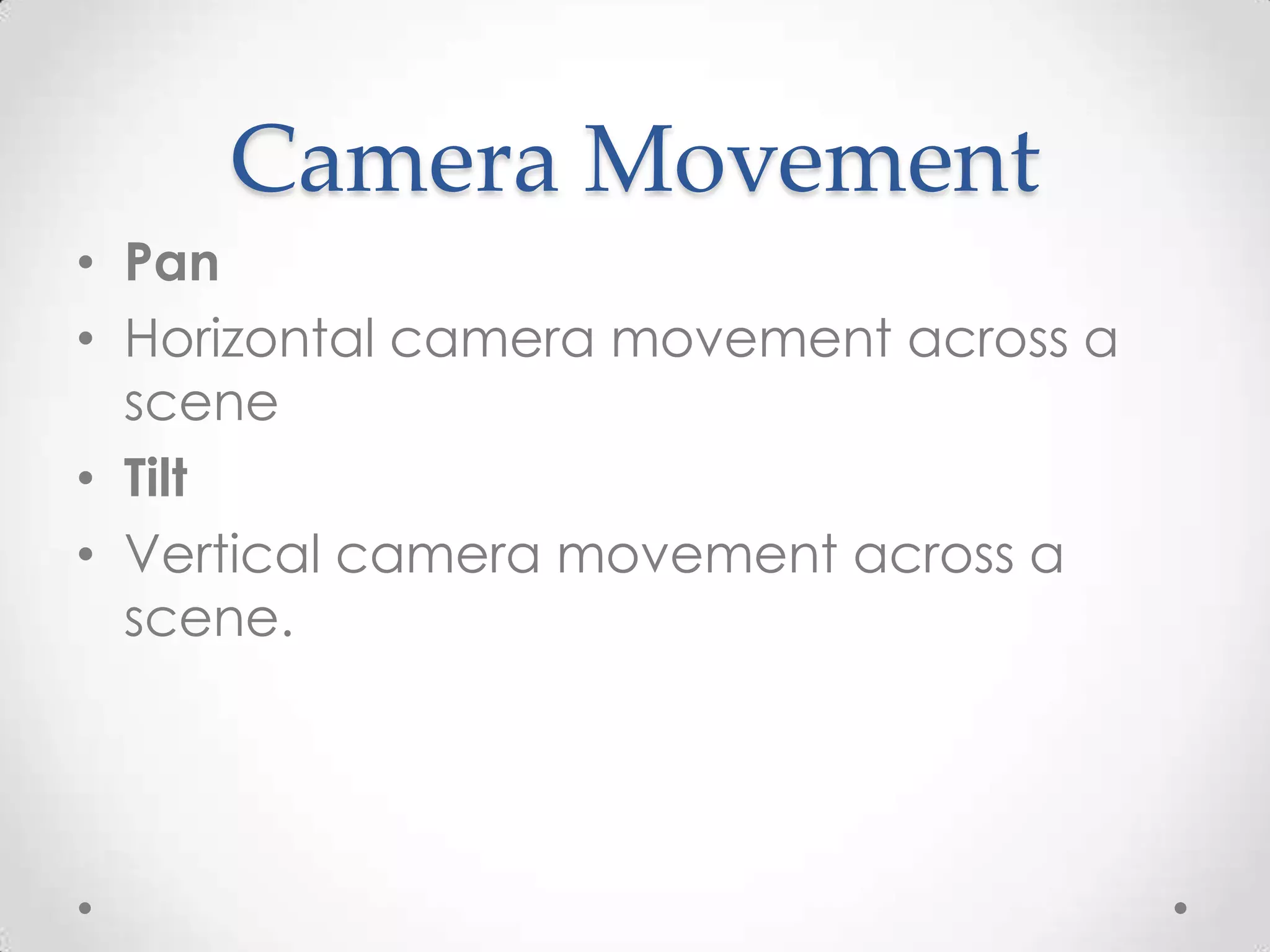
• Pan
• Horizontal camera movement across a
scene
• Tilt
• Vertical camera movement across a
scene.
Camera Movement
• Tracking (Dolly Shots)
• Camera moves alongside the action.
These can be aerial (achieved by a
crane), in a car, or more conventionally
on a dolly.
• http://www.youtube.com/watch?v=FQv
8OavpALQ
Camera Movement
• Aerial Shot
• Usually an ELS shot from an aeroplane or
a helicopter. Used to give a sense of
grandeur and exhilaration
• http://www.youtube.com/watch?v=7s5K
FbyBmrQ (2.13)
Camera Movement
• Zoom
• Used to focus on an object within a
scene without editing. Can be achieved
by a zoom lens or by physically moving
the camera closer to the object
• http://www.youtube.com/watch?v=5OC
rkaMaBbY
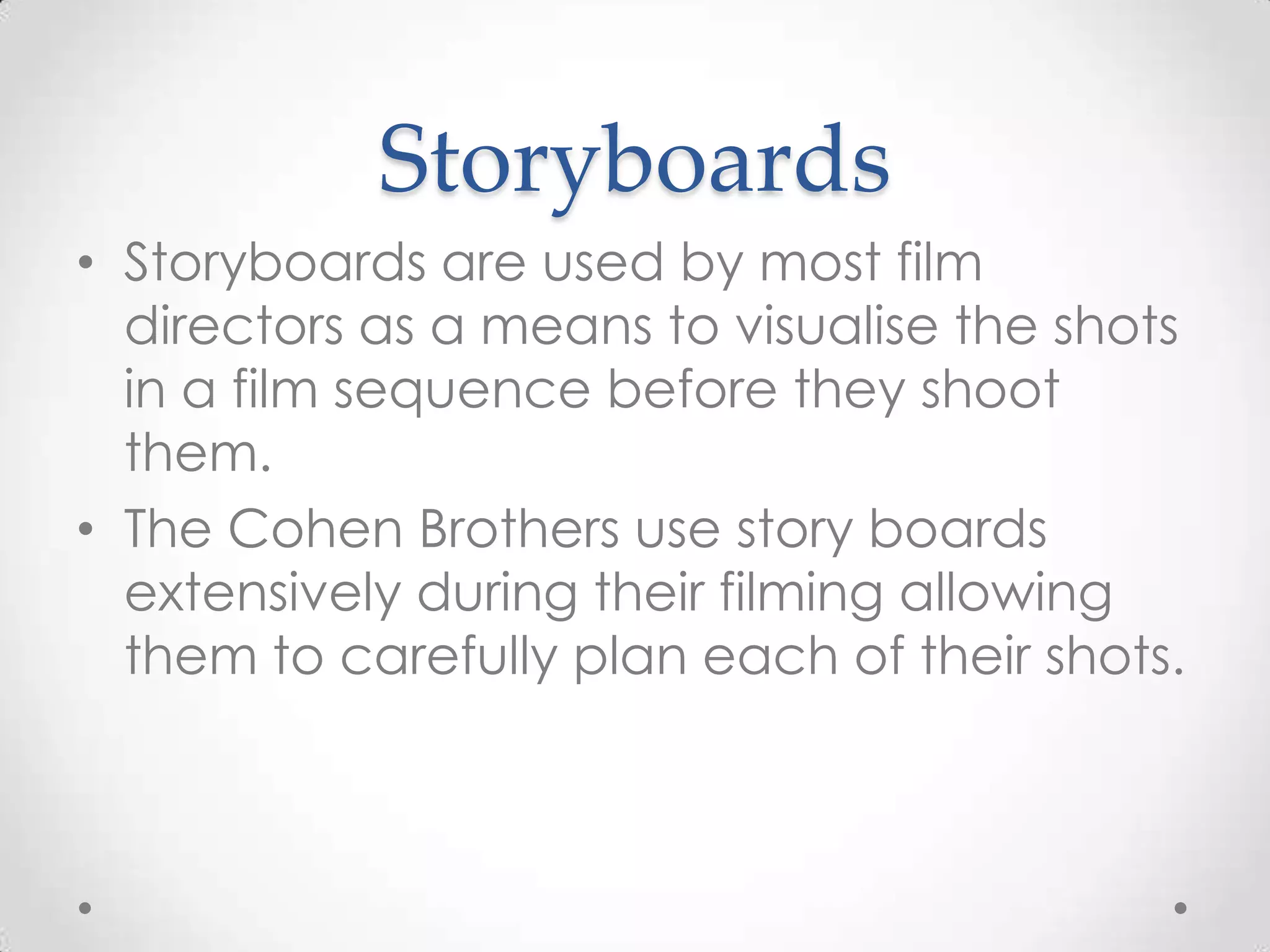
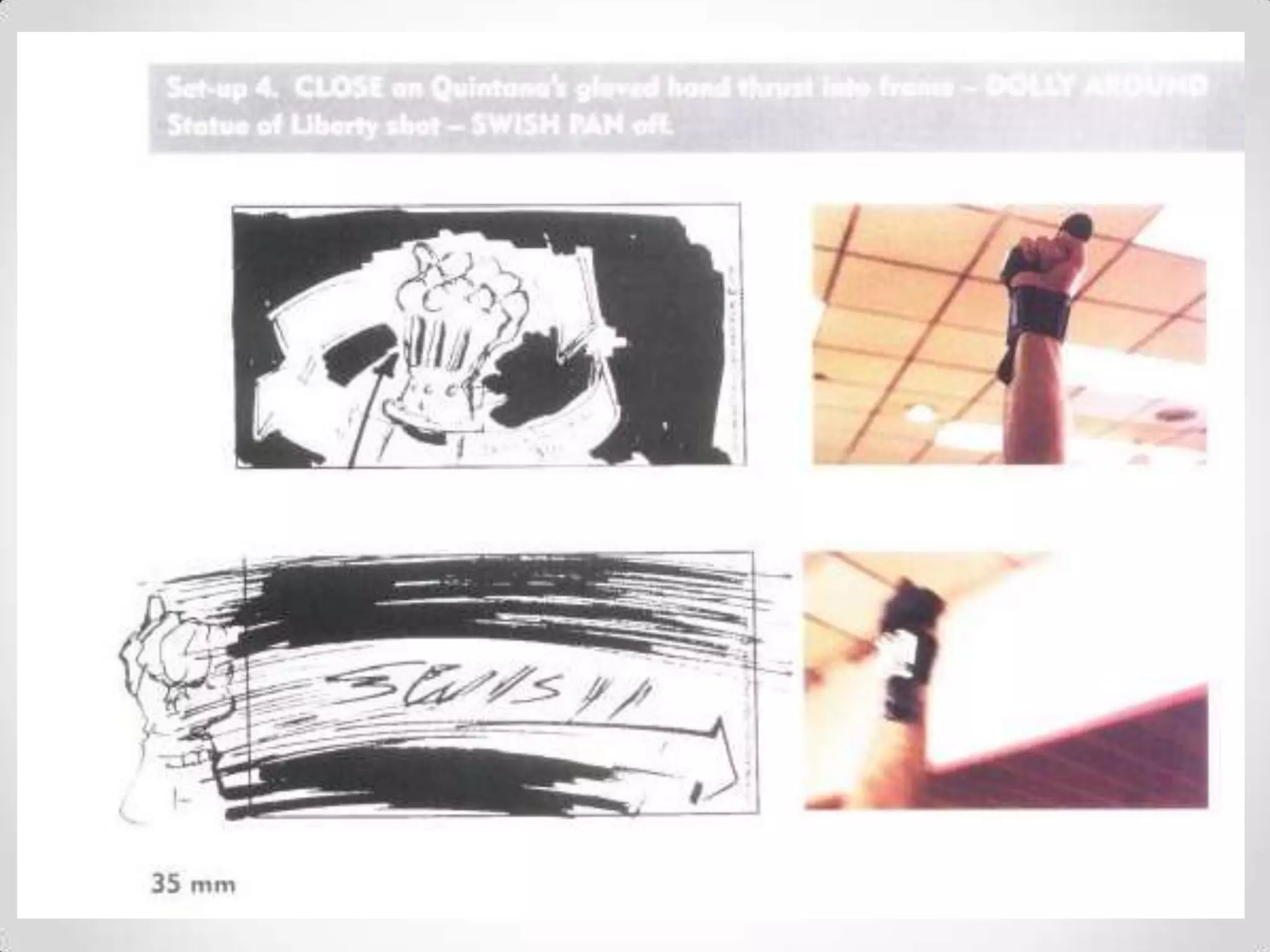
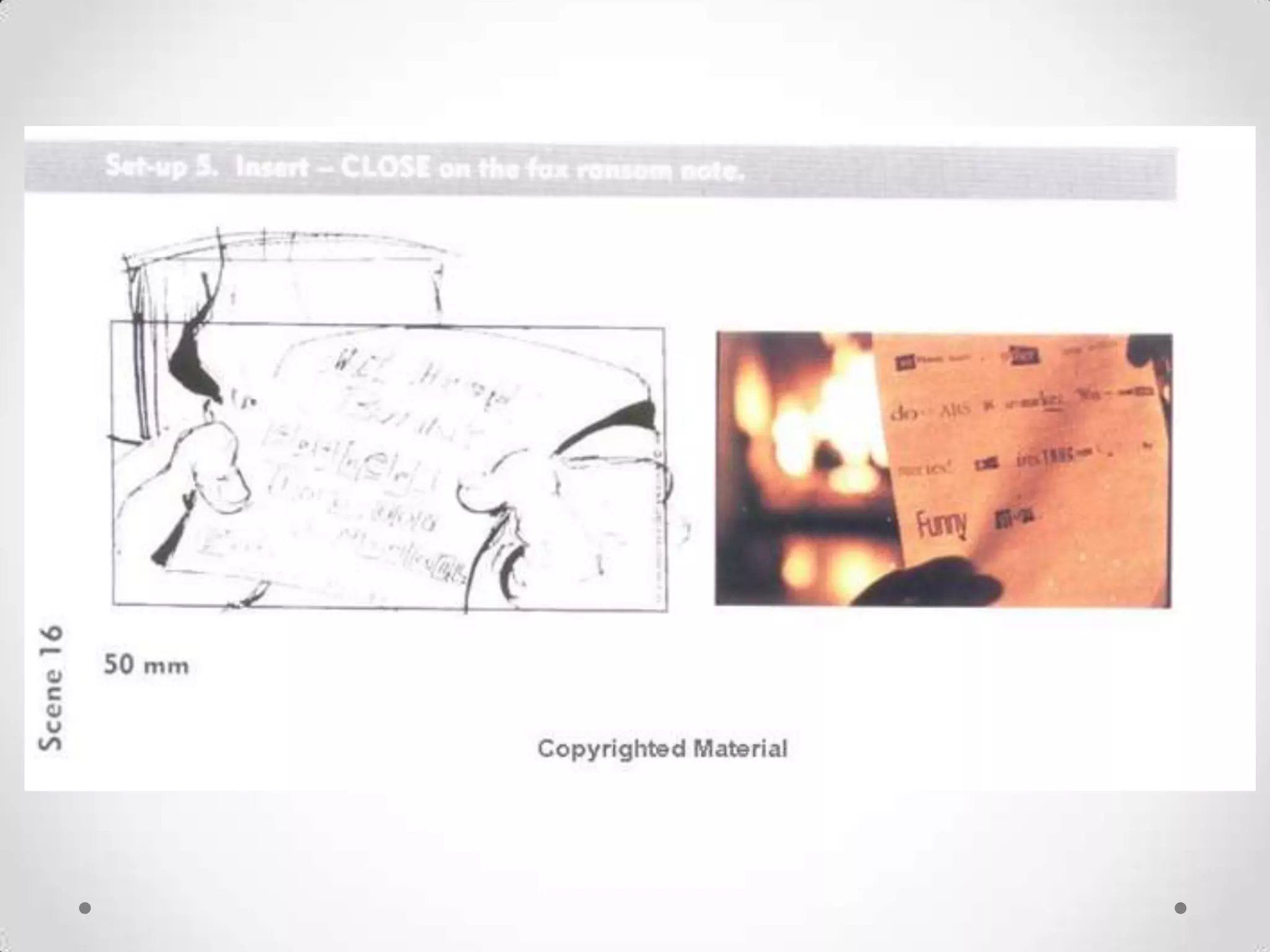
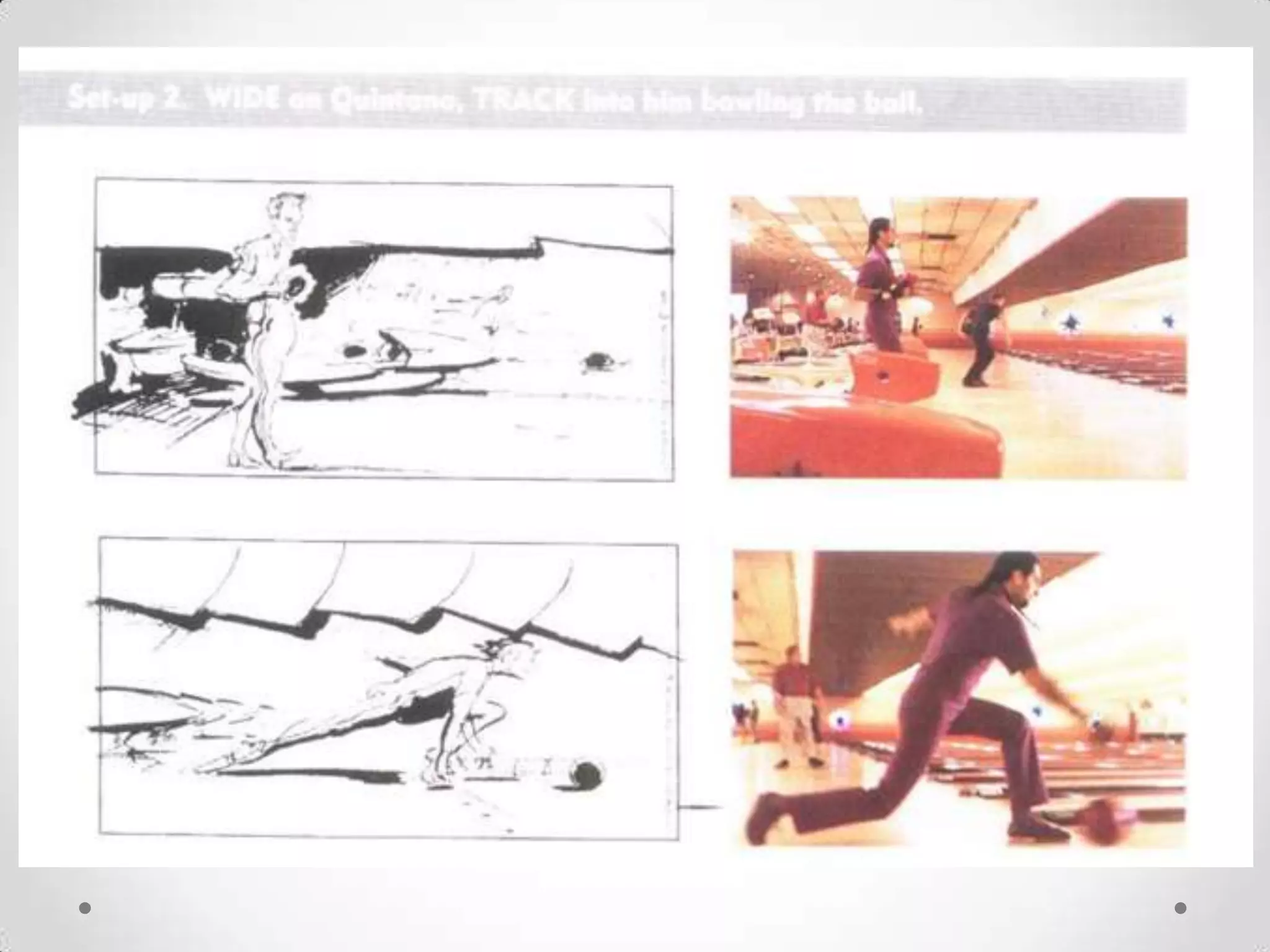
Storyboards
• Storyboards are used by most film
directors as a means to visualise the shots
in a film sequence before they shoot
them.
• The Cohen Brothers use story boards
extensively during their filming allowing
them to carefully plan each of their shots.
Camera shots, angles and movement

Camera shots, angles and movement

  • 1.
  • 2.
    Camera Shot • ExtremeLong Shot (ELS) • Also known as an establishing shot. Often used at the beginning of a sequence to ‘establish’ the setting in which the scene takes place.
  • 3.
    Extreme Long Shotfrom Mission Impossible 2
  • 4.
    Camera Shot • LongShot (LS) • A shot that portrays the scene in a realistic perspective. It can also be defined as a Full Shot, a shot that contains a person from head to toe. This can be used to draw the audience into a scene after an establishing shot.
  • 5.
    Long Shot fromThe Good, The Bad and The Ugly
  • 6.
    Long Shot /Full shot from Burke and Hare
  • 7.
    Camera Shot • MidShot (MS) • A shot depicting a person from the waist up. Can be used for dialogue • 2 shot • A MS containing 2 people. Used for travelling scenes and dialogue. • 3 shot • A MS containing 3 people. Used for travelling scenes and dialogue.
  • 8.
    Mid Shot fromKill Bill
  • 9.
    2 Shot fromX- Men: First Class
  • 10.
    3 Shot fromHarry Potter and the Half Blood Prince
  • 11.
    Camera Shot • CloseUp (CU) • A shot depicting a person from the shoulders/neck up or depicting a specific item or prop in the scene. Used to draw the audience’s attention to a specific person or item. Can be used for dialogue
  • 12.
    Close Up fromUnited 93
  • 13.
    Camera Shot • ExtremeClose Up (ECU) • A detailed shot either displaying a person’s facial feature (i.e. the eye.) or an important object. Used for dramatic effect to display emotions or to draw the audience’s attention
  • 14.
    Extreme Close Upfrom The Lord of The Rings
  • 15.
    Extreme Close Upfrom The Lord of The Rings
  • 16.
    Camera Angle • Bird’sEye View • A high angled shot normally directly overhead the character. Combined with an ELS it can be used to establish a scene.
  • 17.
    Birds Eye Viewshot from Kill Bill
  • 18.
    Camera Angle • HighAngle • Shot by the camera pointing down at the character. Can be used to diminish a character and make them seem smaller.
  • 19.
    High Angle shotfrom North by Northwest
  • 20.
    Camera Angle • EyeLevel • Most commonly used angle. Used to depict dialogue and in most other scenes. This gives a naturalistic effect to the scene.
  • 21.
    Eye Level shotfrom Kill Bill
  • 22.
    Camera Angle • LowAngle • Shot by the camera pointing up at the character. Can be used to add height to buildings, but can also make characters seem taller and more threatening.
  • 23.
    Low Angle shotfrom Inglorious Basterds
  • 24.
    Camera Angle • DutchAngles • The camera is tipped and not level with the floor. This gives a sense of unease to the scene. This angle is more commonly used in the Horror or suspense genre.
  • 25.
    Dutch Angle fromThe Third Man
  • 26.
    Camera Movement • Pan •Horizontal camera movement across a scene • Tilt • Vertical camera movement across a scene.
  • 27.
    Camera Movement • Tracking(Dolly Shots) • Camera moves alongside the action. These can be aerial (achieved by a crane), in a car, or more conventionally on a dolly. • http://www.youtube.com/watch?v=FQv 8OavpALQ
  • 28.
    Camera Movement • AerialShot • Usually an ELS shot from an aeroplane or a helicopter. Used to give a sense of grandeur and exhilaration • http://www.youtube.com/watch?v=7s5K FbyBmrQ (2.13)
  • 29.
    Camera Movement • Zoom •Used to focus on an object within a scene without editing. Can be achieved by a zoom lens or by physically moving the camera closer to the object • http://www.youtube.com/watch?v=5OC rkaMaBbY
  • 30.
    Storyboards • Storyboards areused by most film directors as a means to visualise the shots in a film sequence before they shoot them. • The Cohen Brothers use story boards extensively during their filming allowing them to carefully plan each of their shots.