FUNDAMENTALS OF COMPUTERIZED
ACCOUNTING
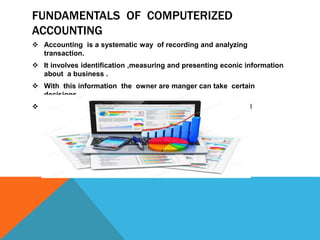
 Accounting is a systematic way of recording and analyzing
transaction.
 It involves identification ,measuring and presenting econic information
about a business .
 With this information the owner are manger can take certain
decisions.
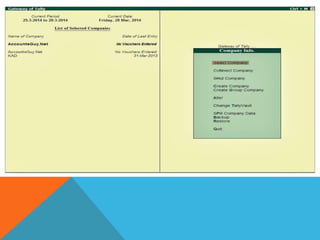
 If we do accounting using computers is called computerized
accounting
PRINCIPLES OF ACCOUNTING
JOURNAl
 It is the original book, where all transaction are recorded
 In this book, all business transaction are entered first .
 It is known as “journlizing” istead of all transaction in one journal
book ,transaction are recorede into sundivisions of journal or
subsidiary books .
classification
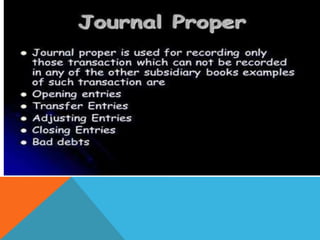
 Journal proper
 Day books
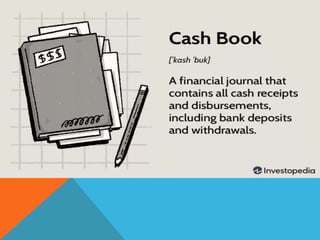
 Cash books
DAY BOOKS
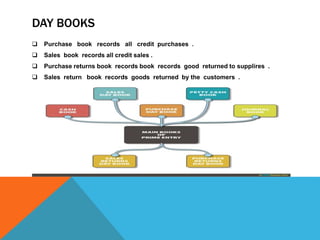
 Purchase book records all credit purchases .
 Sales book records all credit sales .
 Purchase returns book records book records good returned to supplires .
 Sales return book records goods returned by the customers .
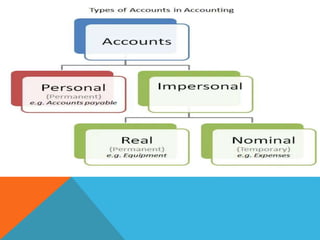
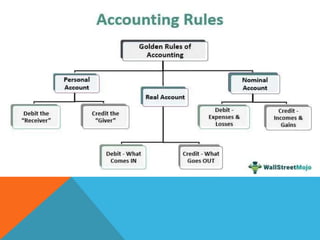
TYPES OF ACCOUNTS
BUSINESS TRANSACTION ARE CLASSIFIED INTO THREE CATRGORIES .
THEY ARE:
• Transaction relating to individuals and other organizations.
• Transaction relating to properties, goods , or cash .
• transaction relating to expenses (or losses) and incomes ( or gains).
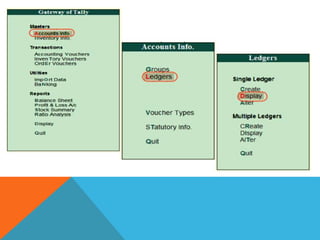
LEDGER
 It is a book of final entry
 It can be divided into various sub divisions from the view point of convenience
and simplicity.
THEY ARE:
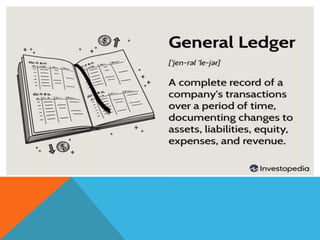
 GENERAL LEDGER
 PURSCHASE LEDGER
 SALES LEDGER
 PRIVATE LEDGER
PURCHASE LEDGER
 Records all personal accounts of
cutomers from whom the goods have
been purchased on credit
SALES LEDGER
• Records all personal accounts of
customers to whom the goods
have been sold on credit.
PRIVATE LEDGER
 Records the personal accounts
of the properitor ,that is, capital
accounts & drawings accounts.
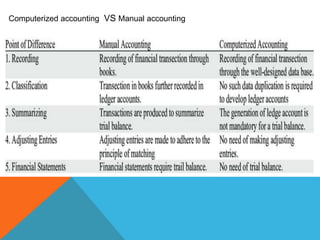
Computerized accounting VS Manual accounting
CAB Unit IV.pptx
CAB Unit IV.pptx
CAB Unit IV.pptx
CAB Unit IV.pptx
CAB Unit IV.pptx
CAB Unit IV.pptx
CAB Unit IV.pptx
CAB Unit IV.pptx
CAB Unit IV.pptx
CAB Unit IV.pptx

CAB Unit IV.pptx

  • 2.
    FUNDAMENTALS OF COMPUTERIZED ACCOUNTING Accounting is a systematic way of recording and analyzing transaction.  It involves identification ,measuring and presenting econic information about a business .  With this information the owner are manger can take certain decisions.  If we do accounting using computers is called computerized accounting
  • 3.
    PRINCIPLES OF ACCOUNTING JOURNAl It is the original book, where all transaction are recorded  In this book, all business transaction are entered first .  It is known as “journlizing” istead of all transaction in one journal book ,transaction are recorede into sundivisions of journal or subsidiary books . classification  Journal proper  Day books  Cash books
  • 5.
    DAY BOOKS  Purchasebook records all credit purchases .  Sales book records all credit sales .  Purchase returns book records book records good returned to supplires .  Sales return book records goods returned by the customers .
  • 7.
    TYPES OF ACCOUNTS BUSINESSTRANSACTION ARE CLASSIFIED INTO THREE CATRGORIES . THEY ARE: • Transaction relating to individuals and other organizations. • Transaction relating to properties, goods , or cash . • transaction relating to expenses (or losses) and incomes ( or gains).
  • 10.
    LEDGER  It isa book of final entry  It can be divided into various sub divisions from the view point of convenience and simplicity. THEY ARE:  GENERAL LEDGER  PURSCHASE LEDGER  SALES LEDGER  PRIVATE LEDGER
  • 12.
    PURCHASE LEDGER  Recordsall personal accounts of cutomers from whom the goods have been purchased on credit SALES LEDGER • Records all personal accounts of customers to whom the goods have been sold on credit. PRIVATE LEDGER  Records the personal accounts of the properitor ,that is, capital accounts & drawings accounts.
  • 18.
    Computerized accounting VSManual accounting