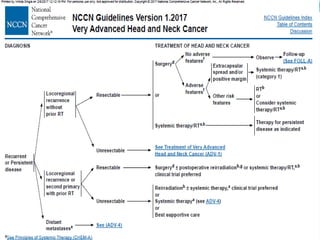
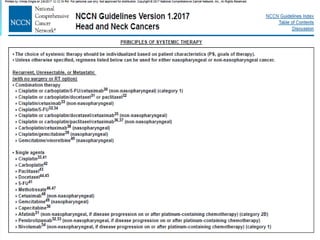
Management Goals
 Functional organ preservation with minimal toxicity
 Locally confined disease (stage I and stage II tumors) are
considered as early stage
 Locoregionally advanced disease - stages III and IV
(nonmetastatic) disease
Perez and brady’s principles and practice of radiation oncology (sixth edition)
Early stage
 For all subsites, early-stage tumors are usually well controlled
with a single local modality, either radiotherapy or surgery.
 Selection of modality should be based on the primary tumor
size, extent of local spread, and subsite involved.
 Generally, small tumors of the tonsil can be well managed
surgically, whereas the morbidity of surgery on the soft palate
and base of tongue tumours favours radiotherapy.
Perez and brady’s principles and practice of radiation oncology (sixth edition)
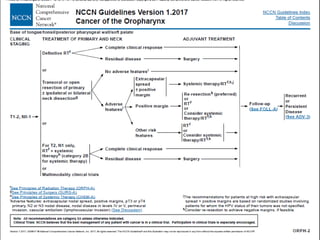
Locally Advanced
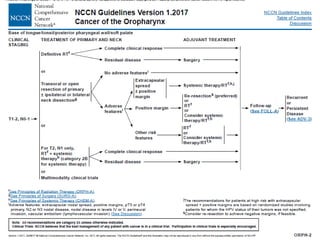
 For loco-regionally advanced disease
 Two appropriate treatment strategies are used:
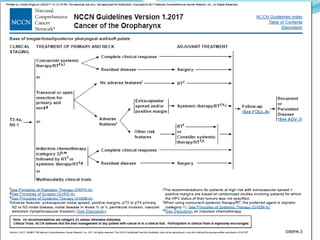
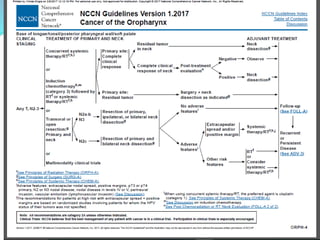
 Either sx followed by RT±CT based on pathologic risk factors
 Radiotherapy usually given with chemotherapy, concurrently
Perez and brady’s principles and practice of radiation oncology (sixth edition)
Treatment Modalities
 Surgery
 Radiotherapy
 Chemotherapy
Perez and brady’s principles and practice of radiation oncology (sixth
edition)
Surgical Approaches
Base of Tongue
 Limited role due to high morbidity and functional disability
associated with the surgical procedures
Soft Palate
 Rarely recommended because
 Significant reflux into nasopharynx post surgery and functional compromise
 Midline location– B/L neck involvement is common
Perez and brady’s principles and practice of radiation oncology (sixth edition)
Tonsil cancer
 Wide local Excision –small (<1 cm ),early stage, confined to
anterior pillar
 Radical Tonsillectomy–larger tumor with extension to tongue,
mandible or soft tissue. It include resection of
 Tonsil with tonsillar pillar & fossa
 Portion of soft palate
 Tongue
 Lateral/Total pharyngectomy as needed
 Mandible
Perez and brady’s principles and practice of radiation oncology
(sixth edition)
Surgical Margins
 A clear margin is defined as distance from invasive tumor
front that is 5 mm or more from the resected margin.
 A close margin is defined as distance from invasive tumor
front to the resected margin that is less than 5 mm.
 A positive margin is defined as carcinoma in situ or as
invasive carcinoma at the margin of resection.
NCCN
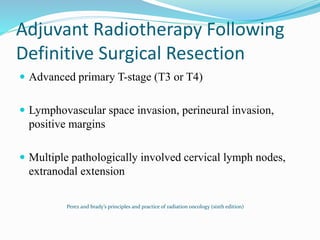
Adjuvant Radiotherapy Following
Definitive Surgical Resection
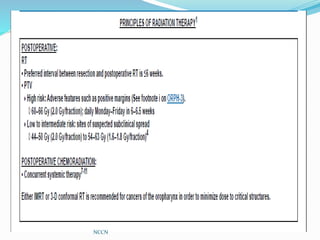
 Advanced primary T-stage (T3 or T4)
 Lymphovascular space invasion, perineural invasion,
positive margins
 Multiple pathologically involved cervical lymph nodes,
extranodal extension
Perez and brady’s principles and practice of radiation oncology (sixth edition)
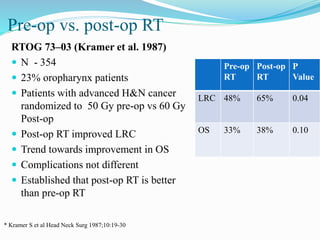
Pre-op vs. post-op RT
RTOG 73–03 (Kramer et al. 1987)
 N - 354
 23% oropharynx patients
 Patients with advanced H&N cancer
randomized to 50 Gy pre-op vs 60 Gy
Post-op
 Post-op RT improved LRC
 Trend towards improvement in OS
 Complications not different
 Established that post-op RT is better
than pre-op RT
* Kramer S et al Head Neck Surg 1987;10:19-30
Pre-op
RT
Post-op
RT
P
Value
LRC 48% 65% 0.04
OS 33% 38% 0.10
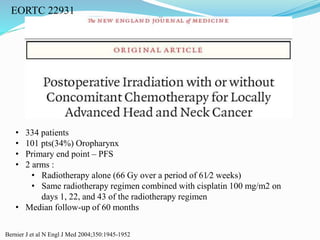
EORTC 22931
Bernier J et al N Engl J Med 2004;350:1945-1952
• 334 patients
• 101 pts(34%) Oropharynx
• Primary end point – PFS
• 2 arms :
• Radiotherapy alone (66 Gy over a period of 61⁄2 weeks)
• Same radiotherapy regimen combined with cisplatin 100 mg/m2 on
days 1, 22, and 43 of the radiotherapy regimen
• Median follow-up of 60 months
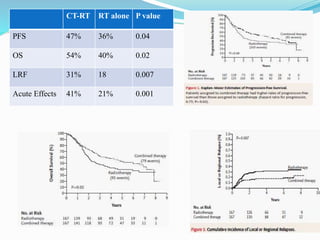
CT-RT RT alone P value
PFS 47% 36% 0.04
OS 54% 40% 0.02
LRF 31% 18 0.007
Acute Effects 41% 21% 0.001
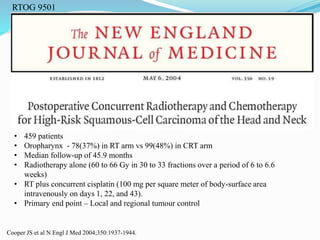
RTOG 9501
Cooper JS et al N Engl J Med 2004;350:1937-1944.
• 459 patients
• Oropharynx - 78(37%) in RT arm vs 99(48%) in CRT arm
• Median follow-up of 45.9 months
• Radiotherapy alone (60 to 66 Gy in 30 to 33 fractions over a period of 6 to 6.6
weeks)
• RT plus concurrent cisplatin (100 mg per square meter of body-surface area
intravenously on days 1, 22, and 43).
• Primary end point – Local and regional tumour control
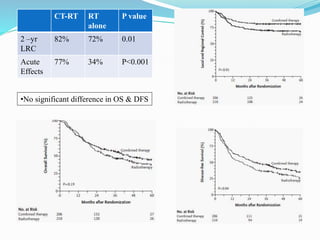
CT-RT RT
alone
P value
2 –yr
LRC
82% 72% 0.01
Acute
Effects
77% 34% P<0.001
•No significant difference in OS & DFS
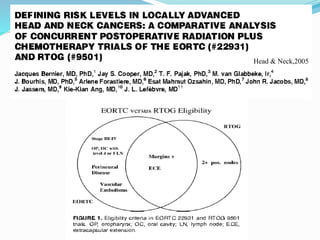
Head & Neck,2005
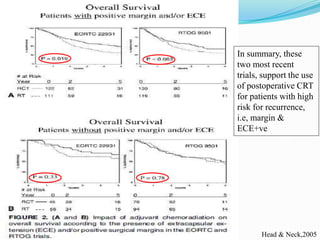
In summary, these
two most recent
trials, support the use
of postoperative CRT
for patients with high
risk for recurrence,
i.e, margin &
ECE+ve
Head & Neck,2005
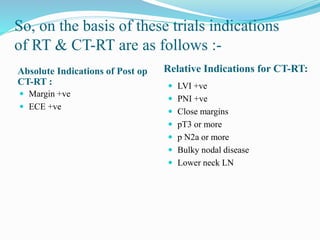
So, on the basis of these trials indications
of RT & CT-RT are as follows :-
Absolute Indications of Post op
CT-RT :
Relative Indications for CT-RT:
 Margin +ve
 ECE +ve
 LVI +ve
 PNI +ve
 Close margins
 pT3 or more
 p N2a or more
 Bulky nodal disease
 Lower neck LN
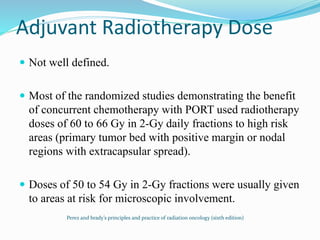
Adjuvant Radiotherapy Dose
 Not well defined.
 Most of the randomized studies demonstrating the benefit
of concurrent chemotherapy with PORT used radiotherapy
doses of 60 to 66 Gy in 2-Gy daily fractions to high risk
areas (primary tumor bed with positive margin or nodal
regions with extracapsular spread).
 Doses of 50 to 54 Gy in 2-Gy fractions were usually given
to areas at risk for microscopic involvement.
Perez and brady’s principles and practice of radiation oncology (sixth edition)
NCCN
Definitive RT
EARLY-STAGE
 Single modality: good outcomes and functional
preservation.
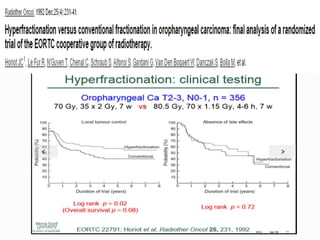
 No consensus on the optimal dose fractionation schedule
 Randomized data and meta-analyses support an overall
survival benefit with the use of accelerated fractionation or
hyperfractionated radiotherapy.
 Strong consideration should be given to altered
fractionation of some sort.
Perez and brady’s principles and practice of radiation oncology (sixth edition)
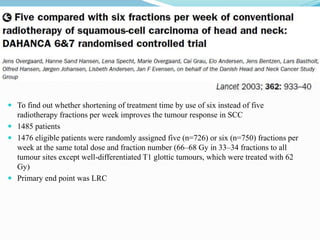
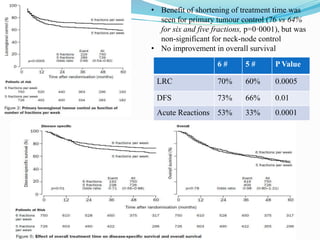
 To find out whether shortening of treatment time by use of six instead of five
radiotherapy fractions per week improves the tumour response in SCC
 1485 patients
 1476 eligible patients were randomly assigned five (n=726) or six (n=750) fractions per
week at the same total dose and fraction number (66–68 Gy in 33–34 fractions to all
tumour sites except well-differentiated T1 glottic tumours, which were treated with 62
Gy)
 Primary end point was LRC
• Benefit of shortening of treatment time was
seen for primary tumour control (76 vs 64%
for six and five fractions, p=0·0001), but was
non-significant for neck-node control
• No improvement in overall survival
6 # 5 # P Value
LRC 70% 60% 0.0005
DFS 73% 66% 0.01
Acute Reactions 53% 33% 0.0001
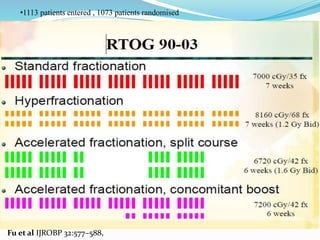
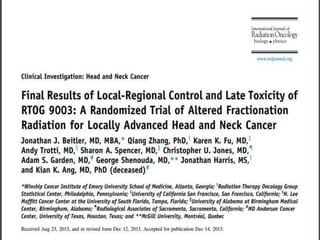
Fu et al IJROBP 32:577–588,
•1113 patients entered , 1073 patients randomised
CONCLUSION
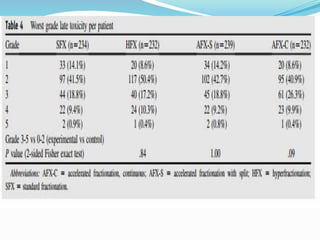
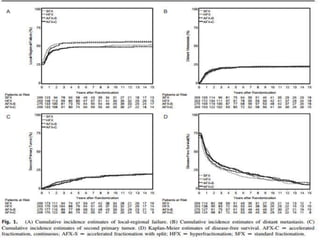
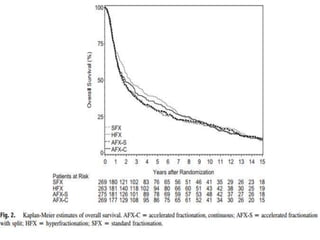
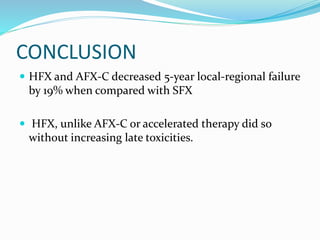
 HFX and AFX-C decreased 5-year local-regional failure
by 19% when compared with SFX
 HFX, unlike AFX-C or accelerated therapy did so
without increasing late toxicities.
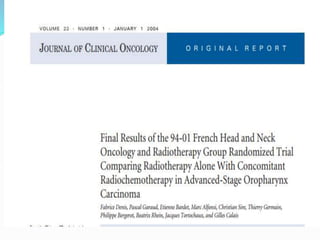
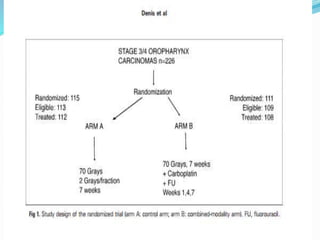
Locoregionally advanced
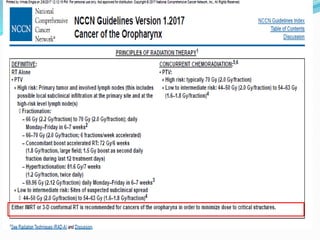
 Concurrent chemoradiotherapy is the standard
treatment.
Perez and brady’s principles and practice of radiation oncology
(sixth edition)
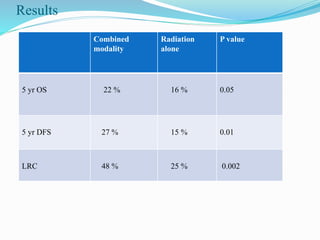
Results
Combined
modality
Radiation
alone
P value
5 yr OS 22 % 16 % 0.05
5 yr DFS 27 % 15 % 0.01
LRC 48 % 25 % 0.002
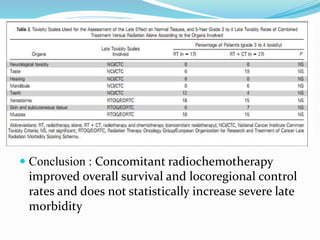
 Conclusion : Concomitant radiochemotherapy
improved overall survival and locoregional control
rates and does not statistically increase severe late
morbidity
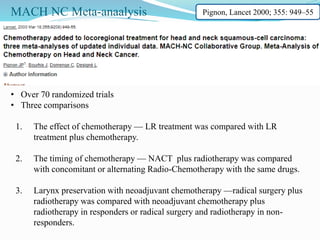
MACH NC Meta-anaalysis Pignon, Lancet 2000; 355: 949–55
• Over 70 randomized trials
• Three comparisons
1. The effect of chemotherapy — LR treatment was compared with LR
treatment plus chemotherapy.
2. The timing of chemotherapy — NACT plus radiotherapy was compared
with concomitant or alternating Radio-Chemotherapy with the same drugs.
3. Larynx preservation with neoadjuvant chemotherapy —radical surgery plus
radiotherapy was compared with neoadjuvant chemotherapy plus
radiotherapy in responders or radical surgery and radiotherapy in non-
responders.
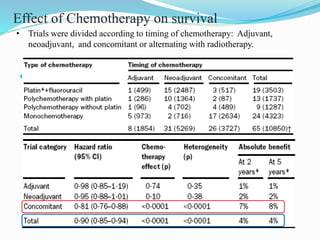
Effect of Chemotherapy on survival
 The first meta-analysis included 63 trials.
• Trials were divided according to timing of chemotherapy: Adjuvant,
neoadjuvant, and concomitant or alternating with radiotherapy.
Conclusion
• The addition of chemotherapy to locoregional treatment- the
most important result was a small, but statistically significant,
overall benefit in survival with chemotherapy (the absolute
benefit at 2 and 5 years was 4%).
• No significant benefit of adjuvant or neoadjuvant
chemotherapy but a significant benefit of concomitant
chemotherapy (absolute benefit at 2 and 5 years of 8%)
MACH-NC: Update
• Update to the meta-analysis by adding the data from the randomized trials
performed between 1994 and 2000.
• Added 24 new trials, most of them on concomittant chemotherapy
• 87 trials, 16665 pts
• median f/u 5.5 yrs
• An absolute benefit for chemotherapy of 4.4% at 5 yr.
• For concomitant CTRT group the absolute survival benefit at 5 yr is 8 %
IJROBP, Vol. 69, No. 2, Supplement, pp. S112–S114, 2007
MACH-NC 2009 Update
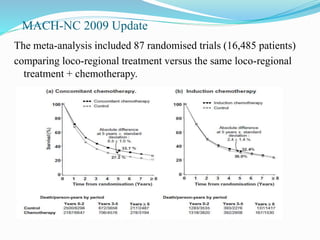
The meta-analysis included 87 randomised trials (16,485 patients)
comparing loco-regional treatment versus the same loco-regional
treatment + chemotherapy.
MACH-NC (2011 update)
 87 randomised control trials from period of 1965 to 2000
 16,192 patients were analysed in a median follow up of 5.6 yrs
• Evidence of improvement in overall survival
• Absolute benefit 4.5% at 5 yrs
• Benefit more in concurrent CTRT (p<0.0001) & absolute
benefit of 6.5%
• Benefit decreases with increasing age
• Absolute benefits - oral cavity-8.9%
oropharynx-8.1%
larynx-5.4%
hypopharynx-4%
MACH- NC-Conclusions
• Addition of CT - Absolute benefit in survival-5% in 5 yrs.
• Induction/adjuvant - 2% survival benefit
• Concurrent CTRT 8% - 5yr survival benefit
• Platinum based regimen more effective.
• No significant difference in efficacy between mono and multiple
drug platinum regimens
• Small reduction in distant metastasis found in population of patients
with CTRT
• Inverse relation between age and impact of CT. Disappears by
around age of 70
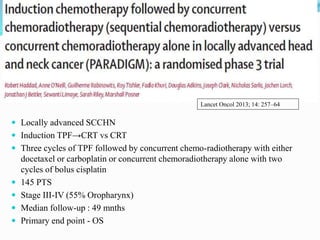
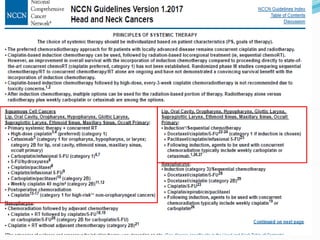
 Locally advanced SCCHN
 Induction TPF→CRT vs CRT
 Three cycles of TPF followed by concurrent chemo-radiotherapy with either
docetaxel or carboplatin or concurrent chemoradiotherapy alone with two
cycles of bolus cisplatin
 145 PTS
 Stage III-IV (55% Oropharynx)
 Median follow-up : 49 mnths
 Primary end point - OS
Lancet Oncol 2013; 14: 257–64
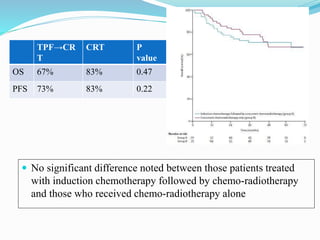
 No significant difference noted between those patients treated
with induction chemotherapy followed by chemo-radiotherapy
and those who received chemo-radiotherapy alone
TPF→CR
T
CRT P
value
OS 67% 83% 0.47
PFS 73% 83% 0.22
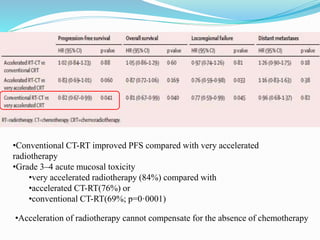
 Locally advanced head and neck squamous-cell carcinoma
 840 patients (66% oropharynx pts)
 3 arms
 Conventional CT-RT(70 Gy/35# + 3 cycles concomitant carboplatin-fluorouracil)
 Accelerated CT-RT(70 Gy in 6 weeks +2 cycles of 5 days concomitant carboplatin-
fluorouracil)
 Very accelerated radiotherapy alone (64·8 Gy [1·8 Gy twice daily] in 3·5 weeks)
 Median follow-up was 5·2 years
 Primary endpoint - PFS
•Conventional CT-RT improved PFS compared with very accelerated
radiotherapy
•Grade 3–4 acute mucosal toxicity
•very accelerated radiotherapy (84%) compared with
•accelerated CT-RT(76%) or
•conventional CT-RT(69%; p=0·0001)
•Acceleration of radiotherapy cannot compensate for the absence of chemotherapy
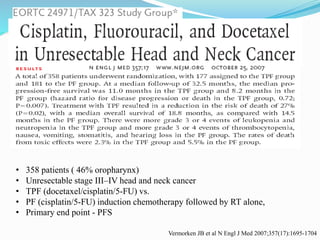
Vermorken JB et al N Engl J Med 2007;357(17):1695-1704
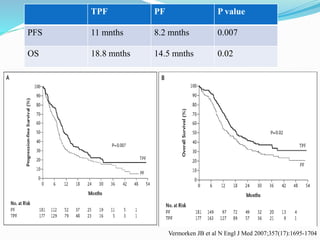
• 358 patients ( 46% oropharynx)
• Unresectable stage III–IV head and neck cancer
• TPF (docetaxel/cisplatin/5-FU) vs.
• PF (cisplatin/5-FU) induction chemotherapy followed by RT alone,
• Primary end point - PFS
Vermorken JB et al N Engl J Med 2007;357(17):1695-1704
TPF PF P value
PFS 11 mnths 8.2 mnths 0.007
OS 18.8 mnths 14.5 mnths 0.02
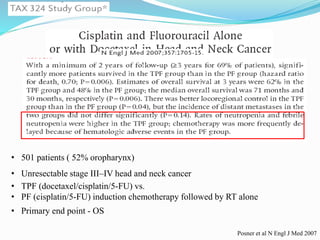
• 501 patients ( 52% oropharynx)
• Unresectable stage III–IV head and neck cancer
• TPF (docetaxel/cisplatin/5-FU) vs.
• PF (cisplatin/5-FU) induction chemotherapy followed by RT alone
• Primary end point - OS
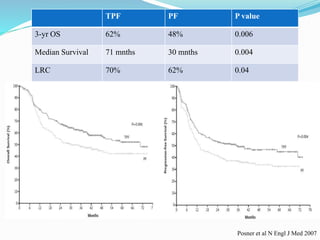
Posner et al N Engl J Med 2007
TPF PF P value
3-yr OS 62% 48% 0.006
Median Survival 71 mnths 30 mnths 0.004
LRC 70% 62% 0.04
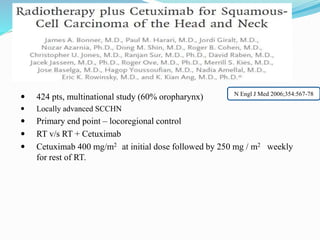
 424 pts, multinational study (60% oropharynx)
 Locally advanced SCCHN
 Primary end point – locoregional control
 RT v/s RT + Cetuximab
 Cetuximab 400 mg/m2 at initial dose followed by 250 mg / m2 weekly
for rest of RT.
N Engl J Med 2006;354:567-78
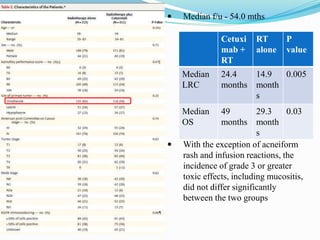
 Median f/u - 54.0 mths
 With the exception of acneiform
rash and infusion reactions, the
incidence of grade 3 or greater
toxic effects, including mucositis,
did not differ significantly
between the two groups
Cetuxi
mab +
RT
RT
alone
P
value
Median
LRC
24.4
months
14.9
month
s
0.005
Median
OS
49
months
29.3
month
s
0.03
Technique
 Prerequisite
 For optimal treatment planning thorough review of diagnostic
films, endoscopic finding and description of the examination is
essential to determine target volume
 Preirradiation dental care
 All patients to be regularly seen by dental or oral surgeons for
dental evaluation and fluoride treatment
 Any potential surgical procedure and tooth extractions to be
performed before initiation of radiation therapy
Perez and brady’s principles and practice of radiation oncology (sixth edition)
Simulation
 Supine position
 Orfit cast for immobilization
 Neck extended, shoulders pulled down to maximize exposure
 Tongue to be displaced from the palate by an individually constructed
tongue bite block
 Bite block – facilitate immobilization & ↓ amt of normal tissue in field
 For BOT – keeps primary tumor in field
 For soft palate - ↓ amt of unnecessary irradiated tongue
 Images should be taken from above the calvarium to the carina
Perez and brady’s principles and practice of radiation oncology (sixth edition)
Conventional Field borders
 Upper margin – upto zygomatic arch
 Posteriorly – tip of mastoid
 Anteriorly – depending upon the clinical extension(2 cm beyond the disease)
 Inferiorly – thyroid notch
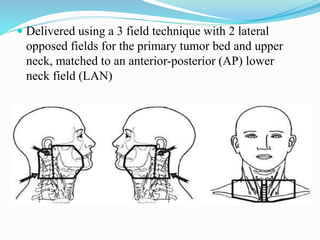
 LAN
 Superior : Lower border of throid notch and match with upper neck
lateral fields
 Inferior : inferior edge of the clavicular head
 Lateral : Two thirds of the clavicle or 2 cm lateral to
lymphadenopathy (which ever more lateral)
 Delivered using a 3 field technique with 2 lateral
opposed fields for the primary tumor bed and upper
neck, matched to an anterior-posterior (AP) lower
neck field (LAN)
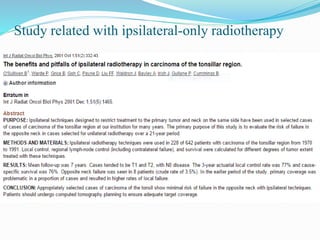
Indication for ipsilateral radiotherapy
 Well lateralised Tonsillar cancer cases not involving the base of tongue
and with minimal involvement of soft palate.
 Patients with c/l cervical lymph node involvement usually seen in patients
with tumor approaching or crossing midline or have extensive I/L cervical
lymph node involvement.
Perez and brady’s principles and practice of radiation oncology (sixth edition)
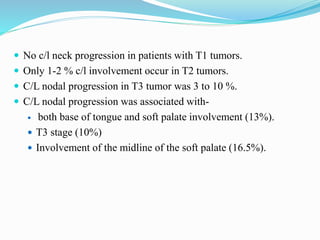
Study related with ipsilateral-only radiotherapy
 No c/l neck progression in patients with T1 tumors.
 Only 1-2 % c/l involvement occur in T2 tumors.
 C/L nodal progression in T3 tumor was 3 to 10 %.
 C/L nodal progression was associated with-
 both base of tongue and soft palate involvement (13%).
 T3 stage (10%)
 Involvement of the midline of the soft palate (16.5%).
Intensity-Modulated Radiotherapy
 Ability to minimize normal organ exposure to
radiation.
 This is particularly important for oropharyngeal cancer
patients because pharyngeal constrictor doses and
parotid doses are associated with dysphagia and
xerostomia
Perez and brady’s principles and practice of radiation oncology (sixth edition)
CONCLUSION
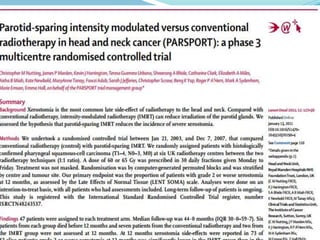
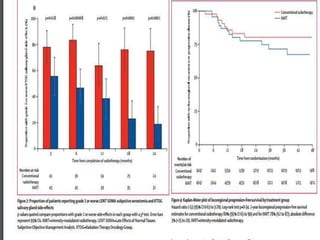
 Sparing the parotid glands with IMRT significantly
reduces the incidence of xerostomia and leads to
recovery of saliva secretion and improvements in
associated quality of life, and thus strongly supports a
role for IMRT in squamous-cell carcinoma of the head
and neck
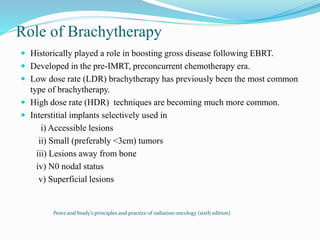
Role of Brachytherapy
 Historically played a role in boosting gross disease following EBRT.
 Developed in the pre-IMRT, preconcurrent chemotherapy era.
 Low dose rate (LDR) brachytherapy has previously been the most common
type of brachytherapy.
 High dose rate (HDR) techniques are becoming much more common.
 Interstitial implants selectively used in
i) Accessible lesions
ii) Small (preferably <3cm) tumors
iii) Lesions away from bone
iv) N0 nodal status
v) Superficial lesions
Perez and brady’s principles and practice of radiation oncology (sixth edition)
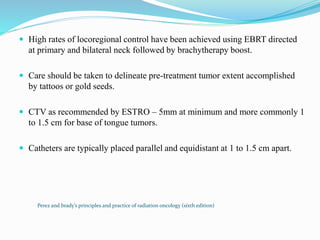
 High rates of locoregional control have been achieved using EBRT directed
at primary and bilateral neck followed by brachytherapy boost.
 Care should be taken to delineate pre-treatment tumor extent accomplished
by tattoos or gold seeds.
 CTV as recommended by ESTRO – 5mm at minimum and more commonly 1
to 1.5 cm for base of tongue tumors.
 Catheters are typically placed parallel and equidistant at 1 to 1.5 cm apart.
Perez and brady’s principles and practice of radiation oncology (sixth edition)
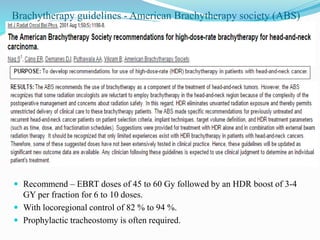
Brachytherapy guidelines - American Brachytherapy society (ABS)
 Recommend – EBRT doses of 45 to 60 Gy followed by an HDR boost of 3-4
GY per fraction for 6 to 10 doses.
 With locoregional control of 82 % to 94 %.
 Prophylactic tracheostomy is often required.
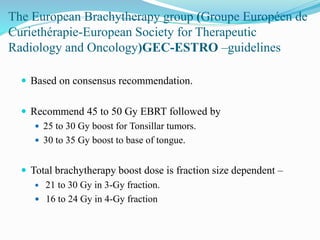
The European Brachytherapy group (Groupe Européen de
Curiethérapie-European Society for Therapeutic
Radiology and Oncology)GEC-ESTRO –guidelines
 Based on consensus recommendation.
 Recommend 45 to 50 Gy EBRT followed by
 25 to 30 Gy boost for Tonsillar tumors.
 30 to 35 Gy boost to base of tongue.
 Total brachytherapy boost dose is fraction size dependent –
 21 to 30 Gy in 3-Gy fraction.
 16 to 24 Gy in 4-Gy fraction
Recurrent Locoregionally confined squamous cell
carcinoma of oropharynx
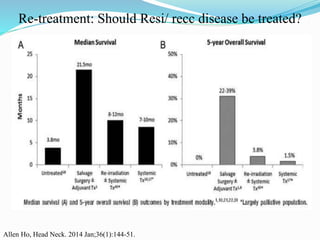
Re-treatment: Should Resi/ recc disease be treated?
Allen Ho, Head Neck. 2014 Jan;36(1):144-51.
Reirradiation
 High risk of normal tissue toxicity including upto a 20% carotid
rupture rate.
 15% fatal toxicity.
 Patients undergoing a second course of chemotherapy and
radiation therapy should be managed with experienced centers.
 Failed phase III studies to compare systemic therapy alone or
chemotherapy and reirradiation.
Perez and brady’s principles and practice of radiation oncology (sixth edition)
Reirradiation
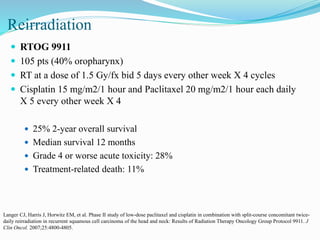
 RTOG 9911
 105 pts (40% oropharynx)
 RT at a dose of 1.5 Gy/fx bid 5 days every other week X 4 cycles
 Cisplatin 15 mg/m2/1 hour and Paclitaxel 20 mg/m2/1 hour each daily
X 5 every other week X 4
 25% 2-year overall survival
 Median survival 12 months
 Grade 4 or worse acute toxicity: 28%
 Treatment-related death: 11%
Langer CJ, Harris J, Horwitz EM, et al. Phase II study of low-dose paclitaxel and cisplatin in combination with split-course concomitant twice-
daily reirradiation in recurrent squamous cell carcinoma of the head and neck: Results of Radiation Therapy Oncology Group Protocol 9911. J
Clin Oncol. 2007;25:4800-4805.
Palliative Chemotherapy
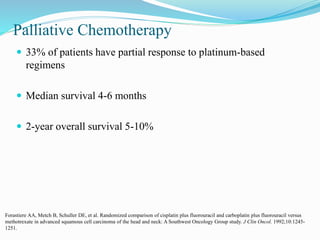
 33% of patients have partial response to platinum-based
regimens
 Median survival 4-6 months
 2-year overall survival 5-10%
Forastiere AA, Metch B, Schuller DE, et al. Randomized comparison of cisplatin plus fluorouracil and carboplatin plus fluorouracil versus
methotrexate in advanced squamous cell carcinoma of the head and neck: A Southwest Oncology Group study. J Clin Oncol. 1992;10:1245-
1251.
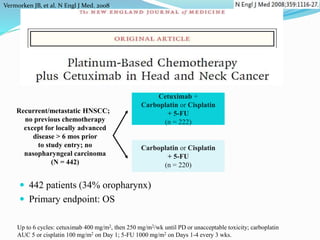
 442 patients (34% oropharynx)
 Primary endpoint: OS
Recurrent/metastatic HNSCC;
no previous chemotherapy
except for locally advanced
disease > 6 mos prior
to study entry; no
nasopharyngeal carcinoma
(N = 442)
Up to 6 cycles: cetuximab 400 mg/m2, then 250 mg/m2/wk until PD or unacceptable toxicity; carboplatin
AUC 5 or cisplatin 100 mg/m2 on Day 1; 5-FU 1000 mg/m2 on Days 1-4 every 3 wks.
Cetuximab +
Carboplatin or Cisplatin
+ 5-FU
(n = 222)
Carboplatin or Cisplatin
+ 5-FU
(n = 220)
Vermorken JB, et al. N Engl J Med. 2008.
127
153
83
118
65
82
47
57
19
30
173
184
220
222
8
15
1
3
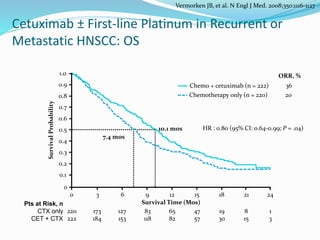
HR : 0.80 (95% CI: 0.64-0.99; P = .04)
Chemotherapy only (n = 220) 20
Chemo + cetuximab (n = 222) 36
SurvivalProbability
0
0.1
0.2
0.3
0.4
0.5
0.6
0.7
0.8
0.9
1.0
0 3 6 9 12 15 18 21 24
10.1 mos
7.4 mos
Pts at Risk, n
CTX only
CET + CTX
Survival Time (Mos)
Cetuximab ± First-line Platinum in Recurrent or
Metastatic HNSCC: OS
ORR, %
Vermorken JB, et al. N Engl J Med. 2008;350:1116-1127.
ca oropharynx
ca oropharynx
ca oropharynx

ca oropharynx

  • 5.
    Management Goals  Functionalorgan preservation with minimal toxicity  Locally confined disease (stage I and stage II tumors) are considered as early stage  Locoregionally advanced disease - stages III and IV (nonmetastatic) disease Perez and brady’s principles and practice of radiation oncology (sixth edition)
  • 6.
    Early stage  Forall subsites, early-stage tumors are usually well controlled with a single local modality, either radiotherapy or surgery.  Selection of modality should be based on the primary tumor size, extent of local spread, and subsite involved.  Generally, small tumors of the tonsil can be well managed surgically, whereas the morbidity of surgery on the soft palate and base of tongue tumours favours radiotherapy. Perez and brady’s principles and practice of radiation oncology (sixth edition)
  • 7.
    Locally Advanced  Forloco-regionally advanced disease  Two appropriate treatment strategies are used:  Either sx followed by RT±CT based on pathologic risk factors  Radiotherapy usually given with chemotherapy, concurrently Perez and brady’s principles and practice of radiation oncology (sixth edition)
  • 8.
    Treatment Modalities  Surgery Radiotherapy  Chemotherapy Perez and brady’s principles and practice of radiation oncology (sixth edition)
  • 9.
  • 10.
    Base of Tongue Limited role due to high morbidity and functional disability associated with the surgical procedures Soft Palate  Rarely recommended because  Significant reflux into nasopharynx post surgery and functional compromise  Midline location– B/L neck involvement is common Perez and brady’s principles and practice of radiation oncology (sixth edition)
  • 11.
    Tonsil cancer  Widelocal Excision –small (<1 cm ),early stage, confined to anterior pillar  Radical Tonsillectomy–larger tumor with extension to tongue, mandible or soft tissue. It include resection of  Tonsil with tonsillar pillar & fossa  Portion of soft palate  Tongue  Lateral/Total pharyngectomy as needed  Mandible Perez and brady’s principles and practice of radiation oncology (sixth edition)
  • 12.
    Surgical Margins  Aclear margin is defined as distance from invasive tumor front that is 5 mm or more from the resected margin.  A close margin is defined as distance from invasive tumor front to the resected margin that is less than 5 mm.  A positive margin is defined as carcinoma in situ or as invasive carcinoma at the margin of resection. NCCN
  • 13.
    Adjuvant Radiotherapy Following DefinitiveSurgical Resection  Advanced primary T-stage (T3 or T4)  Lymphovascular space invasion, perineural invasion, positive margins  Multiple pathologically involved cervical lymph nodes, extranodal extension Perez and brady’s principles and practice of radiation oncology (sixth edition)
  • 14.
    Pre-op vs. post-opRT RTOG 73–03 (Kramer et al. 1987)  N - 354  23% oropharynx patients  Patients with advanced H&N cancer randomized to 50 Gy pre-op vs 60 Gy Post-op  Post-op RT improved LRC  Trend towards improvement in OS  Complications not different  Established that post-op RT is better than pre-op RT * Kramer S et al Head Neck Surg 1987;10:19-30 Pre-op RT Post-op RT P Value LRC 48% 65% 0.04 OS 33% 38% 0.10
  • 15.
    EORTC 22931 Bernier Jet al N Engl J Med 2004;350:1945-1952 • 334 patients • 101 pts(34%) Oropharynx • Primary end point – PFS • 2 arms : • Radiotherapy alone (66 Gy over a period of 61⁄2 weeks) • Same radiotherapy regimen combined with cisplatin 100 mg/m2 on days 1, 22, and 43 of the radiotherapy regimen • Median follow-up of 60 months
  • 16.
    CT-RT RT aloneP value PFS 47% 36% 0.04 OS 54% 40% 0.02 LRF 31% 18 0.007 Acute Effects 41% 21% 0.001
  • 17.
    RTOG 9501 Cooper JSet al N Engl J Med 2004;350:1937-1944. • 459 patients • Oropharynx - 78(37%) in RT arm vs 99(48%) in CRT arm • Median follow-up of 45.9 months • Radiotherapy alone (60 to 66 Gy in 30 to 33 fractions over a period of 6 to 6.6 weeks) • RT plus concurrent cisplatin (100 mg per square meter of body-surface area intravenously on days 1, 22, and 43). • Primary end point – Local and regional tumour control
  • 18.
    CT-RT RT alone P value 2–yr LRC 82% 72% 0.01 Acute Effects 77% 34% P<0.001 •No significant difference in OS & DFS
  • 19.
  • 20.
    In summary, these twomost recent trials, support the use of postoperative CRT for patients with high risk for recurrence, i.e, margin & ECE+ve Head & Neck,2005
  • 21.
    So, on thebasis of these trials indications of RT & CT-RT are as follows :- Absolute Indications of Post op CT-RT : Relative Indications for CT-RT:  Margin +ve  ECE +ve  LVI +ve  PNI +ve  Close margins  pT3 or more  p N2a or more  Bulky nodal disease  Lower neck LN
  • 22.
    Adjuvant Radiotherapy Dose Not well defined.  Most of the randomized studies demonstrating the benefit of concurrent chemotherapy with PORT used radiotherapy doses of 60 to 66 Gy in 2-Gy daily fractions to high risk areas (primary tumor bed with positive margin or nodal regions with extracapsular spread).  Doses of 50 to 54 Gy in 2-Gy fractions were usually given to areas at risk for microscopic involvement. Perez and brady’s principles and practice of radiation oncology (sixth edition)
  • 24.
  • 25.
  • 26.
    EARLY-STAGE  Single modality:good outcomes and functional preservation.  No consensus on the optimal dose fractionation schedule  Randomized data and meta-analyses support an overall survival benefit with the use of accelerated fractionation or hyperfractionated radiotherapy.  Strong consideration should be given to altered fractionation of some sort. Perez and brady’s principles and practice of radiation oncology (sixth edition)
  • 28.
     To findout whether shortening of treatment time by use of six instead of five radiotherapy fractions per week improves the tumour response in SCC  1485 patients  1476 eligible patients were randomly assigned five (n=726) or six (n=750) fractions per week at the same total dose and fraction number (66–68 Gy in 33–34 fractions to all tumour sites except well-differentiated T1 glottic tumours, which were treated with 62 Gy)  Primary end point was LRC
  • 29.
    • Benefit ofshortening of treatment time was seen for primary tumour control (76 vs 64% for six and five fractions, p=0·0001), but was non-significant for neck-node control • No improvement in overall survival 6 # 5 # P Value LRC 70% 60% 0.0005 DFS 73% 66% 0.01 Acute Reactions 53% 33% 0.0001
  • 31.
    Fu et alIJROBP 32:577–588, •1113 patients entered , 1073 patients randomised
  • 35.
    CONCLUSION  HFX andAFX-C decreased 5-year local-regional failure by 19% when compared with SFX  HFX, unlike AFX-C or accelerated therapy did so without increasing late toxicities.
  • 38.
    Locoregionally advanced  Concurrentchemoradiotherapy is the standard treatment. Perez and brady’s principles and practice of radiation oncology (sixth edition)
  • 41.
    Results Combined modality Radiation alone P value 5 yrOS 22 % 16 % 0.05 5 yr DFS 27 % 15 % 0.01 LRC 48 % 25 % 0.002
  • 42.
     Conclusion :Concomitant radiochemotherapy improved overall survival and locoregional control rates and does not statistically increase severe late morbidity
  • 43.
    MACH NC Meta-anaalysisPignon, Lancet 2000; 355: 949–55 • Over 70 randomized trials • Three comparisons 1. The effect of chemotherapy — LR treatment was compared with LR treatment plus chemotherapy. 2. The timing of chemotherapy — NACT plus radiotherapy was compared with concomitant or alternating Radio-Chemotherapy with the same drugs. 3. Larynx preservation with neoadjuvant chemotherapy —radical surgery plus radiotherapy was compared with neoadjuvant chemotherapy plus radiotherapy in responders or radical surgery and radiotherapy in non- responders.
  • 44.
    Effect of Chemotherapyon survival  The first meta-analysis included 63 trials. • Trials were divided according to timing of chemotherapy: Adjuvant, neoadjuvant, and concomitant or alternating with radiotherapy.
  • 45.
    Conclusion • The additionof chemotherapy to locoregional treatment- the most important result was a small, but statistically significant, overall benefit in survival with chemotherapy (the absolute benefit at 2 and 5 years was 4%). • No significant benefit of adjuvant or neoadjuvant chemotherapy but a significant benefit of concomitant chemotherapy (absolute benefit at 2 and 5 years of 8%)
  • 46.
    MACH-NC: Update • Updateto the meta-analysis by adding the data from the randomized trials performed between 1994 and 2000. • Added 24 new trials, most of them on concomittant chemotherapy • 87 trials, 16665 pts • median f/u 5.5 yrs • An absolute benefit for chemotherapy of 4.4% at 5 yr. • For concomitant CTRT group the absolute survival benefit at 5 yr is 8 % IJROBP, Vol. 69, No. 2, Supplement, pp. S112–S114, 2007
  • 47.
    MACH-NC 2009 Update Themeta-analysis included 87 randomised trials (16,485 patients) comparing loco-regional treatment versus the same loco-regional treatment + chemotherapy.
  • 48.
    MACH-NC (2011 update) 87 randomised control trials from period of 1965 to 2000  16,192 patients were analysed in a median follow up of 5.6 yrs • Evidence of improvement in overall survival • Absolute benefit 4.5% at 5 yrs • Benefit more in concurrent CTRT (p<0.0001) & absolute benefit of 6.5% • Benefit decreases with increasing age • Absolute benefits - oral cavity-8.9% oropharynx-8.1% larynx-5.4% hypopharynx-4%
  • 49.
    MACH- NC-Conclusions • Additionof CT - Absolute benefit in survival-5% in 5 yrs. • Induction/adjuvant - 2% survival benefit • Concurrent CTRT 8% - 5yr survival benefit • Platinum based regimen more effective. • No significant difference in efficacy between mono and multiple drug platinum regimens • Small reduction in distant metastasis found in population of patients with CTRT • Inverse relation between age and impact of CT. Disappears by around age of 70
  • 50.
     Locally advancedSCCHN  Induction TPF→CRT vs CRT  Three cycles of TPF followed by concurrent chemo-radiotherapy with either docetaxel or carboplatin or concurrent chemoradiotherapy alone with two cycles of bolus cisplatin  145 PTS  Stage III-IV (55% Oropharynx)  Median follow-up : 49 mnths  Primary end point - OS Lancet Oncol 2013; 14: 257–64
  • 51.
     No significantdifference noted between those patients treated with induction chemotherapy followed by chemo-radiotherapy and those who received chemo-radiotherapy alone TPF→CR T CRT P value OS 67% 83% 0.47 PFS 73% 83% 0.22
  • 52.
     Locally advancedhead and neck squamous-cell carcinoma  840 patients (66% oropharynx pts)  3 arms  Conventional CT-RT(70 Gy/35# + 3 cycles concomitant carboplatin-fluorouracil)  Accelerated CT-RT(70 Gy in 6 weeks +2 cycles of 5 days concomitant carboplatin- fluorouracil)  Very accelerated radiotherapy alone (64·8 Gy [1·8 Gy twice daily] in 3·5 weeks)  Median follow-up was 5·2 years  Primary endpoint - PFS
  • 53.
    •Conventional CT-RT improvedPFS compared with very accelerated radiotherapy •Grade 3–4 acute mucosal toxicity •very accelerated radiotherapy (84%) compared with •accelerated CT-RT(76%) or •conventional CT-RT(69%; p=0·0001) •Acceleration of radiotherapy cannot compensate for the absence of chemotherapy
  • 54.
    Vermorken JB etal N Engl J Med 2007;357(17):1695-1704 • 358 patients ( 46% oropharynx) • Unresectable stage III–IV head and neck cancer • TPF (docetaxel/cisplatin/5-FU) vs. • PF (cisplatin/5-FU) induction chemotherapy followed by RT alone, • Primary end point - PFS
  • 55.
    Vermorken JB etal N Engl J Med 2007;357(17):1695-1704 TPF PF P value PFS 11 mnths 8.2 mnths 0.007 OS 18.8 mnths 14.5 mnths 0.02
  • 56.
    • 501 patients( 52% oropharynx) • Unresectable stage III–IV head and neck cancer • TPF (docetaxel/cisplatin/5-FU) vs. • PF (cisplatin/5-FU) induction chemotherapy followed by RT alone • Primary end point - OS Posner et al N Engl J Med 2007
  • 57.
    Posner et alN Engl J Med 2007 TPF PF P value 3-yr OS 62% 48% 0.006 Median Survival 71 mnths 30 mnths 0.004 LRC 70% 62% 0.04
  • 58.
     424 pts,multinational study (60% oropharynx)  Locally advanced SCCHN  Primary end point – locoregional control  RT v/s RT + Cetuximab  Cetuximab 400 mg/m2 at initial dose followed by 250 mg / m2 weekly for rest of RT. N Engl J Med 2006;354:567-78
  • 59.
     Median f/u- 54.0 mths  With the exception of acneiform rash and infusion reactions, the incidence of grade 3 or greater toxic effects, including mucositis, did not differ significantly between the two groups Cetuxi mab + RT RT alone P value Median LRC 24.4 months 14.9 month s 0.005 Median OS 49 months 29.3 month s 0.03
  • 64.
    Technique  Prerequisite  Foroptimal treatment planning thorough review of diagnostic films, endoscopic finding and description of the examination is essential to determine target volume  Preirradiation dental care  All patients to be regularly seen by dental or oral surgeons for dental evaluation and fluoride treatment  Any potential surgical procedure and tooth extractions to be performed before initiation of radiation therapy Perez and brady’s principles and practice of radiation oncology (sixth edition)
  • 65.
    Simulation  Supine position Orfit cast for immobilization  Neck extended, shoulders pulled down to maximize exposure  Tongue to be displaced from the palate by an individually constructed tongue bite block  Bite block – facilitate immobilization & ↓ amt of normal tissue in field  For BOT – keeps primary tumor in field  For soft palate - ↓ amt of unnecessary irradiated tongue  Images should be taken from above the calvarium to the carina Perez and brady’s principles and practice of radiation oncology (sixth edition)
  • 66.
    Conventional Field borders Upper margin – upto zygomatic arch  Posteriorly – tip of mastoid  Anteriorly – depending upon the clinical extension(2 cm beyond the disease)  Inferiorly – thyroid notch  LAN  Superior : Lower border of throid notch and match with upper neck lateral fields  Inferior : inferior edge of the clavicular head  Lateral : Two thirds of the clavicle or 2 cm lateral to lymphadenopathy (which ever more lateral)
  • 67.
     Delivered usinga 3 field technique with 2 lateral opposed fields for the primary tumor bed and upper neck, matched to an anterior-posterior (AP) lower neck field (LAN)
  • 68.
    Indication for ipsilateralradiotherapy  Well lateralised Tonsillar cancer cases not involving the base of tongue and with minimal involvement of soft palate.  Patients with c/l cervical lymph node involvement usually seen in patients with tumor approaching or crossing midline or have extensive I/L cervical lymph node involvement. Perez and brady’s principles and practice of radiation oncology (sixth edition)
  • 69.
    Study related withipsilateral-only radiotherapy
  • 70.
     No c/lneck progression in patients with T1 tumors.  Only 1-2 % c/l involvement occur in T2 tumors.  C/L nodal progression in T3 tumor was 3 to 10 %.  C/L nodal progression was associated with-  both base of tongue and soft palate involvement (13%).  T3 stage (10%)  Involvement of the midline of the soft palate (16.5%).
  • 71.
    Intensity-Modulated Radiotherapy  Abilityto minimize normal organ exposure to radiation.  This is particularly important for oropharyngeal cancer patients because pharyngeal constrictor doses and parotid doses are associated with dysphagia and xerostomia Perez and brady’s principles and practice of radiation oncology (sixth edition)
  • 74.
    CONCLUSION  Sparing theparotid glands with IMRT significantly reduces the incidence of xerostomia and leads to recovery of saliva secretion and improvements in associated quality of life, and thus strongly supports a role for IMRT in squamous-cell carcinoma of the head and neck
  • 76.
    Role of Brachytherapy Historically played a role in boosting gross disease following EBRT.  Developed in the pre-IMRT, preconcurrent chemotherapy era.  Low dose rate (LDR) brachytherapy has previously been the most common type of brachytherapy.  High dose rate (HDR) techniques are becoming much more common.  Interstitial implants selectively used in i) Accessible lesions ii) Small (preferably <3cm) tumors iii) Lesions away from bone iv) N0 nodal status v) Superficial lesions Perez and brady’s principles and practice of radiation oncology (sixth edition)
  • 77.
     High ratesof locoregional control have been achieved using EBRT directed at primary and bilateral neck followed by brachytherapy boost.  Care should be taken to delineate pre-treatment tumor extent accomplished by tattoos or gold seeds.  CTV as recommended by ESTRO – 5mm at minimum and more commonly 1 to 1.5 cm for base of tongue tumors.  Catheters are typically placed parallel and equidistant at 1 to 1.5 cm apart. Perez and brady’s principles and practice of radiation oncology (sixth edition)
  • 78.
    Brachytherapy guidelines -American Brachytherapy society (ABS)  Recommend – EBRT doses of 45 to 60 Gy followed by an HDR boost of 3-4 GY per fraction for 6 to 10 doses.  With locoregional control of 82 % to 94 %.  Prophylactic tracheostomy is often required.
  • 79.
    The European Brachytherapygroup (Groupe Européen de Curiethérapie-European Society for Therapeutic Radiology and Oncology)GEC-ESTRO –guidelines  Based on consensus recommendation.  Recommend 45 to 50 Gy EBRT followed by  25 to 30 Gy boost for Tonsillar tumors.  30 to 35 Gy boost to base of tongue.  Total brachytherapy boost dose is fraction size dependent –  21 to 30 Gy in 3-Gy fraction.  16 to 24 Gy in 4-Gy fraction
  • 80.
    Recurrent Locoregionally confinedsquamous cell carcinoma of oropharynx
  • 81.
    Re-treatment: Should Resi/recc disease be treated? Allen Ho, Head Neck. 2014 Jan;36(1):144-51.
  • 82.
    Reirradiation  High riskof normal tissue toxicity including upto a 20% carotid rupture rate.  15% fatal toxicity.  Patients undergoing a second course of chemotherapy and radiation therapy should be managed with experienced centers.  Failed phase III studies to compare systemic therapy alone or chemotherapy and reirradiation. Perez and brady’s principles and practice of radiation oncology (sixth edition)
  • 83.
    Reirradiation  RTOG 9911 105 pts (40% oropharynx)  RT at a dose of 1.5 Gy/fx bid 5 days every other week X 4 cycles  Cisplatin 15 mg/m2/1 hour and Paclitaxel 20 mg/m2/1 hour each daily X 5 every other week X 4  25% 2-year overall survival  Median survival 12 months  Grade 4 or worse acute toxicity: 28%  Treatment-related death: 11% Langer CJ, Harris J, Horwitz EM, et al. Phase II study of low-dose paclitaxel and cisplatin in combination with split-course concomitant twice- daily reirradiation in recurrent squamous cell carcinoma of the head and neck: Results of Radiation Therapy Oncology Group Protocol 9911. J Clin Oncol. 2007;25:4800-4805.
  • 84.
    Palliative Chemotherapy  33%of patients have partial response to platinum-based regimens  Median survival 4-6 months  2-year overall survival 5-10% Forastiere AA, Metch B, Schuller DE, et al. Randomized comparison of cisplatin plus fluorouracil and carboplatin plus fluorouracil versus methotrexate in advanced squamous cell carcinoma of the head and neck: A Southwest Oncology Group study. J Clin Oncol. 1992;10:1245- 1251.
  • 85.
     442 patients(34% oropharynx)  Primary endpoint: OS Recurrent/metastatic HNSCC; no previous chemotherapy except for locally advanced disease > 6 mos prior to study entry; no nasopharyngeal carcinoma (N = 442) Up to 6 cycles: cetuximab 400 mg/m2, then 250 mg/m2/wk until PD or unacceptable toxicity; carboplatin AUC 5 or cisplatin 100 mg/m2 on Day 1; 5-FU 1000 mg/m2 on Days 1-4 every 3 wks. Cetuximab + Carboplatin or Cisplatin + 5-FU (n = 222) Carboplatin or Cisplatin + 5-FU (n = 220) Vermorken JB, et al. N Engl J Med. 2008.
  • 86.
    127 153 83 118 65 82 47 57 19 30 173 184 220 222 8 15 1 3 HR : 0.80(95% CI: 0.64-0.99; P = .04) Chemotherapy only (n = 220) 20 Chemo + cetuximab (n = 222) 36 SurvivalProbability 0 0.1 0.2 0.3 0.4 0.5 0.6 0.7 0.8 0.9 1.0 0 3 6 9 12 15 18 21 24 10.1 mos 7.4 mos Pts at Risk, n CTX only CET + CTX Survival Time (Mos) Cetuximab ± First-line Platinum in Recurrent or Metastatic HNSCC: OS ORR, % Vermorken JB, et al. N Engl J Med. 2008;350:1116-1127.