Dr. Sayan Das, Consultant Radiation Oncologist
Contouring in Nasopharyngeal
Carcinoma
How we shall go about it
• Anatomy
• Patterns of Spread
• Staging
• Target Volume Delineation (Primary + Node)
• OAR Delineation
Anatomy
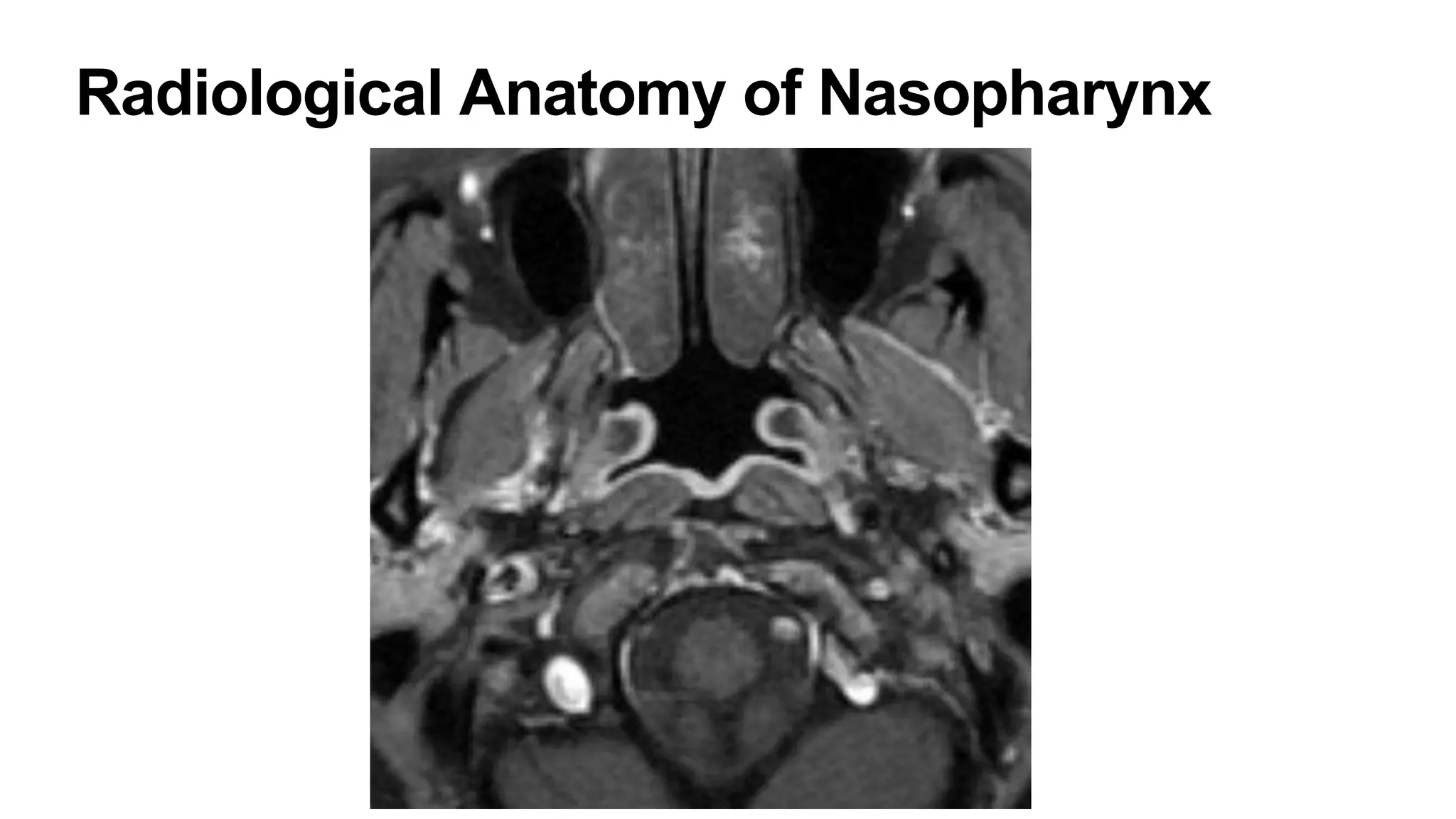
Radiological Anatomy of Nasopharynx
Fascial spaces in suprahyoid neck
Windows of Spread
Pharyngobasilar
fascia
(a) Mucous membrane, (b) Pharyngobasilar fascia,
(c) Muscular coat, and (d) Buccopharyngeal fascia
Parapharyngeal Space
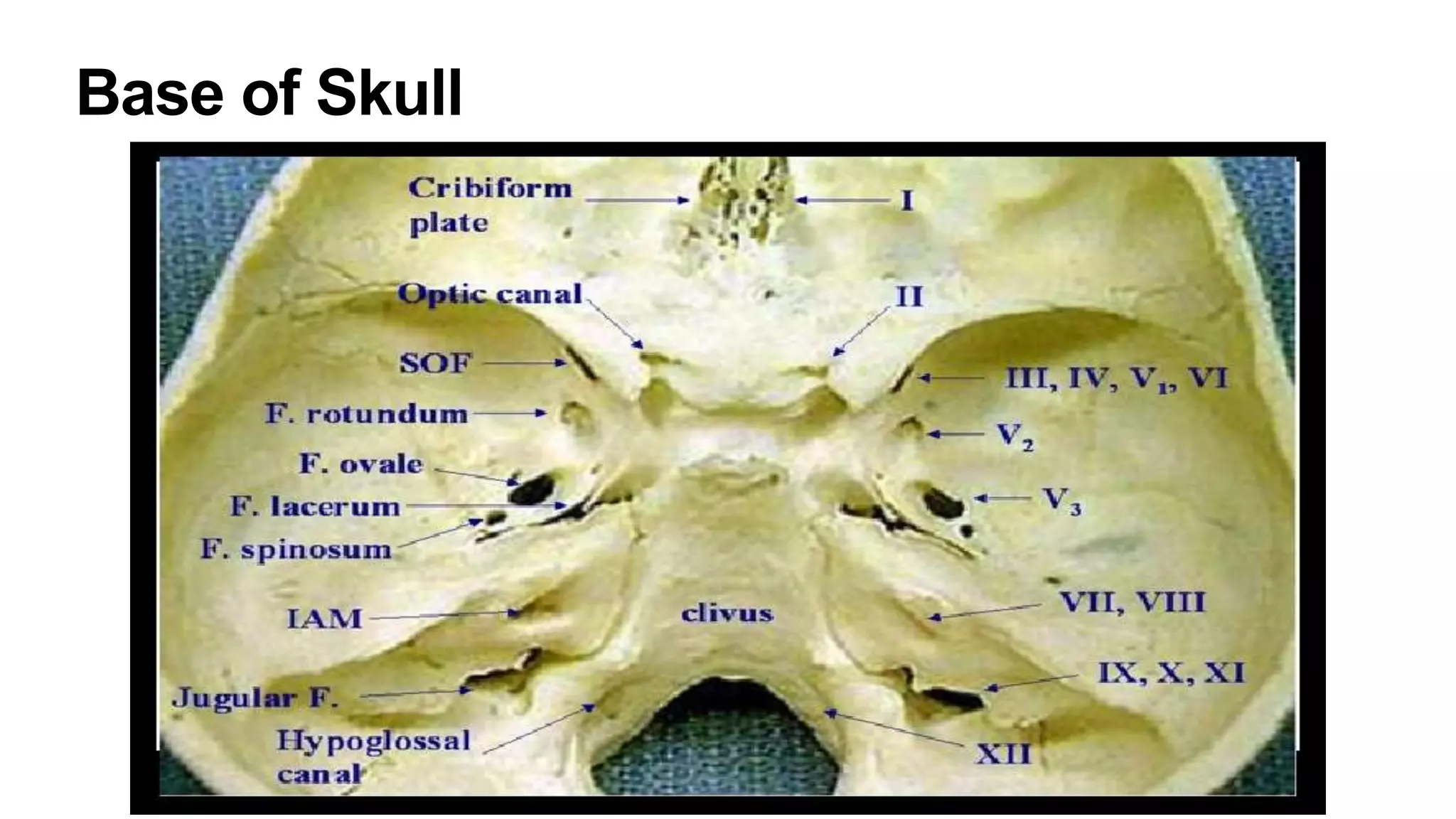
Base of Skull
Skull Base Radiology
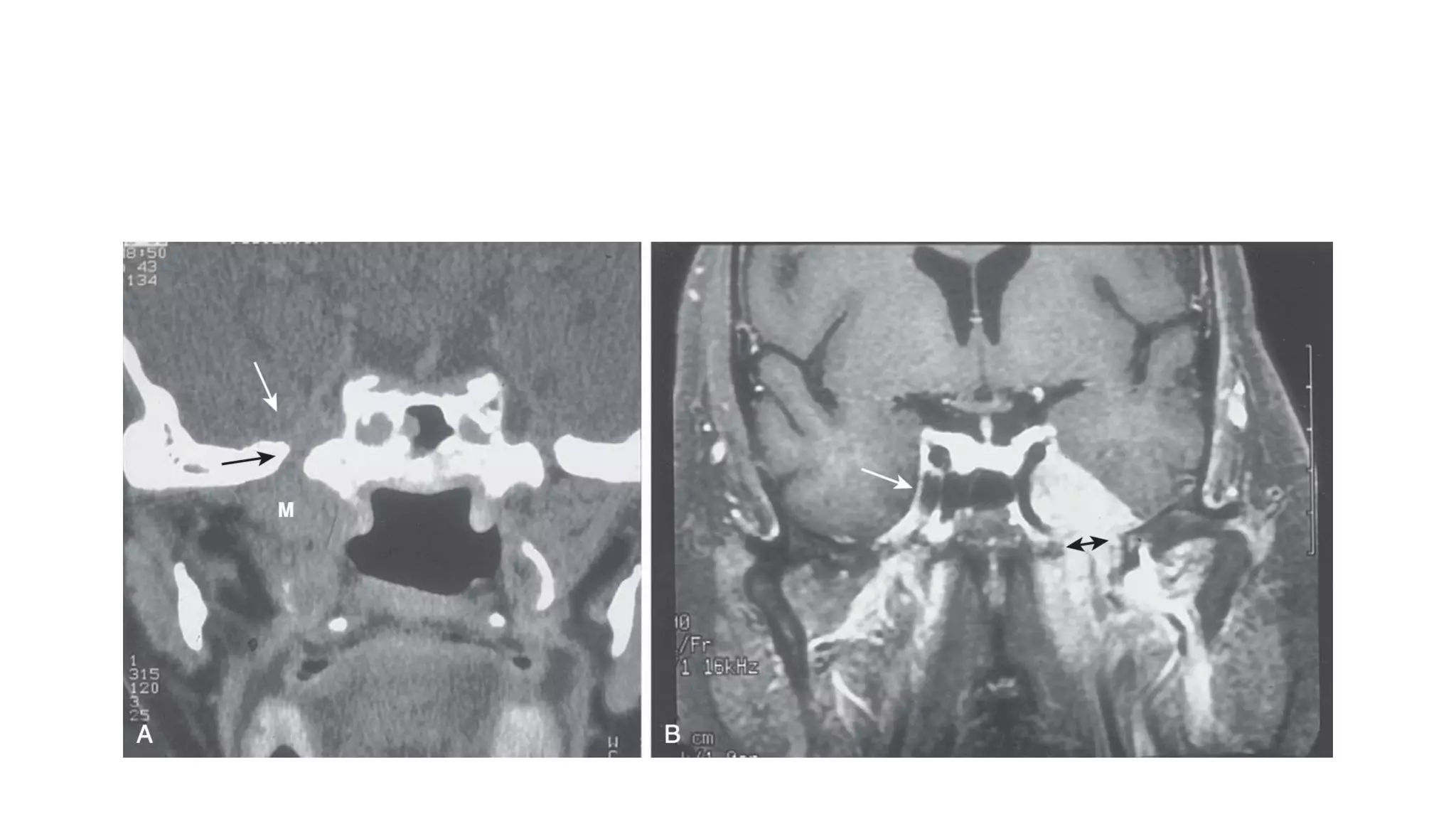
Patterns of Spread
ICA, Pterygoid ms
Middle ear
CN IX-XII
Nasal Cavity
PNS , Orbit
Skull Base
Clivus, C1-2
Prevertebral Muscles
Sinus of Morgagni ->
ParaPharyngeal Space
Sphenoid Sinus
Cavernous sinus
CN II-VI via foramina
Oropharynx
Patterns of Nodal involvement
Retropharyngeal LN
Level II Level V
Level IB Level III
Level IV
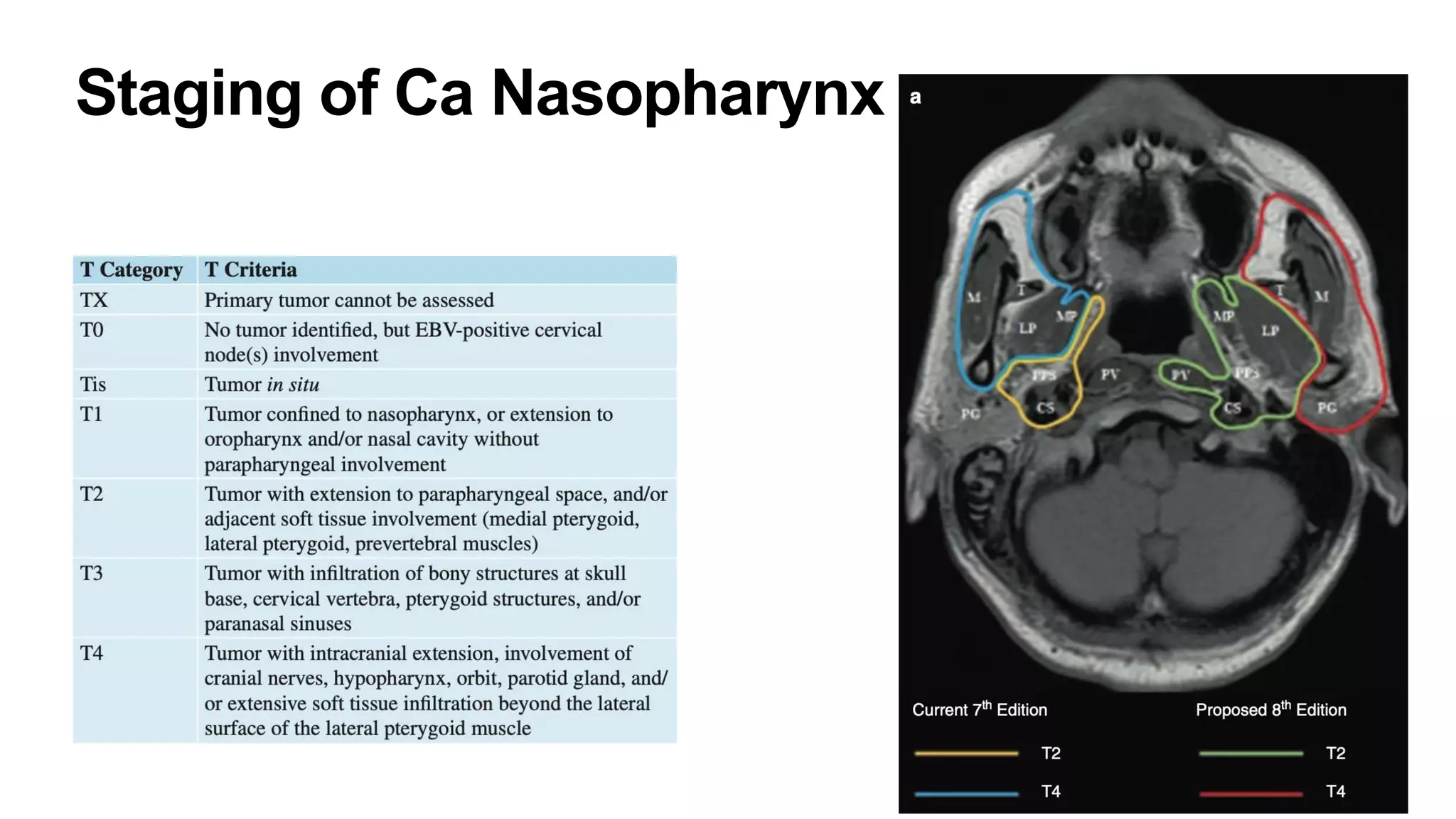
Staging of Ca Nasopharynx
Nodal Staging
T Stage ?
Contouring in Nasopharyngeal Carcinoma
RT simulation
Patient lies supine with arms by the side
Neutral neck position
Immobilization device: 4–5 fixation point
thermoplastic mask covering from skull vertex to
shoulder
2-3 mm slice thickness CECT should be
acquired typically from vertex to 2 cm below the
sternoclavicular joints
Before you begin contouring….
• Read history and examination findings
• Collect pre-T/t images - CT/MR/ PET
• Registration of images
• Identify structures on axial CT scan
• If you’re in doubt - talk to your radiologist
• Set appropriate window width and level.
Typical for HN ST contouring: W:350–400
L:20–60
• Always verify on all 3 planes- axial, coronal
and sagittal
Delineation of GTVp
Thorough clinical examination - mapping of disease extent
Diagnostic CE-MRI performed within 2–3 weeks of RT planning and fused with the
planning CT
Role of PET/CT images
SENSITIVITY (Ng et al) MRI CT
skull base involvement 60 40
intracranial involvement 57 36
prevertebral muscles 51 22
PET/CT MRI
Cervical nodes
Sensitivity 97-100 84-92
Specificity 73-97 73-97
RP nodes
Sensitivity 88 96
Specificity 94 100
Rationale behind CTV delineation
Liang et al. and Li et al. characterized the invasion
patterns of NPC by dividing the anatomic sites of
invasion of tumour into high, medium and low risk
regions.
2 important findings:
• Local disease tends to spread stepwise from
proximal sites to more distal sites.
• Neural foramina and neural pathways serve as
privileged routes for infiltration of tumour.
Liang et al. Int J Radiat Oncol Biol Phys 2009;75:742–50.
Li et al. Chin J Cancer 2012;31:579–87.
General Principles of CTV delineation
“5 + 5 mm expansion” margin from GTV to delineate CTV - no specific data for NPC
Inclusion/exclusion of anatomical structures are based on:
• Natural history of tumour spread.
• Complex and intricate anatomic relationship between the nasopharynx and
adjacent soft tissues.
• The concern that unlike other cortical bones, the skull base is not a strong barrier to
tumour cell infiltration because it is perforated by various foramina and fissures.
High risk CTVp1
CTVp1 = GTV + 5 mm margin (consider exclusion of the clivus if not involved)
What about including entire NPx in CTVp1? - role of MRI (sensitivity of MR imaging is
100%, a specificity of 93%, accuracy of 95% and a negative predictive value of 100%)
Borders of NPx:
• Superior - base of skull
• Anterior - junction with nasal choana superiorly and medial pterygoid plate more
inferiorly
• Lateral - medial border of the parapharyngeal space
• Inferior - caudal edge of C1
Intermediate risk CTVp2
Superiorly….
CTVp2 = 5 mm expansion from CTVp1
Anatomical editing for inclusion of adjacent structures in CTVp2:
Ethmoid sinus: The posterior–inferior part is included to ensure coverage of the vomer
Sphenoid sinus:
• T1 and T2 disease: Include inferior part of sphenoid sinus
• T3 and T4 disease: Include whole of sphenoid sinus.
Cavernous sinus:
• T1 and T2 disease: Spare the cavernous sinus
• T3 and T4 disease: Cover the whole ipsilateral cavernous sinus.
Skull base foramina: Cover B/L foramina ovale/ rotunda/ lacera irrespective of T-category.
Spare jugular foramen/hypoglossal canal if no extensive postero-lateral infiltration or high
jugular LNpathy
Anteriorly….
Include 5 mm of the posterior nasal cavity anteriorly from the choanae irrespective of
T-category
Include 5 mm of the posterior maxillary sinus electively to ensure adequate inclusion
of the pterygo-maxillary fissure and pterygo-palatine fossae, irrespective of T-category
- as well as ITF and vidian canal
Laterally….
Cover pterygoid muscle by 5 + 5 mm expansion from GTVp only. Include whole of
lateral pterygoid muscle if there is invasion of the deep fascia/epimysium of the
pterygoid muscles
Cover entire parapharyngeal space irrespective of T category
Cover the anterior 1/3 of the clivus if not involved and cover the whole clivus if any
clival involvement
Posteriorly….
CTVp2
• Whole of Nasopharynx
• Ethmoid sinus/ sphenoid sinus/ Cavernous sinus (as indicated)
• Skull base foramina - ROL
• Posterior 5 mm of nasal cavity/ maxillary sinus
• PPF/ ITF/ Pterygoid canal
• Parapharyngeal space/ Pterygoid ms
• Clivus (as indicated)
Should air cavities be included in CTV?
Not practical for small curving regions like nasal cavity
or PNS.
Air cavity removal may lead to under-dosing of t/t
volumes at the air–tissue interface region
Microscopic ds cannot extend through the air spaces.
Inclusion of air cavities leads to larger t/t volumes
causing greater toxicity
Target coverage more vulnerable to pt setup uncertainty
when there was significant trimming of air cavities.
Margins for tumour abutting critical OARs
Weigh between the risk of having a marginal miss vs risk of debilitating RT-induced
toxicity
Evaluate on a case-by-case basis - consider patient’s pre-morbidities and attitudes
towards disease and toxicity, in addition to clinician factors
CTV margin: minimum of 1 mm expansion for CTVp1 and 2 mm for CTVp2
Restrict tumoricidal doses within the tolerance limit of critical OARs - overlap volume
receives doses lower than the intended tumor dose
Intracranial Extension
• Create CTV_IC (intracranial portion) - consists of
the intracranial part of the GTV with 3-5 mm
margins depending on the proximity to critical
OARs
• Add PTV margin to create PTV_IC (usually 5mm)
• Prescribe a dose equivalent of 60-64 Gy to
PTV_IC
• Restrict doses received by overlap region b/n
PTV_IC and critical OARs to 54-60 Gy
• Discuss with the patient and obtain a high-risk
consent from the patient Ghosh - Laskar et al. World Journal of Otorhinolaryngology-Head and Neck Surgery (2020) 6, 25-33
Delineation of Nodal CTV
The diagnostic criteria used for defining LN
involvement are:
• Retropharyngeal LNs > 5 mm or cervical LNs > 10
mm in shortest diameter
• Three or more contiguous and confluent LNs, each
with shortest diameter of 8–10 mm
• LNs of any size with central necrosis or a contrast-
enhanced rim
• LNs of any size with extracapsular extension
• LNs of any size with overt FDG uptake on FDG-
PET scan
Articles that you must read!
High and Intermediate Risk nodal CTV
CTVn1 = GTVn + 5 mm (no ECE) or 10 mm (if ECE+)
CTVn2 = CTVn1 + 5 mm expansion (+ cervical nodal levels as defined by Gregoire et
al.)
A 3 mm expansion from GTVn to CTVn1 may be considered for small nodes without
any radiological ECE.
CTVn1/2 should be anatomically edited at the sternocleidomastoid muscle border,
rather than just simple geometric expansion. However, consider larger margins for
cases with extra-capsular extension.
Radiotherapy and Oncology 110 (2014) 172–181
Intermediate risk nodal CTV (prophylactic dose)
(CTVn2)
Include Lateral retropharyngeal lymph nodes (RPLN) in CTVn2 from the base of the skull to the
caudal border of the hyoid bone (C2) or caudal border of C3.
Include ipsilateral Level Ib LN level in CTVn2 if there is involvement of:
• Ipsilateral submandibular gland
• Structures that drain to level Ib as the first echelon site (namely the oral cavity, anterior half of
nasal cavity)
• Level IIa LNs with extracapsular extension.
• Level IIa LNs with maximum nodal axial diameter >2 cm
Sparing the whole submandibular gland in the CTVp2 for level Ib coverage - controversial
CTVn2
Cover B/L RPLNs and cervical lymph node levels II, III and Va within CTVn2 for all T
and N categories.
Extend cranial border for nodal coverage to the skull base in order to cover
retrostyloid nodes (level VIIb).
Allow 3 dose levels for CTVn (i.e. CTVn1 = full therapeutic dose, CTVn2 =
intermediate prophylactic dose, and an optional low dose level, CTVn3).
Include levels IV and Vb ipsilaterally if there are any involved lymph nodes on the
same side of the neck (excluding RPLNs)
Nodal CTV
• CTVn1 - High risk nodal CTV - > 70 Gy equivalent (GTVn + 5 mm (no ECE) or
10 mm (if ECE+)
• CTVn2 - Intermediate risk nodal CTV - > 60 Gy (CTVn1 + 5 mm expansion +
B/L RP/ II/ III/Va) (at least one level below involved nodes)
• CTVn3 - Low dose nodal CTV -> 50 Gy equivalent (IVa + Vb)
Putting it together….
●GTV
●Primary
●Nodal
●CTV
●CTV HR
●P
●N
●CTV IR
●P
●N
●CTV LR
Putting it together….
●GTV
●Primary
●Nodal
●CTV
●CTV HR
●P
●N
●CTV IR
●P
●N
●CTV LR
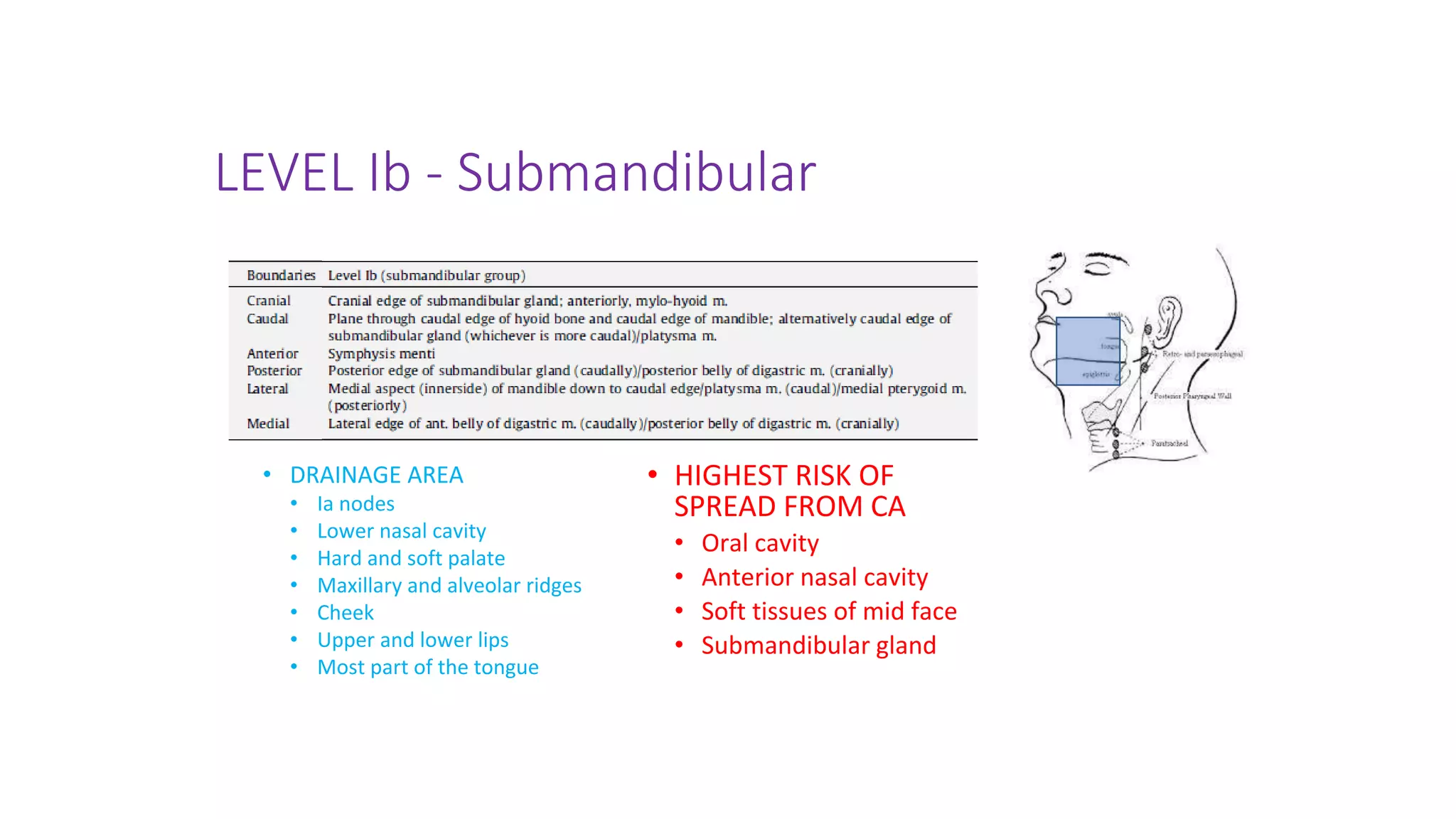
LEVEL Ib - Submandibular
• DRAINAGE AREA
• Ia nodes
• Lower nasal cavity
• Hard and soft palate
• Maxillary and alveolar ridges
• Cheek
• Upper and lower lips
• Most part of the tongue
• HIGHEST RISK OF
SPREAD FROM CA
• Oral cavity
• Anterior nasal cavity
• Soft tissues of mid face
• Submandibular gland
Level II – Upper Jugular
• DRAINAGE AREA
• face,
• parotid gland, sublingual and submandibular glands.
• submandibular, submental and retropharyngeal
nodes.
• nasal cavity,
• pharynx,
• larynx,
• external auditory canal
• the middle ear.
• HIGHEST RISK OF SPREAD FROM CA
• Oral cavity
• Nasal cavity
• Major salivary glands
• Nasopharynx
• Oropharynx
• Hypopharynx
• Larynx
II a & b divided at posterior edge of IJV
IIb involved mostly in Oro & Nasopharynx tumours
Level III – Mid jugular
• HIGHEST RISK OF SPREAD
FROM CA
• Oral cavity
• Nasopharynx
• Oropharynx
• Hypopharynx
• Larynx
• DRAINAGE AREA
• base of the tongue,
• tonsils,
• larynx,
• Hypopharynx
• thyroid gland
• Level II group
• Level V group
• Retropharyngeal nodes
• Paratracheal nodes
• Recurrent laryngeal nodes
Level IV a – Lower Jugular
• DRAINAGE AREAS
• Level III
• Level V
• retropharyngeal,
• pretracheal,
• recurrent laryngeal nodes,
• hypopharynx,
• larynx, and
• thyroid gland
• HIGHEST RISK OF SPREAD FROM
CA
• Thyroid gland
• Hypopharynx
• Larynx
• Rarely Oral cavity (direct metastasis)
2 cm set after intense evaluation of low neck lymphatics
Level IV b – Medial supraclavicluar
• DRAINAGE AREA
• Level IVa
• Level Vc,
• pretracheal, and
• Recurrent laryngeal nodes,
• hypopharynx,
• esophagus,
• larynx,
• trachea and
• thyroid gland
• HIGHEST RISK OF SPREAD FROM
CA
• Thyroid gland
• Hypopharynx
• Subglottic Larynx
• Esophagus
• Trachea
NEW LEVEL
• Expansion of contours
when Level IV nodes are
positive as per 2006
guidelines (node
positive).
Level V (a and b) – Posterior triangle
• Anatomically – Posterior triangle is formed by convergence of SCM and trapezius
• Hence, it should start from the occipital region – now included in Xb
• DRAINAGE AREA
• Occipital and Retroauricular
nodes (Level X)
• occipital and parietal scalp,
• the skin of the lateral and
posterior neck and
shoulder,
• Nasopharynx,
• Oropharynx
• thyroid gland
• HIGHEST RISK OF SPREAD
FROM CA
• Thyroid gland
• Nasopharynx
• Oropharynx
• Skin of posterior scalp
Level Vc – Lateral supraclavicular
NEW LEVEL
• From Transverse cervical vessels cranially to 2 cm above the sternoclavicular joint.
• Its contour stops at same level of IV a (lower jugular) [NOT MEDIAL SUPRACLAVICULAR – LEVEL IV b]
• Corresponds to “Supraclavicular fossa” aka Triangle of Ho (N3b definition of Ca Npx)
• DRAINAGE AREA
• Posterior triangle nodes
– Level Va and Vb
• HIGHEST RISK OF SPREAD
FROM CA
• Nasopharynx
Level VIIa – Lateral Retropharyngeal
NEW LEVEL
• From Upper C1 to hyoid, anterior to Sup & mid constrictors
• Divided into medial and lateral by a line parallel to lateral
edge of longus capiti muscle.
• Medial RP – 2-3 inconsistent nodes
• DRAINAGE AREA
• Nasopharynx
• Soft palate
• Eustachian tube
• HIGHEST RISK OF SPREAD FROM CA
• Nasopharynx
• Oropharynx – posterior pharyngeal wall, soft
palate, tonsillar fossa.
Level VIIb – Retro-styloid
NEW LEVEL
• Nothing but Level II extended up to BOS.
• Part of Level II contoured in node positive disease (2006
guidelines)
• DRAINAGE AREA
• Nasopharynx
• HIGHEST RISK OF SPREAD FROM CA
• Nasopharynx
• Other H&N sites with massive Level II
infiltration and causing retrograde flow
Target Volume post NACT
Guidelines for non-NPC head and neck cancers by Salama et al. recommended that
pre-induction volume should receive the full therapeutic dose regardless of post-
NACT shrinkage — this principle should be used for tumours with pre-induction
volume not abutting critical OARs.
For tumours abutting critical OARs — technically difficult to irradiate to full therapeutic
dose; 2 schools of thought
Ensure that the pre-induction gross tumour volume is still covered at least by CTVp2
Skull base involvement shown on MRI usually remain unchanged even after NACT
making it difficult to assess the extent of residual disease - better to irradiate the pre-
NACT skull base involvement to full therapeutic doses.
Delineation of OARs
• Temporal Lobe
• Pituitary Gland
• Brainstem
• Spinal cord
• Optic Chiasm
• Eye and Lens/ Optic nerves
• Cochlea
• Oral Cavity
• Parotid Gland
• Larynx
• DARS
• Mandible - TM joint
• Thyroid
• Brachial Plexus
Temporal Lobe
Brainstem
• Cranial - bifurcation of
Basilar artery
• Caudal - dens of C2
Optic Chiasm
• A butterfly-shaped structure
which sits directly above the
pituitary fossa.
• Course: Anteriorly it begins
directly posterior to the optic
canal, lies medial to the carotid
arteries but anterior to the
pituitary stalk.
• It joins in front of the pituitary
stalk and then divides again
posteriorly to travel to the most
superior/anterior part of the
brainstem
Cochlea
• lies deep
within the
petrous
temporal
bone,
superior to
lateral most
part of
internal
auditory
canal
Ca Nasopharynx contouring.pptx

Ca Nasopharynx contouring.pptx

  • 1.
    Dr. Sayan Das,Consultant Radiation Oncologist Contouring in Nasopharyngeal Carcinoma
  • 2.
    How we shallgo about it • Anatomy • Patterns of Spread • Staging • Target Volume Delineation (Primary + Node) • OAR Delineation
  • 3.
  • 4.
  • 5.
    Fascial spaces insuprahyoid neck
  • 6.
    Windows of Spread Pharyngobasilar fascia (a)Mucous membrane, (b) Pharyngobasilar fascia, (c) Muscular coat, and (d) Buccopharyngeal fascia
  • 7.
  • 8.
  • 9.
  • 10.
    Patterns of Spread ICA,Pterygoid ms Middle ear CN IX-XII Nasal Cavity PNS , Orbit Skull Base Clivus, C1-2 Prevertebral Muscles Sinus of Morgagni -> ParaPharyngeal Space Sphenoid Sinus Cavernous sinus CN II-VI via foramina Oropharynx
  • 12.
    Patterns of Nodalinvolvement Retropharyngeal LN Level II Level V Level IB Level III Level IV
  • 13.
    Staging of CaNasopharynx
  • 14.
  • 15.
  • 20.
  • 21.
    RT simulation Patient liessupine with arms by the side Neutral neck position Immobilization device: 4–5 fixation point thermoplastic mask covering from skull vertex to shoulder 2-3 mm slice thickness CECT should be acquired typically from vertex to 2 cm below the sternoclavicular joints
  • 22.
    Before you begincontouring…. • Read history and examination findings • Collect pre-T/t images - CT/MR/ PET • Registration of images • Identify structures on axial CT scan • If you’re in doubt - talk to your radiologist • Set appropriate window width and level. Typical for HN ST contouring: W:350–400 L:20–60 • Always verify on all 3 planes- axial, coronal and sagittal
  • 23.
    Delineation of GTVp Thoroughclinical examination - mapping of disease extent Diagnostic CE-MRI performed within 2–3 weeks of RT planning and fused with the planning CT Role of PET/CT images SENSITIVITY (Ng et al) MRI CT skull base involvement 60 40 intracranial involvement 57 36 prevertebral muscles 51 22 PET/CT MRI Cervical nodes Sensitivity 97-100 84-92 Specificity 73-97 73-97 RP nodes Sensitivity 88 96 Specificity 94 100
  • 24.
    Rationale behind CTVdelineation Liang et al. and Li et al. characterized the invasion patterns of NPC by dividing the anatomic sites of invasion of tumour into high, medium and low risk regions. 2 important findings: • Local disease tends to spread stepwise from proximal sites to more distal sites. • Neural foramina and neural pathways serve as privileged routes for infiltration of tumour. Liang et al. Int J Radiat Oncol Biol Phys 2009;75:742–50. Li et al. Chin J Cancer 2012;31:579–87.
  • 25.
    General Principles ofCTV delineation “5 + 5 mm expansion” margin from GTV to delineate CTV - no specific data for NPC Inclusion/exclusion of anatomical structures are based on: • Natural history of tumour spread. • Complex and intricate anatomic relationship between the nasopharynx and adjacent soft tissues. • The concern that unlike other cortical bones, the skull base is not a strong barrier to tumour cell infiltration because it is perforated by various foramina and fissures.
  • 26.
    High risk CTVp1 CTVp1= GTV + 5 mm margin (consider exclusion of the clivus if not involved) What about including entire NPx in CTVp1? - role of MRI (sensitivity of MR imaging is 100%, a specificity of 93%, accuracy of 95% and a negative predictive value of 100%) Borders of NPx: • Superior - base of skull • Anterior - junction with nasal choana superiorly and medial pterygoid plate more inferiorly • Lateral - medial border of the parapharyngeal space • Inferior - caudal edge of C1
  • 27.
    Intermediate risk CTVp2 Superiorly…. CTVp2= 5 mm expansion from CTVp1 Anatomical editing for inclusion of adjacent structures in CTVp2: Ethmoid sinus: The posterior–inferior part is included to ensure coverage of the vomer Sphenoid sinus: • T1 and T2 disease: Include inferior part of sphenoid sinus • T3 and T4 disease: Include whole of sphenoid sinus. Cavernous sinus: • T1 and T2 disease: Spare the cavernous sinus • T3 and T4 disease: Cover the whole ipsilateral cavernous sinus. Skull base foramina: Cover B/L foramina ovale/ rotunda/ lacera irrespective of T-category. Spare jugular foramen/hypoglossal canal if no extensive postero-lateral infiltration or high jugular LNpathy
  • 28.
    Anteriorly…. Include 5 mmof the posterior nasal cavity anteriorly from the choanae irrespective of T-category Include 5 mm of the posterior maxillary sinus electively to ensure adequate inclusion of the pterygo-maxillary fissure and pterygo-palatine fossae, irrespective of T-category - as well as ITF and vidian canal
  • 29.
    Laterally…. Cover pterygoid muscleby 5 + 5 mm expansion from GTVp only. Include whole of lateral pterygoid muscle if there is invasion of the deep fascia/epimysium of the pterygoid muscles Cover entire parapharyngeal space irrespective of T category Cover the anterior 1/3 of the clivus if not involved and cover the whole clivus if any clival involvement Posteriorly….
  • 30.
    CTVp2 • Whole ofNasopharynx • Ethmoid sinus/ sphenoid sinus/ Cavernous sinus (as indicated) • Skull base foramina - ROL • Posterior 5 mm of nasal cavity/ maxillary sinus • PPF/ ITF/ Pterygoid canal • Parapharyngeal space/ Pterygoid ms • Clivus (as indicated)
  • 31.
    Should air cavitiesbe included in CTV? Not practical for small curving regions like nasal cavity or PNS. Air cavity removal may lead to under-dosing of t/t volumes at the air–tissue interface region Microscopic ds cannot extend through the air spaces. Inclusion of air cavities leads to larger t/t volumes causing greater toxicity Target coverage more vulnerable to pt setup uncertainty when there was significant trimming of air cavities.
  • 32.
    Margins for tumourabutting critical OARs Weigh between the risk of having a marginal miss vs risk of debilitating RT-induced toxicity Evaluate on a case-by-case basis - consider patient’s pre-morbidities and attitudes towards disease and toxicity, in addition to clinician factors CTV margin: minimum of 1 mm expansion for CTVp1 and 2 mm for CTVp2 Restrict tumoricidal doses within the tolerance limit of critical OARs - overlap volume receives doses lower than the intended tumor dose
  • 33.
    Intracranial Extension • CreateCTV_IC (intracranial portion) - consists of the intracranial part of the GTV with 3-5 mm margins depending on the proximity to critical OARs • Add PTV margin to create PTV_IC (usually 5mm) • Prescribe a dose equivalent of 60-64 Gy to PTV_IC • Restrict doses received by overlap region b/n PTV_IC and critical OARs to 54-60 Gy • Discuss with the patient and obtain a high-risk consent from the patient Ghosh - Laskar et al. World Journal of Otorhinolaryngology-Head and Neck Surgery (2020) 6, 25-33
  • 34.
    Delineation of NodalCTV The diagnostic criteria used for defining LN involvement are: • Retropharyngeal LNs > 5 mm or cervical LNs > 10 mm in shortest diameter • Three or more contiguous and confluent LNs, each with shortest diameter of 8–10 mm • LNs of any size with central necrosis or a contrast- enhanced rim • LNs of any size with extracapsular extension • LNs of any size with overt FDG uptake on FDG- PET scan
  • 35.
  • 36.
    High and IntermediateRisk nodal CTV CTVn1 = GTVn + 5 mm (no ECE) or 10 mm (if ECE+) CTVn2 = CTVn1 + 5 mm expansion (+ cervical nodal levels as defined by Gregoire et al.) A 3 mm expansion from GTVn to CTVn1 may be considered for small nodes without any radiological ECE. CTVn1/2 should be anatomically edited at the sternocleidomastoid muscle border, rather than just simple geometric expansion. However, consider larger margins for cases with extra-capsular extension. Radiotherapy and Oncology 110 (2014) 172–181
  • 37.
    Intermediate risk nodalCTV (prophylactic dose) (CTVn2) Include Lateral retropharyngeal lymph nodes (RPLN) in CTVn2 from the base of the skull to the caudal border of the hyoid bone (C2) or caudal border of C3. Include ipsilateral Level Ib LN level in CTVn2 if there is involvement of: • Ipsilateral submandibular gland • Structures that drain to level Ib as the first echelon site (namely the oral cavity, anterior half of nasal cavity) • Level IIa LNs with extracapsular extension. • Level IIa LNs with maximum nodal axial diameter >2 cm Sparing the whole submandibular gland in the CTVp2 for level Ib coverage - controversial
  • 38.
    CTVn2 Cover B/L RPLNsand cervical lymph node levels II, III and Va within CTVn2 for all T and N categories. Extend cranial border for nodal coverage to the skull base in order to cover retrostyloid nodes (level VIIb). Allow 3 dose levels for CTVn (i.e. CTVn1 = full therapeutic dose, CTVn2 = intermediate prophylactic dose, and an optional low dose level, CTVn3). Include levels IV and Vb ipsilaterally if there are any involved lymph nodes on the same side of the neck (excluding RPLNs)
  • 39.
    Nodal CTV • CTVn1- High risk nodal CTV - > 70 Gy equivalent (GTVn + 5 mm (no ECE) or 10 mm (if ECE+) • CTVn2 - Intermediate risk nodal CTV - > 60 Gy (CTVn1 + 5 mm expansion + B/L RP/ II/ III/Va) (at least one level below involved nodes) • CTVn3 - Low dose nodal CTV -> 50 Gy equivalent (IVa + Vb)
  • 40.
    Putting it together…. ●GTV ●Primary ●Nodal ●CTV ●CTVHR ●P ●N ●CTV IR ●P ●N ●CTV LR
  • 41.
    Putting it together…. ●GTV ●Primary ●Nodal ●CTV ●CTVHR ●P ●N ●CTV IR ●P ●N ●CTV LR
  • 42.
    LEVEL Ib -Submandibular • DRAINAGE AREA • Ia nodes • Lower nasal cavity • Hard and soft palate • Maxillary and alveolar ridges • Cheek • Upper and lower lips • Most part of the tongue • HIGHEST RISK OF SPREAD FROM CA • Oral cavity • Anterior nasal cavity • Soft tissues of mid face • Submandibular gland
  • 44.
    Level II –Upper Jugular • DRAINAGE AREA • face, • parotid gland, sublingual and submandibular glands. • submandibular, submental and retropharyngeal nodes. • nasal cavity, • pharynx, • larynx, • external auditory canal • the middle ear. • HIGHEST RISK OF SPREAD FROM CA • Oral cavity • Nasal cavity • Major salivary glands • Nasopharynx • Oropharynx • Hypopharynx • Larynx II a & b divided at posterior edge of IJV IIb involved mostly in Oro & Nasopharynx tumours
  • 46.
    Level III –Mid jugular • HIGHEST RISK OF SPREAD FROM CA • Oral cavity • Nasopharynx • Oropharynx • Hypopharynx • Larynx • DRAINAGE AREA • base of the tongue, • tonsils, • larynx, • Hypopharynx • thyroid gland • Level II group • Level V group • Retropharyngeal nodes • Paratracheal nodes • Recurrent laryngeal nodes
  • 48.
    Level IV a– Lower Jugular • DRAINAGE AREAS • Level III • Level V • retropharyngeal, • pretracheal, • recurrent laryngeal nodes, • hypopharynx, • larynx, and • thyroid gland • HIGHEST RISK OF SPREAD FROM CA • Thyroid gland • Hypopharynx • Larynx • Rarely Oral cavity (direct metastasis) 2 cm set after intense evaluation of low neck lymphatics
  • 50.
    Level IV b– Medial supraclavicluar • DRAINAGE AREA • Level IVa • Level Vc, • pretracheal, and • Recurrent laryngeal nodes, • hypopharynx, • esophagus, • larynx, • trachea and • thyroid gland • HIGHEST RISK OF SPREAD FROM CA • Thyroid gland • Hypopharynx • Subglottic Larynx • Esophagus • Trachea NEW LEVEL • Expansion of contours when Level IV nodes are positive as per 2006 guidelines (node positive).
  • 52.
    Level V (aand b) – Posterior triangle • Anatomically – Posterior triangle is formed by convergence of SCM and trapezius • Hence, it should start from the occipital region – now included in Xb • DRAINAGE AREA • Occipital and Retroauricular nodes (Level X) • occipital and parietal scalp, • the skin of the lateral and posterior neck and shoulder, • Nasopharynx, • Oropharynx • thyroid gland • HIGHEST RISK OF SPREAD FROM CA • Thyroid gland • Nasopharynx • Oropharynx • Skin of posterior scalp
  • 54.
    Level Vc –Lateral supraclavicular NEW LEVEL • From Transverse cervical vessels cranially to 2 cm above the sternoclavicular joint. • Its contour stops at same level of IV a (lower jugular) [NOT MEDIAL SUPRACLAVICULAR – LEVEL IV b] • Corresponds to “Supraclavicular fossa” aka Triangle of Ho (N3b definition of Ca Npx) • DRAINAGE AREA • Posterior triangle nodes – Level Va and Vb • HIGHEST RISK OF SPREAD FROM CA • Nasopharynx
  • 56.
    Level VIIa –Lateral Retropharyngeal NEW LEVEL • From Upper C1 to hyoid, anterior to Sup & mid constrictors • Divided into medial and lateral by a line parallel to lateral edge of longus capiti muscle. • Medial RP – 2-3 inconsistent nodes • DRAINAGE AREA • Nasopharynx • Soft palate • Eustachian tube • HIGHEST RISK OF SPREAD FROM CA • Nasopharynx • Oropharynx – posterior pharyngeal wall, soft palate, tonsillar fossa.
  • 58.
    Level VIIb –Retro-styloid NEW LEVEL • Nothing but Level II extended up to BOS. • Part of Level II contoured in node positive disease (2006 guidelines) • DRAINAGE AREA • Nasopharynx • HIGHEST RISK OF SPREAD FROM CA • Nasopharynx • Other H&N sites with massive Level II infiltration and causing retrograde flow
  • 60.
    Target Volume postNACT Guidelines for non-NPC head and neck cancers by Salama et al. recommended that pre-induction volume should receive the full therapeutic dose regardless of post- NACT shrinkage — this principle should be used for tumours with pre-induction volume not abutting critical OARs. For tumours abutting critical OARs — technically difficult to irradiate to full therapeutic dose; 2 schools of thought Ensure that the pre-induction gross tumour volume is still covered at least by CTVp2 Skull base involvement shown on MRI usually remain unchanged even after NACT making it difficult to assess the extent of residual disease - better to irradiate the pre- NACT skull base involvement to full therapeutic doses.
  • 61.
    Delineation of OARs •Temporal Lobe • Pituitary Gland • Brainstem • Spinal cord • Optic Chiasm • Eye and Lens/ Optic nerves • Cochlea • Oral Cavity • Parotid Gland • Larynx • DARS • Mandible - TM joint • Thyroid • Brachial Plexus
  • 62.
  • 63.
    Brainstem • Cranial -bifurcation of Basilar artery • Caudal - dens of C2
  • 64.
    Optic Chiasm • Abutterfly-shaped structure which sits directly above the pituitary fossa. • Course: Anteriorly it begins directly posterior to the optic canal, lies medial to the carotid arteries but anterior to the pituitary stalk. • It joins in front of the pituitary stalk and then divides again posteriorly to travel to the most superior/anterior part of the brainstem
  • 65.
    Cochlea • lies deep withinthe petrous temporal bone, superior to lateral most part of internal auditory canal

Editor's Notes

  • #6 The ITF is a nonfascial lined space containing much of the MS (except masseter), the retroantral buccal fat and the medial part of prestyloid PPS.
  • #8 The PPS extending from base skull to submandibular space (*) reaching up to greater cornu of hyoid bone (H); Axial CT section showing divisions of PPS by line passing through styloid process into prestyloid space (encircled) containing deep lobe of parotid (*) and parapharyngeal fat and poststyloid space containing neurovascular structures
  • #11 Ant -> nasal cavity -> PPF via SPF ->For Rot or Inf Orbit Fis/ Sup Orbit His -> ICE; or For Lac -> Cav Sin/ ICE Lat -> parapharyngeal space thru pharyngobasilar fascia/sinus of Morgagni -> ITF or For Ov -> Cav Sin; PostLat -> Jug For/ Hypogl Can Inf - palatal muscles levator veli palatine (affects ET opening-> air pressure disequilibrium)
  • #13 Extensive Lymphatic Plexus 85% pts clinically evident Cervical LNpathy 50% pts have B/L nodal involvement
  • #18 Axial Tl-weighted MR image shows superior tumor extension into the right foramen lacerum {arrow}. {D} Axial contrast­ enhanced MR image shows tumor enhancement within the right foramen lacerum {arrow}
  • #19 Axial Tl-weighted MR image shows an intermediate signal intensity tumor extending into the right parapharyngeal space {black arrow}. Note the inflammatory changes in the mas­ toid cells due to eustachian tube obstruction {white arrow}. {B} Axial contrast-enhanced MR image shows strong contrast enhancement. Note the marrow enhancement in the clivus {arrows}, which probably reflects hyperplastic reaction.
  • #20 Coronal contrast-enhanced MR image shows tumor in the right parapharyngeal space {asterisk}. Note tumor extension through the rightforamen lacerum (black arrow) and enlargement ofthe right cavernous sinus {white arrow}.
  • #25 These two principles of stepwise tumour progression and ease of tumour spread following neural pathways and foramina serves as the basis of our recommendations for the primary tumour CTV delineation. Liang et al. showed that the anatomic sites at the highest risk of tumour invasion were adjacent to the nasopharynx. When high-risk anatomic sites were involved, the adjacent sites at medium risk had high rates of tumour invasion (up to 55.2%); while conversely, when anatomic sites at high risk were not involved, the adjacent sites at medium risk had low rates of tumour invasion (mostly <10%).
  • #26 data specific for NPC are lacking because surgery is not a primary treatment modality. current recommendations are based on extrapolation from available data on the extent of microscopic extension from recurrent NPC tumours by Chan et al
  • #27 This recommendation is based on a surgical series studying the extent of microscopic extension of recurrent NPC tumours by Chan et al.
  • #28 Vomer is anatomically the superior border of the nasopharynx. for example, the upper part of the posterior ethmoid sinus should be included if the sphenoid sinus is involved. Elective coverage of the anterior and middle ethmoid sinuses is not necessary. Sph sinus - This recommendation was extrapolated from t/t techniques and outcomes when conv 3-beam RT was used. The upper borders of the RT portals were set at the anterior clinoid process level for T1–2 ds, and even higher for T3–4 ds thus encompassing the whole sphenoid sinus. In rare instances of T4- category being solely related to inferior extension – such as to the hypopharynx, one need not cover the whole sphenoid sinus. Cav sinus - this structure was only at high risk when the tumour infiltrates the petrous apex or the foramen lacerum. Skull Base Foramina - In NPC, it has been demonstrated that tumours tend to extend quickly through privileged pathways such as these neural foramina. Some have suggested to spare the foramina ovale in patients with low T-category, due to the observed pattern that NPC tends to spread stepwise so it is unusual to have involvement of a particular structure with- out first having involvement of the adjacent structure
  • #29 The posterior nasal cavity is at risk of disease involvement given the fact that the nasal cavity is right next to the nasopharynx. Current guidelines commonly state posterior 1/2–1/4, and data from Fujian Cancer Center [29] showed that 5 mm anterior coverage from the posterior nasal cavity choanae is adequate for achieving good tumour control with no increase in marginal misses. The pterygo-maxillary fissure and pterygo-palatine fossae are 2 additional privileged pathways through which NPC can easily spread; infratemporal fossa, with perineural extension along the mandibular nerve (V3) into the foramen ovale, and the vidian canal along the pterygoidien nerve and further to the petrous apex
  • #30 and not by muscle boundaries unless there is gross muscular invasion; a significant portion of med pterygoid muscle will invariably be included in CTVp2 after expansions as we are electively covering the pterygoid fossae and the parapharyngeal space. Need not specifically cover the lateral pterygoid muscle, even if the parapharyngeal space is involved, since a 5 + 5 mm expansion from GTVp will generally be adequate. The parapharyngeal space is a high-risk site of involvement by NPC, with a cumulative incidence rate of involvement of 67.7% across all T-categories In cases where there is gross disease involvement of the clivus, the whole clivus should be included as marrow infiltration provides a pathway of reduced resistance for disease spread
  • #32 removing them from the treatment volume holds no clinical significance as the air cavities have no elements that need to be treated or spared. Underdosing - This is due to the phenomenon of electronic disequilibrium near air–tissue inter- faces, which results in radiation dose build-down and build-up near proximal and distal air–tissue interface regions, respectively. The likelihood of under-dosing has been shown to increase with the beam energy and decrease with the size of the radiation field. Thus, with the use of IMRT, which is essentially dose delivery using a large number of small high energy beamlets, the chances of under-dosing at the air–tissue interface increases with a smaller air margin, resulting in an increased risk of recurrence of cancer near air–tissue interfaces
  • #33 CTV represents a margin to account for microscopic disease, so a minimum margin is expected even if gross tumour is abutting into critical OARs The maximum acceptable doses of the most critical OARs (such as the optic chiasm brainstem and spinal cord) will be included as highest priority for dose optimization, thus target volumes abutting/invading these critical OARs will inevitably receive doses lower than the intended tumour dose
  • #34 LC > 80% at 5 yrs
  • #35 a systematic review and meta-analysis by Vellayappan et al. on the accuracy of 18F FDG-PET in the staging of newly diagnosed NPC showed a sensitivity of 0.84 and specificity of 0.90 for signifying malignant involvement
  • #37 Among the RTOG/ NRG trial protocols , margins ranging from 3 -10 mm have been practiced; previous guideline by Gregoire et al. recommended that when an involved LN abuts a muscle (e.g. SCM or para-spinal) and/or shows clear radiological indication of muscular infiltration, this muscle at the vicinity of the node should be included in the CTV with at least with 10 mm margin in all directions.
  • #38 need to specify an anatomical lower limit for elective retropharyngeal nodal coverage to avoid too much of the pharyngeal constrictors being unnecessarily irradiated. 75% of all RPLNs were located at the body of C1, 18% at C2 and probably less than 5% at the level of the body of C3. Thus, we recommend that the lower extent of the RPLN region should ideally be at the caudal border of the hyoid bone (C2), but consider extending to C3 if there are concerns about extensive involvement.
  • #39 25% of NPC patients with involved level II lymph nodes actually had nodes that were located more cra- nially than the caudal edge of the lateral process of C1 For patients with grossly involved LN extending to levels IV or Vb - no resolution as to whether upper mediastinum nodes should be included in CTVn2 , especially since the vast majority of these patients would die of distant metastases.
  • #40 If level IV or low level V nodes are involved - include ipsilateral supraclav nodes
  • #61 radiation doses should not be modified according to response two different schools of thought: Some will continue to use the above principle of treating the pre- induction volumes to full doses, while others will compromise to avoid excessive risk of damage by using the post-induction volumes at the area(s) abutting the critical OARs if the involved structure(s) showed gross regression following chemotherapy A recent randomized study by Yang et al. suggests that this strategy of restricting the full therapeutic dose to the post induction chemotherapy MRI volume, but ensuring that the pre- induction chemotherapy volume will receive at least an intermediate dose (64 Gy) appears not to compromise 3-year local, regional and distant control as well as overall survival but served to reduce late toxicities and overall health status in this cohort of 212 NPC patients