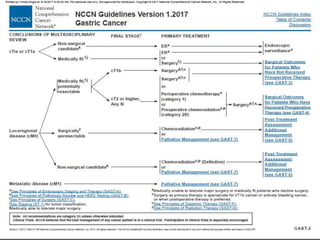
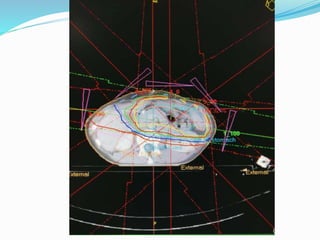
Treatment of
gastric CA
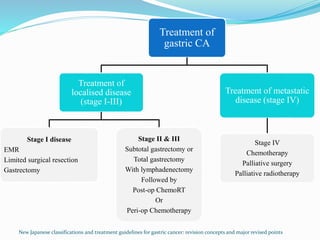
Treatment of
localised disease
(stage I-III)
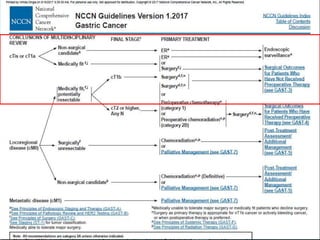
Stage I disease
EMR
Limited surgical resection
Gastrectomy
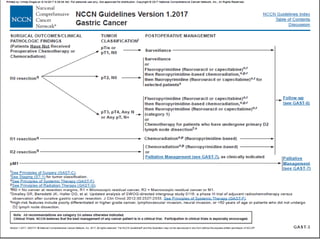
Stage II & III
Subtotal gastrectomy or
Total gastrectomy
With lymphadenectomy
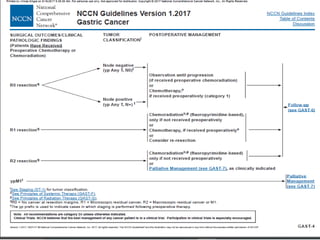
Followed by
Post-op ChemoRT
Or
Peri-op Chemotherapy
Treatment of metastatic
disease (stage IV)
Stage IV
Chemotherapy
Palliative surgery
Palliative radiotherapy
New Japanese classifications and treatment guidelines for gastric cancer: revision concepts and major revised points
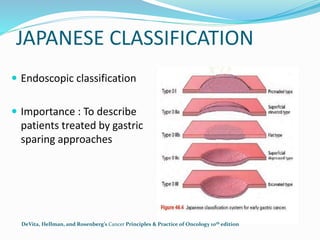
JAPANESE CLASSIFICATION
 Endoscopic classification
 Importance : To describe
patients treated by gastric
sparing approaches
DeVita, Hellman, and Rosenberg’s Cancer Principles & Practice of Oncology 10th edition
ENDOSCOPIC MUCOSAL
RESECTION
 Can be considered when
 Lesion < 2cm
 Well differentiated
 Does not penetrate beyond superficial submucosa
 Clear lateral and deep margins
NCCN
 Subset of patients can undergo R0 resection with out
lymphadenectomy or gastrectomy.
 Incidence of LN metastasis : 1%
 Complications
 Bleeding
 Perforation
 RCTs are needed to establish an outcome advantage over
open surgery
DeVita, Hellman, and Rosenberg’s Cancer Principles & Practice of Oncology 10th edition
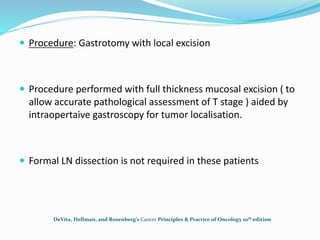
Limited Surgical Resection
 Low rate of LN involvement in EGC, limited resection
may be a reasonable option.
 No well accepted criteria.
 Based on available pathological studies-
a. Small < 3 cm intramucosal tumor
b. Non ulcerated intramucosal tumor
DeVita, Hellman, and Rosenberg’s Cancer Principles & Practice of Oncology 10th edition
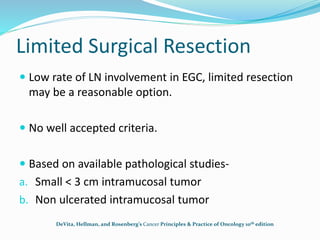
 Procedure: Gastrotomy with local excision
 Procedure performed with full thickness mucosal excision ( to
allow accurate pathological assessment of T stage ) aided by
intraopertaive gastroscopy for tumor localisation.
 Formal LN dissection is not required in these patients
DeVita, Hellman, and Rosenberg’s Cancer Principles & Practice of Oncology 10th edition
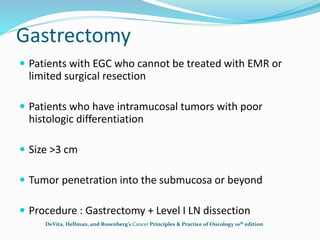
Gastrectomy
 Patients with EGC who cannot be treated with EMR or
limited surgical resection
 Patients who have intramucosal tumors with poor
histologic differentiation
 Size >3 cm
 Tumor penetration into the submucosa or beyond
 Procedure : Gastrectomy + Level I LN dissection
DeVita, Hellman, and Rosenberg’s Cancer Principles & Practice of Oncology 10th edition
SURGERY
 Cornerstone of treatment but not sufficient for cure
 Therapeutic goal : R0 resection
5 cm margin
Perez and brady’s principles and practice of radiation oncology (sixth edition)
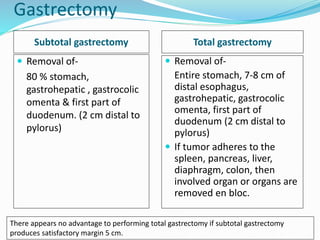
Gastrectomy
Subtotal gastrectomy
 Removal of-
80 % stomach,
gastrohepatic , gastrocolic
omenta & first part of
duodenum. (2 cm distal to
pylorus)
Total gastrectomy
 Removal of-
Entire stomach, 7-8 cm of
distal esophagus,
gastrohepatic, gastrocolic
omenta, first part of
duodenum (2 cm distal to
pylorus)
 If tumor adheres to the
spleen, pancreas, liver,
diaphragm, colon, then
involved organ or organs are
removed en bloc.
There appears no advantage to performing total gastrectomy if subtotal gastrectomy
produces satisfactory margin 5 cm.
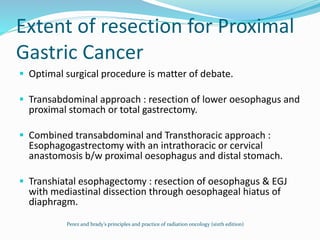
Extent of resection for Proximal
Gastric Cancer
 Optimal surgical procedure is matter of debate.
 Transabdominal approach : resection of lower oesophagus and
proximal stomach or total gastrectomy.
 Combined transabdominal and Transthoracic approach :
Esophagogastrectomy with an intrathoracic or cervical
anastomosis b/w proximal oesophagus and distal stomach.
 Transhiatal esophagectomy : resection of oesophagus & EGJ
with mediastinal dissection through oesophageal hiatus of
diaphragm.
Perez and brady’s principles and practice of radiation oncology (sixth edition)
Extent of resection for Mid &
Distal Gastric Cancer
 Depends on the gross and microscopic status of
surgical margins.
 Three small prospective RCTs compared total
gastrectomy with subtotal gastrectomy concluded
that when general oncologic goal of R0 resection can
be achieved by gastric preserving approach, partial
gastrectomy is preferred over total gastrectomy
Perez and brady’s principles and practice of radiation oncology (sixth edition)
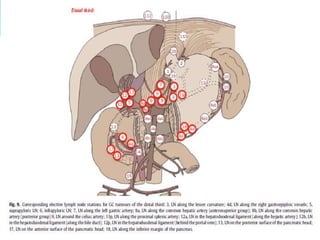
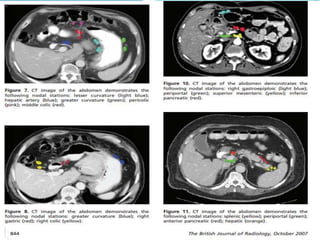
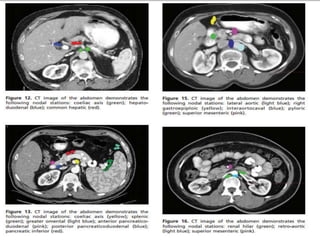
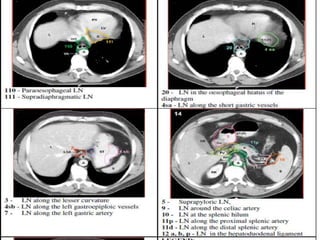
Extent of lymphadenectomy
Japanese Research Society for the study of Gastric Cancer
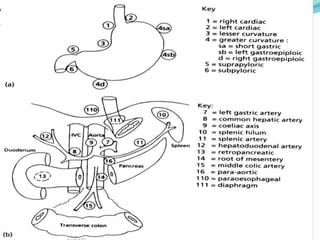
 N1 : LN stations 1-6 (perigastric LN)
 N2 : LN stations 7-11 (extra perigastric LN)
 N3 : LN stations 12-14 (hepatoduodenal LN)
 N4 : LN stations 15-16 (paraaortic LN)
 Removal and analysis of at least 15 LNs is required.
DeVita, Hellman, and Rosenberg’s Cancer Principles & Practice of Oncology 10th edition
Lymph Node Dissection
D1- removal of involved proximal and distal stomach with
margin or total gastrectomy along with removal of lesser and
greater omental lymph nodes
(Includes right and left cardiac lymph nodes, right gastric
artery and supra and infra pyloric nodes)
D2 – D1 plus removal of all nodes along left gastric artery,
common hepatic artery, celiac artery, splenic hilum and artery
D3 – D2 plus omentectomy, clearance of porta hepatis lymph
nodes and para-aortic lymph nodes, splenectomy,
pancreatectomy.
DeVita, Hellman, and Rosenberg’s Cancer Principles & Practice of Oncology 10th edition
Partial pancreatectomy & splenectomy
 Multiple trials have demonstrated that routine splenectomy
and pancreatectomy for gastric cancer does not increase
survival and is associated with increased morbidity and
mortality except in cases where direct extension of tumor.
 Bozzetti et al 1997, Csendes et al 2002, Wu et al 2006, Dutch
trial, MRC trial
DeVita, Hellman, and Rosenberg’s Cancer Principles & Practice of Oncology 10th edition
 Perioperative chemotherapy :
 Rapid increase in cell growth of metastases after a primary
tumor has been removed related to a decline in certain
circulating factors
 Neoadjuvant chemotherapy
 Allows higher rate of R0 resection
 Early treatment of micro metastatic disease
DeVita, Hellman, and Rosenberg’s Cancer Principles & Practice of Oncology 10th edition
Results
 The five most recent trials indicate that adjuvant therapy
decreases the risk of recurrence by approximately 10%
 The use of systemic therapy plus potentially curative
resection is considered a standard of care for patients
with locally advanced gastric cancers.
 The most effective regimen to use, whether or not it is
best to give therapy peri operatively, and the role of
postoperative radiation plus systemic therapy are the
focus of ongoing clinical research trials.
DeVita, Hellman, and Rosenberg’s Cancer Principles & Practice of Oncology 10th edition
Adjuvant Intraperitoneal Therapy
 Peritoneal recurrence is a common pattern of failure
 Median survival time : 3 to 6 months
 The data are a mixture of retrospective reviews, pilot
phase 2 trials, and several small phase 3 trials.
 No definitive conclusions yet
DeVita, Hellman, and Rosenberg’s Cancer Principles & Practice of Oncology 10th edition
Need for RT/ CTRT
 High rates of local and regional failure following surgery
 Marked variability in radiation schedule, sequence with
surgery, use of concurrent and maintenance
chemotherapy
DeVita, Hellman, and Rosenberg’s Cancer Principles & Practice of Oncology 10th edition
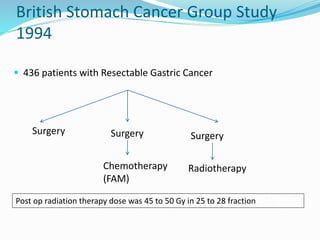
British Stomach Cancer Group Study
1994
 436 patients with Resectable Gastric Cancer
Surgery Surgery Surgery
Chemotherapy
(FAM)
Radiotherapy
Post op radiation therapy dose was 45 to 50 Gy in 25 to 28 fraction
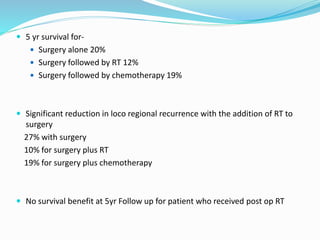
 5 yr survival for-
 Surgery alone 20%
 Surgery followed by RT 12%
 Surgery followed by chemotherapy 19%
 Significant reduction in loco regional recurrence with the addition of RT to
surgery
27% with surgery
10% for surgery plus RT
19% for surgery plus chemotherapy
 No survival benefit at 5yr Follow up for patient who received post op RT
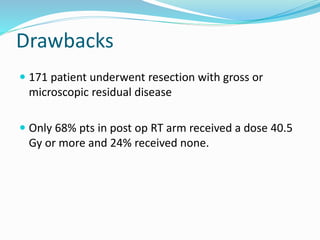
Drawbacks
 171 patient underwent resection with gross or
microscopic residual disease
 Only 68% pts in post op RT arm received a dose 40.5
Gy or more and 24% received none.
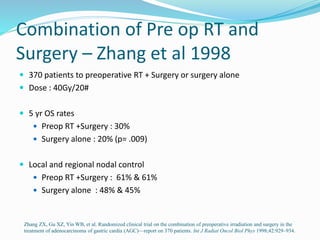
Combination of Pre op RT and
Surgery – Zhang et al 1998
 370 patients to preoperative RT + Surgery or surgery alone
 Dose : 40Gy/20#
 5 yr OS rates
 Preop RT +Surgery : 30%
 Surgery alone : 20% (p= .009)
 Local and regional nodal control
 Preop RT +Surgery : 61% & 61%
 Surgery alone : 48% & 45%
Zhang ZX, Gu XZ, Yin WB, et al. Randomized clinical trial on the combination of preoperative irradiation and surgery in the
treatment of adenocarcinoma of gastric cardia (AGC)—report on 370 patients. Int J Radiat Oncol Biol Phys 1998;42:929–934.
Meta-analysis
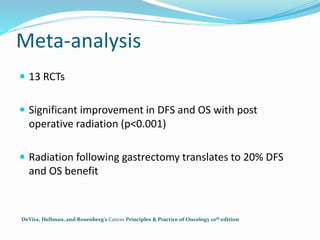
 13 RCTs
 Significant improvement in DFS and OS with post
operative radiation (p<0.001)
 Radiation following gastrectomy translates to 20% DFS
and OS benefit
DeVita, Hellman, and Rosenberg’s Cancer Principles & Practice of Oncology 10th edition
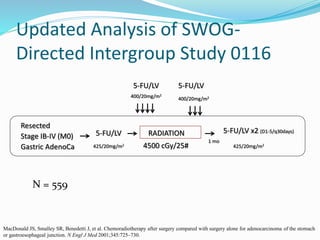
Resected
Stage IB-IV (M0)
Gastric AdenoCa
5-FU/LV
5-FU/LV 5-FU/LV
5-FU/LV x2 (D1-5/q30days)RADIATION
4500 cGy/25# 425/20mg/m2
400/20mg/m2
400/20mg/m2
425/20mg/m2
1 mo
MacDonald JS, Smalley SR, Benedetti J, et al. Chemoradiotherapy after surgery compared with surgery alone for adenocarcinoma of the stomach
or gastroesophageal junction. N Engl J Med 2001;345:725–730.
Updated Analysis of SWOG-
Directed Intergroup Study 0116
N = 559
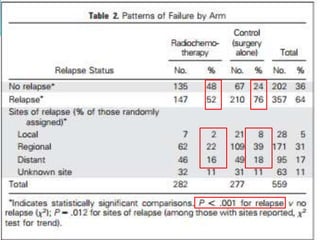
CONCLUSION
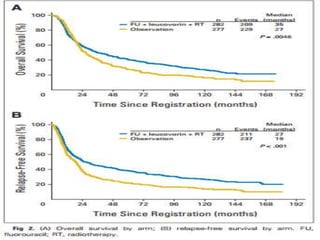
 Intergroup 0116 (INT-0116) demonstrates strong persistent
benefit from adjuvant radiochemotherapy.
 Toxicities, including second malignancies, appear acceptable,
given the magnitude of RFS and OS improvement.
 LRF reduction may account for the majority of overall relapse
reduction.
 Adjuvant radiochemotherapy remains a rational standard
therapy for curatively resected gastric cancer with primaries
T3 or greater and/or positive nodes.
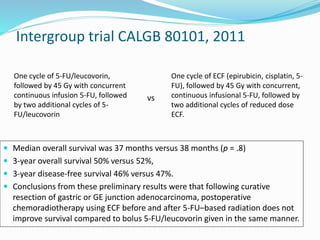
Intergroup trial CALGB 80101, 2011
 Median overall survival was 37 months versus 38 months (p = .8)
 3-year overall survival 50% versus 52%,
 3-year disease-free survival 46% versus 47%.
 Conclusions from these preliminary results were that following curative
resection of gastric or GE junction adenocarcinoma, postoperative
chemoradiotherapy using ECF before and after 5-FU–based radiation does not
improve survival compared to bolus 5-FU/leucovorin given in the same manner.
One cycle of 5-FU/leucovorin,
followed by 45 Gy with concurrent
continuous infusion 5-FU, followed
by two additional cycles of 5-
FU/leucovorin
One cycle of ECF (epirubicin, cisplatin, 5-
FU), followed by 45 Gy with concurrent,
continuous infusional 5-FU, followed by
two additional cycles of reduced dose
ECF.
vs
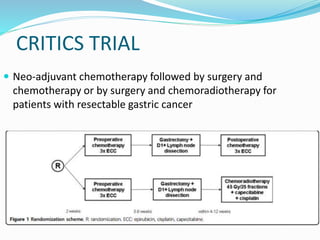
CRITICS TRIAL
 Neo-adjuvant chemotherapy followed by surgery and
chemotherapy or by surgery and chemoradiotherapy for
patients with resectable gastric cancer
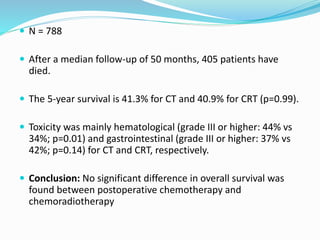
 N = 788
 After a median follow-up of 50 months, 405 patients have
died.
 The 5-year survival is 41.3% for CT and 40.9% for CRT (p=0.99).
 Toxicity was mainly hematological (grade III or higher: 44% vs
34%; p=0.01) and gastrointestinal (grade III or higher: 37% vs
42%; p=0.14) for CT and CRT, respectively.
 Conclusion: No significant difference in overall survival was
found between postoperative chemotherapy and
chemoradiotherapy
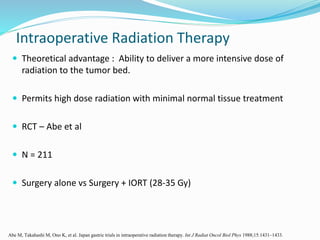
 Theoretical advantage : Ability to deliver a more intensive dose of
radiation to the tumor bed.
 Permits high dose radiation with minimal normal tissue treatment
 RCT – Abe et al
 N = 211
 Surgery alone vs Surgery + IORT (28-35 Gy)
Intraoperative Radiation Therapy
Abe M, Takahashi M, Ono K, et al. Japan gastric trials in intraoperative radiation therapy. Int J Radiat Oncol Biol Phys 1988;15:1431–1433.
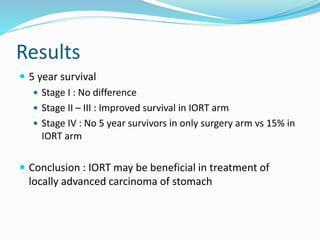
Results
 5 year survival
 Stage I : No difference
 Stage II – III : Improved survival in IORT arm
 Stage IV : No 5 year survivors in only surgery arm vs 15% in
IORT arm
 Conclusion : IORT may be beneficial in treatment of
locally advanced carcinoma of stomach
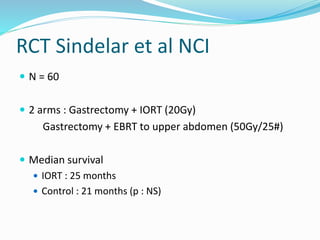
RCT Sindelar et al NCI
 N = 60
 2 arms : Gastrectomy + IORT (20Gy)
Gastrectomy + EBRT to upper abdomen (50Gy/25#)
 Median survival
 IORT : 25 months
 Control : 21 months (p : NS)
SIMULATION
 Supine
 Immobilization
 Arms : Overhead
 Legs : Knee support
 Oral and Intravenous contrast
Perez and brady’s principles and practice of radiation oncology (sixth edition)
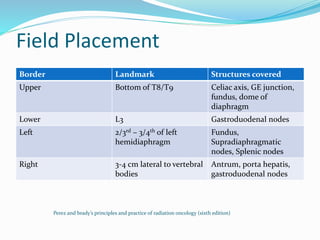
Field Placement
Border Landmark Structures covered
Upper Bottom of T8/T9 Celiac axis, GE junction,
fundus, dome of
diaphragm
Lower L3 Gastroduodenal nodes
Left 2/3rd – 3/4th of left
hemidiaphragm
Fundus,
Supradiaphragmatic
nodes, Splenic nodes
Right 3-4 cm lateral to vertebral
bodies
Antrum, porta hepatis,
gastroduodenal nodes
Perez and brady’s principles and practice of radiation oncology (sixth edition)
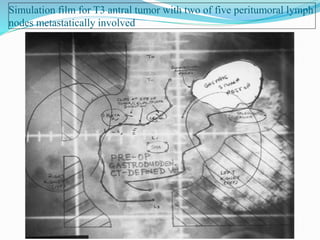
Simulation film for T3 antral tumor with two of five peritumoral lymph
nodes metastatically involved
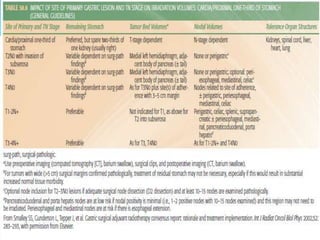
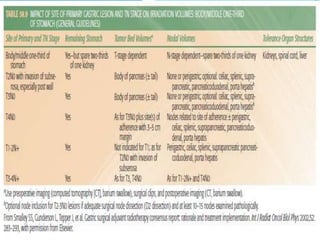
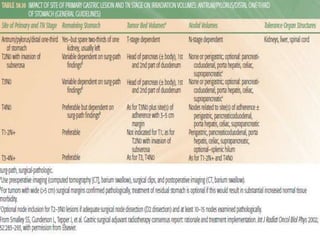
Target Volume
 GTV : Pre-op/unresectable cases/ NACT
 CTV
 PTV
Perez and brady’s principles and practice of radiation oncology (sixth edition)
Target Volumes in Unresected cases
 Gross tumor volumes (GTV) : GTV_T + GTV_N.
 GTV_T : Primary tumor (including the perigastric tumor
extension)
 In case of induction/neoadjuvant CT, GTV prior to this.
General recommendations for CTV
definition
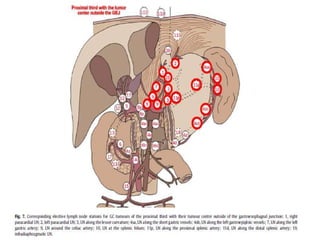
 Proximal 1/3rd : contour of the stomach with exclusion of
pylorus and antrum , 5 cm margin from GTV.
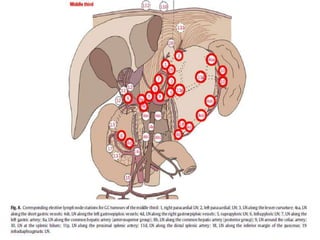
 Middle 1/3rd : contour of the stomach from cardia to
pylorus.
 Distal 1/3rd : contour of the stomach with exclusion of
cardia and fundus, 5 cm margin from GTV
 If pyloric/ duodenal invasion : CTV expanded along
duodenum with a 3 cm margin
Perez and brady’s principles and practice of radiation oncology (sixth edition)
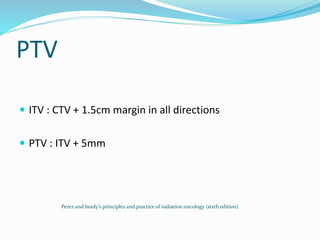
PTV
 ITV : CTV + 1.5cm margin in all directions
 PTV : ITV + 5mm
Perez and brady’s principles and practice of radiation oncology (sixth edition)
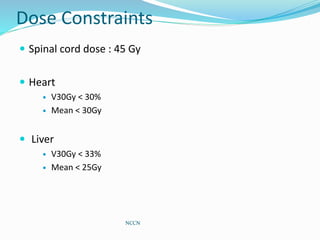
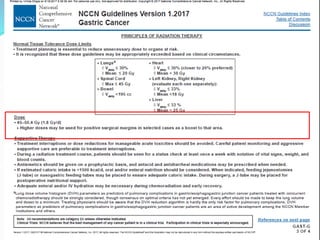
Dose Constraints
 Spinal cord dose : 45 Gy
 Heart
 V30Gy < 30%
 Mean < 30Gy
 Liver
 V30Gy < 33%
 Mean < 25Gy
NCCN
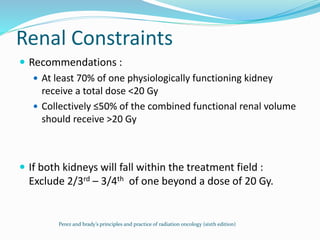
Renal Constraints
 Recommendations :
 At least 70% of one physiologically functioning kidney
receive a total dose <20 Gy
 Collectively ≤50% of the combined functional renal volume
should receive >20 Gy
 If both kidneys will fall within the treatment field :
Exclude 2/3rd – 3/4th of one beyond a dose of 20 Gy.
Perez and brady’s principles and practice of radiation oncology (sixth edition)
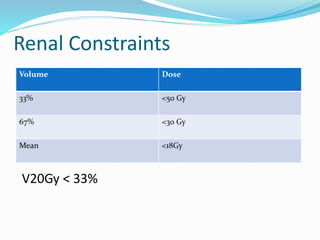
Renal Constraints
Volume Dose
33% <50 Gy
67% <30 Gy
Mean <18Gy
V20Gy < 33%
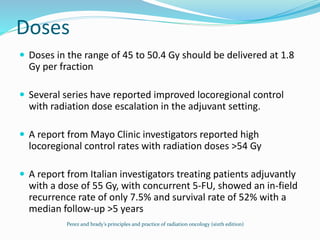
Doses
 Doses in the range of 45 to 50.4 Gy should be delivered at 1.8
Gy per fraction
 Several series have reported improved locoregional control
with radiation dose escalation in the adjuvant setting.
 A report from Mayo Clinic investigators reported high
locoregional control rates with radiation doses >54 Gy
 A report from Italian investigators treating patients adjuvantly
with a dose of 55 Gy, with concurrent 5-FU, showed an in-field
recurrence rate of only 7.5% and survival rate of 52% with a
median follow-up >5 years
Perez and brady’s principles and practice of radiation oncology (sixth edition)
 With regimens using single daily fractions, the usual dose
is 45Gy delivered in 1.8- to 2-Gy fractions over 5 weeks
with a field reduction after 45 Gy in patients receiving
boost-field treatments.
 Reduced boost fields to small areas of residual disease
and a small volume of stomach or small intestine
sometimes can be cautiously carried to doses of 55 to 60
Gy with multifield techniques
Perez and brady’s principles and practice of radiation oncology (sixth edition)
Thank
you!

Ca stomach

  • 4.
    Treatment of gastric CA Treatmentof localised disease (stage I-III) Stage I disease EMR Limited surgical resection Gastrectomy Stage II & III Subtotal gastrectomy or Total gastrectomy With lymphadenectomy Followed by Post-op ChemoRT Or Peri-op Chemotherapy Treatment of metastatic disease (stage IV) Stage IV Chemotherapy Palliative surgery Palliative radiotherapy New Japanese classifications and treatment guidelines for gastric cancer: revision concepts and major revised points
  • 6.
    JAPANESE CLASSIFICATION  Endoscopicclassification  Importance : To describe patients treated by gastric sparing approaches DeVita, Hellman, and Rosenberg’s Cancer Principles & Practice of Oncology 10th edition
  • 7.
    ENDOSCOPIC MUCOSAL RESECTION  Canbe considered when  Lesion < 2cm  Well differentiated  Does not penetrate beyond superficial submucosa  Clear lateral and deep margins NCCN
  • 8.
     Subset ofpatients can undergo R0 resection with out lymphadenectomy or gastrectomy.  Incidence of LN metastasis : 1%  Complications  Bleeding  Perforation  RCTs are needed to establish an outcome advantage over open surgery DeVita, Hellman, and Rosenberg’s Cancer Principles & Practice of Oncology 10th edition
  • 9.
    Limited Surgical Resection Low rate of LN involvement in EGC, limited resection may be a reasonable option.  No well accepted criteria.  Based on available pathological studies- a. Small < 3 cm intramucosal tumor b. Non ulcerated intramucosal tumor DeVita, Hellman, and Rosenberg’s Cancer Principles & Practice of Oncology 10th edition
  • 10.
     Procedure: Gastrotomywith local excision  Procedure performed with full thickness mucosal excision ( to allow accurate pathological assessment of T stage ) aided by intraopertaive gastroscopy for tumor localisation.  Formal LN dissection is not required in these patients DeVita, Hellman, and Rosenberg’s Cancer Principles & Practice of Oncology 10th edition
  • 11.
    Gastrectomy  Patients withEGC who cannot be treated with EMR or limited surgical resection  Patients who have intramucosal tumors with poor histologic differentiation  Size >3 cm  Tumor penetration into the submucosa or beyond  Procedure : Gastrectomy + Level I LN dissection DeVita, Hellman, and Rosenberg’s Cancer Principles & Practice of Oncology 10th edition
  • 14.
    SURGERY  Cornerstone oftreatment but not sufficient for cure  Therapeutic goal : R0 resection 5 cm margin Perez and brady’s principles and practice of radiation oncology (sixth edition)
  • 15.
    Gastrectomy Subtotal gastrectomy  Removalof- 80 % stomach, gastrohepatic , gastrocolic omenta & first part of duodenum. (2 cm distal to pylorus) Total gastrectomy  Removal of- Entire stomach, 7-8 cm of distal esophagus, gastrohepatic, gastrocolic omenta, first part of duodenum (2 cm distal to pylorus)  If tumor adheres to the spleen, pancreas, liver, diaphragm, colon, then involved organ or organs are removed en bloc. There appears no advantage to performing total gastrectomy if subtotal gastrectomy produces satisfactory margin 5 cm.
  • 16.
    Extent of resectionfor Proximal Gastric Cancer  Optimal surgical procedure is matter of debate.  Transabdominal approach : resection of lower oesophagus and proximal stomach or total gastrectomy.  Combined transabdominal and Transthoracic approach : Esophagogastrectomy with an intrathoracic or cervical anastomosis b/w proximal oesophagus and distal stomach.  Transhiatal esophagectomy : resection of oesophagus & EGJ with mediastinal dissection through oesophageal hiatus of diaphragm. Perez and brady’s principles and practice of radiation oncology (sixth edition)
  • 17.
    Extent of resectionfor Mid & Distal Gastric Cancer  Depends on the gross and microscopic status of surgical margins.  Three small prospective RCTs compared total gastrectomy with subtotal gastrectomy concluded that when general oncologic goal of R0 resection can be achieved by gastric preserving approach, partial gastrectomy is preferred over total gastrectomy Perez and brady’s principles and practice of radiation oncology (sixth edition)
  • 18.
    Extent of lymphadenectomy JapaneseResearch Society for the study of Gastric Cancer  N1 : LN stations 1-6 (perigastric LN)  N2 : LN stations 7-11 (extra perigastric LN)  N3 : LN stations 12-14 (hepatoduodenal LN)  N4 : LN stations 15-16 (paraaortic LN)  Removal and analysis of at least 15 LNs is required. DeVita, Hellman, and Rosenberg’s Cancer Principles & Practice of Oncology 10th edition
  • 19.
    Lymph Node Dissection D1-removal of involved proximal and distal stomach with margin or total gastrectomy along with removal of lesser and greater omental lymph nodes (Includes right and left cardiac lymph nodes, right gastric artery and supra and infra pyloric nodes) D2 – D1 plus removal of all nodes along left gastric artery, common hepatic artery, celiac artery, splenic hilum and artery D3 – D2 plus omentectomy, clearance of porta hepatis lymph nodes and para-aortic lymph nodes, splenectomy, pancreatectomy. DeVita, Hellman, and Rosenberg’s Cancer Principles & Practice of Oncology 10th edition
  • 20.
    Partial pancreatectomy &splenectomy  Multiple trials have demonstrated that routine splenectomy and pancreatectomy for gastric cancer does not increase survival and is associated with increased morbidity and mortality except in cases where direct extension of tumor.  Bozzetti et al 1997, Csendes et al 2002, Wu et al 2006, Dutch trial, MRC trial DeVita, Hellman, and Rosenberg’s Cancer Principles & Practice of Oncology 10th edition
  • 22.
     Perioperative chemotherapy:  Rapid increase in cell growth of metastases after a primary tumor has been removed related to a decline in certain circulating factors  Neoadjuvant chemotherapy  Allows higher rate of R0 resection  Early treatment of micro metastatic disease DeVita, Hellman, and Rosenberg’s Cancer Principles & Practice of Oncology 10th edition
  • 25.
  • 26.
     The fivemost recent trials indicate that adjuvant therapy decreases the risk of recurrence by approximately 10%  The use of systemic therapy plus potentially curative resection is considered a standard of care for patients with locally advanced gastric cancers.  The most effective regimen to use, whether or not it is best to give therapy peri operatively, and the role of postoperative radiation plus systemic therapy are the focus of ongoing clinical research trials. DeVita, Hellman, and Rosenberg’s Cancer Principles & Practice of Oncology 10th edition
  • 27.
    Adjuvant Intraperitoneal Therapy Peritoneal recurrence is a common pattern of failure  Median survival time : 3 to 6 months  The data are a mixture of retrospective reviews, pilot phase 2 trials, and several small phase 3 trials.  No definitive conclusions yet DeVita, Hellman, and Rosenberg’s Cancer Principles & Practice of Oncology 10th edition
  • 29.
    Need for RT/CTRT  High rates of local and regional failure following surgery  Marked variability in radiation schedule, sequence with surgery, use of concurrent and maintenance chemotherapy DeVita, Hellman, and Rosenberg’s Cancer Principles & Practice of Oncology 10th edition
  • 30.
    British Stomach CancerGroup Study 1994  436 patients with Resectable Gastric Cancer Surgery Surgery Surgery Chemotherapy (FAM) Radiotherapy Post op radiation therapy dose was 45 to 50 Gy in 25 to 28 fraction
  • 31.
     5 yrsurvival for-  Surgery alone 20%  Surgery followed by RT 12%  Surgery followed by chemotherapy 19%  Significant reduction in loco regional recurrence with the addition of RT to surgery 27% with surgery 10% for surgery plus RT 19% for surgery plus chemotherapy  No survival benefit at 5yr Follow up for patient who received post op RT
  • 32.
    Drawbacks  171 patientunderwent resection with gross or microscopic residual disease  Only 68% pts in post op RT arm received a dose 40.5 Gy or more and 24% received none.
  • 33.
    Combination of Preop RT and Surgery – Zhang et al 1998  370 patients to preoperative RT + Surgery or surgery alone  Dose : 40Gy/20#  5 yr OS rates  Preop RT +Surgery : 30%  Surgery alone : 20% (p= .009)  Local and regional nodal control  Preop RT +Surgery : 61% & 61%  Surgery alone : 48% & 45% Zhang ZX, Gu XZ, Yin WB, et al. Randomized clinical trial on the combination of preoperative irradiation and surgery in the treatment of adenocarcinoma of gastric cardia (AGC)—report on 370 patients. Int J Radiat Oncol Biol Phys 1998;42:929–934.
  • 34.
    Meta-analysis  13 RCTs Significant improvement in DFS and OS with post operative radiation (p<0.001)  Radiation following gastrectomy translates to 20% DFS and OS benefit DeVita, Hellman, and Rosenberg’s Cancer Principles & Practice of Oncology 10th edition
  • 35.
    Resected Stage IB-IV (M0) GastricAdenoCa 5-FU/LV 5-FU/LV 5-FU/LV 5-FU/LV x2 (D1-5/q30days)RADIATION 4500 cGy/25# 425/20mg/m2 400/20mg/m2 400/20mg/m2 425/20mg/m2 1 mo MacDonald JS, Smalley SR, Benedetti J, et al. Chemoradiotherapy after surgery compared with surgery alone for adenocarcinoma of the stomach or gastroesophageal junction. N Engl J Med 2001;345:725–730. Updated Analysis of SWOG- Directed Intergroup Study 0116 N = 559
  • 38.
    CONCLUSION  Intergroup 0116(INT-0116) demonstrates strong persistent benefit from adjuvant radiochemotherapy.  Toxicities, including second malignancies, appear acceptable, given the magnitude of RFS and OS improvement.  LRF reduction may account for the majority of overall relapse reduction.  Adjuvant radiochemotherapy remains a rational standard therapy for curatively resected gastric cancer with primaries T3 or greater and/or positive nodes.
  • 39.
    Intergroup trial CALGB80101, 2011  Median overall survival was 37 months versus 38 months (p = .8)  3-year overall survival 50% versus 52%,  3-year disease-free survival 46% versus 47%.  Conclusions from these preliminary results were that following curative resection of gastric or GE junction adenocarcinoma, postoperative chemoradiotherapy using ECF before and after 5-FU–based radiation does not improve survival compared to bolus 5-FU/leucovorin given in the same manner. One cycle of 5-FU/leucovorin, followed by 45 Gy with concurrent continuous infusion 5-FU, followed by two additional cycles of 5- FU/leucovorin One cycle of ECF (epirubicin, cisplatin, 5- FU), followed by 45 Gy with concurrent, continuous infusional 5-FU, followed by two additional cycles of reduced dose ECF. vs
  • 40.
    CRITICS TRIAL  Neo-adjuvantchemotherapy followed by surgery and chemotherapy or by surgery and chemoradiotherapy for patients with resectable gastric cancer
  • 41.
     N =788  After a median follow-up of 50 months, 405 patients have died.  The 5-year survival is 41.3% for CT and 40.9% for CRT (p=0.99).  Toxicity was mainly hematological (grade III or higher: 44% vs 34%; p=0.01) and gastrointestinal (grade III or higher: 37% vs 42%; p=0.14) for CT and CRT, respectively.  Conclusion: No significant difference in overall survival was found between postoperative chemotherapy and chemoradiotherapy
  • 42.
     Theoretical advantage: Ability to deliver a more intensive dose of radiation to the tumor bed.  Permits high dose radiation with minimal normal tissue treatment  RCT – Abe et al  N = 211  Surgery alone vs Surgery + IORT (28-35 Gy) Intraoperative Radiation Therapy Abe M, Takahashi M, Ono K, et al. Japan gastric trials in intraoperative radiation therapy. Int J Radiat Oncol Biol Phys 1988;15:1431–1433.
  • 43.
    Results  5 yearsurvival  Stage I : No difference  Stage II – III : Improved survival in IORT arm  Stage IV : No 5 year survivors in only surgery arm vs 15% in IORT arm  Conclusion : IORT may be beneficial in treatment of locally advanced carcinoma of stomach
  • 44.
    RCT Sindelar etal NCI  N = 60  2 arms : Gastrectomy + IORT (20Gy) Gastrectomy + EBRT to upper abdomen (50Gy/25#)  Median survival  IORT : 25 months  Control : 21 months (p : NS)
  • 49.
    SIMULATION  Supine  Immobilization Arms : Overhead  Legs : Knee support  Oral and Intravenous contrast Perez and brady’s principles and practice of radiation oncology (sixth edition)
  • 50.
    Field Placement Border LandmarkStructures covered Upper Bottom of T8/T9 Celiac axis, GE junction, fundus, dome of diaphragm Lower L3 Gastroduodenal nodes Left 2/3rd – 3/4th of left hemidiaphragm Fundus, Supradiaphragmatic nodes, Splenic nodes Right 3-4 cm lateral to vertebral bodies Antrum, porta hepatis, gastroduodenal nodes Perez and brady’s principles and practice of radiation oncology (sixth edition)
  • 51.
    Simulation film forT3 antral tumor with two of five peritumoral lymph nodes metastatically involved
  • 52.
    Target Volume  GTV: Pre-op/unresectable cases/ NACT  CTV  PTV Perez and brady’s principles and practice of radiation oncology (sixth edition)
  • 53.
    Target Volumes inUnresected cases  Gross tumor volumes (GTV) : GTV_T + GTV_N.  GTV_T : Primary tumor (including the perigastric tumor extension)  In case of induction/neoadjuvant CT, GTV prior to this.
  • 54.
    General recommendations forCTV definition  Proximal 1/3rd : contour of the stomach with exclusion of pylorus and antrum , 5 cm margin from GTV.  Middle 1/3rd : contour of the stomach from cardia to pylorus.  Distal 1/3rd : contour of the stomach with exclusion of cardia and fundus, 5 cm margin from GTV  If pyloric/ duodenal invasion : CTV expanded along duodenum with a 3 cm margin Perez and brady’s principles and practice of radiation oncology (sixth edition)
  • 63.
    PTV  ITV :CTV + 1.5cm margin in all directions  PTV : ITV + 5mm Perez and brady’s principles and practice of radiation oncology (sixth edition)
  • 68.
    Dose Constraints  Spinalcord dose : 45 Gy  Heart  V30Gy < 30%  Mean < 30Gy  Liver  V30Gy < 33%  Mean < 25Gy NCCN
  • 69.
    Renal Constraints  Recommendations:  At least 70% of one physiologically functioning kidney receive a total dose <20 Gy  Collectively ≤50% of the combined functional renal volume should receive >20 Gy  If both kidneys will fall within the treatment field : Exclude 2/3rd – 3/4th of one beyond a dose of 20 Gy. Perez and brady’s principles and practice of radiation oncology (sixth edition)
  • 70.
    Renal Constraints Volume Dose 33%<50 Gy 67% <30 Gy Mean <18Gy V20Gy < 33%
  • 71.
    Doses  Doses inthe range of 45 to 50.4 Gy should be delivered at 1.8 Gy per fraction  Several series have reported improved locoregional control with radiation dose escalation in the adjuvant setting.  A report from Mayo Clinic investigators reported high locoregional control rates with radiation doses >54 Gy  A report from Italian investigators treating patients adjuvantly with a dose of 55 Gy, with concurrent 5-FU, showed an in-field recurrence rate of only 7.5% and survival rate of 52% with a median follow-up >5 years Perez and brady’s principles and practice of radiation oncology (sixth edition)
  • 72.
     With regimensusing single daily fractions, the usual dose is 45Gy delivered in 1.8- to 2-Gy fractions over 5 weeks with a field reduction after 45 Gy in patients receiving boost-field treatments.  Reduced boost fields to small areas of residual disease and a small volume of stomach or small intestine sometimes can be cautiously carried to doses of 55 to 60 Gy with multifield techniques Perez and brady’s principles and practice of radiation oncology (sixth edition)
  • 78.

Editor's Notes

  • #21 In 2006 wu et al published a trial 221 pts. undergoing D1 and D2 resection with curative intent.
  • #52 Simulation film for T3 antral tumor with two of five peritumoral lymph nodes metastatically involved (radical subtotal gastrectomy with D1 node dissection). Simulation film identifies areas at risk for recurrence, including preoperative gastric/tumor bed (defined by preoperative computed tomography [CT] scan), anastomotic sites and gastric stump (staple line seen on precontrast simulation films and marked on postintravenous pyelogram/postcontrast film), and regional lymphatics (celiac, porta hepatis, superior mesenteric artery, and splenic nodes identified on CT, and pancreaticoduodenal nodes lie in C-loop of duodenum identified by preoperative CT). The right kidney is spared for approximately three-fourths of its volume, whereas the left kidney has about one-third of its volume blocked