

BUSINESS MODEL CANVAS
Prof. Bhasker Vijaykumar
Bhatt
PG in-charge (ME-TCP) & Assistant
Professor in Faculty of Civil Engg.
Sarvajanik College of Engg. &
Tech., Surat
+91-98258-35364
www.bvbhatt.com
bhasker.bhatt@scet.ac.in
Startup
Weekend
SuratPowered by
Google for Entrepreneurs appear.in
.co
At BMEF Seminar Hall, Vesu, Surat
Pre-event
workshop (Date:
04-07-2017)
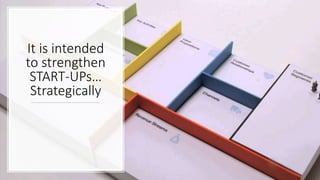
It is intended
to strengthen
START-UPs…
Strategically
It is an answer to…
“I want to
develop a clear plan
on how to grow
my idea into
something bigger”
Osterwalder A., Pigneur Y (2010) Business Model Generation
Reference: Osterwalder A., Pigneur Y (2010) Business Model Generation
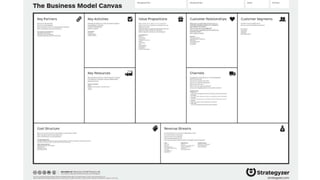
A One-page answer to…
The both,
• What you do (or want to do), and
• How you go about doing it
• It enables structured conversations around management and
strategy by laying out the crucial activities and challenges
involved with “your” initiative and how they relate to each
other.
Reference: Osterwalder A., Pigneur Y (2010) Business Model Generation
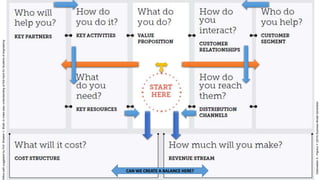
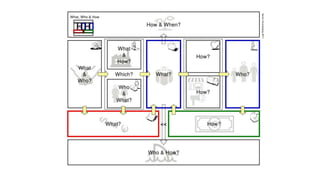
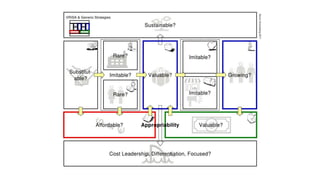
CAN WE CREATE A BALANCE HERE?
OsterwalderA.,PigneurY(2010)BusinessModelGeneration
rkflowpathsuggestedbyProf.BhaskerV.Bhatt,tomakeeasyunderstandingatfirsthandforStudentsofengineering
How?
• To make a Business Model Canvas, the easiest way to start is by filling
out what you do.
• Start from a blank canvas and add notes with keywords to each
building block of the canvas.
• If you use ‘sticky notes’ for this, you can move ideas around as you fill
out each building block in the canvas.
Caution…
• Don’t fall in love with your first idea…
• Instead
sketch out alternative business models for the same product,
service, or technology.
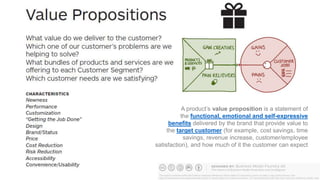
A product’s value proposition is a statement of
the functional, emotional and self-expressive
benefits delivered by the brand that provide value to
the target customer (for example, cost savings, time
savings, revenue increase, customer/employee
satisfaction), and how much of it the customer can expect
Value must always be considered from the buyer’s perspective.
• For the customer to consider buying your product, your
value proposition must…
• Be superior not only to the competition but also to doing
nothing (that is, the status quo).
• Differentiate you from the competition and focus on your
product’s unique benefits.
• Demonstrate an understanding of what your customers are
trying to achieve.
Understanding the customer’s role (that is, economic buyer, technical buyer, end-user) is critical
when developing a value proposition.
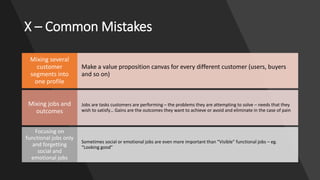
X – Common Mistakes
Make a value proposition canvas for every different customer (users, buyers
and so on)
Mixing several
customer
segments into
one profile
Jobs are tasks customers are performing – the problems they are attempting to solve – needs that they
wish to satisfy… Gains are the outcomes they want to achieve or avoid and eliminate in the case of pain
Mixing jobs and
outcomes
Sometimes social or emotional jobs are even more important than “Visible” functional jobs – eg.
“Looking good”
Focusing on
functional jobs only
and forgetting
social and
emotional jobs
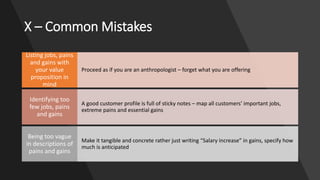
X – Common Mistakes
Proceed as if you are an anthropologist – forget what you are offering
Listing jobs, pains
and gains with
your value
proposition in
mind
A good customer profile is full of sticky notes – map all customers’ important jobs,
extreme pains and essential gains
Identifying too
few jobs, pains
and gains
Make it tangible and concrete rather just writing “Salary increase” in gains, specify how
much is anticipated
Being too vague
in descriptions of
pains and gains
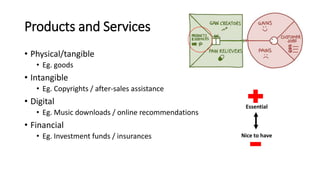
Products and Services
• Physical/tangible
• Eg. goods
• Intangible
• Eg. Copyrights / after-sales assistance
• Digital
• Eg. Music downloads / online recommendations
• Financial
• Eg. Investment funds / insurances
Essential
Nice to have
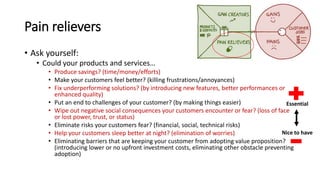
Pain relievers
• Ask yourself:
• Could your products and services…
• Produce savings? (time/money/efforts)
• Make your customers feel better? (killing frustrations/annoyances)
• Fix underperforming solutions? (by introducing new features, better performances or
enhanced quality)
• Put an end to challenges of your customer? (by making things easier)
• Wipe out negative social consequences your customers encounter or fear? (loss of face
or lost power, trust, or status)
• Eliminate risks your customers fear? (financial, social, technical risks)
• Help your customers sleep better at night? (elimination of worries)
• Eliminating barriers that are keeping your customer from adopting value proposition?
(introducing lower or no upfront investment costs, eliminating other obstacle preventing
adoption)
Essential
Nice to have
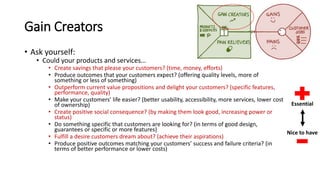
Gain Creators
• Ask yourself:
• Could your products and services…
• Create savings that please your customers? (time, money, efforts)
• Produce outcomes that your customers expect? (offering quality levels, more of
something or less of something)
• Outperform current value propositions and delight your customers? (specific features,
performance, quality)
• Make your customers’ life easier? (better usability, accessibility, more services, lower cost
of ownership)
• Create positive social consequence? (by making them look good, increasing power or
status)
• Do something specific that customers are looking for? (in terms of good design,
guarantees or specific or more features)
• Fulfill a desire customers dream about? (achieve their aspirations)
• Produce positive outcomes matching your customers’ success and failure criteria? (in
terms of better performance or lower costs)
Essential
Nice to have
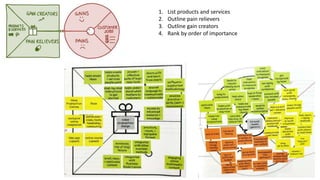
1. List products and services
2. Outline pain relievers
3. Outline gain creators
4. Rank by order of importance
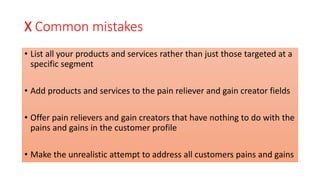
X Common mistakes
• List all your products and services rather than just those targeted at a
specific segment
• Add products and services to the pain reliever and gain creator fields
• Offer pain relievers and gain creators that have nothing to do with the
pains and gains in the customer profile
• Make the unrealistic attempt to address all customers pains and gains
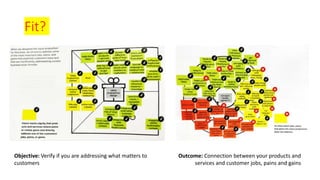
Fit?
Objective: Verify if you are addressing what matters to
customers
Outcome: Connection between your products and
services and customer jobs, pains and gains
Activity 1: Key business model questions
Write a brief response to the following questions.
1.How do you acquire customers?
2.After you have landed a new customer, how do you plan to relate to that customer and manage
the relationship (if at all)?
3.How do you charge your customers? What is your revenue model?
4.How much do you charge your customers? Can you calculate your revenues for the next month,
quarter and year?
5.What assets are available to you or under your control?
http://www.marsdd.com/mars-library/building-blocks-of-the-business-model-canvas/
Activity 1: Key business model questions
6.Who are your key partners?
7.What key activities do you need to engage in to deliver your value proposition?
8.What are your fixed costs?
9.What are your variable costs? Can you calculate your total cost for the next month, quarter and
year?
10.Does your revenue forecast demonstrate increased profitability towards the end of the
forecast period?
http://www.marsdd.com/mars-library/building-blocks-of-the-business-model-canvas/
VALUE
PROPOSITIONS
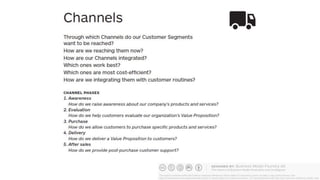
CHANNELS
CUSTOMER
RELATIONSHIPS
CUSTOMER
SEGMENTS
REVENUE STREAMSCOST STRUCTURE
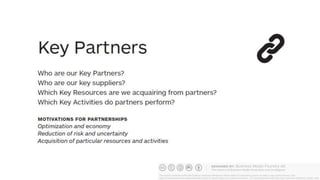
KEY
PARTNERS
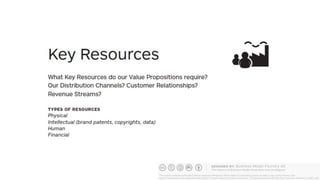
KEY
RESOURCES
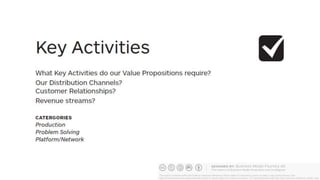
KEY
ACTIVITIES
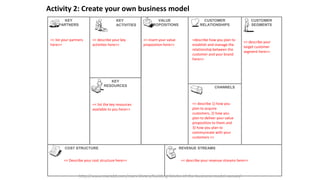
Activity 2: Create your own business model
<< insert your value
proposition here>>
<< Describe your cost structure here>>
<< list your partners
here>>
<< describe your revenue streams here>>
<< list the key resources
available to you here>>
<< describe your key
activities here>>
<describe how you plan to
establish and manage the
relationship between the
customer and your brand
here>>
<< describe 1) how you
plan to acquire
customers, 2) how you
plan to deliver your value
proposition to them and
3) how you plan to
communicate with your
customers >>
<< describe your
target customer
segment here>>
http://www.marsdd.com/mars-library/building-blocks-of-the-business-model-canvas/
Convert your work in
strategy
Activity 3: Consider your business model
• Does it work? Do the revenues outweigh the cost? Try estimating revenues
and cost for the next month ( or the first month of sales, if you are without
revenue for now)
• What are the risks to your business model? What parts of your business
model are most critical for your business to grow in a profitable manner?
• Are there things that can or should be changed to strengthen the business
model or reduce its risk?
http://www.marsdd.com/mars-library/building-blocks-of-the-business-model-canvas/
Activity 4: Clarify your business model assumptions
Check each response in the Building Model Canvas against the following criteria:
• How do you know what you wrote in each building block is true? Have you
made an assumption or do you have solid evidence—in the form of
documented facts?
• In the cases you have facts, label the response as “Fact” and make a note of your evidence.
• In the cases you have made assumptions, label the response as “Assumption.”
• Complete the activity by listing all the assumptions regarding your business
model on the next slide.
The next section will address how to test those assumptions.
http://www.marsdd.com/mars-library/building-blocks-of-the-business-model-canvas/
Activity 4: Clarify your business model assumptions
(cont’d)
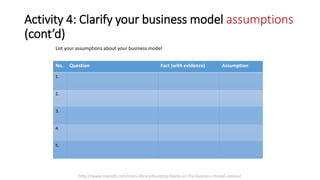
List your assumptions about your business model
No. Question Fact (with evidence) Assumption
1.
2.
3.
4.
5.
http://www.marsdd.com/mars-library/building-blocks-of-the-business-model-canvas/
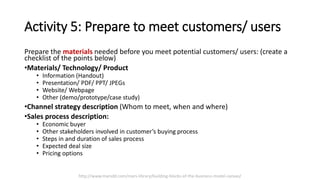
Activity 5: Prepare to meet customers/ users
Prepare the materials needed before you meet potential customers/ users: (create a
checklist of the points below)
•Materials/ Technology/ Product
• Information (Handout)
• Presentation/ PDF/ PPT/ JPEGs
• Website/ Webpage
• Other (demo/prototype/case study)
•Channel strategy description (Whom to meet, when and where)
•Sales process description:
• Economic buyer
• Other stakeholders involved in customer’s buying process
• Steps in and duration of sales process
• Expected deal size
• Pricing options
http://www.marsdd.com/mars-library/building-blocks-of-the-business-model-canvas/
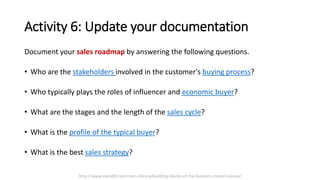
Activity 6: Update your documentation
Document your sales roadmap by answering the following questions.
• Who are the stakeholders involved in the customer's buying process?
• Who typically plays the roles of influencer and economic buyer?
• What are the stages and the length of the sales cycle?
• What is the profile of the typical buyer?
• What is the best sales strategy?
http://www.marsdd.com/mars-library/building-blocks-of-the-business-model-canvas/
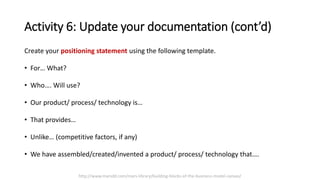
Activity 6: Update your documentation (cont’d)
Create your positioning statement using the following template.
• For… What?
• Who…. Will use?
• Our product/ process/ technology is…
• That provides…
• Unlike… (competitive factors, if any)
• We have assembled/created/invented a product/ process/ technology that….
http://www.marsdd.com/mars-library/building-blocks-of-the-business-model-canvas/
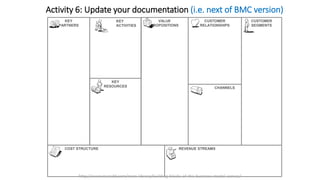
VALUE
PROPOSITIONS
CHANNELS
CUSTOMER
RELATIONSHIPS
CUSTOMER
SEGMENTS
REVENUE STREAMSCOST STRUCTURE
KEY
PARTNERS
KEY
RESOURCES
KEY
ACTIVITIES
Activity 6: Update your documentation (i.e. next of BMC version)
http://www.marsdd.com/mars-library/building-blocks-of-the-business-model-canvas/
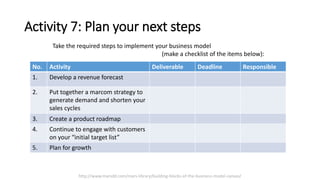
Activity 7: Plan your next steps
No. Activity Deliverable Deadline Responsible
1. Develop a revenue forecast
2. Put together a marcom strategy to
generate demand and shorten your
sales cycles
3. Create a product roadmap
4. Continue to engage with customers
on your “initial target list”
5. Plan for growth
Take the required steps to implement your business model
(make a checklist of the items below):
http://www.marsdd.com/mars-library/building-blocks-of-the-business-model-canvas/
Convert your work in Future
Business
Examples
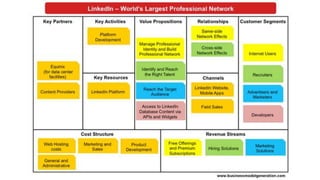
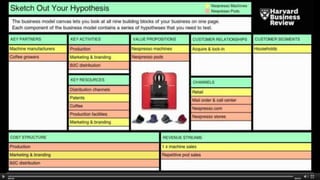
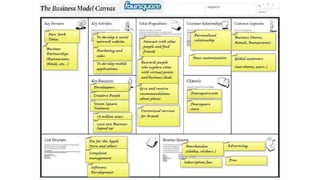
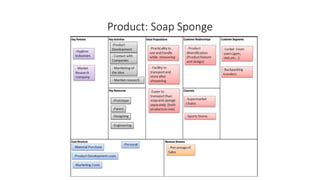
For understanding the concept on BMC
Product: Soap Sponge
References
• Aaker, D.A. (1996). Building Strong Brands. New York: Free Press.
• Blank, S.G. (2005). The Four Steps to the Epiphany. Self-published: Cafepress.com.
• BUSINESS MODEL ALCHEMIST (HTTP://BUSINESSMODELALCHEMIST.COM/TOOLS) AND (Strategyzer.com)
• MaRS DISCOVERY DISTRICT (http://www.marsdd.com/mars-library/value-proposition-a-reflection-of-the-
relationship-between-your-customer-and-brand/)
• Building blocks of the business model canvas (http://www.marsdd.com/mars-library/building-blocks-of-the-
business-model-canvas/)
• Value Proposition Design (https://strategyzer.com/books/value-proposition-design)
• Video Lecture tutorial (http://www.marsdd.com/mars-library/business-model-canvas-entrepreneurship-101-
201415/)
• http://www.slideshare.net/svanebjerg/business-model-canvas-9238780
THANKS
Axit Mehta & entire crew @
“Team Startup Weekend
Surat”

Business Model Canvas

  • 1.
    BUSINESS MODEL CANVAS Prof.Bhasker Vijaykumar Bhatt PG in-charge (ME-TCP) & Assistant Professor in Faculty of Civil Engg. Sarvajanik College of Engg. & Tech., Surat +91-98258-35364 www.bvbhatt.com bhasker.bhatt@scet.ac.in Startup Weekend SuratPowered by Google for Entrepreneurs appear.in .co At BMEF Seminar Hall, Vesu, Surat Pre-event workshop (Date: 04-07-2017)
  • 2.
    It is intended tostrengthen START-UPs… Strategically
  • 4.
    It is ananswer to… “I want to develop a clear plan on how to grow my idea into something bigger” Osterwalder A., Pigneur Y (2010) Business Model Generation Reference: Osterwalder A., Pigneur Y (2010) Business Model Generation
  • 5.
    A One-page answerto… The both, • What you do (or want to do), and • How you go about doing it • It enables structured conversations around management and strategy by laying out the crucial activities and challenges involved with “your” initiative and how they relate to each other. Reference: Osterwalder A., Pigneur Y (2010) Business Model Generation
  • 7.
    CAN WE CREATEA BALANCE HERE? OsterwalderA.,PigneurY(2010)BusinessModelGeneration rkflowpathsuggestedbyProf.BhaskerV.Bhatt,tomakeeasyunderstandingatfirsthandforStudentsofengineering
  • 8.
    How? • To makea Business Model Canvas, the easiest way to start is by filling out what you do. • Start from a blank canvas and add notes with keywords to each building block of the canvas. • If you use ‘sticky notes’ for this, you can move ideas around as you fill out each building block in the canvas.
  • 9.
    Caution… • Don’t fallin love with your first idea… • Instead sketch out alternative business models for the same product, service, or technology.
  • 10.
    A product’s valueproposition is a statement of the functional, emotional and self-expressive benefits delivered by the brand that provide value to the target customer (for example, cost savings, time savings, revenue increase, customer/employee satisfaction), and how much of it the customer can expect
  • 11.
    Value must alwaysbe considered from the buyer’s perspective. • For the customer to consider buying your product, your value proposition must… • Be superior not only to the competition but also to doing nothing (that is, the status quo). • Differentiate you from the competition and focus on your product’s unique benefits. • Demonstrate an understanding of what your customers are trying to achieve. Understanding the customer’s role (that is, economic buyer, technical buyer, end-user) is critical when developing a value proposition.
  • 12.
    X – CommonMistakes Make a value proposition canvas for every different customer (users, buyers and so on) Mixing several customer segments into one profile Jobs are tasks customers are performing – the problems they are attempting to solve – needs that they wish to satisfy… Gains are the outcomes they want to achieve or avoid and eliminate in the case of pain Mixing jobs and outcomes Sometimes social or emotional jobs are even more important than “Visible” functional jobs – eg. “Looking good” Focusing on functional jobs only and forgetting social and emotional jobs
  • 13.
    X – CommonMistakes Proceed as if you are an anthropologist – forget what you are offering Listing jobs, pains and gains with your value proposition in mind A good customer profile is full of sticky notes – map all customers’ important jobs, extreme pains and essential gains Identifying too few jobs, pains and gains Make it tangible and concrete rather just writing “Salary increase” in gains, specify how much is anticipated Being too vague in descriptions of pains and gains
  • 14.
    Products and Services •Physical/tangible • Eg. goods • Intangible • Eg. Copyrights / after-sales assistance • Digital • Eg. Music downloads / online recommendations • Financial • Eg. Investment funds / insurances Essential Nice to have
  • 15.
    Pain relievers • Askyourself: • Could your products and services… • Produce savings? (time/money/efforts) • Make your customers feel better? (killing frustrations/annoyances) • Fix underperforming solutions? (by introducing new features, better performances or enhanced quality) • Put an end to challenges of your customer? (by making things easier) • Wipe out negative social consequences your customers encounter or fear? (loss of face or lost power, trust, or status) • Eliminate risks your customers fear? (financial, social, technical risks) • Help your customers sleep better at night? (elimination of worries) • Eliminating barriers that are keeping your customer from adopting value proposition? (introducing lower or no upfront investment costs, eliminating other obstacle preventing adoption) Essential Nice to have
  • 16.
    Gain Creators • Askyourself: • Could your products and services… • Create savings that please your customers? (time, money, efforts) • Produce outcomes that your customers expect? (offering quality levels, more of something or less of something) • Outperform current value propositions and delight your customers? (specific features, performance, quality) • Make your customers’ life easier? (better usability, accessibility, more services, lower cost of ownership) • Create positive social consequence? (by making them look good, increasing power or status) • Do something specific that customers are looking for? (in terms of good design, guarantees or specific or more features) • Fulfill a desire customers dream about? (achieve their aspirations) • Produce positive outcomes matching your customers’ success and failure criteria? (in terms of better performance or lower costs) Essential Nice to have
  • 17.
    1. List productsand services 2. Outline pain relievers 3. Outline gain creators 4. Rank by order of importance
  • 18.
    X Common mistakes •List all your products and services rather than just those targeted at a specific segment • Add products and services to the pain reliever and gain creator fields • Offer pain relievers and gain creators that have nothing to do with the pains and gains in the customer profile • Make the unrealistic attempt to address all customers pains and gains
  • 19.
    Fit? Objective: Verify ifyou are addressing what matters to customers Outcome: Connection between your products and services and customer jobs, pains and gains
  • 28.
    Activity 1: Keybusiness model questions Write a brief response to the following questions. 1.How do you acquire customers? 2.After you have landed a new customer, how do you plan to relate to that customer and manage the relationship (if at all)? 3.How do you charge your customers? What is your revenue model? 4.How much do you charge your customers? Can you calculate your revenues for the next month, quarter and year? 5.What assets are available to you or under your control? http://www.marsdd.com/mars-library/building-blocks-of-the-business-model-canvas/
  • 29.
    Activity 1: Keybusiness model questions 6.Who are your key partners? 7.What key activities do you need to engage in to deliver your value proposition? 8.What are your fixed costs? 9.What are your variable costs? Can you calculate your total cost for the next month, quarter and year? 10.Does your revenue forecast demonstrate increased profitability towards the end of the forecast period? http://www.marsdd.com/mars-library/building-blocks-of-the-business-model-canvas/
  • 30.
    VALUE PROPOSITIONS CHANNELS CUSTOMER RELATIONSHIPS CUSTOMER SEGMENTS REVENUE STREAMSCOST STRUCTURE KEY PARTNERS KEY RESOURCES KEY ACTIVITIES Activity2: Create your own business model << insert your value proposition here>> << Describe your cost structure here>> << list your partners here>> << describe your revenue streams here>> << list the key resources available to you here>> << describe your key activities here>> <describe how you plan to establish and manage the relationship between the customer and your brand here>> << describe 1) how you plan to acquire customers, 2) how you plan to deliver your value proposition to them and 3) how you plan to communicate with your customers >> << describe your target customer segment here>> http://www.marsdd.com/mars-library/building-blocks-of-the-business-model-canvas/
  • 31.
    Convert your workin strategy
  • 32.
    Activity 3: Consideryour business model • Does it work? Do the revenues outweigh the cost? Try estimating revenues and cost for the next month ( or the first month of sales, if you are without revenue for now) • What are the risks to your business model? What parts of your business model are most critical for your business to grow in a profitable manner? • Are there things that can or should be changed to strengthen the business model or reduce its risk? http://www.marsdd.com/mars-library/building-blocks-of-the-business-model-canvas/
  • 33.
    Activity 4: Clarifyyour business model assumptions Check each response in the Building Model Canvas against the following criteria: • How do you know what you wrote in each building block is true? Have you made an assumption or do you have solid evidence—in the form of documented facts? • In the cases you have facts, label the response as “Fact” and make a note of your evidence. • In the cases you have made assumptions, label the response as “Assumption.” • Complete the activity by listing all the assumptions regarding your business model on the next slide. The next section will address how to test those assumptions. http://www.marsdd.com/mars-library/building-blocks-of-the-business-model-canvas/
  • 34.
    Activity 4: Clarifyyour business model assumptions (cont’d) List your assumptions about your business model No. Question Fact (with evidence) Assumption 1. 2. 3. 4. 5. http://www.marsdd.com/mars-library/building-blocks-of-the-business-model-canvas/
  • 35.
    Activity 5: Prepareto meet customers/ users Prepare the materials needed before you meet potential customers/ users: (create a checklist of the points below) •Materials/ Technology/ Product • Information (Handout) • Presentation/ PDF/ PPT/ JPEGs • Website/ Webpage • Other (demo/prototype/case study) •Channel strategy description (Whom to meet, when and where) •Sales process description: • Economic buyer • Other stakeholders involved in customer’s buying process • Steps in and duration of sales process • Expected deal size • Pricing options http://www.marsdd.com/mars-library/building-blocks-of-the-business-model-canvas/
  • 36.
    Activity 6: Updateyour documentation Document your sales roadmap by answering the following questions. • Who are the stakeholders involved in the customer's buying process? • Who typically plays the roles of influencer and economic buyer? • What are the stages and the length of the sales cycle? • What is the profile of the typical buyer? • What is the best sales strategy? http://www.marsdd.com/mars-library/building-blocks-of-the-business-model-canvas/
  • 37.
    Activity 6: Updateyour documentation (cont’d) Create your positioning statement using the following template. • For… What? • Who…. Will use? • Our product/ process/ technology is… • That provides… • Unlike… (competitive factors, if any) • We have assembled/created/invented a product/ process/ technology that…. http://www.marsdd.com/mars-library/building-blocks-of-the-business-model-canvas/
  • 38.
    VALUE PROPOSITIONS CHANNELS CUSTOMER RELATIONSHIPS CUSTOMER SEGMENTS REVENUE STREAMSCOST STRUCTURE KEY PARTNERS KEY RESOURCES KEY ACTIVITIES Activity6: Update your documentation (i.e. next of BMC version) http://www.marsdd.com/mars-library/building-blocks-of-the-business-model-canvas/
  • 39.
    Activity 7: Planyour next steps No. Activity Deliverable Deadline Responsible 1. Develop a revenue forecast 2. Put together a marcom strategy to generate demand and shorten your sales cycles 3. Create a product roadmap 4. Continue to engage with customers on your “initial target list” 5. Plan for growth Take the required steps to implement your business model (make a checklist of the items below): http://www.marsdd.com/mars-library/building-blocks-of-the-business-model-canvas/
  • 40.
    Convert your workin Future Business
  • 44.
  • 48.
  • 49.
    References • Aaker, D.A.(1996). Building Strong Brands. New York: Free Press. • Blank, S.G. (2005). The Four Steps to the Epiphany. Self-published: Cafepress.com. • BUSINESS MODEL ALCHEMIST (HTTP://BUSINESSMODELALCHEMIST.COM/TOOLS) AND (Strategyzer.com) • MaRS DISCOVERY DISTRICT (http://www.marsdd.com/mars-library/value-proposition-a-reflection-of-the- relationship-between-your-customer-and-brand/) • Building blocks of the business model canvas (http://www.marsdd.com/mars-library/building-blocks-of-the- business-model-canvas/) • Value Proposition Design (https://strategyzer.com/books/value-proposition-design) • Video Lecture tutorial (http://www.marsdd.com/mars-library/business-model-canvas-entrepreneurship-101- 201415/) • http://www.slideshare.net/svanebjerg/business-model-canvas-9238780
  • 50.
    THANKS Axit Mehta &entire crew @ “Team Startup Weekend Surat”

Editor's Notes

  • #40 Marcom (sometimes spelled "marcomm") is an abbreviation for "marketing communications." Marcom is targeted interaction with customers and prospects using one or more media, such as direct mail, newspapers and magazines, television, radio, billboards, telemarketing, and the Internet. (Source: whatis.techtarget.com/definition/marcom-or-marcomm)