Introduction to
Business Model
Canvas
@luiserazoga
What is a
Business
Model?
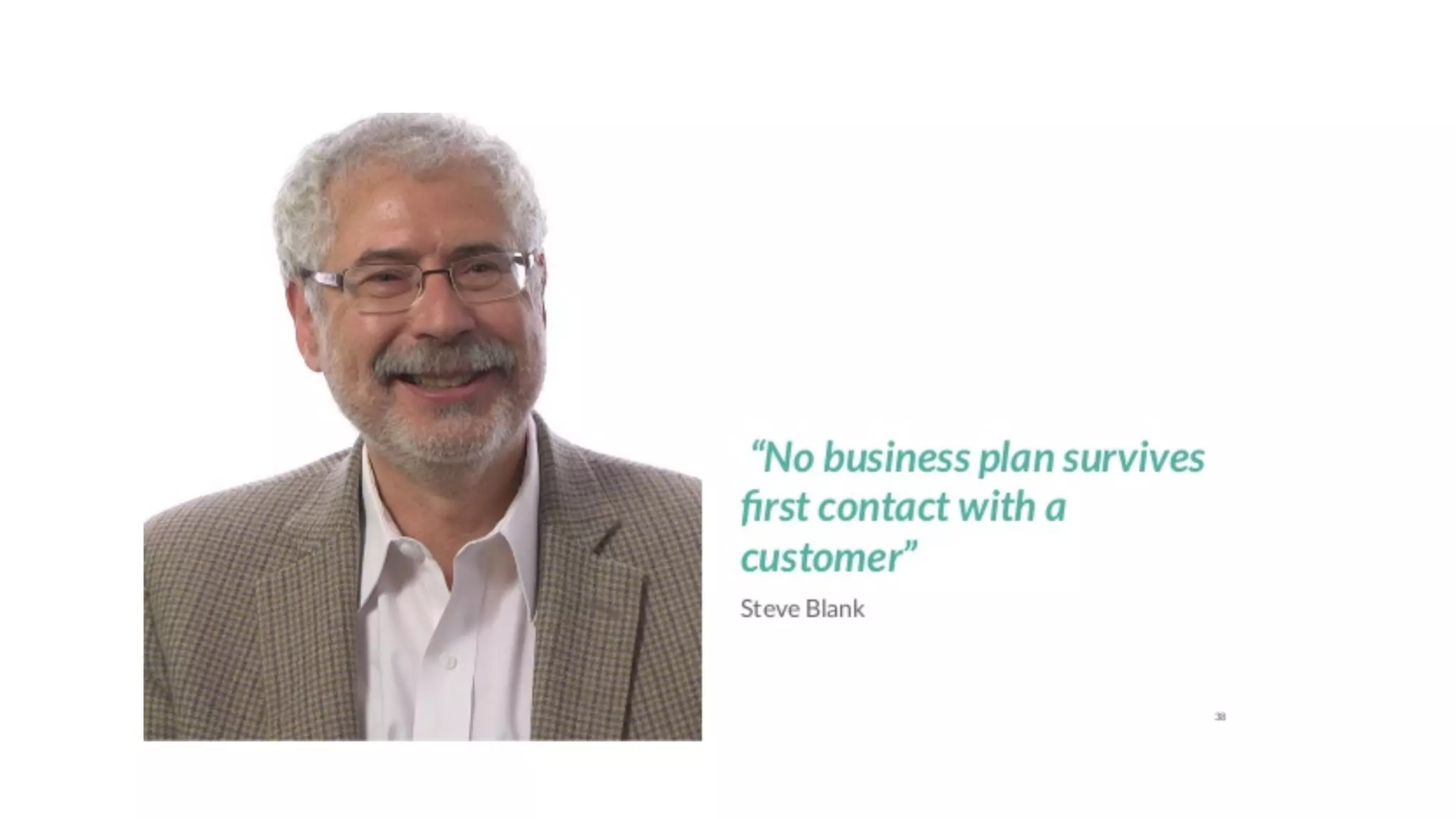
“A business model
describes the
rationale of how to
create, deliver,
and capture value”
Steve Blank
Why use a
Canvas?
• Helps you understand and explain your idea/business better

• See your assumptions so you can test them
• Know what you don’t know
• Keeps your team on one page and on track
• REMEMBER: each section is an assumption – you will need to
test them!
When to use a
Business Model
Canvas?
• Co-create Strategic Planning
• Understanding Competition
• Prototype business models and test them
• Understanding Customers (B2B)
• Before doing a Business Plan
Why a Canvas
and not a
Business Plan?
• Useful later down the line.
• Take a lot of time (and often money) to prepare.
• Hard to change.
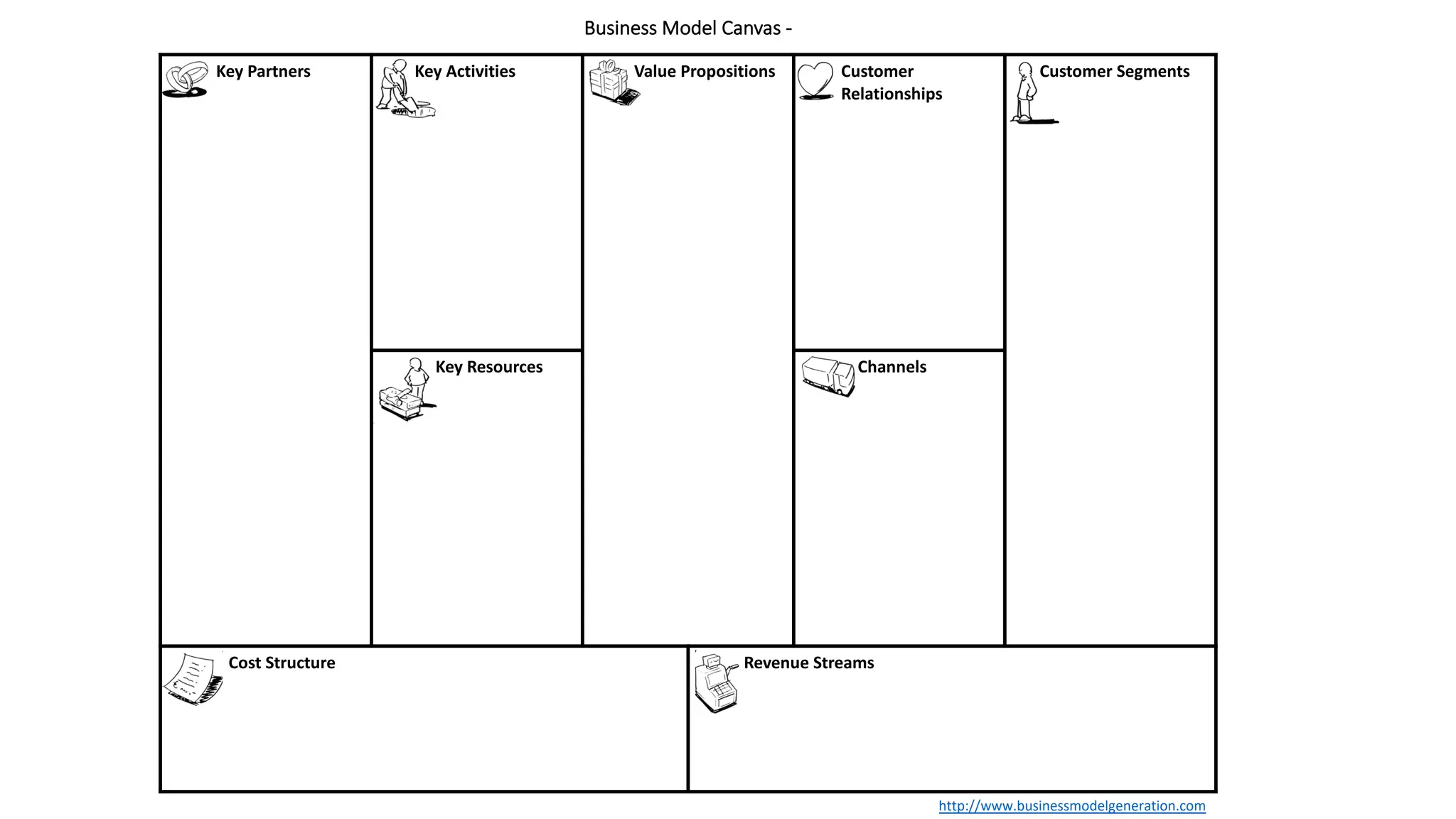
Business Model Canvas -
Key Partners Key Activities Value Propositions Customer
Relationships
Customer Segments
Key Resources Channels
Cost Structure Revenue Streams
http://www.businessmodelgeneration.com
Customer
Segments
• For whom are we creating value?
• Who are our most important customers?
Mass Market
Niche Market
Segmented
Diversified
Multi-side
Value
Proposition
• How does your solution create value?
• Which one of our customer’s problems or needs are
we helping to solve?
• How will it make your customer’s life better?
IMPORTANT: It is not a list of features!
“To turn your idea into a business
you need to iterate between
designing and testing business
models and value propositions
until you find what will work.”
Alexander Osterwalder
Simplicity
Cost reduction
Quality
Price
Accessibility
Channels
• Describes how a company communicates with and
reaches its Customer Segments to deliver a Value
Proposition
• Through which Channels do our Customer Segments
want to be reached?
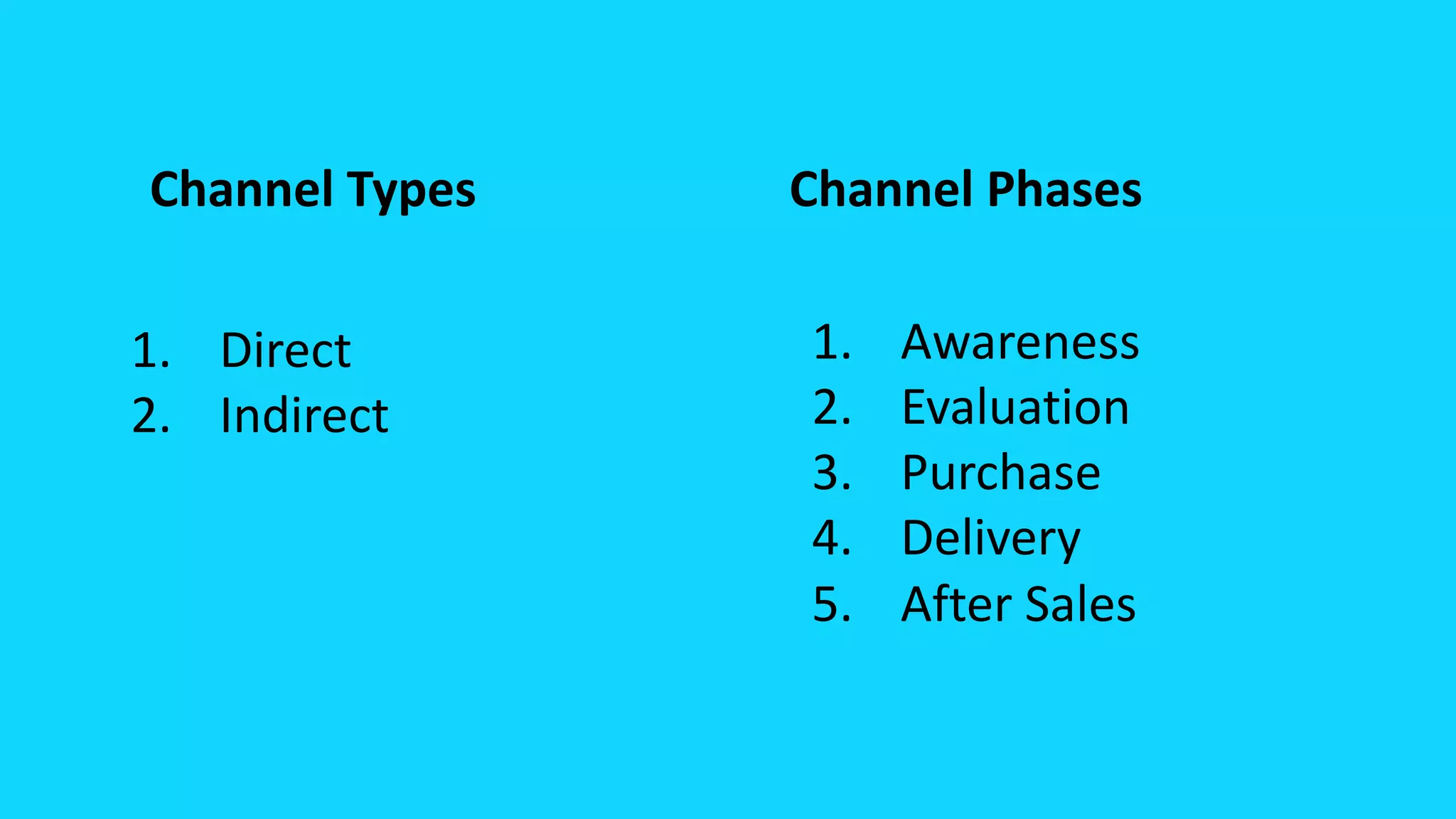
1. Awareness
2. Evaluation
3. Purchase
4. Delivery
5. After Sales
Channel PhasesChannel Types
1. Direct
2. Indirect
Customer
Relationships
Describes the type of relationships a company
establishes with specific Customer Segments.
• Which type of relationships does each of our
Customer Segments expect us to establish and
maintain with them?
• Personal assistance
• Dedicated personal assistance
• Self-service
• Automated services
• Communities
• Co-creation
Revenue
Streams
Represents the cash a company generates from
each Customer Segment
• For what value are our customers really willing to
pay?
• How would they prefer to pay?
• How much does each Revenue Stream contribute
to overall revenues?
Types
• Asset sale
• Usage fee
• Subscription fee
• Lending/Renting/Leasing
• Licensing
• Brokerage fee
• Advertising
Pricing Mechanisms – Fixed Pricing
• List price
• Product feature dependent
• Customer segment dependent
• Volume dependent
Pricing Mechanisms – Dynamic Pricing
• Negotiation
• Yield management
• Real-time-market
• Auctions
Key
Resources
Describe the most important assets required to make a
business model work
• What Key Resources do our Value Propositions
require? Our Distribution Channels? Customer
Relationships? Revenue Streams?
Categories
• Physical
• Intellectual
• Human
• Financial
Key
Activities
Describe the most important things a company must do
to make its business model work.
• What Key Activities do our Value Proposition require?
Our Distribution Channels? Customer Relationships?
Revenue Stream?
Categories
• Production
• Problem Solving
• Platform/Network
Key
Partnerships
Describes the network of suppliers and partners that
make the business model work
• Who are our Key Partners and Suppliers?
• Which resources are we acquiring from partners?
• Which activities do partners perform?
Types
• Strategic alliance between non-competitors
• Coopetition: Strategic partnership between competitors
• Join venture to develop new business
• Buyer-supplier relationship to assure reliable supplies
Cost
Structure
Describes all costs incurred to operate a business model.
• What are the most important costs inherent in our
business model?
• Which Key Resources are most expensive?
• Which Key Activities are most expensive?
• Are you Cost-Driven or Value-Driven?
Categories
• Fixed costs
• Variable costs
• Economies of scale
• Economies of scope

Introduction to Business Model Canvas