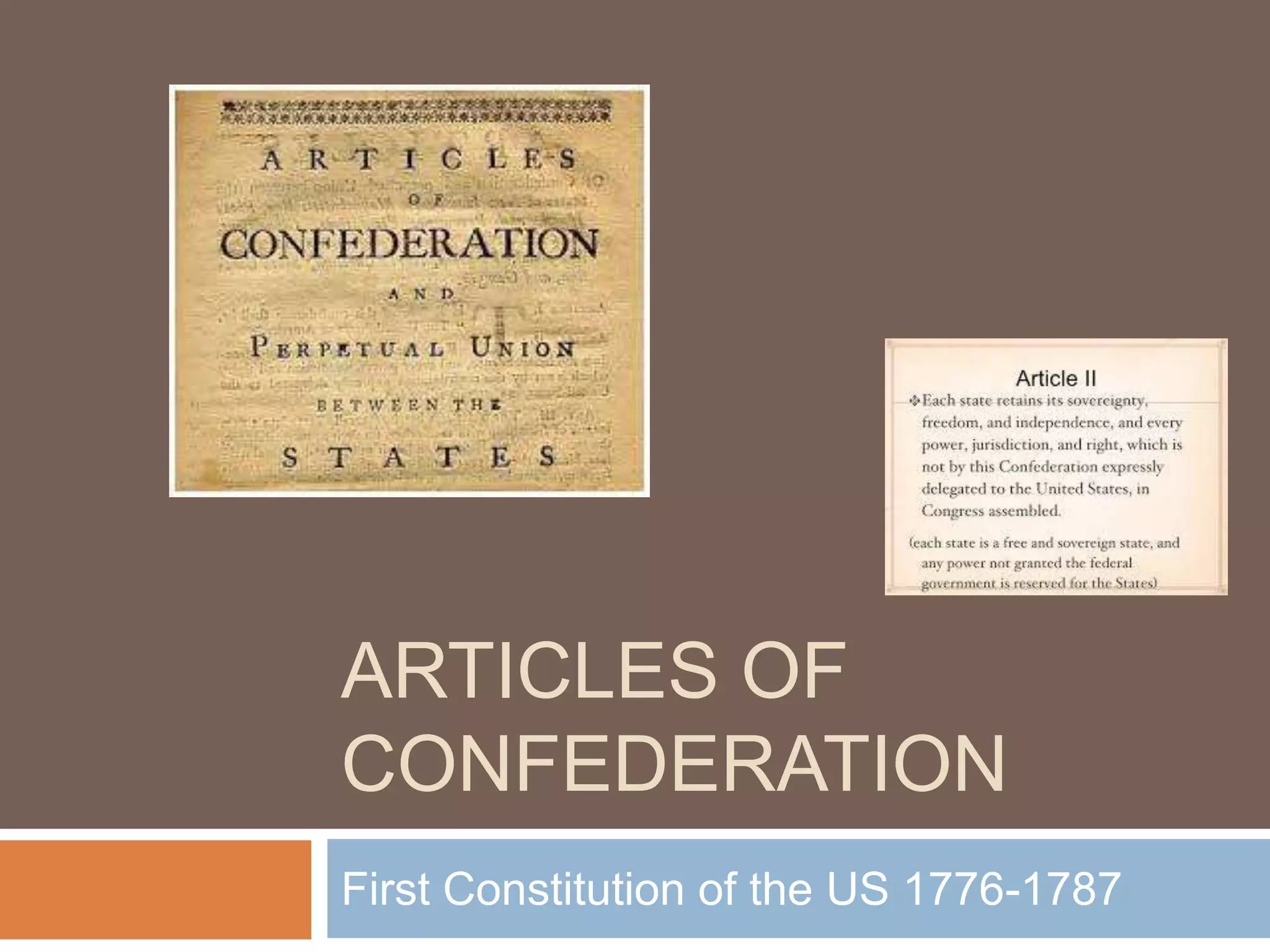
ARTICLES OF
CONFEDERATION
First Constitution of the US 1776-1787
Central Gov’t Under the Articles
 Single- chamber (unicameral) congress
 No executive branch or president
 Congress made up of one delegate from each
state w/ one vote each
 Congress’ powers limited to:
1. Foreign affairs
2. Defense
Articles of Confederation
Weak Central Gov’t
 No power to levy taxes
 No power to regulate trade between states
 No power to enforce laws
 Difficult to pass laws: needed 9/13 to pass a
law
 Needed consent from all 13 states to amend
the Articles
 No Executive Branch
 No Federal court system (Supreme Court)
Need for Stronger Gov’t
1. States began to argue over boundary lines and
tariffs. *(taxes)
2. Central gov’t had no money to maintain an army
and was $40 million in debt.
3. 1786 economic depression left many farmers in
debt. Gov’t could not pay soldiers
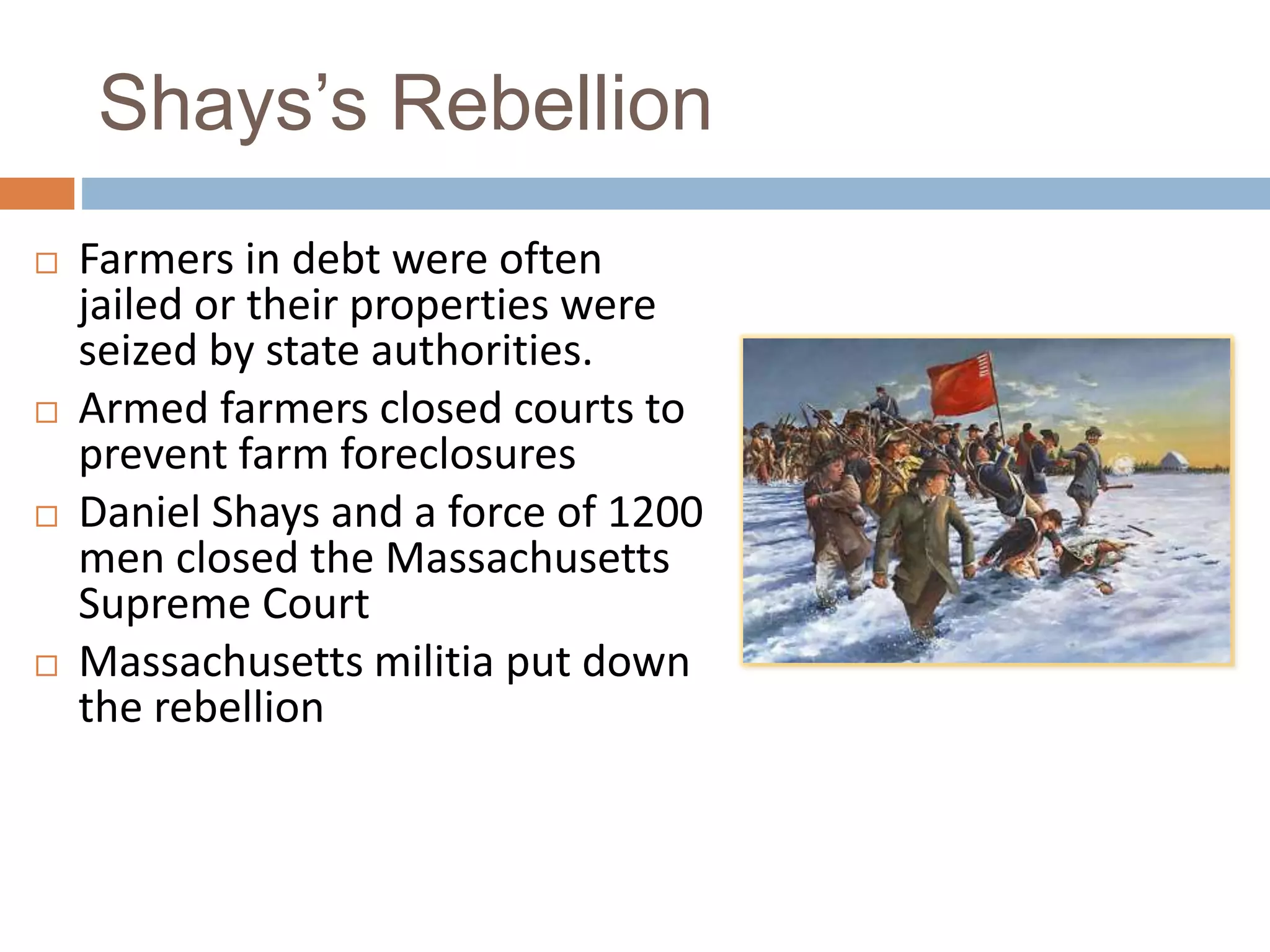
Shays’s Rebellion
 Farmers in debt were often
jailed or their properties were
seized by state authorities.
 Armed farmers closed courts to
prevent farm foreclosures
 Daniel Shays and a force of 1200
men closed the Massachusetts
Supreme Court
 Massachusetts militia put down
the rebellion
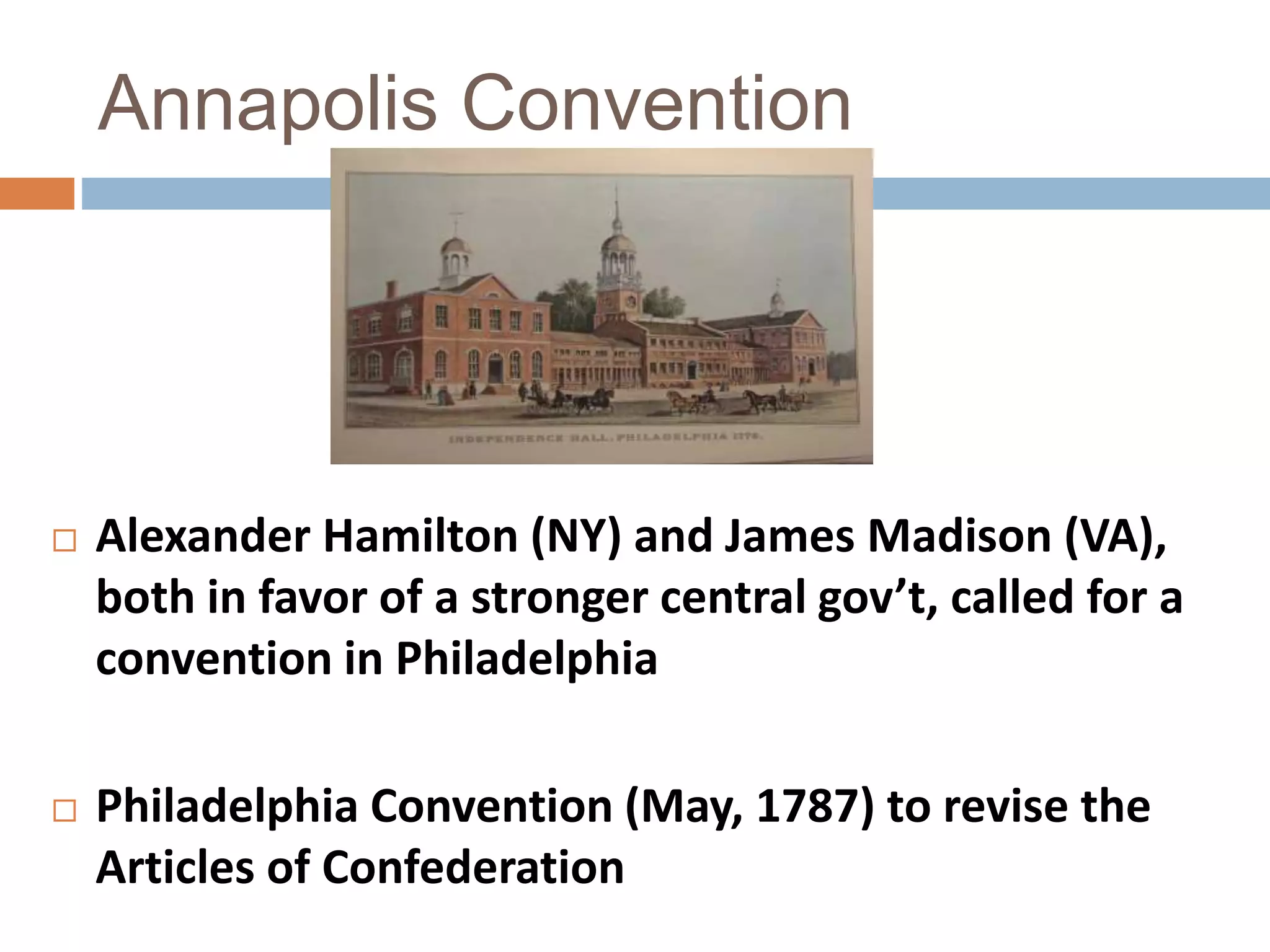
Annapolis Convention
 Alexander Hamilton (NY) and James Madison (VA),
both in favor of a stronger central gov’t, called for a
convention in Philadelphia
 Philadelphia Convention (May, 1787) to revise the
Articles of Confederation
Achievements
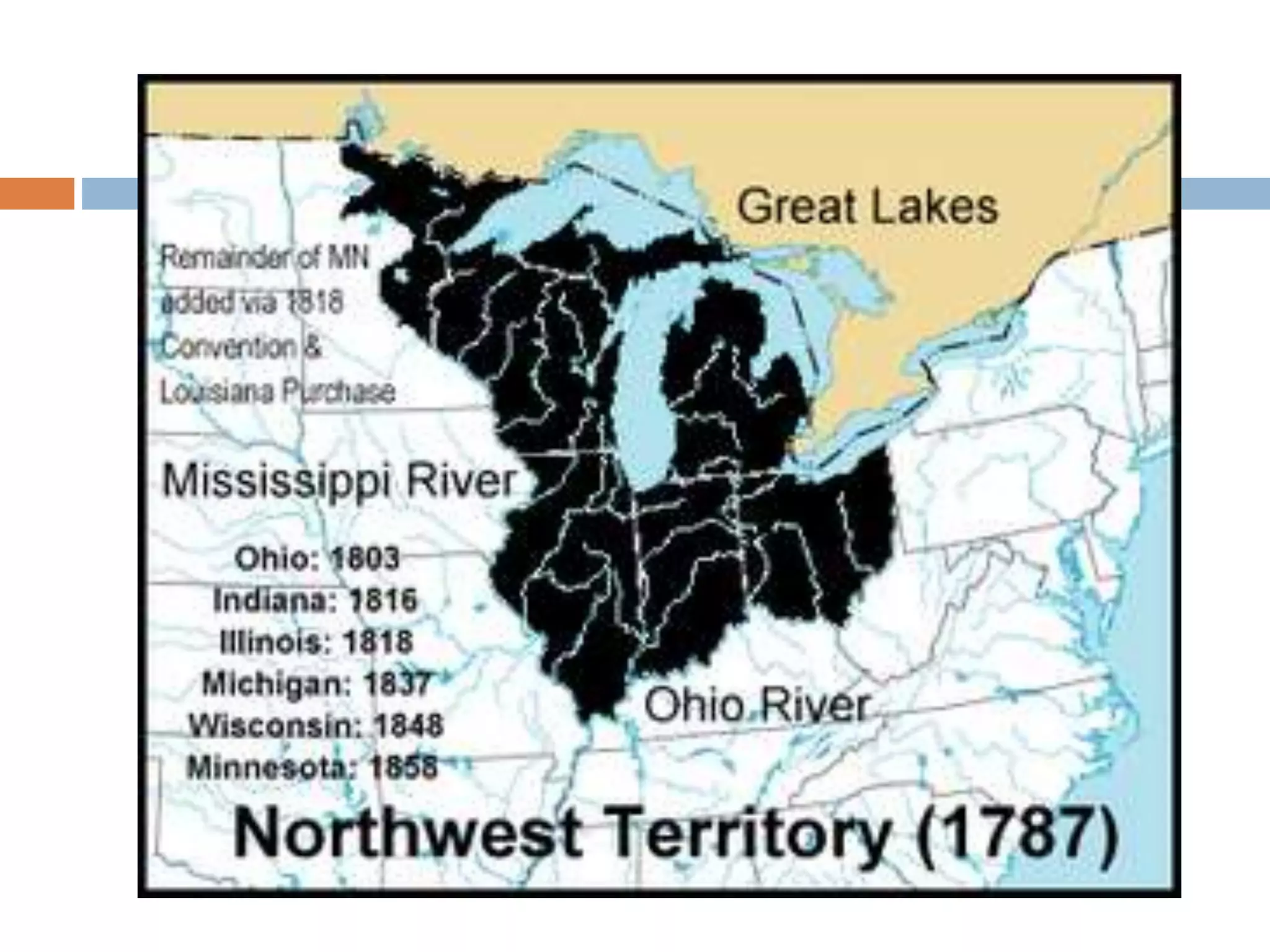
 Northwest Ordinance- Developed a fair policy for
the development of lands west of the
Appalachians
 Peace Treaty with Great Britain- Britain recognized
American independence, and America gained land
Articles of Confederation

Articles of Confederation

  • 1.
  • 2.
    Central Gov’t Underthe Articles  Single- chamber (unicameral) congress  No executive branch or president  Congress made up of one delegate from each state w/ one vote each  Congress’ powers limited to: 1. Foreign affairs 2. Defense Articles of Confederation
  • 3.
    Weak Central Gov’t No power to levy taxes  No power to regulate trade between states  No power to enforce laws  Difficult to pass laws: needed 9/13 to pass a law  Needed consent from all 13 states to amend the Articles  No Executive Branch  No Federal court system (Supreme Court)
  • 4.
    Need for StrongerGov’t 1. States began to argue over boundary lines and tariffs. *(taxes) 2. Central gov’t had no money to maintain an army and was $40 million in debt. 3. 1786 economic depression left many farmers in debt. Gov’t could not pay soldiers
  • 5.
    Shays’s Rebellion  Farmersin debt were often jailed or their properties were seized by state authorities.  Armed farmers closed courts to prevent farm foreclosures  Daniel Shays and a force of 1200 men closed the Massachusetts Supreme Court  Massachusetts militia put down the rebellion
  • 6.
    Annapolis Convention  AlexanderHamilton (NY) and James Madison (VA), both in favor of a stronger central gov’t, called for a convention in Philadelphia  Philadelphia Convention (May, 1787) to revise the Articles of Confederation
  • 7.
    Achievements  Northwest Ordinance-Developed a fair policy for the development of lands west of the Appalachians  Peace Treaty with Great Britain- Britain recognized American independence, and America gained land