AP X-RAY DEMONSTRATING APC TYPE 2 
SYMPHYSEAL SEPARATION
INLET VIEW DEMONSTRATING 
SEPARATION OF THE SYMPHYSIS
OUTLET VIEW
The patient is prepped, such that the symphysis 
is exposed inferiorly, the umbilicus superiorly and 
the ASIS laterally.
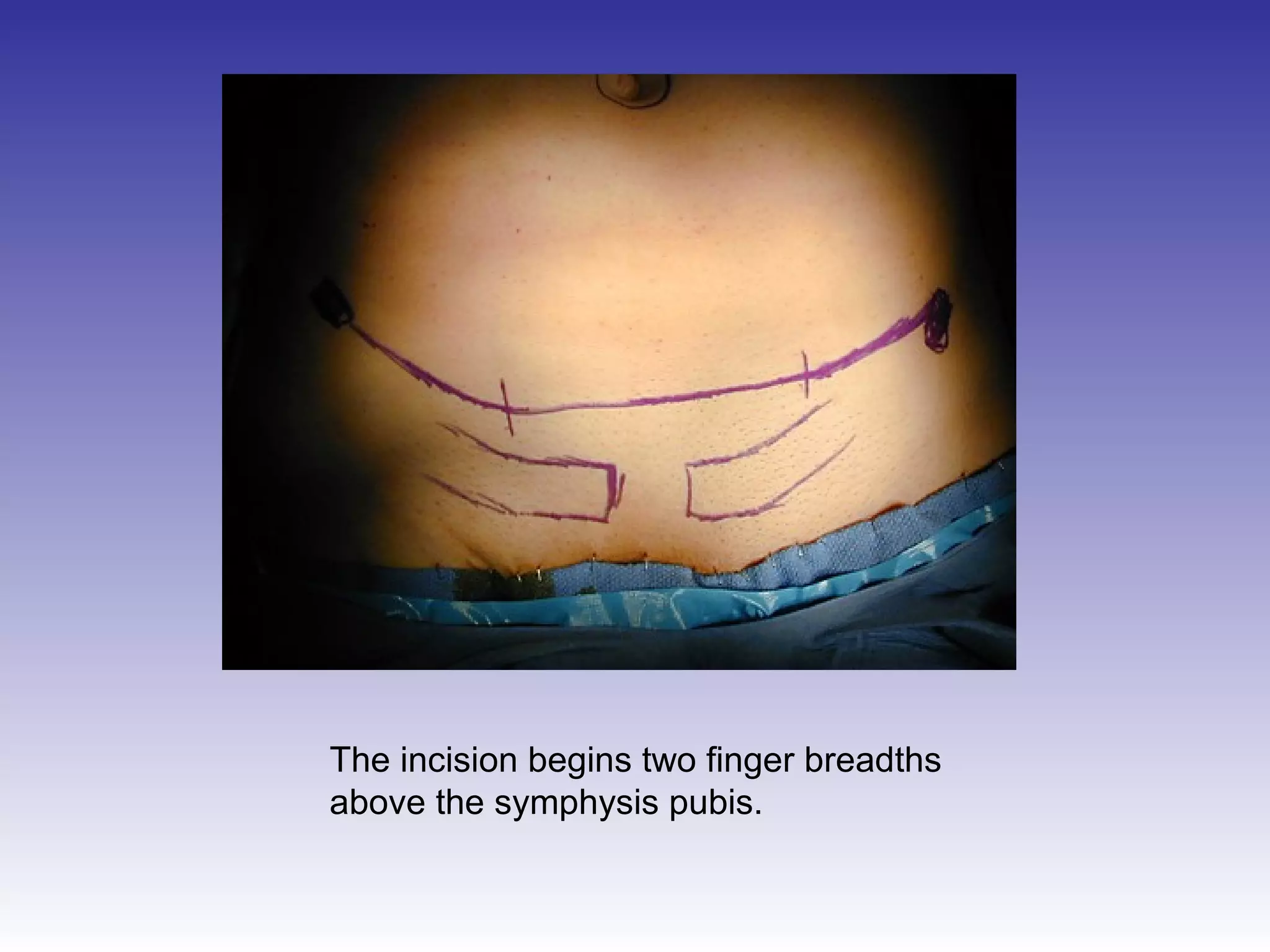
The incision begins two finger breadths 
above the symphysis pubis.
The incision begins two finger breadths 
above the symphysis pubis.
RECTUS MUSCLE 
Frequently, one of the rectus heads is avulsed from 
one of the symphyseal bodies. Occasionally there is 
a split in the rectus fascia.
Gelpi retractors are placed at the wound edges to 
help identify Scarpa’s fascia and then the external 
oblique and rectus fascia.
The soft tissue is elevated superiorly and inferiorly 
from the external oblique and rectus fascia with 
the knife held essentially parallel with the body. 
EXTERNAL 
OBLIQUE 
FASCIA
The soft tissue is elevated superiorly and inferiorly 
from the external oblique and rectus fascia with 
the knife held essentially parallel with the body.
HEAD 
FOOT 
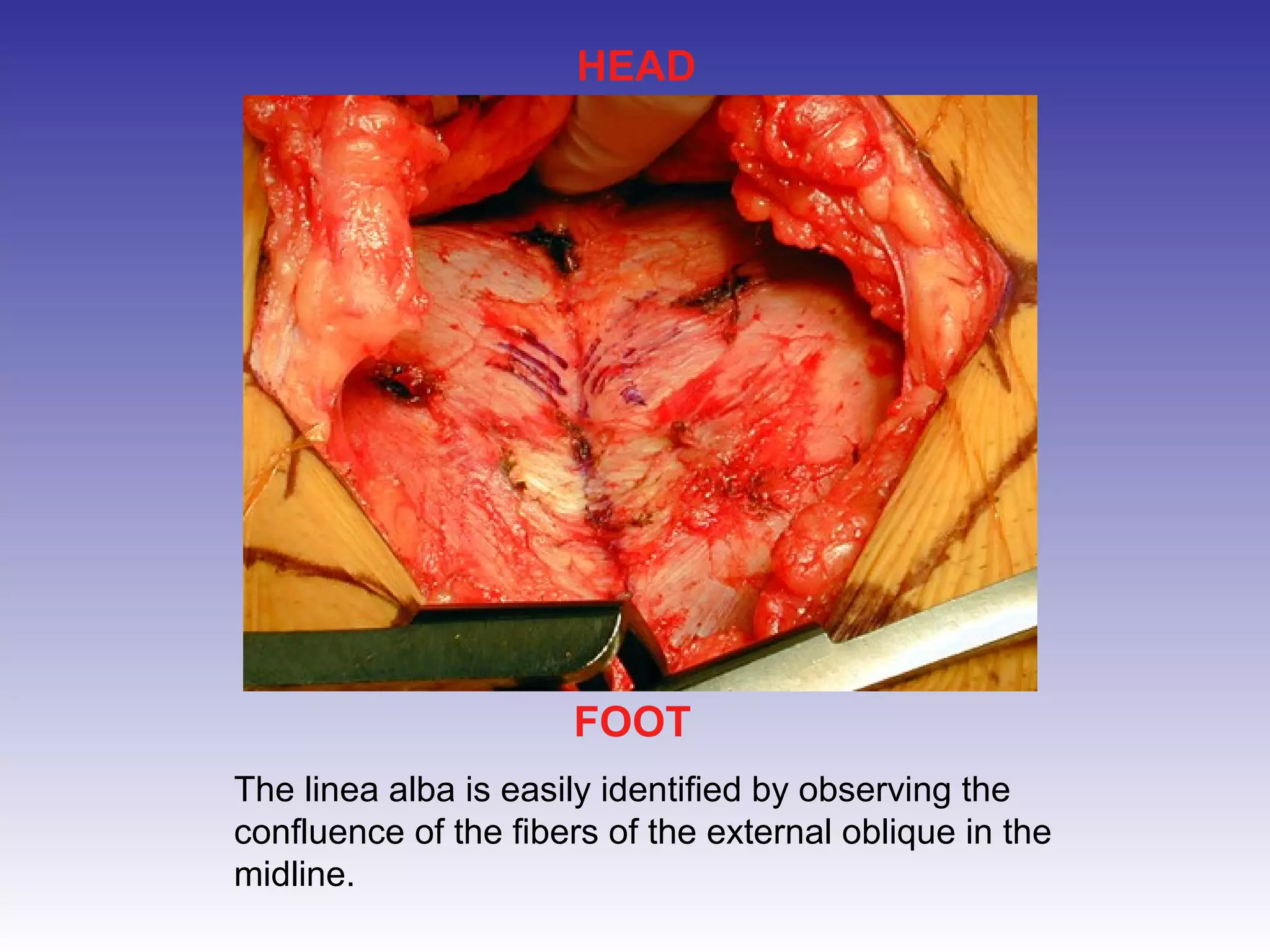
The linea alba is easily identified by observing the 
confluence of the fibers of the external oblique in the 
midline.
HEAD 
FOOT 
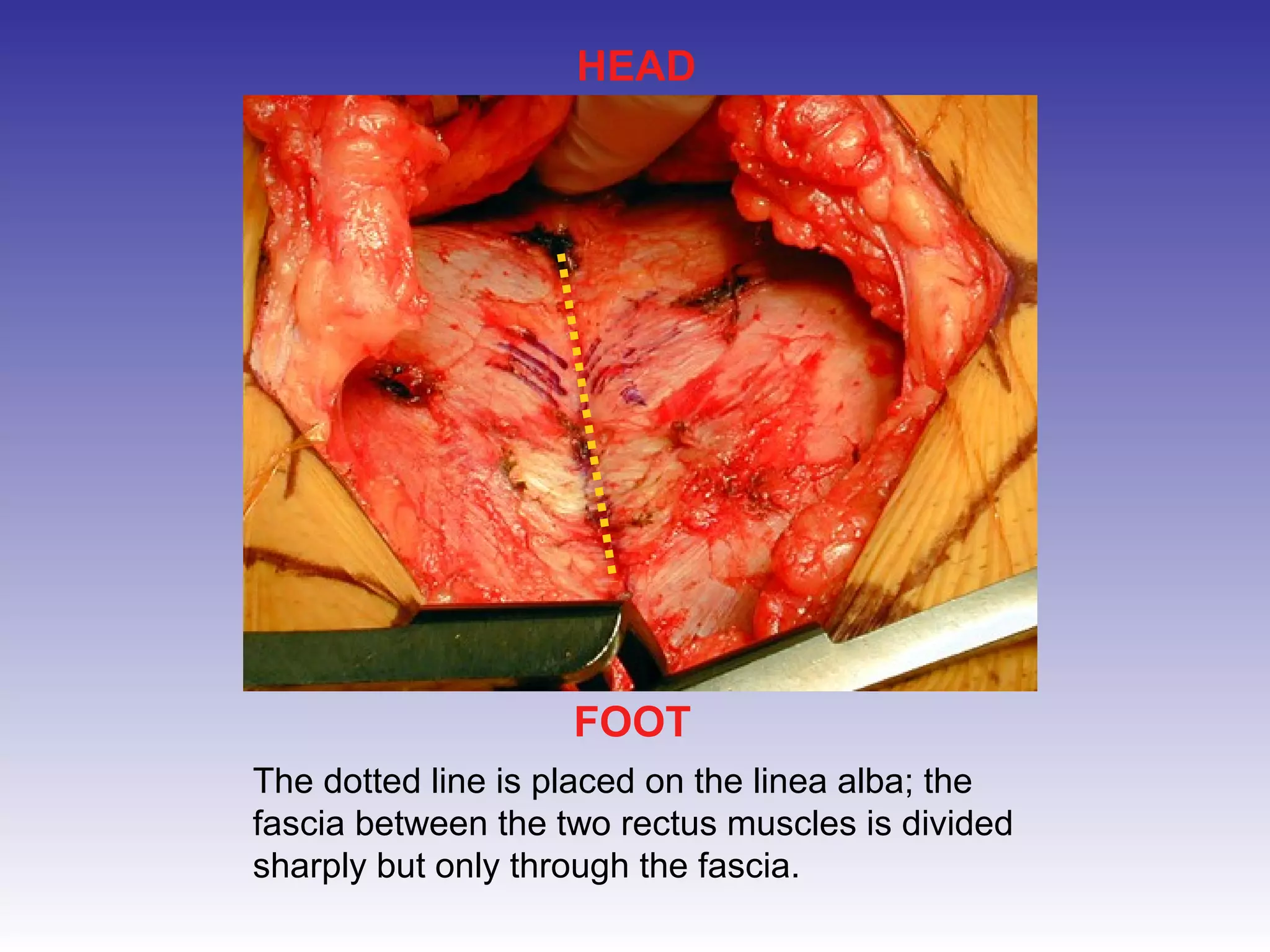
The dotted line is placed on the linea alba; the 
fascia between the two rectus muscles is divided 
sharply but only through the fascia.
HEAD 
FOOT 
RECTUS MUSCLE 
Blunt dissection between the rectus muscle is performed, 
allowing protection of the peritoneum proximally, and bladder 
and bladder neck distally.
HEAD 
FOOT 
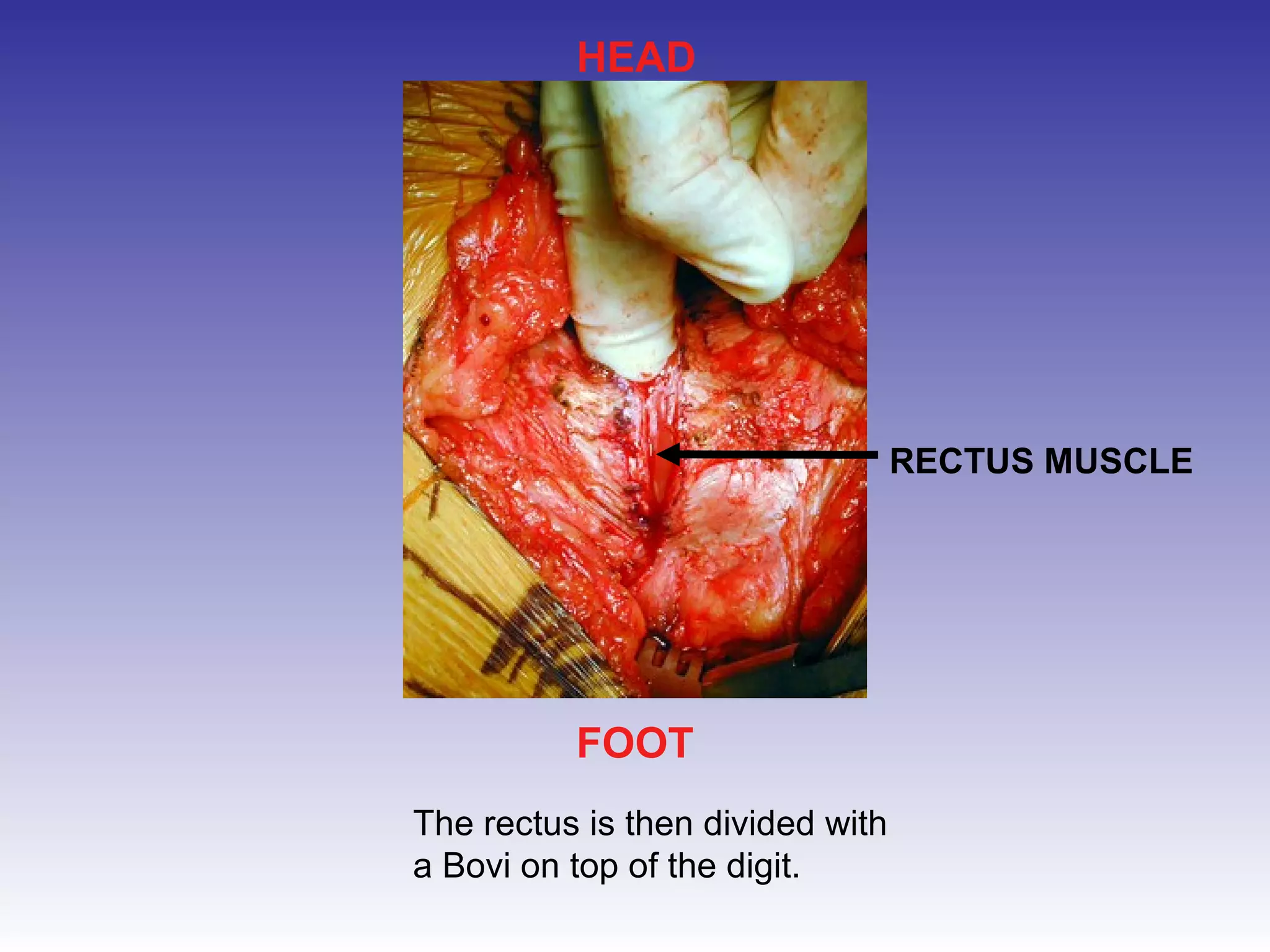
The rectus is then divided with 
a Bovi on top of the digit. 
RECTUS MUSCLE
BLADDER 
HEAD FOOT 
Once the rectus is split, a blunt retractor can be placed, 
eventually holding back the bladder. In this figure, the 
bladder region is visualized just proximal to the 
symphyseal region underneath the rectus.
RECTUS 
FOOT 
By lifting the rectus superiorly with the finger, a 
Hohmann retractor can be placed through the 
periosteum at the superior and proximal edge of 
the superior ramus just lateral to the symphyseal 
body. 
HEAD
RECTUS 
HEAD FOOT 
This is used to retract the rectus laterally.
With the rectus being held laterally, a bovi can be 
used to clean the superior surface of the superior 
ramus in the area in which the plate will be placed. 
SUPERIOR 
RAMUS 
FOOT 
HEAD
SYMPHYSEAL 
RECTUS BODY 
With the legs held together and the retractors in place, 
the symphyseal separation is already partly reduced. 
The sucker is within the symphyseal separation. 
FOOT 
HEAD
FOOT 
HEAD 
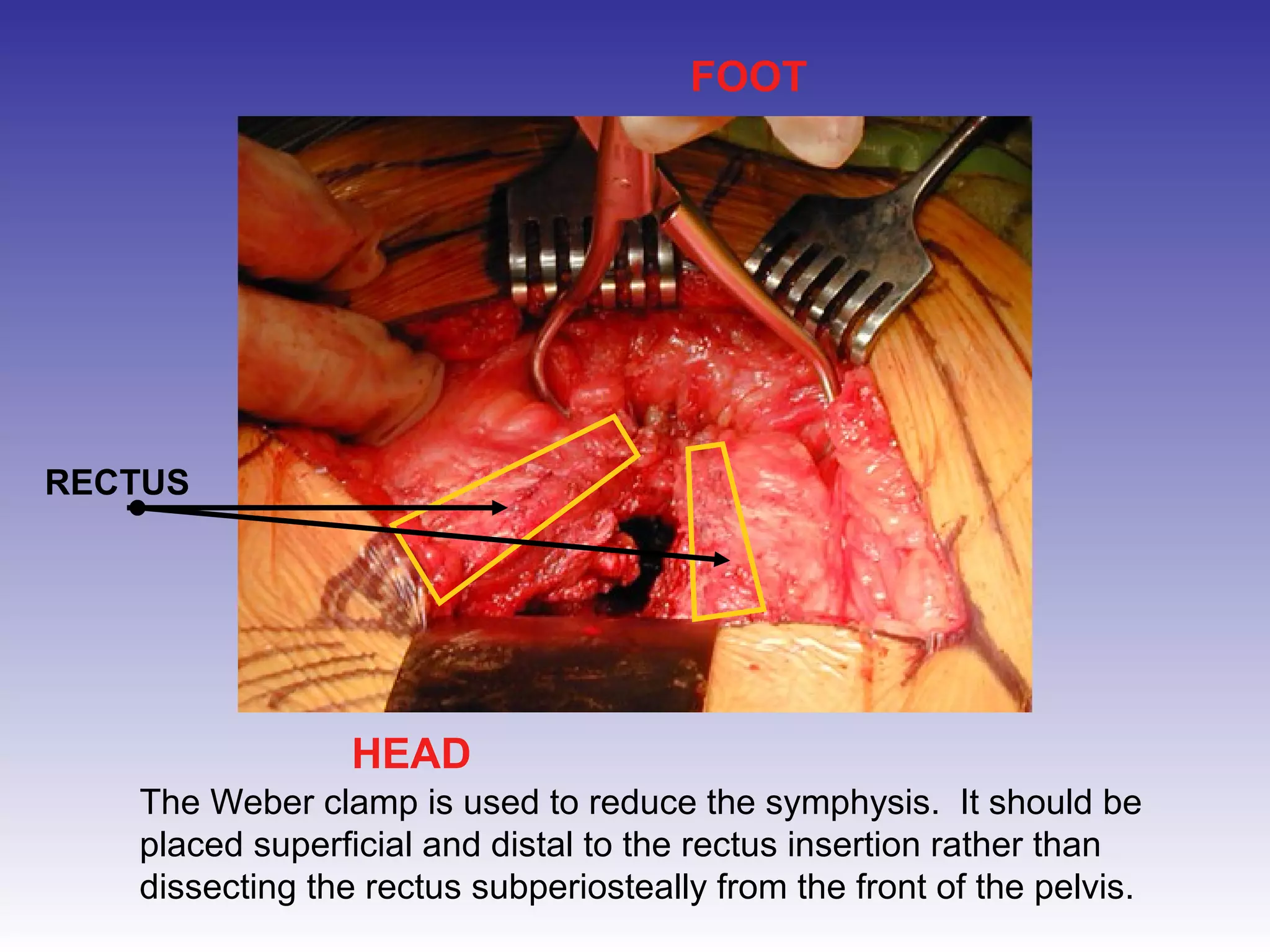
RECTUS 
The Weber clamp is used to reduce the symphysis. It should be 
placed superficial and distal to the rectus insertion rather than 
dissecting the rectus subperiosteally from the front of the pelvis.
FOOT 
HEAD 
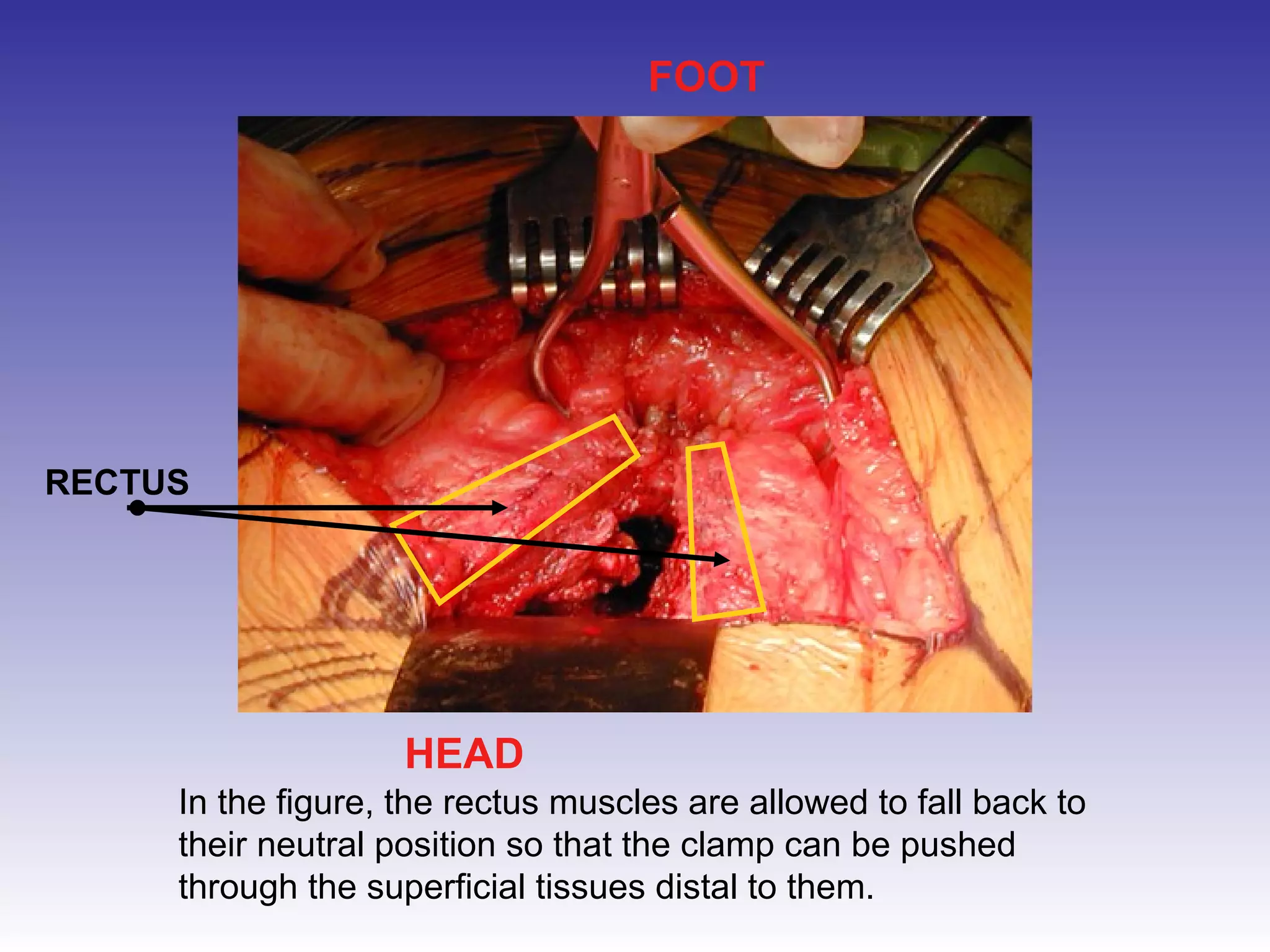
RECTUS 
In the figure, the rectus muscles are allowed to fall back to 
their neutral position so that the clamp can be pushed 
through the superficial tissues distal to them.
REDUCTION 
After the clamp is engaged, the symphysis is reduced 
using the clamp. The clamp must be leaned towards 
the feet in order to fully engage the tongs.
DEMONSTRATION OF THE 
REDUCED SYMPHYSIS PUBIS 
FOOT 
HEAD
If a standard 6-hole curved plate is used, a downward bend is 
essential at the outer aspect of the plate as the middle 
two screws on each side go into the symphyseal body while 
the last screw goes into the ramus, lateral to 
the pubic tubercle.
The plate is also contoured in order to fit the bend of the 
pelvis, which in men is usually an increased bend and in 
women, a slight opening of the plate.
DRILLING 
ECCENTRICALLY 
The screws immediately adjacent to the symphysis are placed angling 
slightly away from the symphysis, paralleling the posterior aspect of the 
symphyseal body and eccentrically within the plate screw holes to allow 
for some compression.
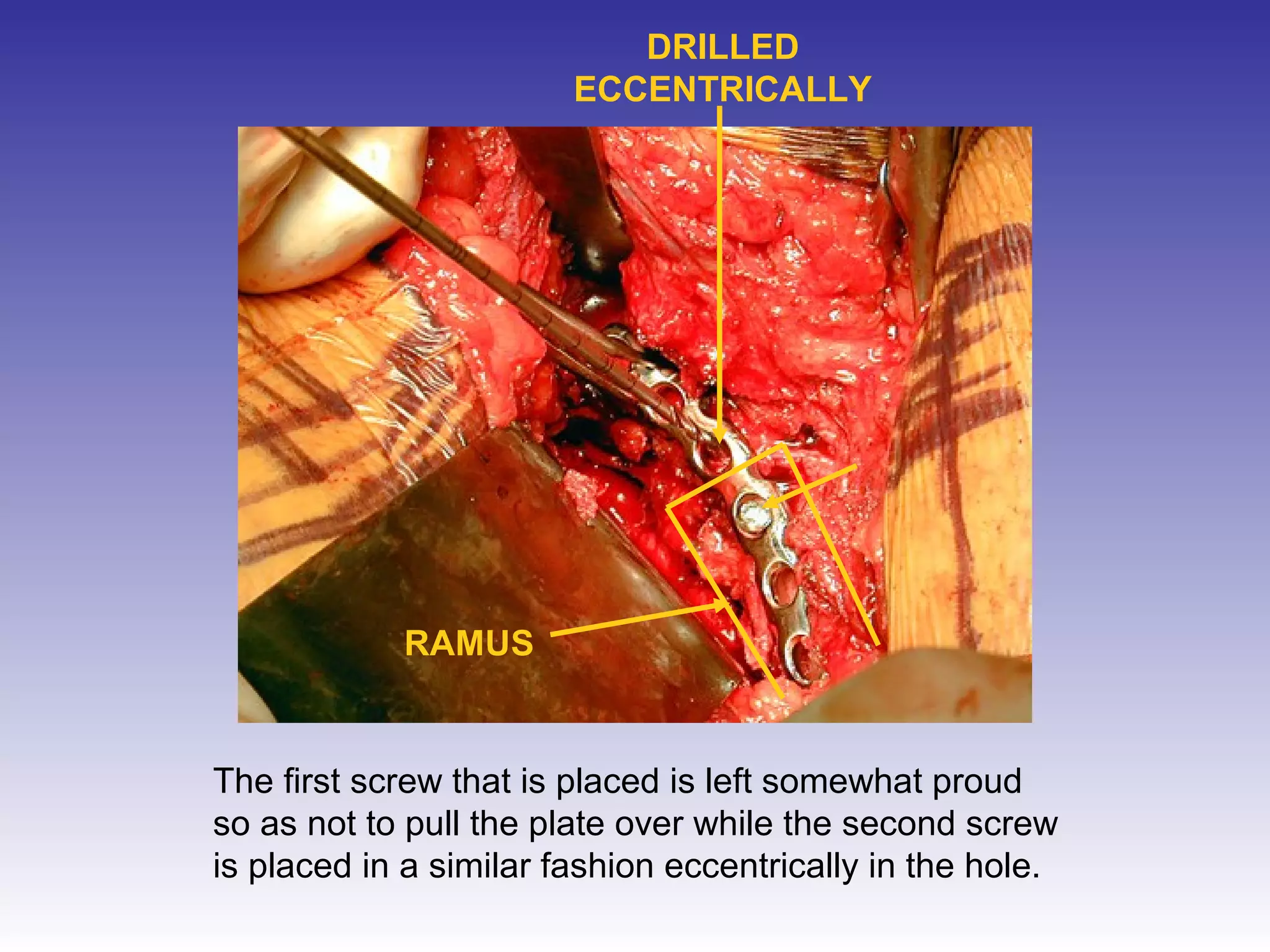
DRILLED 
ECCENTRICALLY 
RAMUS 
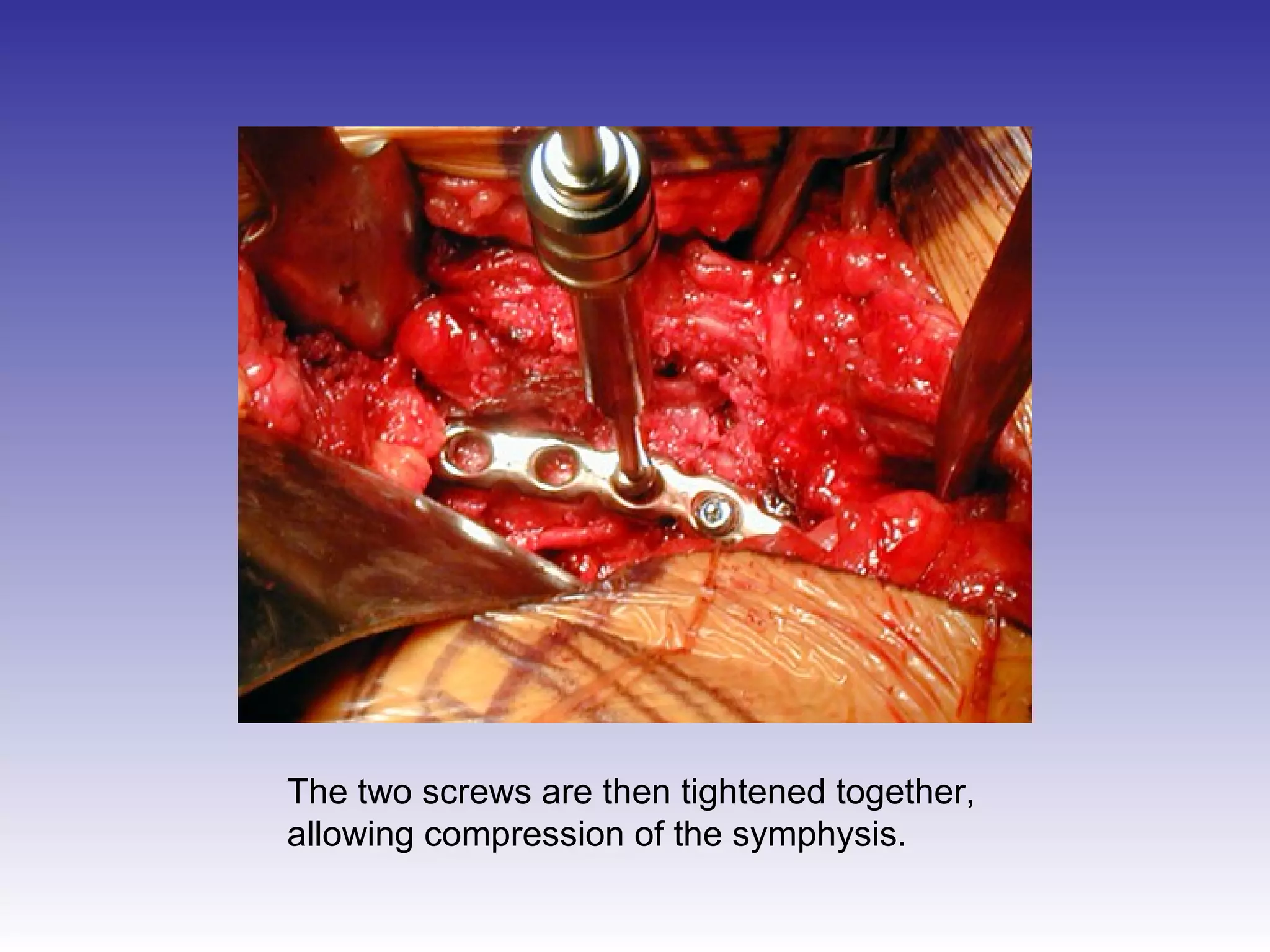
The first screw that is placed is left somewhat proud 
so as not to pull the plate over while the second screw 
is placed in a similar fashion eccentrically in the hole.
The two screws are then tightened together, 
allowing compression of the symphysis.
Anatomic reduction of the symphysis is achieved 
and all the screw holes are filled.
RECTUS 
HEAD FOOT 
After fixation, a Hemovac drain should be placed in the space 
of Retzius, as demonstrated here. Once the wound is thoroughly 
irrigated and the drain is placed, the rectus fascia is closed.
EDGE OF 
RECTUS FASCIA 
It is important not to tie through the entire rectus muscle, 
as this may cause necrosis of part of that muscle.
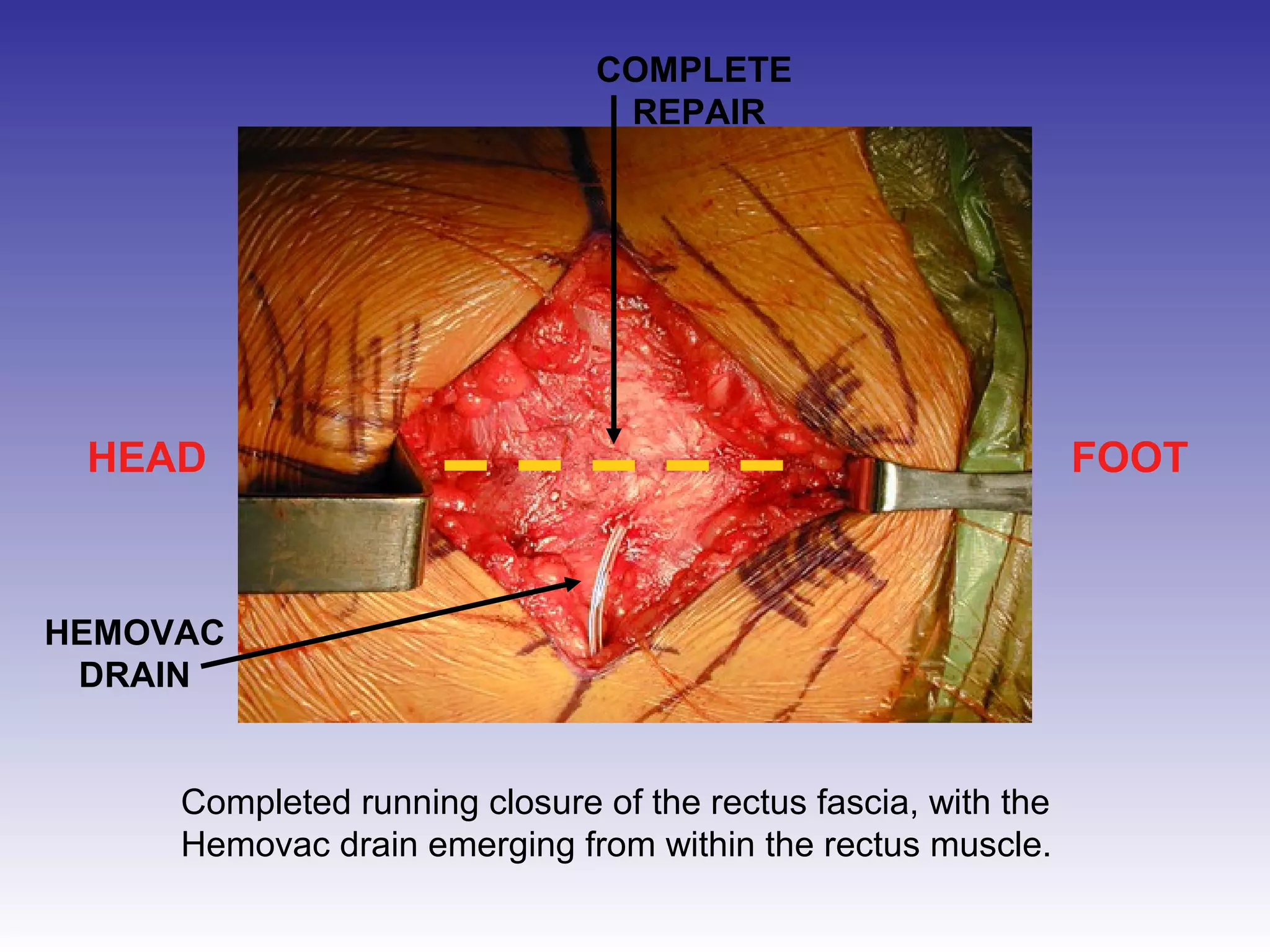
COMPLETE 
REPAIR 
HEAD FOOT 
HEMOVAC 
DRAIN 
Completed running closure of the rectus fascia, with the 
Hemovac drain emerging from within the rectus muscle.
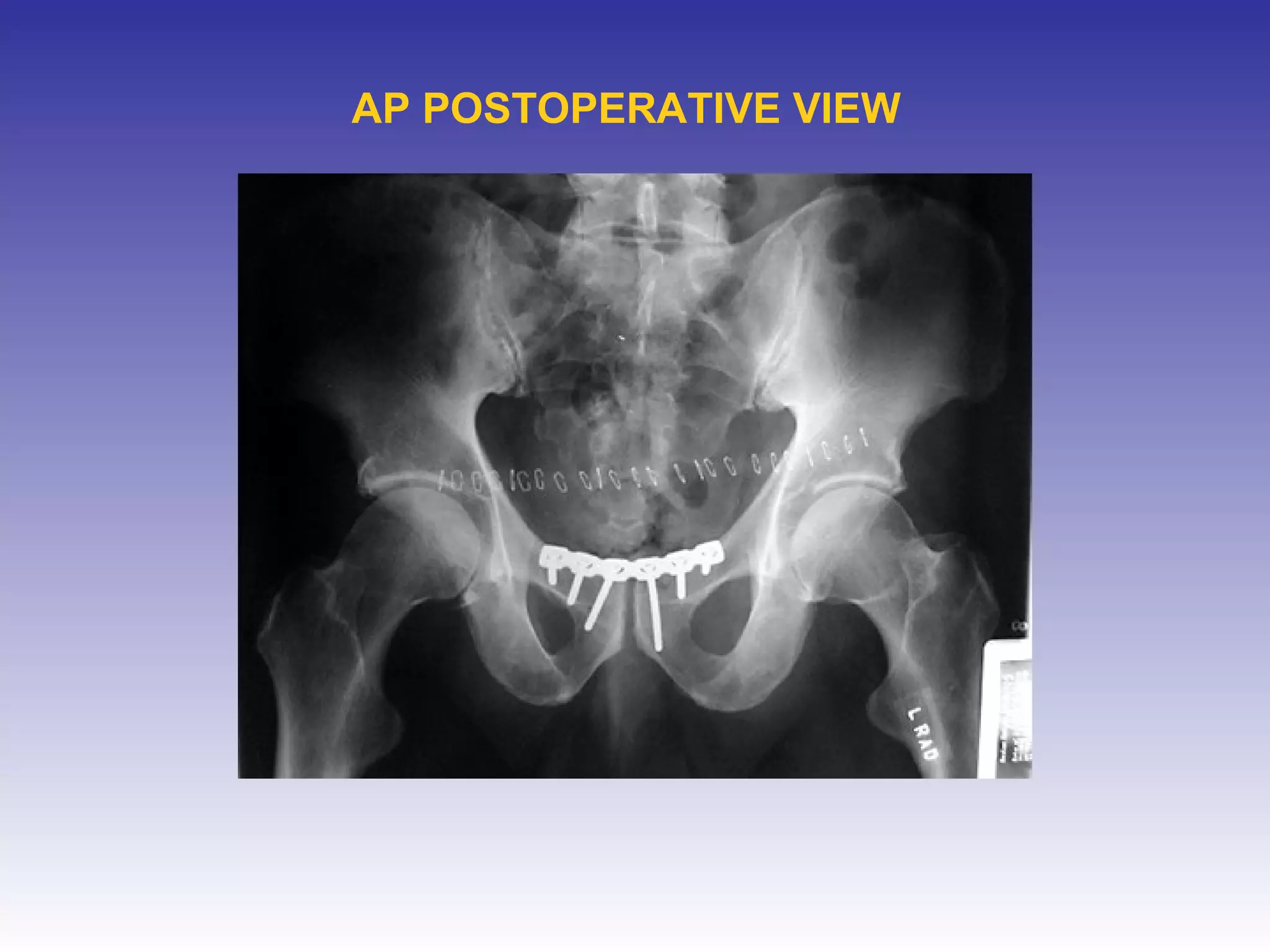
AP POSTOPERATIVE VIEW
INLET VIEW
OUTLET VIEW

Buhrigs

  • 2.
    AP X-RAY DEMONSTRATINGAPC TYPE 2 SYMPHYSEAL SEPARATION
  • 3.
    INLET VIEW DEMONSTRATING SEPARATION OF THE SYMPHYSIS
  • 4.
  • 5.
    The patient isprepped, such that the symphysis is exposed inferiorly, the umbilicus superiorly and the ASIS laterally.
  • 6.
    The incision beginstwo finger breadths above the symphysis pubis.
  • 7.
    The incision beginstwo finger breadths above the symphysis pubis.
  • 8.
    RECTUS MUSCLE Frequently,one of the rectus heads is avulsed from one of the symphyseal bodies. Occasionally there is a split in the rectus fascia.
  • 9.
    Gelpi retractors areplaced at the wound edges to help identify Scarpa’s fascia and then the external oblique and rectus fascia.
  • 10.
    The soft tissueis elevated superiorly and inferiorly from the external oblique and rectus fascia with the knife held essentially parallel with the body. EXTERNAL OBLIQUE FASCIA
  • 11.
    The soft tissueis elevated superiorly and inferiorly from the external oblique and rectus fascia with the knife held essentially parallel with the body.
  • 12.
    HEAD FOOT Thelinea alba is easily identified by observing the confluence of the fibers of the external oblique in the midline.
  • 13.
    HEAD FOOT Thedotted line is placed on the linea alba; the fascia between the two rectus muscles is divided sharply but only through the fascia.
  • 14.
    HEAD FOOT RECTUSMUSCLE Blunt dissection between the rectus muscle is performed, allowing protection of the peritoneum proximally, and bladder and bladder neck distally.
  • 15.
    HEAD FOOT Therectus is then divided with a Bovi on top of the digit. RECTUS MUSCLE
  • 16.
    BLADDER HEAD FOOT Once the rectus is split, a blunt retractor can be placed, eventually holding back the bladder. In this figure, the bladder region is visualized just proximal to the symphyseal region underneath the rectus.
  • 17.
    RECTUS FOOT Bylifting the rectus superiorly with the finger, a Hohmann retractor can be placed through the periosteum at the superior and proximal edge of the superior ramus just lateral to the symphyseal body. HEAD
  • 18.
    RECTUS HEAD FOOT This is used to retract the rectus laterally.
  • 19.
    With the rectusbeing held laterally, a bovi can be used to clean the superior surface of the superior ramus in the area in which the plate will be placed. SUPERIOR RAMUS FOOT HEAD
  • 20.
    SYMPHYSEAL RECTUS BODY With the legs held together and the retractors in place, the symphyseal separation is already partly reduced. The sucker is within the symphyseal separation. FOOT HEAD
  • 21.
    FOOT HEAD RECTUS The Weber clamp is used to reduce the symphysis. It should be placed superficial and distal to the rectus insertion rather than dissecting the rectus subperiosteally from the front of the pelvis.
  • 22.
    FOOT HEAD RECTUS In the figure, the rectus muscles are allowed to fall back to their neutral position so that the clamp can be pushed through the superficial tissues distal to them.
  • 23.
    REDUCTION After theclamp is engaged, the symphysis is reduced using the clamp. The clamp must be leaned towards the feet in order to fully engage the tongs.
  • 24.
    DEMONSTRATION OF THE REDUCED SYMPHYSIS PUBIS FOOT HEAD
  • 25.
    If a standard6-hole curved plate is used, a downward bend is essential at the outer aspect of the plate as the middle two screws on each side go into the symphyseal body while the last screw goes into the ramus, lateral to the pubic tubercle.
  • 26.
    The plate isalso contoured in order to fit the bend of the pelvis, which in men is usually an increased bend and in women, a slight opening of the plate.
  • 27.
    DRILLING ECCENTRICALLY Thescrews immediately adjacent to the symphysis are placed angling slightly away from the symphysis, paralleling the posterior aspect of the symphyseal body and eccentrically within the plate screw holes to allow for some compression.
  • 28.
    DRILLED ECCENTRICALLY RAMUS The first screw that is placed is left somewhat proud so as not to pull the plate over while the second screw is placed in a similar fashion eccentrically in the hole.
  • 29.
    The two screwsare then tightened together, allowing compression of the symphysis.
  • 30.
    Anatomic reduction ofthe symphysis is achieved and all the screw holes are filled.
  • 31.
    RECTUS HEAD FOOT After fixation, a Hemovac drain should be placed in the space of Retzius, as demonstrated here. Once the wound is thoroughly irrigated and the drain is placed, the rectus fascia is closed.
  • 32.
    EDGE OF RECTUSFASCIA It is important not to tie through the entire rectus muscle, as this may cause necrosis of part of that muscle.
  • 33.
    COMPLETE REPAIR HEADFOOT HEMOVAC DRAIN Completed running closure of the rectus fascia, with the Hemovac drain emerging from within the rectus muscle.
  • 34.
  • 35.
  • 36.