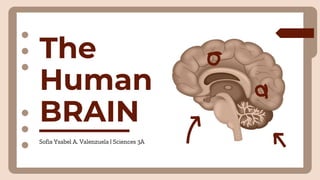
The
Human
BRAIN
Sofia Ysabel A. Valenzuela | Sciences 3A
BUTTERFLY SONG
Butterfly, butterfly
Where are you going?
Out in a garden
Dancing, dancing
Pretty, pretty butterfly
Lonely, lonely butterfly
Pretty, pretty butterfly
Lonely, lonely butterfly
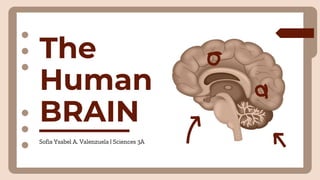
The
Human
BRAIN
Sofia Ysabel A. Valenzuela | Sciences 3A
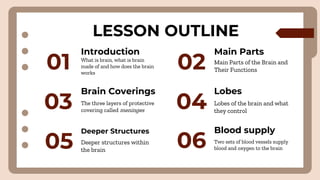
Introduction Main Parts
Brain Coverings
Deeper Structures
01 02 Main Parts of the Brain and
Their Functions
03 The three layers of protective
covering called meninges 04
Deeper structures within
the brain
LESSON OUTLINE
What is brain, what is brain
made of and how does the brain
works
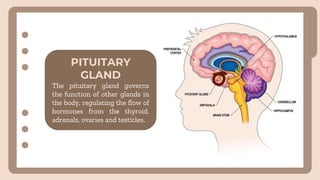
Lobes
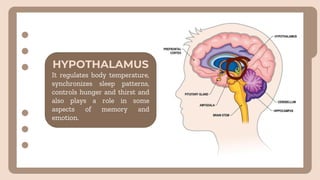
05
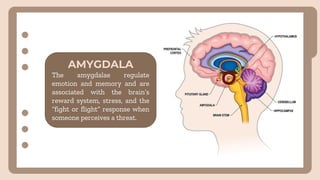
Lobes of the brain and what
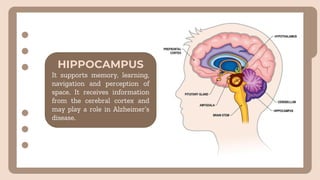
they control
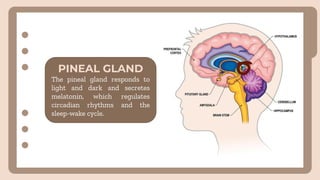
Blood supply
06 Two sets of blood vessels supply
blood and oxygen to the brain
Introduction
01
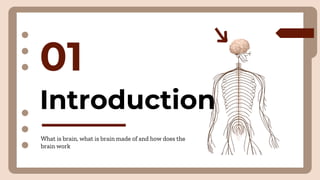
What is brain, what is brain made of and how does the
brain work
Brain
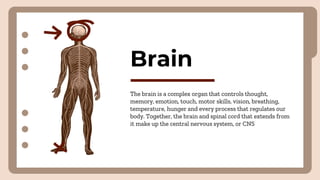
The brain is a complex organ that controls thought,
memory, emotion, touch, motor skills, vision, breathing,
temperature, hunger and every process that regulates our
body. Together, the brain and spinal cord that extends from
it make up the central nervous system, or CNS
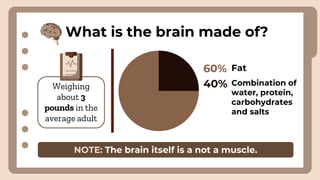
What is the brain made of?
Weighing
about 3
pounds in the
average adult
60% Fat
Combination of
water, protein,
carbohydrates
and salts
40%
NOTE: The brain itself is a not a muscle.
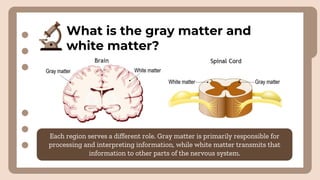
What is the gray matter and
white matter?
Each region serves a different role. Gray matter is primarily responsible for
processing and interpreting information, while white matter transmits that
information to other parts of the nervous system.
How does the brain work?
The brain sends and receives chemical and electrical
signals throughout the body. Different signals control
different processes, and your brain interprets each. Some
make you feel tired, for example, while others make you
feel pain.
Some messages are kept within the brain, while others are
relayed through the spine and across the body’s vast
network of nerves to distant extremities. To do this, the
central nervous system relies on billions of neurons (nerve
cells).
FACT MYTH
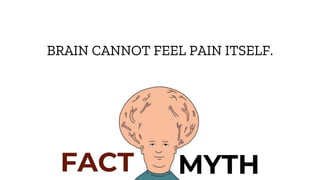
BRAIN CANNOT FEEL PAIN ITSELF.
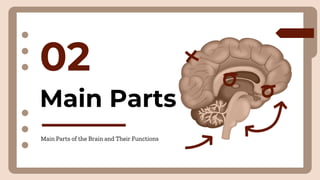
Main Parts
02
Main Parts of the Brain and Their Functions
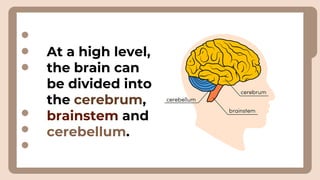
At a high level,
the brain can
be divided into
the cerebrum,
brainstem and
cerebellum.
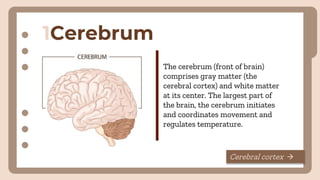
1Cerebrum
The cerebrum (front of brain)
comprises gray matter (the
cerebral cortex) and white matter
at its center. The largest part of
the brain, the cerebrum initiates
and coordinates movement and
regulates temperature.
Cerebral cortex →
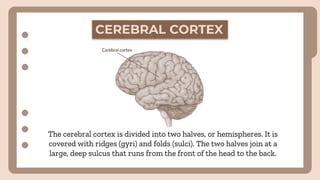
CEREBRAL CORTEX
The cerebral cortex is divided into two halves, or hemispheres. It is
covered with ridges (gyri) and folds (sulci). The two halves join at a
large, deep sulcus that runs from the front of the head to the back.
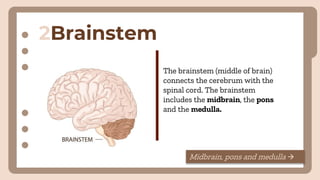
2Brainstem
The brainstem (middle of brain)
connects the cerebrum with the
spinal cord. The brainstem
includes the midbrain, the pons
and the medulla.
Midbrain, pons and medulla →
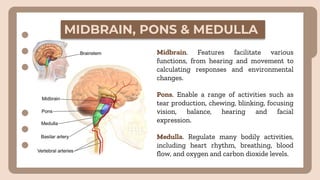
MIDBRAIN, PONS & MEDULLA
Midbrain. Features facilitate various
functions, from hearing and movement to
calculating responses and environmental
changes.
Pons. Enable a range of activities such as
tear production, chewing, blinking, focusing
vision, balance, hearing and facial
expression.
Medulla. Regulate many bodily activities,
including heart rhythm, breathing, blood
flow, and oxygen and carbon dioxide levels.
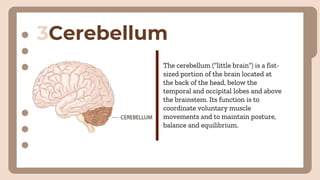
3Cerebellum
The cerebellum (“little brain”) is a fist-
sized portion of the brain located at
the back of the head, below the
temporal and occipital lobes and above
the brainstem. Its function is to
coordinate voluntary muscle
movements and to maintain posture,
balance and equilibrium.
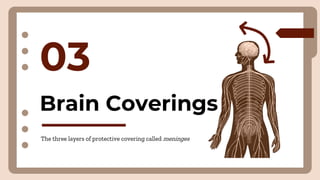
03
The three layers of protective covering called meninges
Brain Coverings
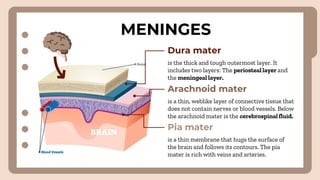
MENINGES
Dura mater
is the thick and tough outermost layer. It
includes two layers: The periosteal layer and
the meningeal layer.
Arachnoid mater
is a thin, weblike layer of connective tissue that
does not contain nerves or blood vessels. Below
the arachnoid mater is the cerebrospinal fluid.
Pia mater
is a thin membrane that hugs the surface of
the brain and follows its contours. The pia
mater is rich with veins and arteries.
FACT MYTH
WE ONLY USE 10% OF OUR BRAIN.
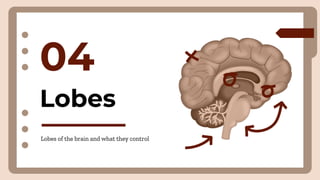
Lobes
04
Lobes of the brain and what they control
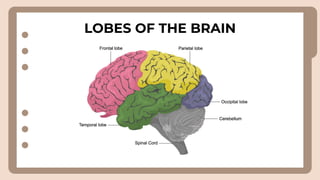
LOBES OF THE BRAIN
LOBES OF THE BRAIN
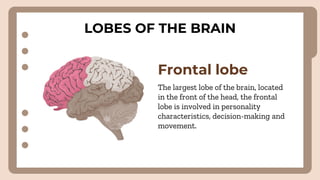
Frontal lobe
The largest lobe of the brain, located
in the front of the head, the frontal
lobe is involved in personality
characteristics, decision-making and
movement.
LOBES OF THE BRAIN
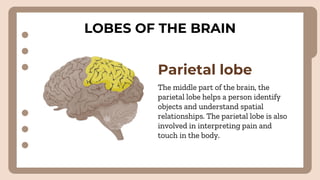
Parietal lobe
The middle part of the brain, the
parietal lobe helps a person identify
objects and understand spatial
relationships. The parietal lobe is also
involved in interpreting pain and
touch in the body.
LOBES OF THE BRAIN
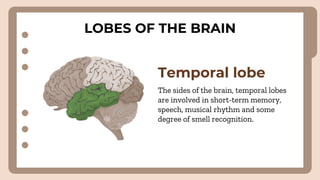
Temporal lobe
The sides of the brain, temporal lobes
are involved in short-term memory,
speech, musical rhythm and some
degree of smell recognition.
LOBES OF THE BRAIN
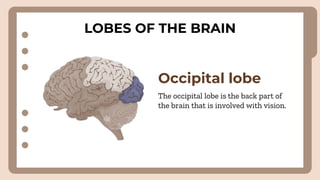
Occipital lobe
The occipital lobe is the back part of
the brain that is involved with vision.
FACT MYTH
YOU CAN MULTITASK EFFECTIVELY.
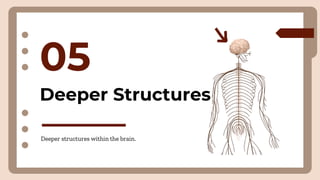
Deeper Structures
05
Deeper structures within the brain.
PITUITARY
GLAND
The pituitary gland governs
the function of other glands in
the body, regulating the flow of
hormones from the thyroid,
adrenals, ovaries and testicles.
HYPOTHALAMUS
It regulates body temperature,
synchronizes sleep patterns,
controls hunger and thirst and
also plays a role in some
aspects of memory and
emotion.
AMYGDALA
The amygdalae regulate
emotion and memory and are
associated with the brain’s
reward system, stress, and the
“fight or flight” response when
someone perceives a threat.
HIPPOCAMPUS
It supports memory, learning,
navigation and perception of
space. It receives information
from the cerebral cortex and
may play a role in Alzheimer’s
disease.
PINEAL GLAND
The pineal gland responds to
light and dark and secretes
melatonin, which regulates
circadian rhythms and the
sleep-wake cycle.
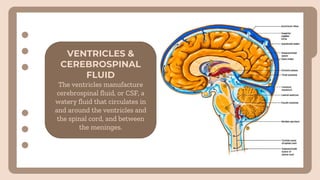
VENTRICLES &
CEREBROSPINAL
FLUID
The ventricles manufacture
cerebrospinal fluid, or CSF, a
watery fluid that circulates in
and around the ventricles and
the spinal cord, and between
the meninges.
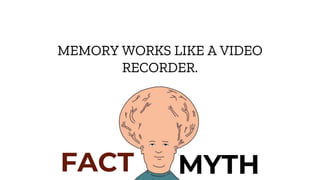
FACT MYTH
MEMORY WORKS LIKE A VIDEO
RECORDER.
06
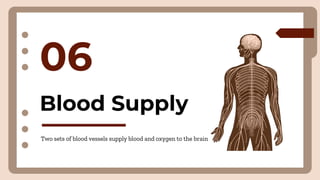
Two sets of blood vessels supply blood and oxygen to the brain
Blood Supply
Blood Supply to the Brain
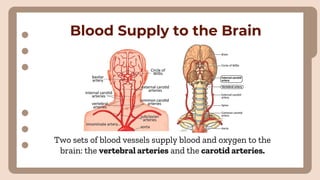
Two sets of blood vessels supply blood and oxygen to the
brain: the vertebral arteries and the carotid arteries.
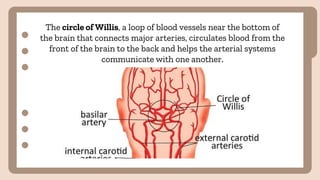
The circle of Willis, a loop of blood vessels near the bottom of
the brain that connects major arteries, circulates blood from the
front of the brain to the back and helps the arterial systems
communicate with one another.
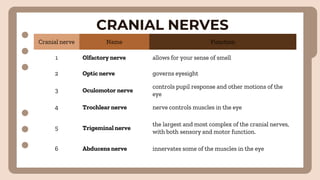
CRANIAL NERVES
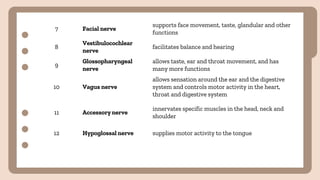
Cranial nerve Name Function
1 Olfactory nerve allows for your sense of smell
2 Optic nerve governs eyesight
3 Oculomotor nerve
controls pupil response and other motions of the
eye
4 Trochlear nerve nerve controls muscles in the eye
5 Trigeminal nerve
the largest and most complex of the cranial nerves,
with both sensory and motor function.
6 Abducens nerve innervates some of the muscles in the eye
7 Facial nerve
supports face movement, taste, glandular and other
functions
8
Vestibulocochlear
nerve
facilitates balance and hearing
9
Glossopharyngeal
nerve
allows taste, ear and throat movement, and has
many more functions
10 Vagus nerve
allows sensation around the ear and the digestive
system and controls motor activity in the heart,
throat and digestive system
11 Accessory nerve
innervates specific muscles in the head, neck and
shoulder
12 Hypoglossal nerve supplies motor activity to the tongue
BRAIN
DISEASES
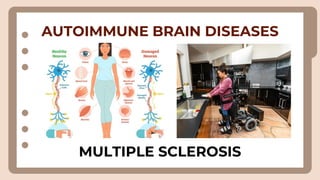
AUTOIMMUNE BRAIN DISEASES
MULTIPLE SCLEROSIS
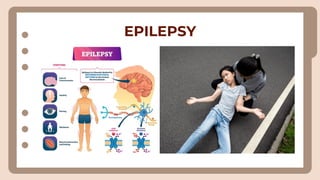
EPILEPSY
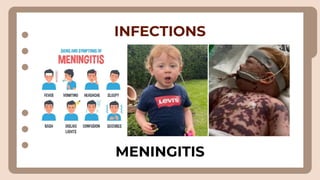
INFECTIONS
MENINGITIS
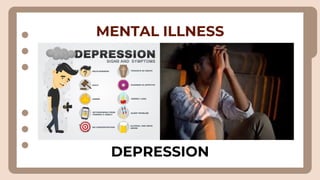
MENTAL ILLNESS
DEPRESSION
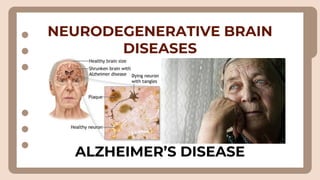
NEURODEGENERATIVE BRAIN
DISEASES
ALZHEIMER’S DISEASE
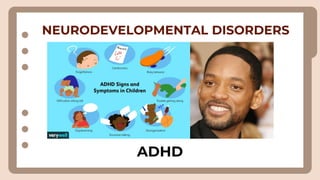
NEURODEVELOPMENTAL DISORDERS
ADHD
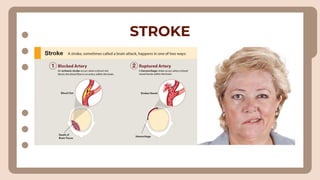
STROKE
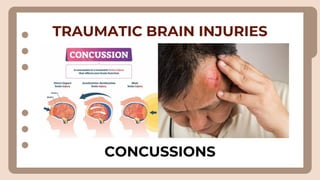
TRAUMATIC BRAIN INJURIES
CONCUSSIONS
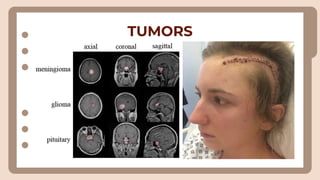
TUMORS
LEONARDO
Da Vinci
Study the science of art. Study
the art of science. Develop
your senses- especially learn
how to see. Realize that
everything connects to
everything else.
Nakuha ba
class?
Ah ma’am
question
lang po…
Thank you
for
listening!

THE HUMAN BRAIN BS EDUCATION SCIENCES 3A.pdf

  • 1.
    The Human BRAIN Sofia Ysabel A.Valenzuela | Sciences 3A
  • 3.
    BUTTERFLY SONG Butterfly, butterfly Whereare you going? Out in a garden Dancing, dancing Pretty, pretty butterfly Lonely, lonely butterfly Pretty, pretty butterfly Lonely, lonely butterfly
  • 4.
    The Human BRAIN Sofia Ysabel A.Valenzuela | Sciences 3A
  • 5.
    Introduction Main Parts BrainCoverings Deeper Structures 01 02 Main Parts of the Brain and Their Functions 03 The three layers of protective covering called meninges 04 Deeper structures within the brain LESSON OUTLINE What is brain, what is brain made of and how does the brain works Lobes 05 Lobes of the brain and what they control Blood supply 06 Two sets of blood vessels supply blood and oxygen to the brain
  • 6.
    Introduction 01 What is brain,what is brain made of and how does the brain work
  • 7.
    Brain The brain isa complex organ that controls thought, memory, emotion, touch, motor skills, vision, breathing, temperature, hunger and every process that regulates our body. Together, the brain and spinal cord that extends from it make up the central nervous system, or CNS
  • 8.
    What is thebrain made of? Weighing about 3 pounds in the average adult 60% Fat Combination of water, protein, carbohydrates and salts 40% NOTE: The brain itself is a not a muscle.
  • 9.
    What is thegray matter and white matter? Each region serves a different role. Gray matter is primarily responsible for processing and interpreting information, while white matter transmits that information to other parts of the nervous system.
  • 10.
    How does thebrain work? The brain sends and receives chemical and electrical signals throughout the body. Different signals control different processes, and your brain interprets each. Some make you feel tired, for example, while others make you feel pain. Some messages are kept within the brain, while others are relayed through the spine and across the body’s vast network of nerves to distant extremities. To do this, the central nervous system relies on billions of neurons (nerve cells).
  • 11.
    FACT MYTH BRAIN CANNOTFEEL PAIN ITSELF.
  • 12.
    Main Parts 02 Main Partsof the Brain and Their Functions
  • 13.
    At a highlevel, the brain can be divided into the cerebrum, brainstem and cerebellum.
  • 14.
    1Cerebrum The cerebrum (frontof brain) comprises gray matter (the cerebral cortex) and white matter at its center. The largest part of the brain, the cerebrum initiates and coordinates movement and regulates temperature. Cerebral cortex →
  • 15.
    CEREBRAL CORTEX The cerebralcortex is divided into two halves, or hemispheres. It is covered with ridges (gyri) and folds (sulci). The two halves join at a large, deep sulcus that runs from the front of the head to the back.
  • 16.
    2Brainstem The brainstem (middleof brain) connects the cerebrum with the spinal cord. The brainstem includes the midbrain, the pons and the medulla. Midbrain, pons and medulla →
  • 17.
    MIDBRAIN, PONS &MEDULLA Midbrain. Features facilitate various functions, from hearing and movement to calculating responses and environmental changes. Pons. Enable a range of activities such as tear production, chewing, blinking, focusing vision, balance, hearing and facial expression. Medulla. Regulate many bodily activities, including heart rhythm, breathing, blood flow, and oxygen and carbon dioxide levels.
  • 18.
    3Cerebellum The cerebellum (“littlebrain”) is a fist- sized portion of the brain located at the back of the head, below the temporal and occipital lobes and above the brainstem. Its function is to coordinate voluntary muscle movements and to maintain posture, balance and equilibrium.
  • 19.
    03 The three layersof protective covering called meninges Brain Coverings
  • 20.
    MENINGES Dura mater is thethick and tough outermost layer. It includes two layers: The periosteal layer and the meningeal layer. Arachnoid mater is a thin, weblike layer of connective tissue that does not contain nerves or blood vessels. Below the arachnoid mater is the cerebrospinal fluid. Pia mater is a thin membrane that hugs the surface of the brain and follows its contours. The pia mater is rich with veins and arteries.
  • 21.
    FACT MYTH WE ONLYUSE 10% OF OUR BRAIN.
  • 22.
    Lobes 04 Lobes of thebrain and what they control
  • 23.
  • 24.
    LOBES OF THEBRAIN Frontal lobe The largest lobe of the brain, located in the front of the head, the frontal lobe is involved in personality characteristics, decision-making and movement.
  • 25.
    LOBES OF THEBRAIN Parietal lobe The middle part of the brain, the parietal lobe helps a person identify objects and understand spatial relationships. The parietal lobe is also involved in interpreting pain and touch in the body.
  • 26.
    LOBES OF THEBRAIN Temporal lobe The sides of the brain, temporal lobes are involved in short-term memory, speech, musical rhythm and some degree of smell recognition.
  • 27.
    LOBES OF THEBRAIN Occipital lobe The occipital lobe is the back part of the brain that is involved with vision.
  • 28.
    FACT MYTH YOU CANMULTITASK EFFECTIVELY.
  • 29.
  • 30.
    PITUITARY GLAND The pituitary glandgoverns the function of other glands in the body, regulating the flow of hormones from the thyroid, adrenals, ovaries and testicles.
  • 31.
    HYPOTHALAMUS It regulates bodytemperature, synchronizes sleep patterns, controls hunger and thirst and also plays a role in some aspects of memory and emotion.
  • 32.
    AMYGDALA The amygdalae regulate emotionand memory and are associated with the brain’s reward system, stress, and the “fight or flight” response when someone perceives a threat.
  • 33.
    HIPPOCAMPUS It supports memory,learning, navigation and perception of space. It receives information from the cerebral cortex and may play a role in Alzheimer’s disease.
  • 34.
    PINEAL GLAND The pinealgland responds to light and dark and secretes melatonin, which regulates circadian rhythms and the sleep-wake cycle.
  • 35.
    VENTRICLES & CEREBROSPINAL FLUID The ventriclesmanufacture cerebrospinal fluid, or CSF, a watery fluid that circulates in and around the ventricles and the spinal cord, and between the meninges.
  • 36.
    FACT MYTH MEMORY WORKSLIKE A VIDEO RECORDER.
  • 37.
    06 Two sets ofblood vessels supply blood and oxygen to the brain Blood Supply
  • 38.
    Blood Supply tothe Brain Two sets of blood vessels supply blood and oxygen to the brain: the vertebral arteries and the carotid arteries.
  • 39.
    The circle ofWillis, a loop of blood vessels near the bottom of the brain that connects major arteries, circulates blood from the front of the brain to the back and helps the arterial systems communicate with one another.
  • 40.
    CRANIAL NERVES Cranial nerveName Function 1 Olfactory nerve allows for your sense of smell 2 Optic nerve governs eyesight 3 Oculomotor nerve controls pupil response and other motions of the eye 4 Trochlear nerve nerve controls muscles in the eye 5 Trigeminal nerve the largest and most complex of the cranial nerves, with both sensory and motor function. 6 Abducens nerve innervates some of the muscles in the eye
  • 41.
    7 Facial nerve supportsface movement, taste, glandular and other functions 8 Vestibulocochlear nerve facilitates balance and hearing 9 Glossopharyngeal nerve allows taste, ear and throat movement, and has many more functions 10 Vagus nerve allows sensation around the ear and the digestive system and controls motor activity in the heart, throat and digestive system 11 Accessory nerve innervates specific muscles in the head, neck and shoulder 12 Hypoglossal nerve supplies motor activity to the tongue
  • 42.
  • 43.
  • 44.
  • 45.
  • 46.
  • 47.
  • 48.
  • 49.
  • 50.
  • 51.
  • 52.
    LEONARDO Da Vinci Study thescience of art. Study the art of science. Develop your senses- especially learn how to see. Realize that everything connects to everything else.
  • 53.
    Nakuha ba class? Ah ma’am question langpo… Thank you for listening!