TEACHING ENGLISH TO YOUNG LEARNERS
READING SKILL
TECHNICAL UNIVERSITY OF AMBATO
Reading is a great way to expand and strenghten the
language
READING
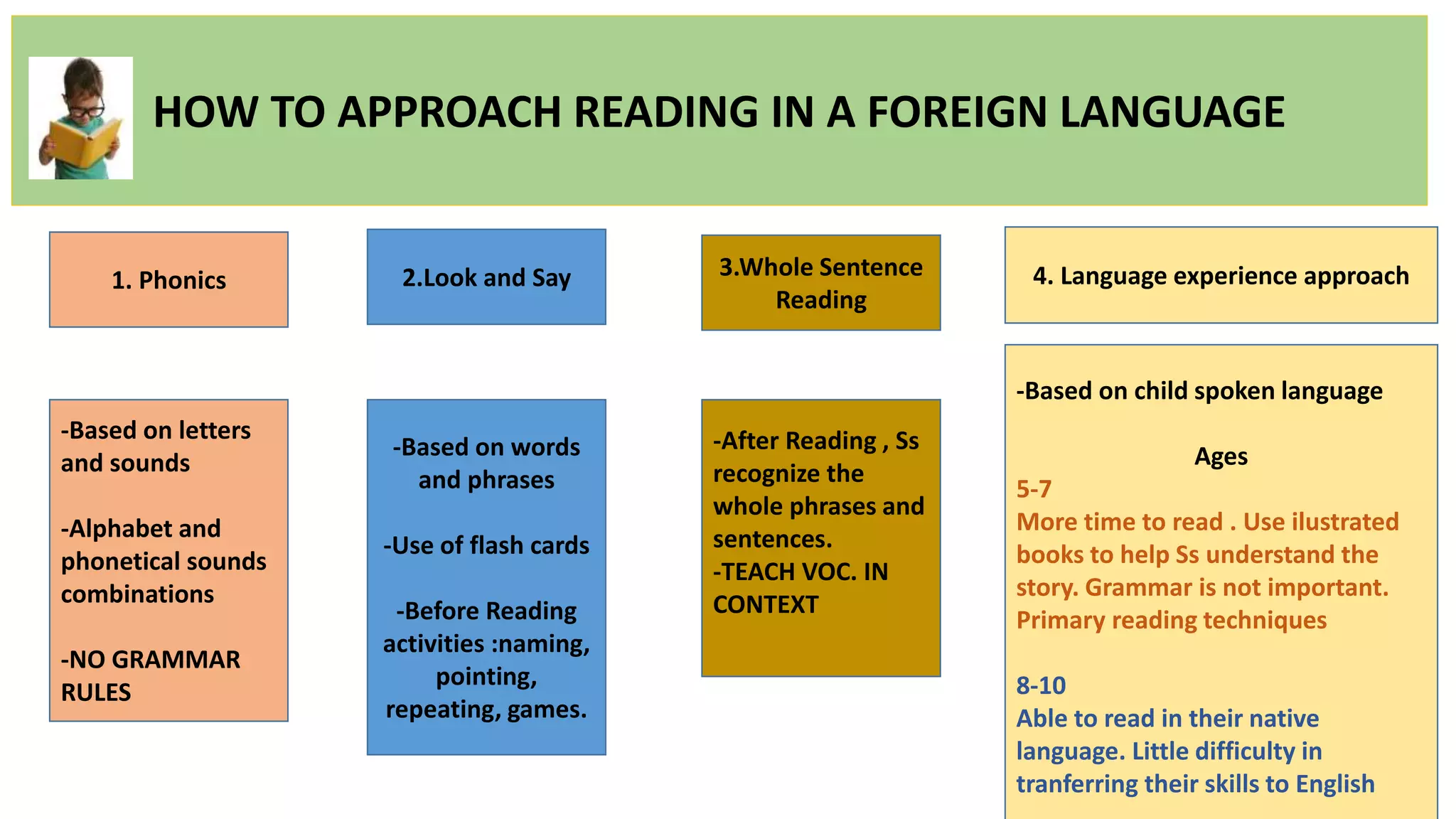
HOW TO APPROACH READING IN A FOREIGN LANGUAGE
1. Phonics 4. Language experience approach2.Look and Say 3.Whole Sentence
Reading
-Based on letters
and sounds
-Alphabet and
phonetical sounds
combinations
-NO GRAMMAR
RULES
-Based on words
and phrases
-Use of flash cards
-Before Reading
activities :naming,
pointing,
repeating, games.
-After Reading , Ss
recognize the
whole phrases and
sentences.
-TEACH VOC. IN
CONTEXT
-Based on child spoken language
Ages
5-7
More time to read . Use ilustrated
books to help Ss understand the
story. Grammar is not important.
Primary reading techniques
8-10
Able to read in their native
language. Little difficulty in
tranferring their skills to English
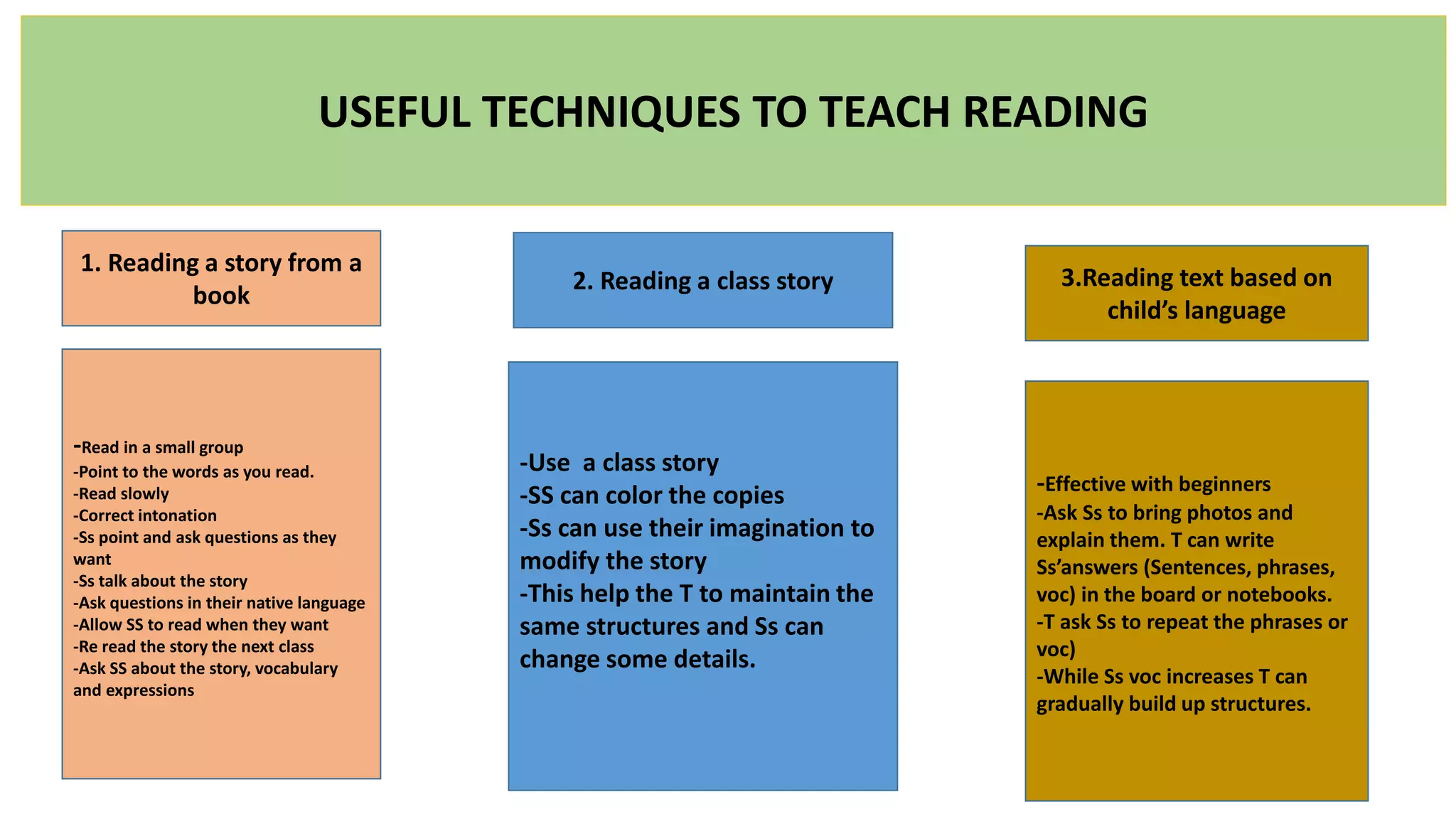
USEFUL TECHNIQUES TO TEACH READING
1. Reading a story from a
book
2. Reading a class story 3.Reading text based on
child’s language
-Read in a small group
-Point to the words as you read.
-Read slowly
-Correct intonation
-Ss point and ask questions as they
want
-Ss talk about the story
-Ask questions in their native language
-Allow SS to read when they want
-Re read the story the next class
-Ask SS about the story, vocabulary
and expressions
-Use a class story
-SS can color the copies
-Ss can use their imagination to
modify the story
-This help the T to maintain the
same structures and Ss can
change some details.
-Effective with beginners
-Ask Ss to bring photos and
explain them. T can write
Ss’answers (Sentences, phrases,
voc) in the board or notebooks.
-T ask Ss to repeat the phrases or
voc)
-While Ss voc increases T can
gradually build up structures.
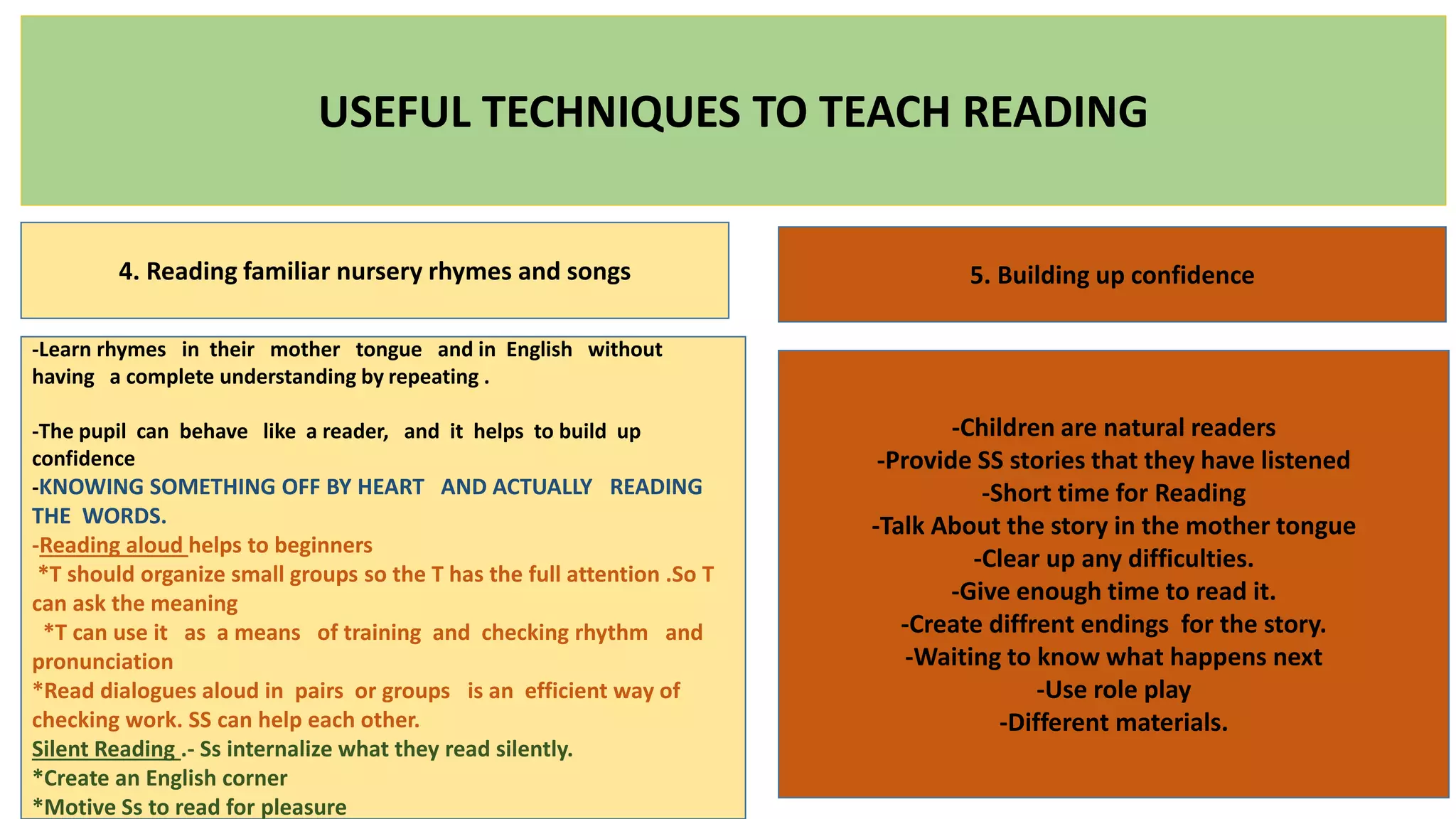
USEFUL TECHNIQUES TO TEACH READING
4. Reading familiar nursery rhymes and songs
-Learn rhymes in their mother tongue and in English without
having a complete understanding by repeating .
-The pupil can behave like a reader, and it helps to build up
confidence
-KNOWING SOMETHING OFF BY HEART AND ACTUALLY READING
THE WORDS.
-Reading aloud helps to beginners
*T should organize small groups so the T has the full attention .So T
can ask the meaning
*T can use it as a means of training and checking rhythm and
pronunciation
*Read dialogues aloud in pairs or groups is an efficient way of
checking work. SS can help each other.
Silent Reading .- Ss internalize what they read silently.
*Create an English corner
*Motive Ss to read for pleasure
5. Building up confidence
-Children are natural readers
-Provide SS stories that they have listened
-Short time for Reading
-Talk About the story in the mother tongue
-Clear up any difficulties.
-Give enough time to read it.
-Create diffrent endings for the story.
-Waiting to know what happens next
-Use role play
-Different materials.
Teaching reading to young learners

Teaching reading to young learners

  • 1.
    TEACHING ENGLISH TOYOUNG LEARNERS READING SKILL TECHNICAL UNIVERSITY OF AMBATO
  • 2.
    Reading is agreat way to expand and strenghten the language READING
  • 3.
    HOW TO APPROACHREADING IN A FOREIGN LANGUAGE 1. Phonics 4. Language experience approach2.Look and Say 3.Whole Sentence Reading -Based on letters and sounds -Alphabet and phonetical sounds combinations -NO GRAMMAR RULES -Based on words and phrases -Use of flash cards -Before Reading activities :naming, pointing, repeating, games. -After Reading , Ss recognize the whole phrases and sentences. -TEACH VOC. IN CONTEXT -Based on child spoken language Ages 5-7 More time to read . Use ilustrated books to help Ss understand the story. Grammar is not important. Primary reading techniques 8-10 Able to read in their native language. Little difficulty in tranferring their skills to English
  • 4.
    USEFUL TECHNIQUES TOTEACH READING 1. Reading a story from a book 2. Reading a class story 3.Reading text based on child’s language -Read in a small group -Point to the words as you read. -Read slowly -Correct intonation -Ss point and ask questions as they want -Ss talk about the story -Ask questions in their native language -Allow SS to read when they want -Re read the story the next class -Ask SS about the story, vocabulary and expressions -Use a class story -SS can color the copies -Ss can use their imagination to modify the story -This help the T to maintain the same structures and Ss can change some details. -Effective with beginners -Ask Ss to bring photos and explain them. T can write Ss’answers (Sentences, phrases, voc) in the board or notebooks. -T ask Ss to repeat the phrases or voc) -While Ss voc increases T can gradually build up structures.
  • 5.
    USEFUL TECHNIQUES TOTEACH READING 4. Reading familiar nursery rhymes and songs -Learn rhymes in their mother tongue and in English without having a complete understanding by repeating . -The pupil can behave like a reader, and it helps to build up confidence -KNOWING SOMETHING OFF BY HEART AND ACTUALLY READING THE WORDS. -Reading aloud helps to beginners *T should organize small groups so the T has the full attention .So T can ask the meaning *T can use it as a means of training and checking rhythm and pronunciation *Read dialogues aloud in pairs or groups is an efficient way of checking work. SS can help each other. Silent Reading .- Ss internalize what they read silently. *Create an English corner *Motive Ss to read for pleasure 5. Building up confidence -Children are natural readers -Provide SS stories that they have listened -Short time for Reading -Talk About the story in the mother tongue -Clear up any difficulties. -Give enough time to read it. -Create diffrent endings for the story. -Waiting to know what happens next -Use role play -Different materials.