gRouP 12 
By : 
Lila Faridatul Anggraini 
Novi Umi Farida
Neurolinguistics 
Definition: Example: 
The study of the 
relationship between 
language and the 
brain. 
A huge metal rod had 
gone through the front 
part of Mr. Gage’s 
brain
Language Areas in the Brain 
Definition: Example: 
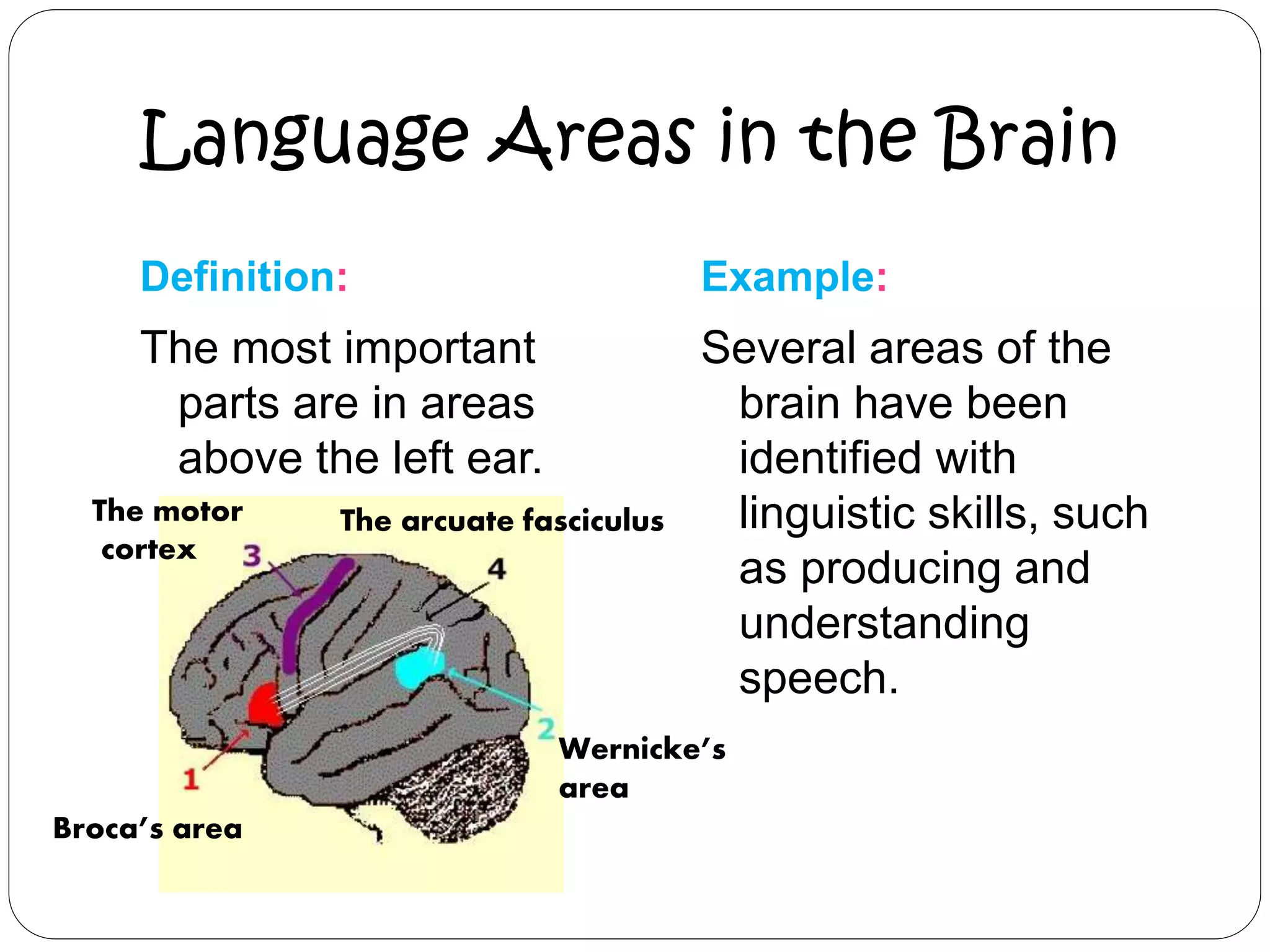
The most important 
parts are in areas 
above the left ear. 
Several areas of the 
brain have been 
identified with 
linguistic skills, such 
as producing and 
understanding 
speech. 
Broca’s area 
Wernicke’s 
area 
The motor 
cortex 
The arcuate fasciculus
Language Areas in the Brain 
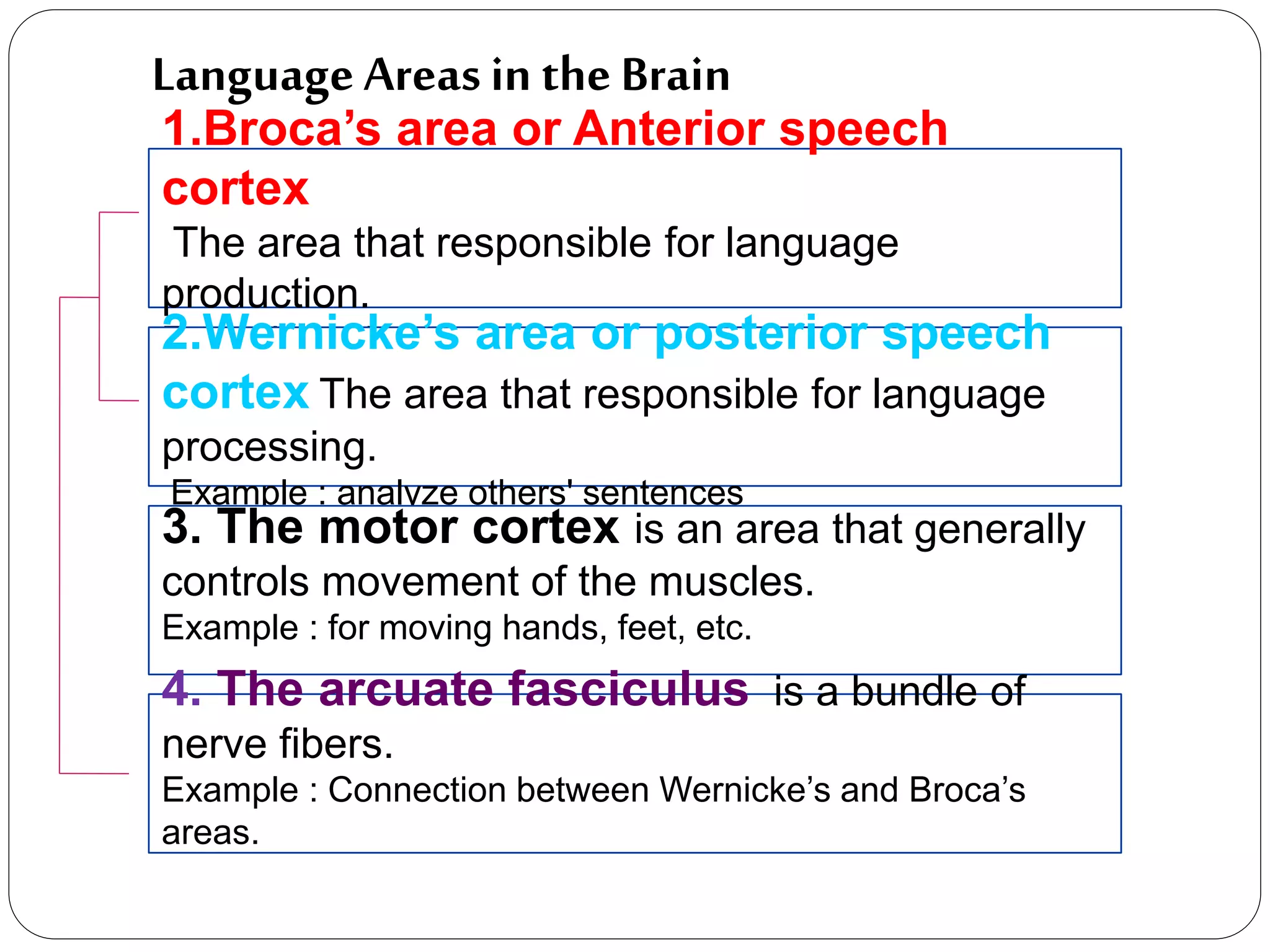
1.Broca’s area or Anterior speech 
cortex 
The area that responsible for language 
production. 
E2x.aWmeplren : iucsiknge ’psropaerre sayntoaxr posterior speech 
cortex The area that responsible for language 
processing. 
Example : analyze others' sentences 
3. The motor cortex is an area that generally 
controls movement of the muscles. 
Example : for moving hands, feet, etc. 
4. The arcuate fasciculus is a bundle of 
nerve fibers. 
Example : Connection between Wernicke’s and Broca’s 
areas.
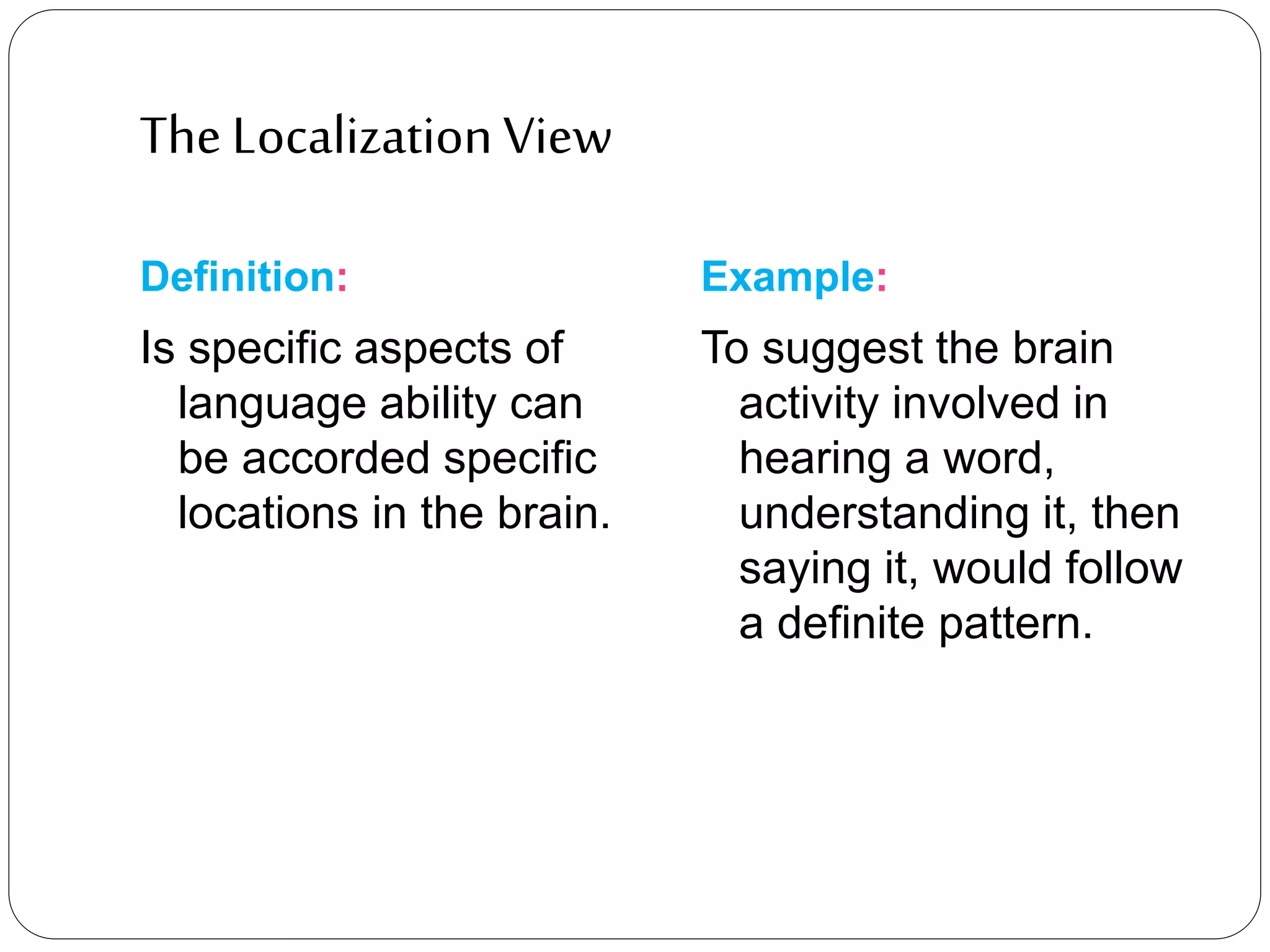
The Localization View 
Definition: Example: 
Is specific aspects of 
language ability can 
be accorded specific 
locations in the brain. 
To suggest the brain 
activity involved in 
hearing a word, 
understanding it, then 
saying it, would follow 
a definite pattern.
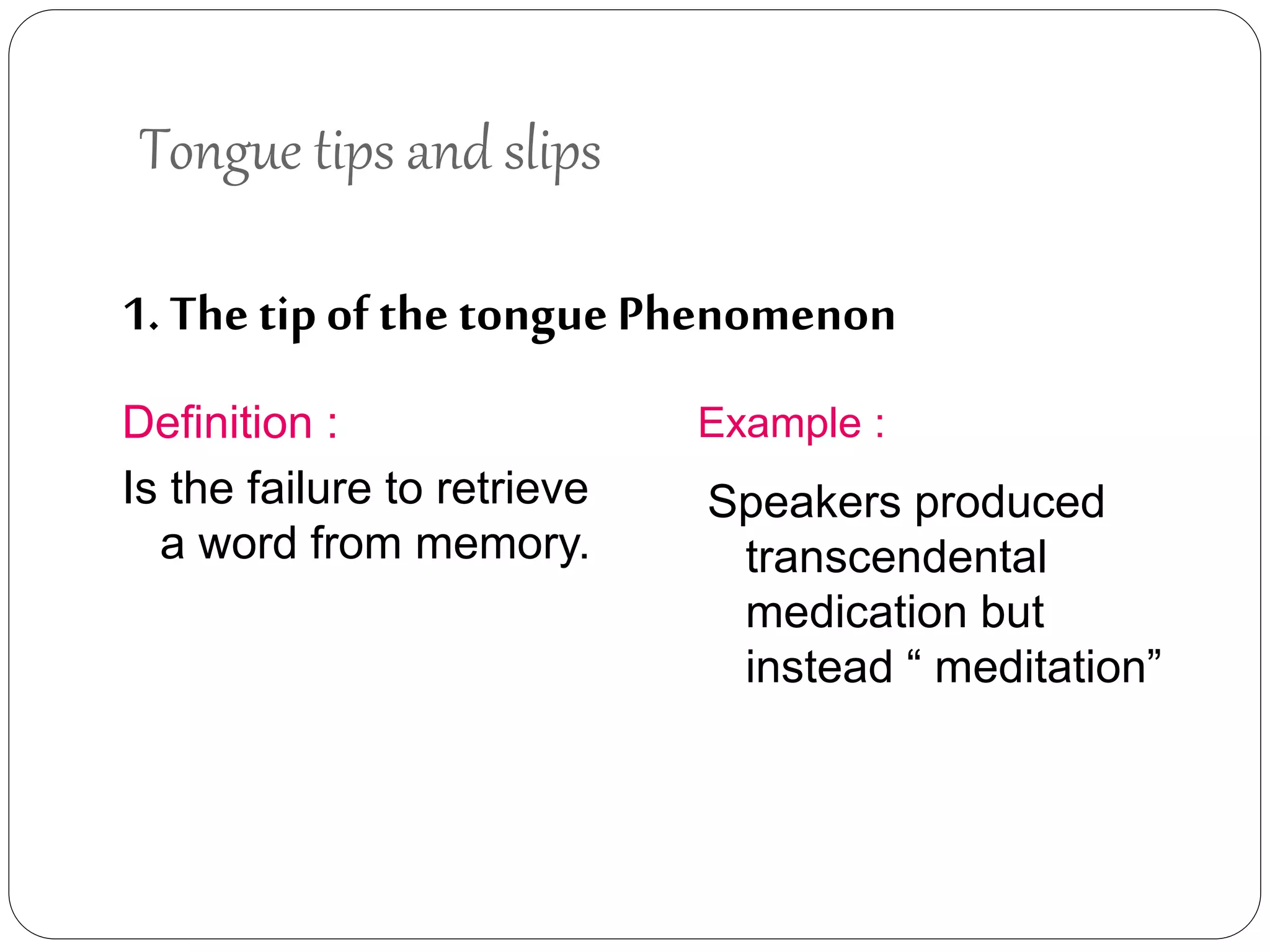
Tongue tips and slips 
1. The tip of the tongue Phenomenon 
Definition : 
Is the failure to retrieve 
a word from memory. 
Example : 
Speakers produced 
transcendental 
medication but 
instead “ meditation”
2. Slips of the Tongue 
Definition: Example: 
 Is the replacement of 
one word with another 
that can add up to 
something far from 
what we meant to say. 
 black boxes but we 
say “black bloxes” or 
a cup of tea but we 
say “tup”
3. Slips of the Ear 
Definition: Example: 
 An error of 
misperception in 
listening: mistaking a 
word or phrase for a 
similar-sounding word 
or phrase in speech 
or conversation. 
 He hear great ape but 
actually the speaker 
said “gray tape”.
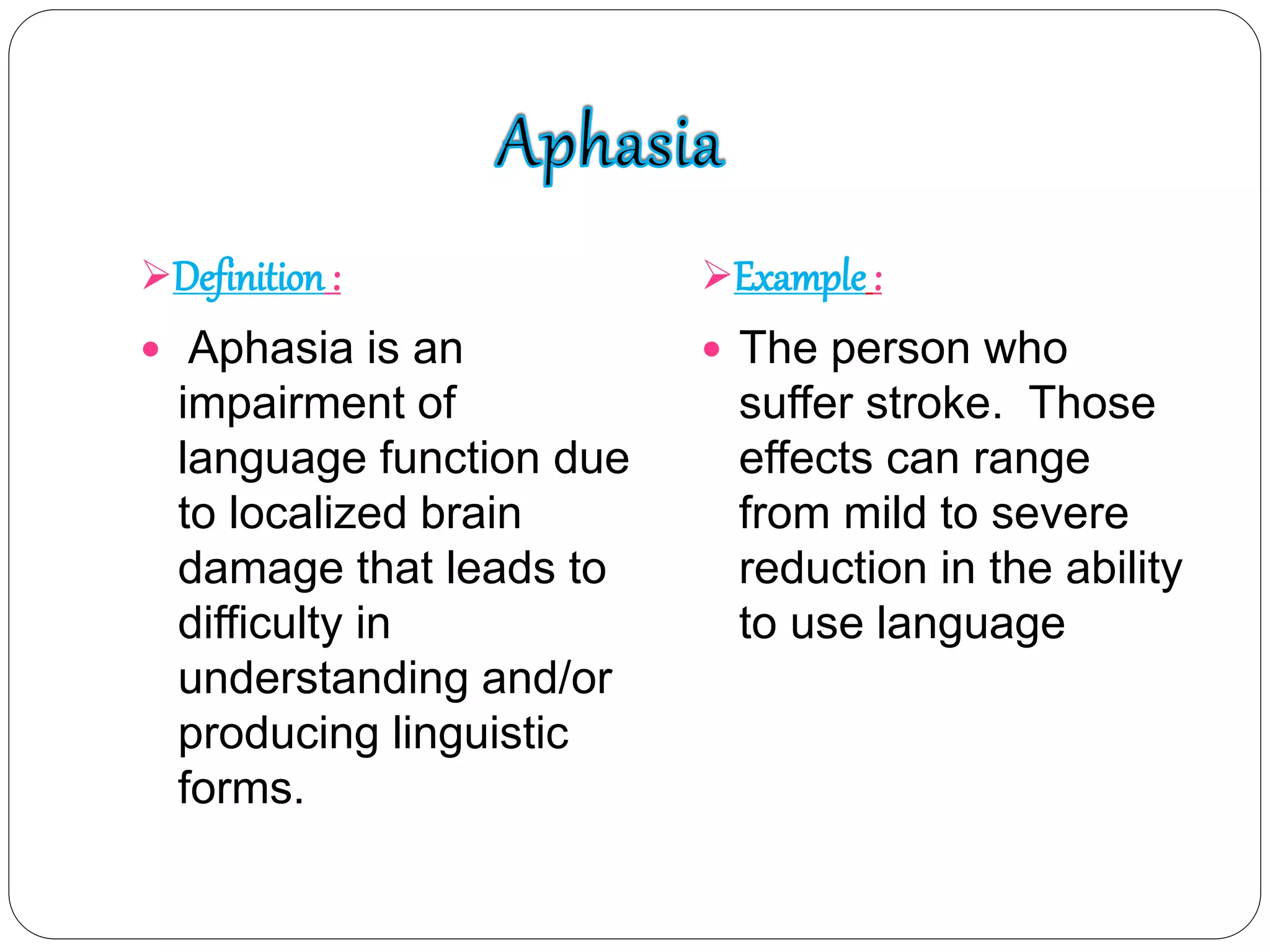
Definition : Example : 
 Aphasia is an 
impairment of 
language function due 
to localized brain 
damage that leads to 
difficulty in 
understanding and/or 
producing linguistic 
forms. 
 The person who 
suffer stroke. Those 
effects can range 
from mild to severe 
reduction in the ability 
to use language
Definition: Example: 
 Is characterized by a 
substantially reduced 
amount of speech, 
distorted acticulation 
and slow. 
 Eliminate inflections 
such as -ed .
Definition: Example: 
 The type of language 
disorder that results in 
auditory 
comprehension. 
 When asked to repeat 
the word glass he 
might say window, or 
something contiguous 
with glass.
Definition: Example: 
 Damage to the 
arcuate fasciculus 
that cause 
mispronounce words, 
but typically do not 
have articulation 
problems. 
 repetitions of the 
words “base” and 
“wash.” What the 
speaker hears and 
understands can’t be 
transferred very 
successfully.
Definition: Example: 
 a behavioural 
technique for studying 
brain asymmetry in 
auditory processing. 
 through one earphone 
comes the syllable ga 
or the word dog, and 
through the other 
earphone at exactly 
the same time comes 
da or cat.
Definition: Example: 
 a limited time in 
which an event can 
occur, usually to result 
in some kind of 
transformation. 
 children learn 
languages most 
rapidly when young, 
and that it is more 
difficult when they 
become adult.
Language and the brain

Language and the brain

  • 1.
    gRouP 12 By: Lila Faridatul Anggraini Novi Umi Farida
  • 2.
    Neurolinguistics Definition: Example: The study of the relationship between language and the brain. A huge metal rod had gone through the front part of Mr. Gage’s brain
  • 3.
    Language Areas inthe Brain Definition: Example: The most important parts are in areas above the left ear. Several areas of the brain have been identified with linguistic skills, such as producing and understanding speech. Broca’s area Wernicke’s area The motor cortex The arcuate fasciculus
  • 4.
    Language Areas inthe Brain 1.Broca’s area or Anterior speech cortex The area that responsible for language production. E2x.aWmeplren : iucsiknge ’psropaerre sayntoaxr posterior speech cortex The area that responsible for language processing. Example : analyze others' sentences 3. The motor cortex is an area that generally controls movement of the muscles. Example : for moving hands, feet, etc. 4. The arcuate fasciculus is a bundle of nerve fibers. Example : Connection between Wernicke’s and Broca’s areas.
  • 5.
    The Localization View Definition: Example: Is specific aspects of language ability can be accorded specific locations in the brain. To suggest the brain activity involved in hearing a word, understanding it, then saying it, would follow a definite pattern.
  • 6.
    Tongue tips andslips 1. The tip of the tongue Phenomenon Definition : Is the failure to retrieve a word from memory. Example : Speakers produced transcendental medication but instead “ meditation”
  • 7.
    2. Slips ofthe Tongue Definition: Example:  Is the replacement of one word with another that can add up to something far from what we meant to say.  black boxes but we say “black bloxes” or a cup of tea but we say “tup”
  • 8.
    3. Slips ofthe Ear Definition: Example:  An error of misperception in listening: mistaking a word or phrase for a similar-sounding word or phrase in speech or conversation.  He hear great ape but actually the speaker said “gray tape”.
  • 9.
    Definition : Example:  Aphasia is an impairment of language function due to localized brain damage that leads to difficulty in understanding and/or producing linguistic forms.  The person who suffer stroke. Those effects can range from mild to severe reduction in the ability to use language
  • 10.
    Definition: Example: Is characterized by a substantially reduced amount of speech, distorted acticulation and slow.  Eliminate inflections such as -ed .
  • 11.
    Definition: Example: The type of language disorder that results in auditory comprehension.  When asked to repeat the word glass he might say window, or something contiguous with glass.
  • 12.
    Definition: Example: Damage to the arcuate fasciculus that cause mispronounce words, but typically do not have articulation problems.  repetitions of the words “base” and “wash.” What the speaker hears and understands can’t be transferred very successfully.
  • 13.
    Definition: Example: a behavioural technique for studying brain asymmetry in auditory processing.  through one earphone comes the syllable ga or the word dog, and through the other earphone at exactly the same time comes da or cat.
  • 14.
    Definition: Example: a limited time in which an event can occur, usually to result in some kind of transformation.  children learn languages most rapidly when young, and that it is more difficult when they become adult.