PHONETICS AND
PHONOLOGY
Marlene Reyes
PREVIOUS KNOWLEDGE
 In pairs , discuss some concepts:
 1. Phonetics, phonology , pronunciation
, phonics, phoneme.
 2. How do you include pronunciation in your
class. Mention 5 different strategies used or
seen used in class.
PHONETICS
 Definition: The branch of linguistics
concerned with the study of speech sounds
with reference to their distribution and
patterning. Adjective: phonological.
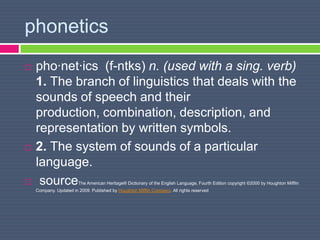
phonetics
 pho·net·ics (f-ntks) n. (used with a sing. verb)
1. The branch of linguistics that deals with the
sounds of speech and their
production, combination, description, and
representation by written symbols.
 2. The system of sounds of a particular
language.
 sourceThe American Heritage® Dictionary of the English Language, Fourth Edition copyright ©2000 by Houghton Mifflin
Company. Updated in 2009. Published by Houghton Mifflin Company. All rights reserved
PHONOLOGY
 Definition: The branch of linguistics
concerned with the study of speech sounds
with reference to their distribution and
patterning. Adjective: phonological.
 source:
PHONEME
 Definition: The smallest sound unit in a
language that is capable of conveying a
distinct meaning, such as the s of sing and the
r of ring. Adjective: phonemic.
PHONOLOGY
 Phonology is the study of the properties of
sound systems, the principles that govern the
ways in which speakers of different languages
organise speech sounds to express meanings.
 Source:Phonology - Critical Concepts in
Linguistics by Charles W. Kreidler
Phonetics and phonology
 Definition of Phonetics and Phonology
 Phonetics and phonology are related, dependent fields for
studying aspects of language. Phonetics is the study of sound
in speech; phonology is the study (and use) of sound patterns
to create meaning. Phonetics focuses on how speech is
physically created and received, including study of the human
vocal and auditory tracts, acoustics, and neurology.
Phonology relies on phonetic information for its practice, but
focuses on how patterns in both speech and non-verbal
communication create meaning, and how such patterns are
interpreted. Phonology includes comparative linguistic studies
of how cognates, sounds, and meaning are transmitted
among and between human communities and languages.
 Source;http://www.chegg.com/homework-
help/definitions/phonetics-and-phonology-51
PHONETICS
 Phonetics (pronounced /fəˈnɛtɪks/, from the
Greek: φωνή, phōnē, 'sound, voice') is a branch of
linguistics that comprises the study of the sounds
of human speech, or—in the case of sign
languages—the equivalent aspects of sign.[1] It is
concerned with the physical properties of speech
sounds or signs (phones): their physiological
production, acoustic properties, auditory
perception, and neurophysiological status.
Phonology, on the other hand, is concerned with
the abstract, grammatical characterization of
systems of sounds or signs.
 source Wikipedia
Phonetics: its branches
 The field of phonetics is a multiple layered subject
of linguistics that focuses on speech. In the case
of oral languages there are three basic areas of
study:
 Articulatory phonetics: the study of the production
of speech sounds by the articulatory and vocal
tract by the speaker
 Acoustic phonetics: the study of the physical
transmission of speech sounds from the speaker
to the listener
 Auditory phonetics: the study of the reception and
perception of speech sounds by the listener
The difference between phonetics
and phonology
 Phonology concerns itself with systems of
phonemes, abstract cognitive units of speech
sound or sign which distinguish the words of a
language. Phonetics, on the other
hand, concerns itself with the
production, transmission, and perception of the
physical phenomena which are abstracted in
the mind to constitute these speech sounds or
signs.
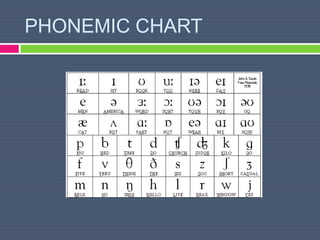
IPA
Definition: The most widely used system
for representing the sounds of any
language.
A reproduction of the latest version of the
International Phonetic Alphabet (2005) is
available at the website of the International
Phonetic Association.
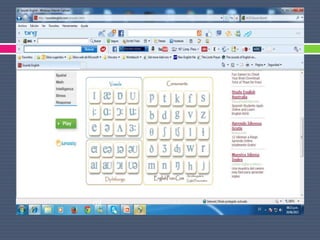
PHONEMIC CHART
http://soundsenglish.com/phonetic.ht
ml

Phonetics and phonology

  • 1.
  • 2.
    PREVIOUS KNOWLEDGE  Inpairs , discuss some concepts:  1. Phonetics, phonology , pronunciation , phonics, phoneme.  2. How do you include pronunciation in your class. Mention 5 different strategies used or seen used in class.
  • 3.
    PHONETICS  Definition: Thebranch of linguistics concerned with the study of speech sounds with reference to their distribution and patterning. Adjective: phonological.
  • 4.
    phonetics  pho·net·ics (f-ntks)n. (used with a sing. verb) 1. The branch of linguistics that deals with the sounds of speech and their production, combination, description, and representation by written symbols.  2. The system of sounds of a particular language.  sourceThe American Heritage® Dictionary of the English Language, Fourth Edition copyright ©2000 by Houghton Mifflin Company. Updated in 2009. Published by Houghton Mifflin Company. All rights reserved
  • 5.
    PHONOLOGY  Definition: Thebranch of linguistics concerned with the study of speech sounds with reference to their distribution and patterning. Adjective: phonological.  source:
  • 6.
    PHONEME  Definition: Thesmallest sound unit in a language that is capable of conveying a distinct meaning, such as the s of sing and the r of ring. Adjective: phonemic.
  • 7.
    PHONOLOGY  Phonology isthe study of the properties of sound systems, the principles that govern the ways in which speakers of different languages organise speech sounds to express meanings.  Source:Phonology - Critical Concepts in Linguistics by Charles W. Kreidler
  • 8.
    Phonetics and phonology Definition of Phonetics and Phonology  Phonetics and phonology are related, dependent fields for studying aspects of language. Phonetics is the study of sound in speech; phonology is the study (and use) of sound patterns to create meaning. Phonetics focuses on how speech is physically created and received, including study of the human vocal and auditory tracts, acoustics, and neurology. Phonology relies on phonetic information for its practice, but focuses on how patterns in both speech and non-verbal communication create meaning, and how such patterns are interpreted. Phonology includes comparative linguistic studies of how cognates, sounds, and meaning are transmitted among and between human communities and languages.  Source;http://www.chegg.com/homework- help/definitions/phonetics-and-phonology-51
  • 9.
    PHONETICS  Phonetics (pronounced/fəˈnɛtɪks/, from the Greek: φωνή, phōnē, 'sound, voice') is a branch of linguistics that comprises the study of the sounds of human speech, or—in the case of sign languages—the equivalent aspects of sign.[1] It is concerned with the physical properties of speech sounds or signs (phones): their physiological production, acoustic properties, auditory perception, and neurophysiological status. Phonology, on the other hand, is concerned with the abstract, grammatical characterization of systems of sounds or signs.  source Wikipedia
  • 10.
    Phonetics: its branches The field of phonetics is a multiple layered subject of linguistics that focuses on speech. In the case of oral languages there are three basic areas of study:  Articulatory phonetics: the study of the production of speech sounds by the articulatory and vocal tract by the speaker  Acoustic phonetics: the study of the physical transmission of speech sounds from the speaker to the listener  Auditory phonetics: the study of the reception and perception of speech sounds by the listener
  • 11.
    The difference betweenphonetics and phonology  Phonology concerns itself with systems of phonemes, abstract cognitive units of speech sound or sign which distinguish the words of a language. Phonetics, on the other hand, concerns itself with the production, transmission, and perception of the physical phenomena which are abstracted in the mind to constitute these speech sounds or signs.
  • 12.
    IPA Definition: The mostwidely used system for representing the sounds of any language. A reproduction of the latest version of the International Phonetic Alphabet (2005) is available at the website of the International Phonetic Association.
  • 13.
  • 14.