BLOOM'S
DIGITAL TAXONOMY
ADAPTED FOR STUDENTS ON
THE AUTISM SPECTRUM
By Karina Barley M.Ed.
and
Digital Learning Tree
www.digitallearningtree2.com
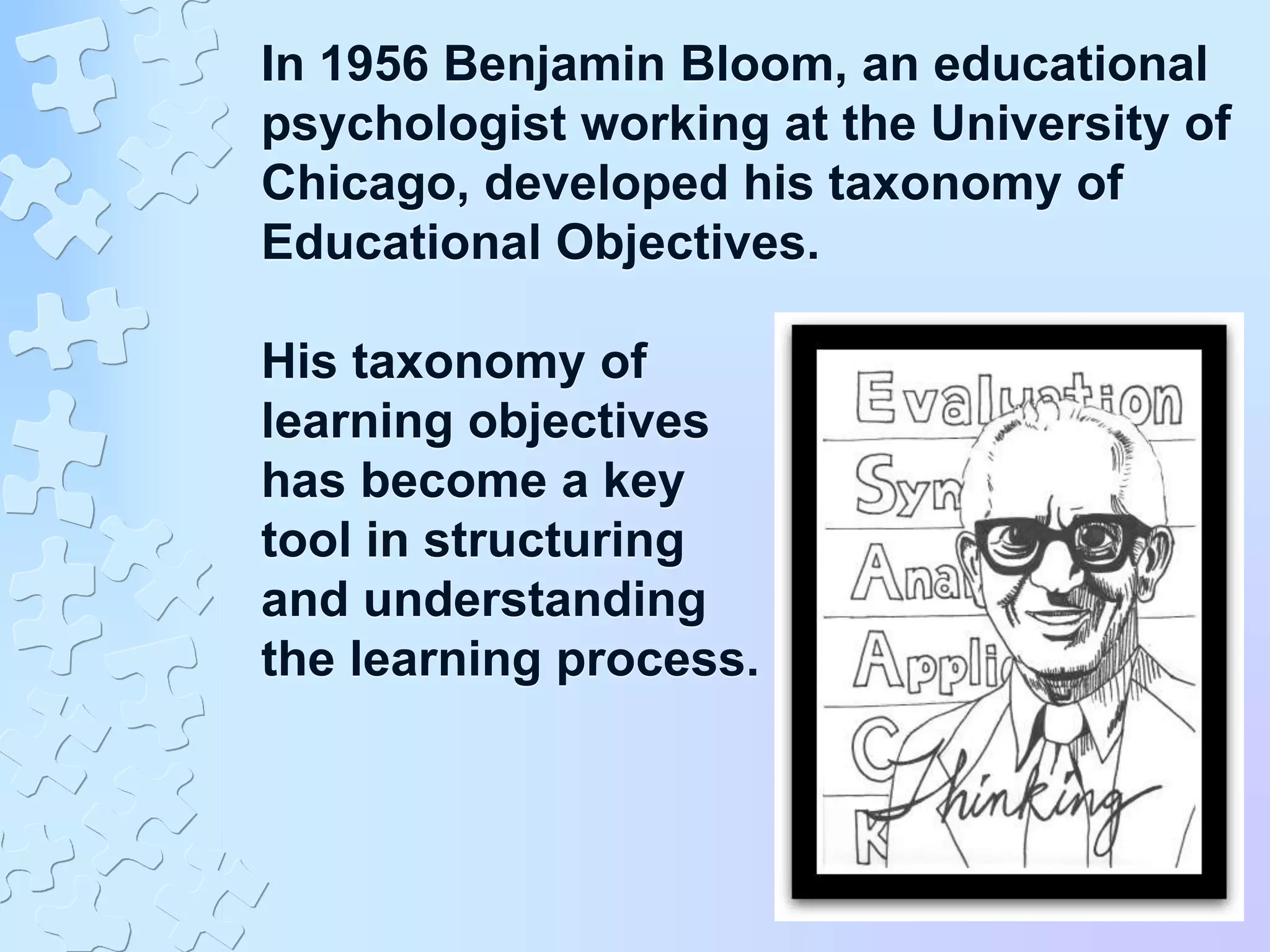
In 1956 Benjamin Bloom, an educational
psychologist working at the University of
Chicago, developed his taxonomy of
Educational Objectives.
His taxonomy of
learning objectives
has become a key
tool in structuring
and understanding
the learning process.
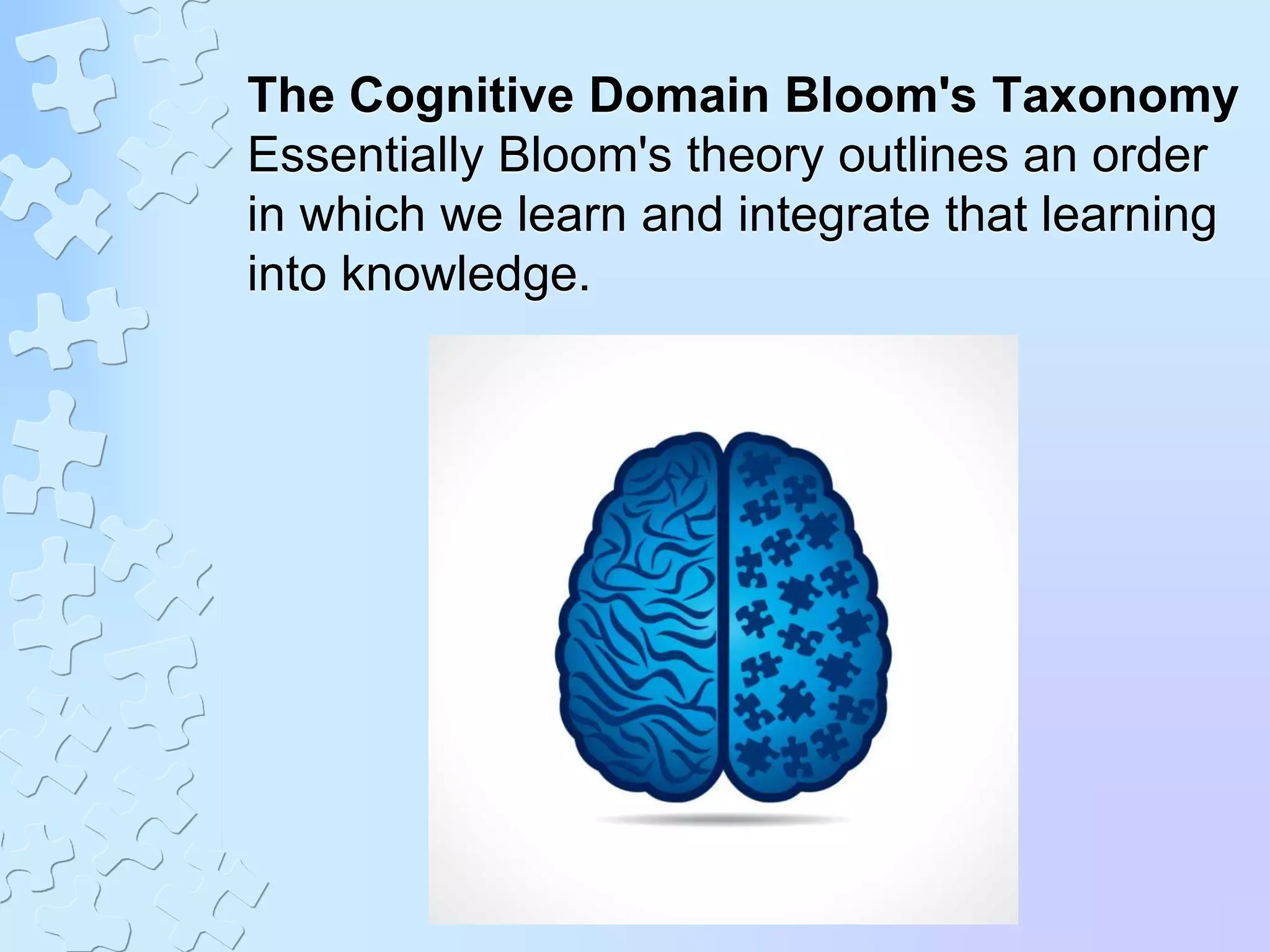
The Cognitive Domain Bloom's Taxonomy
Essentially Bloom's theory outlines an order
in which we learn and integrate that learning
into knowledge.
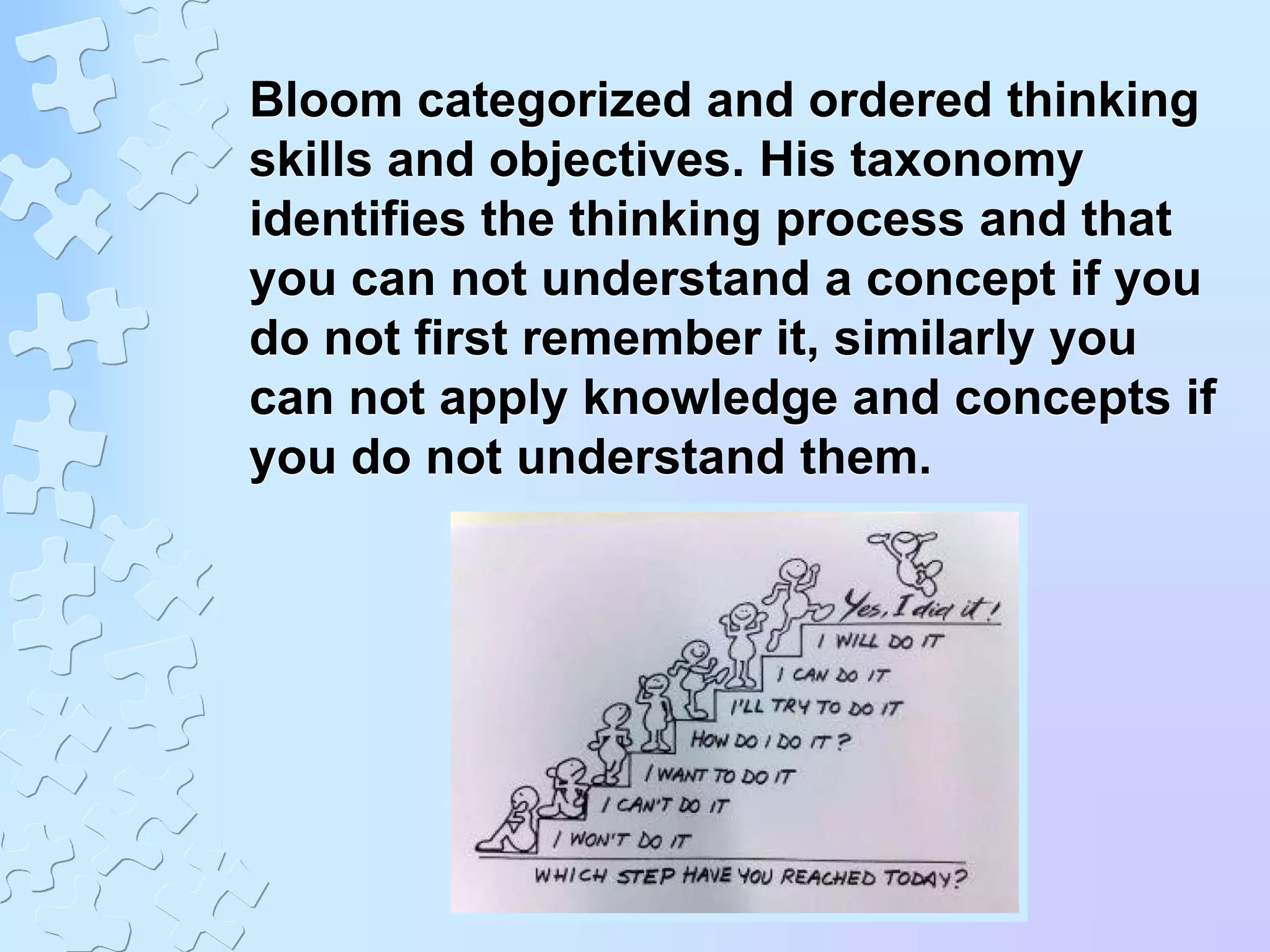
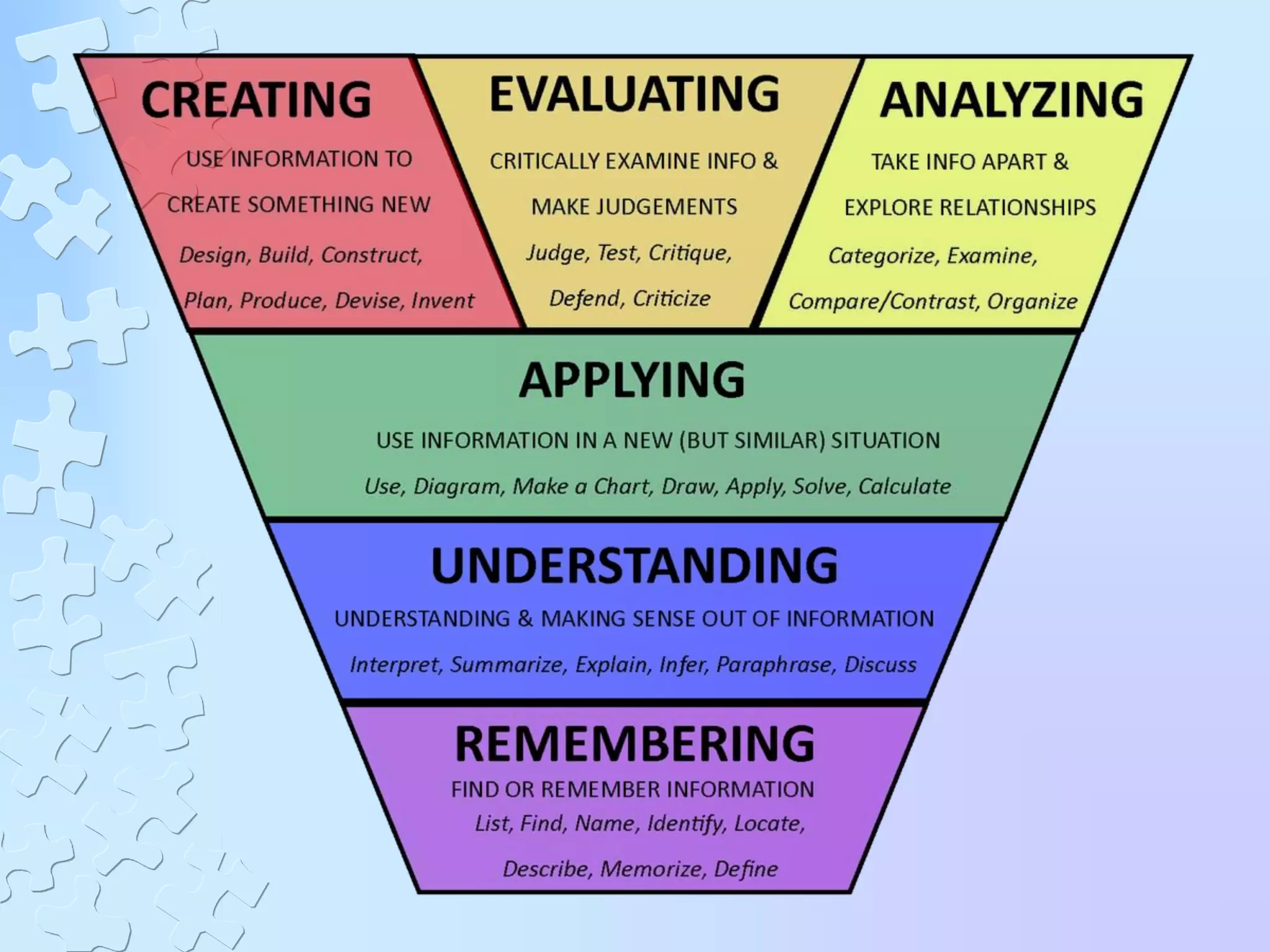
Bloom categorized and ordered thinking
skills and objectives. His taxonomy
identifies the thinking process and that
you can not understand a concept if you
do not first remember it, similarly you
can not apply knowledge and concepts if
you do not understand them.
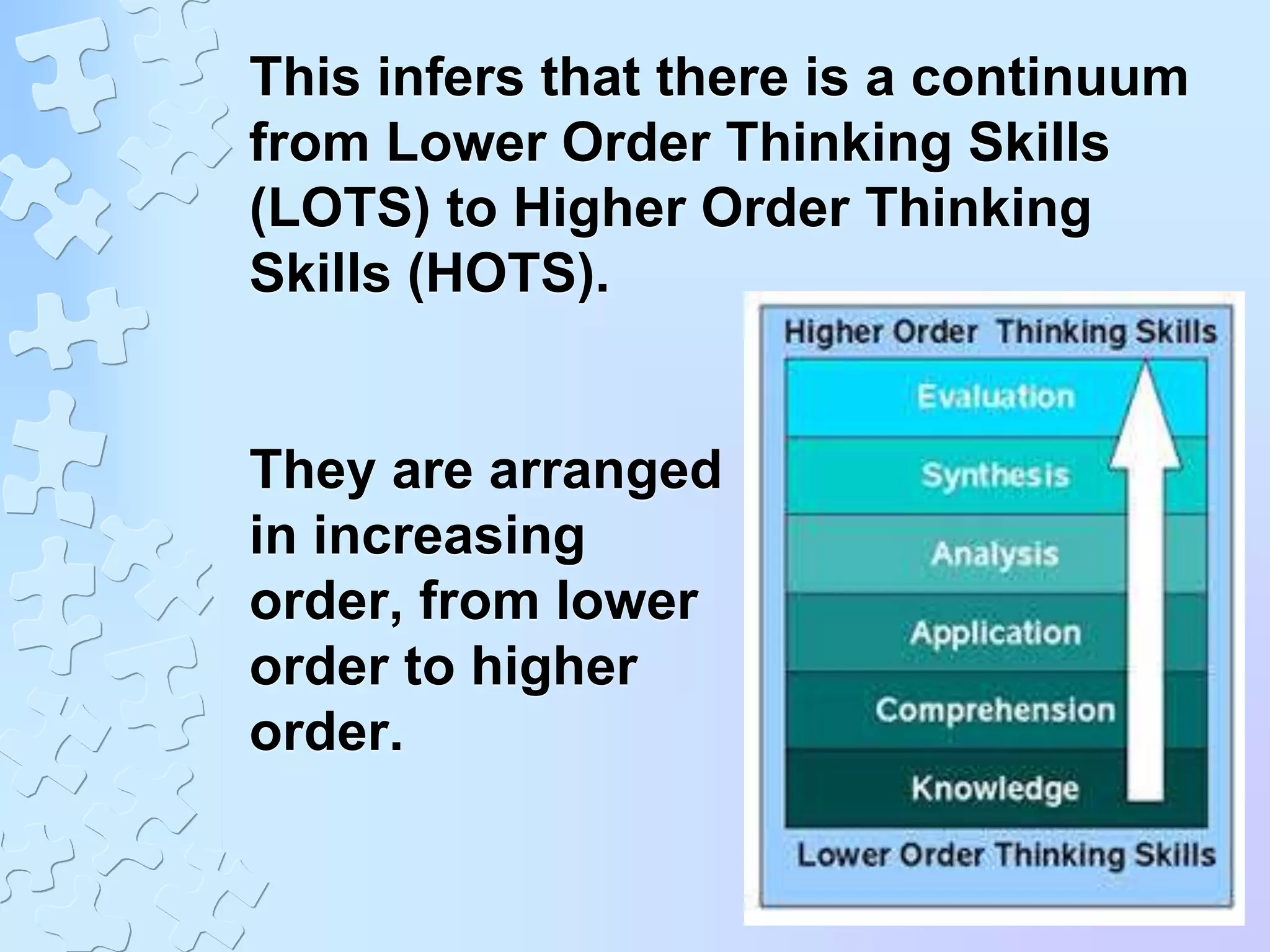
This infers that there is a continuum
from Lower Order Thinking Skills
(LOTS) to Higher Order Thinking
Skills (HOTS).
They are arranged
in increasing
order, from lower
order to higher
order.
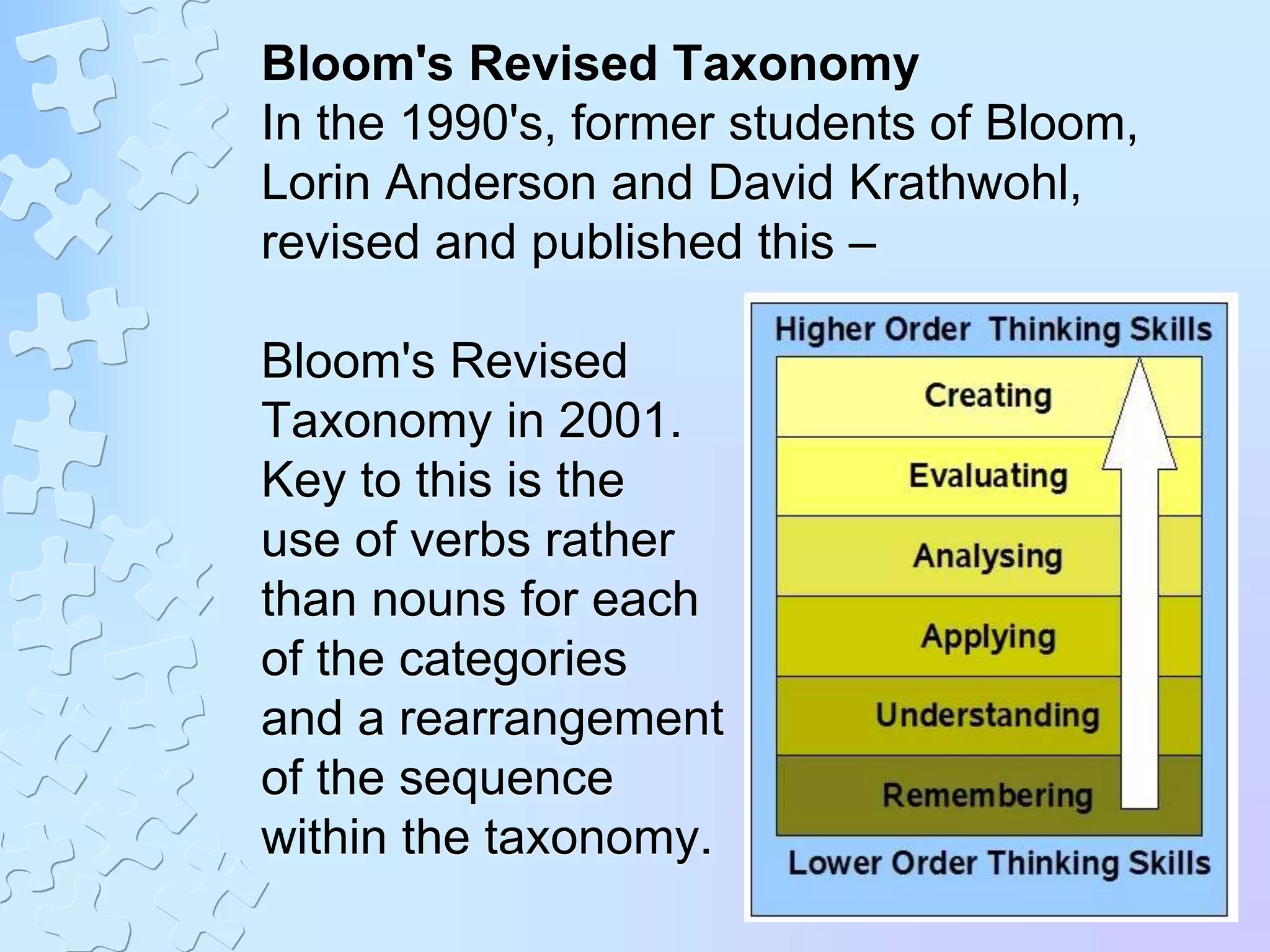
Bloom's Revised Taxonomy
In the 1990's, former students of Bloom,
Lorin Anderson and David Krathwohl,
revised and published this –
Bloom's Revised
Taxonomy in 2001.
Key to this is the
use of verbs rather
than nouns for each
of the categories
and a rearrangement
of the sequence
within the taxonomy.
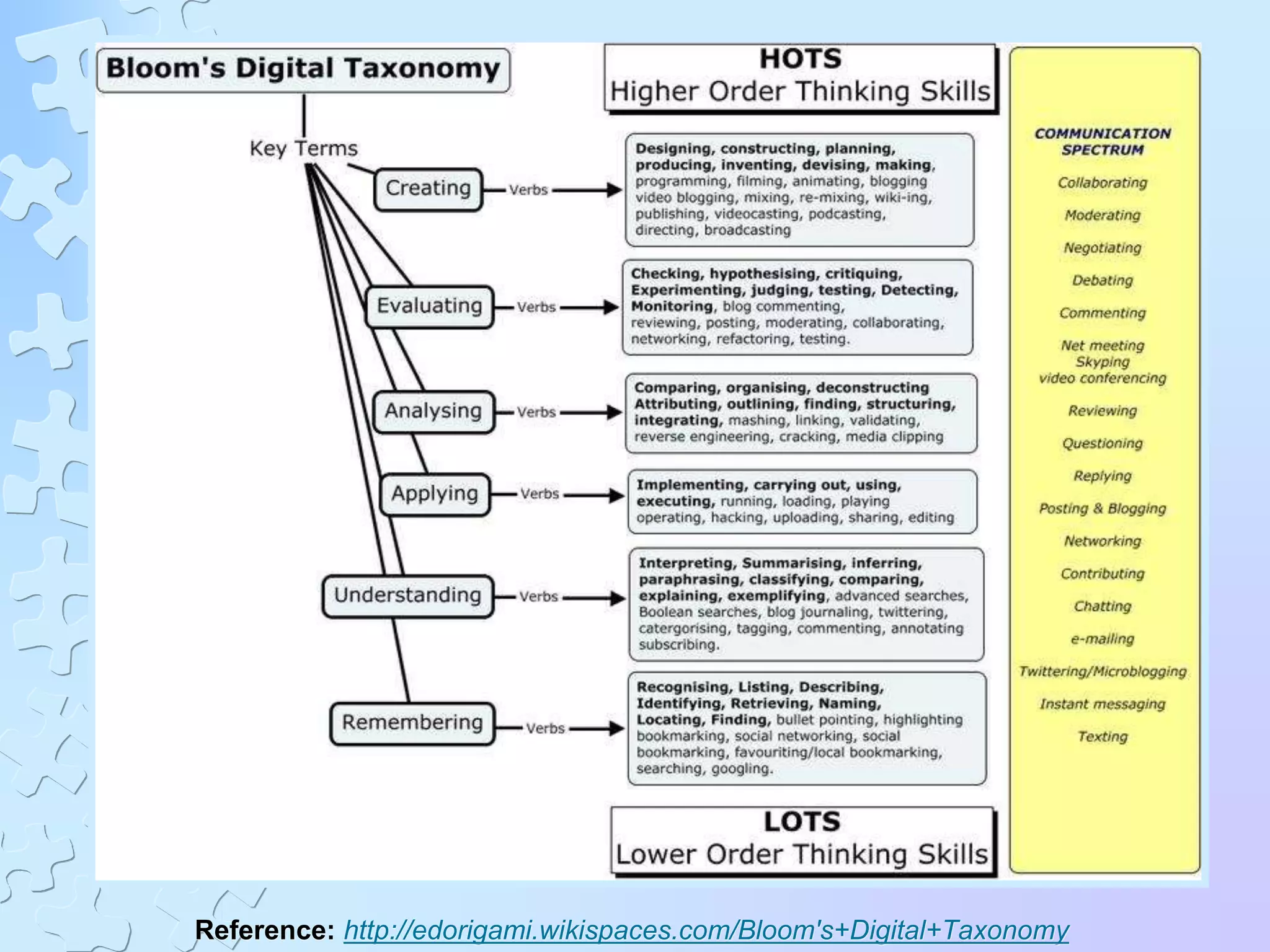
Reference: http://edorigami.wikispaces.com/Bloom's+Digital+Taxonomy
Collaboration is a key element to the
acquisition of 21st Century Skills and
for children on the Spectrum this is
one of the challenging aspects of
their condition as most have
socialization issues.
Using technology can be extremely
helpful for these students as the
technology can become the buffer
they need that enables them to
communicate.
SAMR Model
The Substitution Augmentation
Modification Redefinition Model is a
method of seeing how technology
might impact teaching and learning.
It also shows a continuum that
educators using technology can follow
as they progress through teaching and
learning using technology.
Reference: https://sites.google.com/a/msad60.org/technology-is-learning/samr-model
Kathy Schrock has combined the
two models to reflect the impact of
technology on learning.
Visit Kathy’s website to see her
amazing work.
http://www.schrockguide.net/bloomi
n-apps.html
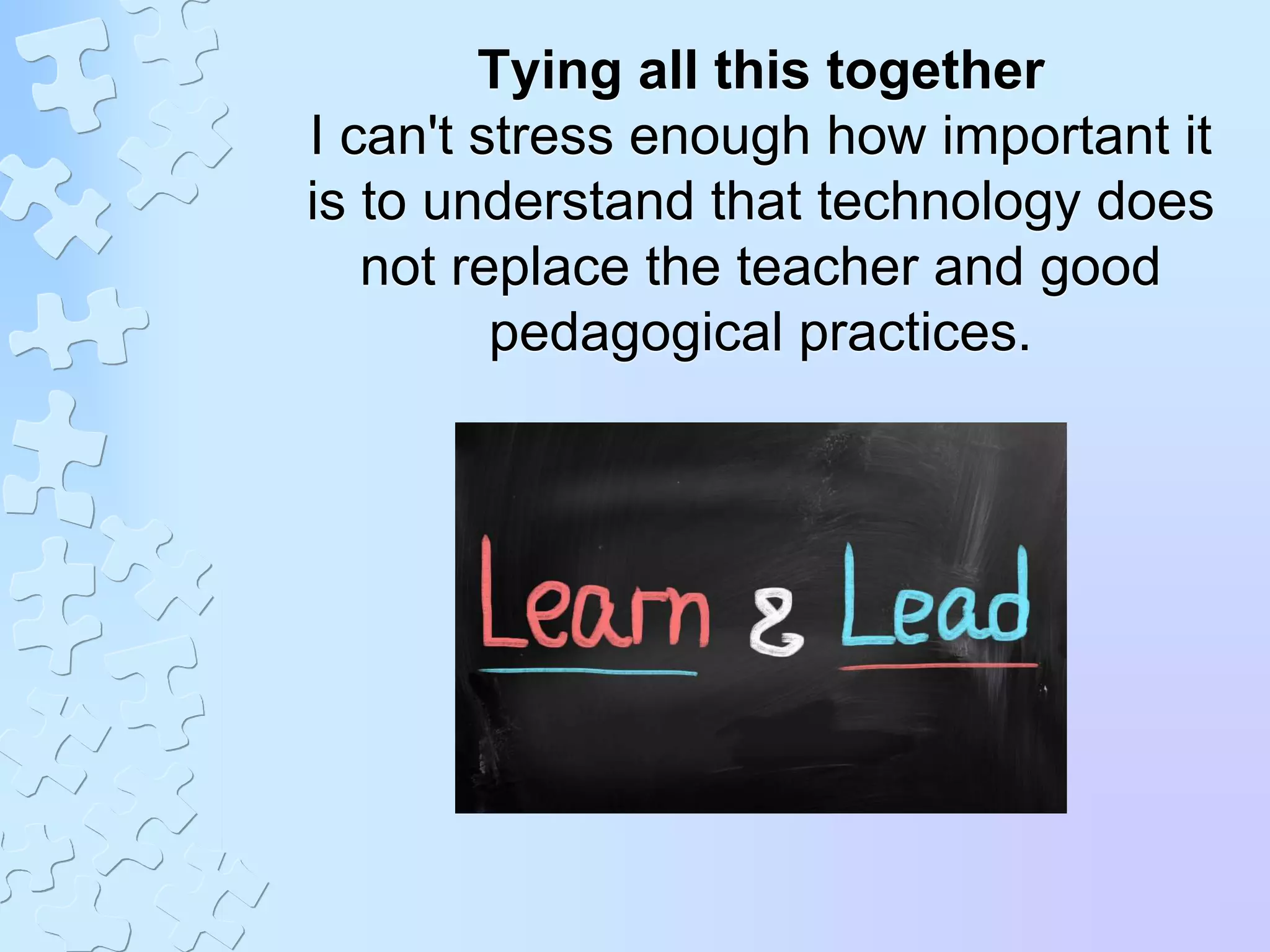
Tying all this together
I can't stress enough how important it
is to understand that technology does
not replace the teacher and good
pedagogical practices.
Handing the iPad to a child
and expecting them to instantly
learn is NOT using the iPad for
educational purposes.
Using the iPad purposefully
with educational outcomes in
mind elevates this technology
to an educational tool that can
be integrated into the
curriculum.
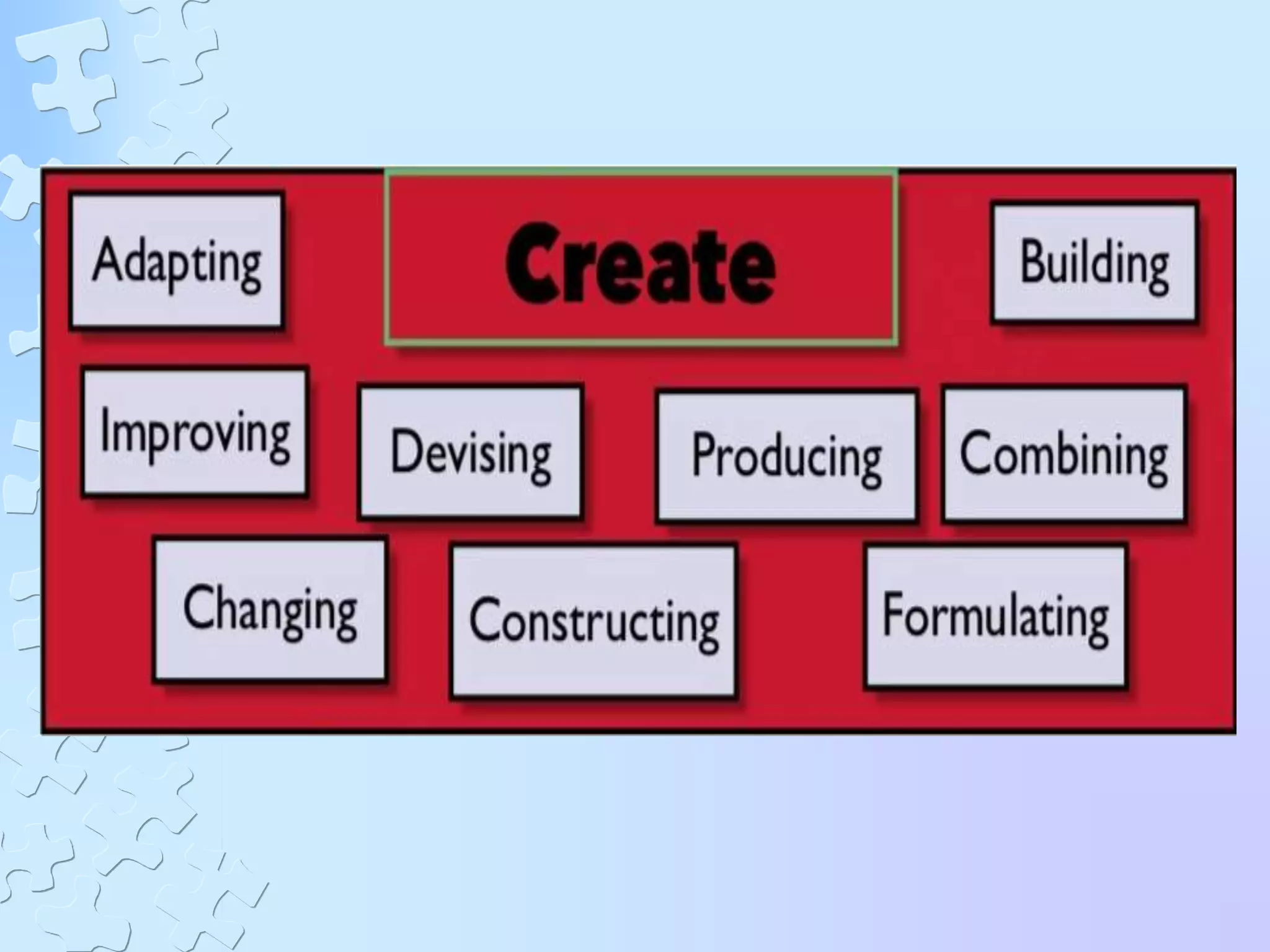
Back to Bloom
Bloom suggested that learning occurs like a
pyramid in that you need to go through each
step to get to the next.
Personally, I believe this model can also be
viewed as a continuum where a child might
move back and forth between steps over
time. Even when knowledge is acquired and
demonstrated through creating, oftentimes a
student might go back to remembering,
understanding or applying to revisit a
concept before using it.
This means learning can be a fluid, organic
and evolutionary process.
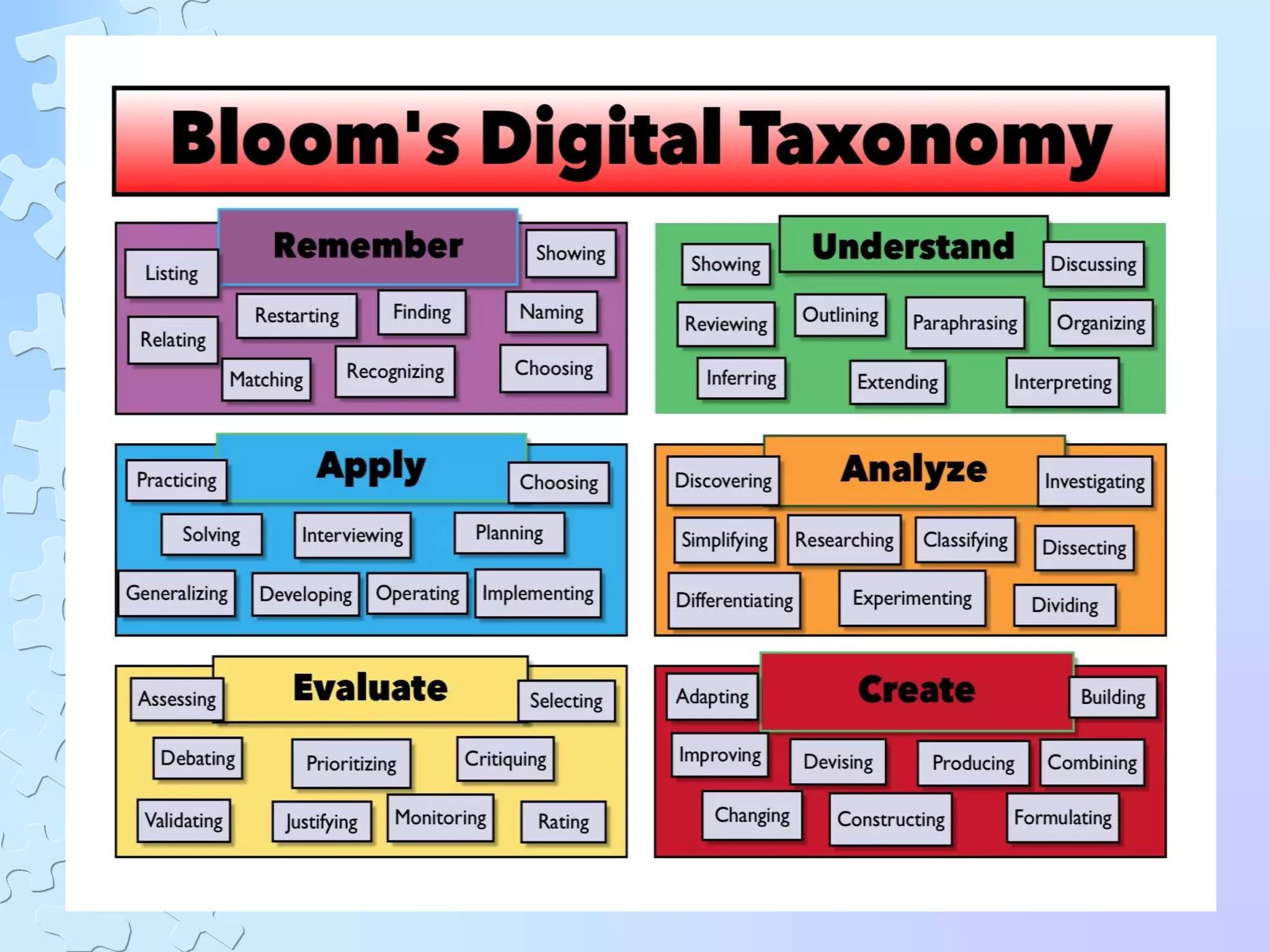
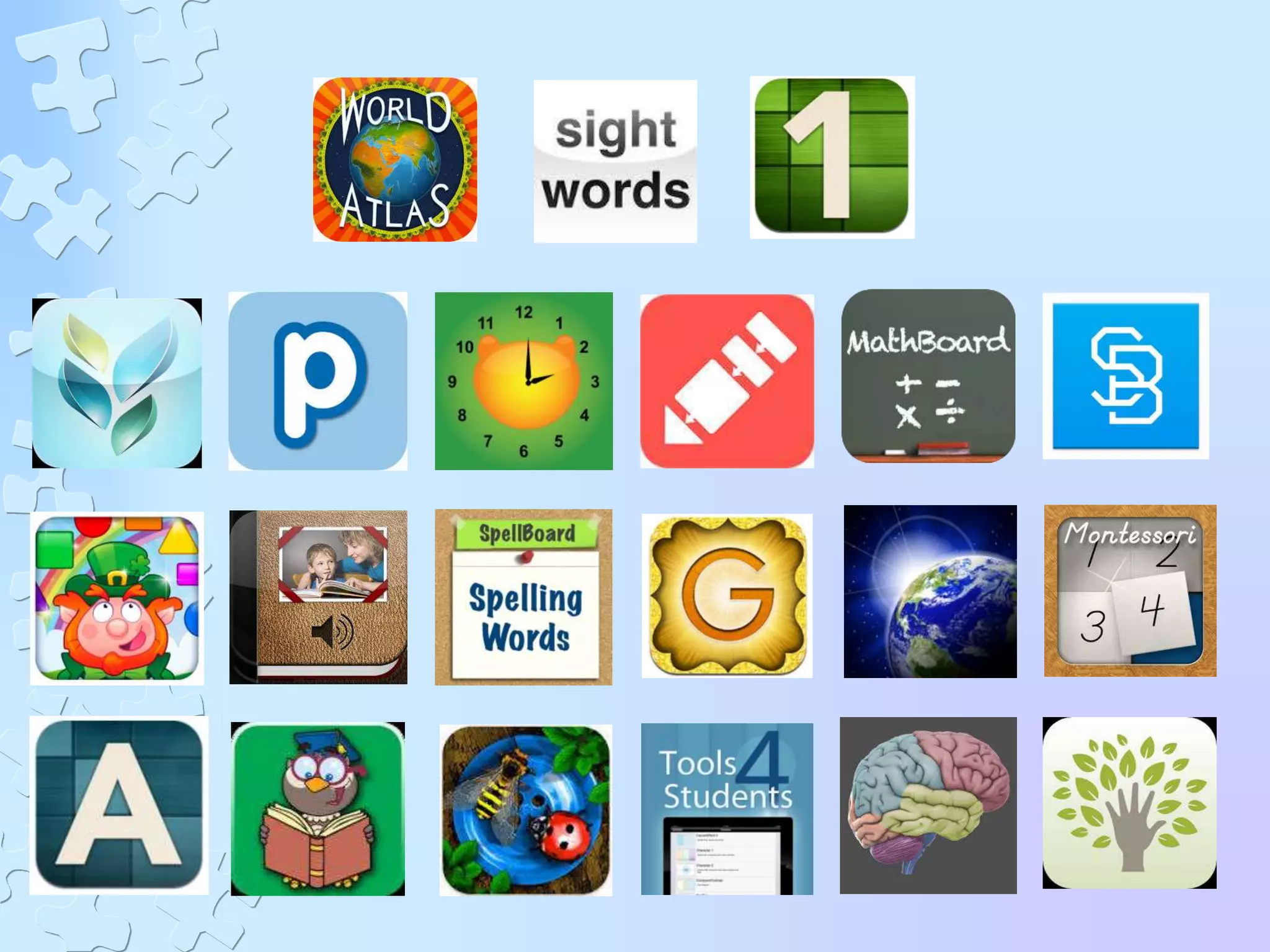
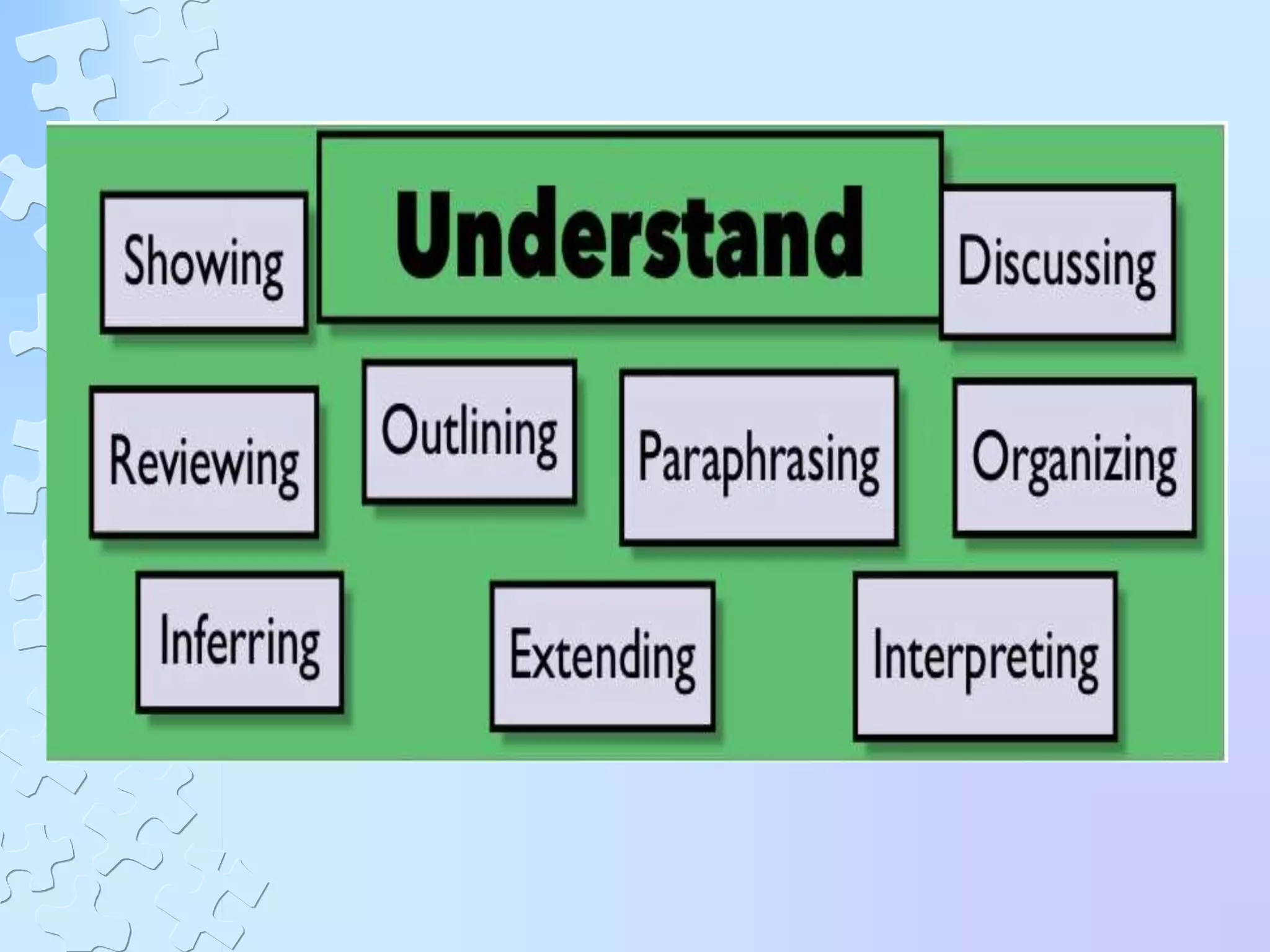
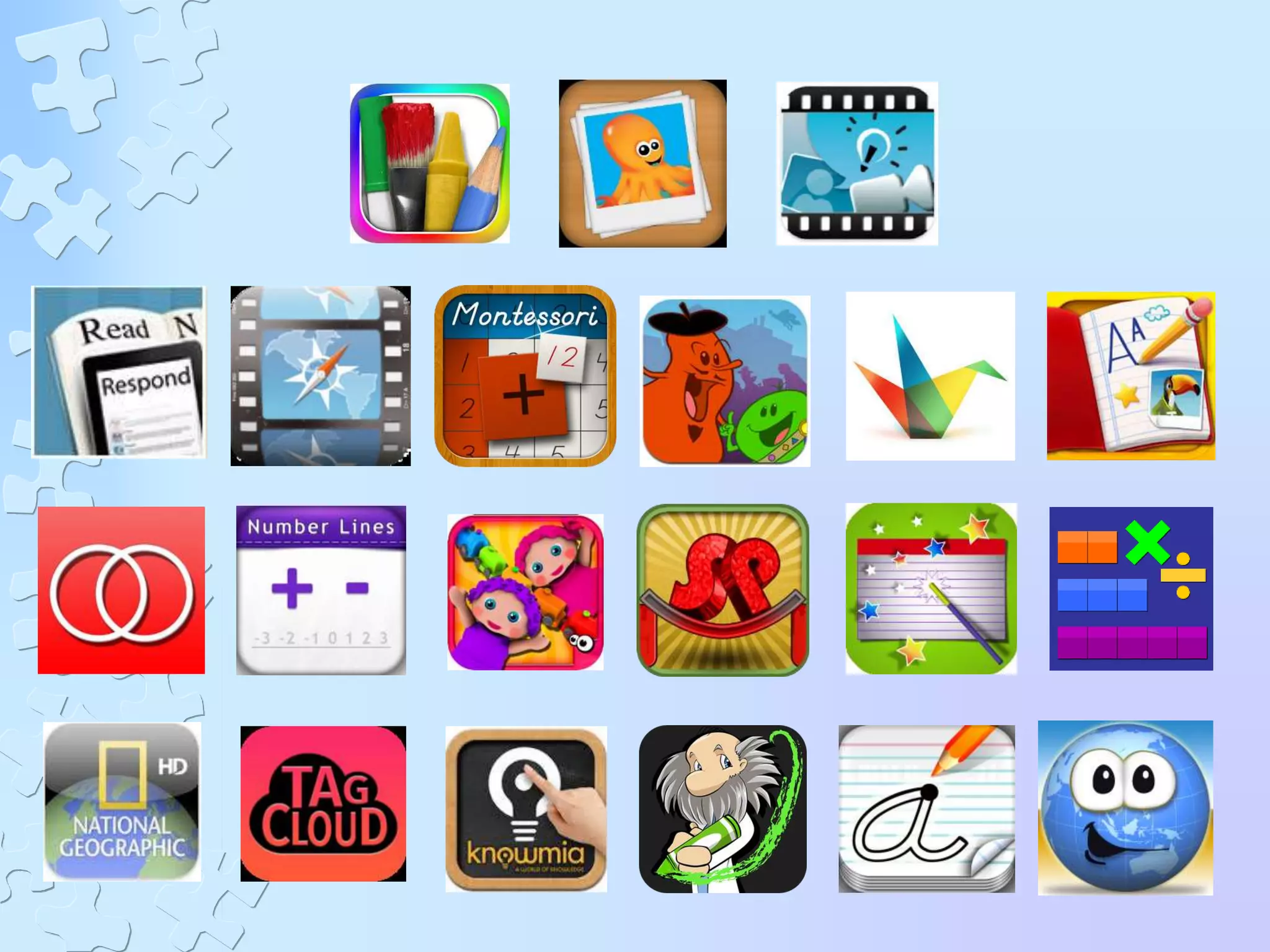
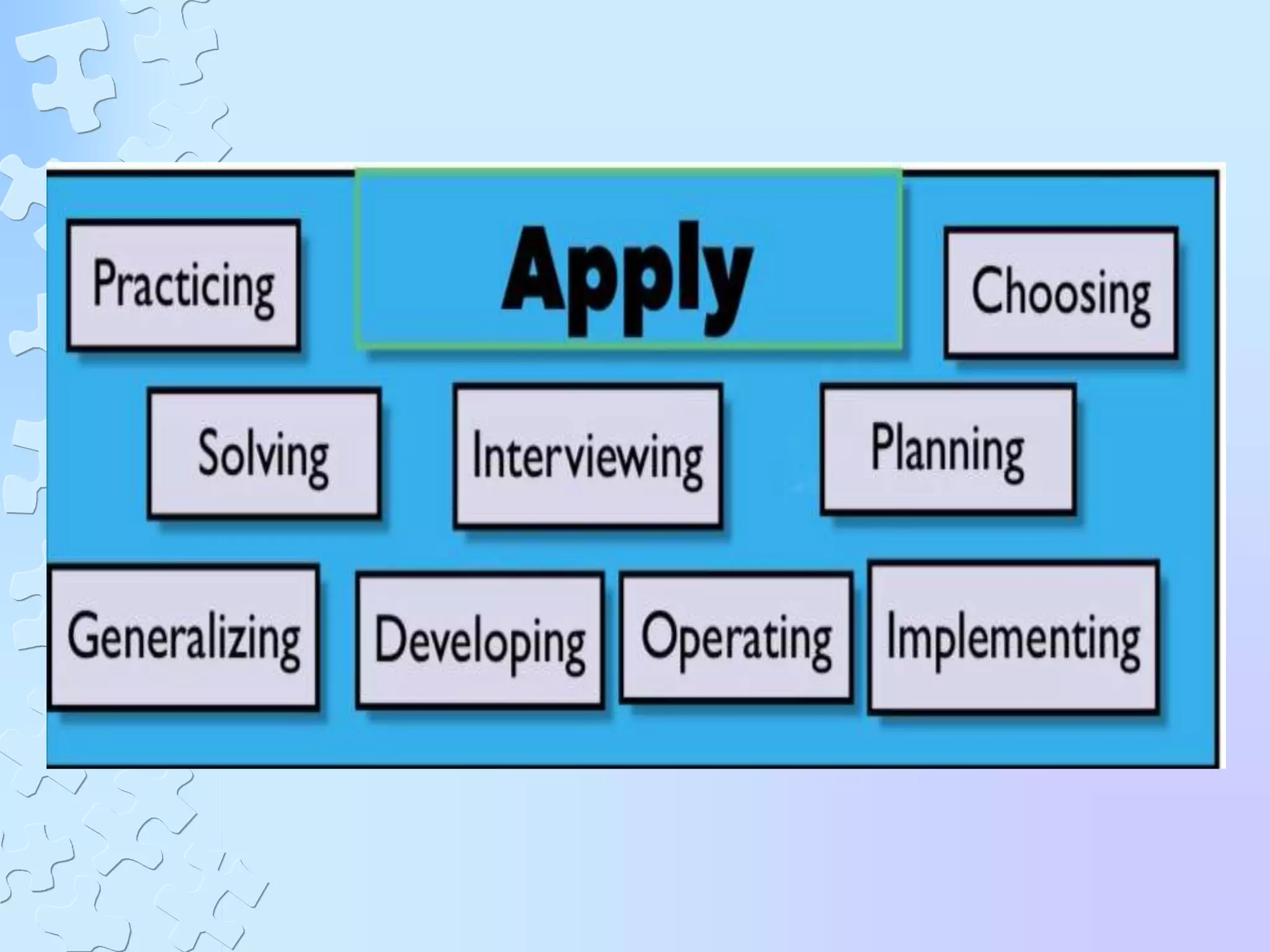
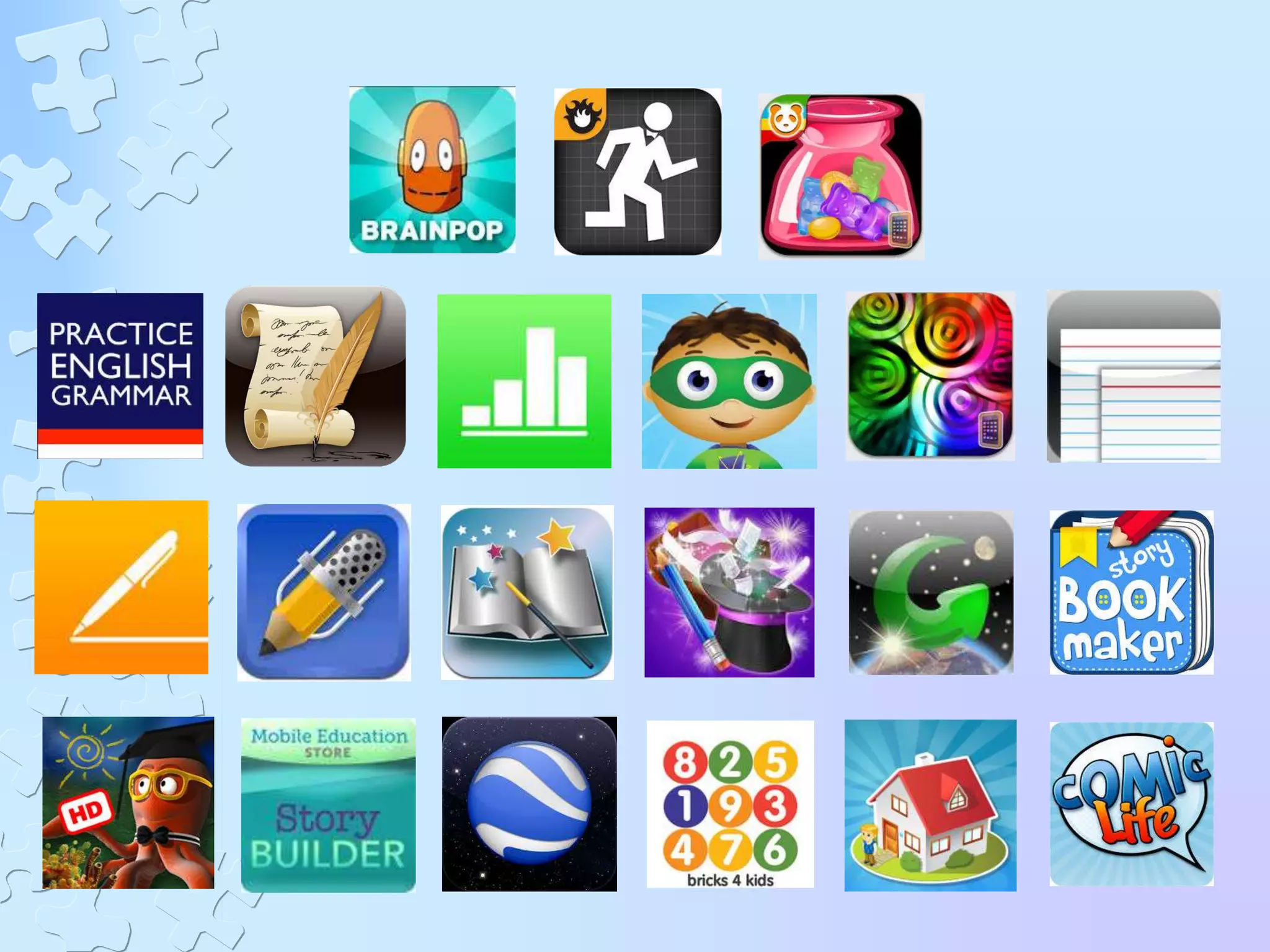
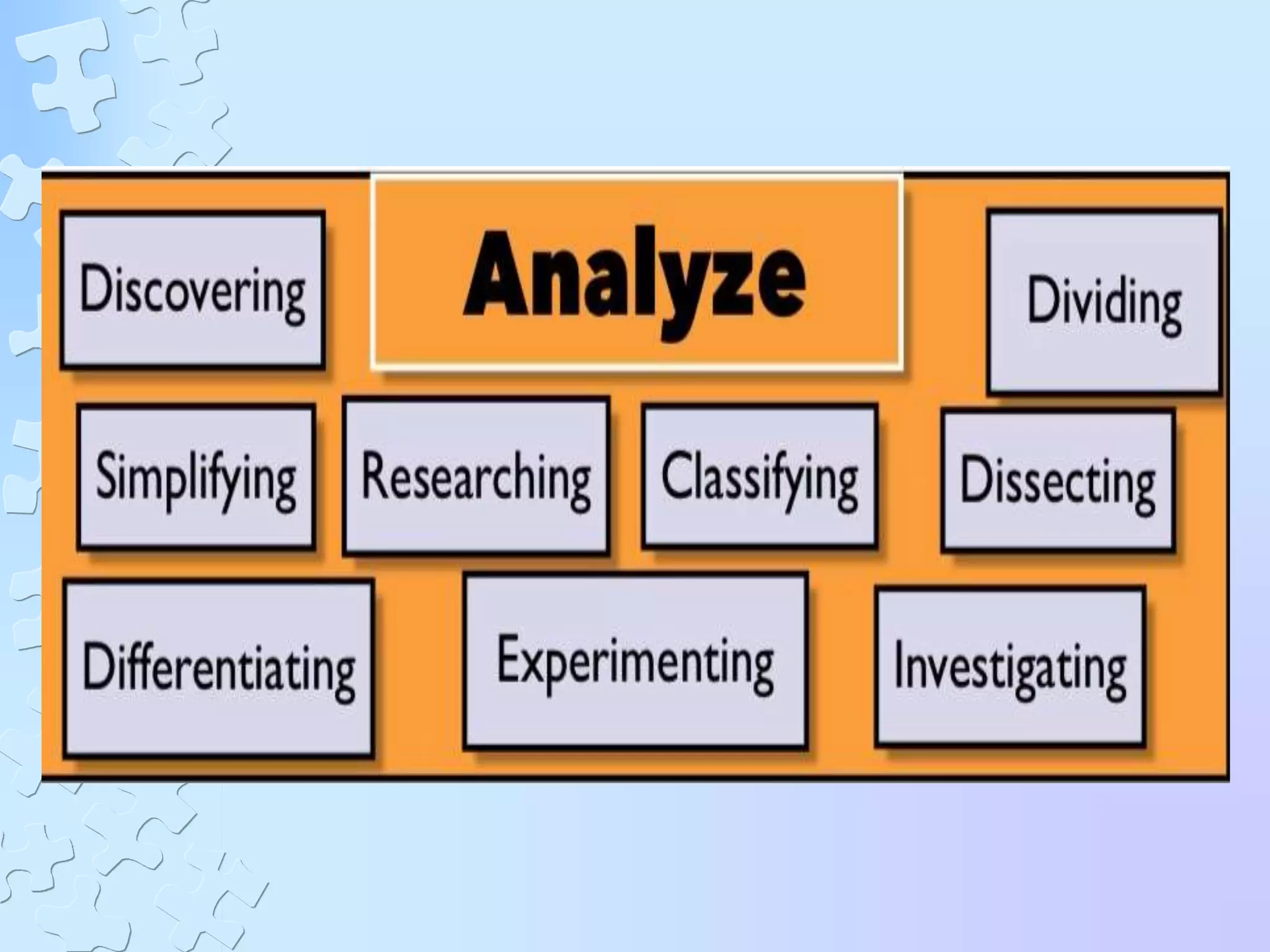
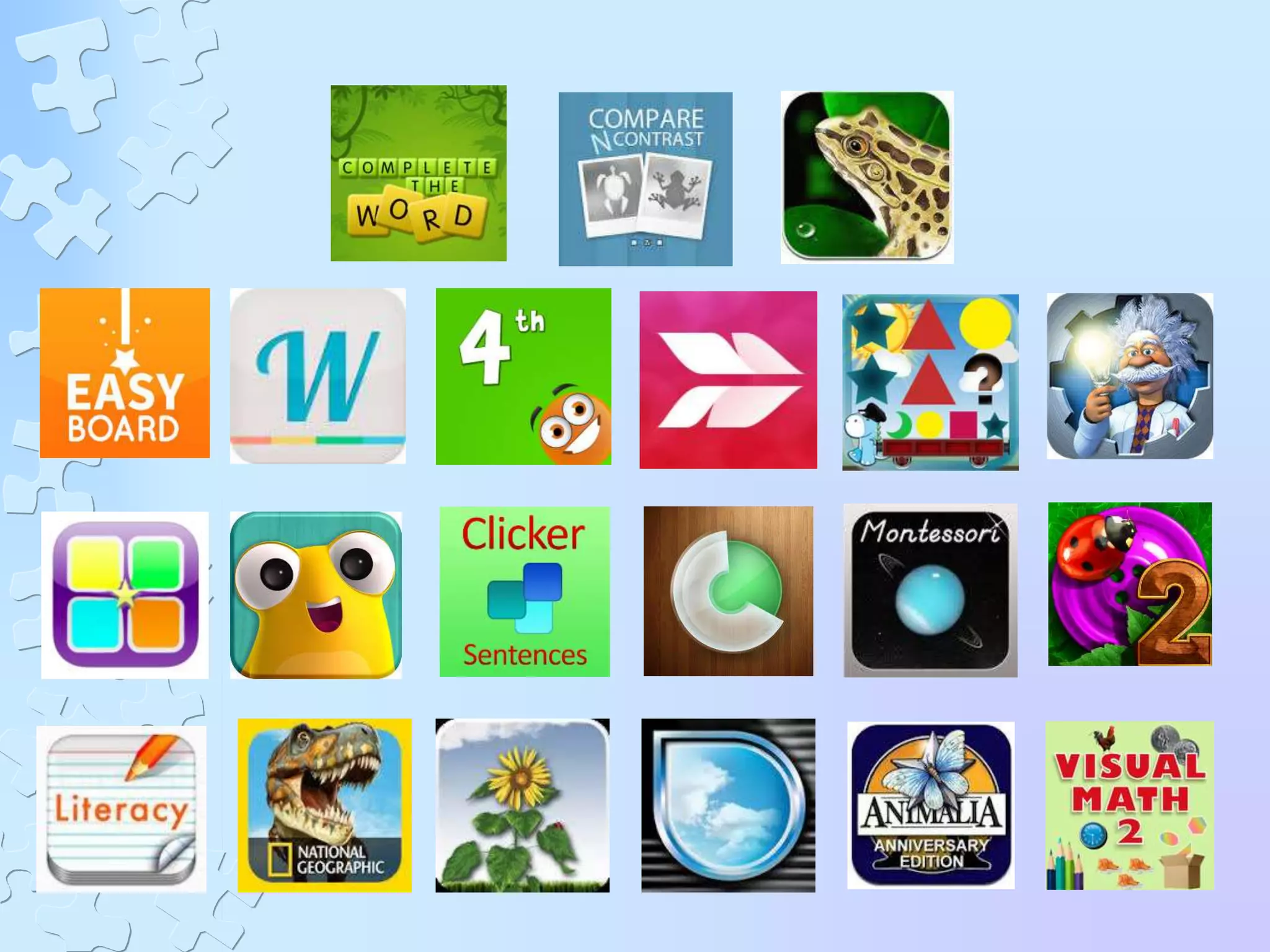
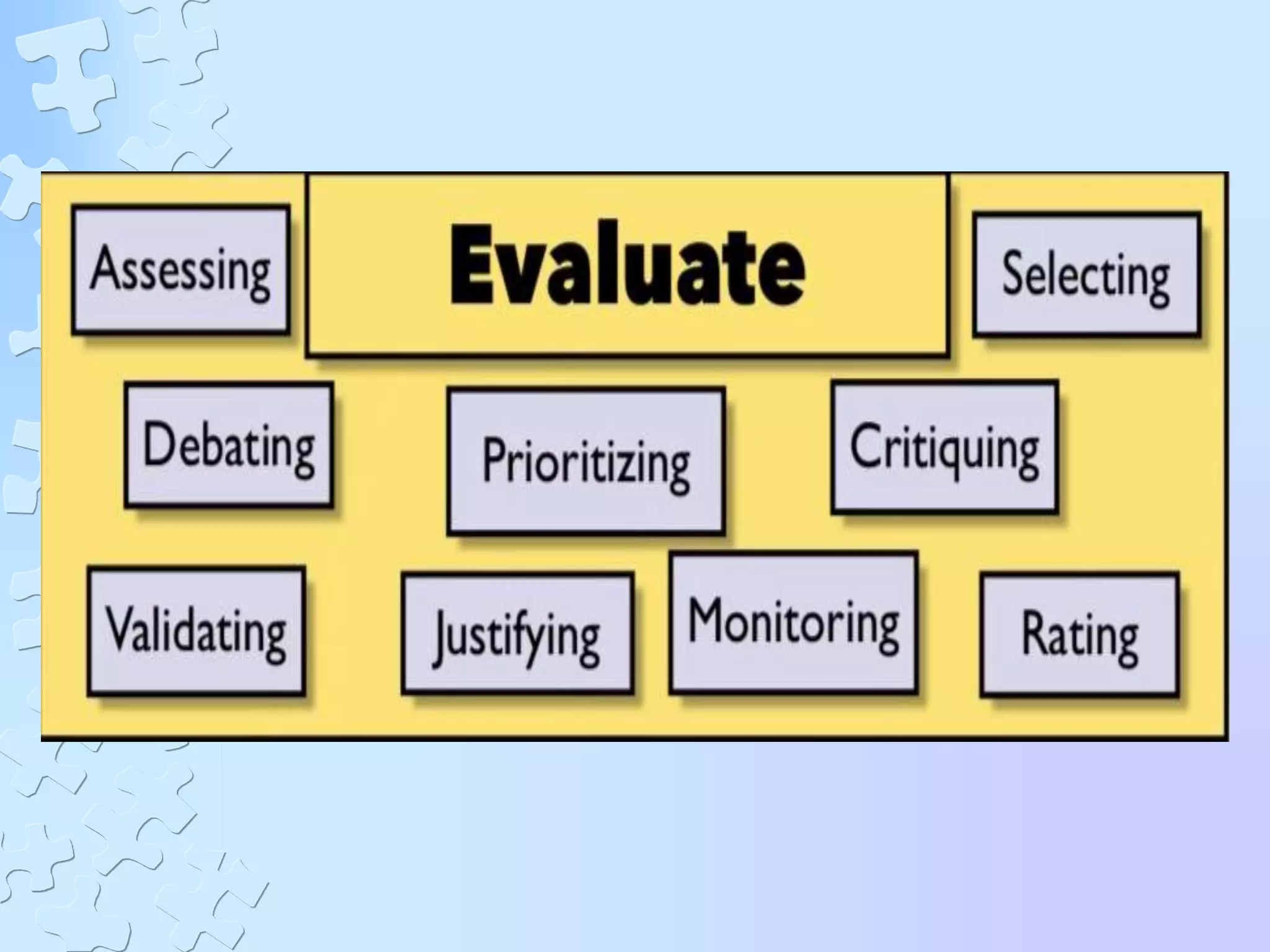
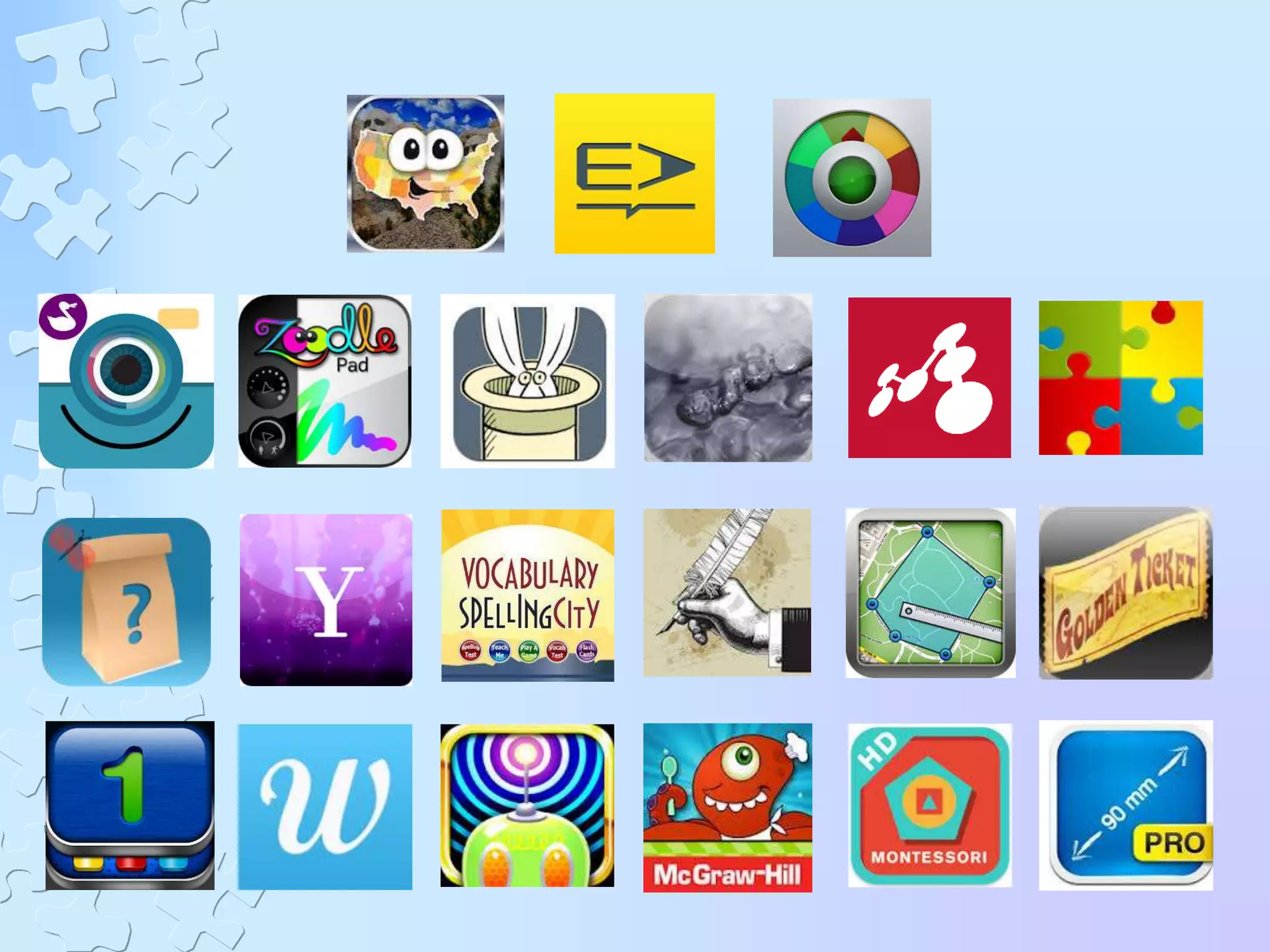
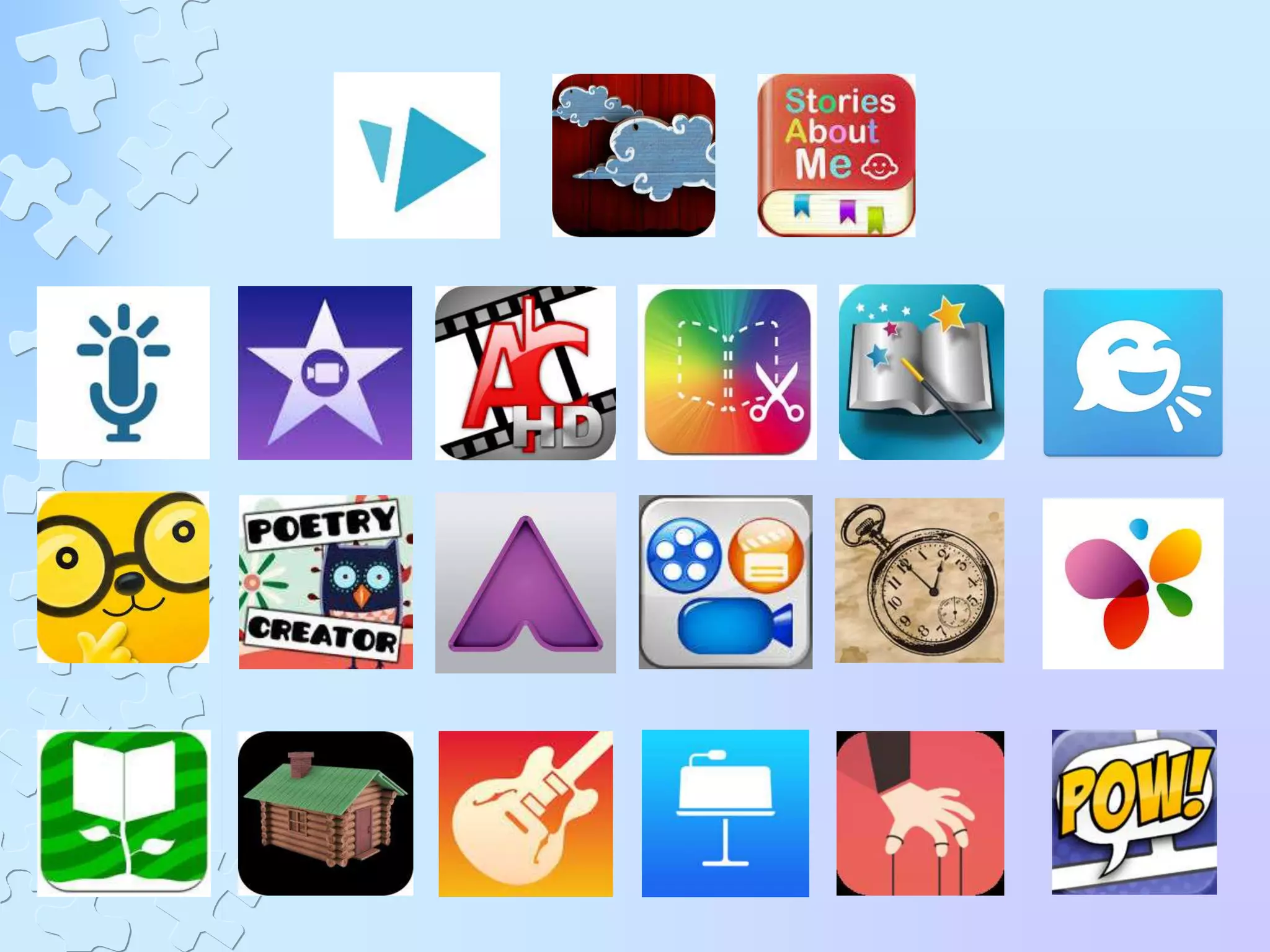
The following pages illustrate Bloom's Digital
Taxonomy and provides suggestions of apps that
can be used in each learning area.
This is not a definitive list and many apps can be
used across the continuum of Bloom's Taxonomy.
You can click on each of the icons to be taken to the a
pp in the iTunes App Store.
Thanks for joining us today
I have put this presentation together as a
resource for my students taking learning
unit’s in the
iPads for Autism Education Course
Series.
For further information on the course
please visit us at
www.digitallearningtree.com/courses/ipa
ds-for-autism-education

Bloom's Digital Taxonomy adapted using iPads with children on the Autism Spectrum

  • 1.
    BLOOM'S DIGITAL TAXONOMY ADAPTED FORSTUDENTS ON THE AUTISM SPECTRUM By Karina Barley M.Ed. and Digital Learning Tree www.digitallearningtree2.com
  • 3.
    In 1956 BenjaminBloom, an educational psychologist working at the University of Chicago, developed his taxonomy of Educational Objectives. His taxonomy of learning objectives has become a key tool in structuring and understanding the learning process.
  • 4.
    The Cognitive DomainBloom's Taxonomy Essentially Bloom's theory outlines an order in which we learn and integrate that learning into knowledge.
  • 5.
    Bloom categorized andordered thinking skills and objectives. His taxonomy identifies the thinking process and that you can not understand a concept if you do not first remember it, similarly you can not apply knowledge and concepts if you do not understand them.
  • 6.
    This infers thatthere is a continuum from Lower Order Thinking Skills (LOTS) to Higher Order Thinking Skills (HOTS). They are arranged in increasing order, from lower order to higher order.
  • 7.
    Bloom's Revised Taxonomy Inthe 1990's, former students of Bloom, Lorin Anderson and David Krathwohl, revised and published this – Bloom's Revised Taxonomy in 2001. Key to this is the use of verbs rather than nouns for each of the categories and a rearrangement of the sequence within the taxonomy.
  • 8.
  • 9.
    Collaboration is akey element to the acquisition of 21st Century Skills and for children on the Spectrum this is one of the challenging aspects of their condition as most have socialization issues.
  • 10.
    Using technology canbe extremely helpful for these students as the technology can become the buffer they need that enables them to communicate.
  • 11.
    SAMR Model The SubstitutionAugmentation Modification Redefinition Model is a method of seeing how technology might impact teaching and learning. It also shows a continuum that educators using technology can follow as they progress through teaching and learning using technology. Reference: https://sites.google.com/a/msad60.org/technology-is-learning/samr-model
  • 12.
    Kathy Schrock hascombined the two models to reflect the impact of technology on learning. Visit Kathy’s website to see her amazing work. http://www.schrockguide.net/bloomi n-apps.html
  • 13.
    Tying all thistogether I can't stress enough how important it is to understand that technology does not replace the teacher and good pedagogical practices.
  • 14.
    Handing the iPadto a child and expecting them to instantly learn is NOT using the iPad for educational purposes.
  • 15.
    Using the iPadpurposefully with educational outcomes in mind elevates this technology to an educational tool that can be integrated into the curriculum.
  • 16.
    Back to Bloom Bloomsuggested that learning occurs like a pyramid in that you need to go through each step to get to the next.
  • 18.
    Personally, I believethis model can also be viewed as a continuum where a child might move back and forth between steps over time. Even when knowledge is acquired and demonstrated through creating, oftentimes a student might go back to remembering, understanding or applying to revisit a concept before using it. This means learning can be a fluid, organic and evolutionary process.
  • 19.
    The following pagesillustrate Bloom's Digital Taxonomy and provides suggestions of apps that can be used in each learning area. This is not a definitive list and many apps can be used across the continuum of Bloom's Taxonomy. You can click on each of the icons to be taken to the a pp in the iTunes App Store.
  • 32.
    Thanks for joiningus today I have put this presentation together as a resource for my students taking learning unit’s in the iPads for Autism Education Course Series. For further information on the course please visit us at www.digitallearningtree.com/courses/ipa ds-for-autism-education