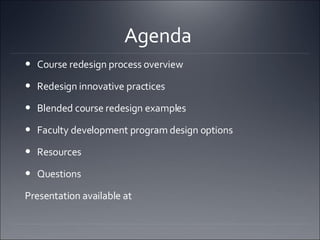
Agenda  Course redesign process overview  Redesign innovative practices Blended course redesign examples Faculty development program design options  Resources Questions Presentation available at
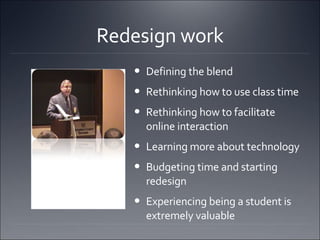
Redesign work Defining the blend Rethinking how to use class time Rethinking how to facilitate online interaction Learning more about technology Budgeting time and starting redesign Experiencing being a student is extremely valuable
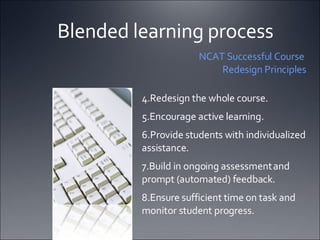
Blended learning process  NCAT Successful Course  Redesign Principles Redesign the whole course. Encourage active learning. Provide students with individualized assistance. Build in ongoing assessment and prompt (automated) feedback. Ensure sufficient time on task and monitor student progress.
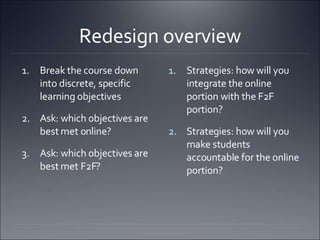
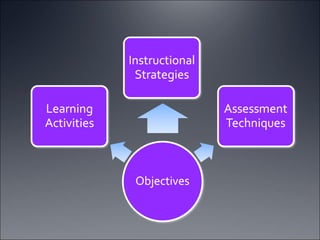
Redesign overview Break the course down into discrete, specific learning objectives  Ask: which objectives are best met online?  Ask: which objectives are best met F2F?  Strategies: how will you integrate the online portion with the F2F portion?  Strategies: how will you make students accountable for the online portion?
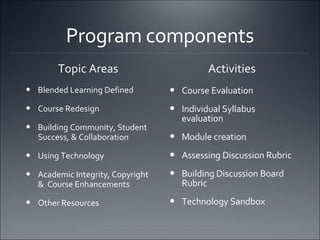
Program components Topic Areas Blended Learning Defined Course Redesign Building Community, Student Success, & Collaboration Using Technology Academic Integrity, Copyright  &  Course Enhancements Other Resources Activities Course Evaluation Individual Syllabus evaluation Module creation Assessing Discussion Rubric Building Discussion Board Rubric Technology Sandbox
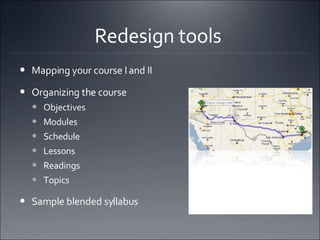
Redesign tools  Mapping your course I and II  Organizing the course Objectives Modules Schedule  Lessons  Readings Topics  Sample blended syllabus
 
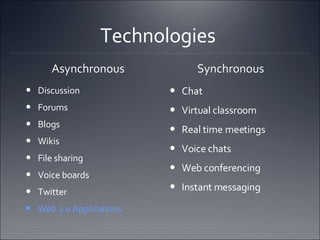
Technologies  Asynchronous Discussion Forums Blogs Wikis File sharing Voice boards Twitter Web 2.0 Applications Synchronous  Chat Virtual classroom Real time meetings Voice chats Web conferencing Instant messaging
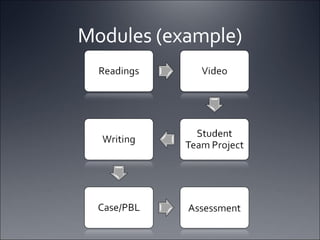
Modules (example)
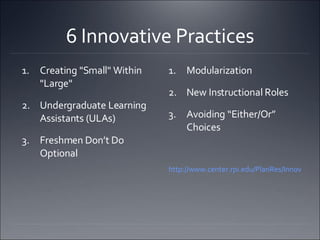
6 Innovative Practices Creating "Small" Within "Large"  Undergraduate Learning Assistants (ULAs) Freshmen Don’t Do Optional Modularization New Instructional Roles Avoiding “Either/Or” Choices http://www.center.rpi.edu/PlanRes/Innov_CrRedPractices.htm
Quality Matters Course overview and introduction Learning objectives (competencies) Assessment and measurement Resources and materials  Learner interaction Course technology Learner support ADA compliance  http://qualitymatters.org/
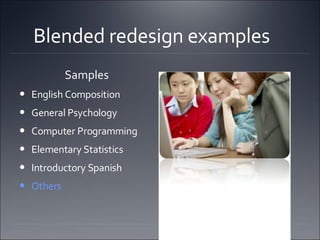
Blended redesign examples  Samples  English Composition General Psychology Computer Programming Elementary Statistics Introductory Spanish Others
Implementation
Implementation best practices  Ongoing institutional commitment to the redesign Initial and ongoing faculty consensus  Support instructors, and other support staff  Technological infrastructure  Quality assurance: peer review  Faculty disciplinary communities of practice
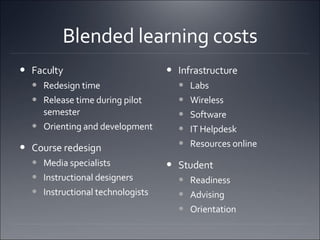
Blended learning costs Faculty  Redesign time Release time during pilot semester Orienting and development  Course redesign  Media specialists  Instructional designers Instructional technologists  Infrastructure Labs Wireless Software IT Helpdesk Resources online  Student  Readiness  Advising Orientation
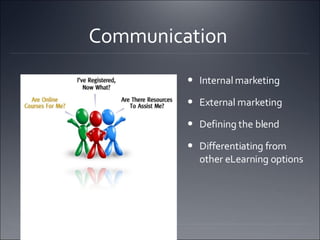
Communication  Internal marketing  External marketing Defining the blend Differentiating from other eLearning options
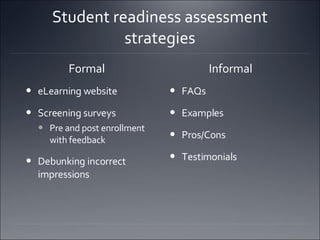
Student readiness assessment strategies Formal  eLearning website  Screening surveys  Pre and post enrollment with feedback Debunking incorrect impressions  Informal  FAQs  Examples  Pros/Cons  Testimonials
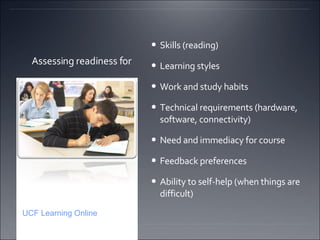
Assessing readiness for  Skills (reading)  Learning styles Work and study habits Technical requirements (hardware, software, connectivity)  Need and immediacy for course Feedback preferences  Ability to self-help (when things are difficult)  UCF Learning Online
Faculty Development and Blended Learning
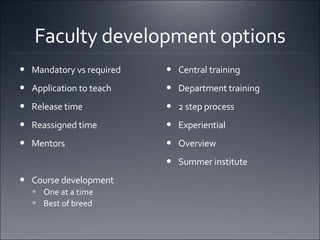
Faculty development options Mandatory vs required  Application to teach  Release time  Reassigned time  Mentors  Course development One at a time  Best of breed  Central training  Department training  2 step process Experiential  Overview  Summer institute
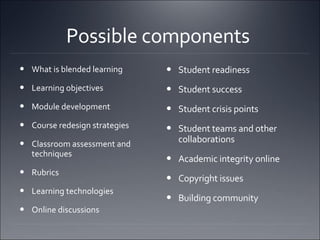
Possible components  What is blended learning  Learning objectives  Module development Course redesign strategies Classroom assessment and techniques Rubrics Learning technologies Online discussions  Student readiness Student success  Student crisis points Student teams and other collaborations Academic integrity online Copyright issues Building community
Questions?
Contact Us Veronica M. Diaz, PhD [email_address] Maricopa Center for Learning and Instruction 480-731-8300  Jennifer Strickland, PhD Paradise Valley Community College [email_address]   Maricopa Community Colleges  Copyright Veronica Diaz & Jennifer Strickland, 2008. This work is the intellectual property of the authors. Permission is granted for this material to be shared for non-commercial, educational purposes, provided that this copyright statement appears on the reproduced materials and notice is given that the copying is by permission of the author. To disseminate otherwise or to republish requires written permission from the authors.

Blended Learning For Faculty

  • 1.
  • 2.
    Agenda Courseredesign process overview Redesign innovative practices Blended course redesign examples Faculty development program design options Resources Questions Presentation available at
  • 3.
    Redesign work Definingthe blend Rethinking how to use class time Rethinking how to facilitate online interaction Learning more about technology Budgeting time and starting redesign Experiencing being a student is extremely valuable
  • 4.
    Blended learning process NCAT Successful Course Redesign Principles Redesign the whole course. Encourage active learning. Provide students with individualized assistance. Build in ongoing assessment and prompt (automated) feedback. Ensure sufficient time on task and monitor student progress.
  • 5.
    Redesign overview Breakthe course down into discrete, specific learning objectives Ask: which objectives are best met online? Ask: which objectives are best met F2F? Strategies: how will you integrate the online portion with the F2F portion? Strategies: how will you make students accountable for the online portion?
  • 6.
    Program components TopicAreas Blended Learning Defined Course Redesign Building Community, Student Success, & Collaboration Using Technology Academic Integrity, Copyright & Course Enhancements Other Resources Activities Course Evaluation Individual Syllabus evaluation Module creation Assessing Discussion Rubric Building Discussion Board Rubric Technology Sandbox
  • 7.
    Redesign tools Mapping your course I and II Organizing the course Objectives Modules Schedule Lessons Readings Topics Sample blended syllabus
  • 8.
  • 9.
    Technologies AsynchronousDiscussion Forums Blogs Wikis File sharing Voice boards Twitter Web 2.0 Applications Synchronous Chat Virtual classroom Real time meetings Voice chats Web conferencing Instant messaging
  • 10.
  • 11.
    6 Innovative PracticesCreating "Small" Within "Large" Undergraduate Learning Assistants (ULAs) Freshmen Don’t Do Optional Modularization New Instructional Roles Avoiding “Either/Or” Choices http://www.center.rpi.edu/PlanRes/Innov_CrRedPractices.htm
  • 12.
    Quality Matters Courseoverview and introduction Learning objectives (competencies) Assessment and measurement Resources and materials Learner interaction Course technology Learner support ADA compliance http://qualitymatters.org/
  • 13.
    Blended redesign examples Samples English Composition General Psychology Computer Programming Elementary Statistics Introductory Spanish Others
  • 14.
  • 15.
    Implementation best practices Ongoing institutional commitment to the redesign Initial and ongoing faculty consensus Support instructors, and other support staff Technological infrastructure Quality assurance: peer review Faculty disciplinary communities of practice
  • 16.
    Blended learning costsFaculty Redesign time Release time during pilot semester Orienting and development Course redesign Media specialists Instructional designers Instructional technologists Infrastructure Labs Wireless Software IT Helpdesk Resources online Student Readiness Advising Orientation
  • 17.
    Communication Internalmarketing External marketing Defining the blend Differentiating from other eLearning options
  • 18.
    Student readiness assessmentstrategies Formal eLearning website Screening surveys Pre and post enrollment with feedback Debunking incorrect impressions Informal FAQs Examples Pros/Cons Testimonials
  • 19.
    Assessing readiness for Skills (reading) Learning styles Work and study habits Technical requirements (hardware, software, connectivity) Need and immediacy for course Feedback preferences Ability to self-help (when things are difficult) UCF Learning Online
  • 20.
    Faculty Development andBlended Learning
  • 21.
    Faculty development optionsMandatory vs required Application to teach Release time Reassigned time Mentors Course development One at a time Best of breed Central training Department training 2 step process Experiential Overview Summer institute
  • 22.
    Possible components What is blended learning Learning objectives Module development Course redesign strategies Classroom assessment and techniques Rubrics Learning technologies Online discussions Student readiness Student success Student crisis points Student teams and other collaborations Academic integrity online Copyright issues Building community
  • 23.
  • 24.
    Contact Us VeronicaM. Diaz, PhD [email_address] Maricopa Center for Learning and Instruction 480-731-8300 Jennifer Strickland, PhD Paradise Valley Community College [email_address] Maricopa Community Colleges Copyright Veronica Diaz & Jennifer Strickland, 2008. This work is the intellectual property of the authors. Permission is granted for this material to be shared for non-commercial, educational purposes, provided that this copyright statement appears on the reproduced materials and notice is given that the copying is by permission of the author. To disseminate otherwise or to republish requires written permission from the authors.