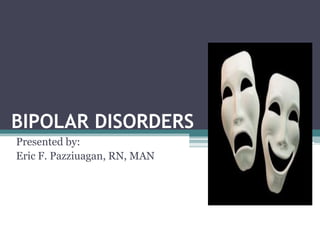
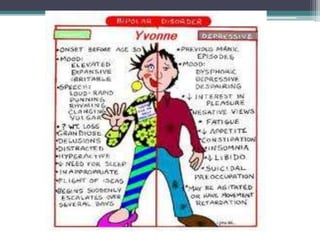
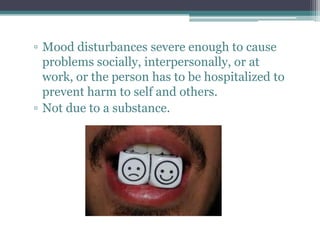

















Bipolar disorders involve extreme shifts in mood between mania and depression. During manic episodes, people may feel euphoric or irritable and display symptoms like inflated self-esteem, decreased need for sleep, racing thoughts, and involvement in risky behaviors. Bipolar disorders are thought to have biological and genetic causes, and episodes can be triggered by psychosocial stressors. They are diagnosed based on the duration and severity of mood episodes as outlined in the DSM-IV criteria. Bipolar disorder can emerge at any age and often involves comorbid conditions that complicate diagnosis and treatment.


