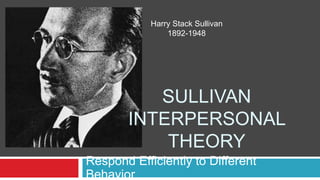
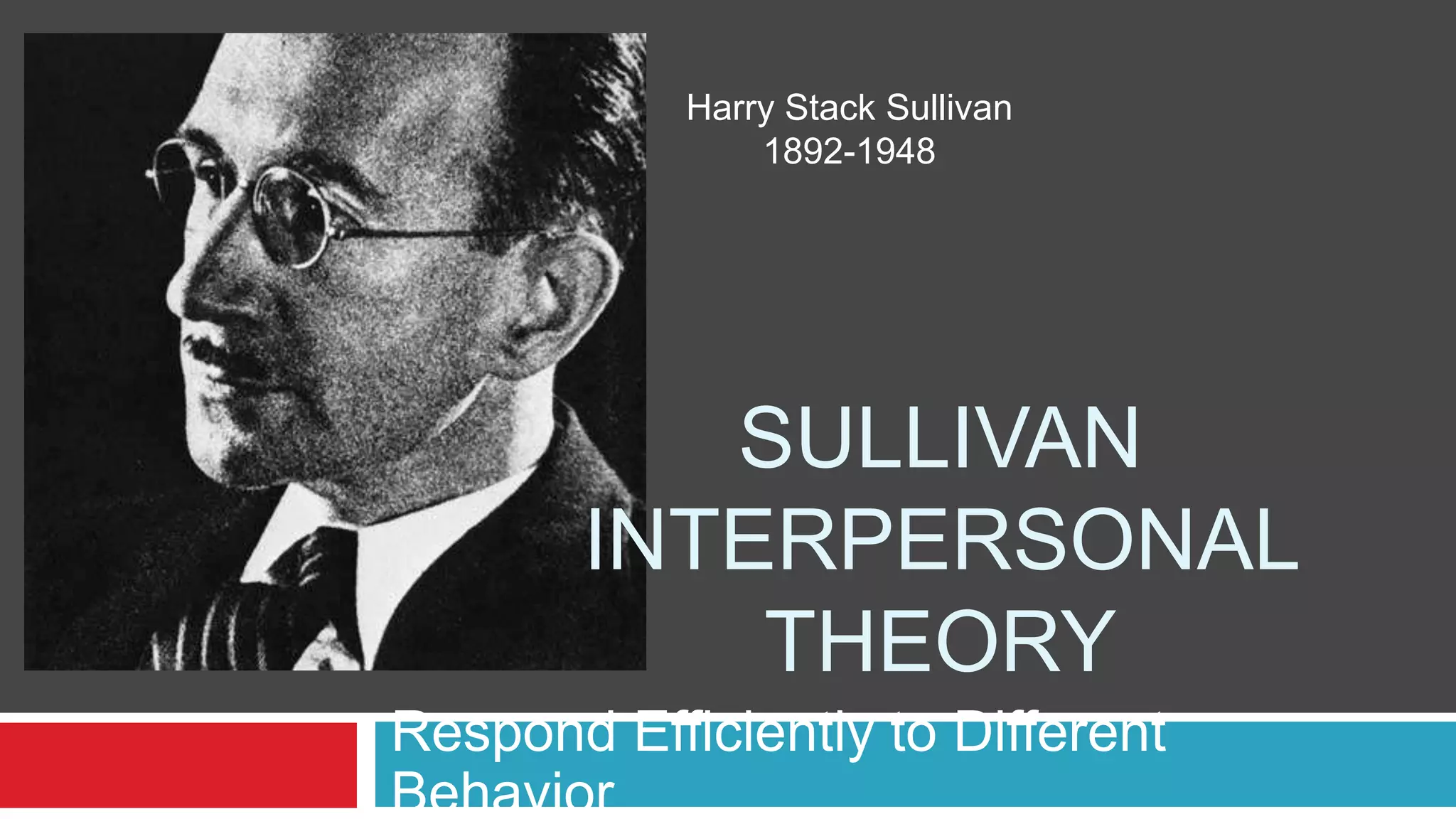
Harry Stack Sullivan
1892-1948

SULLIVAN
INTERPERSONAL
THEORY
Respond Efficiently to Different
Behavior
Sullivan’s CORE IDEAS
First American to construct a Comprehensive
Personality Theory
Emphasizes childhood friendships in the formation
of personality
- Chumship, intimacy, & Security
Personality is shaped from our relationships with others
Personality can never be isolated from the complex of interpersonal
relations in which the person lives
- i.e., Personality cannot be separated from our
social worlds
Sullivan’s Background
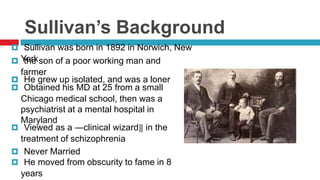
 Sullivan was born in 1892 in Norwich, New
 York son of a poor working man and
the

farmer
 He grew up isolated, and was a loner
 Obtained his MD at 25 from a small
Chicago medical school, then was a
psychiatrist at a mental hospital in
Maryland
 Viewed as a ―clinical wizard‖ in the
treatment of schizophrenia
 Never Married
 He moved from obscurity to fame in 8
years
Tensions


potentially for action or actions themselves (i.e., energy
transformations) that may not be experienced in awareness.



Needs



Tensions brought on by a biological imbalance between the
person and the physiochemical environment, both inside and
outside the organism.
 Can be physiological or interpersonal
 The most basic interpersonal need is that of
tenderness.
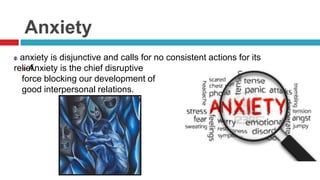
Anxiety
anxiety is disjunctive and calls for no consistent actions for its
relief.
 Anxiety is the chief disruptive
force blocking our development of
good interpersonal relations.
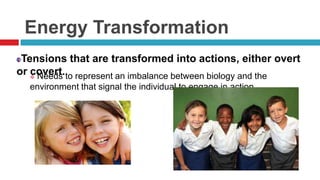
Energy Transformation
Tensions that are transformed into actions, either overt
or  Needs to represent an imbalance between biology and the
covert.
environment that signal the individual to engage in action.
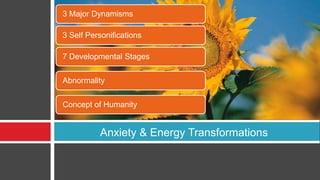
3 Major Dynamisms
3 Self Personifications
7 Developmental Stages
Abnormality
Concept of Humanity

Anxiety & Energy Transformations
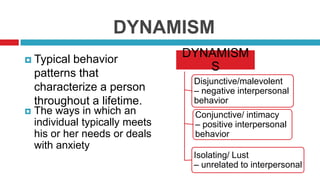
DYNAMISM
 Typical

behavior
patterns that
characterize a person
throughout a lifetime.



The ways in which an
individual typically meets
his or her needs or deals
with anxiety

DYNAMISM
S
Disjunctive/malevolent
– negative interpersonal
behavior
Conjunctive/ intimacy
– positive interpersonal
behavior
Isolating/ Lust
– unrelated to interpersonal


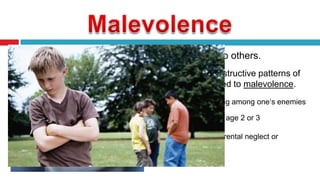
wishing evil to others.



Disjunctive destructive patterns of
behavior related to malevolence.


Feeling of living among one„s enemies



Arises around age 2 or 3



Caused by parental neglect or
rejection


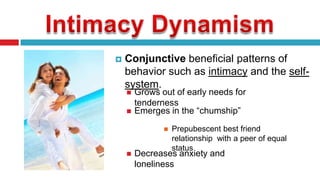
Conjunctive beneficial patterns of
behavior such as intimacy and the selfsystem.



Grows out of early needs for
tenderness
Emerges in the “chumship”




Prepubescent best friend
relationship with a peer of equal
status

Decreases anxiety and
loneliness


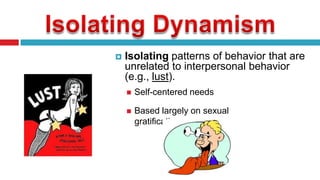
Isolating patterns of behavior that are
unrelated to interpersonal behavior
(e.g., lust).


Self-centered needs



Based largely on sexual
gratification




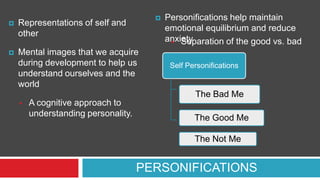
Representations of self and
other



Mental images that we acquire
during development to help us
understand ourselves and the
world

Personifications help maintain
emotional equilibrium and reduce
anxiety
 Separation of the good vs. bad
Self Personifications

The Bad Me


A cognitive approach to
understanding personality.

The Good Me
The Not Me

PERSONIFICATIONS


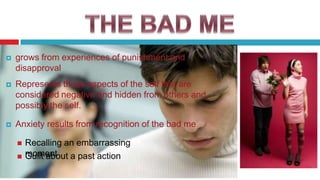
grows from experiences of punishment and
disapproval



Represents those aspects of the self that are
considered negative and hidden from others and
possibly the self.



Anxiety results from recognition of the bad me



Recalling an embarrassing
moment a past action
Guilt about





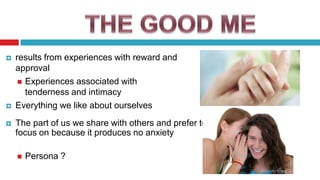
results from experiences with reward and
approval
 Experiences associated with
tenderness and intimacy
Everything we like about ourselves
The part of us we share with others and prefer to
focus on because it produces no anxiety


Persona ?


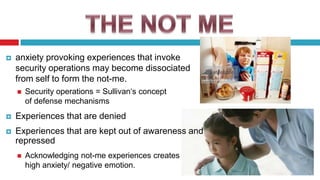
anxiety provoking experiences that invoke
security operations may become dissociated
from self to form the not-me.


Security operations = Sullivan„s concept
of defense mechanisms



Experiences that are denied



Experiences that are kept out of awareness and
repressed


Acknowledging not-me experiences creates
high anxiety/ negative emotion.
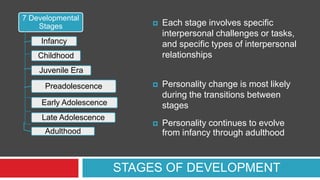
7 Developmental
Stages



Each stage involves specific
interpersonal challenges or tasks,
and specific types of interpersonal
relationships



Personality change is most likely
during the transitions between
stages



Personality continues to evolve
from infancy through adulthood

Infancy
Childhood
Juvenile Era
Preadolescence
Early Adolescence
Late Adolescence
Adulthood

STAGES OF DEVELOPMENT
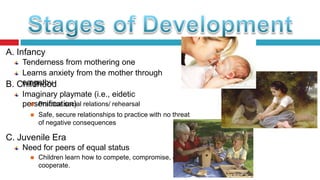
A. Infancy
Tenderness from mothering one
Learns anxiety from the mother through
empathy
B. Childhood
Imaginary playmate (i.e., eidetic
 Practice social
personification) relations/ rehearsal


Safe, secure relationships to practice with no threat
of negative consequences

C. Juvenile Era
Need for peers of equal status


Children learn how to compete, compromise, and
cooperate.
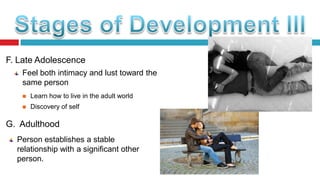
F. Late Adolescence
Feel both intimacy and lust toward the
same person


Learn how to live in the adult world



Discovery of self

G. Adulthood
Person establishes a stable
relationship with a significant other
person.
 MENTAL




DISORDERS

All mental disorders have an
interpersonal origin and can be
understood only with reference to the
person„s social environment.
Interpersonal theories emerge in
1980„s and 1990„s

 Psychotherapy


Promoted Interpersonal Psychotherapy



Pioneered the notion of the therapist
as a participant observer.
Originated Group Psychotherapy



ABNORMALITY
 Sullivan

saw personality as being largely formed
from interpersonal relations.


Insisted that humans have no existence outside the interpersonal
situation.

 Theory

emphasizes:



social influences over biological ones;



Rates high on unconscious determinants,



average on free choice, optimism, and causality,



and low on uniqueness

CONCEPT OF HUMANITY

Sullivan interpersonal theory

  • 1.
  • 2.
    Sullivan’s CORE IDEAS FirstAmerican to construct a Comprehensive Personality Theory Emphasizes childhood friendships in the formation of personality - Chumship, intimacy, & Security Personality is shaped from our relationships with others Personality can never be isolated from the complex of interpersonal relations in which the person lives - i.e., Personality cannot be separated from our social worlds
  • 3.
    Sullivan’s Background  Sullivanwas born in 1892 in Norwich, New  York son of a poor working man and the farmer  He grew up isolated, and was a loner  Obtained his MD at 25 from a small Chicago medical school, then was a psychiatrist at a mental hospital in Maryland  Viewed as a ―clinical wizard‖ in the treatment of schizophrenia  Never Married  He moved from obscurity to fame in 8 years
  • 5.
    Tensions  potentially for actionor actions themselves (i.e., energy transformations) that may not be experienced in awareness.  Needs  Tensions brought on by a biological imbalance between the person and the physiochemical environment, both inside and outside the organism.  Can be physiological or interpersonal  The most basic interpersonal need is that of tenderness.
  • 6.
    Anxiety anxiety is disjunctiveand calls for no consistent actions for its relief.  Anxiety is the chief disruptive force blocking our development of good interpersonal relations.
  • 8.
    Energy Transformation Tensions thatare transformed into actions, either overt or  Needs to represent an imbalance between biology and the covert. environment that signal the individual to engage in action.
  • 9.
    3 Major Dynamisms 3Self Personifications 7 Developmental Stages Abnormality Concept of Humanity Anxiety & Energy Transformations
  • 10.
    DYNAMISM  Typical behavior patterns that characterizea person throughout a lifetime.  The ways in which an individual typically meets his or her needs or deals with anxiety DYNAMISM S Disjunctive/malevolent – negative interpersonal behavior Conjunctive/ intimacy – positive interpersonal behavior Isolating/ Lust – unrelated to interpersonal
  • 11.
     wishing evil toothers.  Disjunctive destructive patterns of behavior related to malevolence.  Feeling of living among one„s enemies  Arises around age 2 or 3  Caused by parental neglect or rejection
  • 12.
     Conjunctive beneficial patternsof behavior such as intimacy and the selfsystem.   Grows out of early needs for tenderness Emerges in the “chumship”   Prepubescent best friend relationship with a peer of equal status Decreases anxiety and loneliness
  • 13.
     Isolating patterns ofbehavior that are unrelated to interpersonal behavior (e.g., lust).  Self-centered needs  Based largely on sexual gratification
  • 14.
      Representations of selfand other  Mental images that we acquire during development to help us understand ourselves and the world Personifications help maintain emotional equilibrium and reduce anxiety  Separation of the good vs. bad Self Personifications The Bad Me  A cognitive approach to understanding personality. The Good Me The Not Me PERSONIFICATIONS
  • 15.
     grows from experiencesof punishment and disapproval  Represents those aspects of the self that are considered negative and hidden from others and possibly the self.  Anxiety results from recognition of the bad me   Recalling an embarrassing moment a past action Guilt about
  • 16.
       results from experienceswith reward and approval  Experiences associated with tenderness and intimacy Everything we like about ourselves The part of us we share with others and prefer to focus on because it produces no anxiety  Persona ?
  • 17.
     anxiety provoking experiencesthat invoke security operations may become dissociated from self to form the not-me.  Security operations = Sullivan„s concept of defense mechanisms  Experiences that are denied  Experiences that are kept out of awareness and repressed  Acknowledging not-me experiences creates high anxiety/ negative emotion.
  • 18.
    7 Developmental Stages  Each stageinvolves specific interpersonal challenges or tasks, and specific types of interpersonal relationships  Personality change is most likely during the transitions between stages  Personality continues to evolve from infancy through adulthood Infancy Childhood Juvenile Era Preadolescence Early Adolescence Late Adolescence Adulthood STAGES OF DEVELOPMENT
  • 19.
    A. Infancy Tenderness frommothering one Learns anxiety from the mother through empathy B. Childhood Imaginary playmate (i.e., eidetic  Practice social personification) relations/ rehearsal  Safe, secure relationships to practice with no threat of negative consequences C. Juvenile Era Need for peers of equal status  Children learn how to compete, compromise, and cooperate.
  • 20.
    F. Late Adolescence Feelboth intimacy and lust toward the same person  Learn how to live in the adult world  Discovery of self G. Adulthood Person establishes a stable relationship with a significant other person.
  • 21.
     MENTAL   DISORDERS All mentaldisorders have an interpersonal origin and can be understood only with reference to the person„s social environment. Interpersonal theories emerge in 1980„s and 1990„s  Psychotherapy  Promoted Interpersonal Psychotherapy  Pioneered the notion of the therapist as a participant observer. Originated Group Psychotherapy  ABNORMALITY
  • 22.
     Sullivan saw personalityas being largely formed from interpersonal relations.  Insisted that humans have no existence outside the interpersonal situation.  Theory emphasizes:  social influences over biological ones;  Rates high on unconscious determinants,  average on free choice, optimism, and causality,  and low on uniqueness CONCEPT OF HUMANITY