Presented by: Eric F. Pazziuagan, RN, MAN
 Major

characteristic: patients have physical
symptoms for which there is no known
organic cause or physiologic mechanism.
 Physical symptoms are connected to
psychological factors or conflicts.
 Patients are not in control of the symptoms,
which are unconscious and involuntary.
 Patients express conflicts through bodily
symptoms and complaints using the defense
of somatization.
 They

do not deal with anxiety or feelings
emotionally but displace the anxiety into
bodily symptoms.
 Anxiety that focuses on health matters and
will perhaps be classified differently in the
DSM-V.
 Patients generally see general practitioners
and not mental health professionals or
psychiatrists.
 Repeatedly seek medical diagnosis and
treatment, even though they have been told
that there is no known physiologic or
organic evidence to explain their symptoms
or disability,
 Defense



mechanisms:

Repression: occurs in reference to feelings,
conflicts, and unacceptable impulses.
Denial of psychological problems

 Genetic,

developmental learning,
personality, and sociocultural factors can
predispose, precipitate, and maintain
somatoform disorders.
 Emotional and social stress can precipitate
these disorders.
 Patients often appear to be needy and
dependent on others.
 Severe

pain in one or more anatomic
sites that causes significant distress
or impairment in functioning.
 Location or complaint of the pain
does not change.
 No organic basis.
 There might be underlying
psychological factors related to pain
disorder that the patients might not
recognize consciously.
 Amount

of pain or impairment is greatly
exaggerated or out of proportion.
 Pain may allow patients to avoid something
they do not want to do.
 May be classified as:



Pain disorder associated with psychological
factors.
Pain disorder associated with associated with both
psychological factors and a general medical
condition.

 Patients

are often “doctor shoppers” and
might use analgesics excessively without
experiencing any relief.
 Patients are often anxious about their
symptoms and depressed about giving better.
Worried about having, or believe that they have, a
serious disease based on the misinterpretation of
bodily signs and sensations.
 Medical evaluation and reassurance do not help
dispel the fear.
 Displaces anxiety onto the body and misinterprets
the bodily symptoms.
 Hypersensitive to their symptoms of anxiety and
think that they are physically ill, which then
increases their anxiety and physical symptoms.
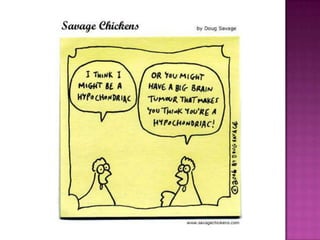
 Hypochondriacs check for reassurance from
physicians or friends similar to the compulsive
behavior of patients with OCD.

A

deficit or alteration in voluntary motor or
sensory function that suggests a neurologic
or medical condition.
 Psychological factors, conflicts, or stressors
are associated with or precede the
development of this disorder.
 Most common conversion symptoms
(neurologic diseases): paralysis, blindness or
seizures
 Primary gain: alleviation of anxiety that the
disorder provides, because conflict is kept
out of conscious awareness.
 Secondary

gain: gratification received as
a result of how people in these patient’s
environment respond to their illness and
can prolong conversion symptoms.
 Another characteristic: symptom is often
determined by the situation that
produced it.
 Might have an attitude of la belle
indifference:



Expresses little concern or anxiety about the
distressing disorder.
Symptom binds the anxiety, so that it is not
behaviorally expressed.
 Characterized

by a preoccupation with an
imagined defect in appearance that causes
clinically significant distress or impairment in
important areas of functioning.
 If a slight physical anomaly is actually
present, the person's concern with the
anomaly is excessive and bothersome.
 The cause of body dysmorphic disorder is
unknown.
 The most common concerns involve facial
flaws, particularly those involving specific
parts (e.g., the nose).
 Medication

for pain
should be used
temporarily and
sparingly.
 SSRIs: helpful for
treating anxiety and
depression because of
the high incidence of
comorbidity of these
disorders.
 Relaxation

exercises, meditation, and CBT.
 Physical therapy: to prevent muscle
atrophy for an individual with conversion
disorder.
 Groups: assertiveness, decision-making,
goal-setting, stress management.
 Family therapy for family conflict.
 Group interventions that focus on
psychosocial needs, not on physical needs.
 Focus:

to improve patient’s overall levels of
functioning by helping them develop adaptive
coping behaviors.
 Teach ways of verbalizing feelings
appropriately that help eliminate or diminish
the need for physical symptoms.
 Develop awareness and insight.
 Convey empathy and reassurance and teach
patients about the connection between
emotions and physical symptoms.
 Physician or psychiatric orders, tests, physical
examination and laboratory work-ups for
presence of any physiologic or organic disease
or etiology.
1.
2.
3.

4.

5.

Use a matter-of-fact, caring approach when
providing care for physical symptoms.
Ask patients how they feel are feeling and
ask them to describe their feelings.
Assist patients with developing more
appropriate ways to verbalize feelings and
needs.
Use positive reinforcement and set limits
by withdrawing attention from patients
when they focus on physical complaints or
make unreasonable demands.
Be consistent with patients, and have all
requests directed to the primary nurse
providing care.
6.
7.

Use diversion by including patients in
milieu activities and recreational games.
Do not push awareness of or insight into
conflicts or problems.
Somatoform Disorders

Somatoform Disorders

  • 1.
    Presented by: EricF. Pazziuagan, RN, MAN
  • 2.
     Major characteristic: patientshave physical symptoms for which there is no known organic cause or physiologic mechanism.  Physical symptoms are connected to psychological factors or conflicts.  Patients are not in control of the symptoms, which are unconscious and involuntary.  Patients express conflicts through bodily symptoms and complaints using the defense of somatization.
  • 3.
     They do notdeal with anxiety or feelings emotionally but displace the anxiety into bodily symptoms.  Anxiety that focuses on health matters and will perhaps be classified differently in the DSM-V.  Patients generally see general practitioners and not mental health professionals or psychiatrists.  Repeatedly seek medical diagnosis and treatment, even though they have been told that there is no known physiologic or organic evidence to explain their symptoms or disability,
  • 4.
     Defense   mechanisms: Repression: occursin reference to feelings, conflicts, and unacceptable impulses. Denial of psychological problems  Genetic, developmental learning, personality, and sociocultural factors can predispose, precipitate, and maintain somatoform disorders.  Emotional and social stress can precipitate these disorders.  Patients often appear to be needy and dependent on others.
  • 7.
     Severe pain inone or more anatomic sites that causes significant distress or impairment in functioning.  Location or complaint of the pain does not change.  No organic basis.  There might be underlying psychological factors related to pain disorder that the patients might not recognize consciously.
  • 8.
     Amount of painor impairment is greatly exaggerated or out of proportion.  Pain may allow patients to avoid something they do not want to do.  May be classified as:   Pain disorder associated with psychological factors. Pain disorder associated with associated with both psychological factors and a general medical condition.  Patients are often “doctor shoppers” and might use analgesics excessively without experiencing any relief.  Patients are often anxious about their symptoms and depressed about giving better.
  • 11.
    Worried about having,or believe that they have, a serious disease based on the misinterpretation of bodily signs and sensations.  Medical evaluation and reassurance do not help dispel the fear.  Displaces anxiety onto the body and misinterprets the bodily symptoms.  Hypersensitive to their symptoms of anxiety and think that they are physically ill, which then increases their anxiety and physical symptoms.  Hypochondriacs check for reassurance from physicians or friends similar to the compulsive behavior of patients with OCD. 
  • 13.
    A deficit or alterationin voluntary motor or sensory function that suggests a neurologic or medical condition.  Psychological factors, conflicts, or stressors are associated with or precede the development of this disorder.  Most common conversion symptoms (neurologic diseases): paralysis, blindness or seizures  Primary gain: alleviation of anxiety that the disorder provides, because conflict is kept out of conscious awareness.
  • 14.
     Secondary gain: gratificationreceived as a result of how people in these patient’s environment respond to their illness and can prolong conversion symptoms.  Another characteristic: symptom is often determined by the situation that produced it.  Might have an attitude of la belle indifference:   Expresses little concern or anxiety about the distressing disorder. Symptom binds the anxiety, so that it is not behaviorally expressed.
  • 16.
     Characterized by apreoccupation with an imagined defect in appearance that causes clinically significant distress or impairment in important areas of functioning.  If a slight physical anomaly is actually present, the person's concern with the anomaly is excessive and bothersome.  The cause of body dysmorphic disorder is unknown.  The most common concerns involve facial flaws, particularly those involving specific parts (e.g., the nose).
  • 17.
     Medication for pain shouldbe used temporarily and sparingly.  SSRIs: helpful for treating anxiety and depression because of the high incidence of comorbidity of these disorders.
  • 18.
     Relaxation exercises, meditation,and CBT.  Physical therapy: to prevent muscle atrophy for an individual with conversion disorder.  Groups: assertiveness, decision-making, goal-setting, stress management.  Family therapy for family conflict.  Group interventions that focus on psychosocial needs, not on physical needs.
  • 19.
     Focus: to improvepatient’s overall levels of functioning by helping them develop adaptive coping behaviors.  Teach ways of verbalizing feelings appropriately that help eliminate or diminish the need for physical symptoms.  Develop awareness and insight.  Convey empathy and reassurance and teach patients about the connection between emotions and physical symptoms.  Physician or psychiatric orders, tests, physical examination and laboratory work-ups for presence of any physiologic or organic disease or etiology.
  • 21.
    1. 2. 3. 4. 5. Use a matter-of-fact,caring approach when providing care for physical symptoms. Ask patients how they feel are feeling and ask them to describe their feelings. Assist patients with developing more appropriate ways to verbalize feelings and needs. Use positive reinforcement and set limits by withdrawing attention from patients when they focus on physical complaints or make unreasonable demands. Be consistent with patients, and have all requests directed to the primary nurse providing care.
  • 22.
    6. 7. Use diversion byincluding patients in milieu activities and recreational games. Do not push awareness of or insight into conflicts or problems.