Downloaded 415 times


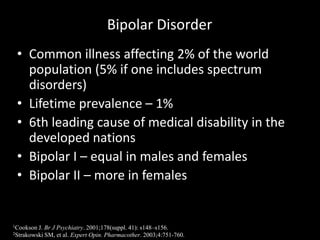


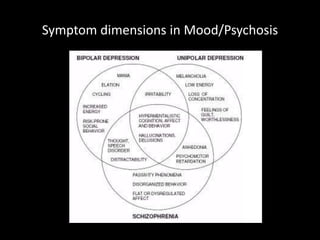
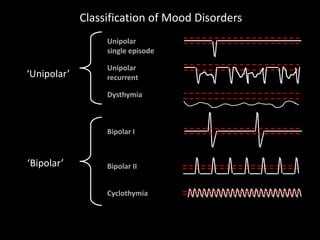
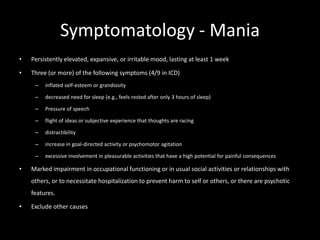

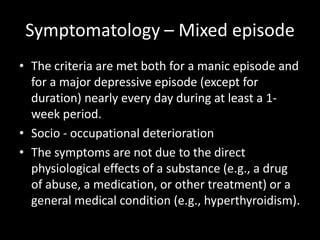
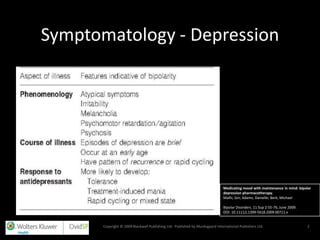
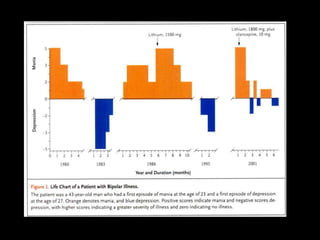

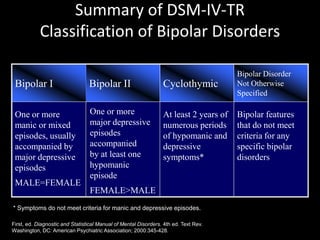
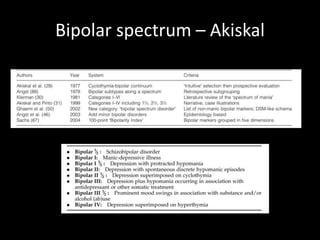

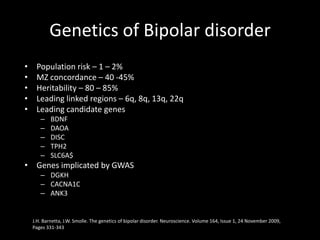
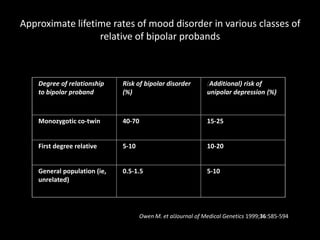
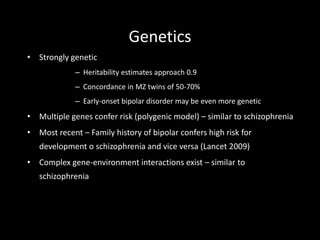
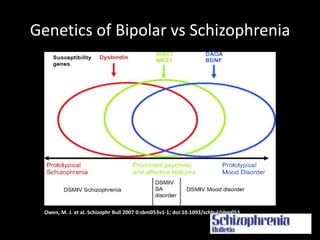
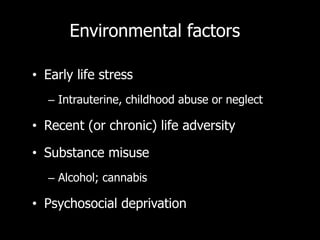
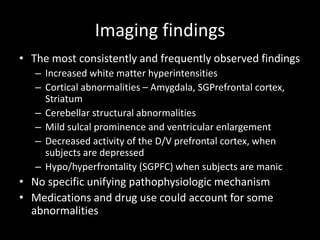
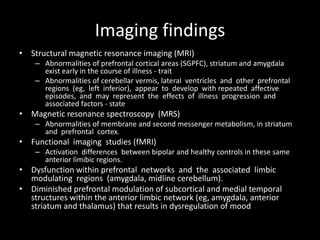


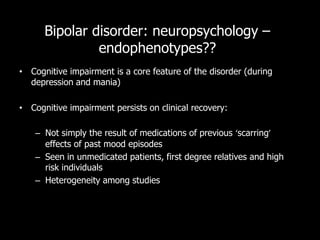
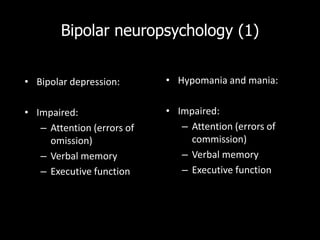

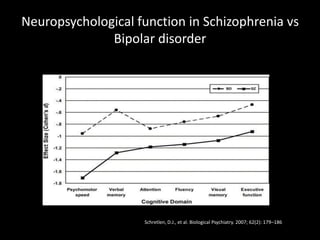



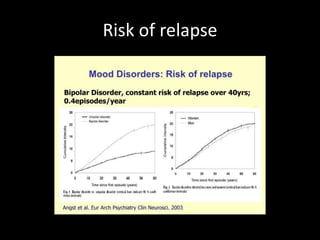

























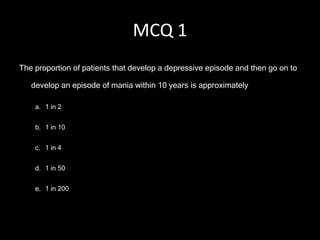
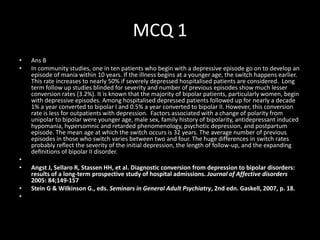
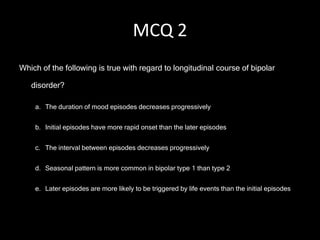
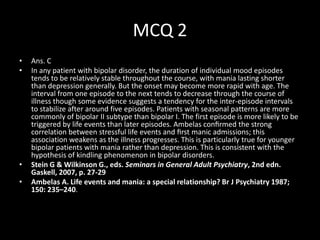






Bipolar disorder is a common mental illness that affects approximately 2% of the world population. It is characterized by episodes of mania or hypomania and depression. It is classified into Bipolar I, Bipolar II, and Cyclothymia based on the types of episodes experienced. Genetics plays a strong role in bipolar disorder, with heritability estimates around 80-85%. Environmental stressors can also contribute to its development. Neuroimaging and neuropsychological studies have found abnormalities in brain regions involved in mood regulation such as the prefrontal cortex and limbic structures. Cognitive deficits are also seen both during mood episodes and during periods of remission, suggesting they may be traits or endophenotypes


