MOOD DISORDERS
Undergraduate lecture
By
DR. ASHRAF SAAD MOHAMED ELSHAZLY
MBBCH , MSc PSYCHIATRY, M.D. PSYCHIATRY
CONSULTANT PSYCHIATRY
TABLE OF CONTENT
• Introduction (what is mood? Mood disorder?)
• Types of mood disorders
A- Bipolar mood disorder(Lecture1)******
(Types – Epidemiology – Etiology - Clinical manifestation - Diagnostic Criteria-
Differential diagnoses– Management )
B-Unipolar depressive disorder( Lecture2)
(Types – Epidemiology – Etiology - Clinical manifestation - Diagnostic Criteria-
Differential diagnoses– Management )
INTRODUCTION
What is the Mood? What Is A Mood Disorder?
• Mood is a pervasive and sustained feeling
tone that is experienced internally and
subjectively, which influences a person’s
behavior and perception of the world.
• Mood can be normal , elevated, or
depressed.
• A normal mood is defined as euthymia.
• Affect is generally defined as the external
expression of mood which objectively
observed by clinician during MSE.
•Particular attention should be given to the
quality of mood, noting its depth, length of
time it prevails, and the degree of
• Mood disorders— are large spectrum of
disorders in which pathologic mood
disturbances dominate the clinical picture.
•When the mood is too high, a person is
manic and when the mood is too low a
person is depressed.
• Mood disorders can also cause physical
changes and changes in the process and
content of thought.
•Most people experience highs and lows but
maintain a general balance of mood.
•Mood disorder is only when these highs and
lows persist for certain durations, meet a
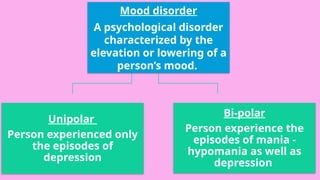
Mood disorder
A psychological disorder
characterized by the
elevation or lowering of a
person’s mood.
Unipolar
Person experienced only
the episodes of
depression
Bi-polar
Person experience the
episodes of mania -
hypomania as well as
depression
LECTURE 1
BIPOLAR AFFECTIVE DISORDERS
• The Bipolar disorders include:-
• Bipolar disorder type I, commonly referred to as manic – depression disorder.
• Bipolar type II disorder.
• Cyclothymic disorder.
• Historically, we considered these mood disorders to be on a continuum with
depressive disorders —hence the concept of polarity, with depression at one
end and mania the other.
EPIDEMOLOGY
*Prevalence rate:-
• The lifelong prevalence of bipolar disorder in the United States, has been ranged from
0.9% to 2.1%.
• The lifetime prevalence for bipolar disorder type I (1.0%), bipolar disorder type II (1.1%),
and subthreshold bipolar disorders (2.4–4.7%).
• Internationally, the lifelong prevalence rate of bipolar disorder is 0.3–1.5%.
*Age-related differences in incidence
• For both BPI and BPII, the age range is from childhood to 50 years, with a mean age of
approximately 21 years.
• The second most frequent age range of onset is 20–24 years.
• From 1990 to 2019, the global incidence of bipolar disorder among adolescents and
young adults rose from 79.21 per 100,000 to 84.97 per 100,000.
*Sex-related differences in incidence
• BPI occurs equally in both sexes;
• Rapid-cycling bipolar disorder ( 4 episodes/y) is more common in women than in men.
≥
• The incidence of BPII is higher in females than in males.
ETIOLOGY
• BIOLGICAL FACTOR:-
*Genetic factor:-
- Bipolar disorder, especially bipolar type I has a major genetic component, with the involvement
of the ANK3,CACNA1C, and CLOCK genes.
- First-degree relatives of people with BPI are approximately 7 times more likely to develop BPI
than the general population.
- Offspring of a parent with bipolar disorder have a 50% chance of having another major
psychiatric disorder.
- Twin studies demonstrate a concordance of 33–90% for BPI in identical twins.
- Adoption studies prove that a common environment is not the only factor that makes bipolar
disorder occur in families.
- Children whose biologic parents have either BPI or a major depressive disorder remain at
increased risk of developing an disorder, even if they are reared in a home with adopted parents
who are not affected.
ETIOLOGY
*Neurotransmitters :-
• Catecholamine hypothesis, which holds that an increase in epinephrine and
norepinephrine causes mania and a decrease in epinephrine and norepinephrine
causes depression.
• Drugs used to treat depression and drugs of abuse (eg, cocaine) that increase levels
of monoamines, including serotonin, norepinephrine, or dopamine, can trigger
mania, implicating all of these neurotransmitters in its etiology.
• Evidence of the contribution of glutamate to both bipolar disorder, as in postmortem
study of the frontal lobes of individuals with these disorders revealed that the
glutamate levels were increased.
• Calcium channel blockers have been used to treat mania, which may also result from
a disruption of intracellular calcium regulation in neurons as suggested by
experimental and genetic data.
• Hormonal imbalances and disruptions of the hypothalamic-pituitary-adrenal axis
involved in homeostasis and the stress response may also contribute to the clinical
picture of bipolar disorder.
ETIOLOGY
*PSYCHODYNAMIC FACTOR
• The Psychodynamics of manic-depressive illness as being linked through a single
common pathway.
• The theory postulated that the depression is the manifestation of losses (ie, the
loss of self-esteem and the sense of worthlessness), while mania serves as a
defense against the feelings of depression.
*Environmental & Social factors :-
- In some instances, the cycle may be directly linked to external stresses or the
external pressures may serve to exacerbate some underlying genetic or biochemical
predisposition.
- Also , the admission rate for patients with bipolar disorder was significantly higher
during May, June, and July; months with maximum sunlight exposure.
CLINICAL PRESENTATION
*MANIC EPISODE :-
• Manic episodes are feature at least 1 week of profound mood disturbance, characterized by elation,
irritability, or expansiveness.
• At least 3 of the following symptoms must also be present:
-Grandiosity
-Diminished need for sleep
-Excessive talking or pressured speech
-Racing thoughts or flight of ideas
-Clear evidence of distractibility
-Increased level of goal-focused activity at home, at work, or sexually
-Excessive pleasurable activities, often with painful consequences
• The mood disturbance is sufficient to cause impairment at work or danger to the patient or others. The
mood is not the result of substance abuse or a medical condition.
CLINICAL PRESENTATION
• HYPOMANIC EPISODE:-
• Hypomanic episodes are characterized by an elevated, expansive, or irritable mood of at least 4 consecutive
days’ duration.
• At least 3 of the following symptoms are also present:
-Grandiosity or inflated self-esteem
-Diminished need for sleep
-Pressured speech
-Racing thoughts or flight of ideas
-Clear evidence of distractibility
-Increased level of goal-focused activity at home, at work, or sexually
-Engaging in activities with a high potential for painful consequences
• The mood disturbance is observable to others.
• The mood is not the result of substance abuse or a medical condition.
• The episode is not severe enough to cause social or occupational impairment.
CLINICAL PRESENTATION
• Manic or Hypomanic Episode With Mixed Features
• One must also have at least 3 of the symptoms during the majority of the days of the current or most
recent episode of mania/hypomania:
1. Prominent dysphoria or depressed mood as indicated by either subjective report (eg, feels sad or
empty) or observation made by others (eg, appears tearful).
2. Diminished interest or pleasure in all, or almost all, activities (as indicated by either subjective account
or observation made by others).
3. Psychomotor retardation nearly every day (observable by others, not merely subjective feelings of
being slowed down).
4. Fatigue or loss of energy.
5. Feeling of worthlessness or excessive or inappropriate guilt (not merely self-reproach or guilt about
being sick).
6. Recurrent thoughts of death (not just fear of dying), recurrent suicidal ideation without a specific plan,
or a suicide attempt or a specific plan for committing suicide.
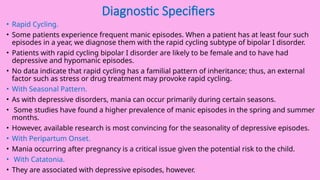
Diagnostic Specifiers
• Rapid Cycling.
• Some patients experience frequent manic episodes. When a patient has at least four such
episodes in a year, we diagnose them with the rapid cycling subtype of bipolar I disorder.
• Patients with rapid cycling bipolar I disorder are likely to be female and to have had
depressive and hypomanic episodes.
• No data indicate that rapid cycling has a familial pattern of inheritance; thus, an external
factor such as stress or drug treatment may provoke rapid cycling.
• With Seasonal Pattern.
• As with depressive disorders, mania can occur primarily during certain seasons.
• Some studies have found a higher prevalence of manic episodes in the spring and summer
months.
• However, available research is most convincing for the seasonality of depressive episodes.
• With Peripartum Onset.
• Mania occurring after pregnancy is a critical issue given the potential risk to the child.
• With Catatonia.
• They are associated with depressive episodes, however.
CILINAL PRESENTATION
• DEPRESSIVE EPISODE :-
• Major depressive episodes are characterized as, for the same 2 weeks, the person experiences 5 or
more of the following symptoms, with at least 1 of the symptoms being either a depressed mood or
characterized by a loss of pleasure or interest:
• Depressed mood
-Markedly diminished pleasure or interest in nearly all activities
-Significant weight loss or gain or significant loss or increase in appetite
-Hypersomnia or insomnia
-Psychomotor retardation or agitation
-Loss of energy or fatigue
-Feelings of worthlessness or excessive guilt
-Decreased concentration ability or marked indecisiveness
-Preoccupation with death or suicide; patient has a plan or has attempted suicide
• Symptoms cause significant impairment and distress and are not the result of substance abuse or a
medical condition
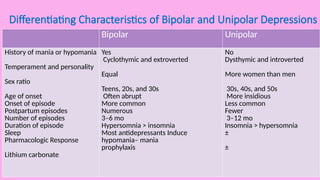
Differentiating Characteristics of Bipolar and Unipolar Depressions
Bipolar Unipolar
History of mania or hypomania
Temperament and personality
Sex ratio
Age of onset
Onset of episode
Postpartum episodes
Number of episodes
Duration of episode
Sleep
Pharmacologic Response
Lithium carbonate
Yes
Cyclothymic and extroverted
Equal
Teens, 20s, and 30s
Often abrupt
More common
Numerous
3–6 mo
Hypersomnia > insomnia
Most antidepressants Induce
hypomania– mania
prophylaxis
No
Dysthymic and introverted
More women than men
30s, 40s, and 50s
More insidious
Less common
Fewer
3–12 mo
Insomnia > hypersomnia
±
±
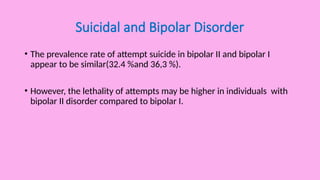
Suicidal and Bipolar Disorder
• The prevalence rate of attempt suicide in bipolar II and bipolar I
appear to be similar(32.4 %and 36,3 %).
• However, the lethality of attempts may be higher in individuals with
bipolar II disorder compared to bipolar I.
Cyclothymic disorder
*Cyclothymic disorder has also been appreciated clinically for some time as a less
severe form of bipolar disorder.
*Patients with cyclothymic disorder have at least 2 years of frequently occurring
hypomanic symptoms that cannot fit the diagnosis of a manic episode and of
depressive symptoms that cannot fit the diagnosis of a major depressive episode.
*Exclusions (not better explained by):
• Substance use • Medication effect • Other medical condition • Other mental
illness (i.e., Bipolar I or II)
*Psychosocial Impact Marked distress or impairment in areas of functioning.
*Symptom Specifiers
With anxious distress: including at least two symptoms among feeling tense,
restlessness, difficulty with concentration due to worrying, excessive fear without
identifiable cause, fear of loss of control
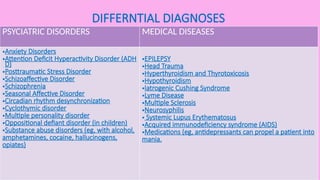
DIFFERNTIAL DIAGNOSES
PSYCIATRIC DISORDERS MEDICAL DISEASES
•Anxiety Disorders
•Attention Deficit Hyperactivity Disorder (ADH
D)
•Posttraumatic Stress Disorder
•Schizoaffective Disorder
•Schizophrenia
•Seasonal Affective Disorder
•Circadian rhythm desynchronization
•Cyclothymic disorder
•Multiple personality disorder
•Oppositional defiant disorder (in children)
•Substance abuse disorders (eg, with alcohol,
amphetamines, cocaine, hallucinogens,
opiates)
•EPILEPSY
•Head Trauma
•Hyperthyroidism and Thyrotoxicosis
•Hypothyroidism
•Iatrogenic Cushing Syndrome
•Lyme Disease
•Multiple Sclerosis
•Neurosyphilis
• Systemic Lupus Erythematosus
•Acquired immunodeficiency syndrome (AIDS)
•Medications (eg, antidepressants can propel a patient into
mania.
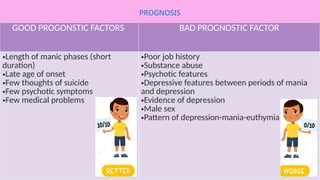
PROGNOSIS
GOOD PROGONSTIC FACTORS BAD PROGNOSTIC FACTOR
•Length of manic phases (short
duration)
•Late age of onset
•Few thoughts of suicide
•Few psychotic symptoms
•Few medical problems
•Poor job history
•Substance abuse
•Psychotic features
•Depressive features between periods of mania
and depression
•Evidence of depression
•Male sex
•Pattern of depression-mania-euthymia
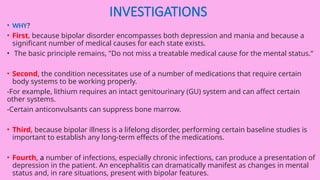
INVESTIGATIONS
• WHY?
• First, because bipolar disorder encompasses both depression and mania and because a
significant number of medical causes for each state exists.
• The basic principle remains, "Do not miss a treatable medical cause for the mental status.“
• Second, the condition necessitates use of a number of medications that require certain
body systems to be working properly.
-For example, lithium requires an intact genitourinary (GU) system and can affect certain
other systems.
-Certain anticonvulsants can suppress bone marrow.
• Third, because bipolar illness is a lifelong disorder, performing certain baseline studies is
important to establish any long-term effects of the medications.
• Fourth, a number of infections, especially chronic infections, can produce a presentation of
depression in the patient. An encephalitis can dramatically manifest as changes in mental
status and, in rare situations, present with bipolar features.
INVESTGATIONS
• Blood Studies
* Complete Blood Count
-(CBC) with differential is used to rule out anemia as a cause of depression in bipolar
disorder.
-Treatment, especially with certain anticonvulsants, may depress the bone marrow.
- Lithium may cause a reversible increase in the WBC count.
*Erythrocyte Sedimentation Rate
*Fasting glucose
*Serum electrolyte concentrations
*Proteins
*Thyroid hormones
*Creatinine and blood urea nitrogen
*Liver function test
*Lipid profile
• Substance and Alcohol Screening
• Magnetic Resonance Imaging
• Electrocardiography
• Electroencephalography
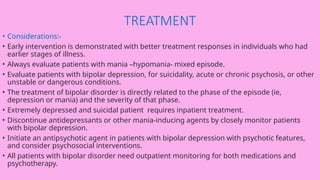
TREATMENT
• Considerations:-
• Early intervention is demonstrated with better treatment responses in individuals who had
earlier stages of illness.
• Always evaluate patients with mania –hypomania- mixed episode.
• Evaluate patients with bipolar depression, for suicidality, acute or chronic psychosis, or other
unstable or dangerous conditions.
• The treatment of bipolar disorder is directly related to the phase of the episode (ie,
depression or mania) and the severity of that phase.
• Extremely depressed and suicidal patient requires inpatient treatment.
• Discontinue antidepressants or other mania-inducing agents by closely monitor patients
with bipolar depression.
• Initiate an antipsychotic agent in patients with bipolar depression with psychotic features,
and consider psychosocial interventions.
• All patients with bipolar disorder need outpatient monitoring for both medications and
psychotherapy.
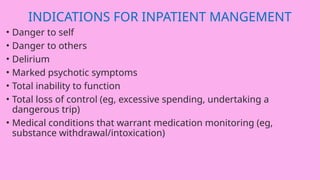
INDICATIONS FOR INPATIENT MANGEMENT
• Danger to self
• Danger to others
• Delirium
• Marked psychotic symptoms
• Total inability to function
• Total loss of control (eg, excessive spending, undertaking a
dangerous trip)
• Medical conditions that warrant medication monitoring (eg,
substance withdrawal/intoxication)
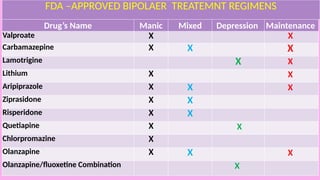
Drug’s Name Manic Mixed Depression Maintenance
Valproate X X
Carbamazepine X X X
Lamotrigine X X
Lithium X X
Aripiprazole X X X
Ziprasidone X X
Risperidone X X
Quetiapine X X
Chlorpromazine X
Olanzapine X X X
Olanzapine/fluoxetine Combination X
FDA –APPROVED BIPOLAER TREATEMNT REGIMENS
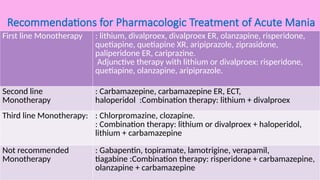
Recommendations for Pharmacologic Treatment of Acute Mania
First line Monotherapy : lithium, divalproex, divalproex ER, olanzapine, risperidone,
quetiapine, quetiapine XR, aripiprazole, ziprasidone,
paliperidone ER, cariprazine.
Adjunctive therapy with lithium or divalproex: risperidone,
quetiapine, olanzapine, aripiprazole.
Second line
Monotherapy
: Carbamazepine, carbamazepine ER, ECT,
haloperidol :Combination therapy: lithium + divalproex
Third line Monotherapy: : Chlorpromazine, clozapine.
: Combination therapy: lithium or divalproex + haloperidol,
lithium + carbamazepine
Not recommended
Monotherapy
: Gabapentin, topiramate, lamotrigine, verapamil,
tiagabine :Combination therapy: risperidone + carbamazepine,
olanzapine + carbamazepine
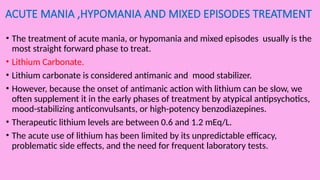
ACUTE MANIA ,HYPOMANIA AND MIXED EPISODES TREATMENT
• The treatment of acute mania, or hypomania and mixed episodes usually is the
most straight forward phase to treat.
• Lithium Carbonate.
• Lithium carbonate is considered antimanic and mood stabilizer.
• However, because the onset of antimanic action with lithium can be slow, we
often supplement it in the early phases of treatment by atypical antipsychotics,
mood-stabilizing anticonvulsants, or high-potency benzodiazepines.
• Therapeutic lithium levels are between 0.6 and 1.2 mEq/L.
• The acute use of lithium has been limited by its unpredictable efficacy,
problematic side effects, and the need for frequent laboratory tests.
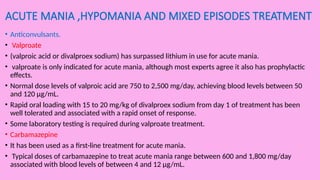
ACUTE MANIA ,HYPOMANIA AND MIXED EPISODES TREATMENT
• Anticonvulsants.
• Valproate
• (valproic acid or divalproex sodium) has surpassed lithium in use for acute mania.
• valproate is only indicated for acute mania, although most experts agree it also has prophylactic
effects.
• Normal dose levels of valproic acid are 750 to 2,500 mg/day, achieving blood levels between 50
and 120 µg/mL.
• Rapid oral loading with 15 to 20 mg/kg of divalproex sodium from day 1 of treatment has been
well tolerated and associated with a rapid onset of response.
• Some laboratory testing is required during valproate treatment.
• Carbamazepine
• It has been used as a first-line treatment for acute mania.
• Typical doses of carbamazepine to treat acute mania range between 600 and 1,800 mg/day
associated with blood levels of between 4 and 12 µg/mL.
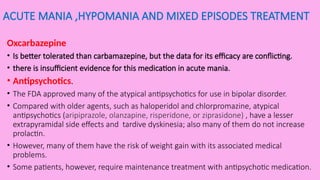
ACUTE MANIA ,HYPOMANIA AND MIXED EPISODES TREATMENT
Oxcarbazepine
• Is better tolerated than carbamazepine, but the data for its efficacy are conflicting.
• there is insufficient evidence for this medication in acute mania.
• Antipsychotics.
• The FDA approved many of the atypical antipsychotics for use in bipolar disorder.
• Compared with older agents, such as haloperidol and chlorpromazine, atypical
antipsychotics (aripiprazole, olanzapine, risperidone, or ziprasidone) , have a lesser
extrapyramidal side effects and tardive dyskinesia; also many of them do not increase
prolactin.
• However, many of them have the risk of weight gain with its associated medical
problems.
• Some patients, however, require maintenance treatment with antipsychotic medication.
ACUTE BIPOLAR DEPRESSION TREATEMENT
*Lithium.
There is limited evidence for lithium in bipolar depression.
More extensive studies suggest that lithium was at least as useful as other mood stabilizers for bipolar
depression.
*Anticonvulsants.
-The most promising anticonvulsant has been lamotrigine, which showing efficacy for bipolar depression.
- Its major limitation is that it must be titrated gradually to prevent a severe skin rash.
-Evidence for valproate and other anticonvulsants is limited.
*Antipsychotics.
-Several of the atypical antipsychotics have shown efficacy for bipolar depression.
-Quetiapine has the best evidence.
-It appears that quetiapine, in a modest dose (300 mg/day), is sufficient to improve symptoms.
Olanzapine, lurasidone, and cariprazine also have positive effects
-FDA approved lurasidone for this indication.
ACUTE BIPOLAR DEPRESSION TREATEMENT
• Antidepressants.
• It remains controversial whether antidepressants are useful for the depressive phase of
bipolar disorder. This is particularly true in patients with rapid cycling and mixed states.
• The risk of inducing mania seems highest for tricyclic antidepressants, monoamine
oxidase inhibitors, and perhaps the serotonin norepinephrine reuptake inhibitors such
as venlafaxine.
• Electroconvulsive Therapy.
• Electroconvulsive therapy may also be used
• for patients with bipolar depression who do not respond to lithium or other mood
stabilizers and their adjuncts, particularly in cases in which strong suicidal tendency
presents as a medical emergency.
• When the patient prefers this treatment modality
• When the risks of ECT are less than that of other treatments
MAINANTANCE TREATEMENT
• Goals of maintenance phase;-
• Preventing recurrences of mood episodes is a primary goal.
• Unwanted side effects that affect functioning (Sedation, cognitive impairment,
tremor, weight gain, and rash) are some side effects that lead to treatment
discontinuation
• Lithium, carbamazepine, and valproic acid, alone or in combination, are the
most widely used agents for the long-term treatment of patients with bipolar
disorder.
• Lamotrigine has prophylactic antidepressant and, potentially, mood-stabilizing
properties and appears to be superior at the acute and prophylactic treatment
of the depressive phase of illness.
PSYCHOTHERAPY
• The goals of this therapy
• helping treatment adherence,
• promoting stability
• avoiding risk factors for the disorder impulsive or inappropriate behavior .
• Cognitive-behavioral therapy,
• interpersonal and social rhythm therapy
• Insight oriented psychotherapy.
• Supportive psychotherapy :- for patients with chronic bipolar disorder, who
may have significant residual symptoms and experience social deterioration.
• family focused therapy are all reasonable therapies to use.
THANK YOU

MOOD DISORDERS ( BIPOLAR AFFECTIVE DIOSRDERS

  • 1.
    MOOD DISORDERS Undergraduate lecture By DR.ASHRAF SAAD MOHAMED ELSHAZLY MBBCH , MSc PSYCHIATRY, M.D. PSYCHIATRY CONSULTANT PSYCHIATRY
  • 2.
    TABLE OF CONTENT •Introduction (what is mood? Mood disorder?) • Types of mood disorders A- Bipolar mood disorder(Lecture1)****** (Types – Epidemiology – Etiology - Clinical manifestation - Diagnostic Criteria- Differential diagnoses– Management ) B-Unipolar depressive disorder( Lecture2) (Types – Epidemiology – Etiology - Clinical manifestation - Diagnostic Criteria- Differential diagnoses– Management )
  • 3.
    INTRODUCTION What is theMood? What Is A Mood Disorder? • Mood is a pervasive and sustained feeling tone that is experienced internally and subjectively, which influences a person’s behavior and perception of the world. • Mood can be normal , elevated, or depressed. • A normal mood is defined as euthymia. • Affect is generally defined as the external expression of mood which objectively observed by clinician during MSE. •Particular attention should be given to the quality of mood, noting its depth, length of time it prevails, and the degree of • Mood disorders— are large spectrum of disorders in which pathologic mood disturbances dominate the clinical picture. •When the mood is too high, a person is manic and when the mood is too low a person is depressed. • Mood disorders can also cause physical changes and changes in the process and content of thought. •Most people experience highs and lows but maintain a general balance of mood. •Mood disorder is only when these highs and lows persist for certain durations, meet a
  • 4.
    Mood disorder A psychologicaldisorder characterized by the elevation or lowering of a person’s mood. Unipolar Person experienced only the episodes of depression Bi-polar Person experience the episodes of mania - hypomania as well as depression
  • 5.
    LECTURE 1 BIPOLAR AFFECTIVEDISORDERS • The Bipolar disorders include:- • Bipolar disorder type I, commonly referred to as manic – depression disorder. • Bipolar type II disorder. • Cyclothymic disorder. • Historically, we considered these mood disorders to be on a continuum with depressive disorders —hence the concept of polarity, with depression at one end and mania the other.
  • 6.
    EPIDEMOLOGY *Prevalence rate:- • Thelifelong prevalence of bipolar disorder in the United States, has been ranged from 0.9% to 2.1%. • The lifetime prevalence for bipolar disorder type I (1.0%), bipolar disorder type II (1.1%), and subthreshold bipolar disorders (2.4–4.7%). • Internationally, the lifelong prevalence rate of bipolar disorder is 0.3–1.5%. *Age-related differences in incidence • For both BPI and BPII, the age range is from childhood to 50 years, with a mean age of approximately 21 years. • The second most frequent age range of onset is 20–24 years. • From 1990 to 2019, the global incidence of bipolar disorder among adolescents and young adults rose from 79.21 per 100,000 to 84.97 per 100,000. *Sex-related differences in incidence • BPI occurs equally in both sexes; • Rapid-cycling bipolar disorder ( 4 episodes/y) is more common in women than in men. ≥ • The incidence of BPII is higher in females than in males.
  • 7.
    ETIOLOGY • BIOLGICAL FACTOR:- *Geneticfactor:- - Bipolar disorder, especially bipolar type I has a major genetic component, with the involvement of the ANK3,CACNA1C, and CLOCK genes. - First-degree relatives of people with BPI are approximately 7 times more likely to develop BPI than the general population. - Offspring of a parent with bipolar disorder have a 50% chance of having another major psychiatric disorder. - Twin studies demonstrate a concordance of 33–90% for BPI in identical twins. - Adoption studies prove that a common environment is not the only factor that makes bipolar disorder occur in families. - Children whose biologic parents have either BPI or a major depressive disorder remain at increased risk of developing an disorder, even if they are reared in a home with adopted parents who are not affected.
  • 8.
    ETIOLOGY *Neurotransmitters :- • Catecholaminehypothesis, which holds that an increase in epinephrine and norepinephrine causes mania and a decrease in epinephrine and norepinephrine causes depression. • Drugs used to treat depression and drugs of abuse (eg, cocaine) that increase levels of monoamines, including serotonin, norepinephrine, or dopamine, can trigger mania, implicating all of these neurotransmitters in its etiology. • Evidence of the contribution of glutamate to both bipolar disorder, as in postmortem study of the frontal lobes of individuals with these disorders revealed that the glutamate levels were increased. • Calcium channel blockers have been used to treat mania, which may also result from a disruption of intracellular calcium regulation in neurons as suggested by experimental and genetic data. • Hormonal imbalances and disruptions of the hypothalamic-pituitary-adrenal axis involved in homeostasis and the stress response may also contribute to the clinical picture of bipolar disorder.
  • 9.
    ETIOLOGY *PSYCHODYNAMIC FACTOR • ThePsychodynamics of manic-depressive illness as being linked through a single common pathway. • The theory postulated that the depression is the manifestation of losses (ie, the loss of self-esteem and the sense of worthlessness), while mania serves as a defense against the feelings of depression. *Environmental & Social factors :- - In some instances, the cycle may be directly linked to external stresses or the external pressures may serve to exacerbate some underlying genetic or biochemical predisposition. - Also , the admission rate for patients with bipolar disorder was significantly higher during May, June, and July; months with maximum sunlight exposure.
  • 10.
    CLINICAL PRESENTATION *MANIC EPISODE:- • Manic episodes are feature at least 1 week of profound mood disturbance, characterized by elation, irritability, or expansiveness. • At least 3 of the following symptoms must also be present: -Grandiosity -Diminished need for sleep -Excessive talking or pressured speech -Racing thoughts or flight of ideas -Clear evidence of distractibility -Increased level of goal-focused activity at home, at work, or sexually -Excessive pleasurable activities, often with painful consequences • The mood disturbance is sufficient to cause impairment at work or danger to the patient or others. The mood is not the result of substance abuse or a medical condition.
  • 11.
    CLINICAL PRESENTATION • HYPOMANICEPISODE:- • Hypomanic episodes are characterized by an elevated, expansive, or irritable mood of at least 4 consecutive days’ duration. • At least 3 of the following symptoms are also present: -Grandiosity or inflated self-esteem -Diminished need for sleep -Pressured speech -Racing thoughts or flight of ideas -Clear evidence of distractibility -Increased level of goal-focused activity at home, at work, or sexually -Engaging in activities with a high potential for painful consequences • The mood disturbance is observable to others. • The mood is not the result of substance abuse or a medical condition. • The episode is not severe enough to cause social or occupational impairment.
  • 12.
    CLINICAL PRESENTATION • Manicor Hypomanic Episode With Mixed Features • One must also have at least 3 of the symptoms during the majority of the days of the current or most recent episode of mania/hypomania: 1. Prominent dysphoria or depressed mood as indicated by either subjective report (eg, feels sad or empty) or observation made by others (eg, appears tearful). 2. Diminished interest or pleasure in all, or almost all, activities (as indicated by either subjective account or observation made by others). 3. Psychomotor retardation nearly every day (observable by others, not merely subjective feelings of being slowed down). 4. Fatigue or loss of energy. 5. Feeling of worthlessness or excessive or inappropriate guilt (not merely self-reproach or guilt about being sick). 6. Recurrent thoughts of death (not just fear of dying), recurrent suicidal ideation without a specific plan, or a suicide attempt or a specific plan for committing suicide.
  • 13.
    Diagnostic Specifiers • RapidCycling. • Some patients experience frequent manic episodes. When a patient has at least four such episodes in a year, we diagnose them with the rapid cycling subtype of bipolar I disorder. • Patients with rapid cycling bipolar I disorder are likely to be female and to have had depressive and hypomanic episodes. • No data indicate that rapid cycling has a familial pattern of inheritance; thus, an external factor such as stress or drug treatment may provoke rapid cycling. • With Seasonal Pattern. • As with depressive disorders, mania can occur primarily during certain seasons. • Some studies have found a higher prevalence of manic episodes in the spring and summer months. • However, available research is most convincing for the seasonality of depressive episodes. • With Peripartum Onset. • Mania occurring after pregnancy is a critical issue given the potential risk to the child. • With Catatonia. • They are associated with depressive episodes, however.
  • 14.
    CILINAL PRESENTATION • DEPRESSIVEEPISODE :- • Major depressive episodes are characterized as, for the same 2 weeks, the person experiences 5 or more of the following symptoms, with at least 1 of the symptoms being either a depressed mood or characterized by a loss of pleasure or interest: • Depressed mood -Markedly diminished pleasure or interest in nearly all activities -Significant weight loss or gain or significant loss or increase in appetite -Hypersomnia or insomnia -Psychomotor retardation or agitation -Loss of energy or fatigue -Feelings of worthlessness or excessive guilt -Decreased concentration ability or marked indecisiveness -Preoccupation with death or suicide; patient has a plan or has attempted suicide • Symptoms cause significant impairment and distress and are not the result of substance abuse or a medical condition
  • 15.
    Differentiating Characteristics ofBipolar and Unipolar Depressions Bipolar Unipolar History of mania or hypomania Temperament and personality Sex ratio Age of onset Onset of episode Postpartum episodes Number of episodes Duration of episode Sleep Pharmacologic Response Lithium carbonate Yes Cyclothymic and extroverted Equal Teens, 20s, and 30s Often abrupt More common Numerous 3–6 mo Hypersomnia > insomnia Most antidepressants Induce hypomania– mania prophylaxis No Dysthymic and introverted More women than men 30s, 40s, and 50s More insidious Less common Fewer 3–12 mo Insomnia > hypersomnia ± ±
  • 16.
    Suicidal and BipolarDisorder • The prevalence rate of attempt suicide in bipolar II and bipolar I appear to be similar(32.4 %and 36,3 %). • However, the lethality of attempts may be higher in individuals with bipolar II disorder compared to bipolar I.
  • 17.
    Cyclothymic disorder *Cyclothymic disorderhas also been appreciated clinically for some time as a less severe form of bipolar disorder. *Patients with cyclothymic disorder have at least 2 years of frequently occurring hypomanic symptoms that cannot fit the diagnosis of a manic episode and of depressive symptoms that cannot fit the diagnosis of a major depressive episode. *Exclusions (not better explained by): • Substance use • Medication effect • Other medical condition • Other mental illness (i.e., Bipolar I or II) *Psychosocial Impact Marked distress or impairment in areas of functioning. *Symptom Specifiers With anxious distress: including at least two symptoms among feeling tense, restlessness, difficulty with concentration due to worrying, excessive fear without identifiable cause, fear of loss of control
  • 18.
    DIFFERNTIAL DIAGNOSES PSYCIATRIC DISORDERSMEDICAL DISEASES •Anxiety Disorders •Attention Deficit Hyperactivity Disorder (ADH D) •Posttraumatic Stress Disorder •Schizoaffective Disorder •Schizophrenia •Seasonal Affective Disorder •Circadian rhythm desynchronization •Cyclothymic disorder •Multiple personality disorder •Oppositional defiant disorder (in children) •Substance abuse disorders (eg, with alcohol, amphetamines, cocaine, hallucinogens, opiates) •EPILEPSY •Head Trauma •Hyperthyroidism and Thyrotoxicosis •Hypothyroidism •Iatrogenic Cushing Syndrome •Lyme Disease •Multiple Sclerosis •Neurosyphilis • Systemic Lupus Erythematosus •Acquired immunodeficiency syndrome (AIDS) •Medications (eg, antidepressants can propel a patient into mania.
  • 19.
    PROGNOSIS GOOD PROGONSTIC FACTORSBAD PROGNOSTIC FACTOR •Length of manic phases (short duration) •Late age of onset •Few thoughts of suicide •Few psychotic symptoms •Few medical problems •Poor job history •Substance abuse •Psychotic features •Depressive features between periods of mania and depression •Evidence of depression •Male sex •Pattern of depression-mania-euthymia
  • 20.
    INVESTIGATIONS • WHY? • First,because bipolar disorder encompasses both depression and mania and because a significant number of medical causes for each state exists. • The basic principle remains, "Do not miss a treatable medical cause for the mental status.“ • Second, the condition necessitates use of a number of medications that require certain body systems to be working properly. -For example, lithium requires an intact genitourinary (GU) system and can affect certain other systems. -Certain anticonvulsants can suppress bone marrow. • Third, because bipolar illness is a lifelong disorder, performing certain baseline studies is important to establish any long-term effects of the medications. • Fourth, a number of infections, especially chronic infections, can produce a presentation of depression in the patient. An encephalitis can dramatically manifest as changes in mental status and, in rare situations, present with bipolar features.
  • 21.
    INVESTGATIONS • Blood Studies *Complete Blood Count -(CBC) with differential is used to rule out anemia as a cause of depression in bipolar disorder. -Treatment, especially with certain anticonvulsants, may depress the bone marrow. - Lithium may cause a reversible increase in the WBC count. *Erythrocyte Sedimentation Rate *Fasting glucose *Serum electrolyte concentrations *Proteins *Thyroid hormones *Creatinine and blood urea nitrogen *Liver function test *Lipid profile • Substance and Alcohol Screening • Magnetic Resonance Imaging • Electrocardiography • Electroencephalography
  • 22.
    TREATMENT • Considerations:- • Earlyintervention is demonstrated with better treatment responses in individuals who had earlier stages of illness. • Always evaluate patients with mania –hypomania- mixed episode. • Evaluate patients with bipolar depression, for suicidality, acute or chronic psychosis, or other unstable or dangerous conditions. • The treatment of bipolar disorder is directly related to the phase of the episode (ie, depression or mania) and the severity of that phase. • Extremely depressed and suicidal patient requires inpatient treatment. • Discontinue antidepressants or other mania-inducing agents by closely monitor patients with bipolar depression. • Initiate an antipsychotic agent in patients with bipolar depression with psychotic features, and consider psychosocial interventions. • All patients with bipolar disorder need outpatient monitoring for both medications and psychotherapy.
  • 23.
    INDICATIONS FOR INPATIENTMANGEMENT • Danger to self • Danger to others • Delirium • Marked psychotic symptoms • Total inability to function • Total loss of control (eg, excessive spending, undertaking a dangerous trip) • Medical conditions that warrant medication monitoring (eg, substance withdrawal/intoxication)
  • 24.
    Drug’s Name ManicMixed Depression Maintenance Valproate X X Carbamazepine X X X Lamotrigine X X Lithium X X Aripiprazole X X X Ziprasidone X X Risperidone X X Quetiapine X X Chlorpromazine X Olanzapine X X X Olanzapine/fluoxetine Combination X FDA –APPROVED BIPOLAER TREATEMNT REGIMENS
  • 25.
    Recommendations for PharmacologicTreatment of Acute Mania First line Monotherapy : lithium, divalproex, divalproex ER, olanzapine, risperidone, quetiapine, quetiapine XR, aripiprazole, ziprasidone, paliperidone ER, cariprazine. Adjunctive therapy with lithium or divalproex: risperidone, quetiapine, olanzapine, aripiprazole. Second line Monotherapy : Carbamazepine, carbamazepine ER, ECT, haloperidol :Combination therapy: lithium + divalproex Third line Monotherapy: : Chlorpromazine, clozapine. : Combination therapy: lithium or divalproex + haloperidol, lithium + carbamazepine Not recommended Monotherapy : Gabapentin, topiramate, lamotrigine, verapamil, tiagabine :Combination therapy: risperidone + carbamazepine, olanzapine + carbamazepine
  • 26.
    ACUTE MANIA ,HYPOMANIAAND MIXED EPISODES TREATMENT • The treatment of acute mania, or hypomania and mixed episodes usually is the most straight forward phase to treat. • Lithium Carbonate. • Lithium carbonate is considered antimanic and mood stabilizer. • However, because the onset of antimanic action with lithium can be slow, we often supplement it in the early phases of treatment by atypical antipsychotics, mood-stabilizing anticonvulsants, or high-potency benzodiazepines. • Therapeutic lithium levels are between 0.6 and 1.2 mEq/L. • The acute use of lithium has been limited by its unpredictable efficacy, problematic side effects, and the need for frequent laboratory tests.
  • 27.
    ACUTE MANIA ,HYPOMANIAAND MIXED EPISODES TREATMENT • Anticonvulsants. • Valproate • (valproic acid or divalproex sodium) has surpassed lithium in use for acute mania. • valproate is only indicated for acute mania, although most experts agree it also has prophylactic effects. • Normal dose levels of valproic acid are 750 to 2,500 mg/day, achieving blood levels between 50 and 120 µg/mL. • Rapid oral loading with 15 to 20 mg/kg of divalproex sodium from day 1 of treatment has been well tolerated and associated with a rapid onset of response. • Some laboratory testing is required during valproate treatment. • Carbamazepine • It has been used as a first-line treatment for acute mania. • Typical doses of carbamazepine to treat acute mania range between 600 and 1,800 mg/day associated with blood levels of between 4 and 12 µg/mL.
  • 28.
    ACUTE MANIA ,HYPOMANIAAND MIXED EPISODES TREATMENT Oxcarbazepine • Is better tolerated than carbamazepine, but the data for its efficacy are conflicting. • there is insufficient evidence for this medication in acute mania. • Antipsychotics. • The FDA approved many of the atypical antipsychotics for use in bipolar disorder. • Compared with older agents, such as haloperidol and chlorpromazine, atypical antipsychotics (aripiprazole, olanzapine, risperidone, or ziprasidone) , have a lesser extrapyramidal side effects and tardive dyskinesia; also many of them do not increase prolactin. • However, many of them have the risk of weight gain with its associated medical problems. • Some patients, however, require maintenance treatment with antipsychotic medication.
  • 29.
    ACUTE BIPOLAR DEPRESSIONTREATEMENT *Lithium. There is limited evidence for lithium in bipolar depression. More extensive studies suggest that lithium was at least as useful as other mood stabilizers for bipolar depression. *Anticonvulsants. -The most promising anticonvulsant has been lamotrigine, which showing efficacy for bipolar depression. - Its major limitation is that it must be titrated gradually to prevent a severe skin rash. -Evidence for valproate and other anticonvulsants is limited. *Antipsychotics. -Several of the atypical antipsychotics have shown efficacy for bipolar depression. -Quetiapine has the best evidence. -It appears that quetiapine, in a modest dose (300 mg/day), is sufficient to improve symptoms. Olanzapine, lurasidone, and cariprazine also have positive effects -FDA approved lurasidone for this indication.
  • 30.
    ACUTE BIPOLAR DEPRESSIONTREATEMENT • Antidepressants. • It remains controversial whether antidepressants are useful for the depressive phase of bipolar disorder. This is particularly true in patients with rapid cycling and mixed states. • The risk of inducing mania seems highest for tricyclic antidepressants, monoamine oxidase inhibitors, and perhaps the serotonin norepinephrine reuptake inhibitors such as venlafaxine. • Electroconvulsive Therapy. • Electroconvulsive therapy may also be used • for patients with bipolar depression who do not respond to lithium or other mood stabilizers and their adjuncts, particularly in cases in which strong suicidal tendency presents as a medical emergency. • When the patient prefers this treatment modality • When the risks of ECT are less than that of other treatments
  • 31.
    MAINANTANCE TREATEMENT • Goalsof maintenance phase;- • Preventing recurrences of mood episodes is a primary goal. • Unwanted side effects that affect functioning (Sedation, cognitive impairment, tremor, weight gain, and rash) are some side effects that lead to treatment discontinuation • Lithium, carbamazepine, and valproic acid, alone or in combination, are the most widely used agents for the long-term treatment of patients with bipolar disorder. • Lamotrigine has prophylactic antidepressant and, potentially, mood-stabilizing properties and appears to be superior at the acute and prophylactic treatment of the depressive phase of illness.
  • 32.
    PSYCHOTHERAPY • The goalsof this therapy • helping treatment adherence, • promoting stability • avoiding risk factors for the disorder impulsive or inappropriate behavior . • Cognitive-behavioral therapy, • interpersonal and social rhythm therapy • Insight oriented psychotherapy. • Supportive psychotherapy :- for patients with chronic bipolar disorder, who may have significant residual symptoms and experience social deterioration. • family focused therapy are all reasonable therapies to use.
  • 33.