GURUNANAK KHALSA
COLLEGE
INORGANIC CHEMISTRY (PAPER-2)
BY
SAKSHI MISHRA
M.Sc. PART-2 (SEM-3)
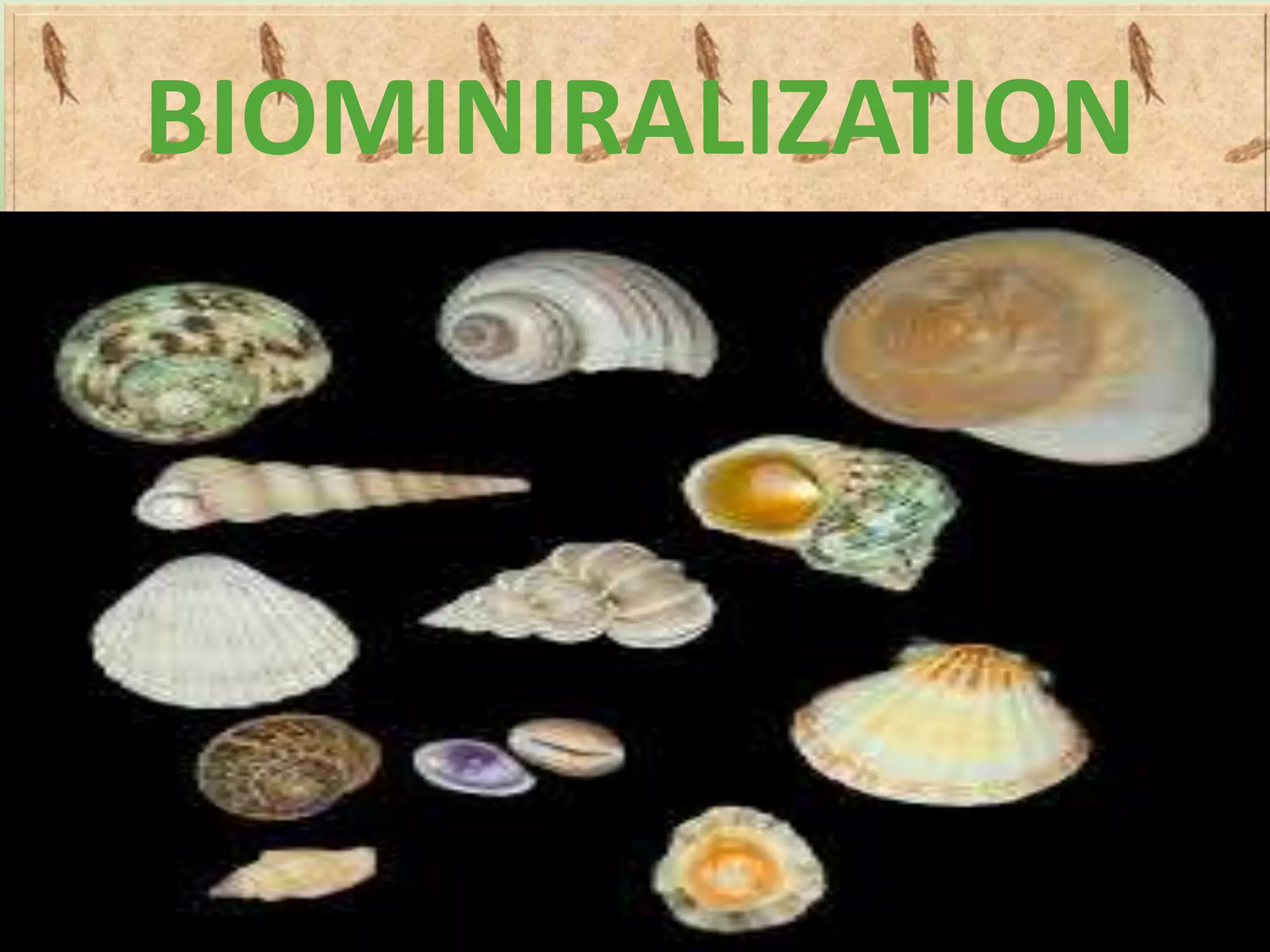
BIOMINIRALIZATION
WHAT IS BIOMINIRALIZATION
The synthesis of inorganic crystalline or
amorphous mineral-like materials by living
organisms.
Among the minerals synthesized biologically in
various forms of life are:
fluoroapatite,(Ca5(PO4)3(F,OH), hydroxyapatite,
magnetite (fe3o4) and calcium carbonate
TYPES OF BIOMINIRALIZATION
• Biologically controlled mineralization (BCM):
cellular activity controls growth, morphology and
location of deposition of the mineral.
• Biologically induced mineralization (BIM)
modification of chemical environment like change
in pH, or redox potential etc. Leads to
mineralization
CALCIUM CARBONATE BIOMINERAL
• Marine organisms such algae, sponges, corals, molluscs
form MgCO3 containing calcium carbonate in large
amounts as a photosynthetic activity. When CO2
dissolved in water is photosynthetically assimilated the
pH value of the surrounding medium rises according to
the concentration of CO3 increases and equillibrium in
shifted towards the precipitation of CaCO3.
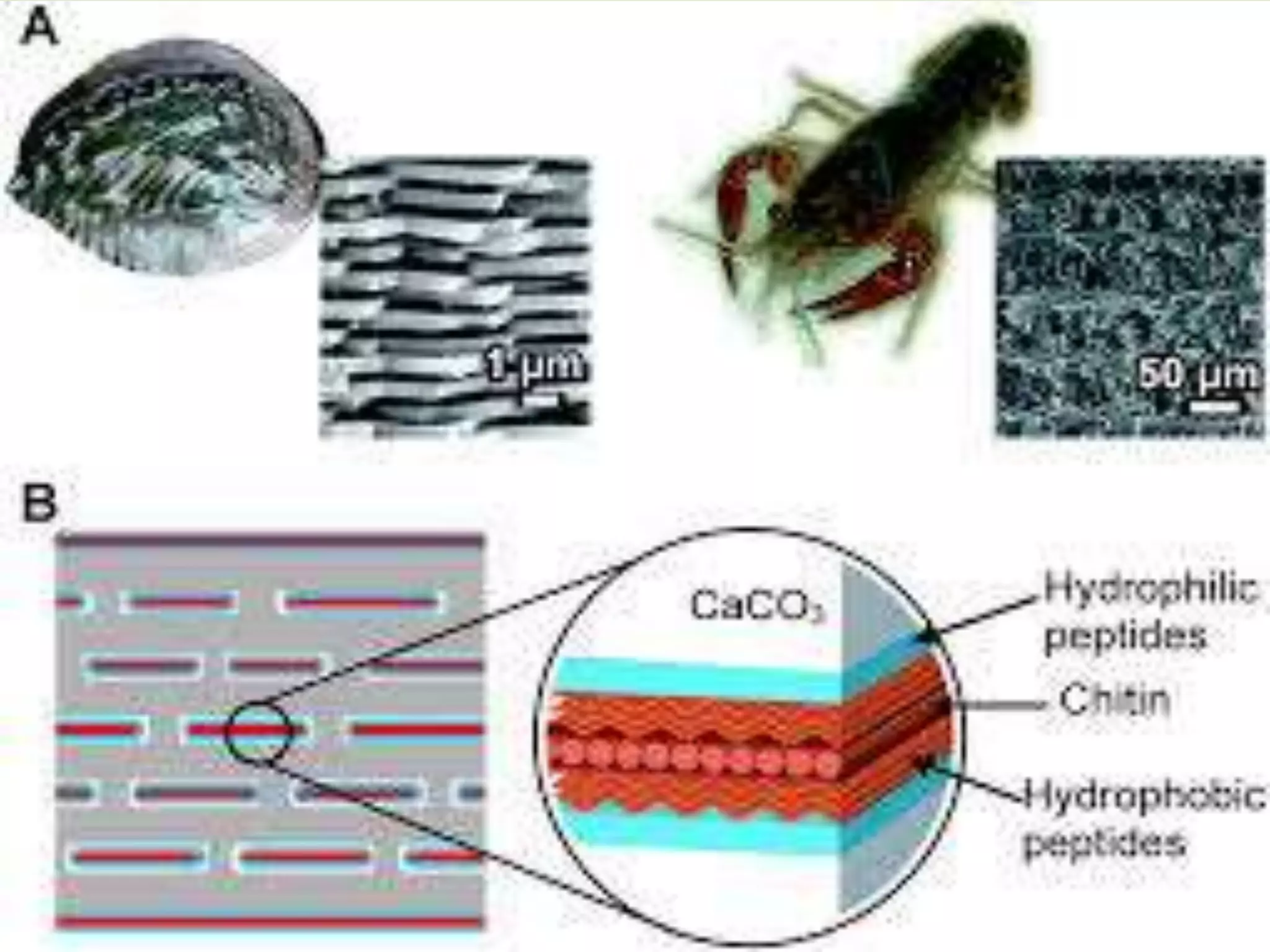
Calcium carbonate is most abundant crystalline
biomineral in nature. In nature calcium carbonate
exists in several forms, calcite and aragonite as the
most common ones.
examples: carbonates in vertebrates, and calcium
phosphates and carbonates in vertebrates. These
mineral often form structural features such as sea
shells and the bone in mammals and birds.
IRON BIOMINERALS
• The biomineralization of iron oxides is a relatively well
documented field of bio-inorganic chemistry. IN ADDITION
TO THE IRON (III) HYDROXIDE CONDENSATION PRODUCTS,
BIOGENIC IRON OXIDE ALSO EXISTS IN THE FORM OF
MAGNETITE (Fe3O4).
• This FeIII,II – containing mineral was detected in the
magnetotactic bacteria, in chitos, molluscs, pigeons, bees,
fishes and even in humans .
CONT…
• In magnetotactic bacteria under an electron
microscope, dark, membrane-coated iron-
containing particles i.e. Magnetosomes observed.
• The magnetosomes are normally arranged as
chains along the direction of bacterial movement
so that this string of particles may function as
biomagnetic compass. TO FORM
MAGNETOSOMES IRON IS TAKEN AS CHELATED
Fe+3 AND THEN MADE AVAILABLE THROUGH
REDUCTION TO Fe+2. After controlled oxidation a
water containing iron(III) oxide precipitates,
dehydration first leads to ferrihydrite, and then
under partial reduction to magnetic
EXAMPLES OF BIOGENIC MINERALS
INCLUDE
• Apatite in bones and teeth
• Aragonite, calcite , fluorite in vestibular
systems (part of the inner ear) of vertebrates
• Magnetite and greigite formed by
Magnetotactic bacteria.
Pyrite and marcasite in sedimentary rocks
quartz and diamonds formed from bacterial
action on fossil fuels (gas, oil, coal)
hydroxylapatite formed by mitochondria
REFRENCES
• vogel’s Qualitative Inorganic Analysis 7th Edition
• Heinz A. LOWENSTAM, STEPHEN WEINER, OXFORD UNIVERSITY
PRESS.
• D.F. SHRIVER, P.W.ATKINS AND C.H. LANGFORD, INORGANIC
CHEMISTRY, 3RD EDITION OXFORD UNIVERSITY PRESS.
• Inorganic Chemistry By Gary L. Miessler , 3rd Edition
• INTERNET WEBSITES.
BIOMINERALISATION

BIOMINERALISATION

  • 1.
    GURUNANAK KHALSA COLLEGE INORGANIC CHEMISTRY(PAPER-2) BY SAKSHI MISHRA M.Sc. PART-2 (SEM-3)
  • 2.
  • 3.
    WHAT IS BIOMINIRALIZATION Thesynthesis of inorganic crystalline or amorphous mineral-like materials by living organisms. Among the minerals synthesized biologically in various forms of life are: fluoroapatite,(Ca5(PO4)3(F,OH), hydroxyapatite, magnetite (fe3o4) and calcium carbonate
  • 4.
    TYPES OF BIOMINIRALIZATION •Biologically controlled mineralization (BCM): cellular activity controls growth, morphology and location of deposition of the mineral. • Biologically induced mineralization (BIM) modification of chemical environment like change in pH, or redox potential etc. Leads to mineralization
  • 5.
    CALCIUM CARBONATE BIOMINERAL •Marine organisms such algae, sponges, corals, molluscs form MgCO3 containing calcium carbonate in large amounts as a photosynthetic activity. When CO2 dissolved in water is photosynthetically assimilated the pH value of the surrounding medium rises according to the concentration of CO3 increases and equillibrium in shifted towards the precipitation of CaCO3.
  • 6.
    Calcium carbonate ismost abundant crystalline biomineral in nature. In nature calcium carbonate exists in several forms, calcite and aragonite as the most common ones. examples: carbonates in vertebrates, and calcium phosphates and carbonates in vertebrates. These mineral often form structural features such as sea shells and the bone in mammals and birds.
  • 8.
    IRON BIOMINERALS • Thebiomineralization of iron oxides is a relatively well documented field of bio-inorganic chemistry. IN ADDITION TO THE IRON (III) HYDROXIDE CONDENSATION PRODUCTS, BIOGENIC IRON OXIDE ALSO EXISTS IN THE FORM OF MAGNETITE (Fe3O4). • This FeIII,II – containing mineral was detected in the magnetotactic bacteria, in chitos, molluscs, pigeons, bees, fishes and even in humans .
  • 9.
    CONT… • In magnetotacticbacteria under an electron microscope, dark, membrane-coated iron- containing particles i.e. Magnetosomes observed. • The magnetosomes are normally arranged as chains along the direction of bacterial movement so that this string of particles may function as biomagnetic compass. TO FORM MAGNETOSOMES IRON IS TAKEN AS CHELATED Fe+3 AND THEN MADE AVAILABLE THROUGH REDUCTION TO Fe+2. After controlled oxidation a water containing iron(III) oxide precipitates, dehydration first leads to ferrihydrite, and then under partial reduction to magnetic
  • 10.
    EXAMPLES OF BIOGENICMINERALS INCLUDE • Apatite in bones and teeth • Aragonite, calcite , fluorite in vestibular systems (part of the inner ear) of vertebrates • Magnetite and greigite formed by Magnetotactic bacteria.
  • 11.
    Pyrite and marcasitein sedimentary rocks quartz and diamonds formed from bacterial action on fossil fuels (gas, oil, coal) hydroxylapatite formed by mitochondria
  • 12.
    REFRENCES • vogel’s QualitativeInorganic Analysis 7th Edition • Heinz A. LOWENSTAM, STEPHEN WEINER, OXFORD UNIVERSITY PRESS. • D.F. SHRIVER, P.W.ATKINS AND C.H. LANGFORD, INORGANIC CHEMISTRY, 3RD EDITION OXFORD UNIVERSITY PRESS. • Inorganic Chemistry By Gary L. Miessler , 3rd Edition • INTERNET WEBSITES.